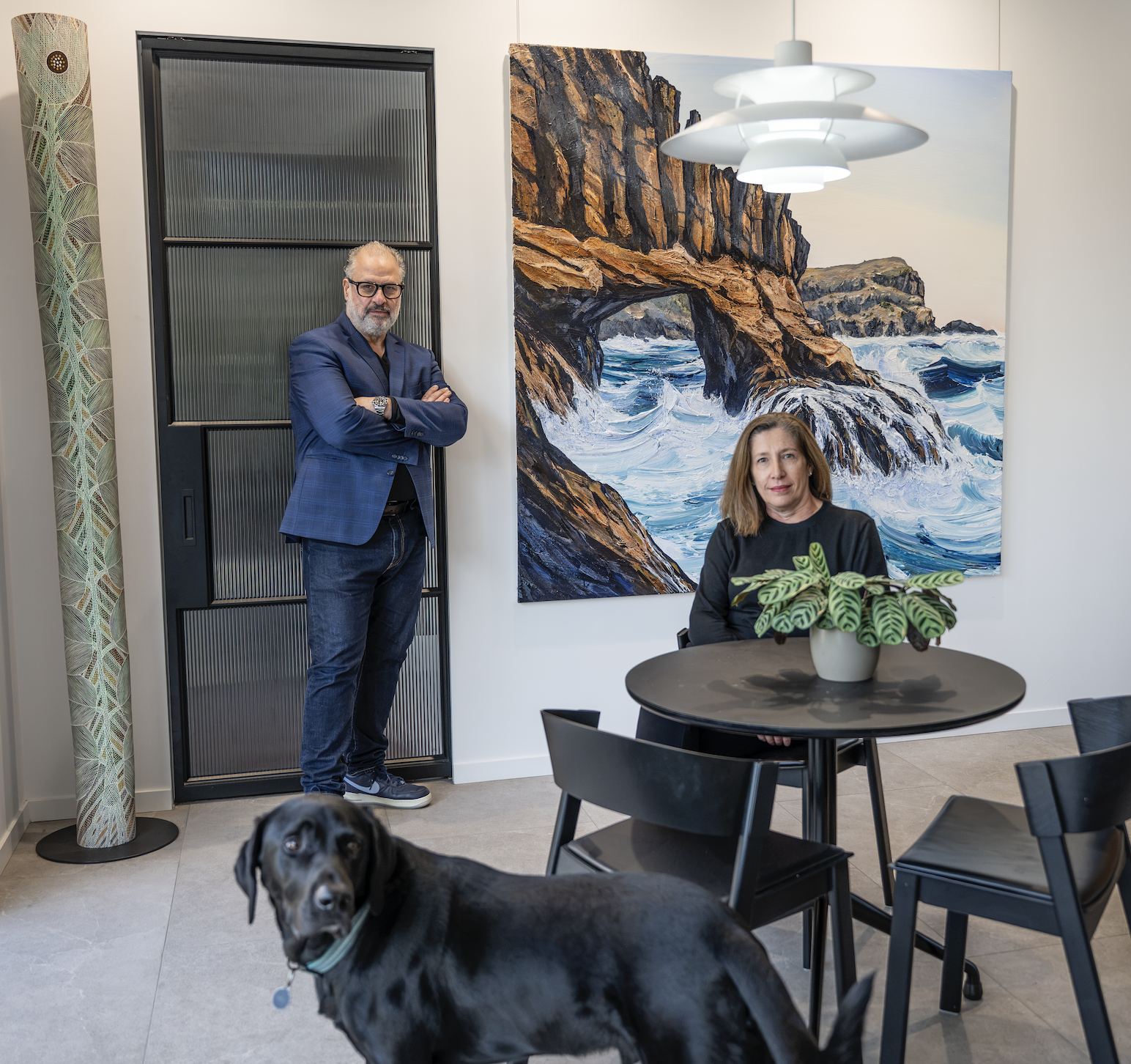
Cover Image: Featured artworks – Malaluba Gumana and Neil Frazer, Photo: Riste Andrievski
For Max and Gabby Germanos, collecting art is about connection rather than formula. Their collection focuses on figurative and portrait-based art that holds tension and emotional ambiguity – pieces that act as daily companions woven into family life rather than static objects. Through their curatorial platform, 3:33 Art Projects, they actively champion emerging and mid-career artists. Ahead of Sydney Contemporary, Max and Gabby share what they are looking forward to at the Fair, advising new collectors to trust their curiosity, build relationships, and only buy what they truly want to live with.
Photos: Riste Andrievski
What first sparked your interest in collecting contemporary art?
It began quite naturally: through looking, living with art, and being stopped in our tracks by certain works. In the late 1990s, while living in a terrace in Alexandria, we started buying contemporary Australian art, initially with an interest in abstraction and First Nations art. Then came what we now think of as our “McLean moment”: encountering McLean Edwards’ paintings opened up a different kind of emotional and psychological pull. The work was not simply beautiful; it was strange, charged and impossible to ignore. That sense of being consumed by a work, of needing to return to it again and again, was what truly sparked the collecting journey.
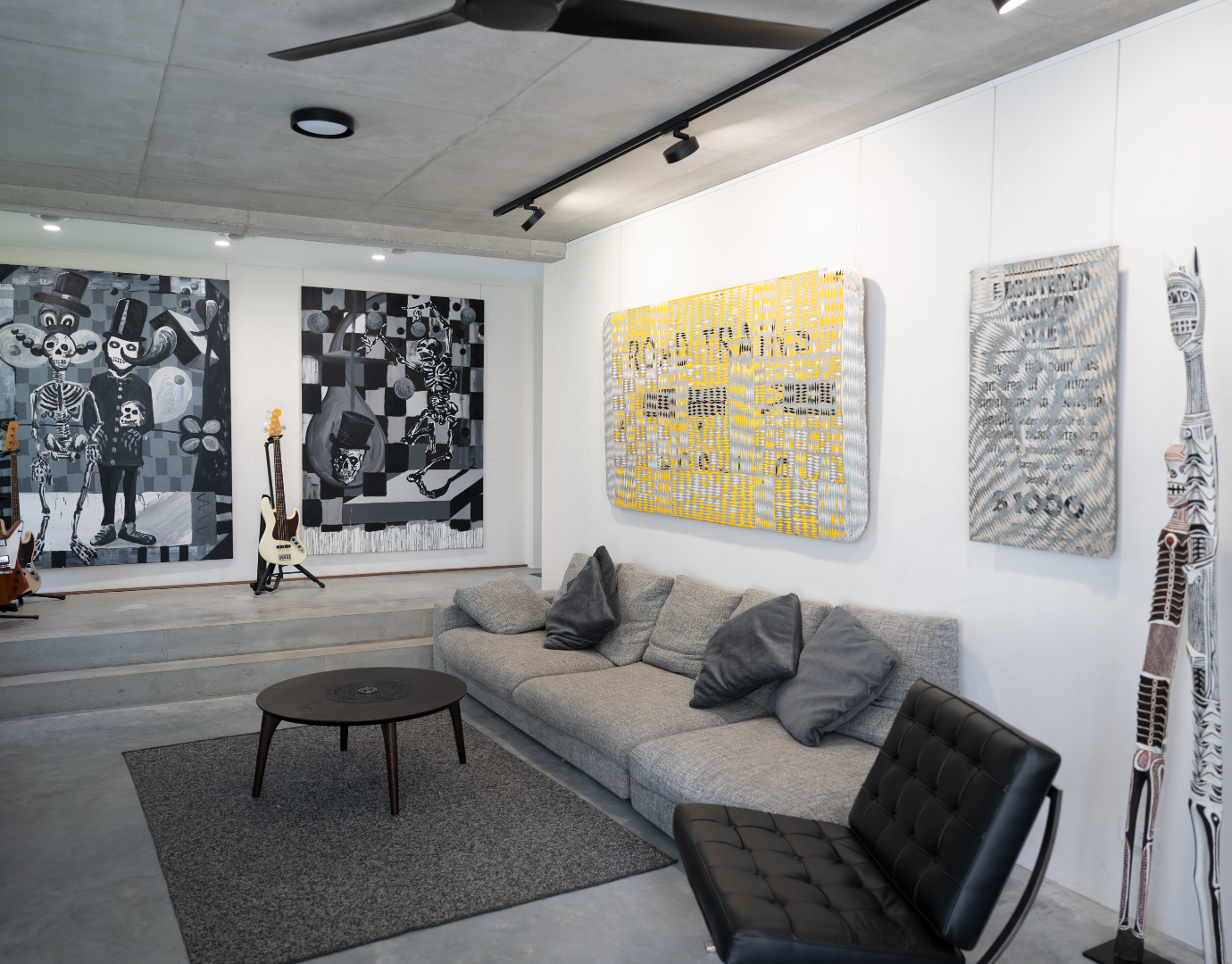
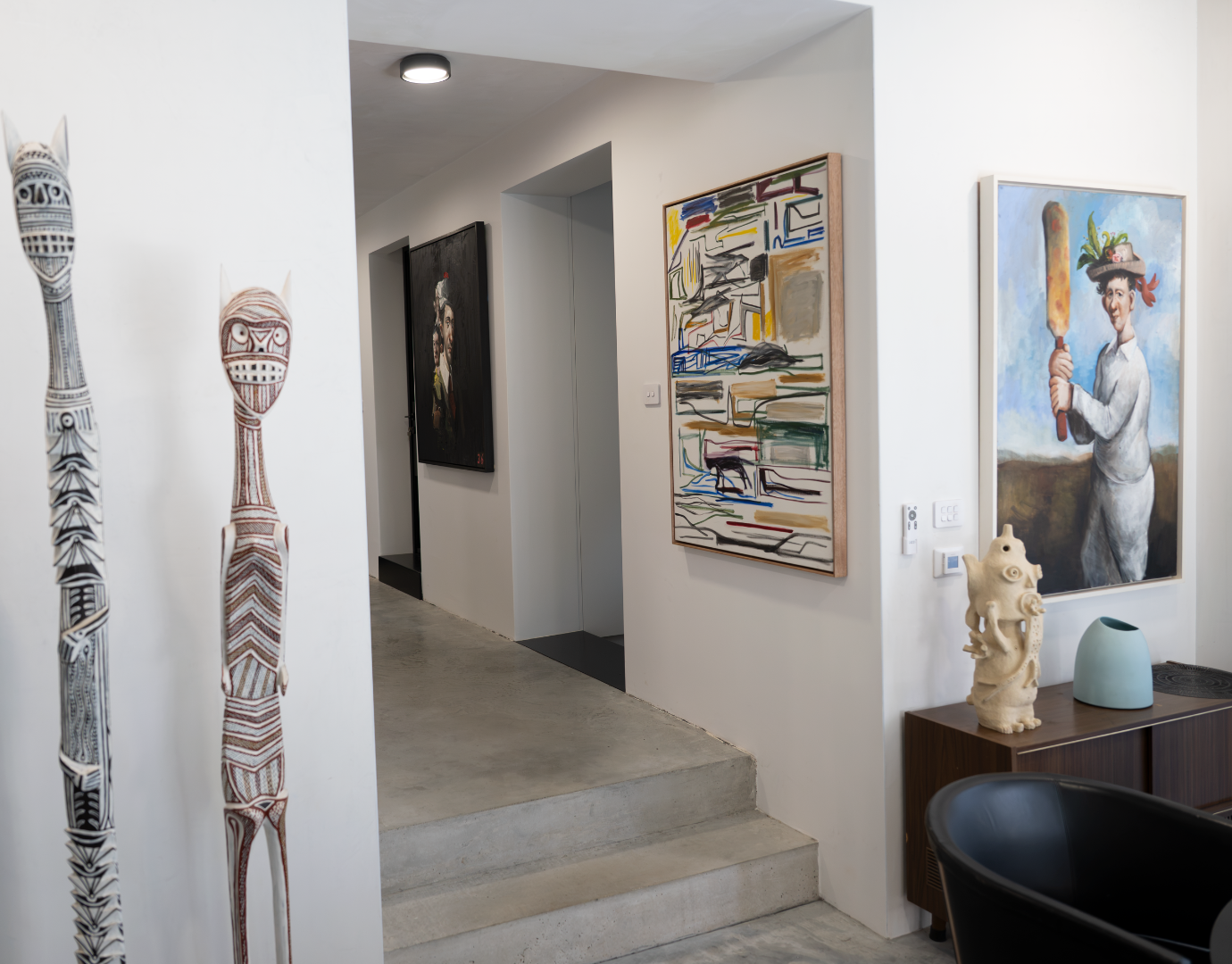 Left to Right – Nawurapu Wununmurra, McLean Edwards, Ken Whisson, Mai Nguyen-Long and McLean Edwards, Photo: Riste Andrievski
When encountering a new work, what qualities or ideas tend to draw you in?
We are drawn to works that hold tension, ambiguity and emotion. We tend to shy away from the purely decorative; in fact, it is often the unresolved or slightly unsettling quality that keeps us looking. Figurative and portrait-based works have become especially important because they suggest stories without closing them down. We respond to art that creates room for conjecture, works that make you wonder who someone is, what has happened, or what might happen next.
Has your approach to collecting evolved over time? If so, how?
Yes, very much. At the beginning, the collection was more instinctive and exploratory. Over time, it has become deeper and more considered. We have found ourselves returning to particular artists and following their practices over many years, sometimes collecting in real depth. The collection now has a strong focus on Australian contemporary artists, particularly figurative and portrait-based work, and we have become increasingly interested in supporting mid-career artists, as well as creating opportunities for artists through our curatorial platform, 3:33 Art Projects.

Mclean Edwards. Photo: Riste Andrievski
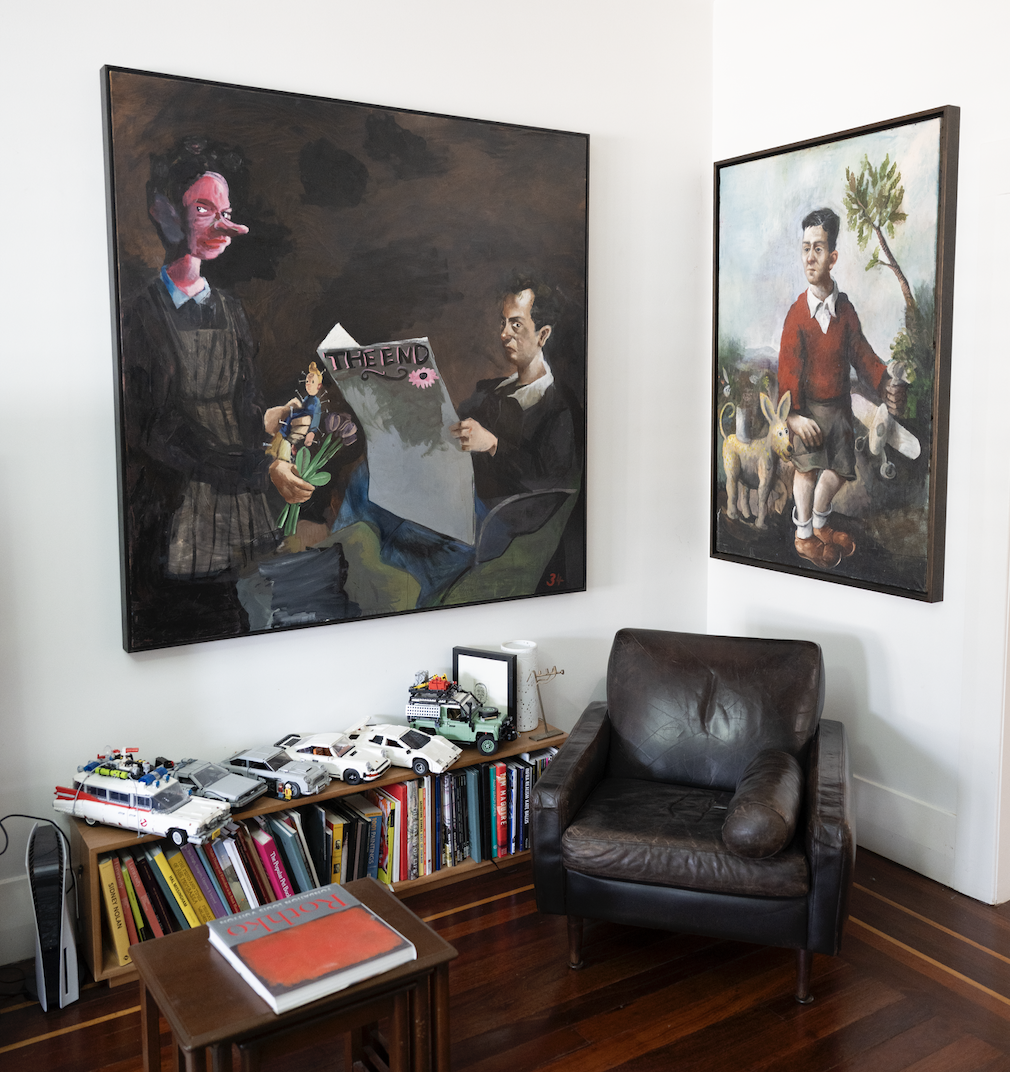
What role does living with artworks play in your everyday life?
Living with art is central to the way we experience the collection. These works are not separate from family life; they are an integral part of the house, the conversations we have and the way we think. Some paintings offer energy, others invite contemplation, and some shift quietly depending on the day. For us, living with art means allowing works to keep revealing themselves over time. They become companions rather than objects.

McLean Edwards, LA Story 2, 2012, Photo: Riste Andrievski
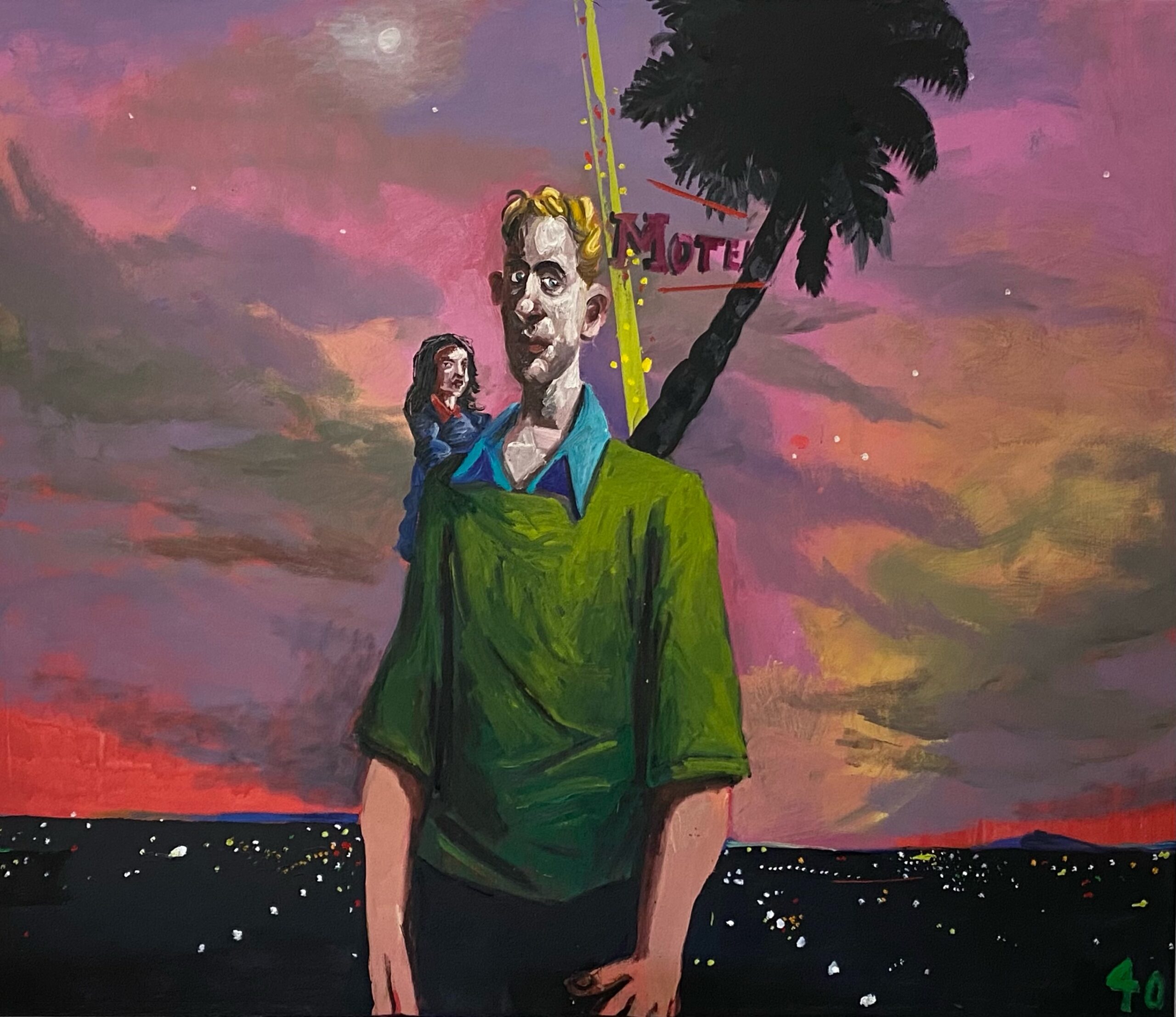
Your collection feels deeply shaped by long-term relationships with artists and a genuine sense of connection rather than a fixed collecting formula. How have those personal relationships influenced the way the collection has evolved over time?
We value the deep friendships we have developed with many of the artists in our collection, and feel very privileged to have such remarkable people in our lives. Collecting is often spoken about in terms of acquisition, but for us it has been much more about connection with artists, ideas and the wider community around contemporary art. Getting to know artists and following the development of their work over time has made the collection more personal and more layered. It also means that works carry memories: of studio visits, dinners, conversations, exhibitions and moments of shared enthusiasm. Those relationships have shaped the collection in ways no fixed formula ever could.
Through 3:33 Art Projects, we have also had the privilege of working with some of Australia’s leading artists, as well as some of its most exciting emerging artists, across more than 70 solo exhibitions over the past 15 years.

Joanna Braithwaite, Pant Man V, 2025, Photo: Riste Andrievski
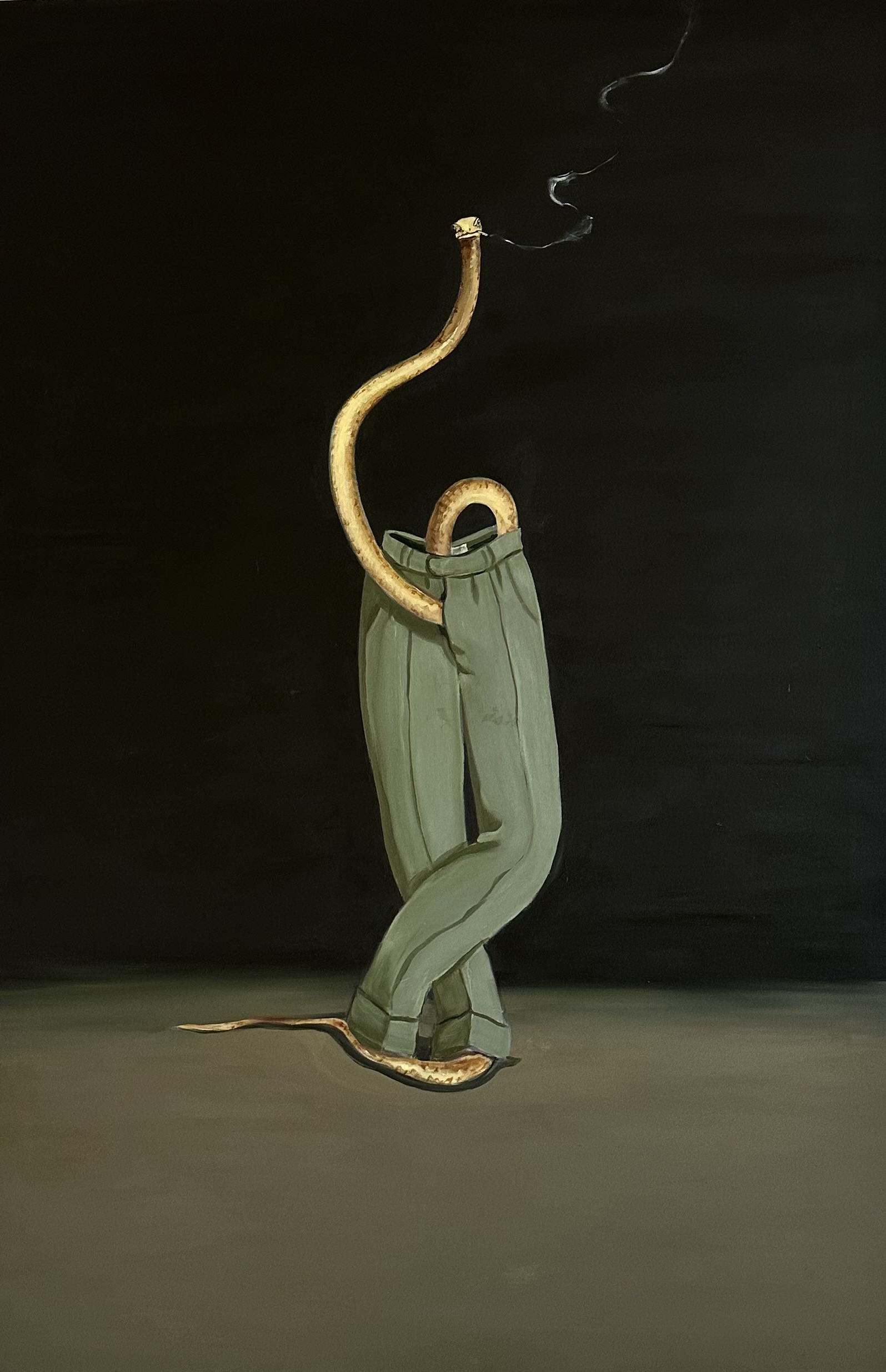
Sydney Contemporary brings together a wide range of artists and galleries each year. What do you most look forward to discovering at the Fair?
What is exciting about Sydney Contemporary is its sense of concentration and possibility. You can see so much at once: established galleries, younger spaces, artists you have followed for years and artists you are encountering for the first time. We look forward to those unexpected moments of recognition: seeing a work that makes you stop, returning to a gallery stand for a second or third look, or beginning a conversation that may lead somewhere over time. The Fair is also a wonderful reminder that collecting is not solitary; it is part of a broader ecosystem of artists, galleries, curators and audiences.

David Griggs (Right), Wanapati Yunupinu (Left), Nawurapu Wununmurra (Far Left). Photo: Riste Andrievski
What advice would you give to someone beginning their journey as a collector?
Start by looking as much as you can, and trust the works that stay with you. Visit galleries, fairs, artist-run spaces and exhibitions; ask questions; speak to artists and gallerists; and give yourself time to understand what genuinely moves you. It is easy to feel that you need a strategy from the beginning, but some of the most meaningful collections grow through curiosity, patience and relationships. Buy what you want to live with, not what you think you should buy. If a work keeps pulling you back, that is worth listening to.
Sydney Contemporary returns to Carriageworks from 3 – 6 September.