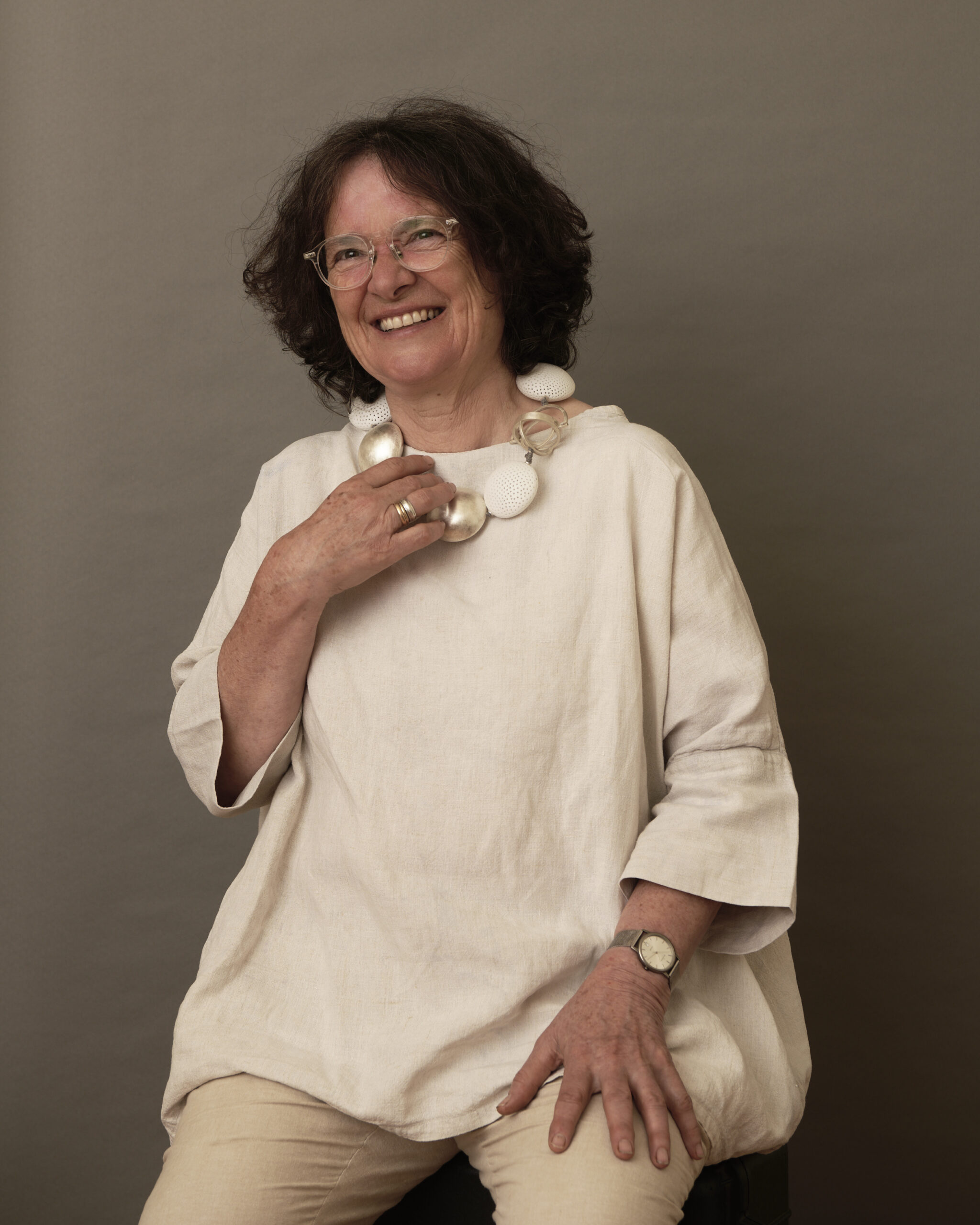
Working with porcelain for decades, the artist explores the delicate balance between form, movement and space. Informed by a background in science and music, her practice embraces the material’s translucency, strength and unpredictability, transforming familiar vessel forms into sculptural compositions shaped by rhythm, light and the relationships between objects.
Here, she discusses the ideas behind Ma 間 at Gallery Sally Dan-Cuthbert, the influence of musical rhythm and scientific enquiry on her approach to making, and how continued experimentation with porcelain and silversmithing opens new possibilities for form, function and discovery.
Ma 間
Opens Saturday, 31 October
Artist Talk 3pm, followed by Opening Reception until 5pm

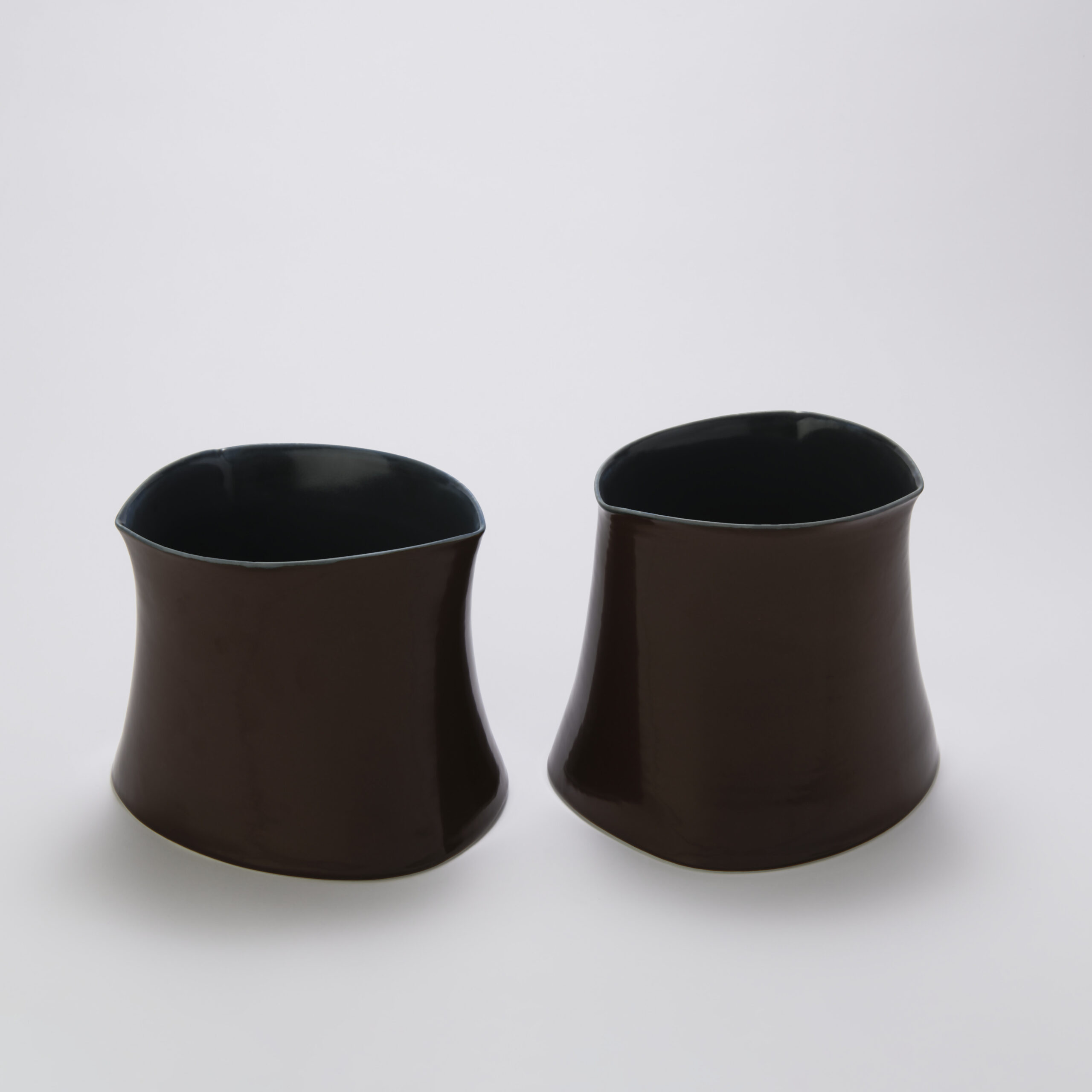
Prue Venables, In Repose II, 2026, Limoges porcelain, hand thrown and altered, 18 x 45 x 21 cm. Image courtesy the artist and Gallery Sally Dan-Cuthbert, Sydney. Photo Fred Kroh.
You’ve worked with porcelain for decades. What continues to interest you about the material, and how has your relationship with it evolved?
I love the innate beauty of porcelain: its glasslike translucency, its strength, the ring of its sound, its challenge and risk. My work takes a long time to make, and this is part of my respect for the material. Porcelain is becoming scarce through wastage, and working slowly, with many challenges, brings me into contact with its nature and possibilities. As in my familiar experience of developing sound on an instrument, exploring the extremes of what is possible always reveals new boundaries. I keep uncovering my own assumptions and testing their limits in search of discovery.

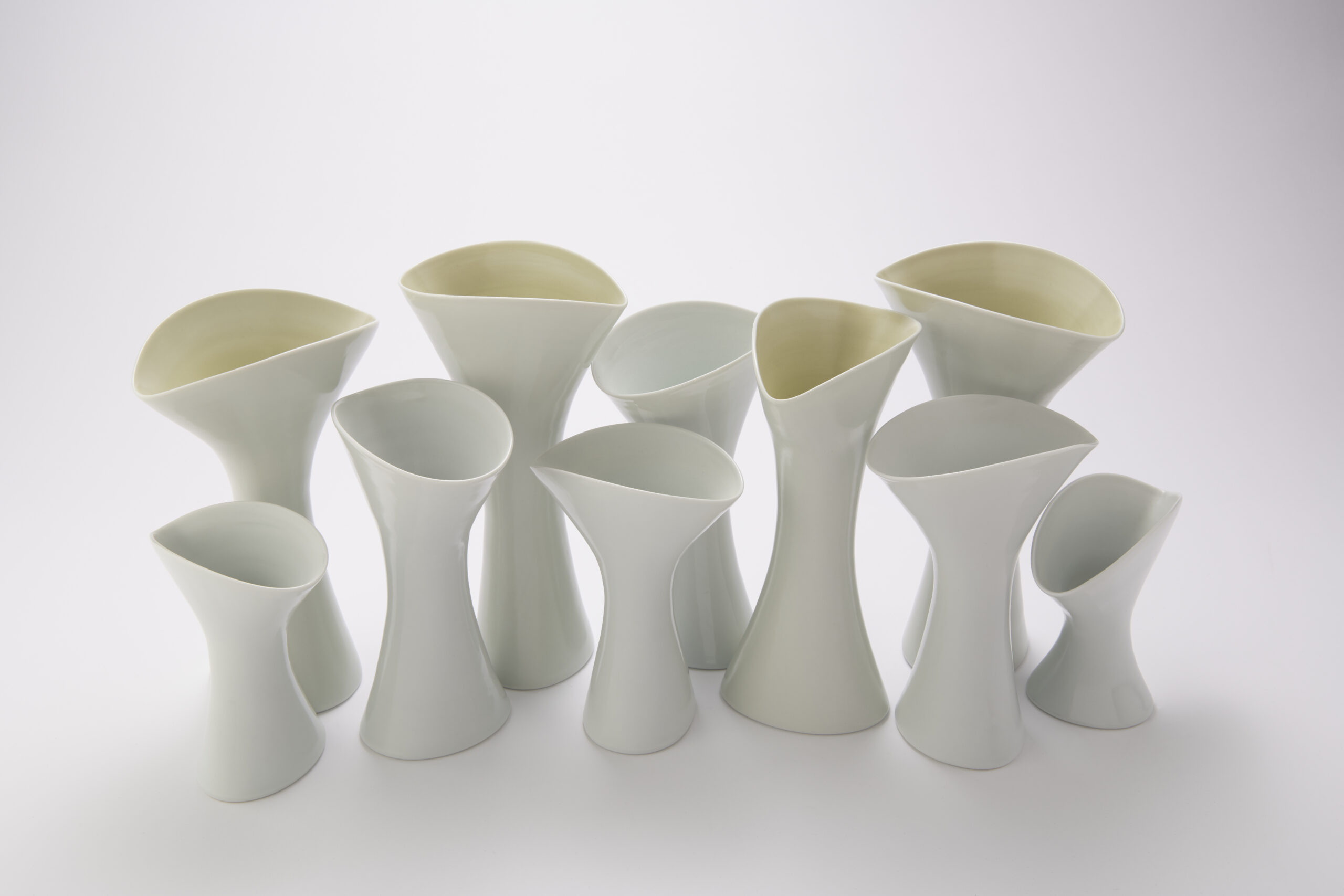
Prue Venables, Courante II, 2026, Limoges porcelain, hand-thrown and altered, 28 x 72 x 24 cm. Image courtesy the artist and Gallery Sally Dan-Cuthbert, Sydney. Photo Fred Kroh.
Your background in science and music seems to resonate with your interest in rhythm and form. How do these disciplines inform your practice?
My childhood was full of music, and I began practising with discipline early each morning. I also studied science for six years as a young adult. I was fortunate to have marvellous teachers in both areas who encouraged and challenged me, and taught me the value of disciplined thinking and practice.
My family shaped this too. My mother had a sensitive artistic talent, expressed through beautiful sewing and painting, and she taught me about discipline and relationships between colours. My father was an esteemed medical specialist, and we spent many hours talking about the science I was learning, exploring approaches to discovery and the importance of instinct in science and medical practice. They both had an intense love of music and a respect for education and enquiry.
I draw on the discipline and joy of learning I absorbed from them, sometimes almost unconsciously. And so the music is always there: as I listen, as I apply the learning of practice and investigation, and as I feel the joy of discovery. I feel a sense of rhythm and timing within me, the space between notes and the importance of placement. It is just there, and I cannot turn it off.
Can you tell us about the ideas behind your upcoming exhibition at Gallery Sally Dan-Cuthbert?
The exhibition, titled Ma 間, explores movement and space as a reflection of the intervals between musical notes, between raindrops, between the words of a poem. It is the pauses that define the objects and the relationships between them.
Over time, my attention has shifted from the individual vessel to the relationships between forms, with each form weighted against another and the shapes extending beyond the traditional vessel. The spaces between them carry movement and emotional connection, shadow and the flickering of light, much as the pause between notes gives music its shape. There is still much to discover.

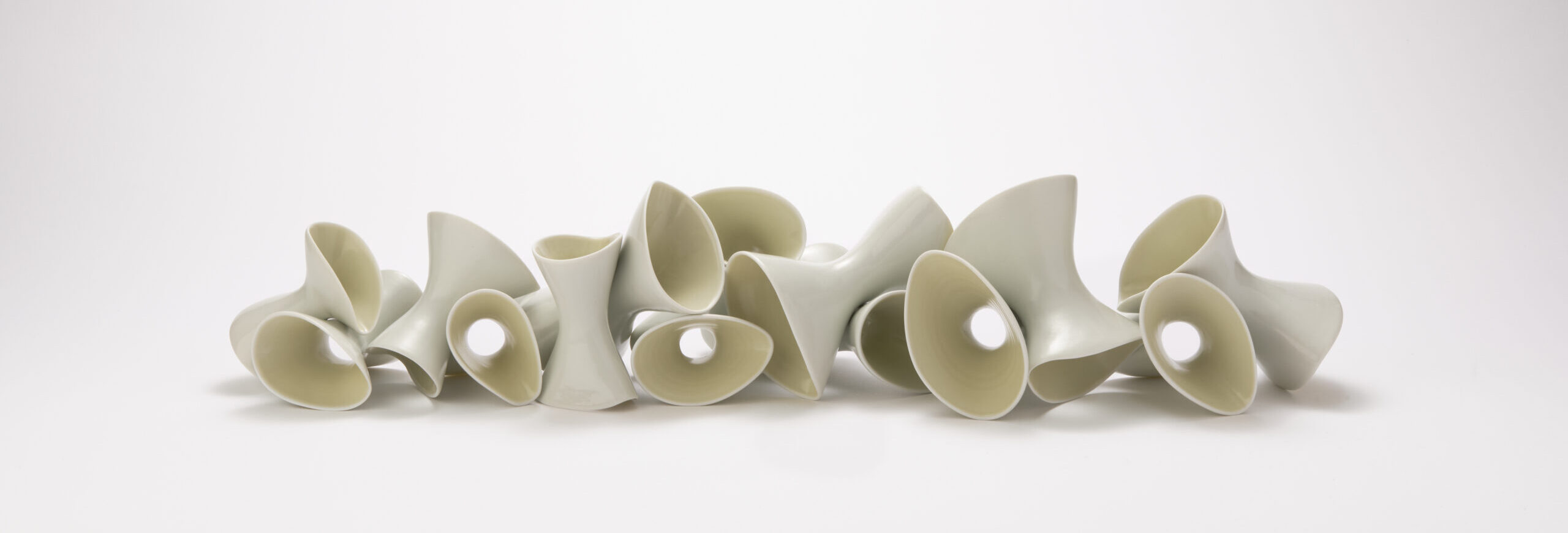
Prue Venables, Gentle Murmurs II, 2026, Limoges porcelain, hand thrown and altered, 15 x 80 x 16 cm. Image courtesy the artist and Gallery Sally Dan-Cuthbert, Sydney. Photo Fred Kroh.
When bringing a body of work together, how do you determine the relationships between the works?
I sit with the forms for many hours, watching as the light changes between them. The relationships emerge throughout the making: in the studio, in night-time dreaming and thinking away from it, during the glazing, and even as I place the work in the kiln. As I move the works around, I observe the movement between them and see new relationships appear.
Your work often begins with familiar functional forms, which you then alter and reconstruct. What draws you to this process of transformation?
The process of altering and reconstructing began decades ago, when I returned to Australia in 1989 after 13 years of studying and living in the UK. I was unfamiliar with local materials, and I saw it as a great opportunity to reset my approach to making.
I love throwing, handling and moving soft clay, but I felt the wheel’s centrifugal force controlled the outcome of my work. I still wanted to use the wheel, but I wanted to challenge that control by altering the thrown shapes. This paired well with my wish to work at higher firing temperatures and play with porcelain’s sensual qualities: its almost glasslike translucency and its strength, which allows me to work finely and delicately.
Altering the shapes brings great risk, but when something fails, it always leads me to try again. As I alter the thrown form, it quickly disappears from my memory, and the exploration of something new comes to the fore. The questions that arise- what is possible, how movement evolves, how to solve technical problems- all provoke and excite me.
Exploring porcelain factories and workshops across Europe, Scandinavia, and Asia, both historically and through visits to contemporary operations, and spending many months working in China expanded my thinking even further. I cannot now return to the past!

Prue Venables, Arcadian II, 2026, Limoges porcelain, hand thrown and altered, 16 x 27 x 20 cm. Image courtesy the artist and Gallery Sally Dan-Cuthbert, Sydney. Photo Fred Kroh
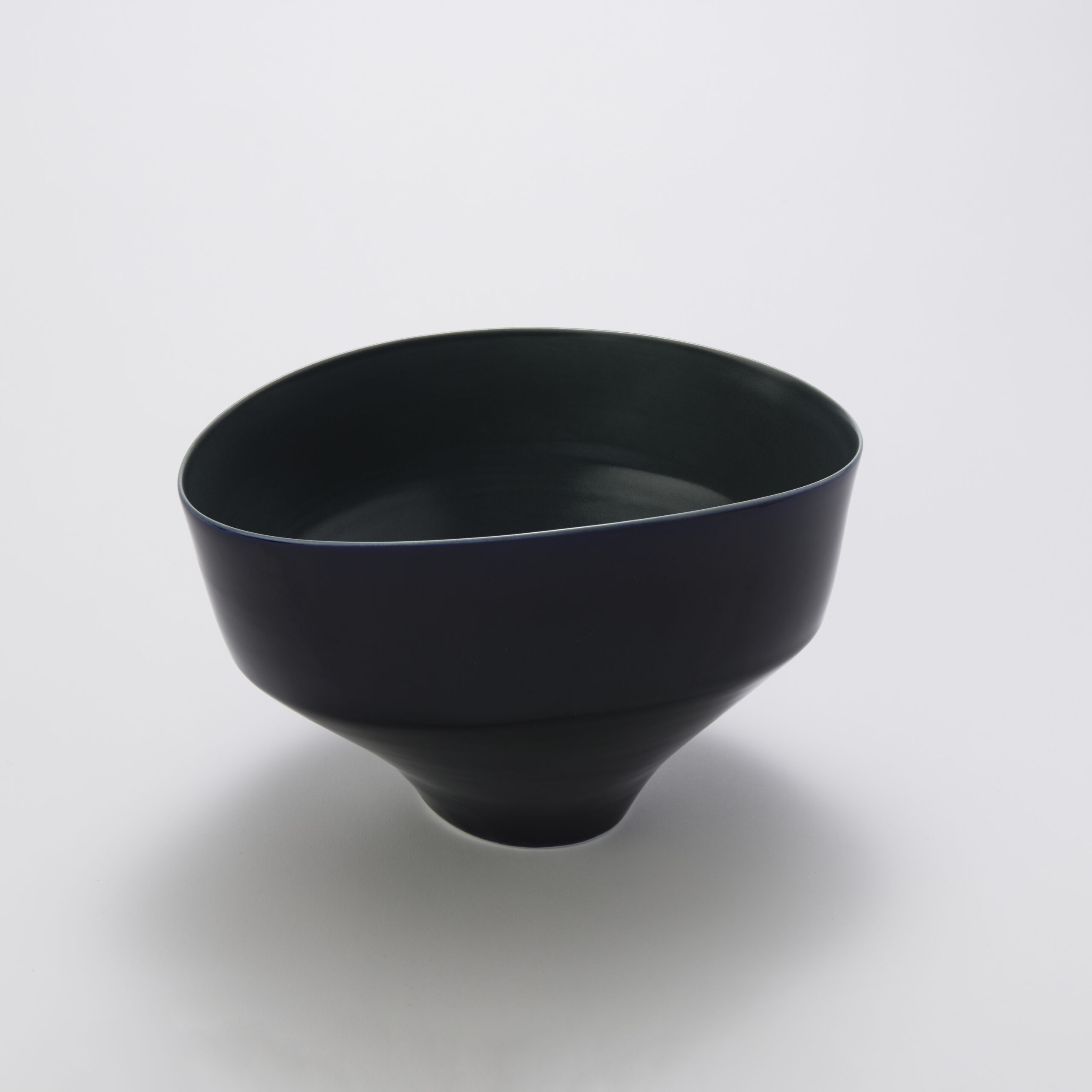
At what point does a functional object become something more abstract, and how important is function to the way you approach making?
I love playing with ideas, assumptions and possibilities of function. Takeshi Yasuda once described, for example, how a brick with food on it becomes a functional plate.
I think every object has abstract and sculptural qualities. When function is a maker’s main focus, these qualities can sometimes appear neglected, perhaps set aside unconsciously. How an object functioned once mattered greatly to me: the thickness of a rim as it touched the lips, the comfort of a handle, even the volume of containment.
I studied at the Harrow School of Art in London in a course focused intensively on the relationships between form, space, detail and movement, both between and within functional and non-functional objects, and we had wonderful teachers. In 2023, I was a finalist in the Loewe Foundation Craft Prize, where my hand-thrown porcelain vessel was described as “a beautiful study in space and movement within form”. Those same principles from my studies – space, form, and movement – continue to guide my practice.
Over decades, I began to think less consciously about function, but it remains embedded in me like muscle memory, like the technical and expressive results of years of musical practice.

Prue Venables, In Repose III, 2026, Limoges porcelain, hand thrown and altered, 19 x 46 x 20 cm. Image courtesy the artist and Gallery Sally Dan-Cuthbert, Sydney. Photo Fred Kroh.
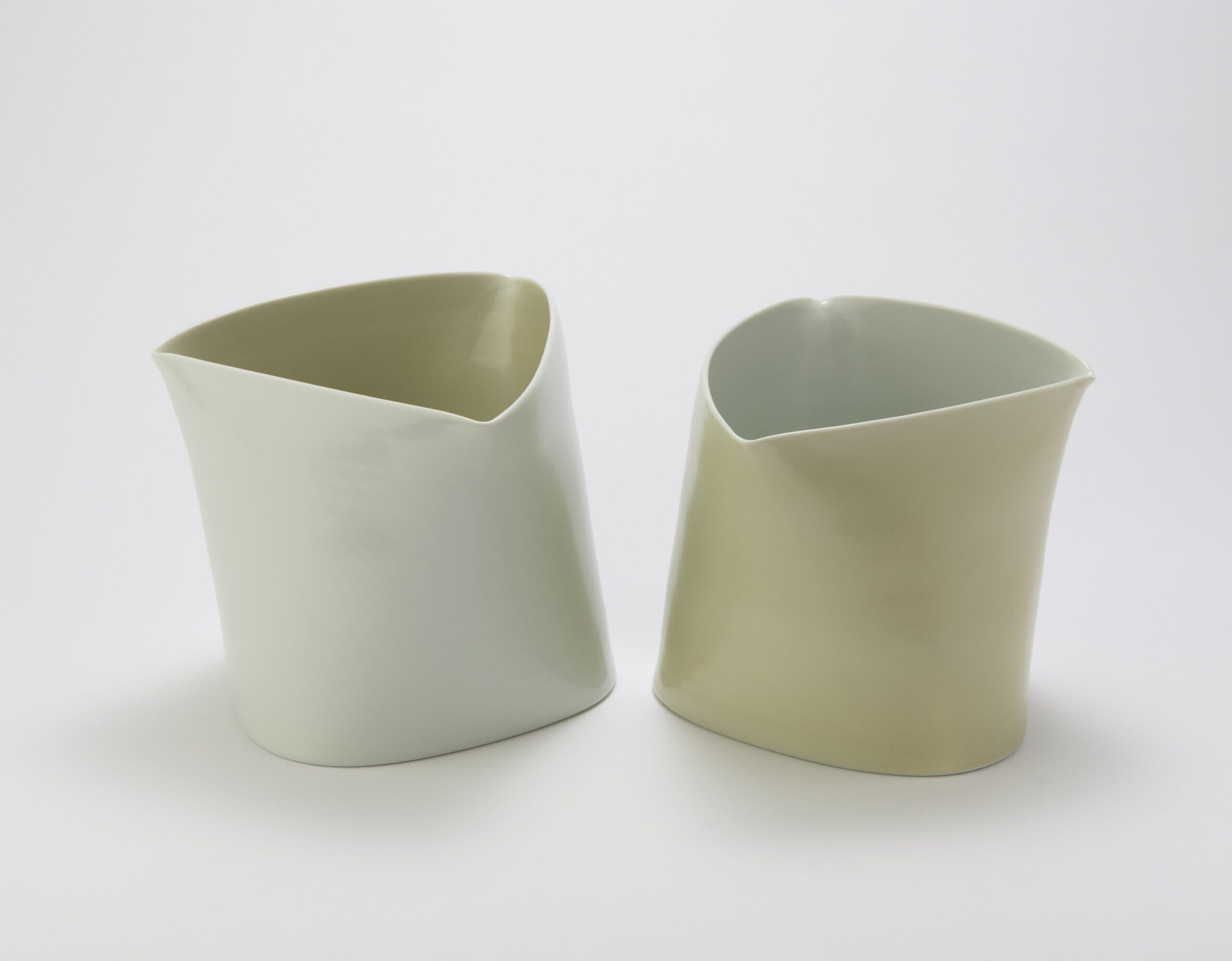
After so many years working with ceramics, what continues to surprise you about the process, and what questions are you still pursuing?
I am constantly surprised by the risks, challenges and rewards of working with porcelain. Porcelain has a strong memory, and altering a shape can bring surprises: as the form dries and goes through the firing, it often bounces back unexpectedly toward its former shape. Every kiln opening holds a surprise, sometimes wonderful, sometimes totally disappointing.
I continue to push the boundaries of what can be formed, and am able to realise ever riskier forms. For many years, I altered thrown forms and fired them on a flattened base. More recently, I have begun firing them on curved bases, lightly balanced on several points. Sometimes this results in total collapse and disaster, but I am slowly discovering ways to make success possible.
I am constantly exploring rhythmic forms whose edges and shapes fold and tumble around each other. The relationship to musical rhythms embedded in my practice is becoming ever more important. There is so much to do!

Prue Venables, Dancing Sprites I, 2026, Limoges porcelain, hand thrown and altered, 14 x 30 x 10 cm. Image courtesy the artist and Gallery Sally Dan-Cuthbert, Sydney. Photo Fred Kroh.

In recent years, you’ve incorporated silversmithing into your practice. What possibilities has working with metal opened up for you, and how does it change your approach to form?
Metal asks different things of me – it is hard and unyielding, not soft on the hands like the delicate, creamy feel of porcelain.
Incorporating silversmithing into my practice has presented many new challenges, both in the practical learning a new material demands and in reflecting on assumptions I have carried into my work with porcelain.
Silversmithing has also extended the formal possibilities of my work. For example, handles that were once impossible to make in porcelain can now be made out of metal components. It has also freed me from many of the restrictions of high-temperature firing, with its tendency to melt and slump, and I can think more freely now.
At times I feel I am beginning again, learning to think anew. Some of the most fruitful music teaching requires returning to the beginning with a familiar instrument, and learning about metal feels very similar.
Instagram
@pruevenables
@gallerysallydancuthbert
Learn More gallerysallydancuthbert.com