Sally Smart’s The Space of Inventory at Gallery Sally Dan-Cuthbert transforms the gallery into a shifting landscape of painted, stitched, printed and sculptural forms. Extending her longstanding language of cutting and collage beyond the canvas, Smart treats the gallery itself as a space for making, with works overlapping, moving through the grid and inviting the viewer to navigate the exhibition from multiple perspectives.
Here, Smart discusses the ideas behind The Space of Inventory, the influence of performance and choreography on her practice, and how working across materials, places and cultural contexts continues to reshape the work.
The Space of Inventory
Opens Saturday, 19 September
Artist Talk 2pm, followed by the Opening Reception until 4pm
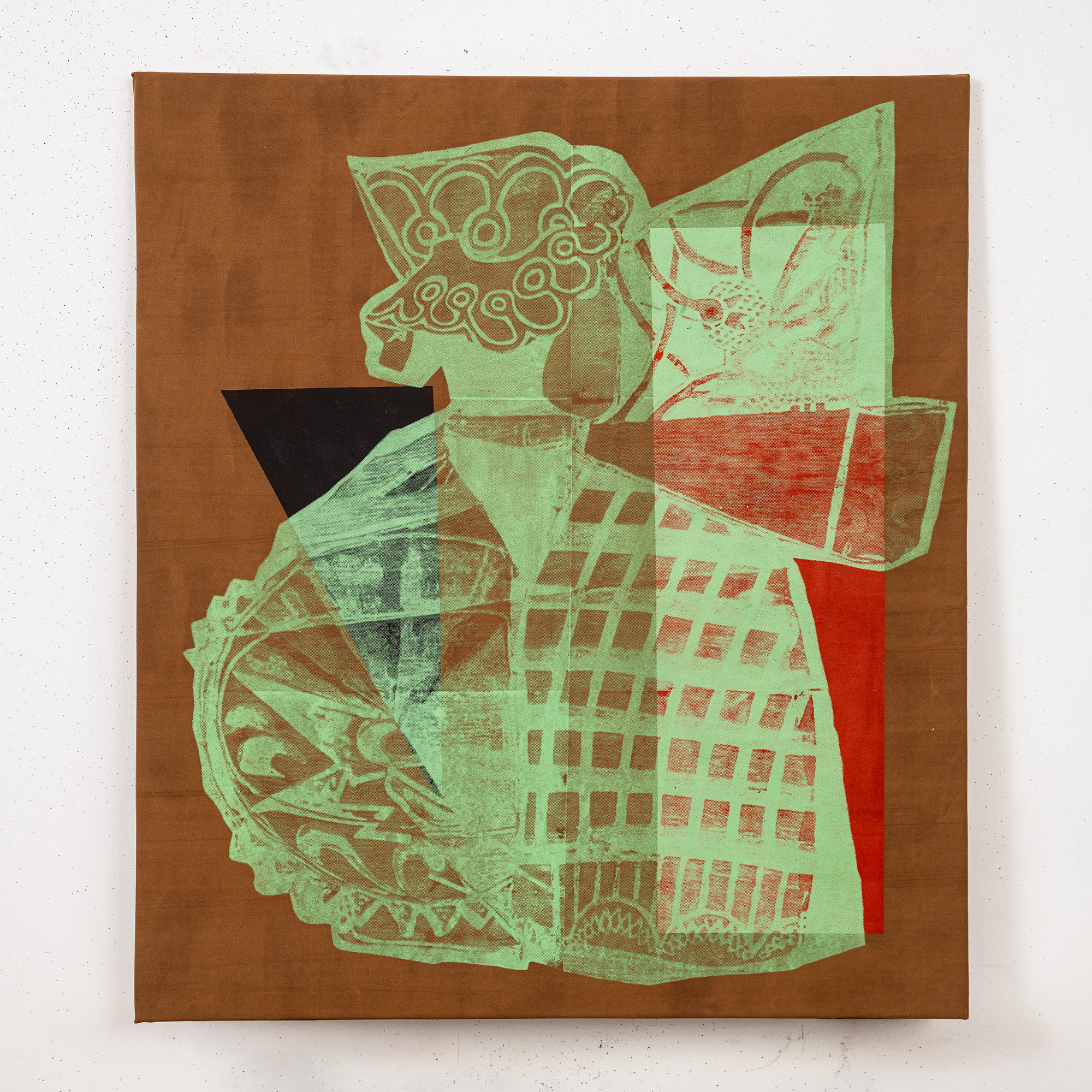
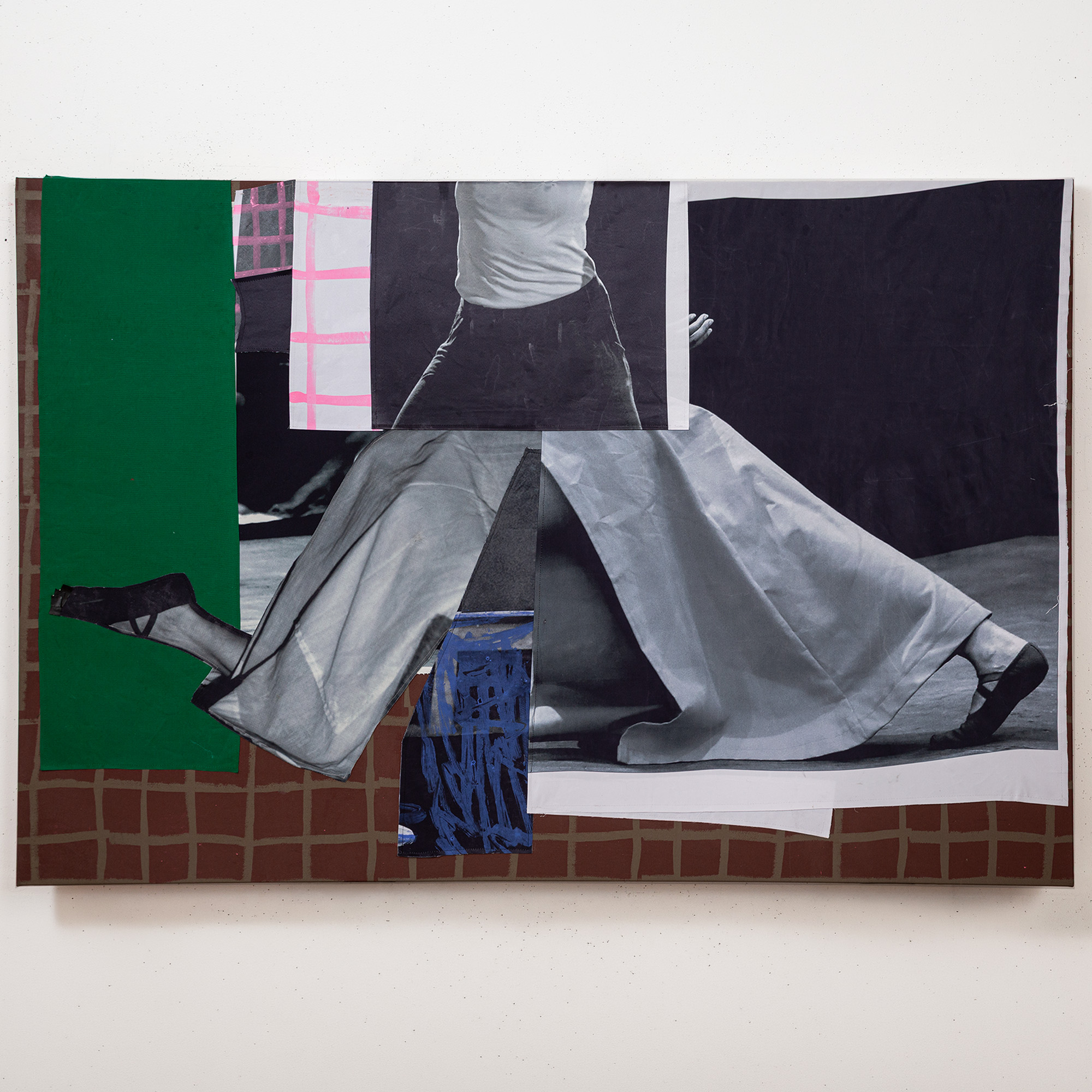
Pictured: Sally Smart, Costume Abstract (Brown) #1, 2026 synthetic polymer paint on canvas textile, 127 x 112 cm, Courtesy the artist and Gallery Sally Dan-Cuthbert, Sydney
‘The Space of Inventory’ transforms the gallery into an environment rather than simply a space for displaying works. What were you thinking about when you began designing the exhibition as a whole?
I might describe my practice as making thinking visible through process — through movement, cutting, assembling and transformation. The Space of Inventory does not necessarily represent a completely new direction in this sense, but it brings multiple applications of my art making to the fore and into relation with one another.
Cutting and collage have been dominant methodologies in my practice for many years, but I also understand them as conceptual processes. The cut interrupts repetition. It separates, disrupts and reorders, allowing the material to move away from a completely predetermined logic. Collage similarly brings things together, but also allows unexpected relationships and associations to emerge.
In The Space of Inventory, these processes operate not only within the individual works but across the installation itself. Cutting, masking and layering occur in the collage-paintings, but they also happen spatially. Elements are placed over and through one another, partially concealed, revealed and reconfigured in relation to the grid and to the architecture of the gallery. The logic of collage therefore extends from the surface of the work into the space around it.
I also think about the cut as producing a kind of choreography. Once something is cut, it can be moved, shifted, layered, pinned or placed differently. These actions create a sequence of possibilities and relationships. In the installation, they become spatial: elements slip through the grid, move across its surface, hang from above or rise from the floor. The work contains traces of the actions of making and, in turn, suggests movement to the viewer.
This connects to my longstanding interest in performance, dance and theatre. My studio is a place where I rehearse ideas spatially, moving elements around and testing their relationships before they are reinterpreted in the gallery. The installation is therefore not a fixed translation of a studio arrangement. It remains open to the conditions of the space and to the movement and perception of the viewer. In this sense, the grid becomes something like a theatre for the performance of the practice itself. It holds repetition and structure, but the cut disrupts that order. The mismatch of lines, duplicated marks, layers and fragments means that the grid itself becomes material for collage rather than simply a pattern imposed upon it.
This also shifts the position of the viewer. Rather than simply looking in at a work, the viewer is invited to look around it — to move through different relationships between the works, the grid, the architecture and the space of the installation. The viewer encounters the work as a series of changing relationships rather than from one fixed viewpoint.
In this way, The Space of Inventory brings together ideas of identity, history and transformation that have been present in my practice, while making the processes through which they are constructed more visible. The installation becomes a way of showing thinking through making: cutting apart, assembling, layering, masking, moving and making connections. The choreography is not fixed; it is generated through these actions and activated anew through each encounter with the work.
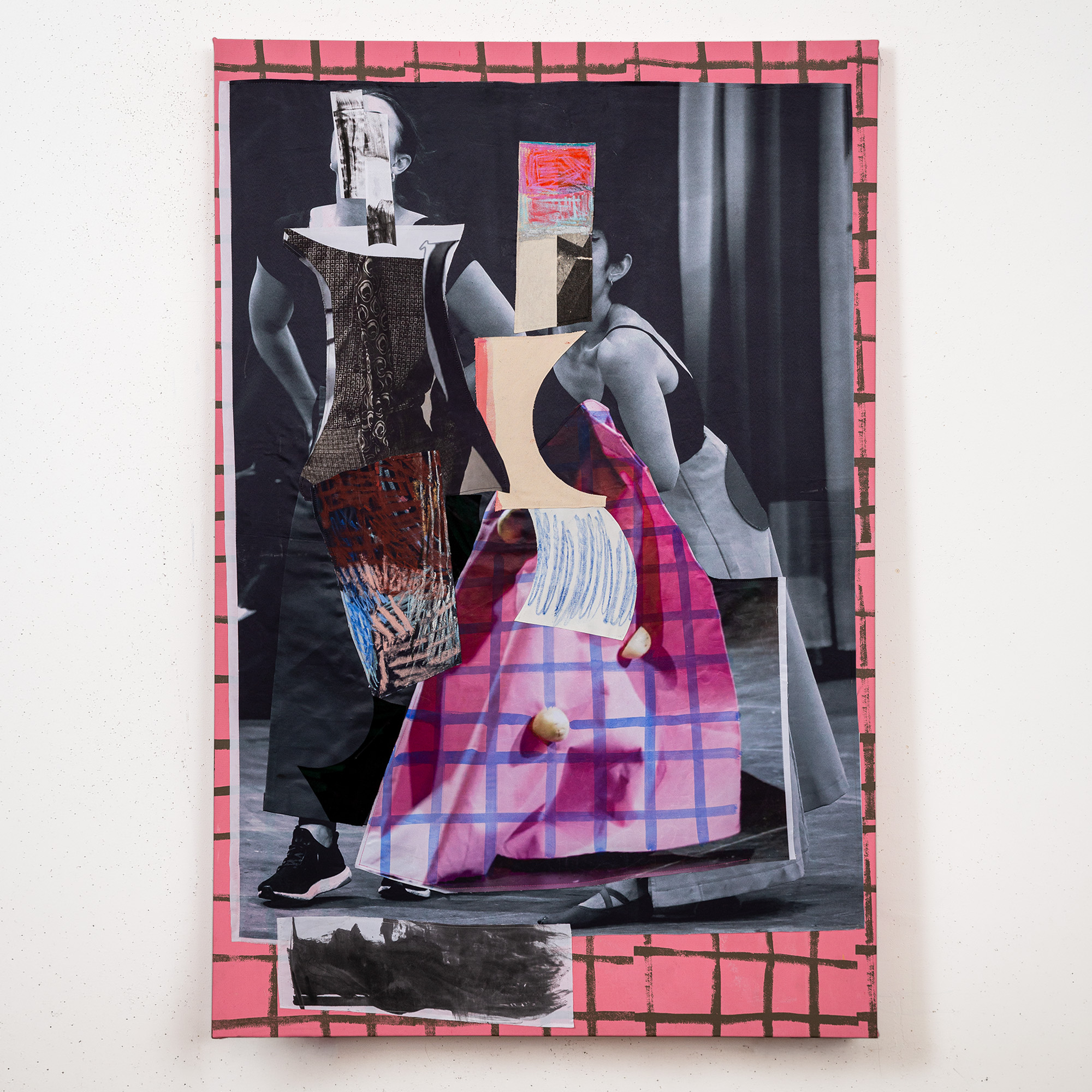
Pictured: Sally Smart, Daughter Architect, 2026 synthetic polymer paint on canvas textile with collage elements 183 x 122 cm Courtesy the artist and Gallery Sally Dan-Cuthbert, Sydney
The grid-patterned fabric wraps the gallery walls and was designed and printed in your Indonesian studio. How does working across different places, materials and cultural contexts shape your practice?
Working across different places, materials and cultural contexts is an important part of how my practice has evolved I bring ideas and questions into a project, but the context of the place also shapes and redirects them. The process is dynamic and not always as I expect. Materials, techniques, people and the particular conditions of a place can open up different possibilities and take the work in directions that I could not have anticipated at the beginning.
My relationship with Indonesia has developed over many years and through ongoing collaborations with artisans and artists. It is not simply a matter of taking an idea from one place to another; the relationships, skills, materials and processes encountered there become part of how the work develops.
The grid-patterned fabric in The Space of Inventory, is both a material element of the installation and part of the larger language of the work. The textile printing and processes of making bring another dimension to the grid, allowing it to move between pattern, material, surface and spatial structure.
For me, working across cultures allows the encounter with a particular place, its materials, processes and relationships, to influence the work and sometimes change what I initially imagined.
Pictured: Sally Smart, Performance scene (Costumes ) #2, 2026 synthetic polymer paint on canvas textile with collage elements 168 x 112 cm Courtesy the artist and Gallery Sally Dan-Cuthbert, Sydney
You bring together paintings, embroideries, puppets and the bronze heads are dressed in garments from your 2017 collaboration with Marni. What connections or conversations emerge between these different elements?
I primarily work in series, with multiple iterations within a series, and I also work across cultures and disciplines. But ultimately, the idea determines the process and connections emerge through the process of working. Different works collide, and sometimes they demand a connection that I then pursue; at other times the connection happens through association and only becomes apparent to me in the process. Sometimes it is obvious, and sometimes it is surprising.
My studio is large enough for me to rehearse the work spatially — to move things around, place them together, separate them and see what happens. This is inherent to my practice, which has always extended the processes of collage and assemblage into space.
Performance is an important part of this. I have an extensive archive of images of performance that have been documented and represented over time. These images become an armature for layers of collage: fragments of performers, gestures, costumes and theatrical forms become signs of making and assembling. In these works images slip, through and across the grid.
The puppets and sculptural heads extend this language into three dimensions. The bronze and wax heads are solid, materially substantial forms, but they are dressed with satin textiles and printed garments, including the garments reconstructed from photographs from the 2017 collaboration with Marni. There is something deliberately unstable in the way they are encountered — a head can appear frontal and full, then become thin or almost disappear when seen from the side. The textile, costume and sculptural form continually shift our perception of what we are looking at.
These elements are connected through the figurations and structures of performance: the body, costume, gesture, transformation, repetition and the act of assembling. They also bring together the theatre of performance with the theatre of making itself. The works are not simply representations of performance; they carry something of its processes — dressing, constructing, arranging, performing and changing.
For me, the conversation between these different elements is therefore generated through the act of making. Collage and assemblage are not simply techniques within my practice; they are ways of thinking. They allow different histories, materials, images and forms to meet, collide and produce new associations.
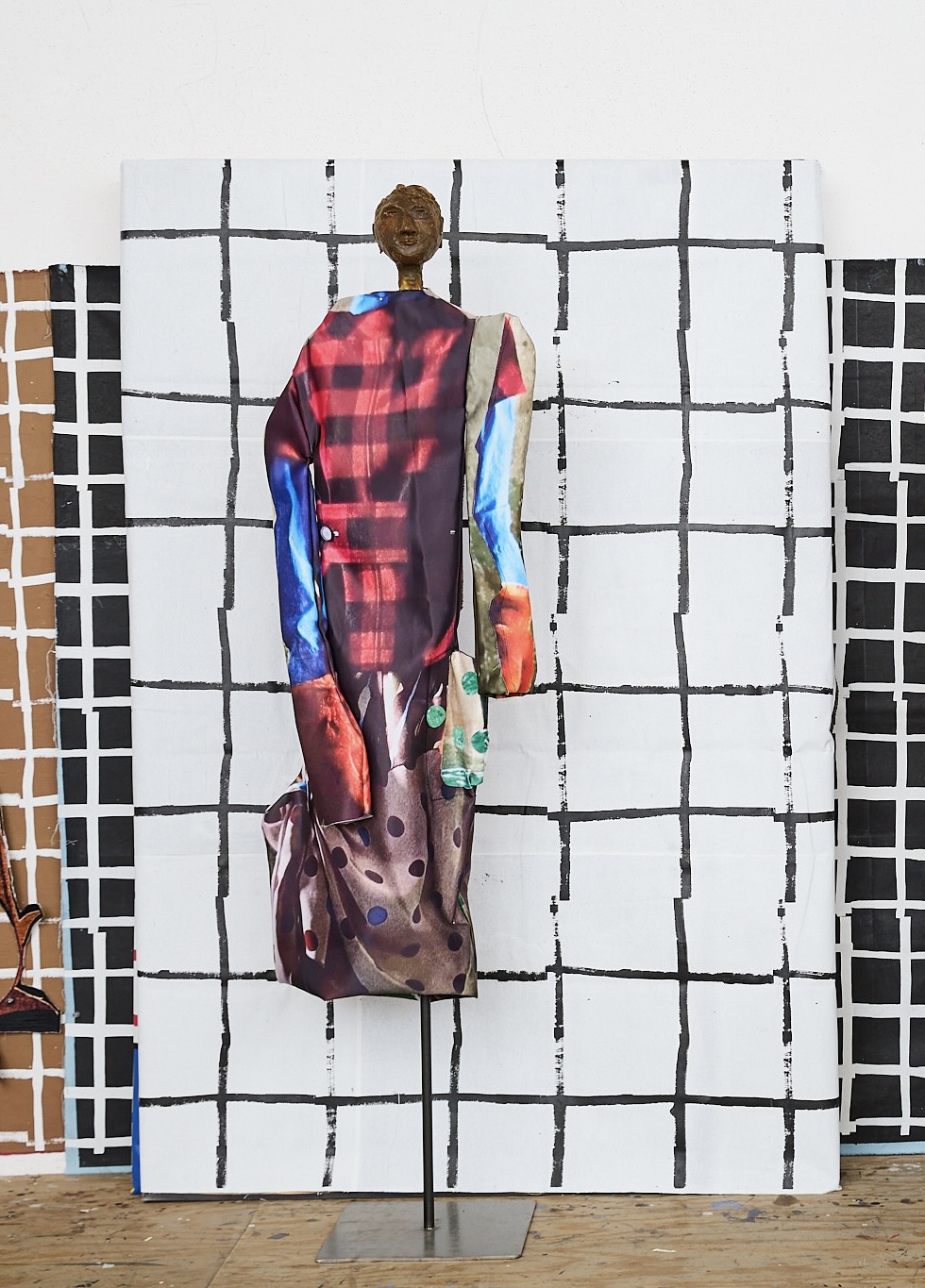
Pictured: Sally Smart, Harlequin model, 2026 synthetic polymer paint on canvas textile with collage elements 168 x 112 cm Courtesy the artist and Gallery Sally Dan-Cuthbert, Sydney
Several works move beyond the wall, falling from the ceiling or rising from the floor. What does working in three dimensions allow you to explore that a traditional painting installation doesn’t?
For me, moving beyond the wall is therefore not simply a way of making sculpture. It extends the processes of collage and assemblage into space, allowing the work to be experienced through movement, changing viewpoints and the relationships between distinct elements.
You’ve described your practice as a way of thinking through ideas of identity, history and transformation. How does ‘The Space of Inventory’ extend or shift those ideas in your work today?
The inventory is both the work itself and the elements that constitute my way of making. It includes the cut-outs, grids, textiles and other materials, but also the actions of making: cutting, sliding, pinning, placing and moving elements through space onto a wall, canvas or linen support. These elements can exist independently, but it is through their placement and relationships that the installation takes shape. The grid operates simultaneously as pattern, wall, support and spatial structure, while the cut-outs interrupt, slip across and move through it. The visual field is therefore dynamic rather than fixed.
This is what makes the work experiential as an installation. Each element has an independent identity, but its position within the whole amplifies the experience of both making and viewing.
The installation makes visible something of the process itself — the movement of forms, the act of placing and the possibility of things shifting and being reconfigured.
I am interested in the grid being open, slipping and unstable rather than fixed: a structure that can be entered, disrupted and continually remade. The installation allows the viewer to encounter not only the finished work but something of the dynamic of its making and the way looking itself becomes part of the work.
Learn more here gallerysallydancuthbert.com