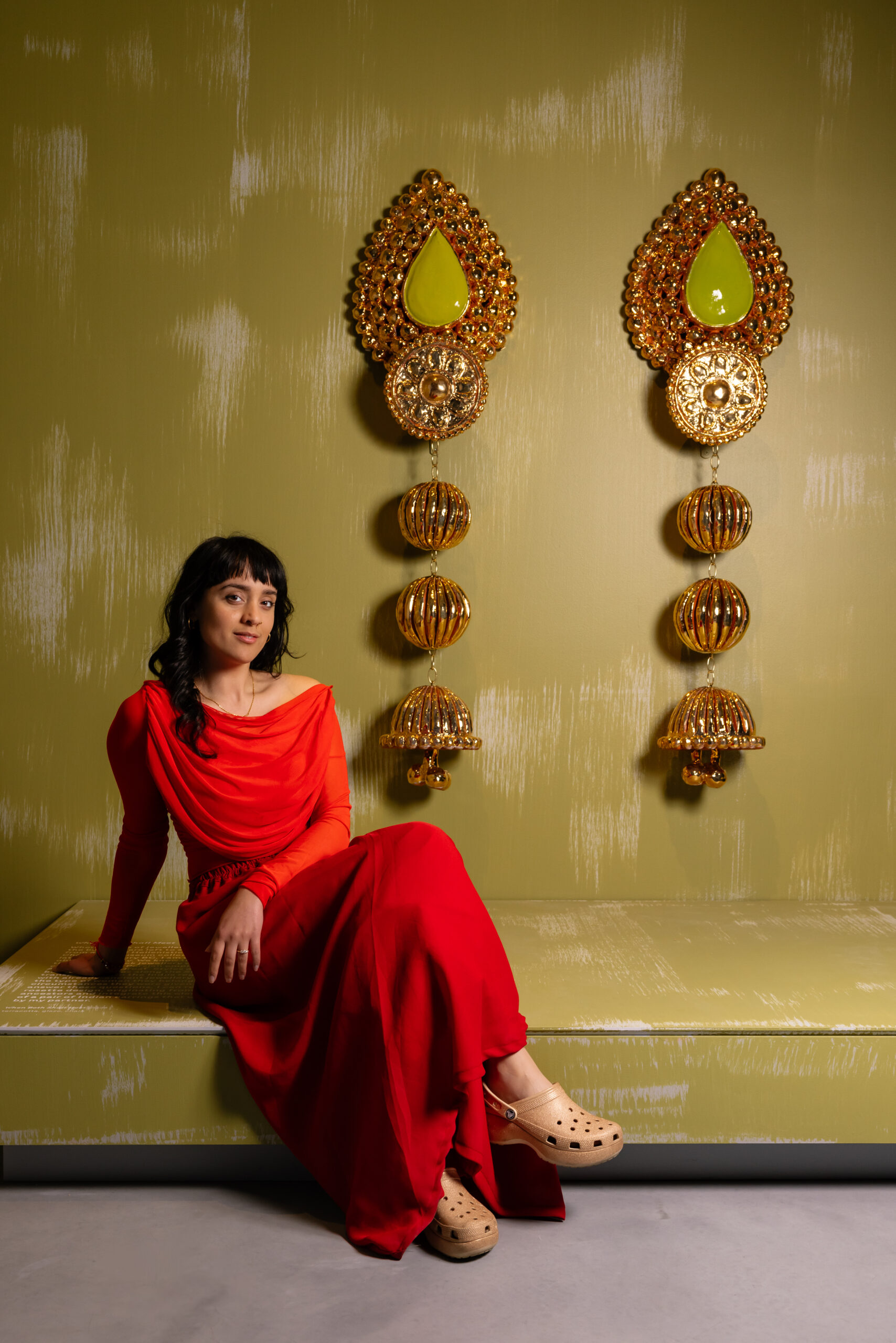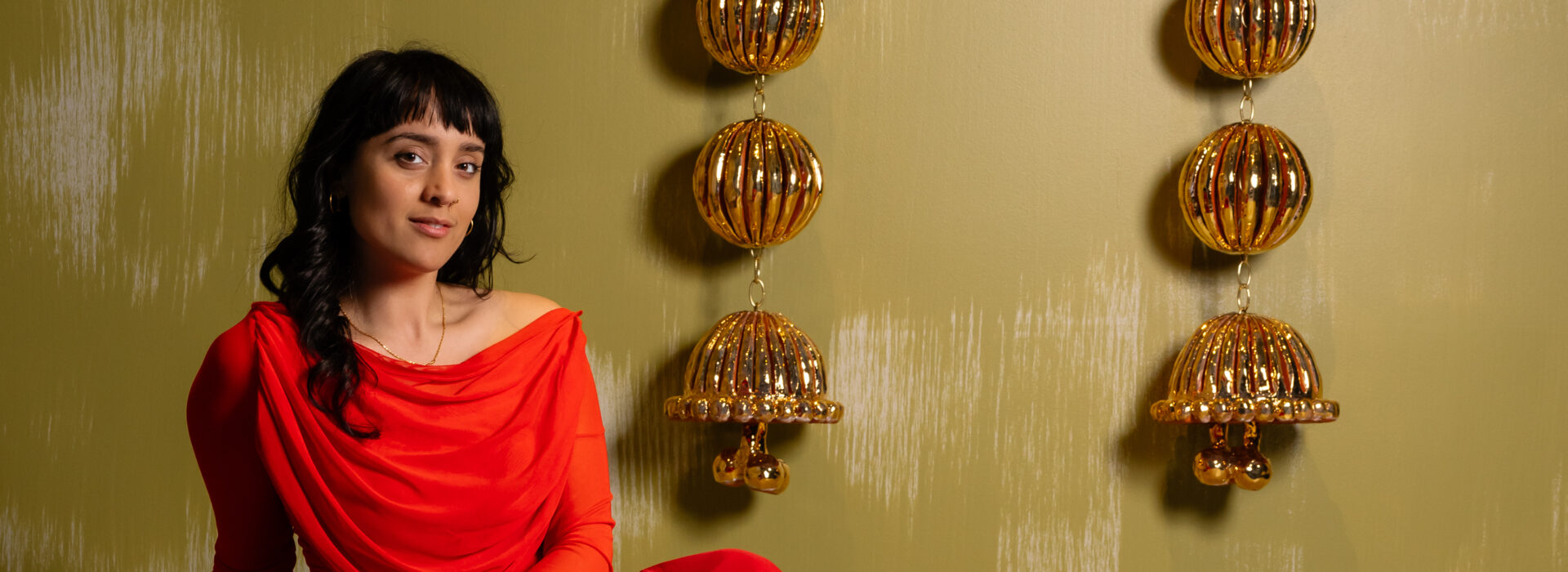
Monica Rani Rudhar transforms jewellery and heirlooms into vessels of memory, tracing the intimate threads between migration, identity and belonging. Ahead of her inclusion in The Biennale of Sydney, we spoke with Monica on weaving family mythology with colonial critique, inviting audiences into tender conversations about inheritance and home, and what she’s looking forward to exploring in 2026.
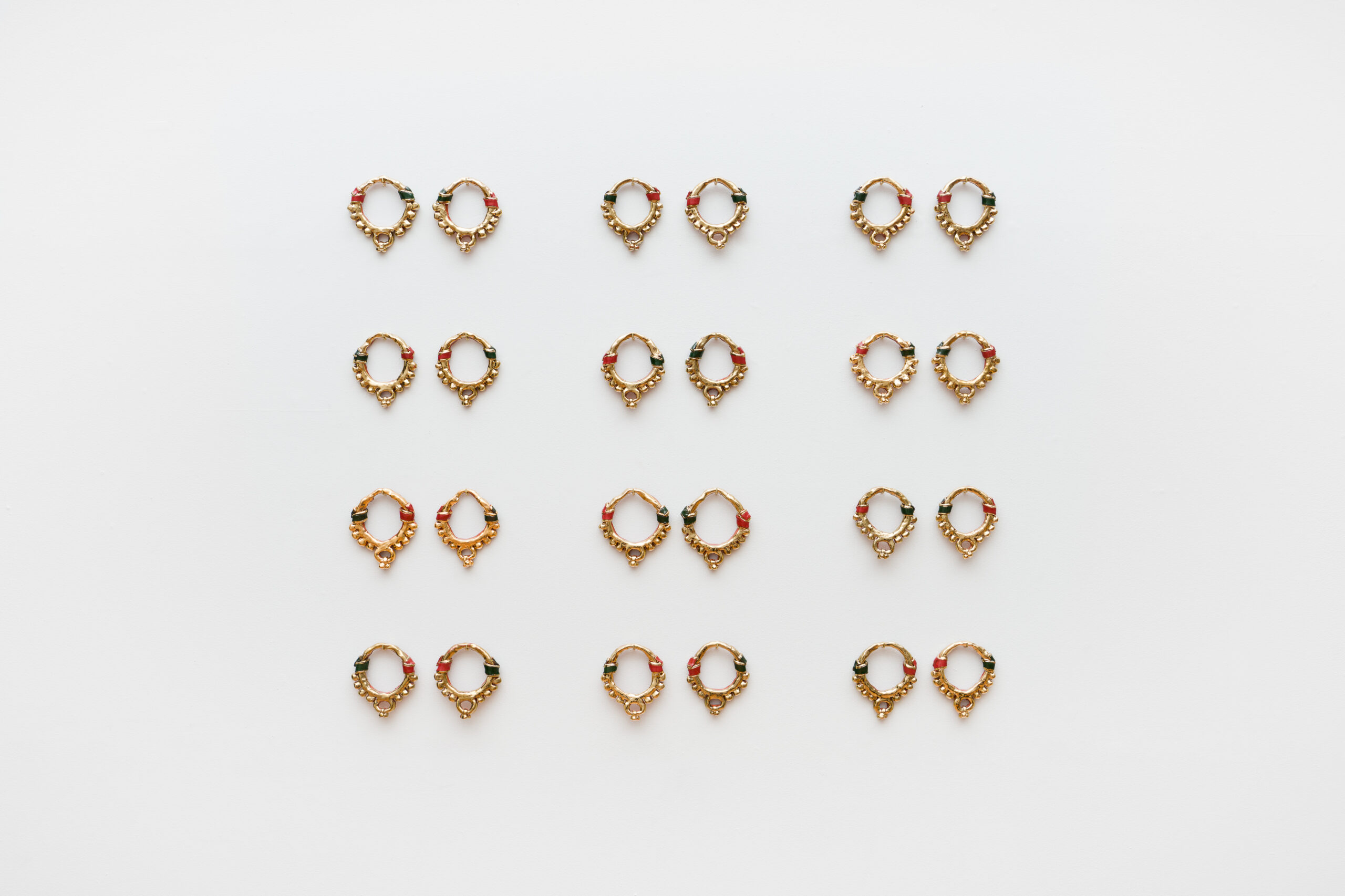
Monica Rani Rudhar, Daughter Of The Same House, 2021, Terracotta, glaze, lustre, dimensions variable. Photo: Docqment.
Objects such as jewellery and heirlooms recur throughout your practice. Can you speak about their significance and the role they play in your work?
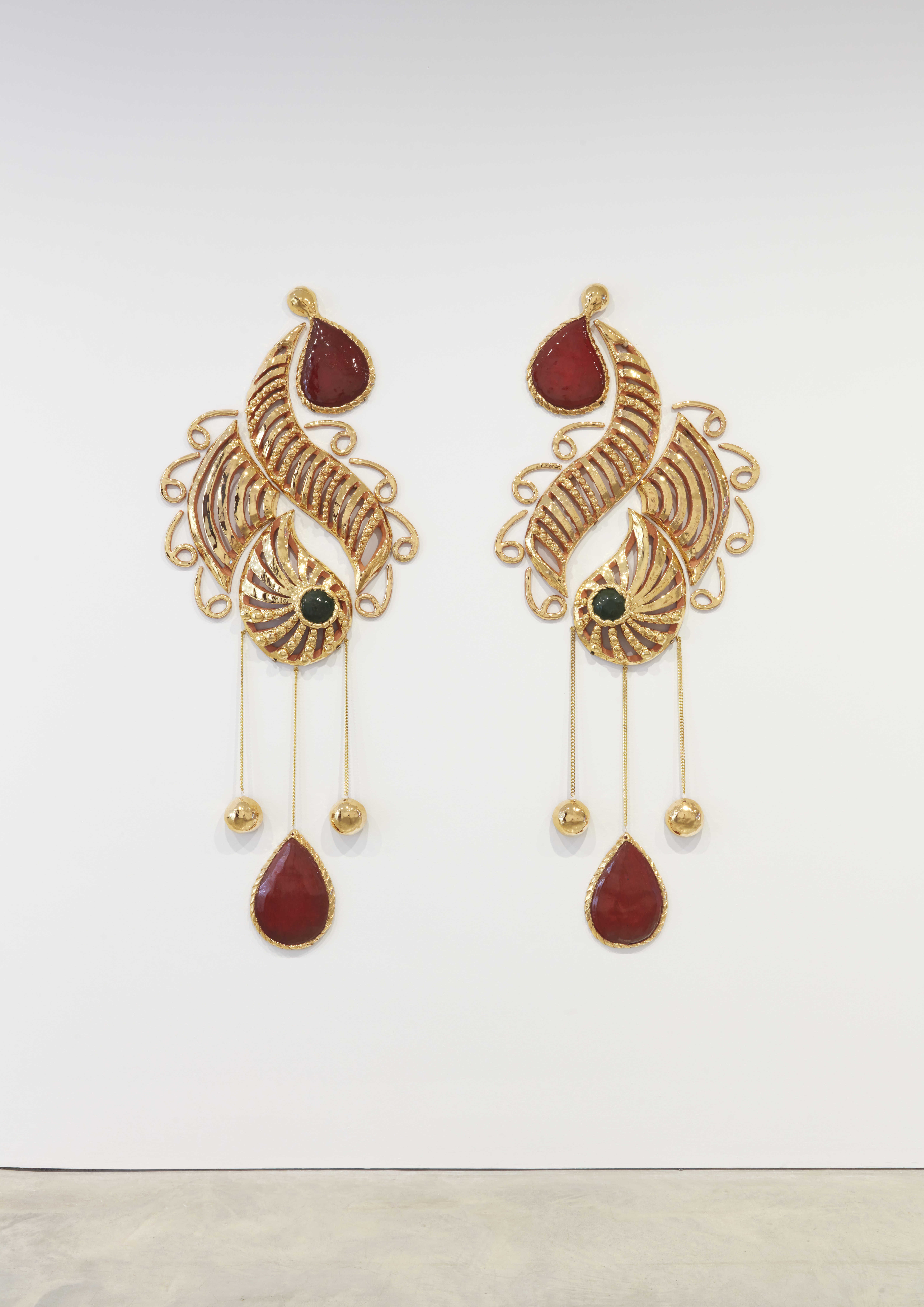
I am very interested in the ways jewellery and heirlooms store inherited memory, acting as tangible links to my cultural homelands and family members who have passed. Using them in my work as relics that preserve personal histories creates an entry point into exploring my own personal family histories. For me, objects and heirlooms have played an important role in shaping my identity as an Indian Romanian Australian. As worn on the body, they have helped me in my journey in owning who I am, and being proud of my rich heritage, whilst being brought up in a space where I didn’t feel like I belonged.

Monica Rani Rudhar, Earrings That My Mother Kept For Me, MCA Primavera Installation View, 2024. Photo: Zan Wimberley.
Your practice often engages with cultural identity and family history. How has growing up between Indian and Romanian heritage shaped the themes and questions you explore in your art?
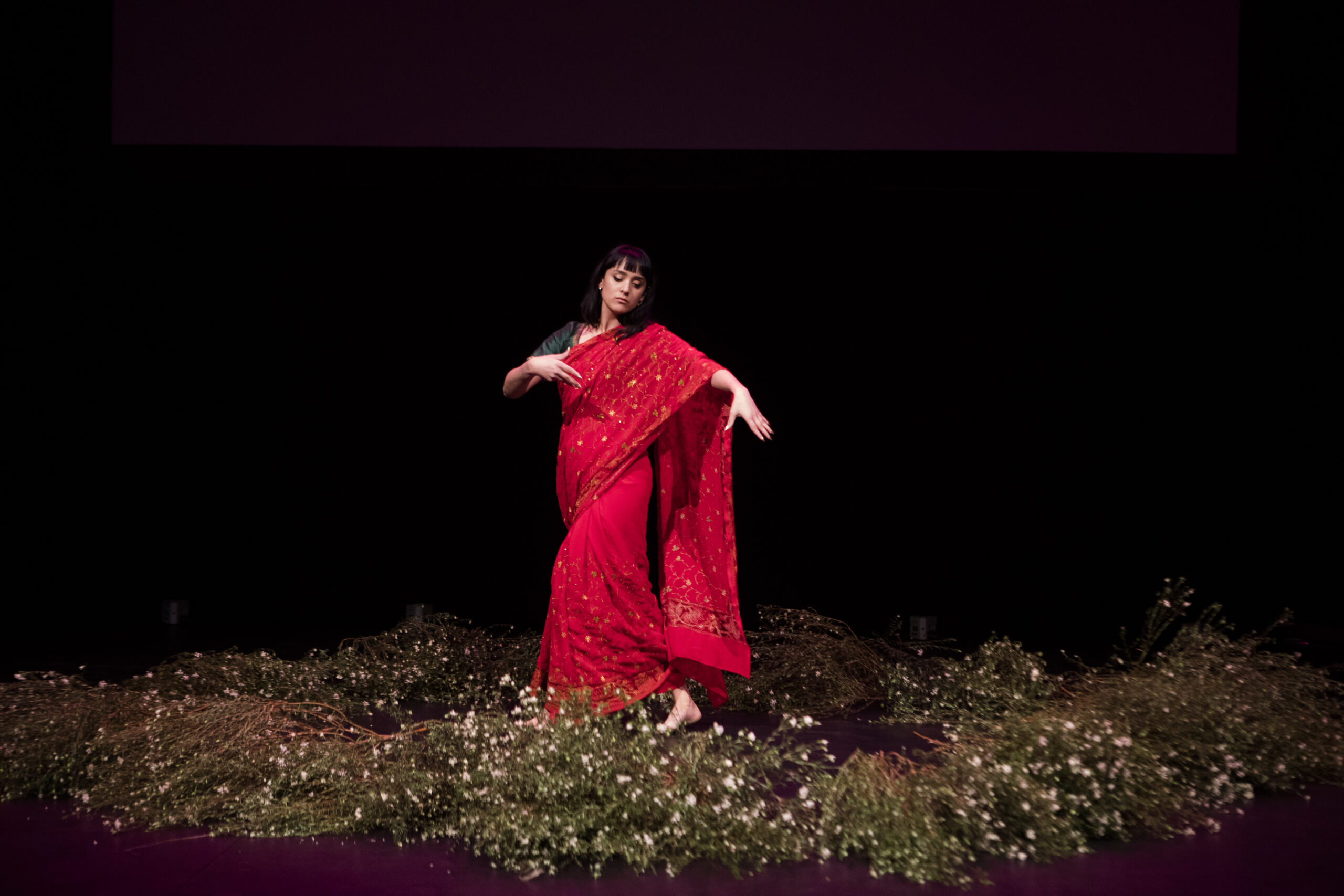
It’s really defined who I am as a person. I think having a multi-racial upbringing is super special, but I definitely think there is more to negotiate in order to belong. Sometimes I feel like I belong to neither side, and instead exist in what many people call this third space. It’s so much more common now, as a lot of children of migrants in my generation are grappling with similar feelings, where you feel like a bit of an imposter because you can’t speak the language of your ancestors. I explore ideas around cultural commodification, racial inequality, authenticity, migration and memory, so really a lot of my work is about belonging and what it means to belong in the context of Australia.

Monica Rani Rudhar, Performance View, Mother Of Millions On Whitford Road, Live dreams Distance, Carriageworks, 2022. Photo: Alex Davies
Much of your work draws on personal and familial narratives. What is your process for translating these stories into visual and sculptural forms?
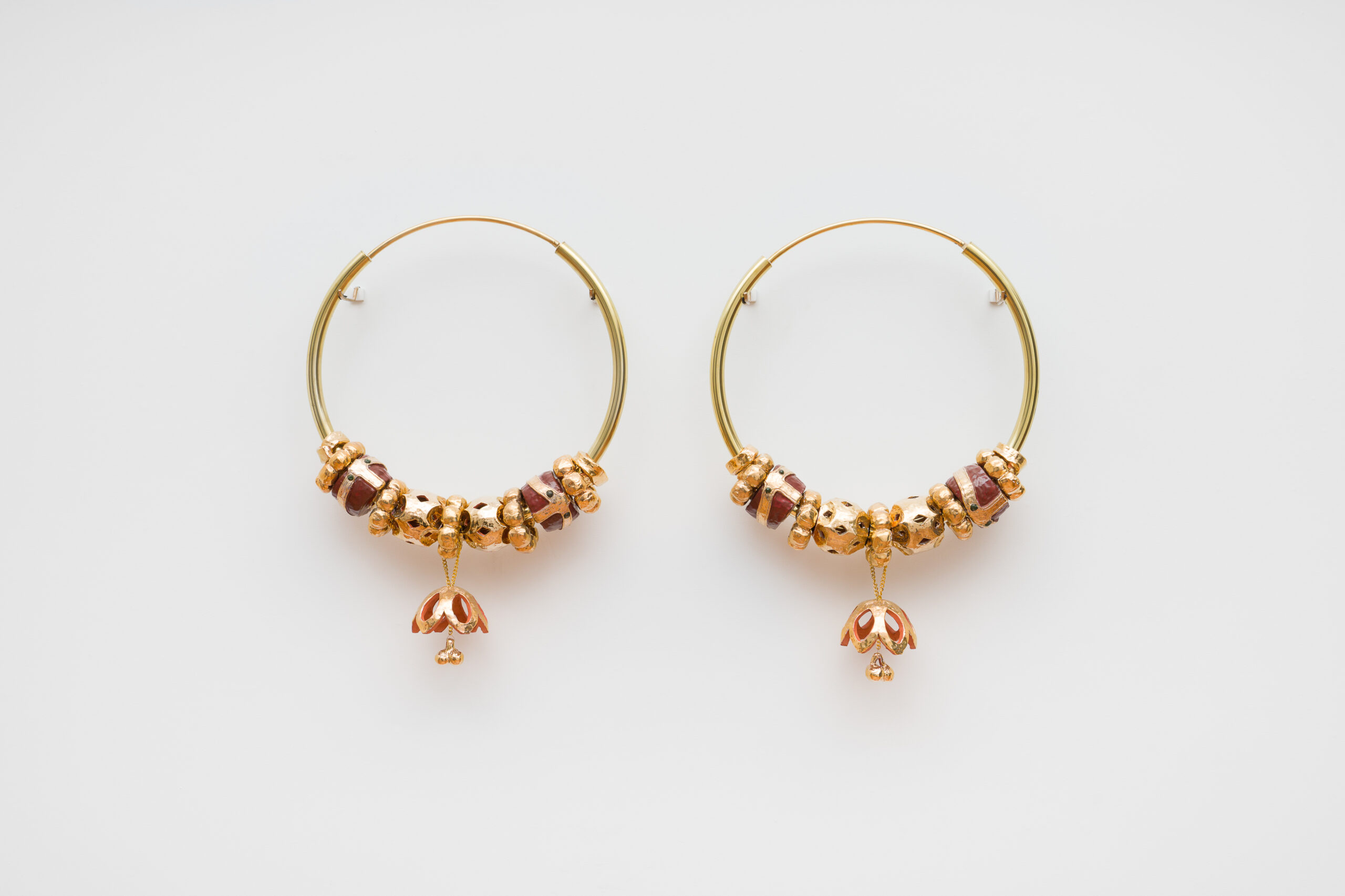
I feel like most of the research I do for the making of my work comes from talking to my parents. For me, my parents feel like a connecting bridge to this imagined idea of a place that I’ve created in my head. Perhaps it’s a little more romanticised, like all good family stories are, and I really do feel like they sometimes function as a type of family mythology. Often, I’ll be calling up my mum or dad to get more details and a better context for certain stories. In my video works, I create nostalgic, non-linear storylines that resemble the way histories are told and stored. I often sketch scenes in pencil or create mood boards to translate what is inside my head. Often these scenes are close-up depictions or re-enactments that have been stitched together, accompanied by a narration or just a musical score. In my sculptures, often the stories are a little more embedded and less obvious, but often start out with many sketches and little studies. If I am working on family heirlooms, I like to work off a photo that my parents have sent to me on my phone, which may seem a little bit odd, but I like that there is a bit of a barrier or a degree of separation from the object. It leaves me the opportunity to interpret the object in my own way, kind of emulating the way we receive stories, how maybe there are parts that we need to fill in ourselves because we don’t have the full picture.

Monica Rani Rudhar, Hoops That My Once Belonged To My Mother, 2022. Photo: Docqment
For the Biennale of Sydney, your new work engages with colonial legacies, trauma, and resistance. What conversations or reflections do you hope this project invites from audiences?
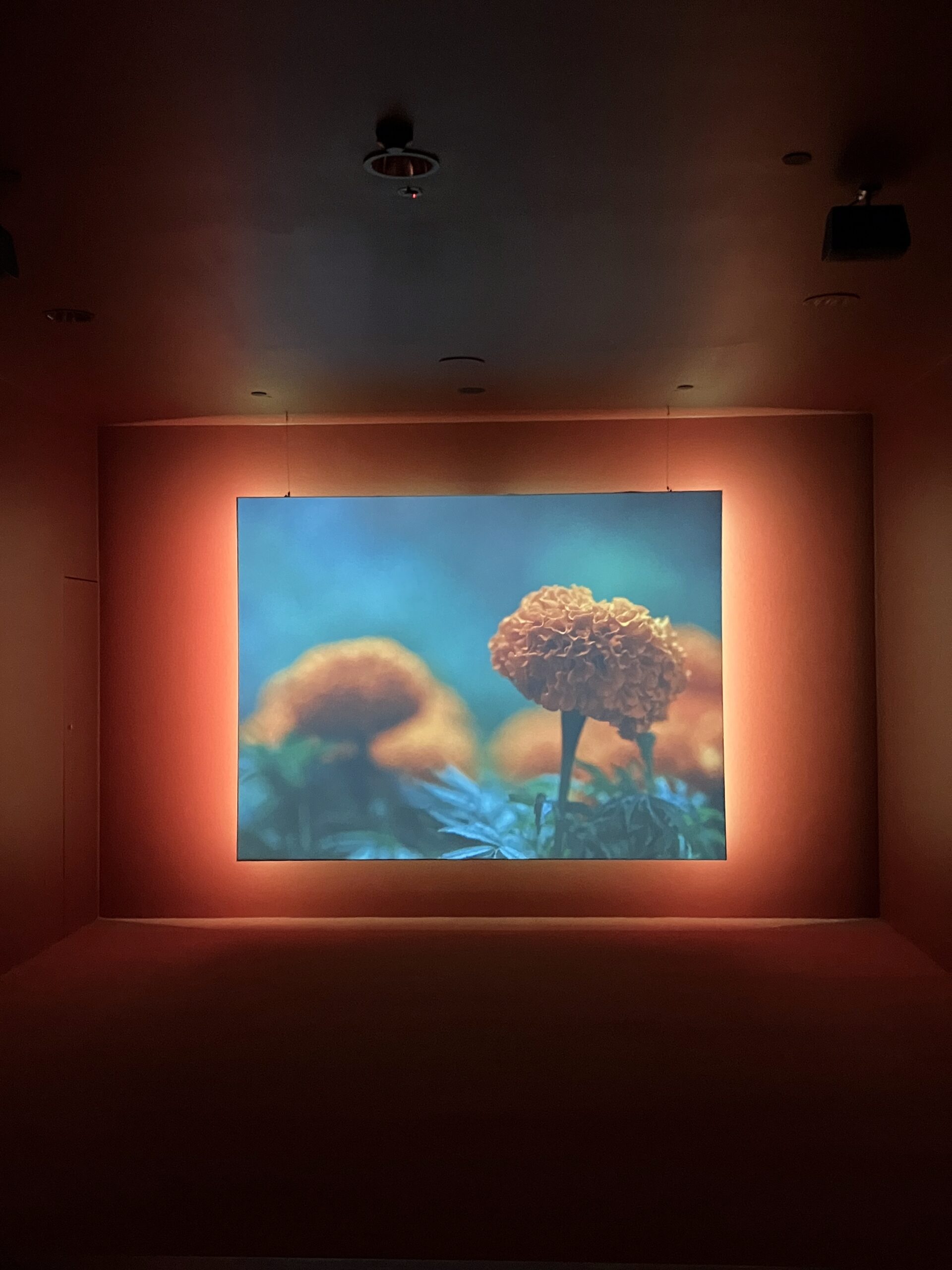
I hope my work invites audiences to reflect on the complex legacies of colonialism and how they continue to shape personal and collective identities. I want the work to encourage conversations about inherited legacies and how strength and knowledge are carried across generations. I want people to reflect on our collective responsibility in the face of racial injustice and colonial violence in our present day.

Installation View. Image courtesy Monica Rani Rudhar.
Looking ahead, are there particular projects, collaborations, or mediums you’re excited to explore in 2026?
Yes, absolutely, I’ve been wanting to explore sculpture a little more closely. I’ve got some ideas of artworks that I’ve sketched in my diary from last year that I’ve been itching to make! I’m eager to take a moment away from ceramics and explore new materials. I’m just waiting for a bit of a breather to play and experiment! I’ve got some public artworks that will be unveiled quite soon, both in ceramic and bronze, but I’m hoping it’s not the end and that these projects will propel me forward in being able to create larger and more ambitious works.
The Biennale of Sydney is on from 14 March to 14 June
biennaleofsydney.art
monicaranirudhar.com