Curator Tim Riley Walsh unpacks Primavera 2025 as a charged snapshot of the present. Blending research and curiosity, we discuss an exhibition shaped by material intensity and the strange distances of life in a digital, post-industrial world.
Featuring five emerging artists from across Australia, Primavera becomes a site of friction and feeling, where sculpture, ambivalence, and making take centre stage.
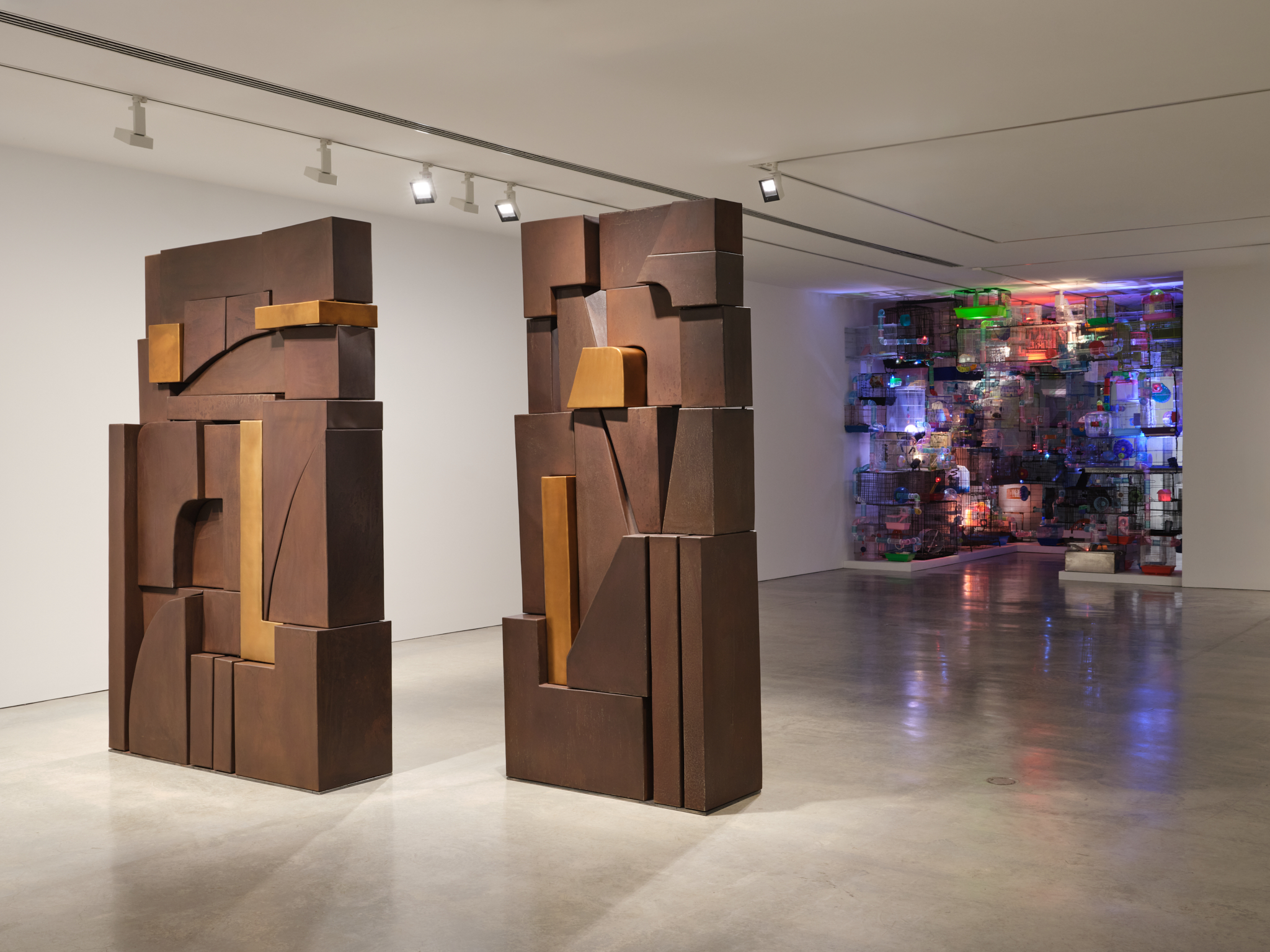
Installation View, Primavera 2025: Augusta Vinall Richardson (front), Emmaline Zanelli (rear). Image: Hamish McIntosh.
How would you best describe this year’s Primavera?
Primavera is an exhibition series that began at the MCA Australia in 1992 – it has an incredible legacy. Over 250 artists have exhibited. 30 curators have participated. The series has an engrained rhythm and remit: annually celebrating young Australian artists 35 years or under.
This year’s Primavera features five artists: Francis Carmody (NSW/VIC), Alexandra Peters (VIC), Augusta Vinall Richardson (VIC), Keemon Williams (QLD), and Emmaline Zanelli (SA). The exhibition reflects what young artists are concerned with right now: labour, extraction, technology, the digital and production. But this exhibition is also strongly materially-focused, even fixated. There is an industrial quality to many of the works, it is a very physical exhibition. It is overtly a celebration of what I see as a renewed interest in sculpture and installation.
Mood is something I increasingly want to express in the exhibitions I curate. I’ll defer to some of the descriptions of this exhibition shared with me by others: brutalist, ominous, and muscular. A colleague summarised the overriding sensation as being ruled by distance and removal – which sits in contradiction with these artworks’ physical immediacy. Ambivalence interests me greatly as a person. I think that is where a lot of magic is found.
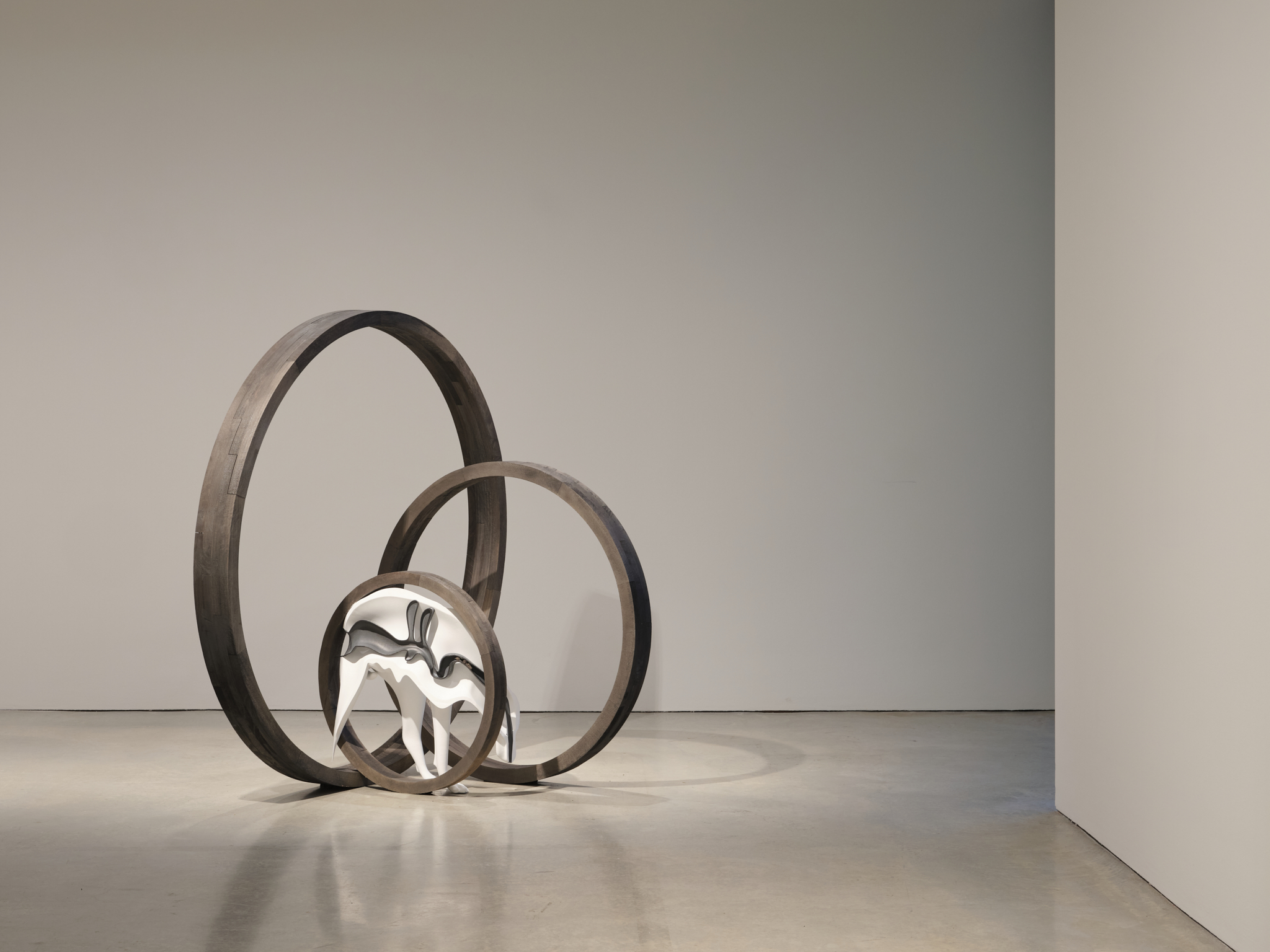
Francis Carmody, Canine Trap (I), 2025. Image: Hamish McIntosh
How did you approach the exhibition development?
I come from an academic background, trained in art history, but grew up in an artistic household. I’d like to think I blend the qualities of both in my curatorial approach.
My process is initially largely instinctive. It is focused on the contemporary. The impetus for my projects emerges from everyday life – the news, literature, popular culture, and of course, art. They begin with what I’d call suspicions. Often about how human behaviour and the world might be changing. I then go out and test this instinct. I observe how current events and actions might confirm or challenge it. From there, I do deeper research into its genealogy to understand where it grew from.
The art might key into the outcomes of my suspicion closely, or it might disagree with it entirely. The exhibition bottles all of that friction and presents it.
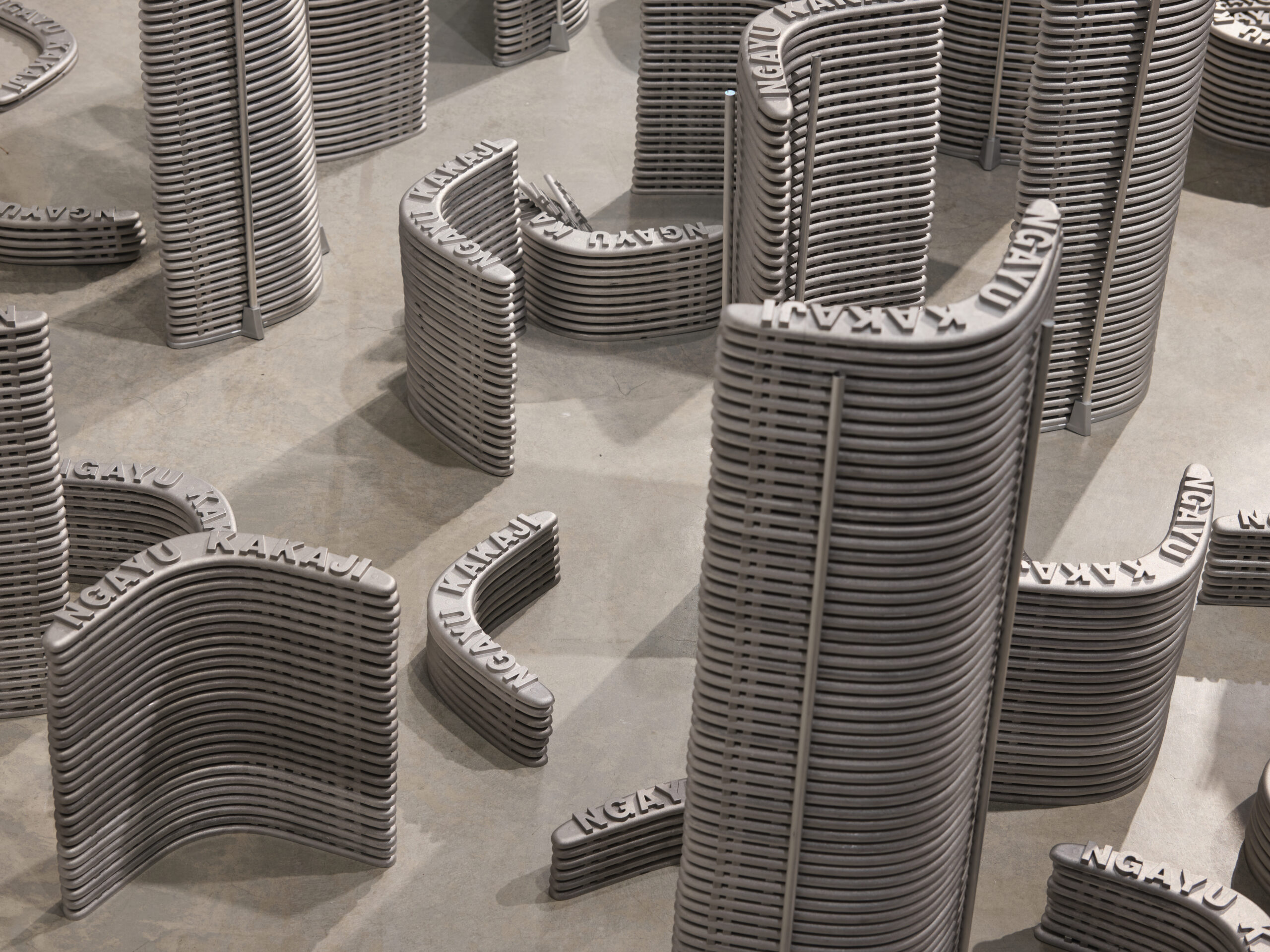
Keemon Williams, Business is Booming (detail), 2025, installation view. Image: Hamish McIntosh
This year’s Primavera focuses on making in a “digital and post-industrial era.” What drew you to this theme, and why do you feel it speaks strongly to the experience of young Australian artists today?
I think what sets apart a single exhibition in a long-running exhibition series like this is its point of view, a sense of cut-through. My leading suspicion in Primavera was what I was calling ‘industrial abstraction’. That the objects that structure our lives today are becoming more mysterious to us, how they are made and function – think of the iPhone for example – and that this state of distance is, in multiple senses, manufactured.
The post-industrial era isn’t new – some might even feel it’s a little outdated. I’m curious how its conditions have changed and its level of visibility. It is not unusual to go through a day now and not make anything new in physical space. If we do produce something ‘new’, it is more often immaterial. A playlist. A carousel of images. A vibe.
I was drawn to the idea of industry because it has strong connections to themes in art history. The factory and production, their ties to pop art and constructivism. Thus, the exhibition features a lot of seriality, for obvious reasons. But I was also drawn to the idea because I feel the distance from making myself. I hope the feeling is relatable too.
Artists are especially sensitive towards the world. As a species, humans understand through knowing a thing’s components or ingredients. Artists make every day – and so I turn to them and their art for guidance through the present.
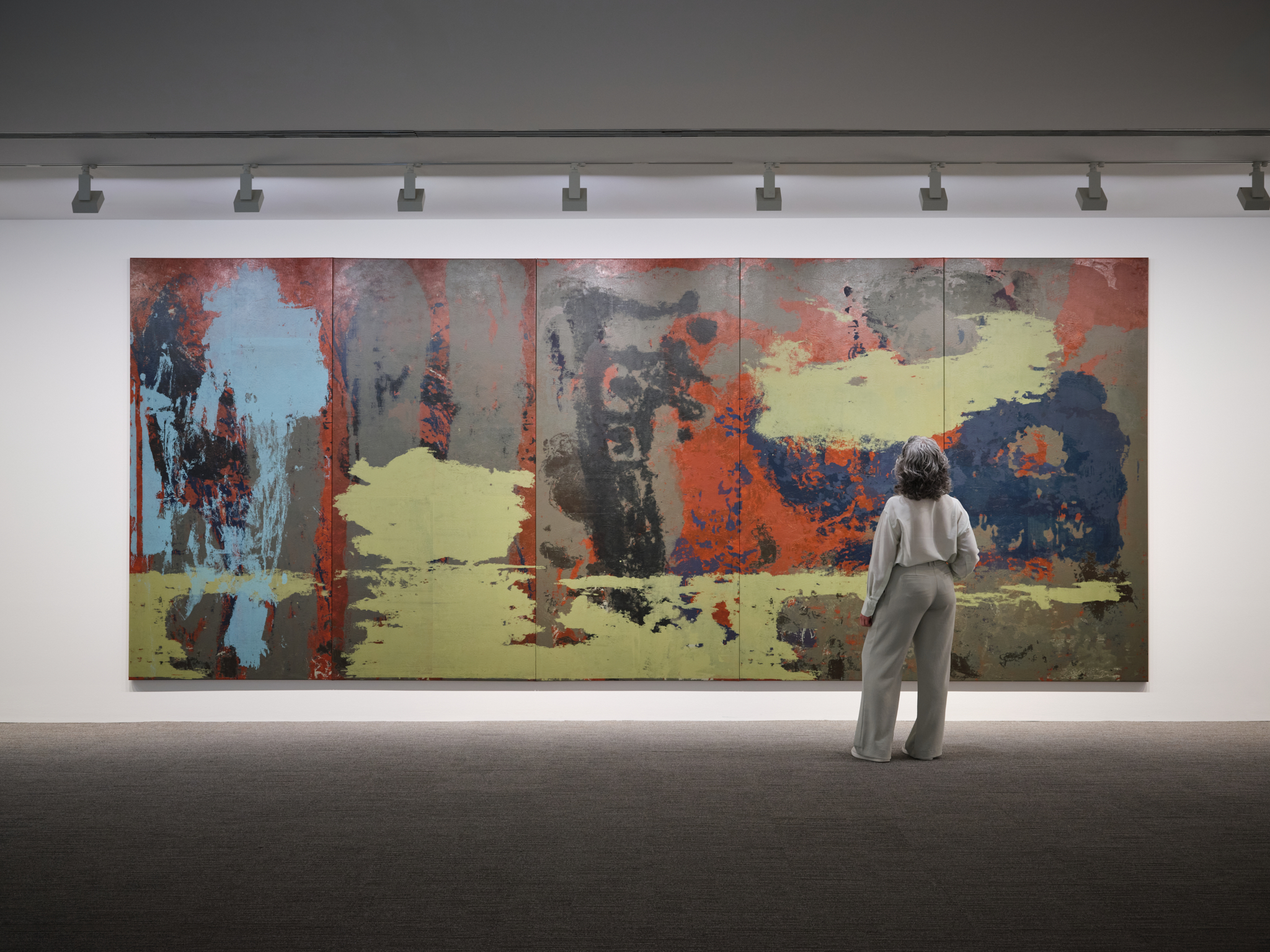
Alexandra Peters, Defenestration (Autoantibodies) as part of The Infinite Image, 2025, installation view. Image: Hamish McIntosh
The show includes artists from several states and very different cultural contexts. What tensions or surprising connections emerged as you researched and met with artists across the country?
On a practical level, Primavera is grounded in a concentrated period of research travel around the country. I met with over 50 artists across seven states.
A studio visit can be an amazing thing. Artists are so open. A lot developed through these encounters and my preconceptions being overturned or troubled. An artist list for the exhibition then starts to emerge from there: which artists might work well in dialogue, but also as counterpoints or even in friction. The promise of what an artist might make or where their energy is currently directed excites me.
Mustering all of those forces and then directing them towards their realisation on opening day is a wild, joyous ride.
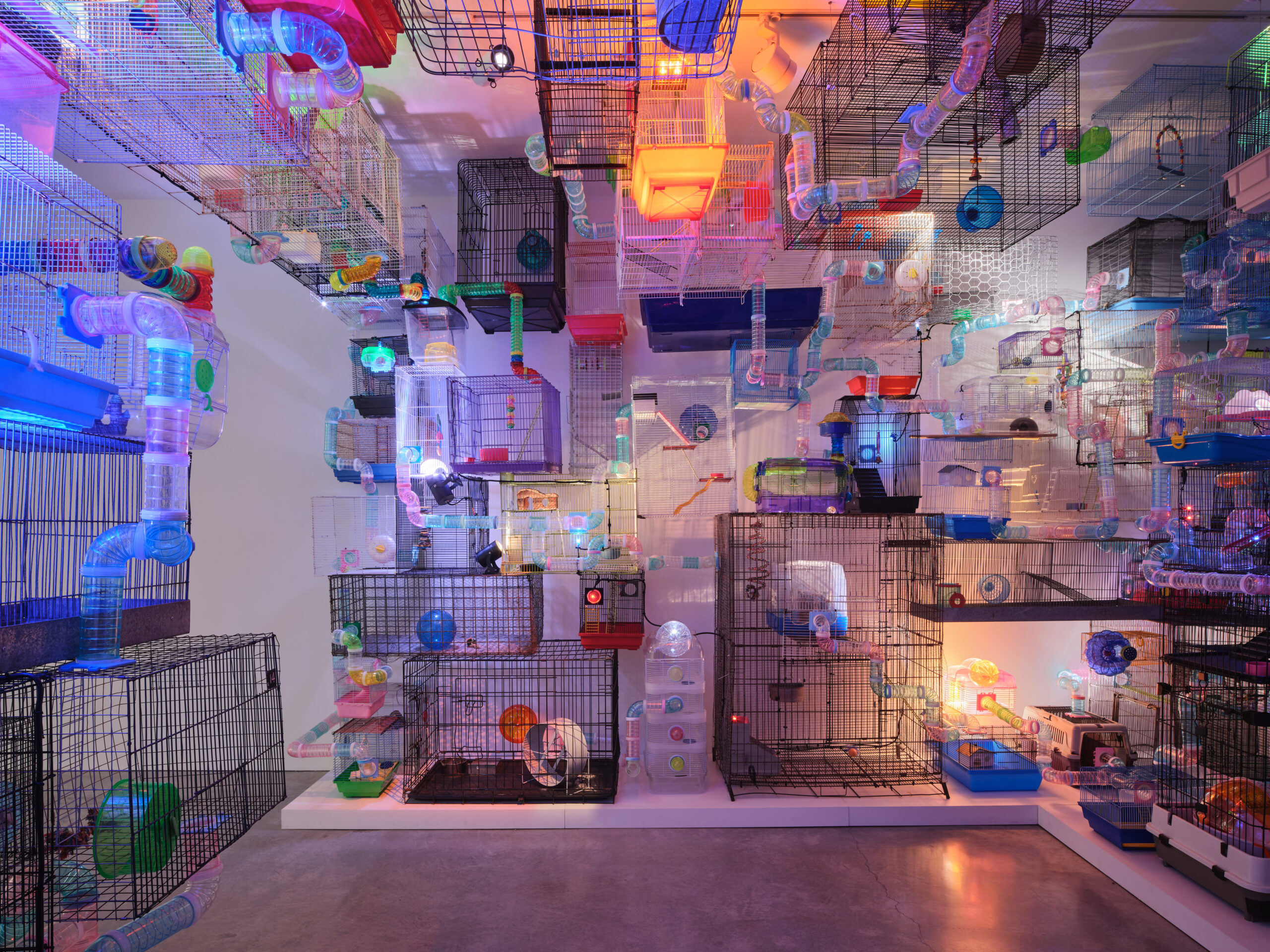
Emmaline Zanelli, Magic Cave, 2024/2025, installation view. Image: Hamish McIntosh
What do you hope audiences will take away from Primavera 2025?
The vitality of contemporary Australian art and the innovation of the young artists in this place. Hopefully a sense of confidence in the ongoing relevance of art to reflect the present. That it makes visible something which has been clouded. That it resonates with a feeling they might have about their own worldview right now.
Primavera 2025: Young Australian Artists continues Museum of Contemporary Art Australia, Sydney until 9 March