
Since the inaugural edition of Sydney Contemporary in 2013, Alcaston Gallery has been a constant presence, championing some of Australia’s most significant Aboriginal and Torres Strait Islander artists while helping to shape conversations around contemporary art collecting. Over the past decade, the gallery has witnessed profound shifts in the recognition and reception of First Nations art, both within the Fair and across the global art market. As Sydney Contemporary celebrates its 10th edition, Alcaston Gallery director Beverly Knight reflects on the power of in-person connection, the evolution of its presentations, and the moments that have defined its journey through a decade of the fair.
_______
Alcaston Gallery has been at every edition since 2013 – what keeps pulling you back each year?
We consider Sydney Contemporary to be a world class art fair; in a world now dominated by the ‘virtual’, personal, real-life contact, interaction and engagement is everything, so the four art fair days in Sydney has become among the most important in the year for our artists!
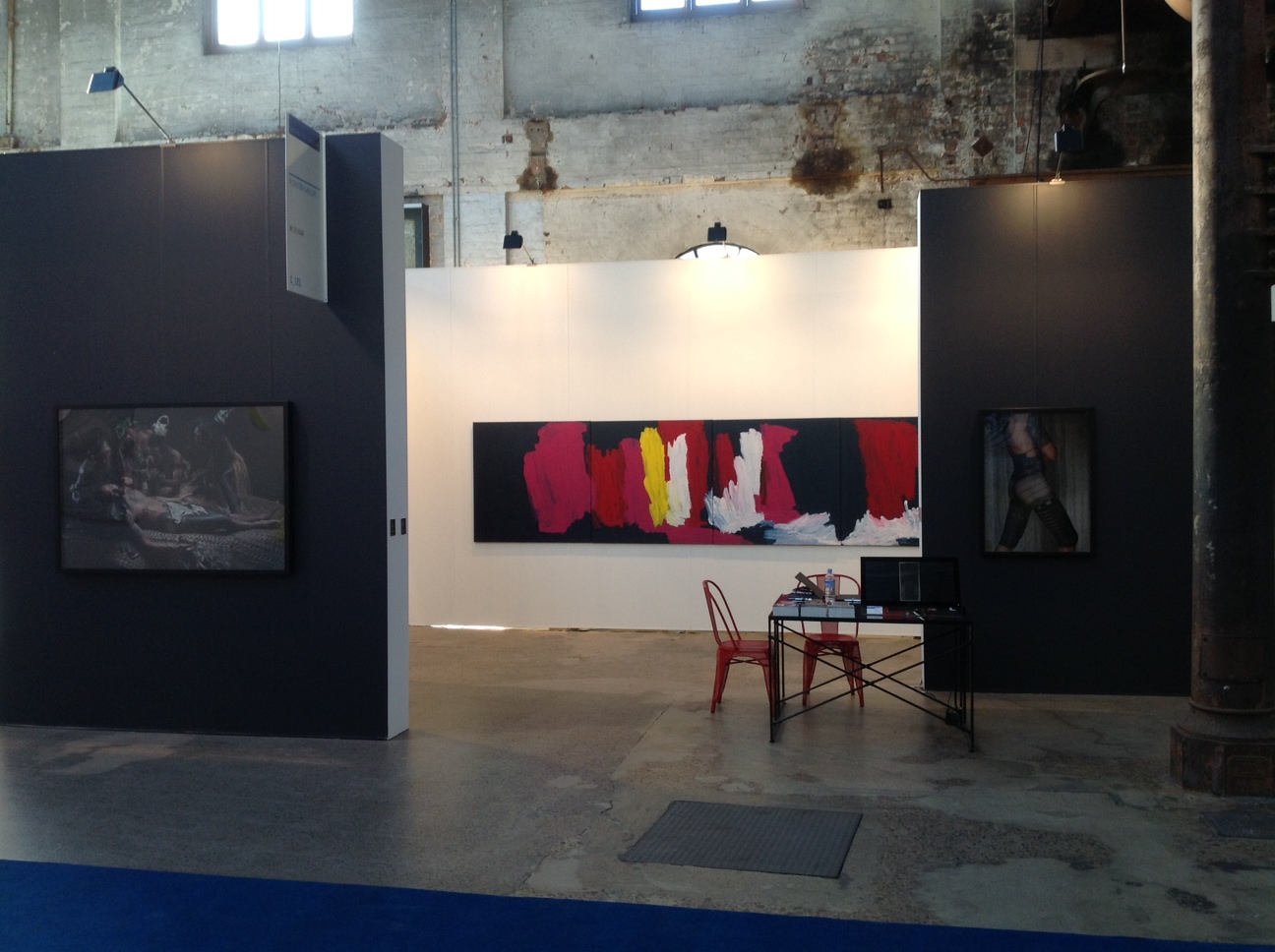
Alcaston Gallery, Sydney Contemporary 2013, Carriageworks
Looking back across all ten editions, how has your presentation evolved, in terms of artists, scale, or curatorial focus, while staying true to the gallery’s mission?
Initially having the same stand location each year really assisted us to look to artists and plan our stand design to achieve the strongest presentation. Changes made by Sydney Contemporary to our much-loved stand position, due to covid restrictions and now again in 2026, we have had to continually reinvent our stand designs for our artists to ensure that we present their work in the best possible way.
Since 2013, how have you seen the visibility and reception of Aboriginal and Torres Strait Islander art shift within the art fair context?
At first, it was a huge challenge being the only commercial gallery exhibiting First Nations Australian artists, as well as Pacific artists including Dean Smith, Greg Semu and Angela Tiatia. We looked to the marketing aspect for the artists to huge numbers of visitors especially institutional and savvy collectors particularly those interested in a wider view of great art. The enduring art of Sally Gabori has been exhibited at every fair, and now with a worldwide dedicated clientele, collectors who fly in from across the globe to see us and the major works by Sally Gabori reserved for Sydney Contemporary!
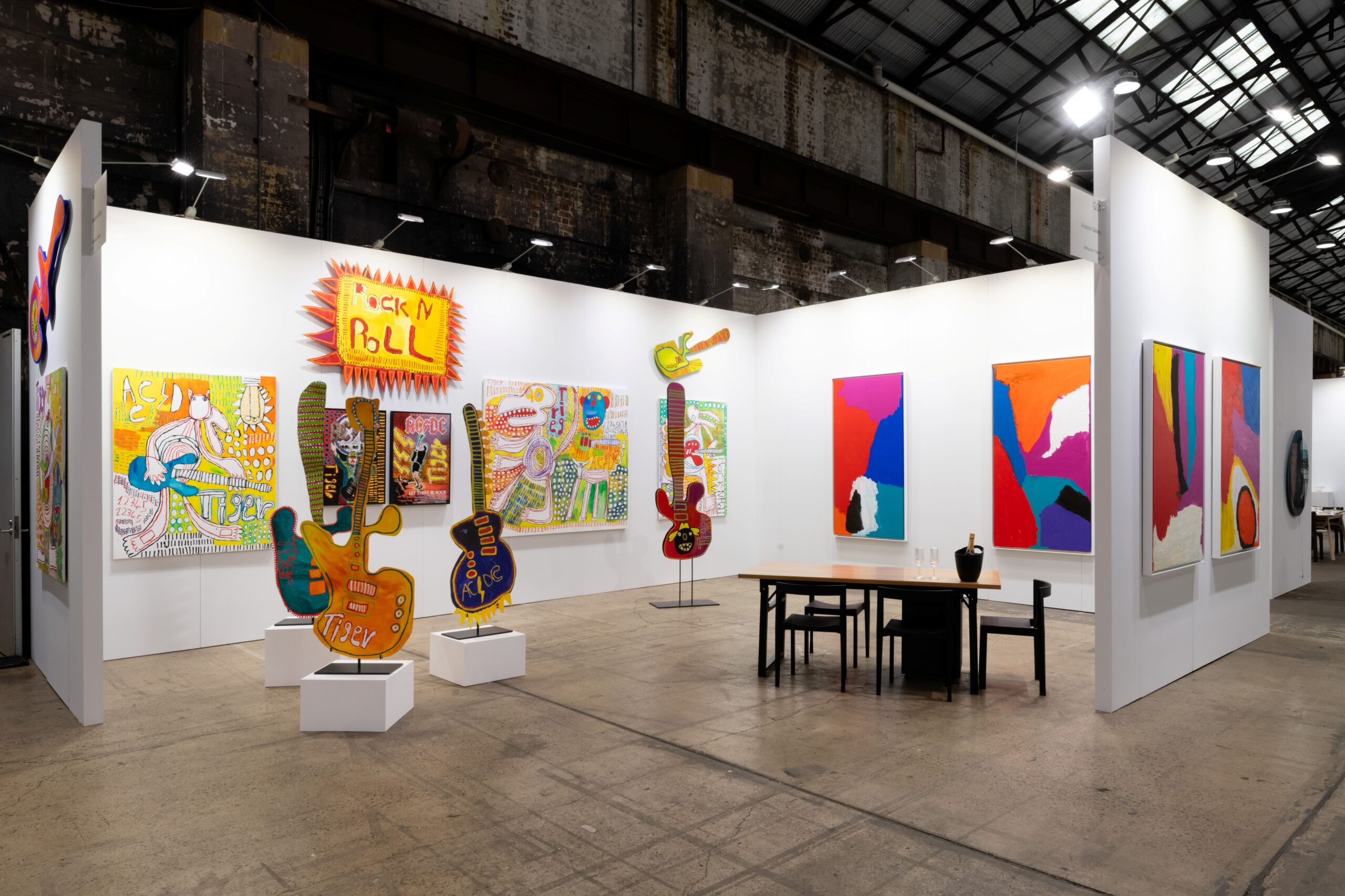
Alcaston Gallery, Sydney Contemporary 2025, Carriageworks.
Are there particular moments across the Fair’s history – a booth presentation, an artist breakthrough, or a collector interaction – that stand out as milestones for Alcaston Gallery?
In 2015, we received a call on VIP day from an unknown art lover from the United Arab Emirates about the major 4.5m Sally Gabori painting presented on our stand, requesting if we could hold it until they catch a flight to view the work at Sydney Contemporary first thing on Saturday morning. We obliged, and the client loved it – and a record price was achieved for the artist.
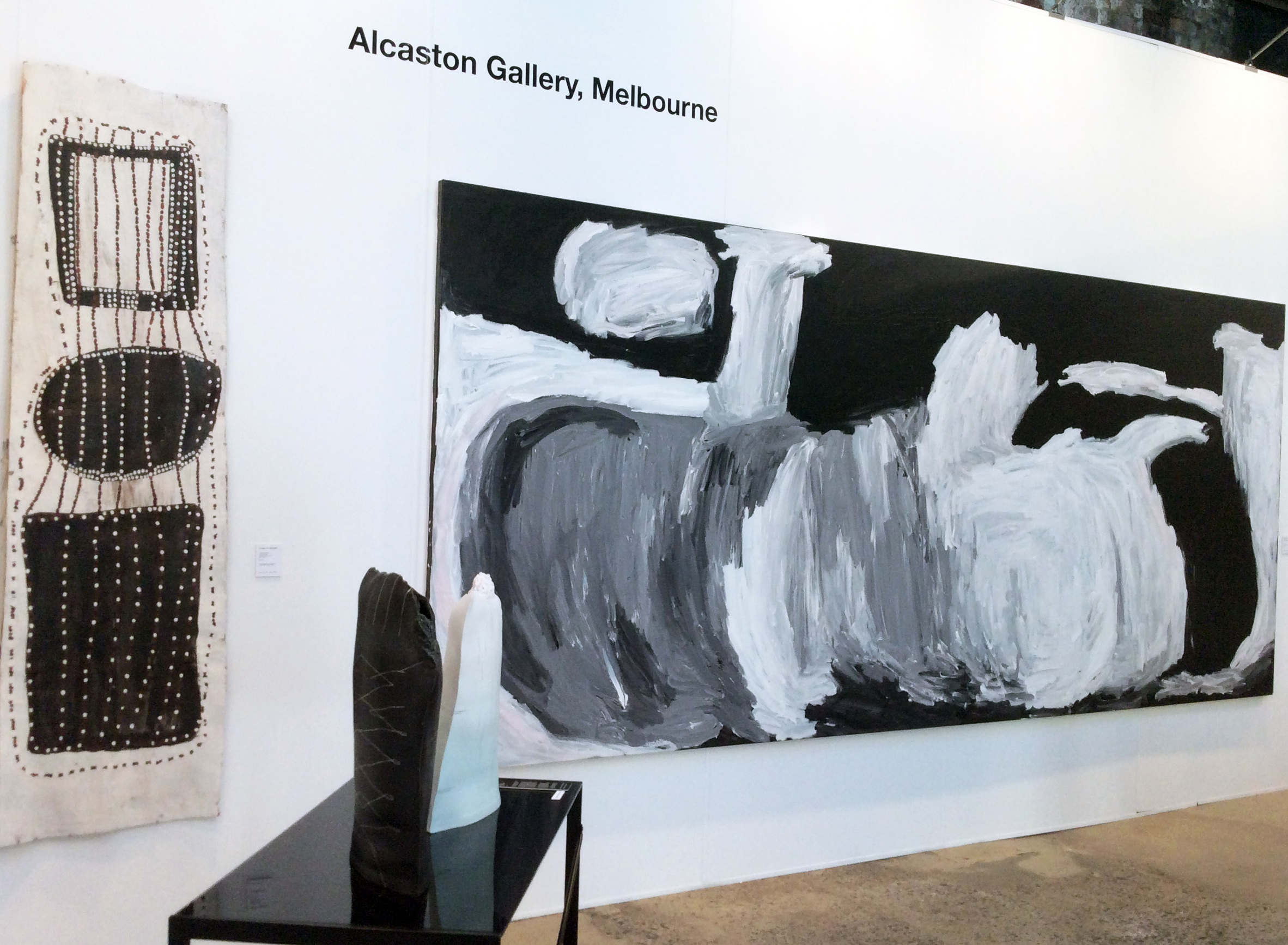
Major work by Sally Gabori at Alcaston Gallery’s booth at Sydney Contemporary 2015.
As Sydney Contemporary marks its 10th edition, what feels most significant to you about being part of its entire journey so far?
The enthusiasm shown by Alcaston Gallery staff and artists, combined with the highly anticipated annual catch-ups with Sydney clients and art lovers, has always been a recipe for success. Like New York art collectors, Sydney-siders love a party; but they know what they like and make decisions on the spot, pay and we deliver.
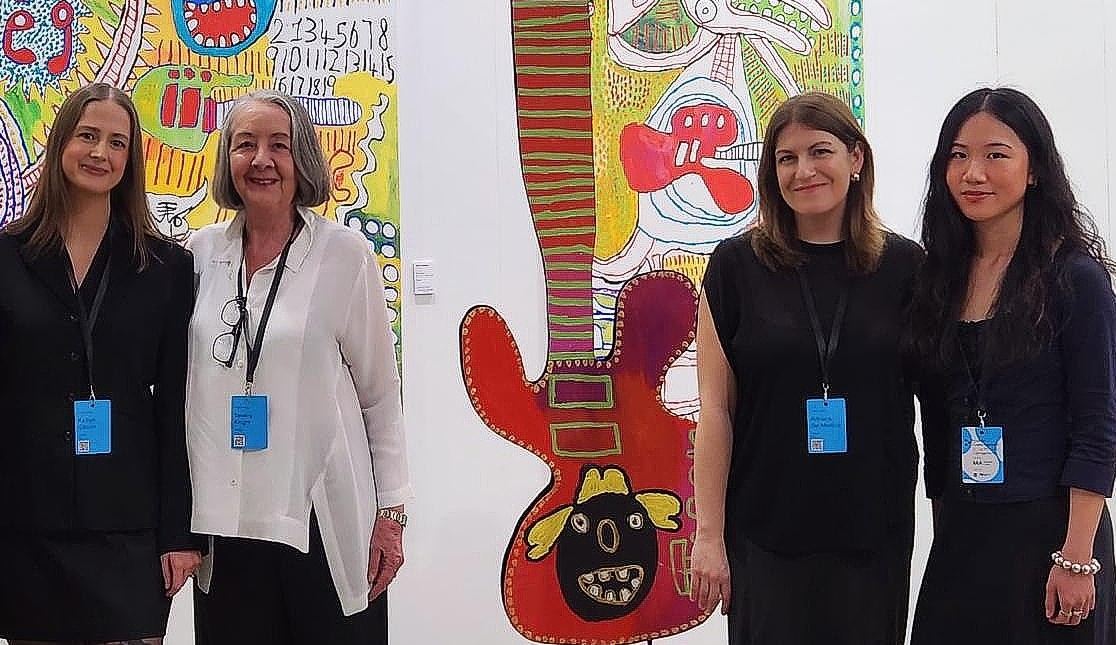
Alcaston Galley staff at Sydney Contemporary 2025
We caught up with artist Marina Rolfe ahead of her exhibition solo exhibition The edge of holding at ARC ONE Gallery opening on April 15th. Marina reflects on the slow attentiveness behind what often appears intuitive, the delicate tension between orientation and ambiguity, and the ways her paintings negotiate the surface – building, erasing, and reforming – to remain open, atmospheric, and endlessly unfolding for the viewer.

Marina Rolfe, Turning, with every tide, 2026, oil on linen, 122 x 152.5 cm. Courtesy of the artist and ARC ONE Gallery
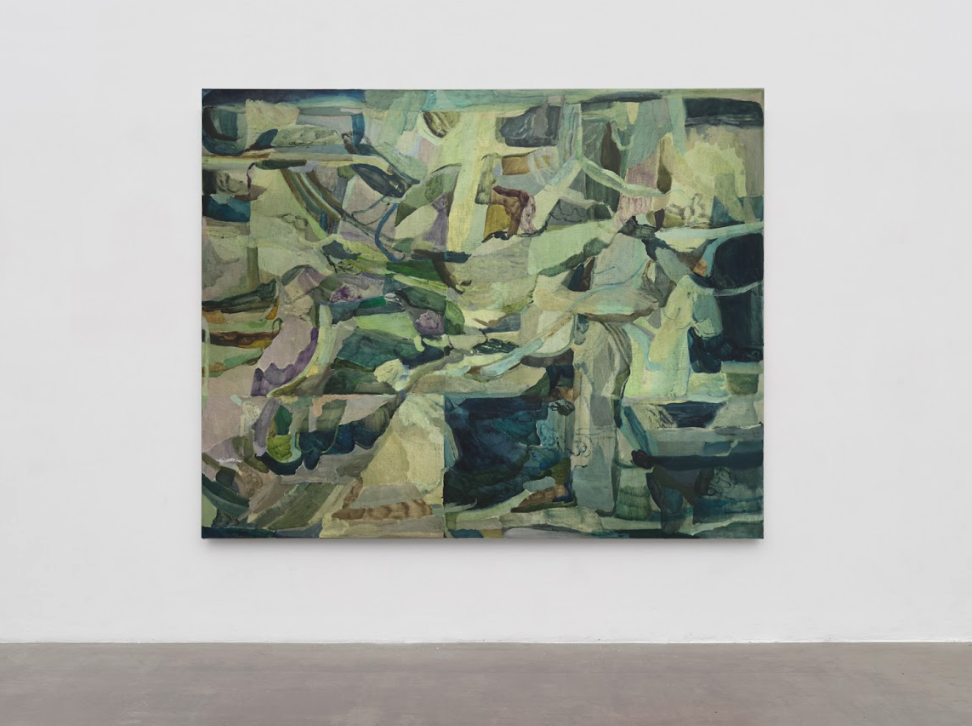
Your early training was in classical painting in Moscow. How does that foundation continue to shape the way you approach abstraction today?
My early training in classical painting definitely still sits somewhere in the background of what I do. It gave me a strong technical knowledge and sensitivity to structure; things like composition, spatial relationships, and how an image holds together. Even though my work is now abstract, that awareness is still there.
I think it shows as something underlying the painting. It allows me to push the work quite far into abstraction without it completely losing a sense of orientation. At the same time, my current practice is almost working against that training. Instead of constructing an image in a controlled way, I’m more interested in allowing the painting to develop through process, through layering and responding to what’s happening on the surface. So there’s a kind of tension between that training and the way I work now.

Installation view of Looking back to see if they still look back at me, 2024, Marina Rolfe, ARC ONE Gallery
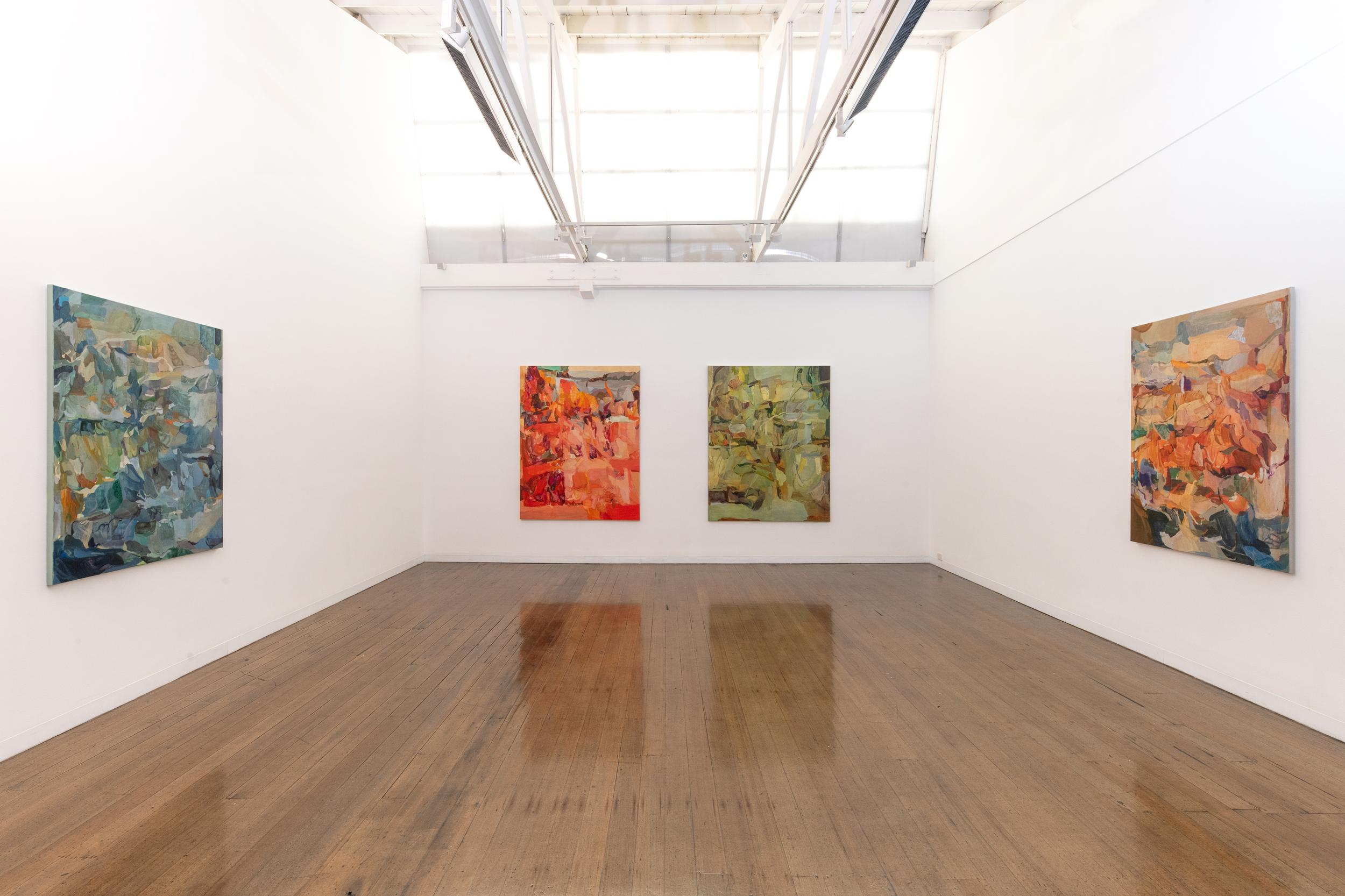
Your work often feels intuitive and emotionally driven. Can you talk about how intuition guides your process, and where conscious decision-making comes in?
I think what gets described as intuition in my work is actually quite slow and attentive. It’s not really about making quick or impulsive decisions; it is more about responding to what the painting is doing.
I start the work without knowing what it will look like when it’s finished. As the painting develops, I’m constantly adjusting things: colour, form, density; so there’s actually a lot of decision-making happening. But those decisions come from being with the painting and responding to it. There are also moments where I deliberately pause or hold back. That’s quite important, because it stops me from resolving the work too quickly and gives space for something else to come through

Marina Rolfe, Of the hour’s secrets, 2025, oil on linen, 198cm x 152.5cm. Courtesy of the artist and ARC ONE Gallery
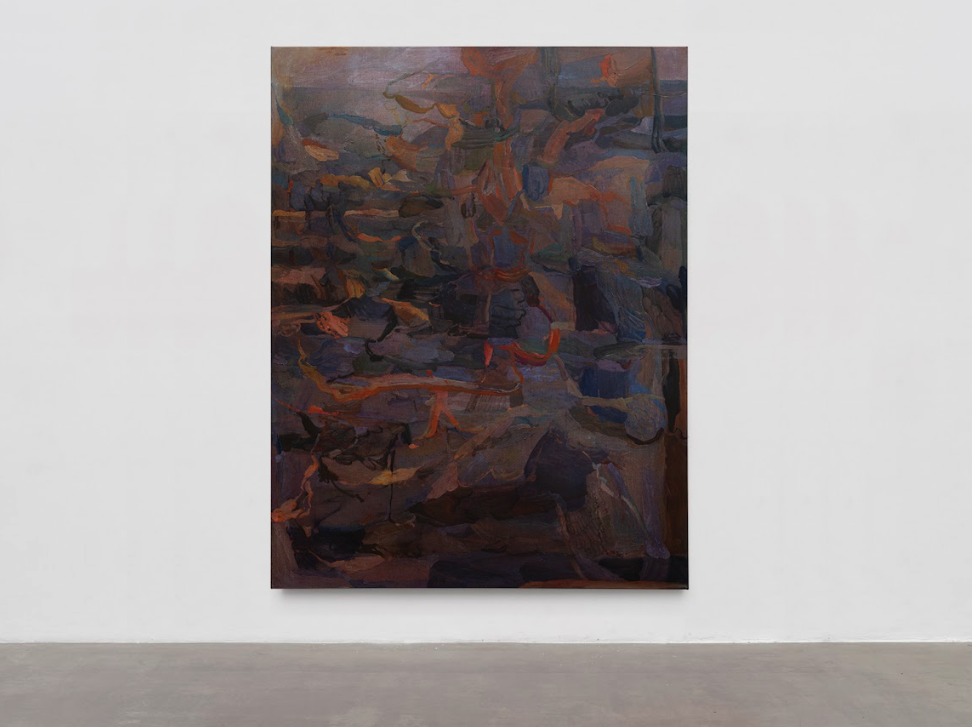
Your practice sits within landscape abstraction, but resists fixed place or narrative. What draws you to this space between recognition and ambiguity?
I’m interested in that space because it allows the painting to remain open. If the image becomes too defined, it can feel closed. But if it goes too far into abstraction, I lose my connection to it. So I work somewhere in between, where there are traces of landscape or space. Things can shift, dissolve, and sometimes reappear. I think that space also invites the viewer to spend time with the work, to orient themselves and then re-orient again. It becomes about experiencing how the painting unfolds.

Marina Rolfe, Artist in studio, 2025. Courtesy of the artist and ARC ONE Gallery
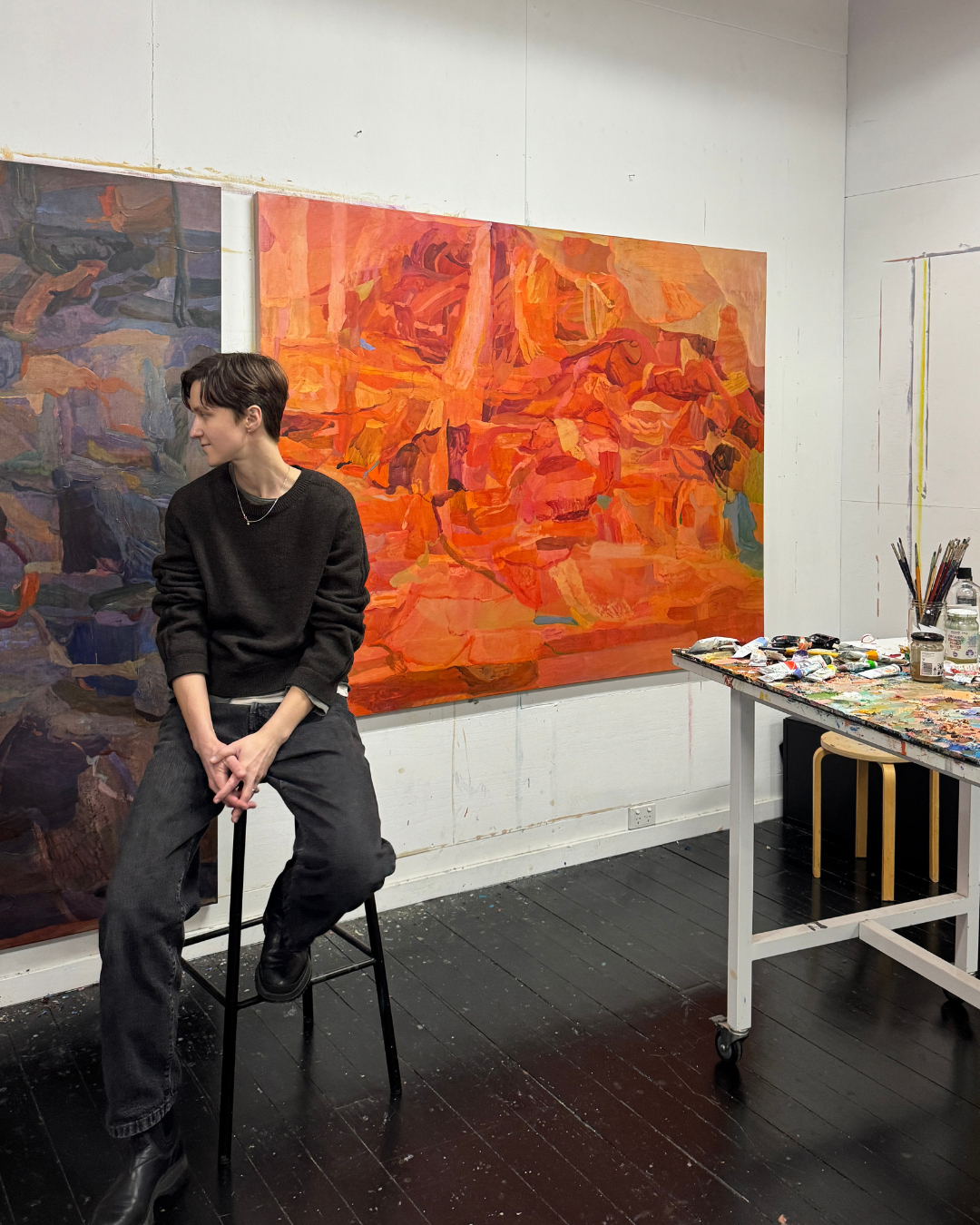
Looking ahead to your upcoming exhibition at ARC ONE Gallery, are there new ideas, materials or directions you’re excited to explore?
In the upcoming exhibition, I’m continuing to develop this idea of painting as a kind of negotiation with the surface.
One thing that’s become more important in the work is this process of almost undoing the painting — pushing it to a point where it feels like it might fall apart or disappear, and then working back into it again. I often find that something new only begins to appear after that point, once the original image has been disrupted. So the paintings move through these stages of building, then being pushed towards a point of collapse, and then slowly re-forming into something else. That’s where the sense of negotiation really sits for me.
I’ve also been thinking more about how to sustain that threshold, where the painting stays open, but something can still begin to appear. The works are becoming more focused on atmosphere, and on how forms gather gradually through layering, erasure, and reworking.

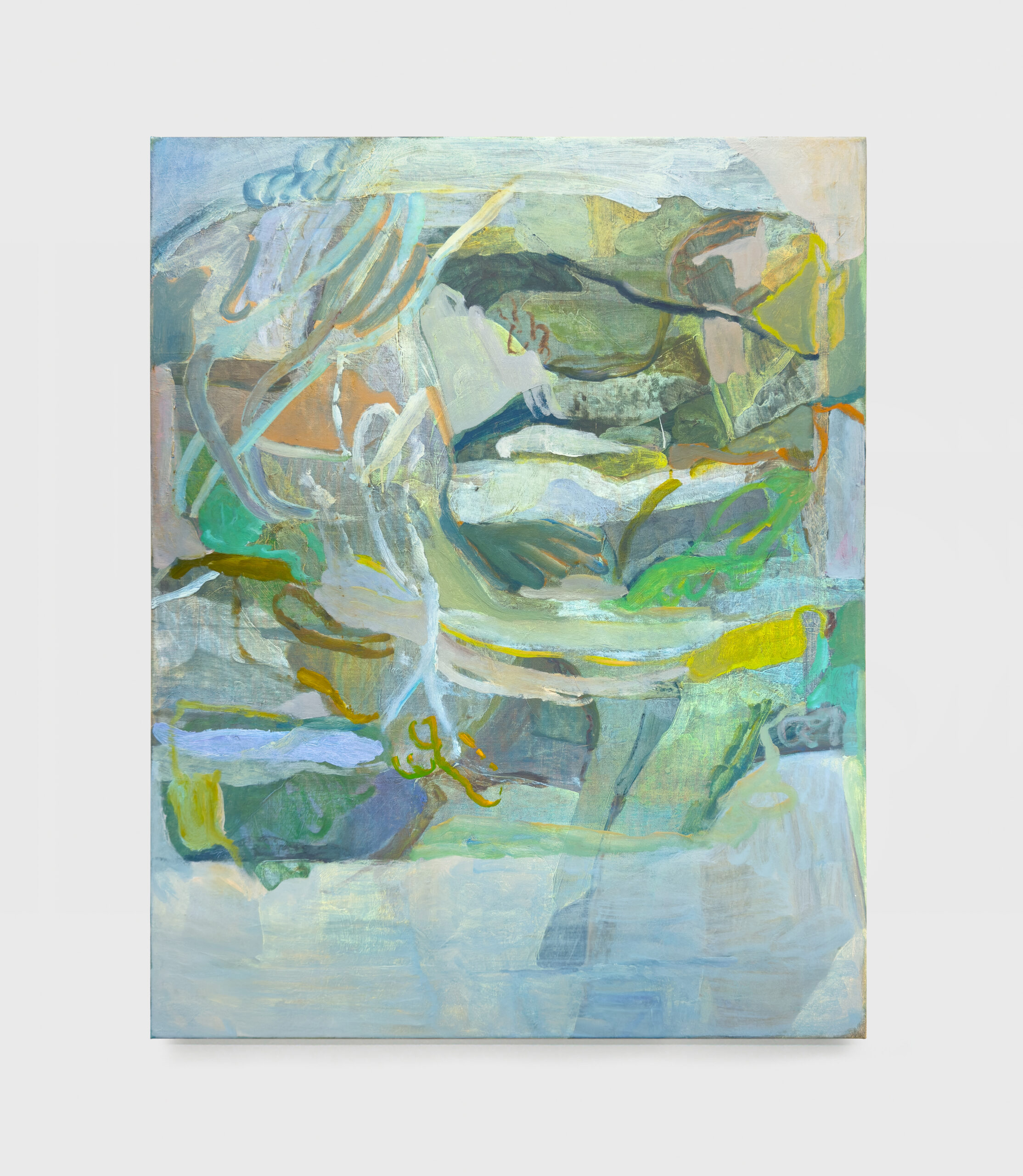
Marina Rolfe, From afar, 2026, oil on linen, 81 x 120 cm. Courtesy of the artist and ARC ONE Gallery
When someone chooses to live with one of your paintings, what do you hope the work continues to offer them over time?
I hope the work continues to unfold over time. I don’t see my paintings as being immediately legible; they can be experienced differently depending on how long you spend with them. Forms might appear and disappear, or certain areas might come forward at different moments. So I hope the work creates a space for ongoing looking, something that remains open and continues to shift over time.
Rolfe’s exhibition The edge of holding at ARC ONE Gallery runs from 15 April until 23 May, with the opening reception taking place on Saturday 18 April 2-4pm.
@marinarolfe
@arconegallery
arcone.com.au
Monica Rani Rudhar transforms jewellery and heirlooms into vessels of memory, tracing the intimate threads between migration, identity and belonging. Ahead of her inclusion in The Biennale of Sydney, we spoke with Monica on weaving family mythology with colonial critique, inviting audiences into tender conversations about inheritance and home, and what she’s looking forward to exploring in 2026.

Monica Rani Rudhar, Daughter Of The Same House, 2021, Terracotta, glaze, lustre, dimensions variable. Photo: Docqment.
Objects such as jewellery and heirlooms recur throughout your practice. Can you speak about their significance and the role they play in your work?
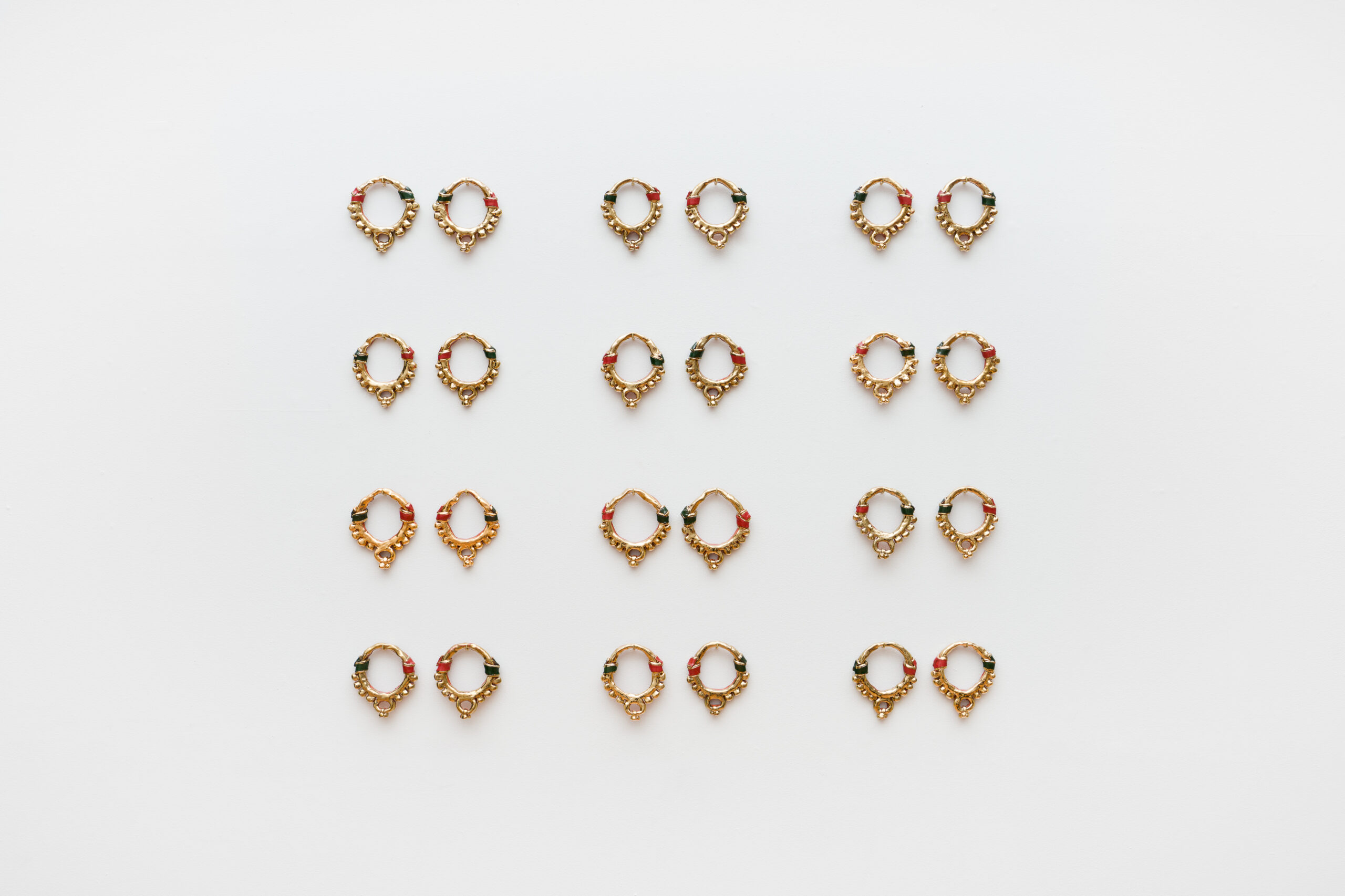
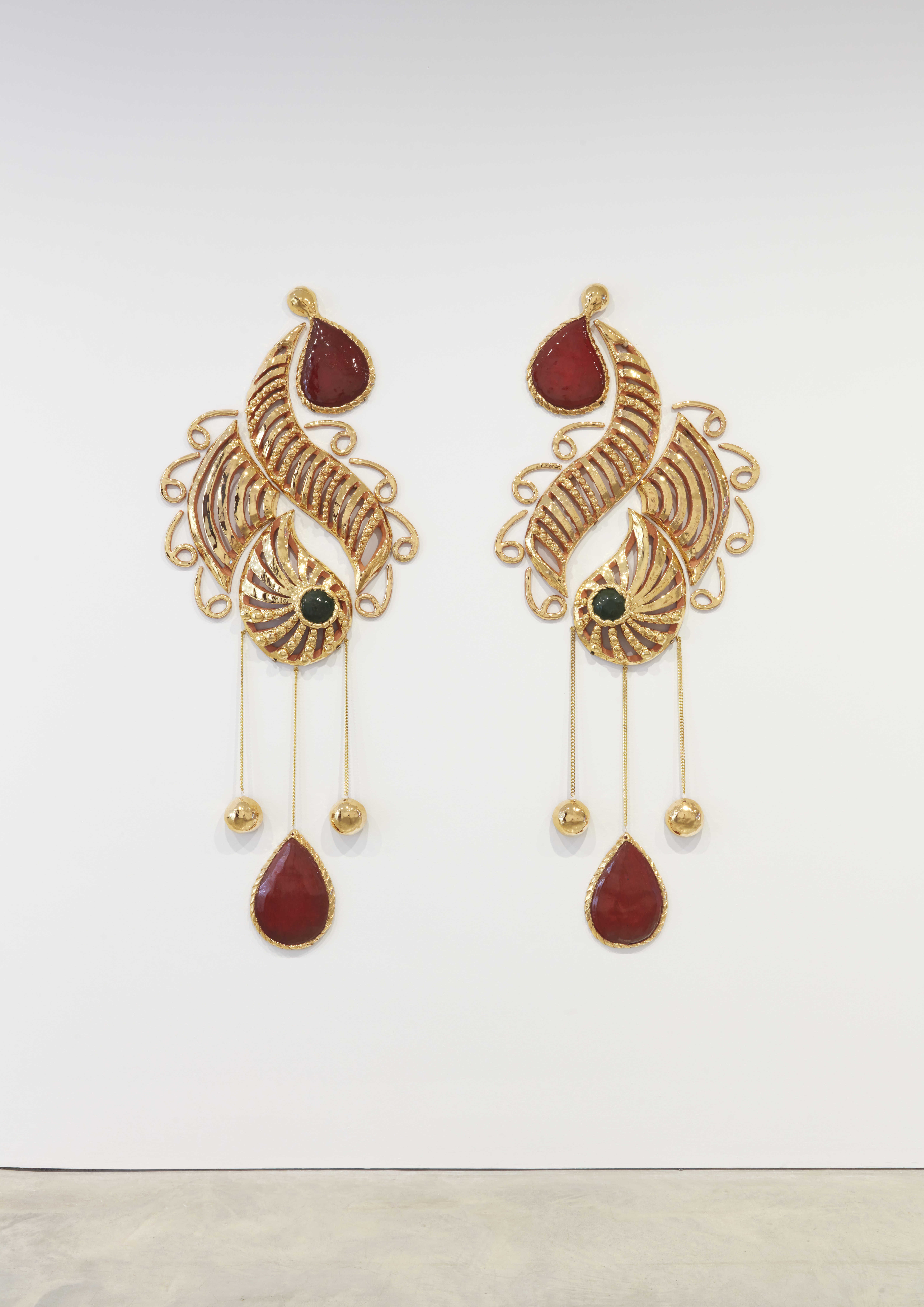
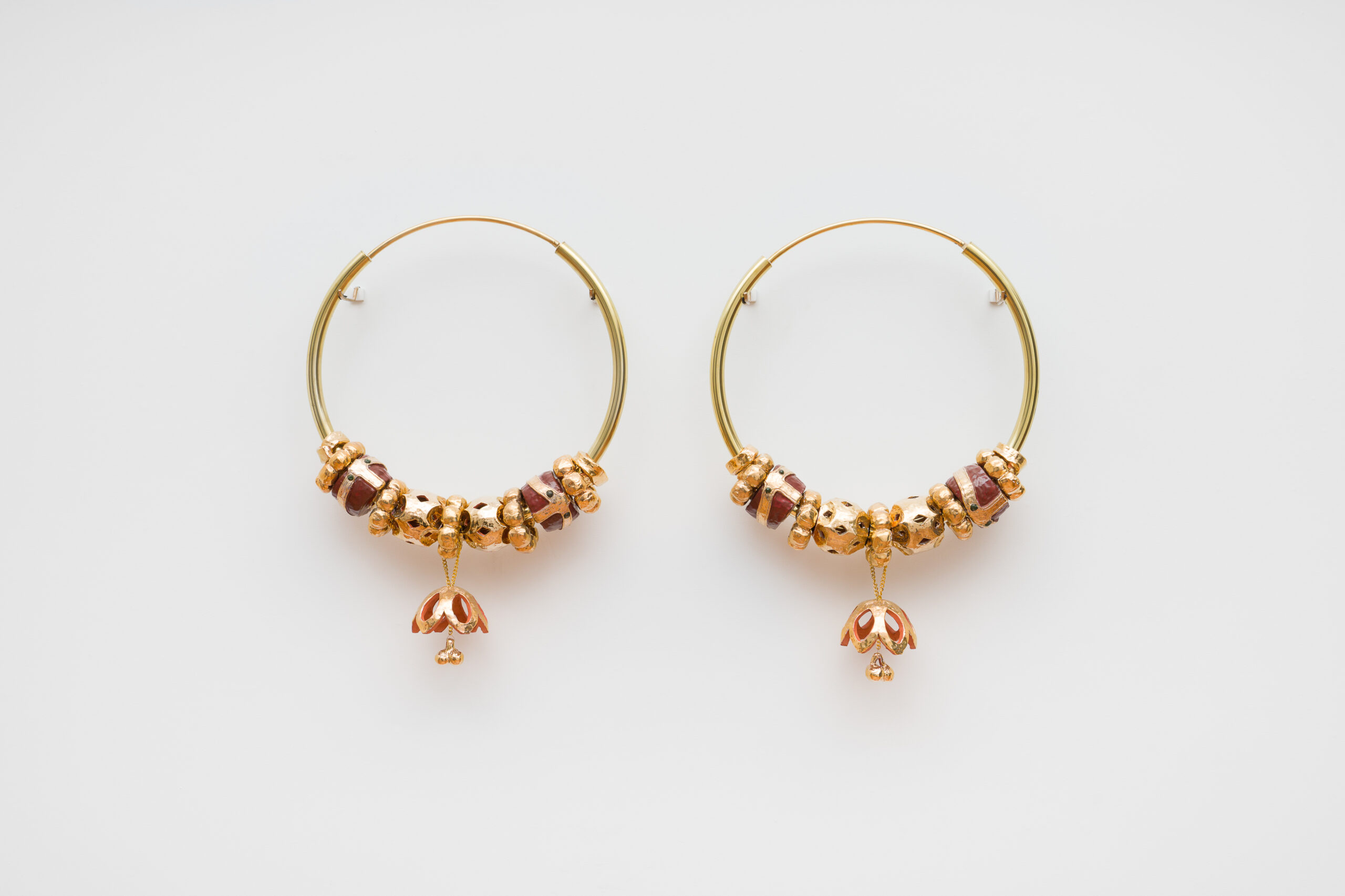
I am very interested in the ways jewellery and heirlooms store inherited memory, acting as tangible links to my cultural homelands and family members who have passed. Using them in my work as relics that preserve personal histories creates an entry point into exploring my own personal family histories. For me, objects and heirlooms have played an important role in shaping my identity as an Indian Romanian Australian. As worn on the body, they have helped me in my journey in owning who I am, and being proud of my rich heritage, whilst being brought up in a space where I didn’t feel like I belonged.

Monica Rani Rudhar, Earrings That My Mother Kept For Me, MCA Primavera Installation View, 2024. Photo: Zan Wimberley.
Your practice often engages with cultural identity and family history. How has growing up between Indian and Romanian heritage shaped the themes and questions you explore in your art?
It’s really defined who I am as a person. I think having a multi-racial upbringing is super special, but I definitely think there is more to negotiate in order to belong. Sometimes I feel like I belong to neither side, and instead exist in what many people call this third space. It’s so much more common now, as a lot of children of migrants in my generation are grappling with similar feelings, where you feel like a bit of an imposter because you can’t speak the language of your ancestors. I explore ideas around cultural commodification, racial inequality, authenticity, migration and memory, so really a lot of my work is about belonging and what it means to belong in the context of Australia.

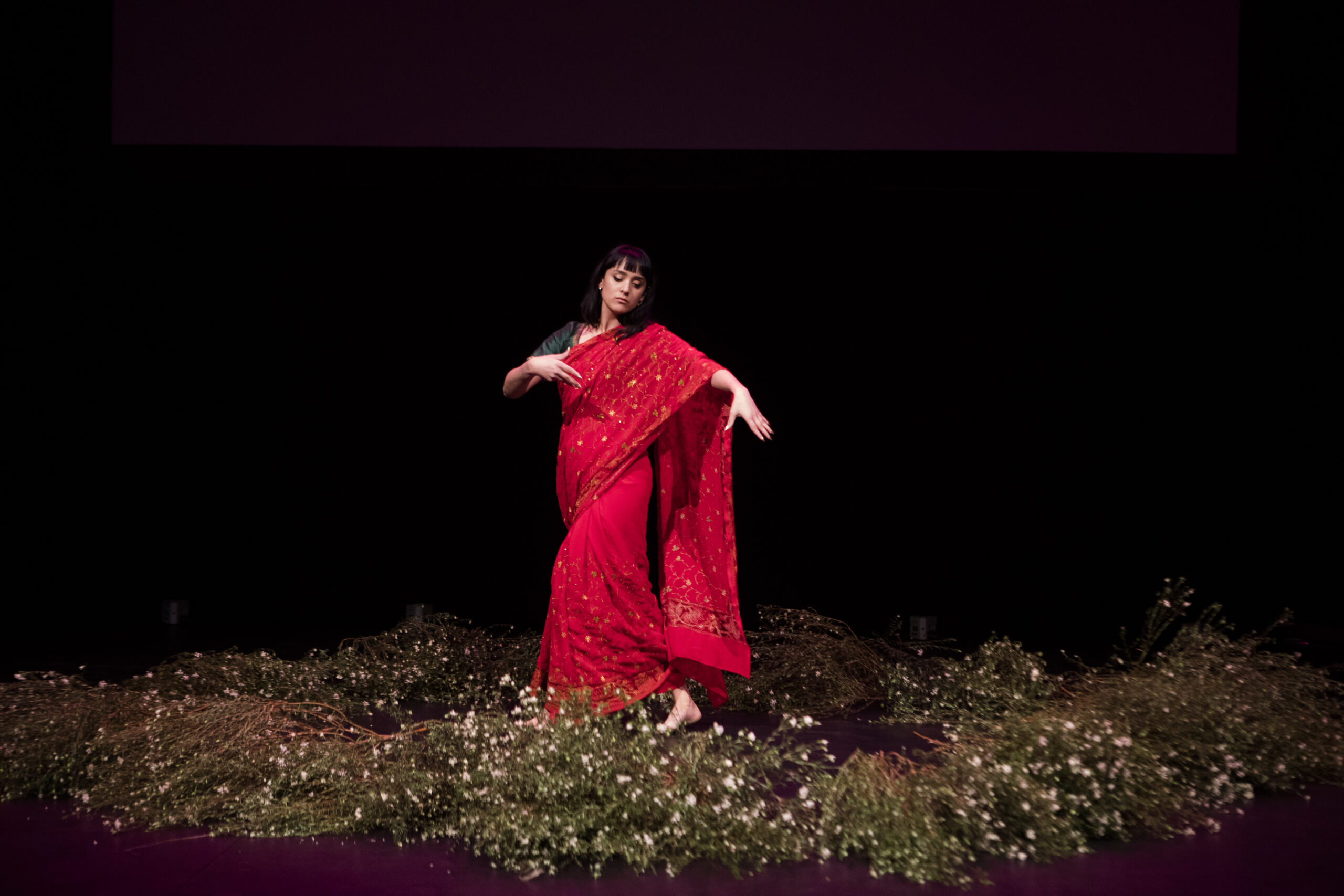
Monica Rani Rudhar, Performance View, Mother Of Millions On Whitford Road, Live dreams Distance, Carriageworks, 2022. Photo: Alex Davies
Much of your work draws on personal and familial narratives. What is your process for translating these stories into visual and sculptural forms?
I feel like most of the research I do for the making of my work comes from talking to my parents. For me, my parents feel like a connecting bridge to this imagined idea of a place that I’ve created in my head. Perhaps it’s a little more romanticised, like all good family stories are, and I really do feel like they sometimes function as a type of family mythology. Often, I’ll be calling up my mum or dad to get more details and a better context for certain stories. In my video works, I create nostalgic, non-linear storylines that resemble the way histories are told and stored. I often sketch scenes in pencil or create mood boards to translate what is inside my head. Often these scenes are close-up depictions or re-enactments that have been stitched together, accompanied by a narration or just a musical score. In my sculptures, often the stories are a little more embedded and less obvious, but often start out with many sketches and little studies. If I am working on family heirlooms, I like to work off a photo that my parents have sent to me on my phone, which may seem a little bit odd, but I like that there is a bit of a barrier or a degree of separation from the object. It leaves me the opportunity to interpret the object in my own way, kind of emulating the way we receive stories, how maybe there are parts that we need to fill in ourselves because we don’t have the full picture.

Monica Rani Rudhar, Hoops That My Once Belonged To My Mother, 2022. Photo: Docqment
For the Biennale of Sydney, your new work engages with colonial legacies, trauma, and resistance. What conversations or reflections do you hope this project invites from audiences?
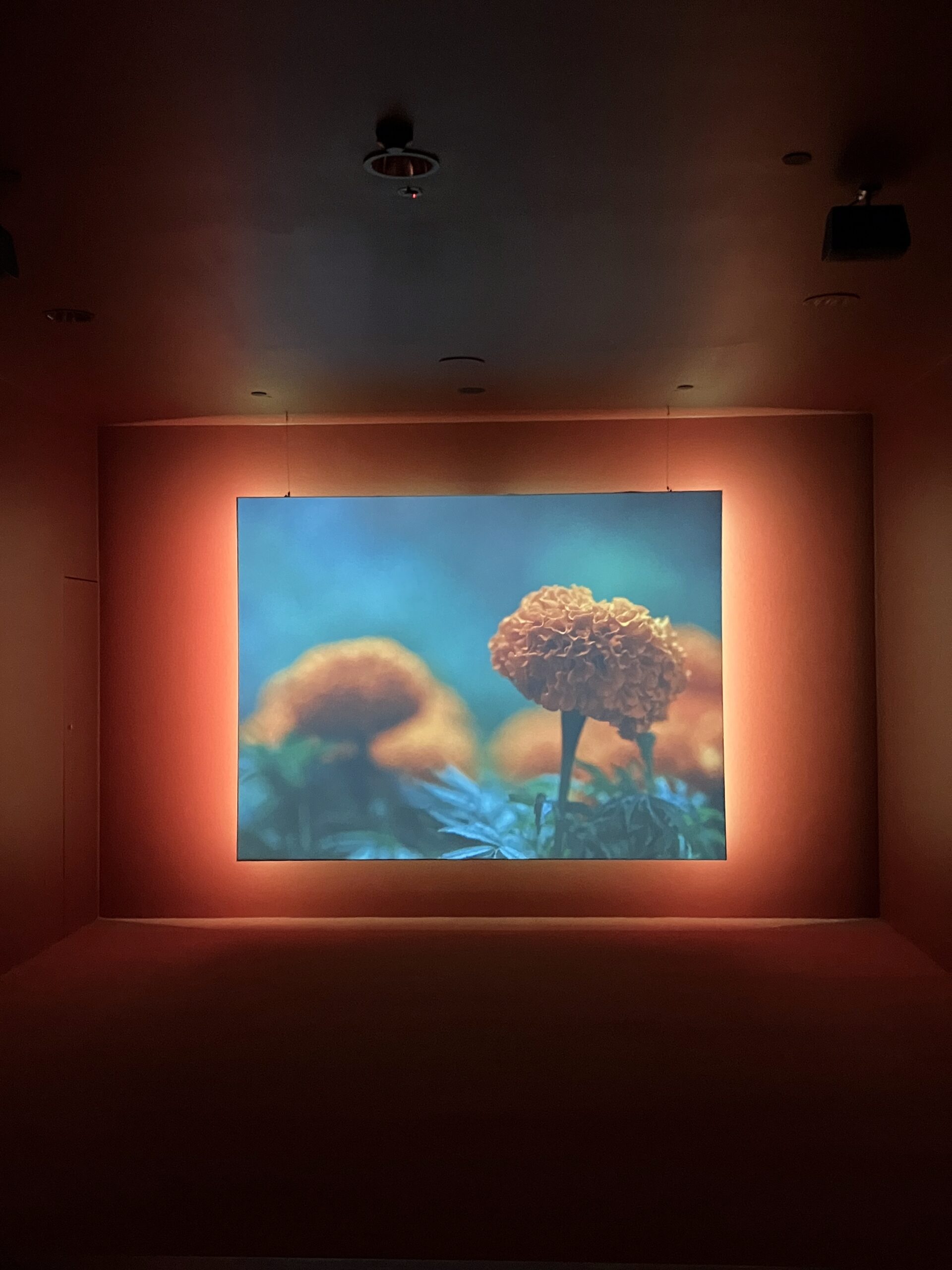
I hope my work invites audiences to reflect on the complex legacies of colonialism and how they continue to shape personal and collective identities. I want the work to encourage conversations about inherited legacies and how strength and knowledge are carried across generations. I want people to reflect on our collective responsibility in the face of racial injustice and colonial violence in our present day.

Installation View. Image courtesy Monica Rani Rudhar.
Looking ahead, are there particular projects, collaborations, or mediums you’re excited to explore in 2026?
Yes, absolutely, I’ve been wanting to explore sculpture a little more closely. I’ve got some ideas of artworks that I’ve sketched in my diary from last year that I’ve been itching to make! I’m eager to take a moment away from ceramics and explore new materials. I’m just waiting for a bit of a breather to play and experiment! I’ve got some public artworks that will be unveiled quite soon, both in ceramic and bronze, but I’m hoping it’s not the end and that these projects will propel me forward in being able to create larger and more ambitious works.
The Biennale of Sydney is on from 14 March to 14 June
biennaleofsydney.art
monicaranirudhar.com
Since its founding, Gallery Sally Dan-Cuthbert has championed work at the intersection of art, design, and craft.
We spoke with Director Sally Dan-Cuthbert about the gallery’s philosophy and the ideas behind the current exhibition, ‘Fine Design and Objets d’Art’. The exhibition brings together artists and designers working across function, form and fine art, and considers how collecting becomes an expansive, cross-disciplinary practice.

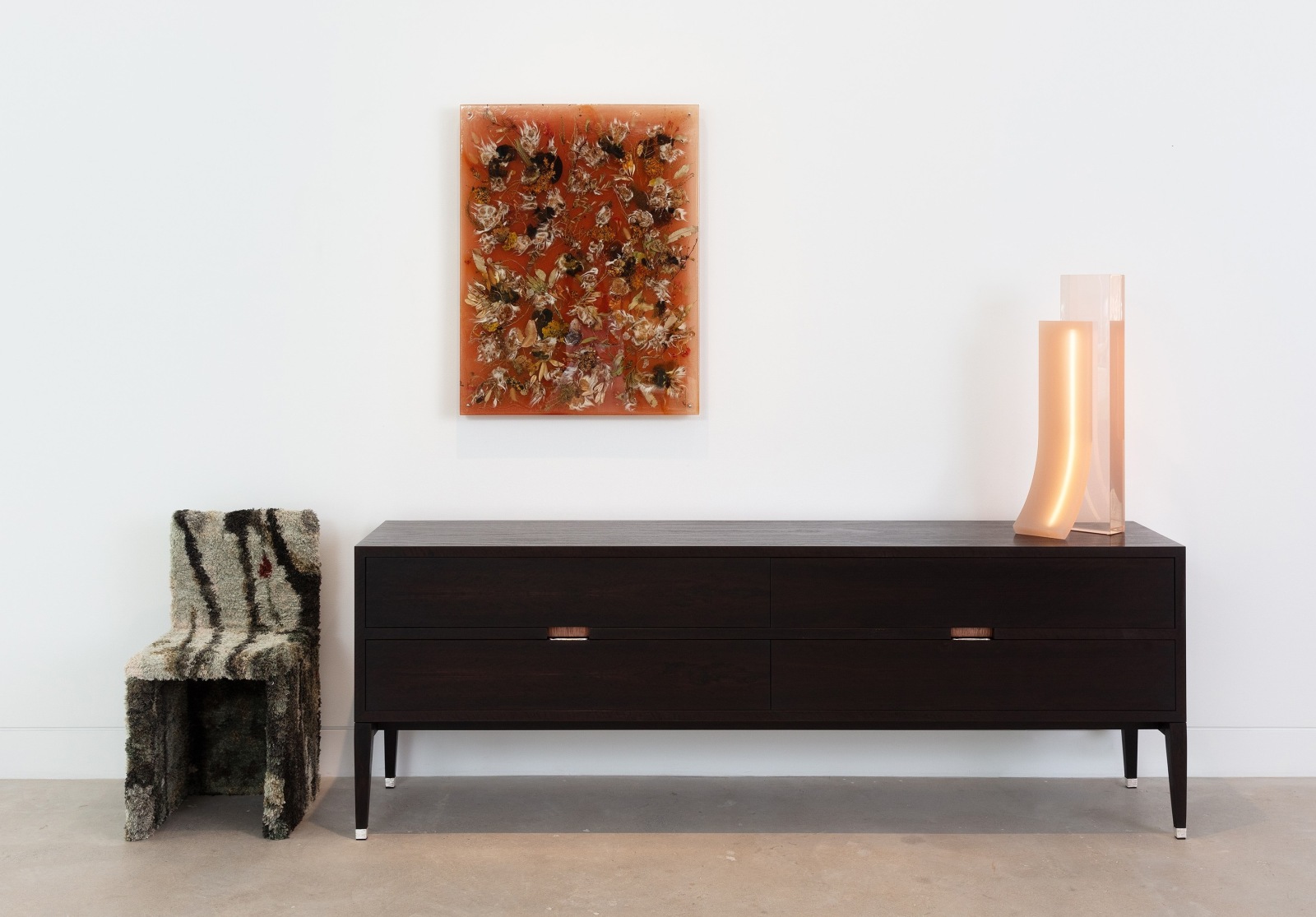
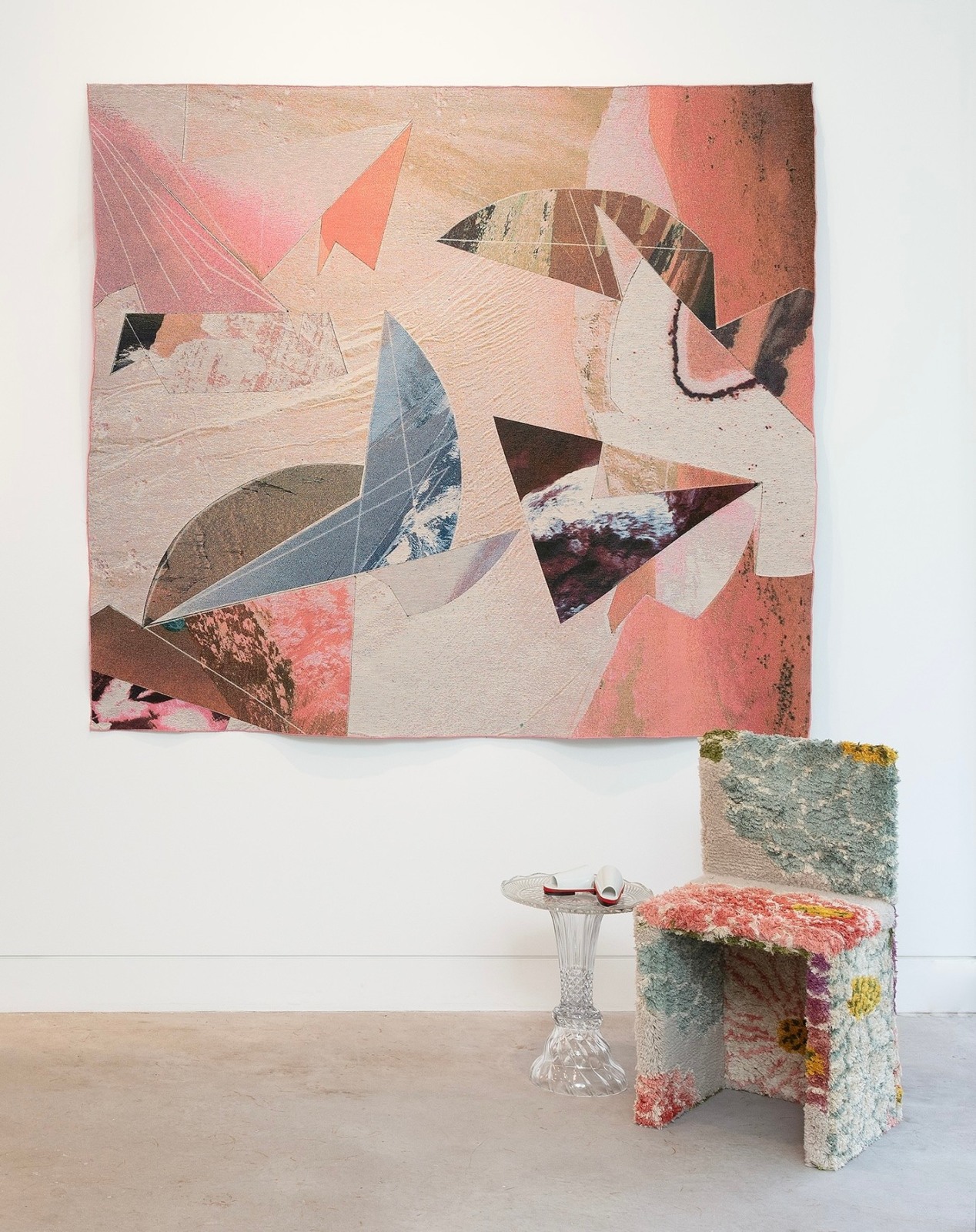
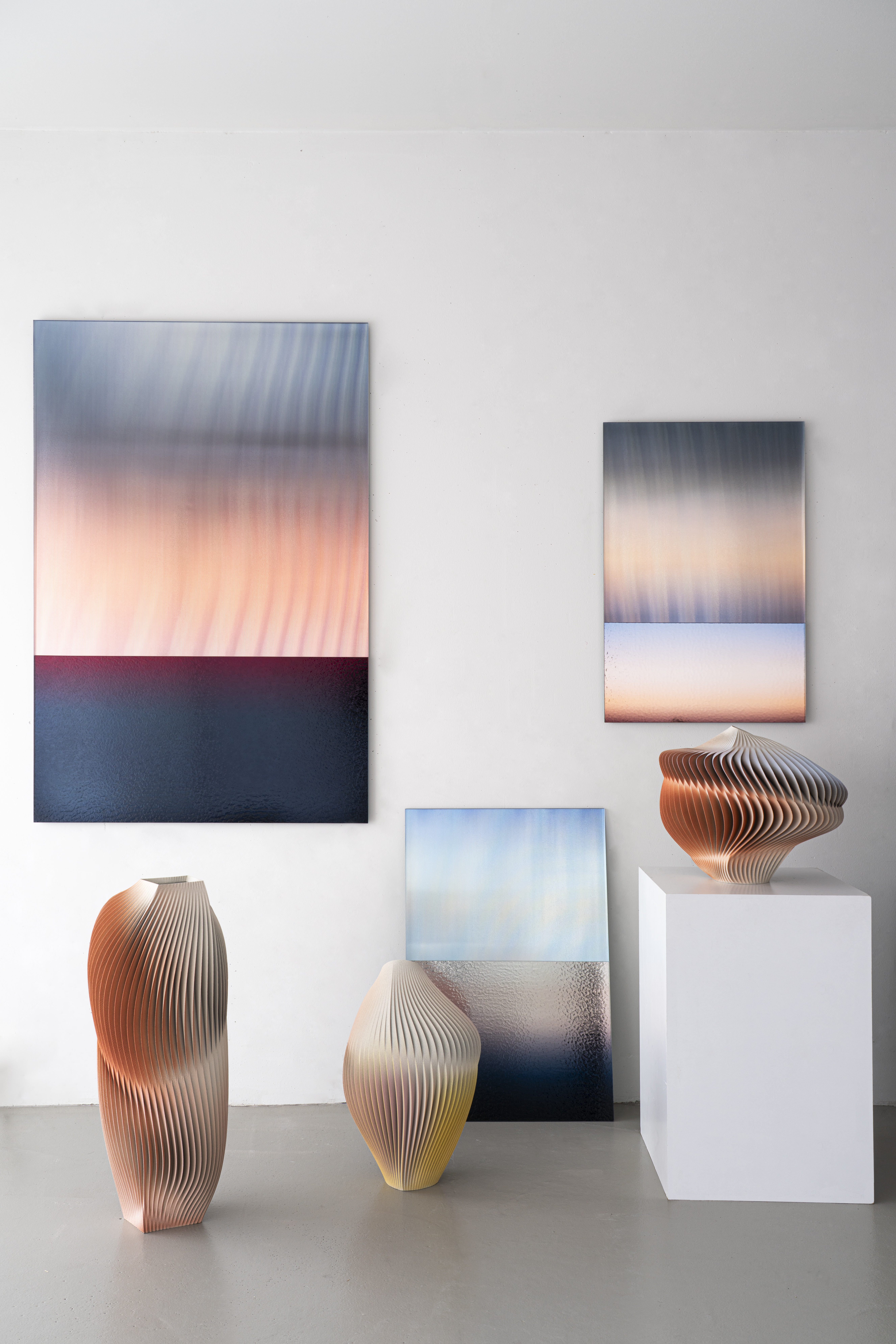
Installation Image, Fine Design and Object d’Art, Pictured: TibetSydney, Rhoda Ting & Mikkel Bojesen, Sabine Marcelis, Damien Wright, Gallery Sally Dan-Cuthbert, Photography Simon Hewson
Can you tell us about the founding of Gallery Sally Dan-Cuthbert, what motivated you to establish the gallery?
Gallery Sally Dan-Cuthbert was established in 2019, the first of its kind in Australia to deliver an intergenerational programme of rigorous contemporary art, objets d’art and collectible design by local and international artists and designers.
Our motivation was to deliver a programme that celebrates diverse approaches to media across art and design, with carefully orchestrated intersections of these parallel disciplines. The gallery presents solo exhibitions, alongside curated group exhibitions, and participates in prestigious fairs and festivals internationally.
Importantly, represented artists and designers regularly exhibit in surveys, biennales, and significant thematic exhibitions in notable institutions globally. Their work is collected into important public and private collections around the world.

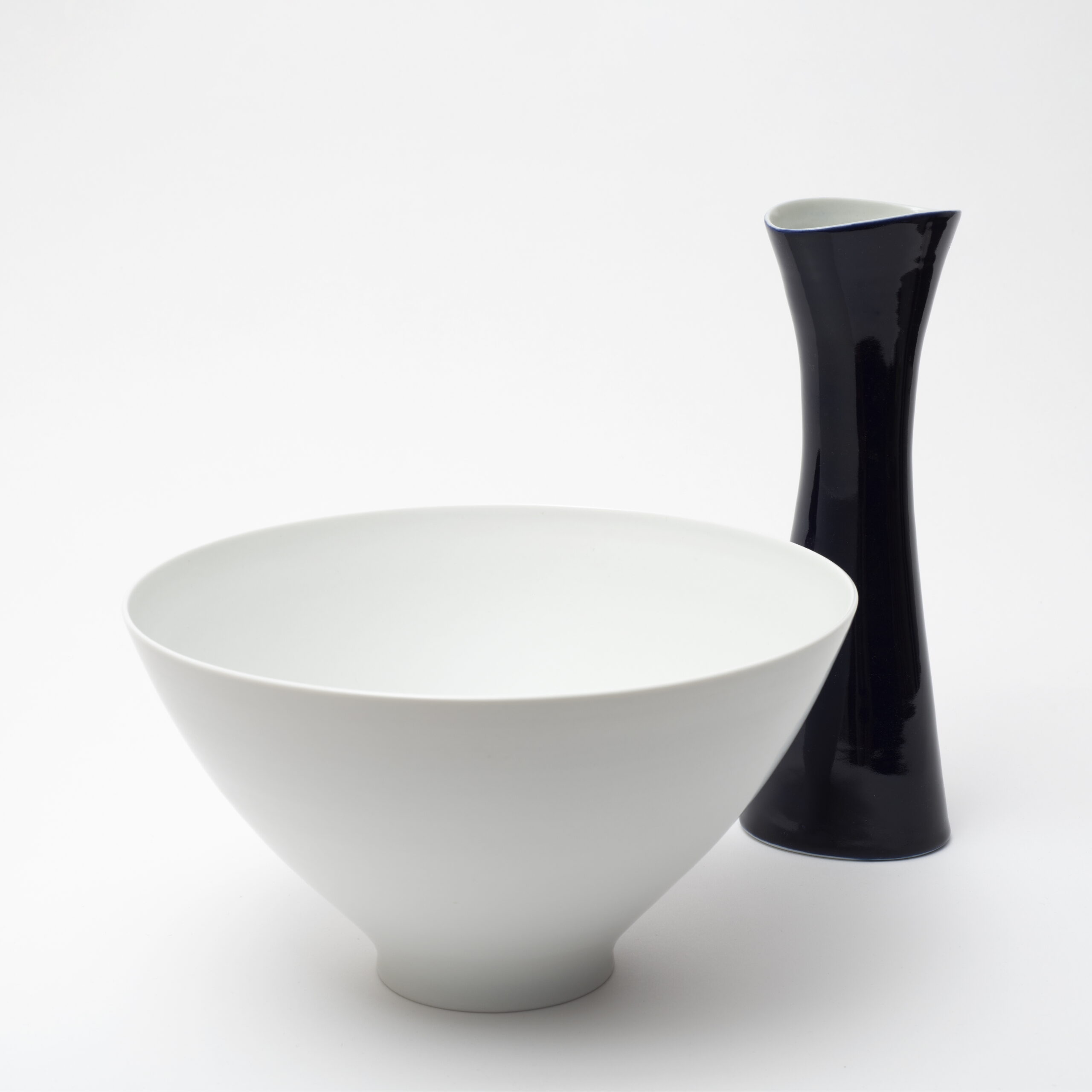
Prue Venables, Deep blue cadence, 2025, thrown Jingdezhen porcelain, thrown and altered Limoges porcelain, 16 x 28 x 28 cm, 28 x 10 x 8 cm
How would you describe the gallery’s philosophy, and how has it evolved since its opening in 2019?
The gallery’s philosophy is to offer collectors and enthusiasts alike an opportunity to engage with contemporary work that honours both innovation and timeless quality. Incorporating all the visual arts: painting, photography, film, textiles, ceramics and sculpture together with refined functional pieces. We present work that blurs the traditional boundaries between disciplines.
The philosophy remains the same just the roster of represented artist and opportunities has grown significantly.
 Sabine Marcelis, Slide Light, Toffee, 2023-ongoing, cast resin, LED, 70 x 20 x 26 cm, Edition of 8 plus 2 AP
 Sabine Marcelis, Slide Light, Toffee, 2023-ongoing, cast resin, LED, 70 x 20 x 26 cm, Edition of 8 plus 2 AP
Your upcoming exhibition brings together design and objects. How does ‘Fine Design and Objets d’art’ reflect the gallery’s mission to bridge contemporary art and collectible design?
Fine Design and Objets d’Art is a carefully curated exhibition celebrating the intersection of artistic excellence and functional beauty. Bringing together gallery artists from around the world, this exhibition showcases practitioners working at the pinnacle of their respective fields, each pushing the boundaries of art, objects, and design with distinctive vision and mastery.

Installation Image, Fine Design and Object d’Art, Pictured: Izabela Pluta, Prue Venables, Edward Waring, Tibet Sydney, Gallery Sally Dan-Cuthbert, Photography Simon Hewson.
What conversations or reflections do you hope people take from ‘Fine Design and Object d’art’?
The exhibition invites a return to the thoughtful, holistic approach to living with art, the ethos of the gallery. It revives the spirit of a golden age when artists of all disciplines coalesced, and homes were layered with carefully chosen pieces, where collections reflected the full spectrum of creative expression beyond paintings alone. These artists share a commitment to exceptional craft and conceptual rigour, creating pieces that are as contemplative as they are exquisitely made.
Looking ahead, what exhibitions, collaborations, or projects are you most excited about, and what can audiences look forward to from the gallery in the coming year?
Fine Design and Objets d’Art sets an inspiring tone for the gallery’s year ahead. In March, we present Tammy Kanat’s debut, solo exhibition, followed by rising star, Olive Gill-Hille’s third solo exhibition. Straight after her opening at the NGV with Cartier, Sabine Marcelis presents exquisite new art and design pieces in the gallery in June. In the second half of the year, we present female doyens of Australian art – new paintings by Sally Smart, then Gabo: light works by Donna Marcus, and the gallery’s much anticipated, first solo exhibition by Loewe Foundation Craft Prize finalist, Prue Venables.
The gallery will also participate in major fairs, including Sydney Contemporary and Aotearoa Art Fair. We have artists participating in important local and international museum exhibitions and biennales. We are excited that a number of major public works and private commissions will also come to fruition.
Critically, we look forward to continuing our engagement in and out of the gallery in deep and meaningful ways with our artists, curators, writers and collectors to support the broader arts community.
Fine Design and Objets d’Art continues until 8 March
@gallerysallydancuthbert
sallydancuthbert.com
Curator Tim Riley Walsh unpacks Primavera 2025 as a charged snapshot of the present. Blending research and curiosity, we discuss an exhibition shaped by material intensity and the strange distances of life in a digital, post-industrial world.
Featuring five emerging artists from across Australia, Primavera becomes a site of friction and feeling, where sculpture, ambivalence, and making take centre stage.
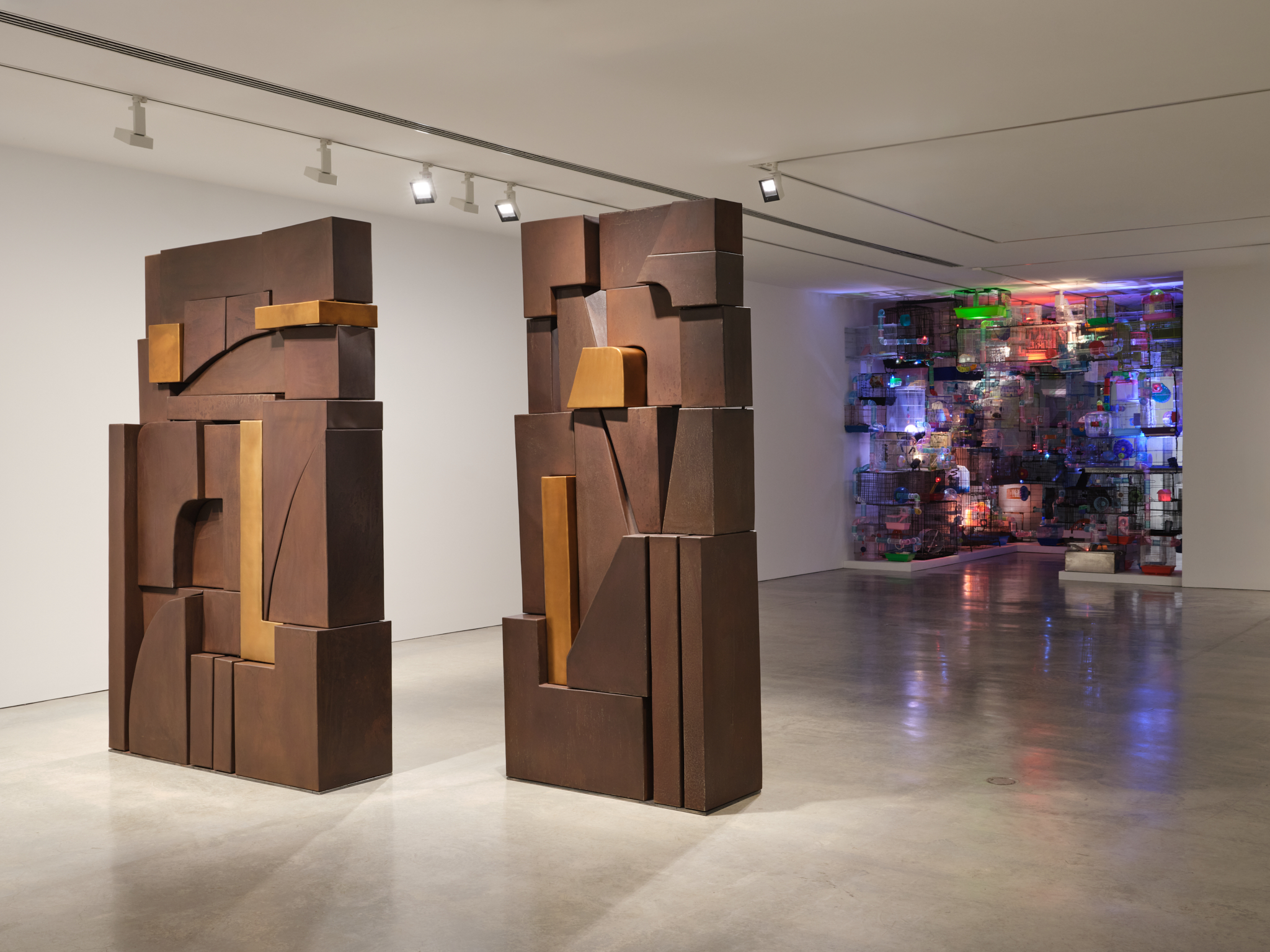
Installation View, Primavera 2025: Augusta Vinall Richardson (front), Emmaline Zanelli (rear). Image: Hamish McIntosh.
How would you best describe this year’s Primavera?
Primavera is an exhibition series that began at the MCA Australia in 1992 – it has an incredible legacy. Over 250 artists have exhibited. 30 curators have participated. The series has an engrained rhythm and remit: annually celebrating young Australian artists 35 years or under.
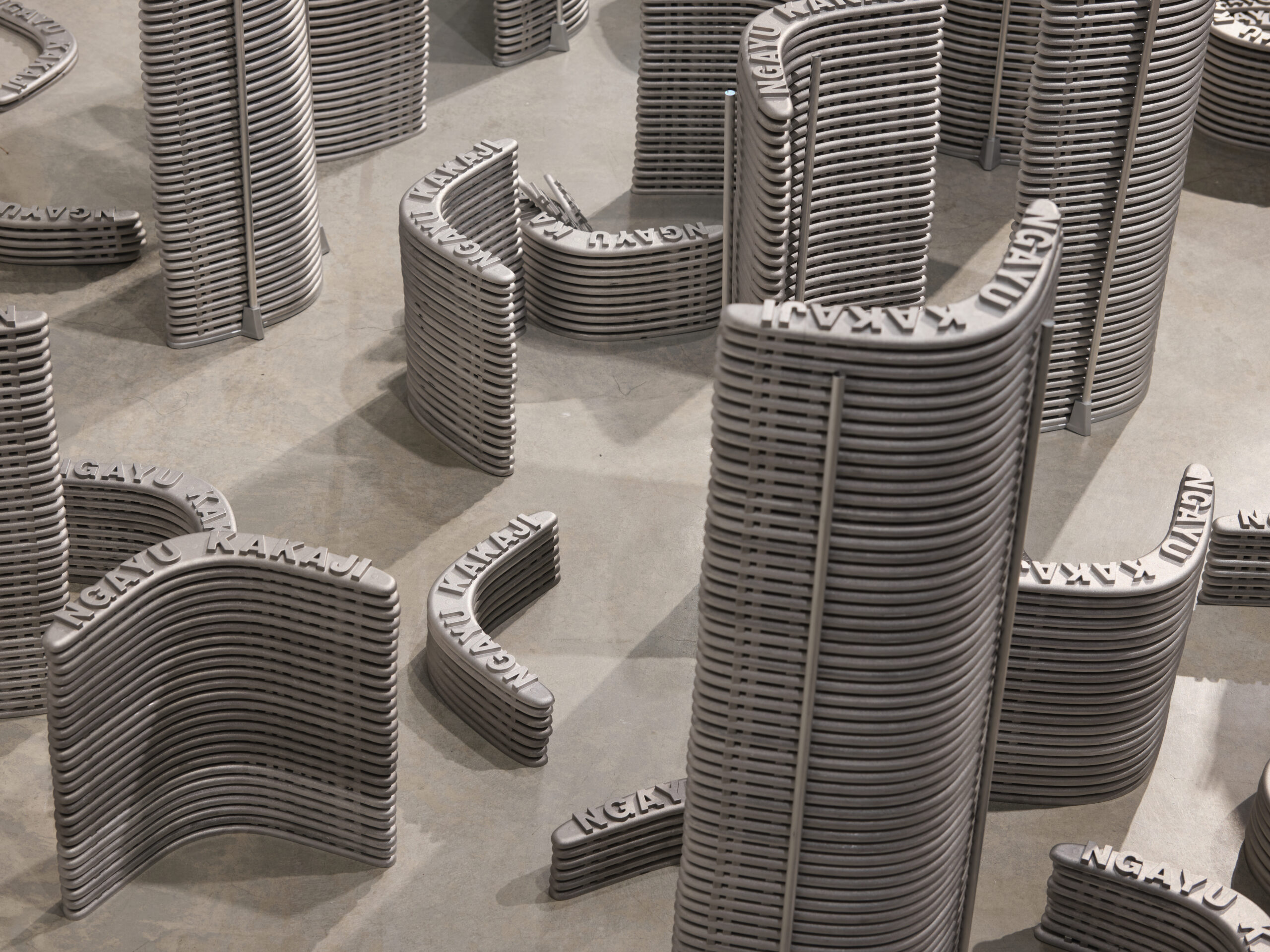
This year’s Primavera features five artists: Francis Carmody (NSW/VIC), Alexandra Peters (VIC), Augusta Vinall Richardson (VIC), Keemon Williams (QLD), and Emmaline Zanelli (SA). The exhibition reflects what young artists are concerned with right now: labour, extraction, technology, the digital and production. But this exhibition is also strongly materially-focused, even fixated. There is an industrial quality to many of the works, it is a very physical exhibition. It is overtly a celebration of what I see as a renewed interest in sculpture and installation.
Mood is something I increasingly want to express in the exhibitions I curate. I’ll defer to some of the descriptions of this exhibition shared with me by others: brutalist, ominous, and muscular. A colleague summarised the overriding sensation as being ruled by distance and removal – which sits in contradiction with these artworks’ physical immediacy. Ambivalence interests me greatly as a person. I think that is where a lot of magic is found.
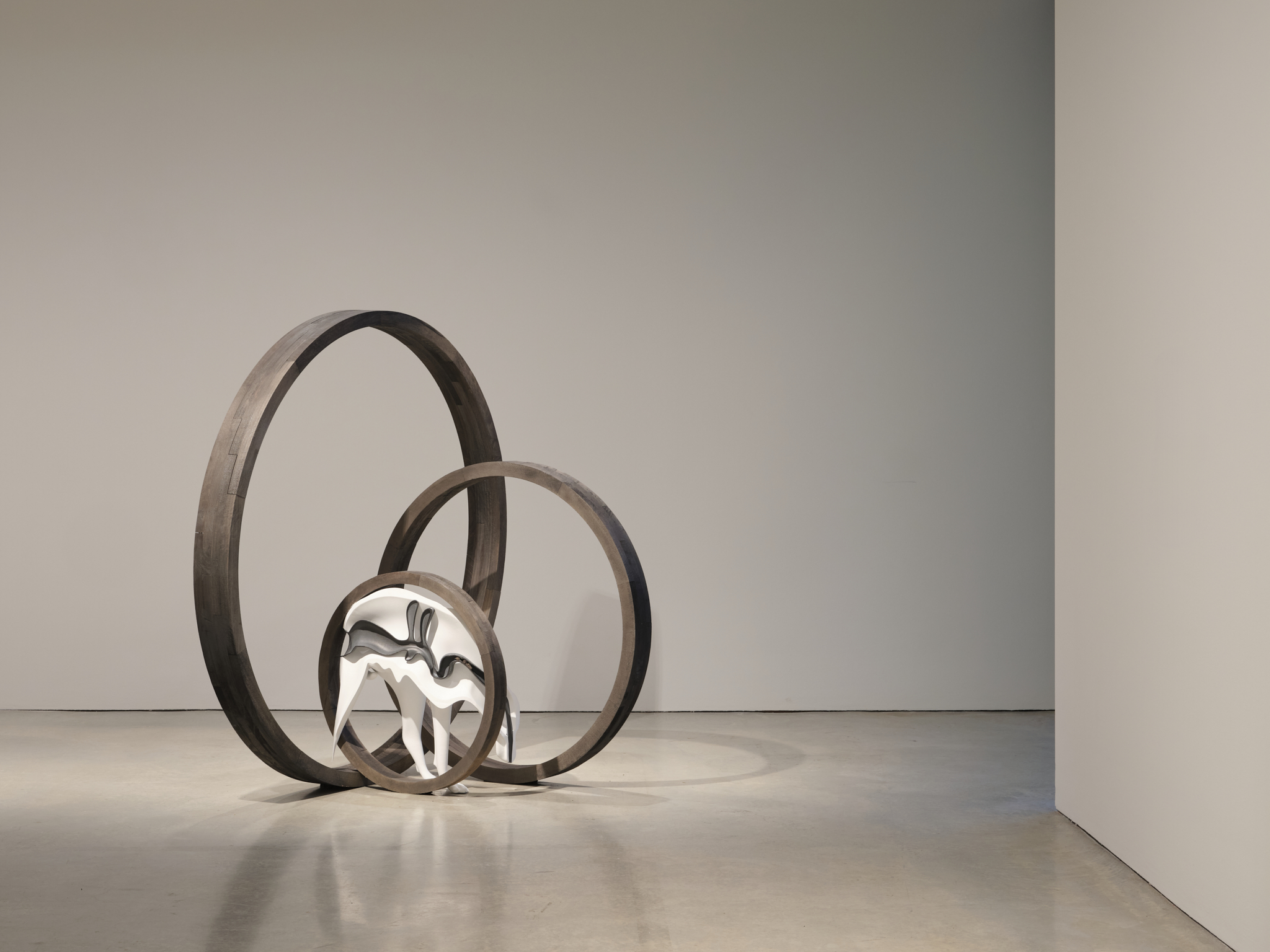
Francis Carmody, Canine Trap (I), 2025. Image: Hamish McIntosh
How did you approach the exhibition development?
I come from an academic background, trained in art history, but grew up in an artistic household. I’d like to think I blend the qualities of both in my curatorial approach.
My process is initially largely instinctive. It is focused on the contemporary. The impetus for my projects emerges from everyday life – the news, literature, popular culture, and of course, art. They begin with what I’d call suspicions. Often about how human behaviour and the world might be changing. I then go out and test this instinct. I observe how current events and actions might confirm or challenge it. From there, I do deeper research into its genealogy to understand where it grew from.
The art might key into the outcomes of my suspicion closely, or it might disagree with it entirely. The exhibition bottles all of that friction and presents it.
Keemon Williams, Business is Booming (detail), 2025, installation view. Image: Hamish McIntosh
This year’s Primavera focuses on making in a “digital and post-industrial era.” What drew you to this theme, and why do you feel it speaks strongly to the experience of young Australian artists today?
I think what sets apart a single exhibition in a long-running exhibition series like this is its point of view, a sense of cut-through. My leading suspicion in Primavera was what I was calling ‘industrial abstraction’. That the objects that structure our lives today are becoming more mysterious to us, how they are made and function – think of the iPhone for example – and that this state of distance is, in multiple senses, manufactured.
The post-industrial era isn’t new – some might even feel it’s a little outdated. I’m curious how its conditions have changed and its level of visibility. It is not unusual to go through a day now and not make anything new in physical space. If we do produce something ‘new’, it is more often immaterial. A playlist. A carousel of images. A vibe.
I was drawn to the idea of industry because it has strong connections to themes in art history. The factory and production, their ties to pop art and constructivism. Thus, the exhibition features a lot of seriality, for obvious reasons. But I was also drawn to the idea because I feel the distance from making myself. I hope the feeling is relatable too.
Artists are especially sensitive towards the world. As a species, humans understand through knowing a thing’s components or ingredients. Artists make every day – and so I turn to them and their art for guidance through the present.
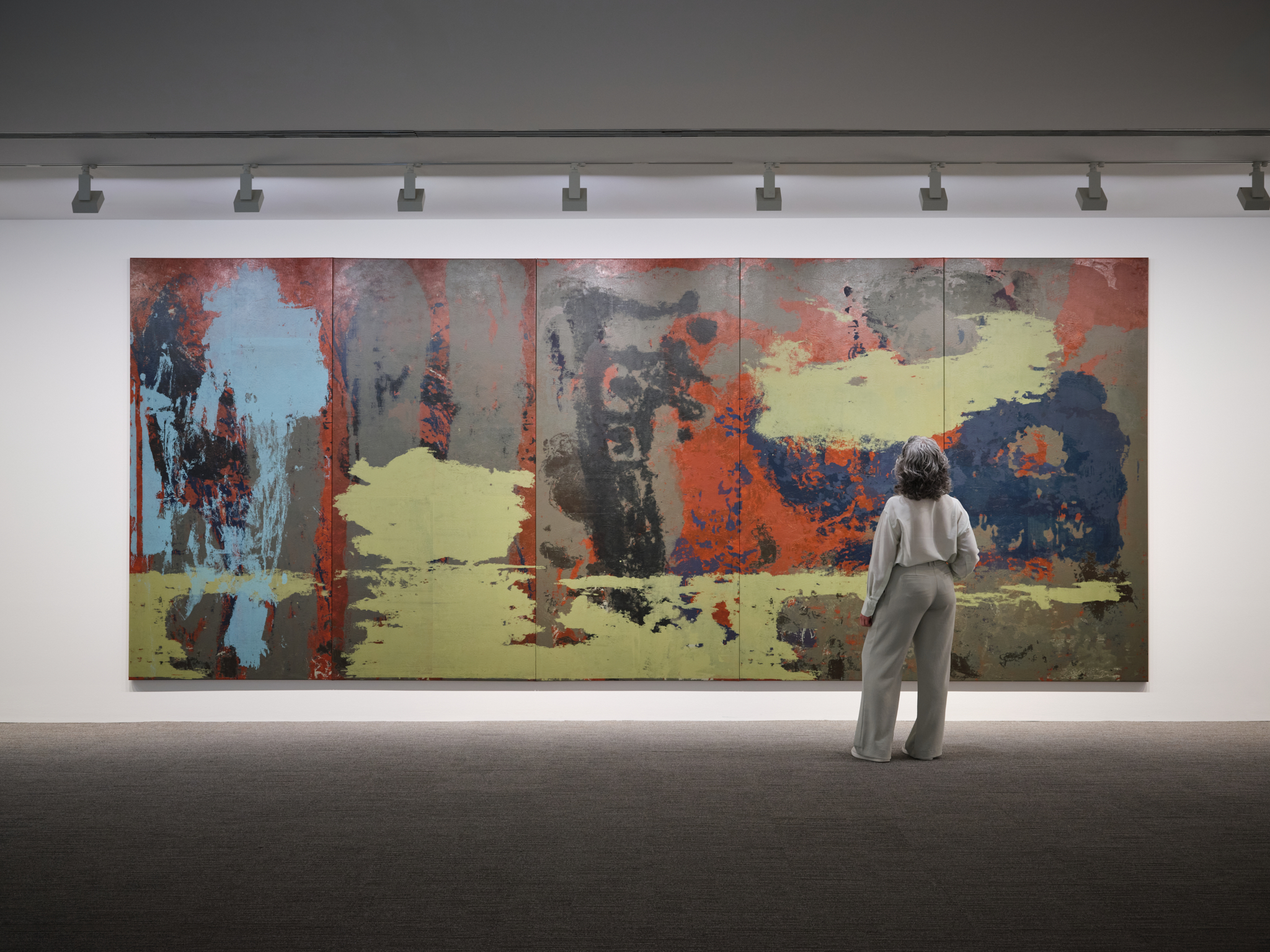
Alexandra Peters, Defenestration (Autoantibodies) as part of The Infinite Image, 2025, installation view. Image: Hamish McIntosh
The show includes artists from several states and very different cultural contexts. What tensions or surprising connections emerged as you researched and met with artists across the country?
On a practical level, Primavera is grounded in a concentrated period of research travel around the country. I met with over 50 artists across seven states.
A studio visit can be an amazing thing. Artists are so open. A lot developed through these encounters and my preconceptions being overturned or troubled. An artist list for the exhibition then starts to emerge from there: which artists might work well in dialogue, but also as counterpoints or even in friction. The promise of what an artist might make or where their energy is currently directed excites me.
Mustering all of those forces and then directing them towards their realisation on opening day is a wild, joyous ride.
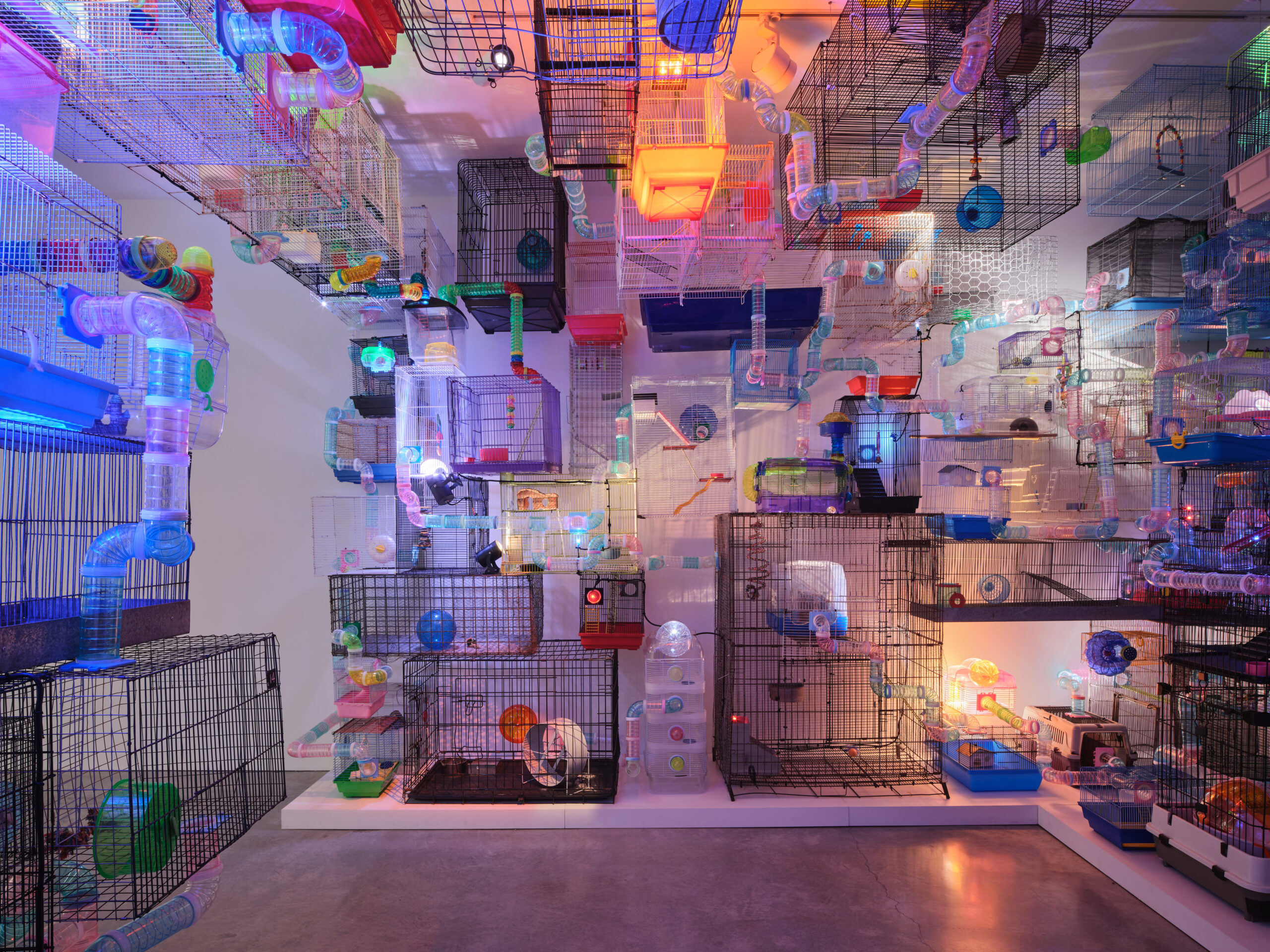
Emmaline Zanelli, Magic Cave, 2024/2025, installation view. Image: Hamish McIntosh
What do you hope audiences will take away from Primavera 2025?
The vitality of contemporary Australian art and the innovation of the young artists in this place. Hopefully a sense of confidence in the ongoing relevance of art to reflect the present. That it makes visible something which has been clouded. That it resonates with a feeling they might have about their own worldview right now.
Primavera 2025: Young Australian Artists continues Museum of Contemporary Art Australia, Sydney until 9 March
