

As the curator of Photo Sydney, what excites you most about launching this new sector of Sydney Contemporary?
Tim Etchells, the Sydney Contemporary owner, has been working to include a Photo section for several years now. The space became available and there has been no shortage of applicants for this first outing for Photo Sydney. We have 15 booths which include 30 photographic artists altogether. I worked as Co-director of Stills Gallery (run by Kathy Freedman) for many years and during this time we were always trying to showcase photography as a uniquely important artform. In the past photography was seen to be a work on paper and it was available in editions, and although photography can still be editioned, it can be presented at large scale and with a vast choice of prestigious presentation methods. In previous times prints were commonly smaller in size.
Photography is seen as being immutable because the image is created from a notion of the ‘real’ world. A painter uses paints and imagination to create a ‘representation’ of an image. A photograph is an imprint of the photographer’s vision.
There are many fine photo artists in Australia. Their style, subject matter and presentation varies widely. This first presentation of Photo Sydney offers a broad range of techniques and subject matter.
What are your top tips for starting or growing a photography collection, are there particular things collectors should look for when acquiring works?
Required qualities include an enthusiasm for art in general, a passion for photography as art, and a personal decision about meeting your specific budget. Emerging photo artists can be a more affordable starting point for a collector than an established photo artist.
Ask lots of questions, follow and believe in your instincts and interests in subject matter, style and presentation. Photo Sydney is a great playing field because you will be talking directly to the photo artists in their booths.
It may help to educate yourself about the history of photography which is a combination of art, history and technology. Points to make note of include the profile of the photo artist, the genre of photography (documentary, colour or black and white), your preferences for subject matter, framed or unframed (framing can be a cost on top of the artwork cost), etc.
Photographs used to be black and white only; now with digital technology colour is predominant, and an image can be made on various paper types and with multiple scales and presentation methods.
Are there any standout artists, works, you think visitors absolutely shouldn’t miss – and why?
There is such variety in this inaugural Photo Sydney. I will touch on a sample from the wide range of approaches to demonstrate that breadth.
Documentary photography is the original form of photographic expression.
Chris Ireland has dedicated hours of time to humanise and herald public housing in Sydney. The Greenway building is situated at the north end of the Sydney Harbour Bridge. Chris introduced himself to residents and what emerges is a community that has a beating heart and a humanity we can all identify with. His photography is classic black and white prints in the tradition of documentary.
Paul Blackmore also works in the documentary tradition, however, since the late 1990s colour became embraced as a form. Paul has a bold eye and his striking colour and compositions are highly memorable.
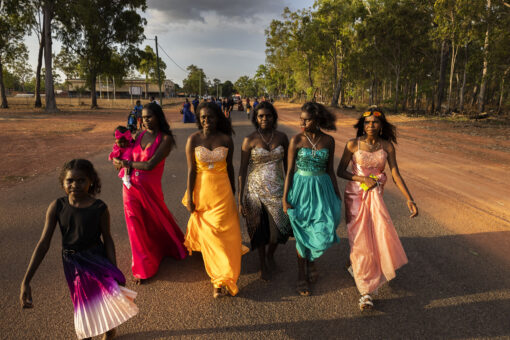
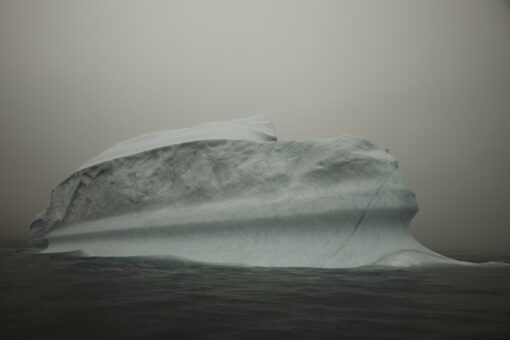
Pictured left: Paul Blackmore, The Ball, 2024. Pictured right: Simon Harsent, Melt, Portrait of an Iceberg #5.
Other documentary photographers in this inaugural Photo Sydney include Blender, specialising in historical rock and roll music photographs; Oculi, a collective of Australian photographers and photojournalists; Simon Harsent, who has a series of eerily moody ice flows photographed in the Arctic ocean, and John Gollings’ strikingly colourful aerial documentation of the 2009 Black Saturday bushfires across Victoria.
Photography as Art
Toby Burrows’ images are both staged and natural (as in documenting nature). They become poetic and transporting. The hand of the artist is visible.
With Greg Weight (Australian Galleries), look out for the description of paintograph. Greg is an artist of quite some pedigree and is known for his black and white portraits of well-known Australian artists. His more recent methodology of painting on photographs has found him inventing a new term, paintograph, a photograph that has been embellished by paint. Greg says the paintographs are a nod to the hand coloured prints of the nineteenth century.
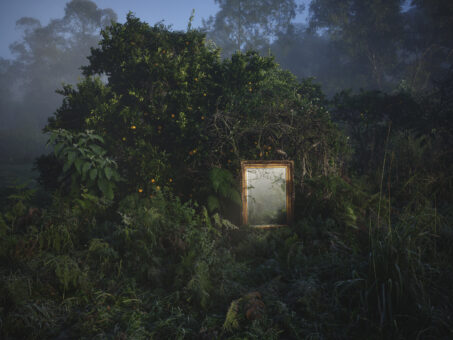
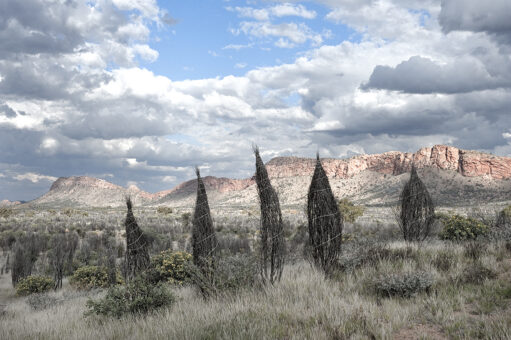
Pictured left: Toby Burrows, The Winter, 2025. Pictured right: Greg Weight, Formations, 2010. Australian Galleries | Greg Weight.
He has a broad sweep of his work on display, from the black and white portraits of significant Australian artists to his inspirational night skies where the stars seem to burn through the photopaper, to his paintographs where he adds his individual markings onto the photograph.
Inspired Doubles in the same booth
Tina FiveAsh and Caterina Pacialeo are one of several inspired doubles in Photo Sydney. It is hard to determine the manner of creation of Tina FiveAsh’s apocalyptic images. Neon signs appear on large buildings and structures offering us an inspired message. The are strikingly different to other works in the Photo section.
Catherine Cloran is an inspired documenter of nature, with a twist. Her photographs are exquisitely pleasurable simply because of the way Cloran constructs the content of the image. Zorica Purlija has a teenage daughter who for years has been her mother’s muse. She also appreciates nature and in these poetic landscapes we can also see the female presence of her daughter in the landscapes.
John Gollings and John Marmaras are also showing a double booth.

Pictured: Caterina Pacialeo, Fire #2 Heart, 2016.
What are some of the most exciting or experimental photographic techniques we’ll see featured in Photo Sydney this year?
Watch out for Sammy Hawker, presented by Photo Access, who is one of three artists in this booth. She is creating inkjet prints from a scanned film negative. ‘Kamberri/Canberra-based artist Sammy Hawker explores the potential of reciprocal engagements between human and more-than-human worlds. Hawker’s multi-disciplinary practice consistently embraces text, photography and moving image. These works form part of a vast and ongoing archive documenting sites and moments of exchange.
Nico Krijno, also presented by Photo Access, is an artist working with video, staged photography, and collage in an experimental photographic practice that investigates contemporary visual codes, archetypes, symbols and patterns, exploring not only these methods of creation but the spaces in-between.
Sandy Barnard is one of Sydney’s finest photo art printers. She will be showing some of her personal works alongside two other artists.
Alexia Sinclair is best known for her intense colour photographs portraying historical and allegorical figures. Her elaborate compositions take on the complexities of history painting by depicting a moment in a narrative story. The abundant detail and symbolism in her work are devices that allow her to tell complex stories. Her pictures combine the elegant finesse of contemporary fashion design with the sumptuous aesthetics of the Golden Age of painting.
George Byrne creates large-scale photographs that depict everyday surfaces and landscapes as painterly abstractions. Borrowing from the clean, vivid clarity of modernist painting, he also references the New Topographics photography movement via a subject matter firmly entrenched in the urban everyday.
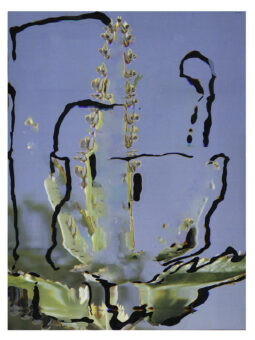
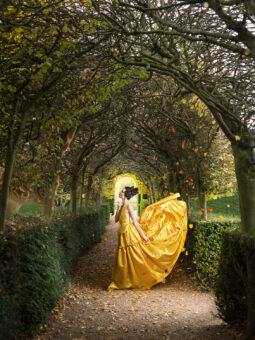
Pictured left: Nico Krijno, The Constellation #9. Photo Access. Pictured right: Alexia Sinclair, The Encounter, 2024.
View more highlights of Photo Sydney here.
Since its founding in 2006, Neon Parc has been a vital force in Melbourne’s contemporary art scene, driven by a deep belief in the power of artists and their role in shaping cultural dialogue. As Neon Parc prepares to present an exciting lineup at Sydney Contemporary, we spoke with founder Geoff Newton about the gallery’s origins, evolving philosophy, and what’s next on the horizon.
______
Can you tell us about how Neon Parc came into existence?
The gallery started as a conversation between an artist (myself) and a curator about how to represent our peers – there were a few key artists who didn’t have any representation at the time so the timing felt right for a number of reasons. The artists the gallery has worked with from the beginning are ambitious and aren’t afraid to take risks in their work.
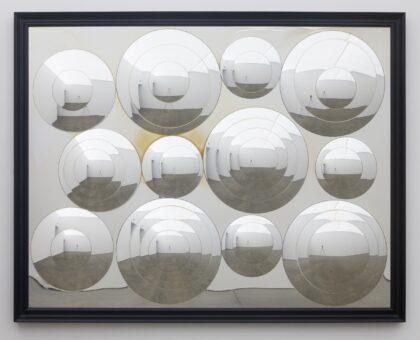
Image: Dale Frank, Beach 30’s, 2015.
Which artists are you presenting at Sydney Contemporary and why?
We are presenting new and historical works by Colleen Ahern, BMDO, Dale Frank, Maria Kozic, Hugo Blomley and Rob McLeish. The installation has a very physical thematic.
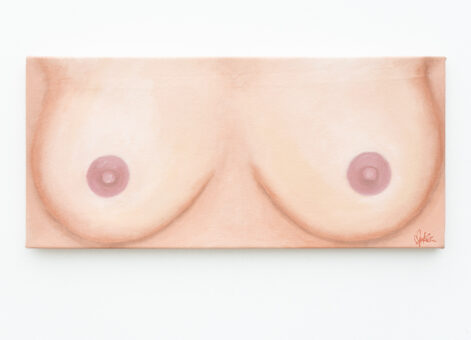
Image: Maria Kozic, T.I.T.S., 1991.
How do you characterize the philosophy of Neon Parc as a gallery?
I think to believe in the role of the artist in society and make exhibitions that fully represent our times. The gallery will be 20 years old next year yet it only feels like we are getting started as in the last decade a few artists have presented solo exhibitions and surveys in institutions. Neon Parc has also published and co-published monographs. The energy and dedication I feel from working with artists has maintained the direction and ambition of the program and I feel like there is a sense of family too.
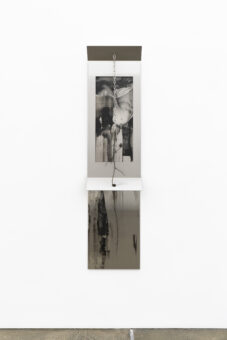
Image: Rob McLeish, SNARE (7), 2025.
What’s happening next in the world of Neon Parc?
Right now we are preparing for Sydney Contemporary, in addition to museum exhibitions by several artists of the gallery, then we have Untitled Miami later this year, which is very exciting.
Our South Yarra building is for sale so there might be some movements over the next few months too.
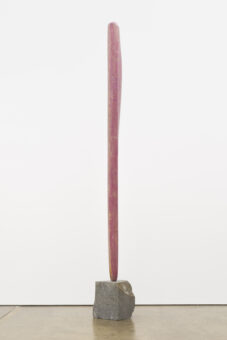
Image: Hugo Blomley, Untitled, 2025.
______
Neon Parc will present work by at Sydney Contemporary 2025. Tickets to Sydney Contemporary are on sale now.
Ahead of her upcoming presentation with Void_Melbourne at Sydney Contemporary 2025, celebrated Australian artist Louise Paramor speaks with us about her dynamic and ever-evolving practice. Known for her vibrant sculptural works and reverse-glass paintings, Paramor discusses her early influences, her fascination with everyday materials, and a future shaped by new technologies like 3D printing. With a rich career spanning decades and a relentless commitment to creative exploration, Paramor continues to challenge the boundaries between sculpture, painting, and public art.
___
What inspired you to pursue a career in art, and how has your journey as an artist evolved over the years?
In Perth during the 1980s, I had an inspirational high school art teacher, Rosemary Wallace, who convinced me I had talent and that I should continue on to art school. Since graduating with a BA in painting from WAIT (now Curtin University) in 1985, the main focus of my life has been my art practice. Over the years, I have experimented with various media, sculpture being at the heart of my work. An interest in scale and an ongoing understanding of the power of objects has led me into the realm of public sculpture.
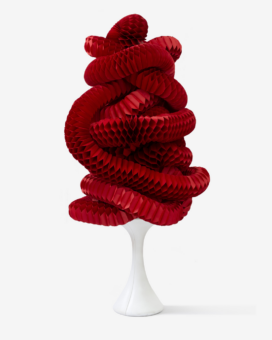
Pictured: Louise Paramor – High Society # 4 2020 | archival paper, found plastic object, steel armature | 212 x 90 x 90 cm
How do you approach the creative process when starting a new painting? Do you have any specific rituals or techniques?
I create reverse-glass paintings, using enamel to paint imagery onto the back of sheet glass. I usually gather subject matter from photographs taken of arrangements of my assemblages. The resulting paintings are colourful and often quite abstract.
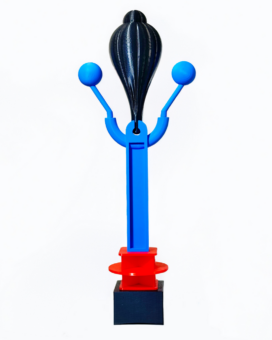
Pictured: Louise Paramor – Her Majesty | 2024 | Polymer | 100 x 40 x 40 cm
Your work often plays with colour, form and scale. What drives your interest in the sculptural language of everyday materials?
My practice is based primarily in sculpture and utilises familiar objects, transforming them into dynamic, abstract compositions. A large component of my practice is the making of assemblages from found plastic objects drawn from a variety of sources. I am attracted to bright colours and unusual shapes. Once I have amassed a diverse selection, I begin a process of trial and error, arranging the parts to create finished sculptures or maquettes. I tend to work in series, which are usually unified by scale. Increasingly, I view my smaller pieces as potential maquettes for future large-scale public art projects. My three-dimensional work always informs the two-dimensional: this includes collages made from gloss enamel-painted paper, glass paintings, and photography.
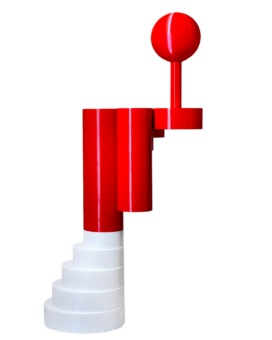
Pictured: Louise Paramor – Supermodel | 2024 | Polymer | 76 x 38 x 30 cm
What can we expect to see in your presentation with Void_Melbourne at Sydney Contemporary?
There will be three different groups of works: a selection of wall-mounted boxes, each featuring a triptych of small assemblages against a colour-field backdrop; a selection of 3D-printed enlargements of small assemblage pieces presented on circular plinths; and a selection of reverse-glass paintings depicting abstracted imagery drawn from the assemblage work.
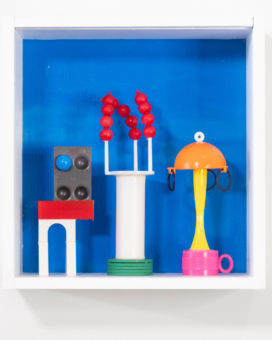
Pictured: Louise Paramor – MatchFit # 6, 2023 | Wall mounted and glass fronted | 22 x 23 x 10cm
How do you imagine yourself—your practice—to look in 10 years’ time?
All I can say is that I hope to continue to be fully immersed in my work in 10 years’ time!
How do you see your art practice evolving, and what direction are you most excited to explore?
Recently, I have started to explore the possibilities of 3D printing, which offers a new way of thinking for me. This means I am not attached to a particular scale of object when making my maquettes. Also, as colour is embedded in the plastic ‘ink’, the material translation is very sympathetic to the original found pieces. I am currently working on a ‘game’ project for a major art institution, programmed for late 2026 (the details of which are yet to be publicly announced), which involves creating a series of small assemblages with the intention to 3D print them at human scale.
___
Louise will present work at Sydney Contemporary 2025 with Void_Melbourne. Tickets to Sydney Contemporary are on sale now.
voidmelbourne.org
@void_melbourne
louiseparamor.com
We caught up with Elisa Trifunoski, Director of Egg & Dart, ahead of Sydney Contemporary 2025 to talk about the gallery’s organic beginnings, its strong connection to place, and what’s in store for this year’s presentation. From a humble window-front in Thirroul to a fully programmed space in Wollongong, Egg & Dart has become a platform defined by material sensitivity, nuance, and an openness to the unexpected.
___
Can you tell us about how Egg & Dart came into existence?
Egg & Dart was formed somewhat coincidentally, exhibiting artworks in the window shopfront of a framing studio in the coastal town of Thirroul, NSW. What began as a small window gallery gradually expanded until it eventually took over the entire studio and became an exclusively programmed gallery.
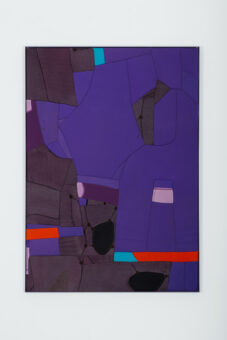
Image:Henry Jock Walker, GJB, 2025.
Your gallery is located in Wollongong, how does the community and neighbourhood around you inform the gallery?
Wollongong has a deep, and sometimes unexpected, creative undercurrent. There’s a rawness and honesty here that aligns with what we do at Egg & Dart. We’re surrounded by the ocean and the escarpment, a landscape that both absorbs and supports our community. And yet we’re so close to Sydney, which gives us access to the broader art scene while providing space for autonomy and experimentation. These are the qualities we aim to reflect in the gallery’s program.
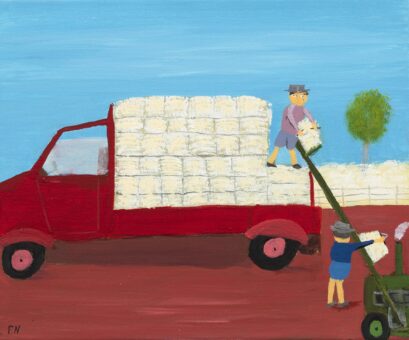
Image: Frank Nowlan, Hay carting
Which artists are you presenting at Sydney Contemporary and why?
For Sydney Contemporary 2025, we’re presenting a group exhibition that embraces the unusual, the layered, and the intimate. It features new works by Hannah Barclay, Lee Bethel, Aaron Fell-Fracasso, Erin Mison, Darren Munce, Frank Nowlan, and Henry Jock Walker – artists working across textiles, ceramics, paper, and painting. What connects these artists is a sensitivity to material and a quiet complexity in their processes. Rather than focusing on a single theme, we wanted to bring together practices that resist easy classification. The exhibition is about nuance, experimentation, and the unexpected.
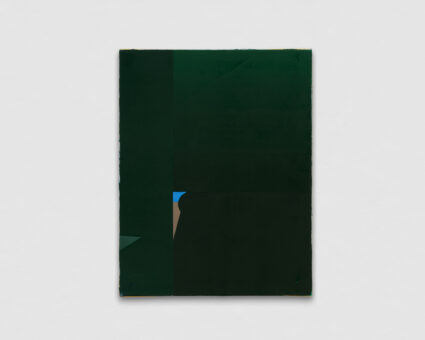
Image: Darren Munce Architectures (study), 2025
Looking ahead, what are your hopes for the next 10 years of Egg & Dart?
I suspect the art world will change quite a bit over the next ten years. But we’ll be doing exactly what we do now – holding space for artists, staying responsive, and continuing to build something generous, sustainable, and and meaningful. I want to keep having fun along the way, too, that’s absolutely key.
______
Egg&Dart will present work by at Sydney Contemporary 2025. Tickets to Sydney Contemporary are on sale now.
Cover portrait image by T W Baker.
Loren Marks’ work radiates with a sense of intuitive energy—her layered, figurative paintings balance ambiguity and presence, memory and materiality. Ahead of her presentation with SANDERSON at Sydney Contemporary, we spoke with the Naarm/Melbourne-based artist about the ritual of daily painting, the shifting identity of her figures, and how discarded books and inner instincts guide her richly alchemical process.
_
What inspired you to pursue a career in art, and how has your journey as an artist evolved over the years?
I loved art as a child but I didn’t know where it would lead. I was lucky to get a place at the Whitecliffe College of Art and Design in Tāmaki Makaurau where I studied a Bachelor of Fine Arts. After graduating I became a surface print designer in the fashion industry. When I was working, I felt like I had all these ideas swirling around in my head and I needed an outlet, so after hours I began making my own art and then showing the pieces in random places in the city. My current gallery director at Sanderson saw the work at a pop up exhibition I put on and I was fortunate to be offered my first gallery solo show shortly after. That moment was the catalyst for me to focus on pursuing my career in art, and now I have moved to in Naarm Melbourne to complete my Masters at VCA, University of Melbourne, as a recipient of the Cranbourne Scholarship in Visual Art.
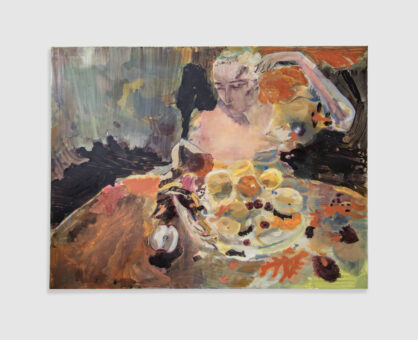
Loren Marks, As for the Rest, 2025. Courtesy of the artist and SANDERSON.
Although your process is described as intuitive and ritualistic, how do you prepare to paint, and how does that affect what appears on the canvas?
Intuition for me is very human, where sensations in my body and mind work in synchronicity to make decisions. I will start by putting paint on the surface of the canvas, which sets off a chain of events that lead to the final outcome. Sometimes the works completely change from the beginning idea. I get ideas for my works from my environment – walking around the city, looking at art, or out in nature. I sketch from my head or I’ll find photos or books that present themselves to me. I found a discarded Caravaggio book outside of my apartment that provided ideas for my current body of work. I have learnt to trust myself and the materials, and it always ends up working out if I am habitually showing up in my studio. This ritual and dedication has taught me lessons that spread out into other aspects of my life.
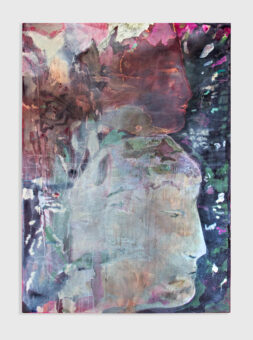
Loren Marks, On A Promise, 2024. Courtesy of the artist and SANDERSON.
Your figures are often ambiguous and shifting, what draws you to this sense of fluid identity?
Exploring the figurative is so fascinating to me, with its infinite possibilities. I want my figures to be viewed as genderless and without a specific ethnicity or identity. I want them to have a universal feeling where they transcend time and space, and you cannot place exactly where they are from. By keeping the figures ambiguous and shifting, I wish to gently invite the viewer to recognise things about themselves in them, and become part of the work too.
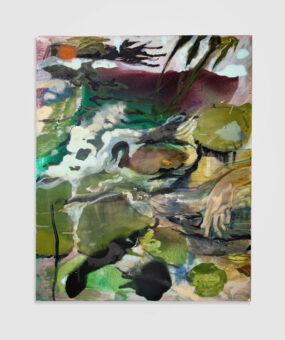
Loren Marks, Slowing of Seasons, 2025. Courtesy of the artist and SANDERSON.
With your layered, alchemical technique, how do you know when a painting is finished?
I never know when a painting is finished! But I definitely know when it’s not finished.
I sometimes bring them home from my studio and I’ll just look at them in a different space for ages and if they’re not done, they sort of annoy me or there’s just something not right and it goes back to that mind/body intuition, like the feeling of knowing that it’s not right. It’s a good sign when I don’t feel bugged by it.
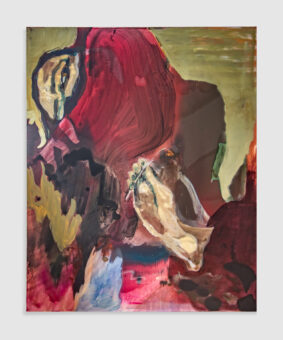
Loren Marks, I Was Able to Go This Far, 2024. Courtesy of the artist and SANDERSON.
Where do you hope to see yourself, your practice, in 10 years?
Being in new places and environments always invigorates my practice. I like to live and work either in a busy city, or deep in nature, nothing in between! I can imagine my practice evolving. With each show there is always a shift. I’m materials led so I don’t really know what my next body of work will be until I make it. What I love about art is that anything can happen, and that’s what makes it so exciting.
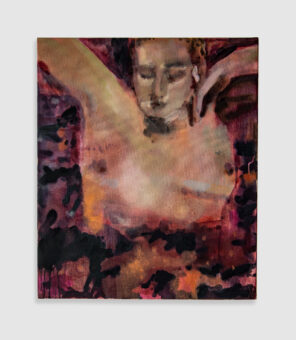
Loren Marks, Clouds in Your Eyes, 2024. Courtesy of the artist and SANDERSON.
Loren will present new work at Sydney Contemporary 2025 with SANDERSON. Tickets to Sydney Contemporary are on sale now.
We spoke with Emanuel Mugrauer, Co-Founder of BTWNLNS, a book and furniture store he runs with his partner, interior architect Nicole Albrecht, and curator of the Sydney Contemporary 2025 pop-up bookshop. We discussed what makes Sydney an increasingly compelling cultural city, the importance of supporting the arts, and how to make the most of your time around the fair.
Drawing from his perspective in Berlin, Emanuel offers a candid, international view of Sydney’s creative scene—one that embraces nuance, collaboration, and a touch of unpretentious charm.
What makes Sydney stand out as a cultural destination?
Sydney has many beautiful, diverse neighbourhoods where people collaborate and contribute in their own unique ways. This makes Sydney a contemporary city in terms of art, music, food, design, architecture, and fashion. I am born and bred in Berlin, lived in Moscow, Munich, Hamburg, New York and worked worldwide. I can get inspiration from wherever I go. The interesting mix of so many cultures in Sydney feels unlike anywhere else in the world. By contrast, my hometown has never felt as diverse to me, and the quality in many areas is quite different. This vibrant patchwork creates something new, and to me, Sydney is one of the most interesting cities globally. Europe is beautiful, old, and classic. But exciting and new things are happening in Seoul, Shanghai, Taipei, Mexico City, and beyond. Hopefully, the same will be true for Sydney, as there is immense potential in the APAC region.
Those who complain about a lack of culture should start doing their part. Cities like Berlin and New York became cultural hubs because people took risks and contributed to the cultural landscape. Sydney has many interesting artists and institutions, and sometimes I feel they should be more proud and push for greater international exchange.
A funny observation is that many people from Sydney or Melbourne go to Berlin, but they haven’t really succeeded in bringing people from Berlin to Melbourne or Sydney. Some of my favourite places in Berlin are run by Australians who contribute to Berlin’s current “cool.” But they could do the same in Sydney, Melbourne, or other Australian cities. It still feels very one-sided and sometimes I wonder if Crocodile Dundee is still the reference for Australia, which is a shame. This is probably partly due to Australia’s city marketing, which tends not to focus on culture. It’s all about kangaroos, beaches, landmarks, and things like the Harbour Bridge and the Sydney Opera House (which, by the way, does a great job with its program). However, the external perception is often limited to the building itself rather than the cultural quality of its program.
Being on the other side of the world, starting fresh on another continent, makes us feel young. We have always been drawn to places that are evolving, rather than those that are already “ready-made” cool. For us, Sydney is one of the most beautiful cities in the world where you can enjoy nature and culture simultaneously.
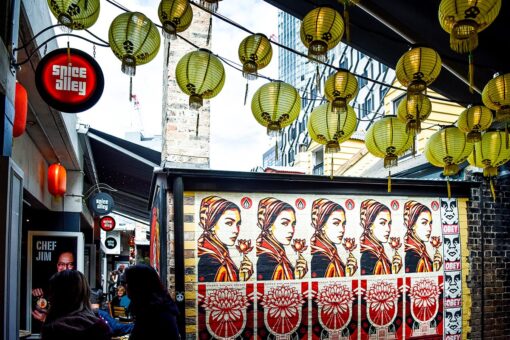
Image: Street art in Spice Alley, Image source: Scott Marsh
After a day of exploring Sydney Contemporary, where would you go for dinner and drinks to continue the evening?
Ito in Surry Hills, with its timeless, understated quality, is one of my favourite spots. Farmhouse Kings Cross, Odd Culture, and ANTE in Newtown, or Dear Sainte Eloise in Potts Point, are also fantastic. The Eveleigh Hotel in Redfern is a great choice for an outdoor beer, a “roundabout bet,” and excellent live jazz.
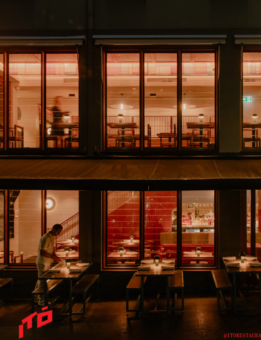
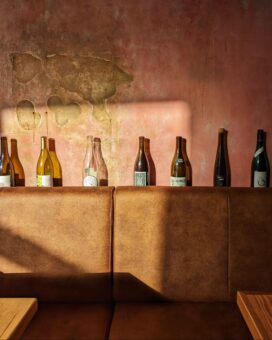
Images: Left: ITO Surry Hills, Image source: © ITO. Right: Odd Culture Newtown, Image source: Odd Culture Newtown.
What cultural events or exhibitions coincide with the Sydney Contemporary that you recommend?
I’m really looking forward to the 38th Kaldor Public Art Project. John Kaldor has invited German artist Thomas Demand to create an exhibition space in the Art Gallery of New South Wales’ Naala Badu building, specifically designed to showcase the John Kaldor Family Collection in a completely new light.
I met Thomas Demand years ago in his studio in Silverlake and was very impressed by his strong and clear artistic vision. We discussed the execution of his work “Blossom” and explored photographic techniques. “Blossom” depicts branches covered with a myriad of delicate cherry blossoms, characteristic of Sakura. Bright red sepals at the stem and pink petals frame a dark red stigma in the center. In traditional Japanese culture, because of the cherry blossoms’ short bloom, the motif symbolizes the fleetingness of life and beauty. At the same time, as a sign of spring, the blossoming trees represent new beginnings. In the end, he chose to use dye transfer prints, and I understood his decision (Even though I was keen to excite him about REANALOG—a technique combining digital photography, 3D, CGI, an 8×10 inch negative, and analogue hand-pulled C-type prints.)
That’s exactly what makes conversations with artists so rewarding—learning from their strong and clear opinions about their work.
His art and long-term collaboration with Caruso St John, showcased in the fantastic exhibitions at Berlin’s Neue Nationalgalerie and The Triple Folly, especially inspired me. His curatorial work for the Prada Foundation and the amazing exhibition “L’image volée” also had a strong impact on me.
Demand’s exhibition explores how we all rely on pre-existing models and how artists have historically drawn on existing images to create their own. The project questions the boundaries between originality, conceptual inventiveness, and the culture of copying. It examines themes of theft, authorship, appropriation, and the creative potential of such endeavours.
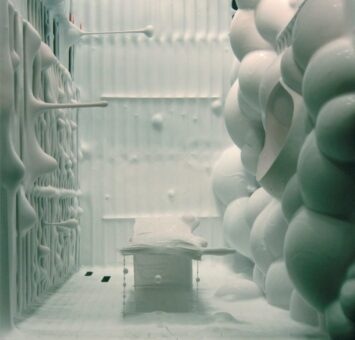
Saskia Olde Wolbers, ‘Placebo’ 2002. John Kaldor Family Collection © Saskia Olde Wolbers. Courtesy Maureen Paley, London.
If you have friends visiting from outside of town, what are you adding to their itinerary?
What do you do with your guests? Of course, we try to show them all facets and impressions of this great city. Start the morning with a dip in the ocean at Nielsen Park or Camp Cove, then enjoy coffee at ÉSEU266 in Marrickville. From there, visit 1301SW and the White Rabbit Gallery. For lunch, head to Chaco Ramen in Surry Hills. After some free time, have a simple dinner at Cairo Takeaway, then catch a concert at the Enmore Theatre, finishing the night with a drink on Enmore Road. A must is to try to get tickets for a concert at Phoenix Central Park or a production by the Sydney Dance Company or Sydney Theatre Company.
If the night was a bit long, the next morning you can relax with a steam bath at Capybara Bathing and then watch a movie at the Golden Age Cinema.
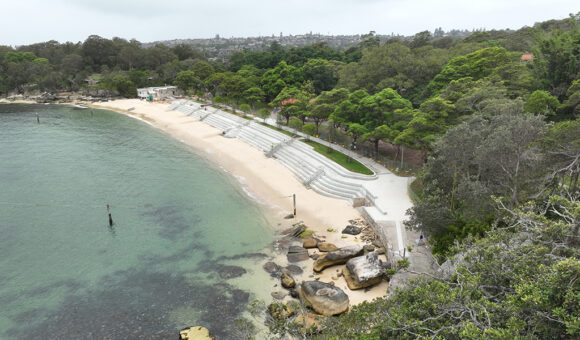
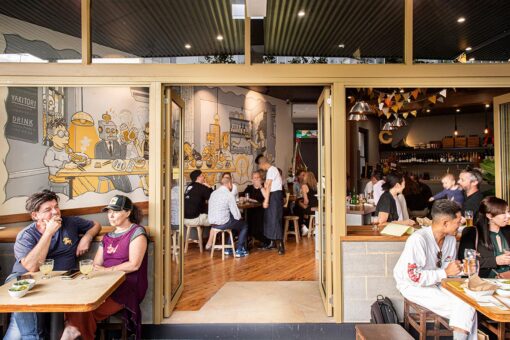
Images: Left: Nielsen Park, Image source: National Parks NSW. Right: Chaco Ramen, Image source: Chaco Ramen.
Do you have a favourite public art installation or mural in the city? What makes it special?
Honestly, I don’t know the artist’s name, but I love the “Break Up Park” bench at Burren Street Reserve in Newtown. It’s simple and effective—you don’t question it.
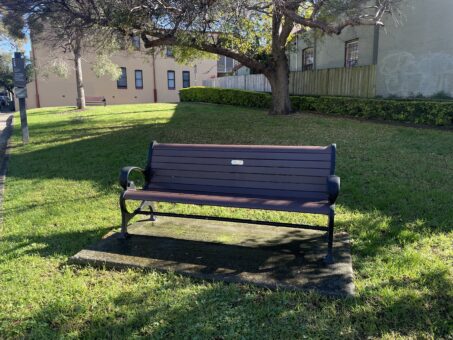
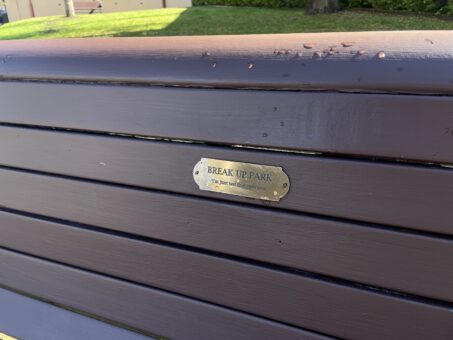
Images: “Break Up Park” bench
______
BWTNLNS will host the Pop-Up Bookshop at Sydney Contemporary 2025. Tickets to Sydney Contemporary are on sale now.
Ahead of Sydney Contemporary 2025, we spoke with Rachael Fry, Director of C. Gallery, about the gallery’s conceptual roots, curatorial focus, and what audiences can expect from their upcoming presentation. Evolving from Criteria’s design foundations, C. Gallery occupies a distinct space that bridges collectible design and contemporary art, highlighting practices that challenge category, craft, and cultural narrative. “C. Gallery developed as an extension of Criteria, integrating both physically and conceptually with the existing collection,” Fry explains.
___
Can you tell us about how C. Gallery came into existence?
C. Gallery developed as an extension of Criteria, integrating both physically and conceptually with the existing collection. It functions as a complementary platform to Criteria’s enduring commitment to collectible design, while simultaneously interrogating and blurring the boundaries between established collecting categories. This approach more accurately reflects the nuanced sensibilities and evolving aesthetic preferences of Australia’s discerning art and design community.
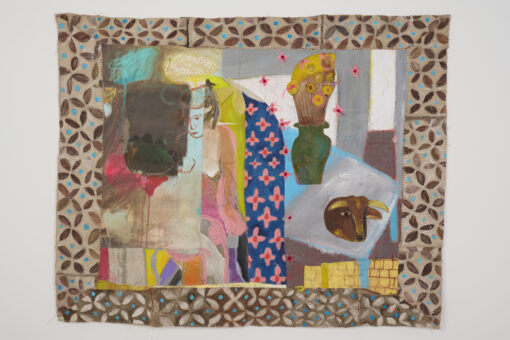
Nic Fern, ‘Ariadne’, 2025. Courtesy of the artists and C. Gallery. Photo by Joshua Morris.
Which artists are you presenting at Sydney Contemporary and why?
We are presenting new works by Nic Fern and Claudia Lau. In exhibiting two female Australian artists, we seek to highlight the differences and parallels between contemporary practices; both which draw from a deep historical knowledge and tradition while pushing their mediums in unexpected directions.
Nic Fern’s work offers a profound exploration of contemporary Australian notions of gender, class, and hierarchy. Through a diverse range of media including painting, drawing, stitching, and hand-built clay elements, she creates intricate wall works and illustrated vessels that cleverly incorporate iconic imagery from the Western visual art canon.
Claudia Lau’s practice straddles between experimentation and the refined. She seeks to explore the ceramic process expanded through a lens of poetic gesture, working with considered studio methodologies that flex between known and unexpected firing outcomes. Dividing her practice and time between a studio practice and a production studio based in Jingdezhen, China, this cultural exchange has developed her deep connection with the tradition of ceramics and experimental production methods.
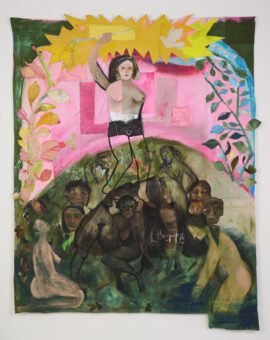
Nic Fern, ‘Liberty Leading the People’, 2025. Courtesy of the artists and C. Gallery. Photo by by Joshua Morris.
Could you share one of the most memorable times you’ve had working as a gallerist?
There’s something uniquely thrilling about witnessing an artist’s work during the installation of an exhibition. Even after seeing the full arc—from early concepts and sketches to preview imagery and final photography—the work never feels entirely real until it takes its place in the physical space. Understanding the immense effort that goes into developing a cohesive body of work only deepens the excitement when it’s finally ready to be shared with the world. It’s a feeling that never gets old.
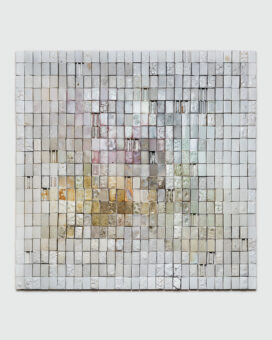
Claudia Lau, ‘Index 1’, 2024. Courtesy of the artists and C. Gallery. Photo by Simon Strong.
Looking ahead, what are your hopes for the next 10 years of C. Gallery?
I hope that our exhibitions will continue to surprise, resonate with, and deeply engage those who encounter it. It is a privilege to share the works of the remarkable artists we represent—each of them bringing a unique perspective to the cultural landscape.
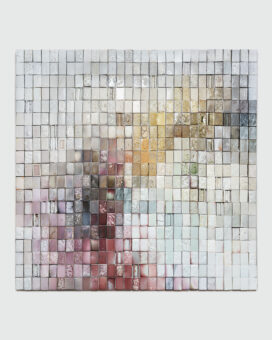
Claudia Lau, ‘Index 2’, 2024. Courtesy of the artists and C. Gallery. Photo by by Simon Strong.
______
C. Gallery will present work by Claudia Lau and Nic Fern at Sydney Contemporary 2025. Tickets to Sydney Contemporary are on sale now.
Cover photo by Sean Fennessy
cgallery.com.au
@cgallerycontemporary
In the lead-up to Sydney Contemporary 2025, we spoke with Jack Willet, Director of 1301SW, about the gallery’s evolving philosophy, memorable moments in his curatorial journey, and what visitors can expect from their upcoming presentation. Rooted in an ongoing dialogue between context and concept, 1301SW continues to push the boundaries of exhibition-making, with new work that engages deeply with both material and idea. As Willet puts it, “1301SW has an innate curiosity in exploring the diverse concepts of its artists… developing an exhibition program of changing agency: states of consistency and deviation, familiarity and inconclusiveness.”
___
How would you characterize the philosophy of 1301SW as a gallery?
It is both multi-pronged and concise. Being gently attached to its sister galleries in Los Angeles and Auckland, this connection to the larger artworld is immensely beneficial, but the gallery has also created its own vision and language, one chiefly concerned with the context it provides its artists. I see 1301SW having an innate curiosity in exploring the diverse concepts of its artists and through its larger output, which has seen us develop an exhibition program of changing agency: states of consistency and deviation, familiarity and inconclusiveness.
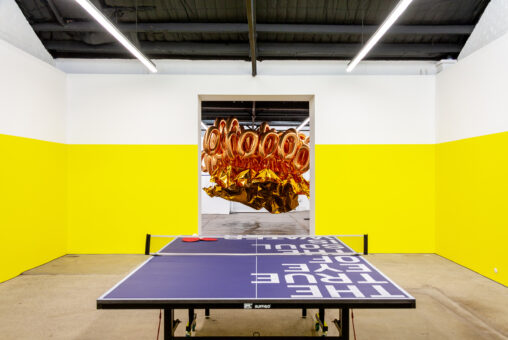
Lime and limpid green, a second scene (Part One), 2024 (installation view). Courtesy of 1301SW.
Could you share one of the most memorable moments you’ve had working as a gallerist?
The most memorable moments are over meals with artists, where a kind of dance with discourse and dialectics unfold over full plates and flowing glasses. Seeing glimmers of new ideas, existing ones needing to be massaged, and most importantly the removal of art as a topic, talking to other subjects and interests which inevitably find themselves in the work.
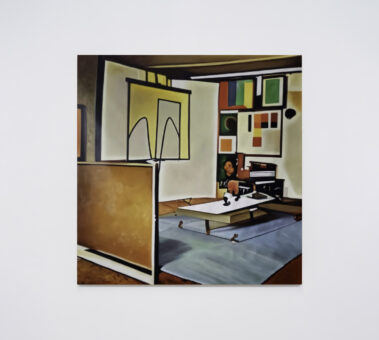
Diena Georgetti, The Civilization of the Abstract, 2025. Courtesy of the artists and 1301SW.
What are you most excited about for Sydney Contemporary 2025?
We will be presenting new aspects and developments by some of our artists at Sydney Contemporary, including a new work from Diena Georgetti which further deepens her collage-like engagement with AI, in combination with her own unique way of painting. This work collides technology, research (obsession), scale, space, form and figure into a remarkable — and sizable — painting in three distinctive yet cohesive sections. Also, outside of our booth in the project space, Jonny Niesche is undertaking the next iteration of his immersive installations which utilise a stretched mirror film, sound and vibrations to further warp our perception of his already hazy paintings.
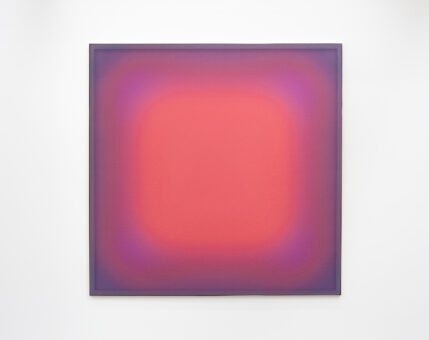
Jonny Niesche, We take infinity into our lungs (for G.B.), 2024. Courtesy of the artists and 1301SW.
Looking ahead, what are your hopes for the next 10 years of 1301SW?
Consistency and change.
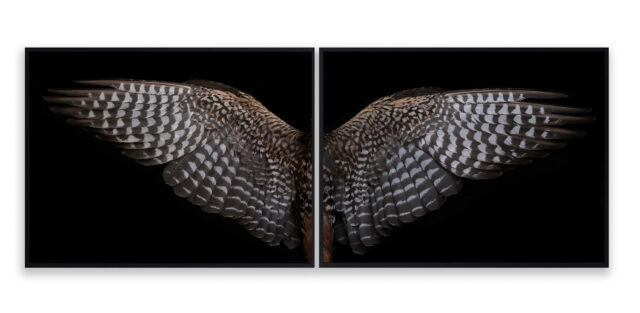
Fiona Pardington, Kārearea (below), Hunter, 2024. Courtesy of the artists and 1301SW.
1301SW | STARKWHITE will present work by Andrew Beck, Diena Georgetti, Heather Straka, Jonny Niesche, Jelena Telecki, Tim Bučković, Fiona Pardington, and Bill Hensonat Sydney Contemporary 2025. Tickets to Sydney Contemporary are on sale now.
1301sw.com
@1301sw_au
starkwhite.co.nz
@starkwhite
We speak with artist Mark Maurangi Carrol ahead of his upcoming presentation with Nasha Gallery in the Future sector at Sydney Contemporary. Known for his experimental use of materials and deep connection to memory and place, Carrol shares insights into his evolving practice, creative process, and what to expect from his powerful new body of work.
_
What inspired you to pursue a career in art, and how has your journey as an artist evolved over the years?
For as long as I can remember, I’ve drawn or made things—it was instinctive. Art offered a quiet space, a way to process my surroundings before I even realised that’s what I was doing. I’ve always known I wanted to create, whatever form that took. I don’t necessarily view art as a career choice, but as something intrinsic—less a conscious decision than a way of being. Over time, my practice has evolved naturally, shaped by place, experience, and dialogue.
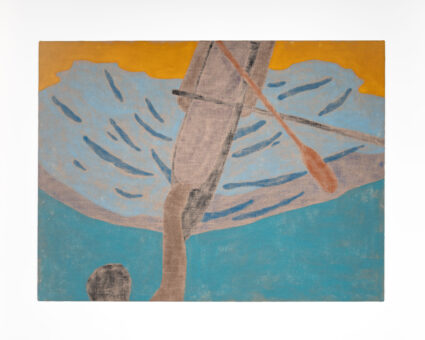
Image: Mark Maurangi Carrol, Second spring (gold), 2025, oil and permanent marker on linen, 138×183.5cm, courtesy of Nasha Gallery.
How do you approach the creative process when starting a new painting? Do you have any specific rituals or techniques?
My process often begins with research—reading, collecting images, writing, and drawing connections between memory, history, and place. I don’t have rigid rituals; while many paintings may share a similar practical inception, each one evolves differently. I spend a lot of time sitting with the linen and preparatory sketches before applying anything. Because I work on the reverse side first, I’m thinking in layers and in time, not just in terms of a “resolved” image. The act of painting becomes accumulative—more about sensing when something feels at rest than planning a finished outcome. Silence helps. I try to sit with the work for as long as possible—I believe looking is often more important to the act of making than actively building the image.
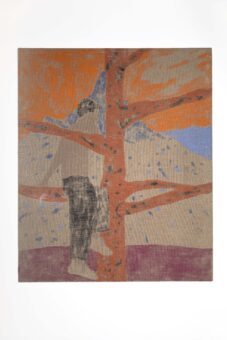
Image: Mark Maurangi Carrol, Two stories high (west), 2025, oil and permanent marker on linen, 195x162cm, courtesy of Nasha Gallery.
Your use of oil enamel on raw linen is both experimental and rooted in tradition, how did this technique evolve for you?
The use of oil enamel on linen evolved through experimentation and a desire to engage both materiality and memory. My background in printmaking and Cook Islander textile traditions like Tīvaevae and Pāreu continues to inform this approach. Painting from the reverse allows for slippages of form and pigment—the “finished” image loses resolution and becomes unstable, much like memory itself. This instability is central to the work. The loom-state linen remains active in the composition; it holds tension and absorbs traces. This method has become a way of collapsing image, material, and process.
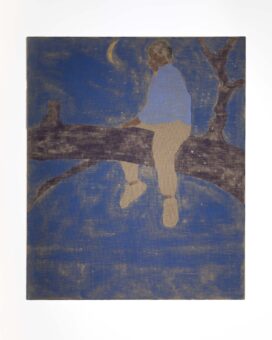
Image: Mark Maurangi Carrol, Overland (Ōkoro East), 2025, oil and permanent marker on linen, 195x162cm, courtesy of Nasha Gallery.
What can we expect to see in your presentation with Nasha Gallery at Sydney Contemporary?
At Sydney Contemporary, I’ll be presenting the third and final act of an ongoing body of work developed over the last year, exploring migration, memory, and ancestral presence through shadow and light. Titled Maru a’ia’i (“the shadows of the evening”), the presentation completes a three-part series in which shadow operates as both metaphor and material—signifying what is remembered, obscured, or carried forward.
The first act, Ueata (“to capture shadows”), was shown at Nasha Gallery earlier this year and centered on the legacy of colonial photography. That idea—photography as both a mechanism of capture and a vessel of memory (a “box of shadows”)—threads throughout the series, not only as source material, but as a conceptual lens through which to consider presence, absence, and the instability of image.
The second act, Maru a’o (“the shadows of the light of day”), opens at Lismore Regional Gallery on September 5 and considers the interplay of visibility and illumination within diasporic experience.
At Sydney Contemporary, Maru a’ia’i forms a poetic response to Maru a’o. Together, the two evoke the passage of day into night, light into shadow. This temporal arc reflects the cycles of return, reflection, and transformation that underpin my practice. The final act leans into what is fading or unresolved—a consideration of lost presence.
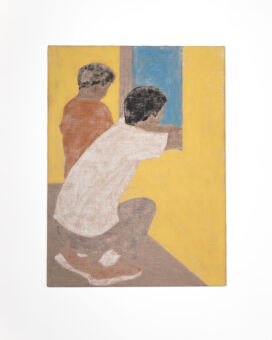
Image: Mark Maurangi Carrol, Procession, 2025, oil and permanent marker on linen, 138.5x102cm, courtesy of Nasha Gallery.
How do you imagine yourself, your practice, to look in 10 years time?
It’s a difficult question to answer, but I imagine myself still working across painting and the image in general—perhaps in more interdisciplinary ways. I’ve been engaging more consciously with sculpture and thinking about painting in an expanded sense. Since I’ve referenced tapa cloth throughout my work, I’m also interested in incorporating more traditional materials into my practice. The conceptual foundation of my work feels integral to who I am, so I imagine that core will remain. But with age and experience, I expect my responses to those ideas will evolve—shaped by time, place, and perspective.
Mark will present new work at Sydney Contemporary 2025 with Nasha Gallery. Tickets to Sydney Contemporary are on sale now.
Cover image by Volodymyr Kravchenko
Sydney is many things – beautiful, ever-changing – but for artist Ramesh, it’s the layers of culture and community that make it truly special. In this conversation, he shares his take on what makes the city such a rich place to experience art, food, and everyday magic. From Western Sydney’s creative energy to the small restaurants and hidden public artworks that stay with you, Ramesh shows us a version of Sydney that’s personal, textured, and full of life. Ramesh is represented by Sullivan+Strumpf.
_
What makes Sydney stand out as a cultural destination?
Sydney is layered, chaotic, and physically amazing. But what makes it stand out is the way multiculturalism has enriched our cultural life. There’s a resistance to a singular narrative. The meaningful integration of migrant and First Nations art, culture, and cuisine makes it an incredible place to experience, even in short bursts. In terms of art, food, and culture, there’s the polished, institutionally-driven metropolitan scene. But there’s also a wildly energetic current that flows through Western Sydney, where I grew up. I can’t wait to see how Powerhouse Parramatta takes shape, Parramatta was my stomping ground as a teenager.
After a day of exploring Sydney Contemporary, where would you go for dinner and drinks to continue the evening?
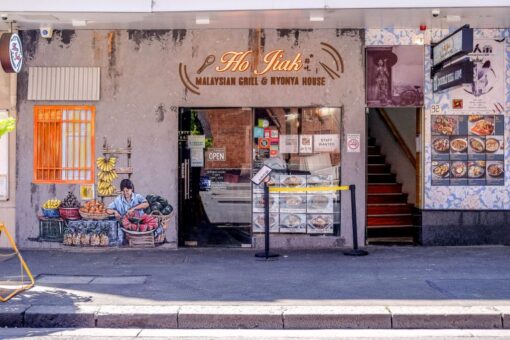
Sydney is gastronomically privileged. After a sensory overload at the fair, I’d decompress somewhere that feels generous, romantic, and unfussy. If you want to stay in Redfern, I’d head to Flyover Fritterie, Bush, or Fontana. If you venture nearby into Surry Hills or the CBD, Ace Hotel, Pellegrino 2000, or Porkfat usually get me going. That said, I love a homestyle eatery! Close by, Ho Jiak, Malacca Straits, Medan Ciak, and Caysorn Thai are some of my favourites. Cantina OK! is also a great vibe for cocktails, some of their drinks feel like storied artworks.


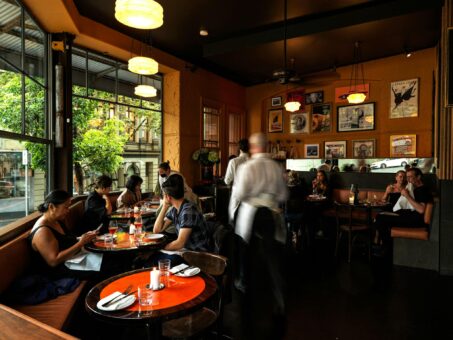
Images: Left: Pellegrino 2000, Image source: Broadsheet. Right: Ho Jiak, Image source Ho Jiak.
What cultural events or exhibitions coincide with Sydney Contemporary that you recommend?
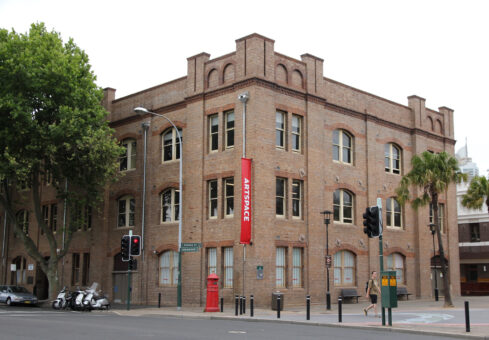
Many galleries, museums, and multi-arts centres roll out engaging programs during this period. They take advantage of the critical mass of people from all over who descend on the city. Definitely check out the major museums, but also head to venues like Artspace, Sydney, to get a sense of contemporary art in a non-commercial or collecting context. The Sydney Contemporary program itself is pretty fab. I’d recommend their tours of artists’ studios, these are the spaces where art is dreamed and made into reality. You’ll get to see the heart, the joy, the mess, the agony of process. It’ll make art feel human.

Image: Artspace, Image source MGNSW
If you have friends visiting from outside of town, what are you adding to their itinerary?
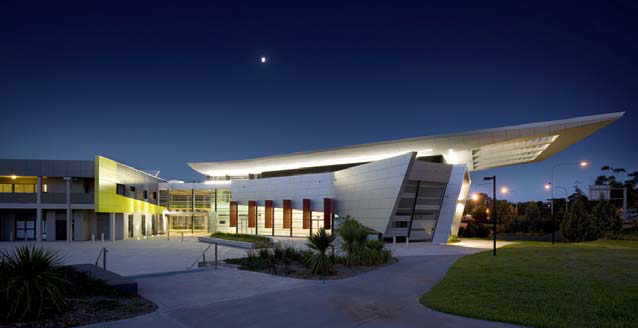
I make them leave the CBD and experience culture through food and art. Get on a train and head to Harris Park! Or head to Chef Ceylon, my favourite Sri Lankan restaurant in Toongabbie. Consider making a trip to Western Sydney galleries like Campbelltown Arts Centre or the Liverpool Powerhouse. That said, there are some amazing fashion offerings in town too. The Song for the Mute flagship store will probably send me broke.

Image: Campbelltown Arts Centre. Image source MGNSW
Do you have a favourite public art installation or mural in the city? What makes it special?
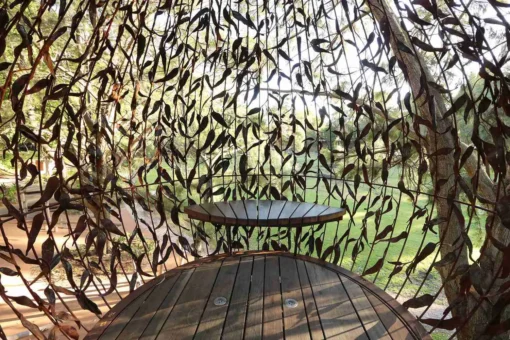
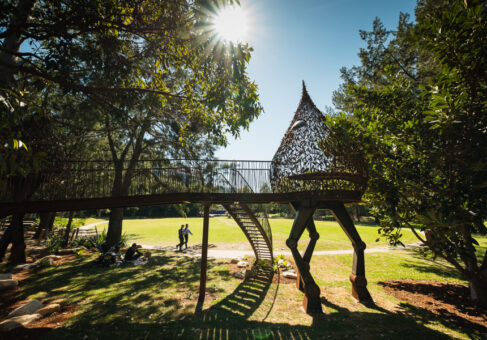
Yeah, Nell’s treehouse in Redfern sticks with me. It’s this curious, elevated structure nestled into the city like it grew there overnight from forged leaves. There’s something punk, playful, and slightly mystical about it. It doesn’t announce itself loudly. It’s not trying to dominate, but once you see it, you can’t unsee this portal or threshold. What I love about Nell’s work, there and more broadly, is how she creates space for joy, grief, humour, and spirit all at once. It reminds me that public art doesn’t have to be monumental to be powerful. It just has to shift your perspective, even for a moment.

Image: Nell’s treehouse, Redfern
Ramesh will present new work at Sydney Contemporary 2025 with Sullivan+Strumpf. Tickets to Sydney Contemporary are on sale now.
Cover image by Bowen Aricò.
ramesh-nithiyendran.com
@ramesh__mario
sullivanstrumpf.com
@sullivanstrumpf
