Driven by an evolving dialogue between design and science, architect Stephen Jolson and his wife Lisa approach contemporary art not as a pursuit of mere acquisition, but as a living record of their shared human experience. For them, a true collection is an authentic portrait of a life lived where art does not merely decorate architecture, but actively asserts its own presence to challenge, shift, and deepen the spaces it inhabits.
Ahead of Sydney Contemporary, we spoke with Stephen about the milestones that shaped his family’s collecting journey, how designing cultural landmarks like Point Leo Estate reframed his view of art as a legacy of stewardship, and why the Fair remains a vital annual nexus for creative connection and community.
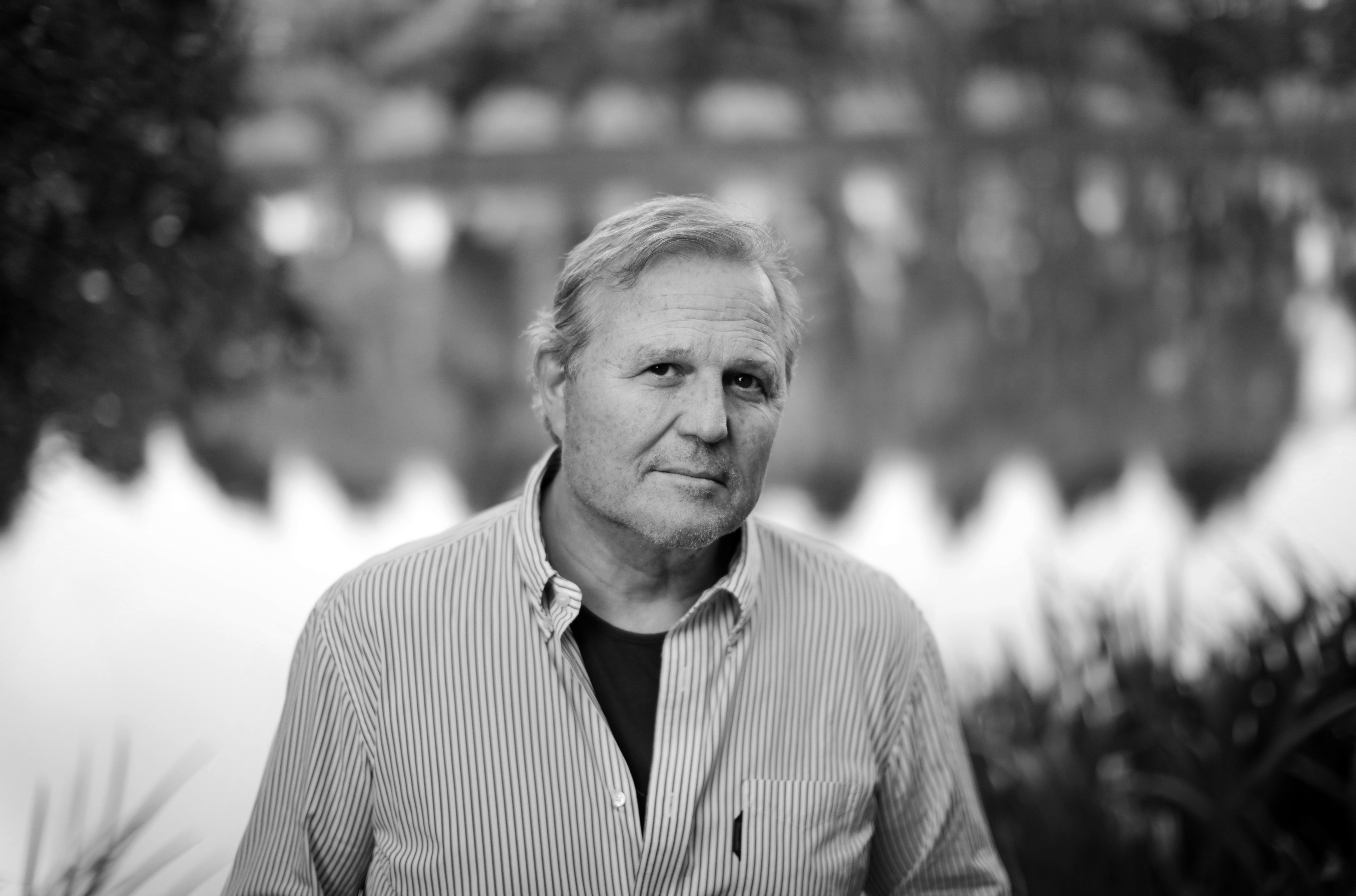
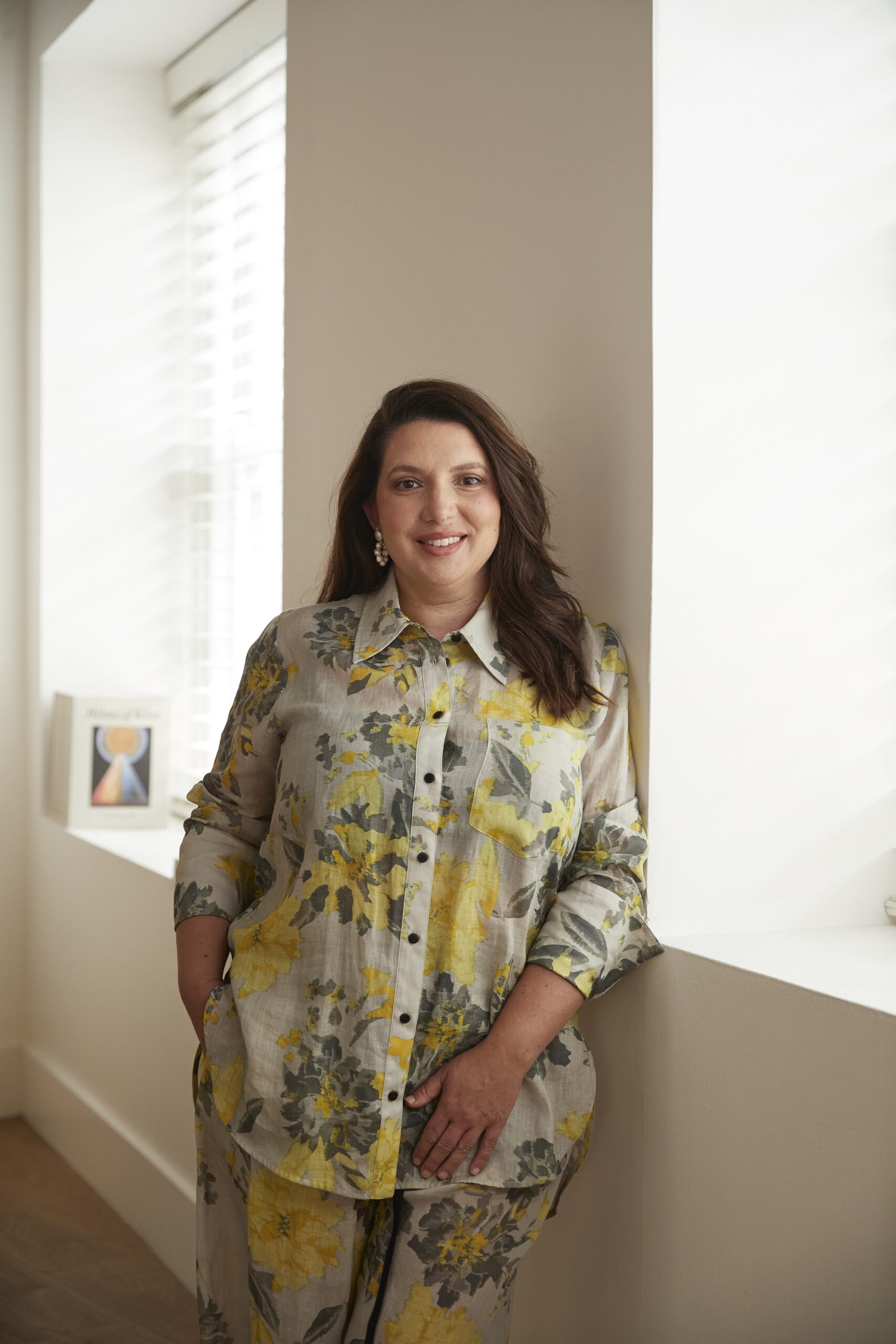
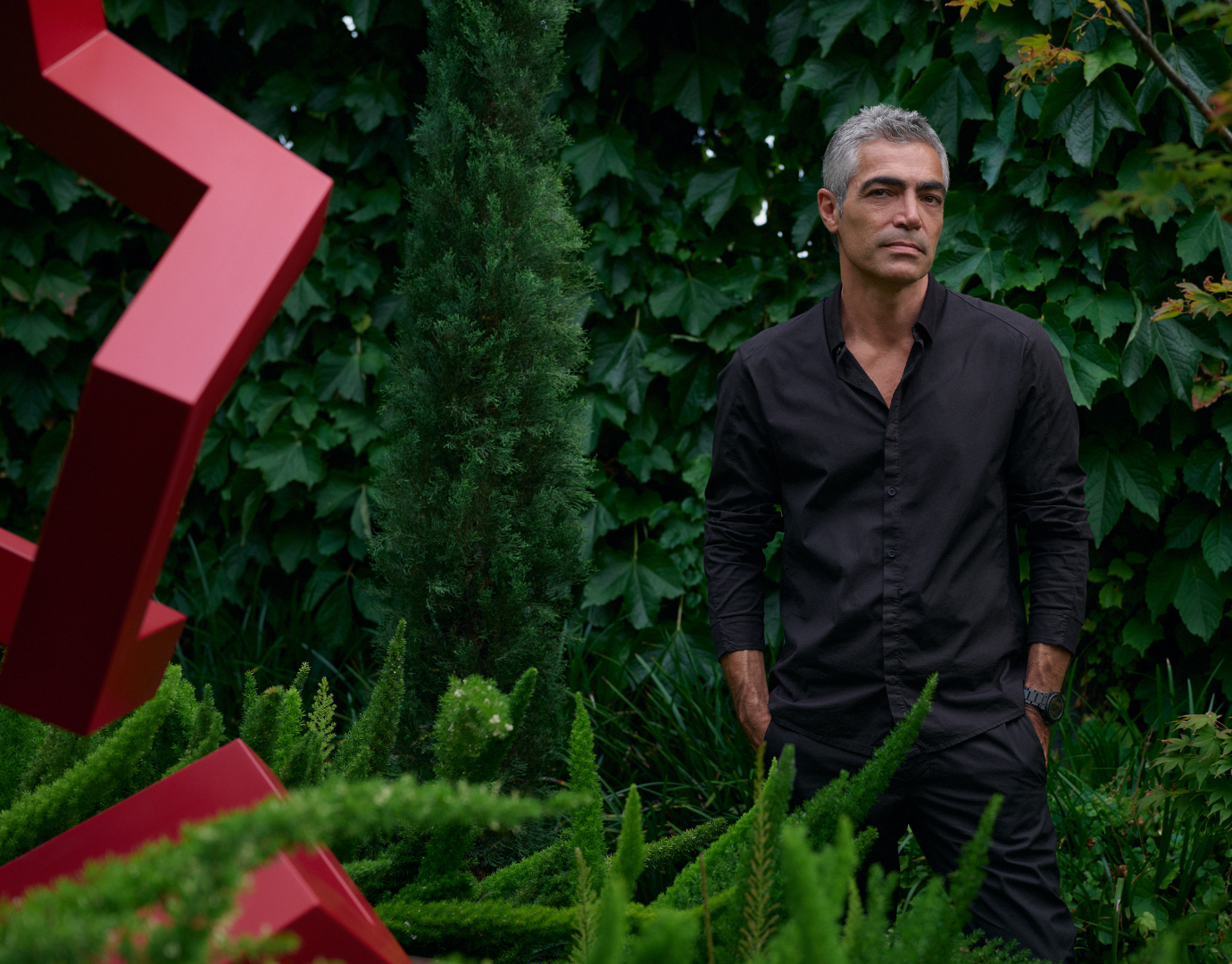
Portrait: Stephen Jolson and Caleb Shea Sculpture

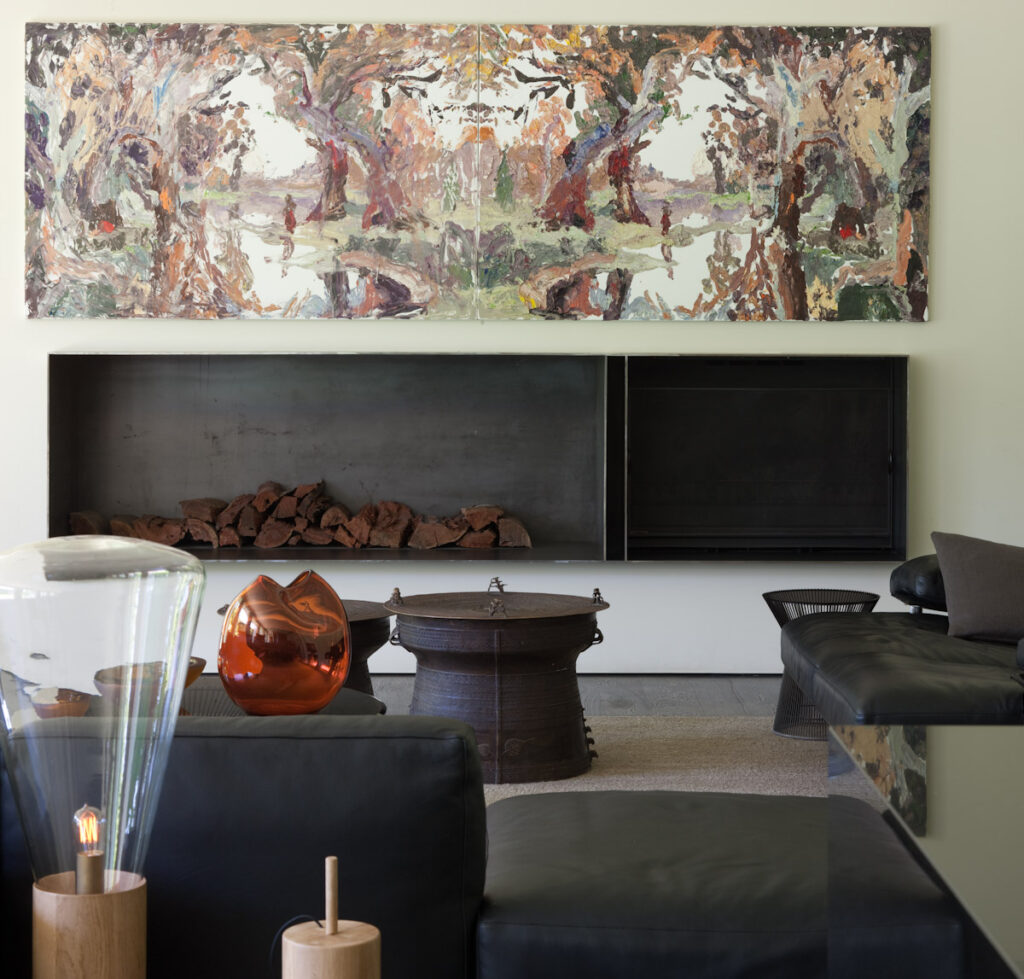
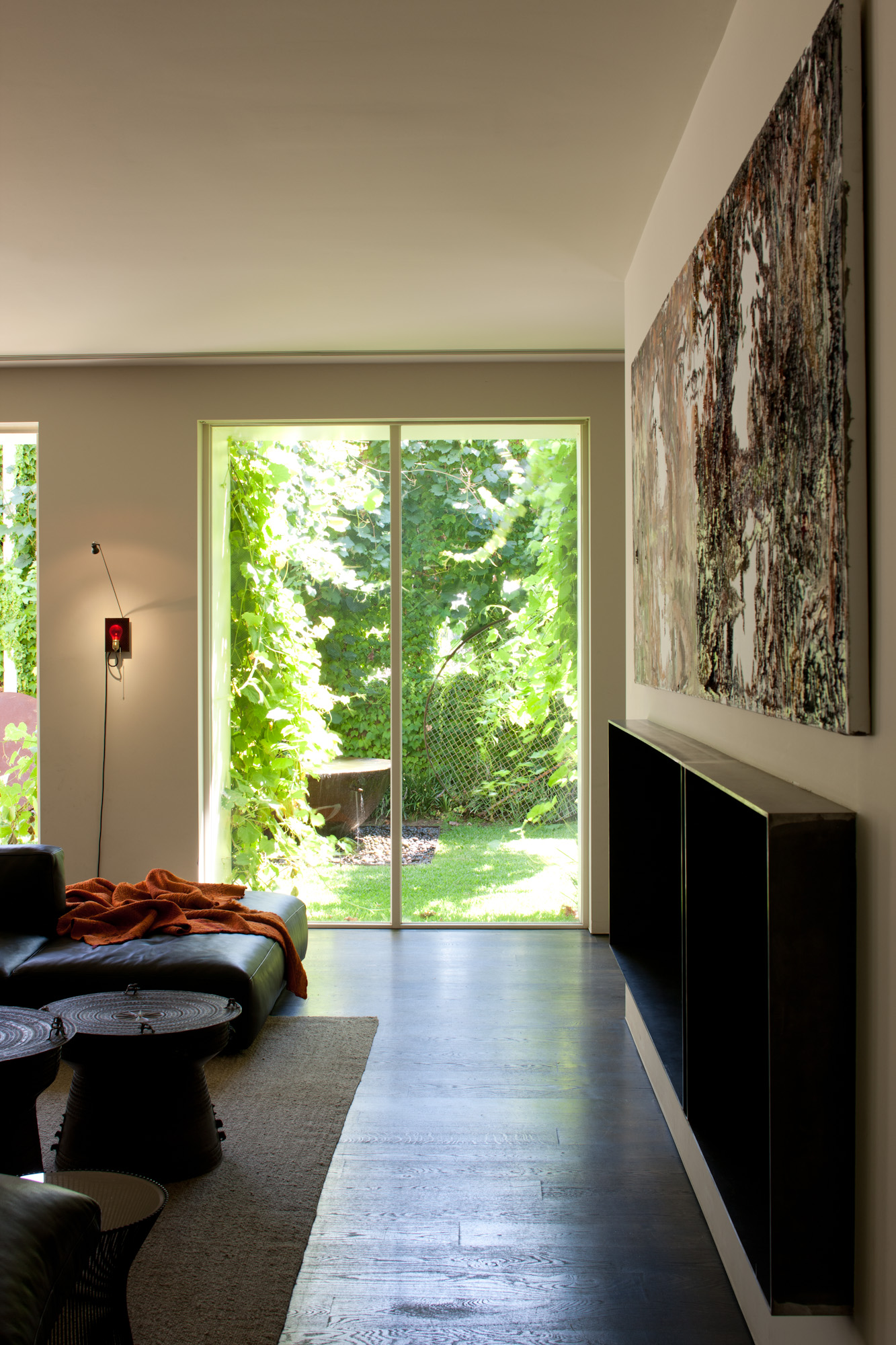
Ben Quilty, Rorshach After Johnstone, 2011. Purchased from Jan Murphy Gallery.
What first sparked your interest in collecting contemporary art?
Looking back, I don’t think my interest in collecting began with art itself. It began with curiosity. Lisa and I built our first home early in our relationship over 20 years ago. The walls were largely blank, not because we wanted them to be, but because we simply couldn’t afford the works we admired. Over time those walls slowly filled. Looking back now, I don’t really see a collection of artworks. I see a chronology of our lives. Every acquisition marks a friendship, a journey, a celebration, a loss or a conversation that moved us, challenged us or simply made us react.
Architecture naturally led me towards art. It taught me that before we can cast our eyes forward, we first need to look backwards. History, landscape, culture and the rituals of life all become part of the design process. Architecture is not an imposition upon place. At its best, it is an act of response. Art asks many of those same questions through a different medium.
Travel reinforced those lessons. Experiencing different cultures heightened my awareness of light, texture, materiality and the local vernacular. I came to appreciate that architecture, painting, music, landscape, food and the objects we live with are all different ways in which people interpret and respond to their surroundings. Together they deepen our understanding of the human experience.
Collecting has never really been about ownership. It has been about curiosity, engagement and learning to see.
When encountering a new work, what qualities or ideas tend to draw you in?
Like architecture, I am drawn to work that makes me stop and think.
The strongest works don’t always reveal themselves immediately. They ask something of you. They provoke a reaction, invite reflection or continue to unfold over time. I’m interested in artists who have developed an authentic language of their own, where process, material and idea become inseparable. You are not simply engaging with an object, but with years of thinking, questioning and making.
One of the most memorable experiences of my career began with an unexpected phone call from a tour guide with clients from Mumbai. He had taken them to visit Point Leo Estate, and upon arrival, they wanted to meet the architect. Within an hour they were in my office, and what began as a spontaneous conversation ultimately became an invitation to design a non-denominational temple within the UNESCO World Heritage landscape of Hampi in India.
What has stayed with me wasn’t simply the commission itself. It was the reminder that architecture and art share something fundamental. Both have the capacity to create an immediate emotional response before a single word is spoken. That instinctive human reaction is something I continue to look for whenever I encounter a work of art.
I’m not necessarily looking for beauty in the conventional sense. Beauty, for me, is something that invites deeper engagement. Some of the works I value most have challenged my assumptions, changed the way I think or simply stayed with me long after I first encountered them.

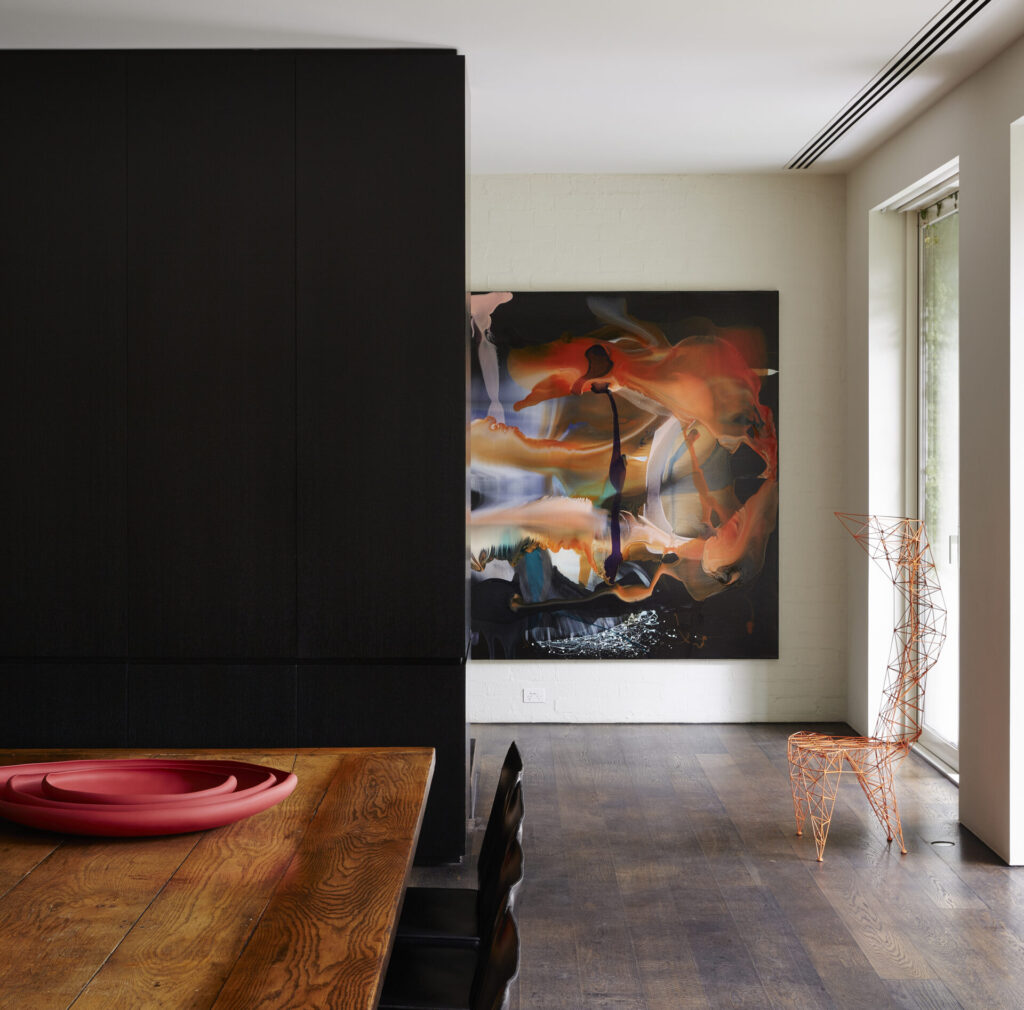
Dale Frank, Creative Guilt Beth Din and Flem Embroidered Words, 2008
Has your approach to collecting evolved over time? If so, how?
Completely.
When Lisa and I first began collecting, our decisions were largely instinctive. Over time they became conversations. Lisa approaches the world through science and medicine. I approach it through design and the built form. Those different ways of seeing have quietly shaped every acquisition and, in hindsight, made our collection stronger.
One of my favourite stories involves Robert Owen. I visited his studio and was immediately taken with Spectrum Shift 4. I bought it impulsively. The challenge was not simply how I was going to pay for the acquisition. It was finding the courage to tell Lisa that I had made the decision without her. From the beginning, collecting had always been something we shared. The gallery kindly agreed to store the work (or quietly hide it) while I paid it off. It remained there for almost ten years, not because Lisa objected to it, but because I never quite found the right moment to tell her. Today it hangs in our entrance hall and reminds me that the most enduring acquisitions are rarely those driven by impulse alone. Their meaning deepens through conversation, patience and ultimately a shared conviction.
Another defining moment came through Dale Frank. Anna Schwartz encouraged us to live with one of Dale’s extraordinary monochrome works. I loved its restraint and the way it echoed the simplicity of our interior. Lisa quietly observed that it felt too comfortable, that it was agreeing with the interior rather than creating its own space. Anna later introduced us to Creative Guilt Beth Din and Flem Embroidered Words, a work that was layered, complex and full of movement. Looking back, Lisa was absolutely right. That experience fundamentally changed the way I think about the relationship between art and architecture. Art has the power to assert its own presence within a space. It shouldn’t simply reinforce the architecture, otherwise it risks becoming decorative.
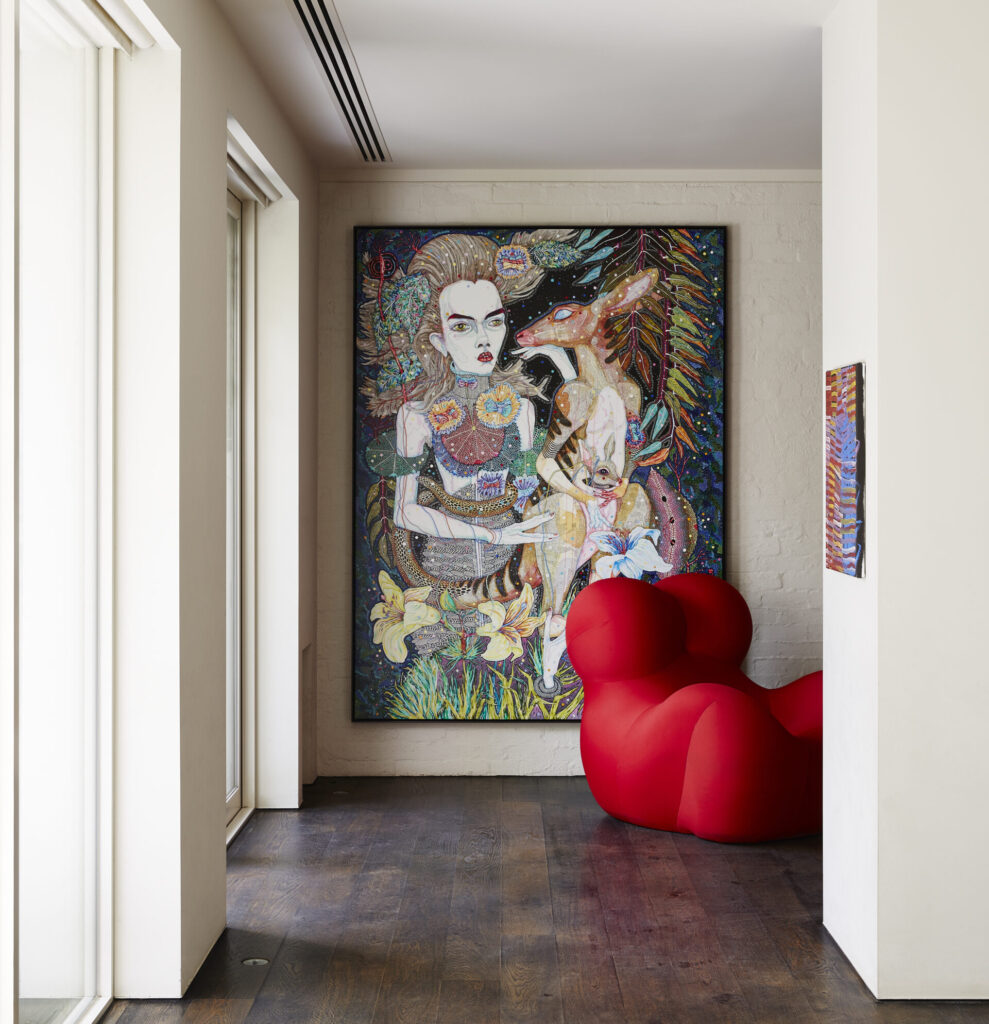
Del Kathryn Barton taught us another important lesson. When Roslyn Oxley first offered us one of Del’s works, my instinct was to say yes immediately. We had admired her practice for years and knew how fortunate we were simply to have been offered the opportunity. Lisa’s hesitation wasn’t about Del’s work, but about living every day with the confronting subject matter while our boys were still young. It changed the conversation completely. Rather than asking whether we should acquire an important work, we began asking whether it belonged in our lives. Roslyn generously introduced us to another work, What I Am Also, which we immediately connected with. It entered our collection during the week my father passed away and has become inseparable from that chapter of our family’s story.
Looking back now, I realise our collection is less about individual artworks than the life that surrounds them.

Del Kathryn Barton, What I Am Also, 2013
What role does living with artworks play in your everyday life?
Living with art has become a way of living with memory.
Every work in our home carries a story. Some remind us of travel, others celebrate the birth of our children, milestone birthdays or enduring friendships with artists and gallerists. Others hold much more personal memories, including periods of loss. The artwork itself never changes, but our relationship with it continues to evolve. Over time the collection has become a chronology of our lives. Looking around our home, I don’t simply see paintings and sculpture. I see twenty years of our lives reflected.
I’ve also become increasingly interested in living with the creative voices of our own generation. Contemporary art is, by its very nature, a commentary on the world in which it is made. It reflects the cultural, political and social questions of our time. Choosing to live with those works means engaging with those ideas every day. The same philosophy extends beyond art. Our home has gradually become a collection of contemporary architecture, furniture and lighting. Together they form a richer conversation about the time in which we live.
Spending meaningful time with artists has also made me a better architect. Visiting studios, understanding process and hearing artists speak about years of experimentation has reinforced the value of patience, restraint and trusting your own voice. Commissioning Lionel Bawden to create Wellsprings of the Spirit for my fortieth birthday remains one of the most meaningful experiences in our collection. Rather than responding to a decorative brief, Lionel responded to conversations about travel, aspiration and the human spirit. Watching an artist transform those ideas into something so deeply personal reinforced that the most meaningful commissions emerge through genuine dialogue.
Perhaps that is what I value most. A meaningful collection is not simply a reflection of personal taste. It becomes a record of a life lived. We are only custodians of these works for a period of time, yet while they are with us they become part of our own story, and perhaps part of the legacy we leave behind.
As architects living closely with art both personally and professionally, how does your approach to collecting differ from more traditional ideas of collecting, and what tends to draw you towards a work?
For me, collecting has never been about acquisition alone. It has always been about curation, relationships and creating a dialogue between art, architecture and the people who live with it. Working as an architect has only reinforced that belief.
Designing Point Leo Estate fundamentally changed my understanding of collecting. Working with John and Pauline Gandel, alongside artists and curators, I came to appreciate collecting as an act of stewardship rather than acquisition. Their vision wasn’t simply to build a remarkable collection, but to create a cultural legacy that could be shared generously with others. That philosophy shaped our architectural response. We conceived the building as a sculptural insertion within the landscape, embracing Inge King’s monumental work at its entrance. The simplicity and clarity of the architectural gesture created a framework through which art, landscape, food, wine and the experience of place could all be considered together as one. It reinforced something that has continued to shape my thinking: the most enduring collections create a legacy, enriching not only the lives of those who create them, but everyone who has the opportunity to engage with them.
That philosophy has continued to shape our residential work. During House of Light, the clients’ own journey into collecting unfolded alongside the architecture. Together we visited Sydney Contemporary, spent time in galleries and met artists including Sally Smart, Alex Seton and Marion Borgelt, and ultimately commissioned Tammy Kanat, who exhibited with Gallery Sally Dan-Cuthbert, to create a significant woven work specifically for the home. Those conversations became every bit as important as discussions about brick, stone or timber. Art was never considered an addition to the project. It became part of the home’s story from the very beginning.
What I have learnt is that designing for a client is very different from collecting for yourself. We can make introductions, ask questions, encourage curiosity and provide confidence, but taste is deeply personal, and art even more so. Every collection should become an authentic reflection of the people who live with it. Some of the greatest satisfaction I’ve experienced has come from watching clients discover an artist who genuinely speaks to them. That’s the moment the collection truly becomes their own.
I’ve never seen art as something separate from architecture. Contemporary artists, architects, furniture designers, lighting designers and landscape architects are all responding to the same moment in history through different mediums. Bringing those creative voices together thoughtfully creates homes that feel connected to their time, while remaining capable of enduring well beyond it.

Ben Quilty, Rorshach After Johnstone, 2011. Purchased from Jan Murphy Gallery.
Sydney Contemporary brings together a wide range of artists and galleries each year. What do you most look forward to discovering at the Fair?
For me, Sydney Contemporary is much more than an art fair. It has become one of the few places where Australia’s creative community comes together. Artists, gallerists, curators, collectors, architects and designers all sharing ideas, conversations and a genuine curiosity about contemporary practice.
I enjoy seeing how artists’ practices evolve over time. There is something incredibly rewarding about watching an artist take a leap, challenge themselves or explore a completely new direction. Those moments often stay with me far longer than any individual acquisition. Equally important are the conversations. Some of the most meaningful relationships in our collection began not with a purchase, but with meeting an artist, visiting a studio or simply spending time talking with a gallerist. Sydney Contemporary creates those opportunities in a way that few other events can.
Carriageworks also plays an important role. It is an extraordinary setting for contemporary art. Its industrial character allows the work to breathe, creating an atmosphere that encourages exploration, discovery and genuine engagement. I always leave inspired, whether I acquire a work or not.
What advice would you give to someone beginning their journey as a collector?
Collect slowly.
Spend more time looking than buying. Visit galleries regularly. Meet artists. Listen to curators. If you’re fortunate enough to visit studios, do so. Travel widely. Immerse yourself in different cultures. Every experience develops your eye and deepens your understanding of the world around you.
Most importantly, trust your own response. Don’t collect because something is fashionable or because someone tells you it is important. Collect because it makes you stop. Because it moves you. Because it continues to occupy your thoughts long after you’ve left the gallery.
Over time you’ll realise that the artwork itself is only part of the story. The relationships you develop with artists and galleries, the places you’ve travelled, the conversations you’ve had and the moments in your own life that become attached to each work are what give a collection its real depth.
Looking back over more than twenty years, I don’t simply see a collection of artworks. I see a collection of friendships, journeys, ideas and experiences that have shaped who we are. A meaningful collection is not simply a reflection of personal taste. It is a portrait of a lifetime spent engaging with the cultural ideas of its time.
Perhaps that is what collecting ultimately becomes. Not an expression of ownership, but a legacy of curiosity, generosity and a life lived with culture at its core.
Sydney Contemporary returns to the Carriageworks from 3 – 6 September.