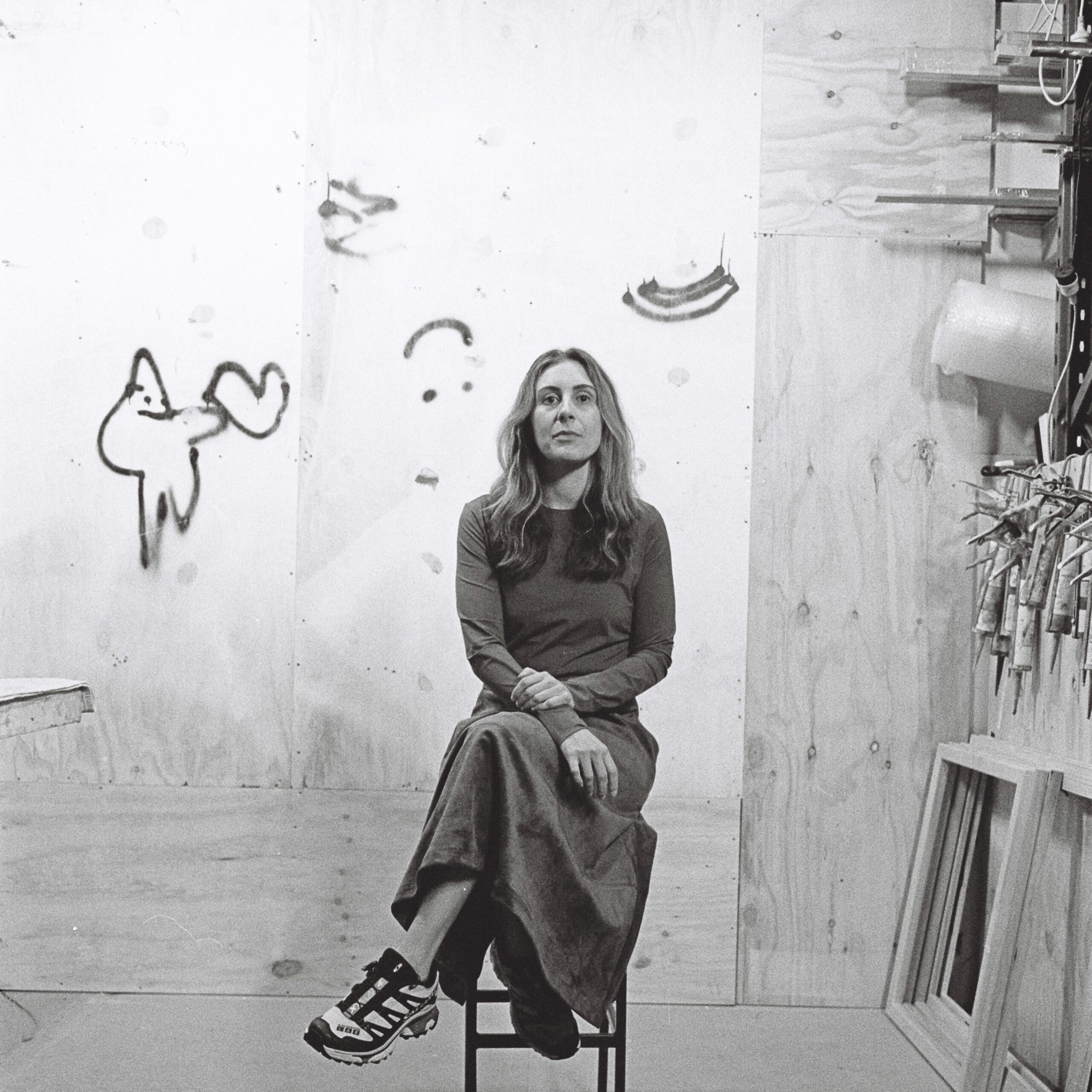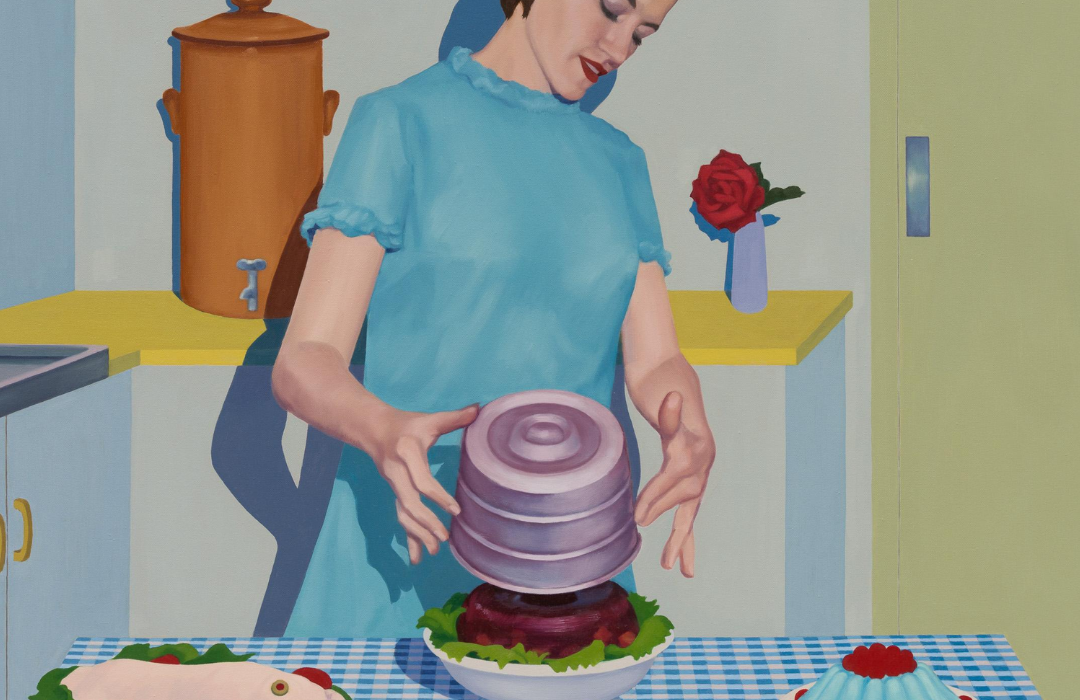
We caught up with artist Kyra Henley ahead of her exhibition ‘Lost’ at Nasha Gallery. Henley’s painting practice is guided by instinct, visual memory, and a deep curiosity for the discarded and overlooked. In our conversation, she reflects on letting imagery speak for itself, the quiet power of imperfection, and why—after decades of painting—she feels like she’s only just begun.
Cover Image: Party Salads, 2025
__
What inspired you to pursue a career in art, and how has your journey as an artist evolved over the years?
I don’t think I have pursued a career exactly. I went to art school straight after high school, 17 and desperate to leave the small town I grew up in. I’ve continued painting since the degree (supporting myself with stupid money paying jobs) and now it’s almost 25 years later and my painting has evolved into what I feel like is my real starting point to the actual work that I will make.

Image: Swimmers, 2024
Your paintings mix personal memories with pop culture —how do you balance what’s personal with the bigger social commentary in your work?
It’s probably impossible for anyone to make anything without a personal layer to it! But it’s not intentional of me, I make images precisely because of my poor ability to express ideas in any coherent verbal or literary way. There may be some link in my brain missing and painting is my way of trying to understand the world and my thoughts on things. It’s very difficult for me to explain using words. Or is it something I do to distract myself from all of that? I don’t know. Probably both.
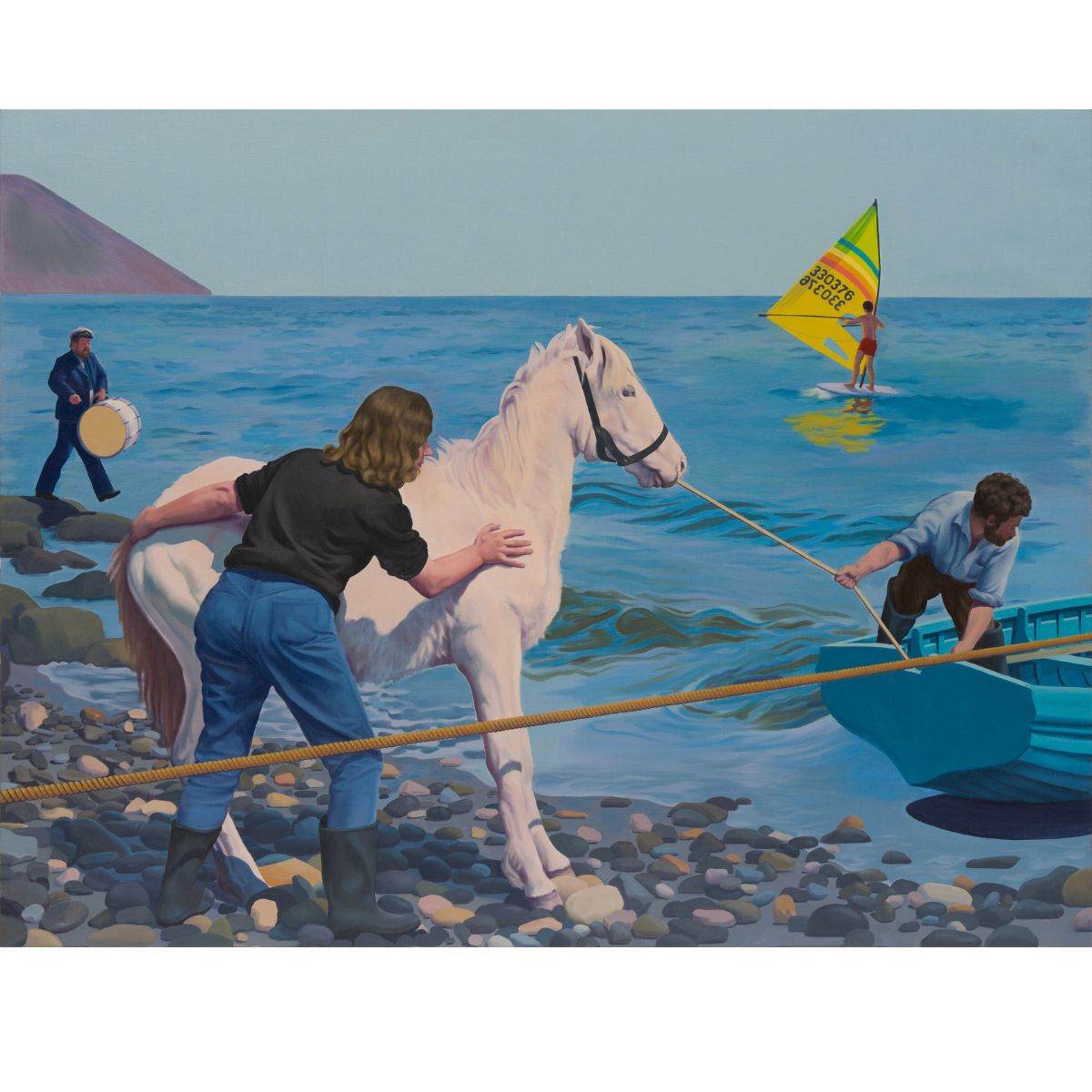
Image: Horse, 2025
How and where do you start your process of sourcing and reworking found imagery?
I start with secondhand books, usually from op shops or discarded on the street. I mostly avoid the internet but sometimes I want a particular thing to add to a painting and will go there. The colour of the printing inspires me, bright but yellowed with age, you get interesting effects from the limitations of the printing processes of the time.
A lot of ‘bad’ photos make it in because this is all before you could take a million photos for free and clean them up with a few clicks – I’m drawn to them because they haven’t been rendered all slick & uniform & bland.
These books are from a time in the recent past when everyone bought books of photographs of people and landscapes and gave them to each other with inscriptions scrawled in them like “ Dear Julie, Merry Christmas from mummy & daddy, 1978″. I have a large collection of these unwanted smelly books and I like spending time with them. I regularly go through tearing out things that catch my eye. When starting a painting I collage the images together with scissors and glue arranging ouija board style until I have something I want to scale up onto a canvas. It’s all pretty intuitive, and I will make formal decisions later on during the painting to block things out or move them or add something.

Image: The Devils Marbles, 2025
You’ve described your works as something for people to “ingest” — what do you hope people feel or think when they spend time with your images?
I try to make the paintings beautifully painted, to be enjoyed simply for their aesthetic qualities, but there’s more there if you have the time and inclination to sit with them. I love some of the narratives people have come up with for the paintings in this current show at Nasha; some things align with thoughts I’d had but often it’s something I hadn’t thought of at all and it makes complete sense in the picture and seems obvious and like that’s what I had intended all along.
Take the text by Steven Latimer we’ve used for the exhibition – It’s an extreme take on the paintings but it makes sense to me, it’s Steve’s take on it. I love it. The way people have engaged with the work keeps me excited to do more and helps me process what the hell I’m doing.

Image: Hotel, 2025
Where do you hope to see yourself, your practice, in 10 years?
Painting is one of the few occupations that gets better with age, perhaps because you lose some self-consciousness.
I’ve spent a couple decades refining some basic skills and now I can use those tools to invest time in looking and thinking about what I’m trying to do, or what the work is showing me. I’m not sure where I’m going, I feel like I’ve just begun.
Henley’s exhibition continues at Nasha Gallery until 26 October.