

Installation
Installation presents major artworks beyond the gallery booth, engaging with the distinctive architecture and atmosphere of Carriageworks. The 2025 Installation program was curated by José Da Silva, Director of UNSW Galleries. Featuring ten ambitious projects, Installation showcase artists who experiment with scale, materiality, and immersive experiences.
“Installation invites visitors into a rich, sensory encounter with contemporary art and an opportunity to see ambitious works by artists from Australia and Aotearoa New Zealand. This year’s program features work that expand the boundaries of painting and sculpture, activate sound, performance, and kinetic forms, and engage with everyday materials and vernacular design. These are generous, site-aware projects that reward close attention.” – José Da Silva.
Helen Calder
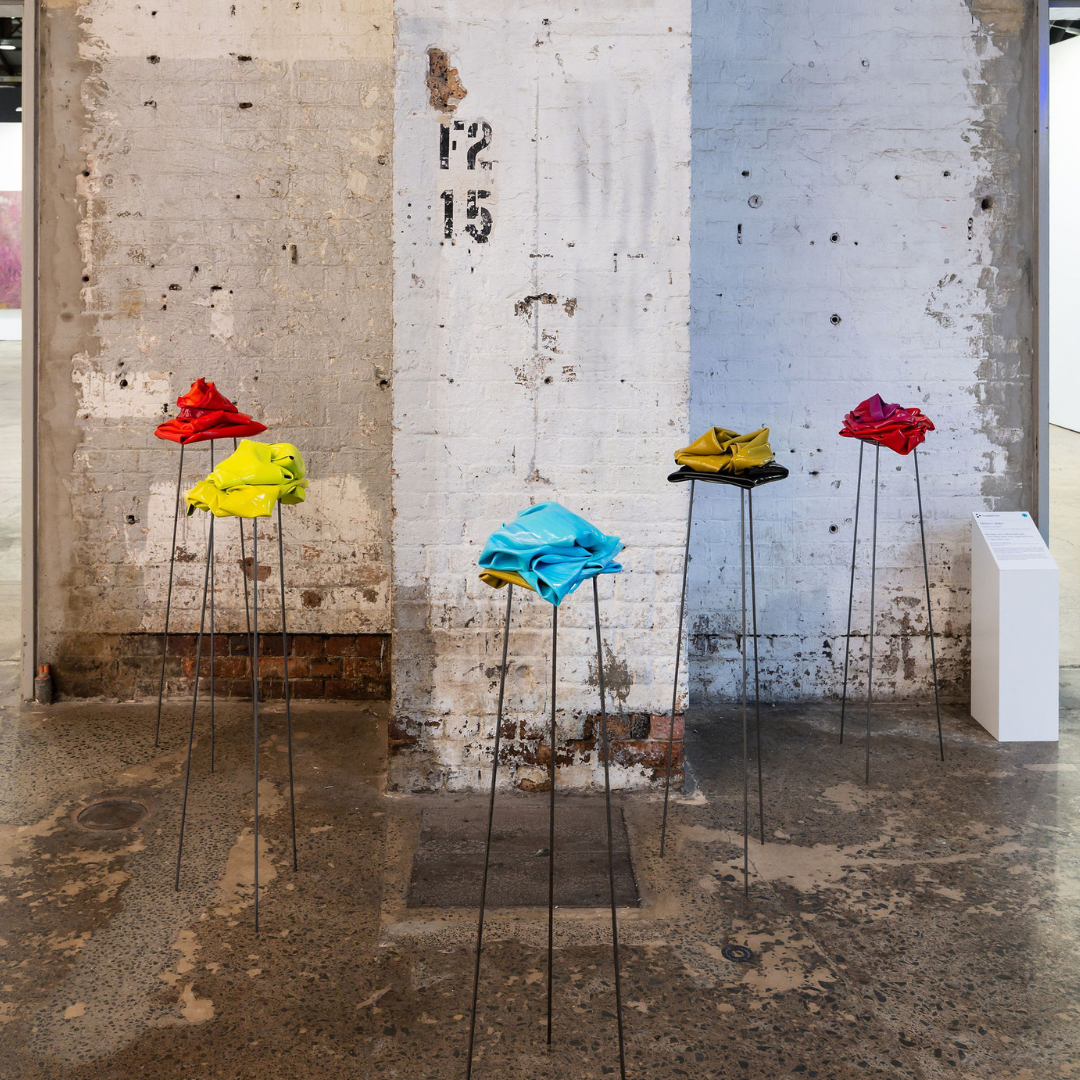
Stacks, 2025
Presented by Two Rooms
Helen Calder creates three-dimensional paintings that blur the line between painting and sculpture, offering a direct engagement with the materiality of paint—its weight, tactility, malleability, and colour. Her poured and pigmented ‘paint skins’—freed from traditional stretchers—are folded, draped, and suspended in space, revealing fronts, backs, and edges saturated with layered colour.
In her recent Stack works, paint skins are folded and layered atop everyday objects such as stools, playfully investigating ideas of balance, compression, and the performative relationship between structure and support. Calder builds chromatic complexity through multiple translucent layers, inviting viewers to consider painting as a pliable, dynamic form that resists containment.
Gerwyn Davies
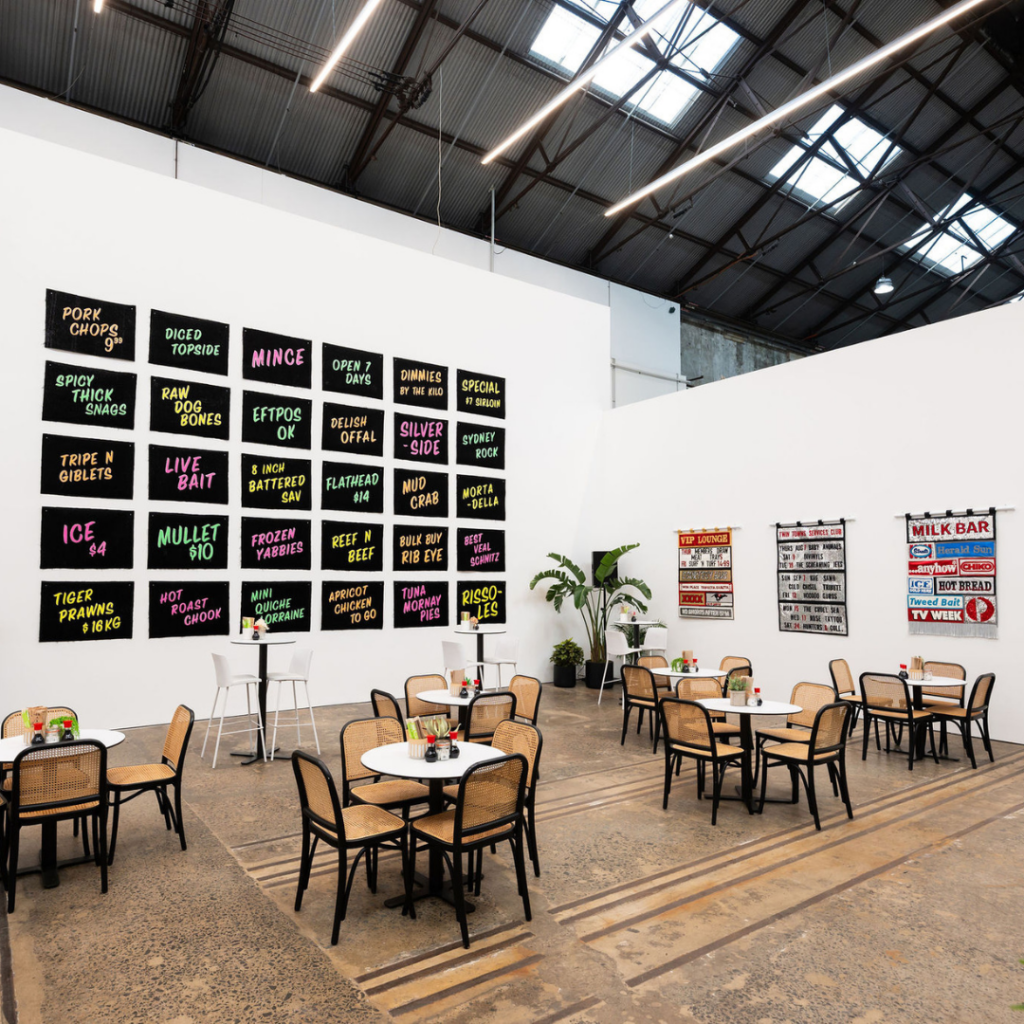
Quality Meat, 2025
Presented by Michael Reid Sydney + Berlin
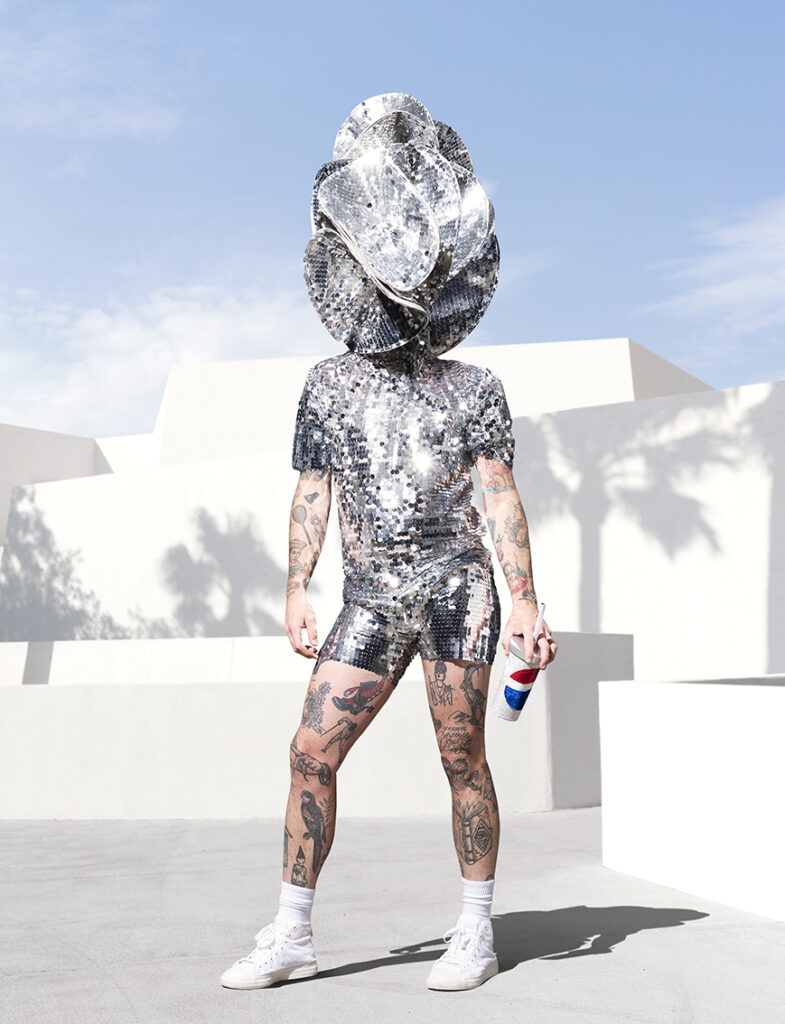
Gerwyn Davies creates elaborately costumed characters that blur the boundaries between photography, performance, and sculpture. These exaggerated personas are both playful and provocative, transforming his own body into a site for exploring identity, humour, and artifice.
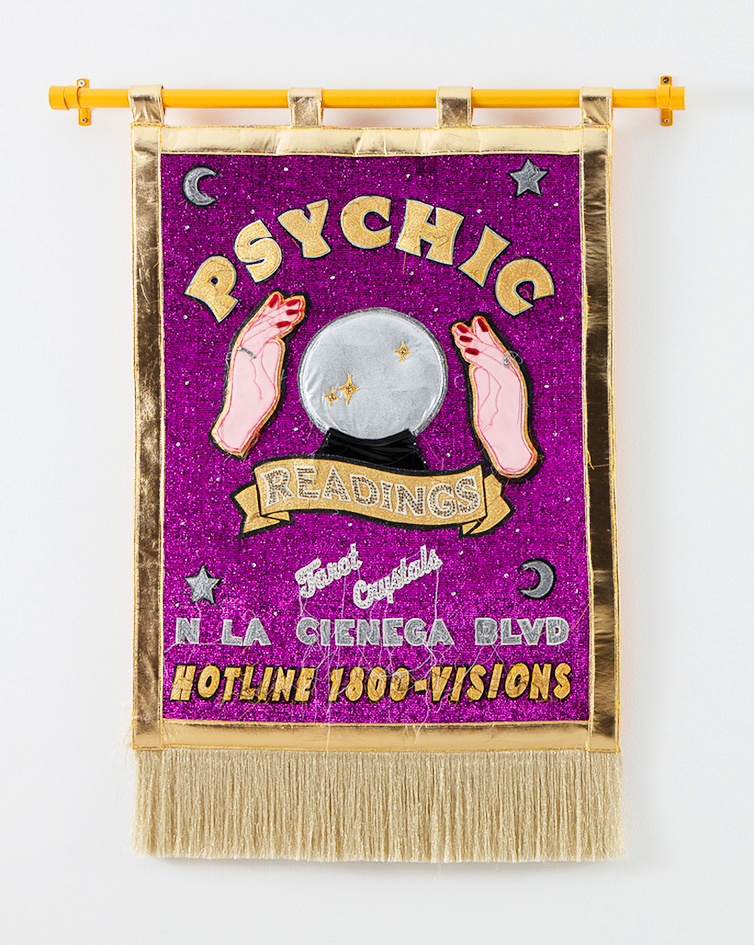
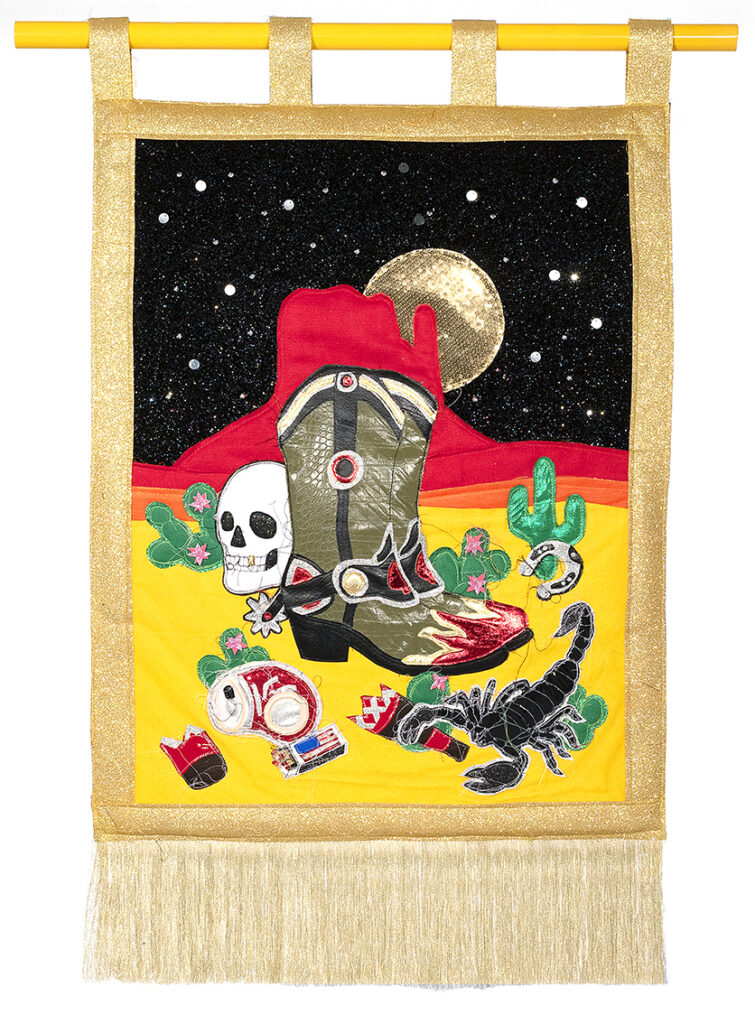
Recently, Davies has begun reconfiguring these costumes into textile banners, drawing on their colours and textures to evoke signs, symbols, and motifs associated with everyday advertising. For Installation Contemporary, he expands this approach with a significant new work for the Sydney Contemporary café, referencing the bold graphic language of butcher shop blackboard signage. Hand-crafted and visually playful, the banners explore vernacular aesthetics, cultural memory, and the performative possibilities of textiles.
Marley Dawson
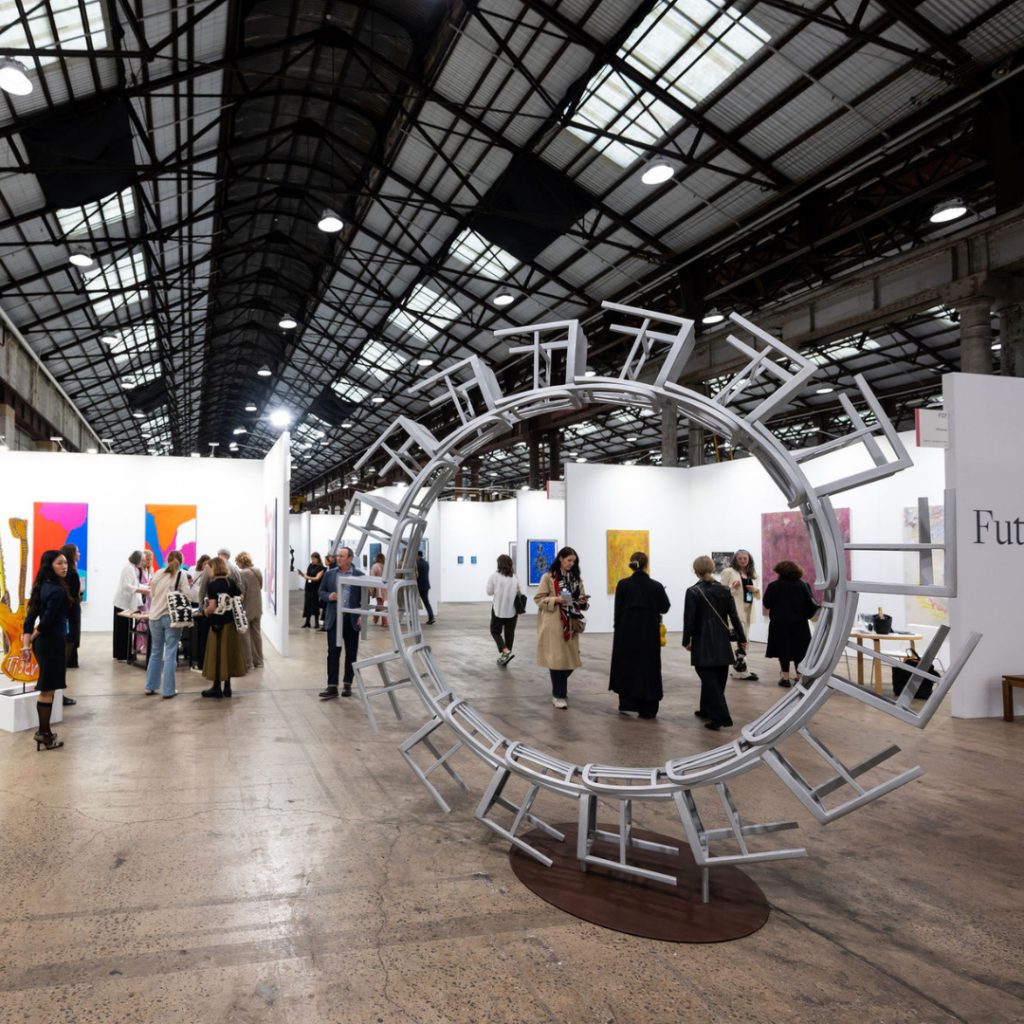
1006 Portal, 2024
Presented by Roslyn Oxley9 Gallery
Marley Dawson creates sculptures that reveal the uncanny, surreal, and extraordinary potential of everyday materials and forms.
In 1006 Portal, Dawson reimagines the iconic Emeco 1006 chair as sculptural architecture, arranging sixteen cast-aluminium replicas in a circular formation. Engineered initially in 1944 for the United States Navy from recycled aluminium, the 1006 was built for institutional durability, serving in warships and prisons. Garnet-blasted to produce a luminous, light-reflecting surface, Dawson’s chairs form a meditative space that reframes the object’s industrial and political history. Through repetition and reconfiguration, 1006 Portal reflects on material legacy, systems of control, and the mutable meanings design acquires over time.
Zac Langdon-Pole
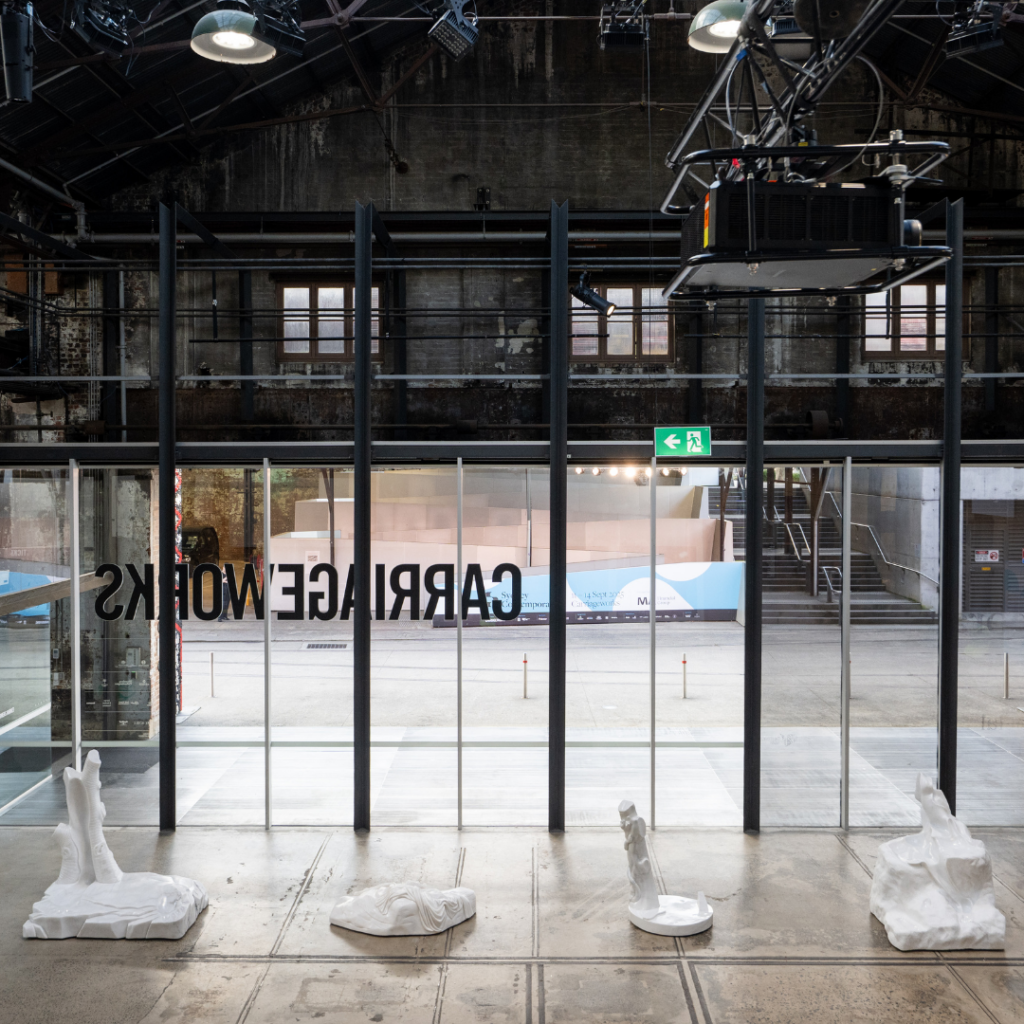
Memory Garden, 2024
Presented by STATION
Zac Langdon-Pole’s practice unfolds across deep time, examining how personal, cultural, and planetary histories intersect. Through transformation and displacement, he reconfigures objects and narratives to reveal the distortions of colonial legacy, the subjectivity of memory, and the layered nature of authenticity.
For Installations, Langdon-Pole presents Memory Garden, a suite of five 1:1 marble replica of iconic sculptures from antiquity and modernity, meticulously reproduced with their human figures removed. These include Michelangelo’s David (1504), Rodin’s The Kiss (1882), Canova’s Psyche Revived by Cupid’s Kiss (1793), the Apollo Belvedere (Roman, ca. 2nd century A.D.), and Praxiteles’s Capitoline Venus (Ancient Rome, 360 B.C.). What remains—the rocks, foliage, and stumps—are elevated from supporting detail to central subject, inviting quiet contemplation of absence, presence, and the ghostly persistence of collective memory.
Jonny Niesche with Mark Pritchard
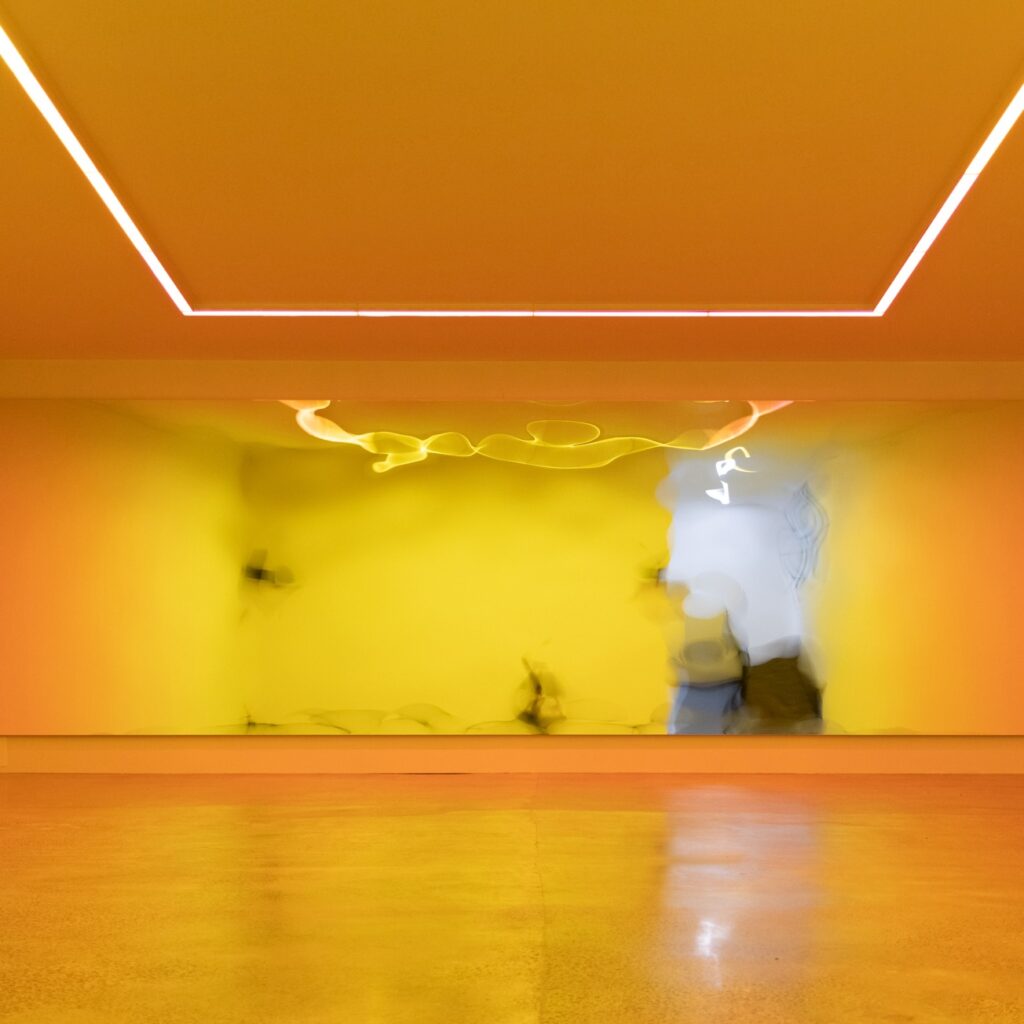
Sound and Vision (Reflect what you are, in case you don’t know), 2025
Presented by 1301SW | STARKWHITE
Jonny Niesche expands painting into a multisensory experience, merging colour, light, surface, and sound to heighten our perceptual awareness. His reflective and translucent surfaces—crafted from sheer fabrics, reflective metals, and mirrored substrates—create visual fields that shift in response to the viewer’s movement and their architectural surrounds.
For Installations, Niesche presents a major new work that builds on recent collaborations with Mark Pritchard. These installations utilise low-frequency sound and vibration to subtly activate the body and space, creating a synesthetic encounter with Niesche’s paintings. Drawing on the atmospheric qualities of colour field painting, psychedelia, and spiritual abstraction, these works invite a contemplative, almost meditative engagement with the sensorial present.
Lisa Reihana CNZM
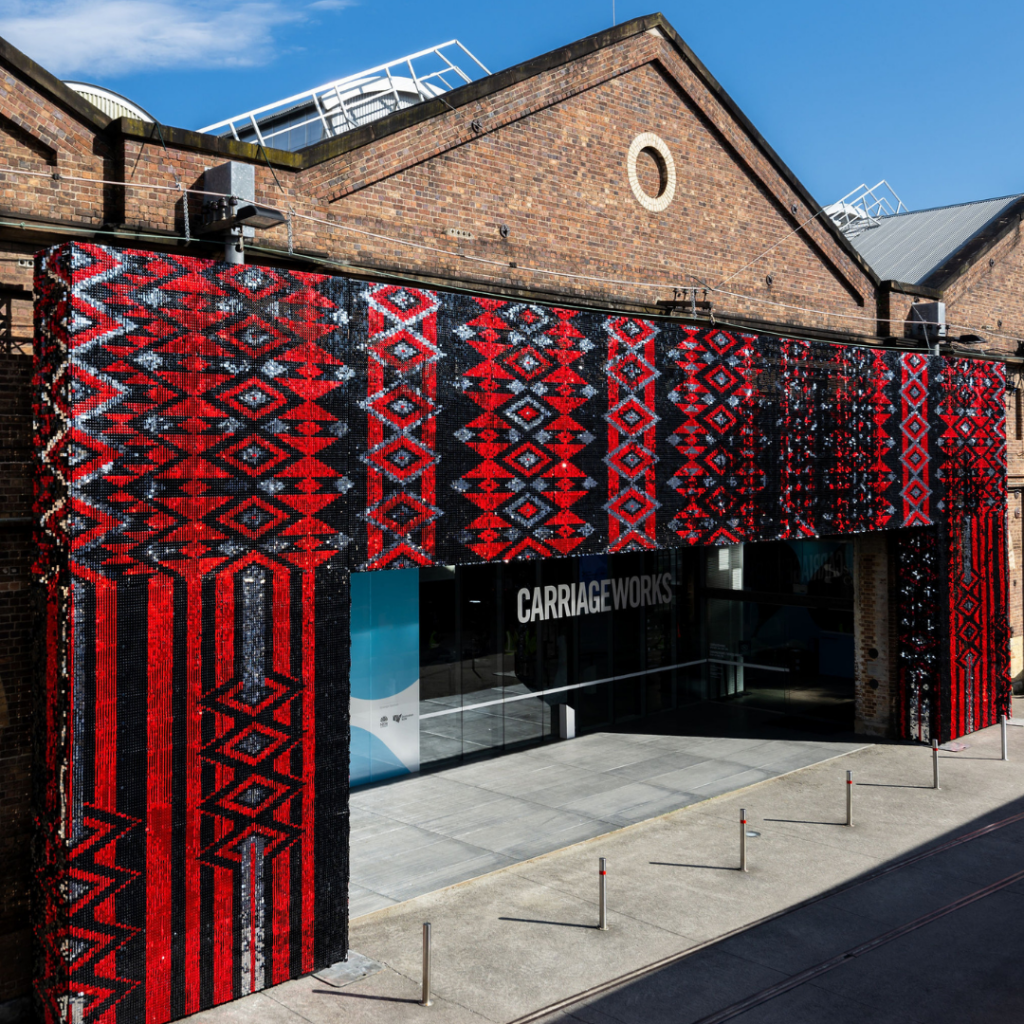
ANZAC, 2025
Presented by Gallery Sally-Dan Cuthbert
Lisa Reihana’s (Ngā Puhi, Ngāti Hine, Ngāi Tuteaura, Ngāi Tūpoto) practice draws on customary Māori art forms and patterning, recasting these visual languages within contemporary contexts through new materials and technologies. For Installation Contemporary, Reihana has created a spectacular entrance feature for Carriageworks, referencing a waharoa—the traditional Māori gateway in front of a marae—and a pare, or door lintel, that serves as a boundary marker, separating the outside world from the sacred space within.
Instead of carving these forms, Reihana uses a tāniko finger-weaving design adapted from a cloak made by women from her Ngā Puhi hapū (clan) to honour returning Māori soldiers from World War I and translates the design into thousands of shimmering discs. Like a cloak that adorns a sacred body, here the discs become a living tapestry that responds to wind and light, creating an architectural blessing for all who pass under as they embark on their journey inside Sydney Contemporary.
Tennant Creek Brio
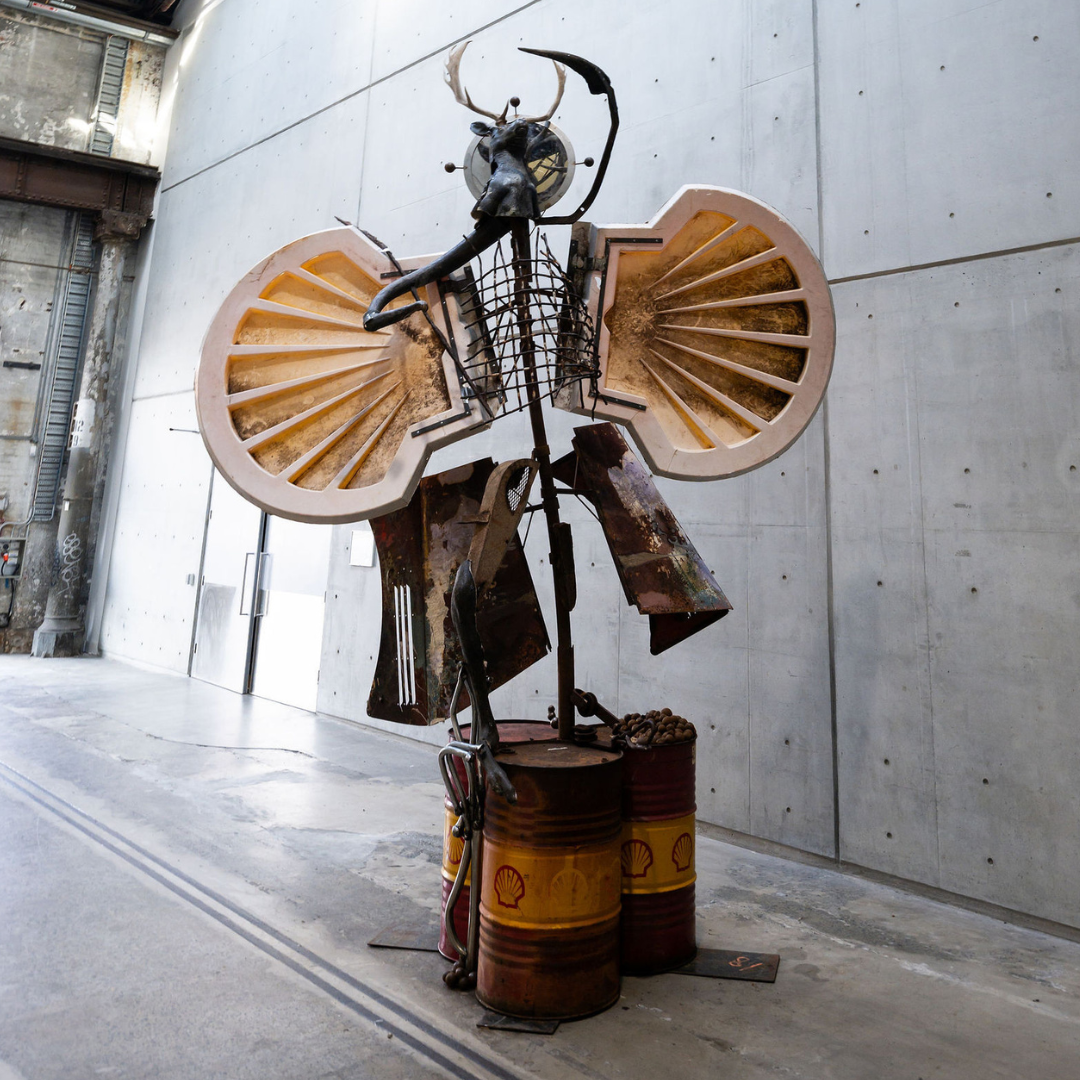
UAP: Unidentified Ab(original) Phenomenon, 2024
Presented by CASSANDRA BIRD
Tennant Creek Brio is an artist collective that fuses the industrial materiality of the mining industry with local histories and First Nations cultural traditions. The transformative creative energy of the Brio speaks to both the collective’s name and the collaborative resilience and punk attitude of a frontier community.
Encompassing artists from Northern Central Australia and Melbourne, Tennant Creek Brio includes early members Fabian Brown Japaljarri, Lindsay Nelson Jakamarra, Rupert Betheras, Joseph Williams Jangarrayi, Clifford Thompson Japaljarri, Jimmy Frank Juppurla, Fabian Rankine Jampijinpa, Marcus Camphoo Kemarre, and more recent collaborators Eleanor Jawurlngali Dixon, Arthur Jalyirri Dixon, Lévi McLean, and Gary Sullivan.
UAP: Unidentified (Ab)original Phenomenon 2024 is a sculpture that takes the form of an Australian gothic guardian angel or petrochemical effigy. The work exemplifies the Brio’s method of collage, assemblage, and creative creolisation with found objects and materials. It also highlights a critique of invasion, colonial extraction, capitalism, and the subsequent social, cultural, and political complexities and negotiations that stem from these.
Augusta Vinall Richardson
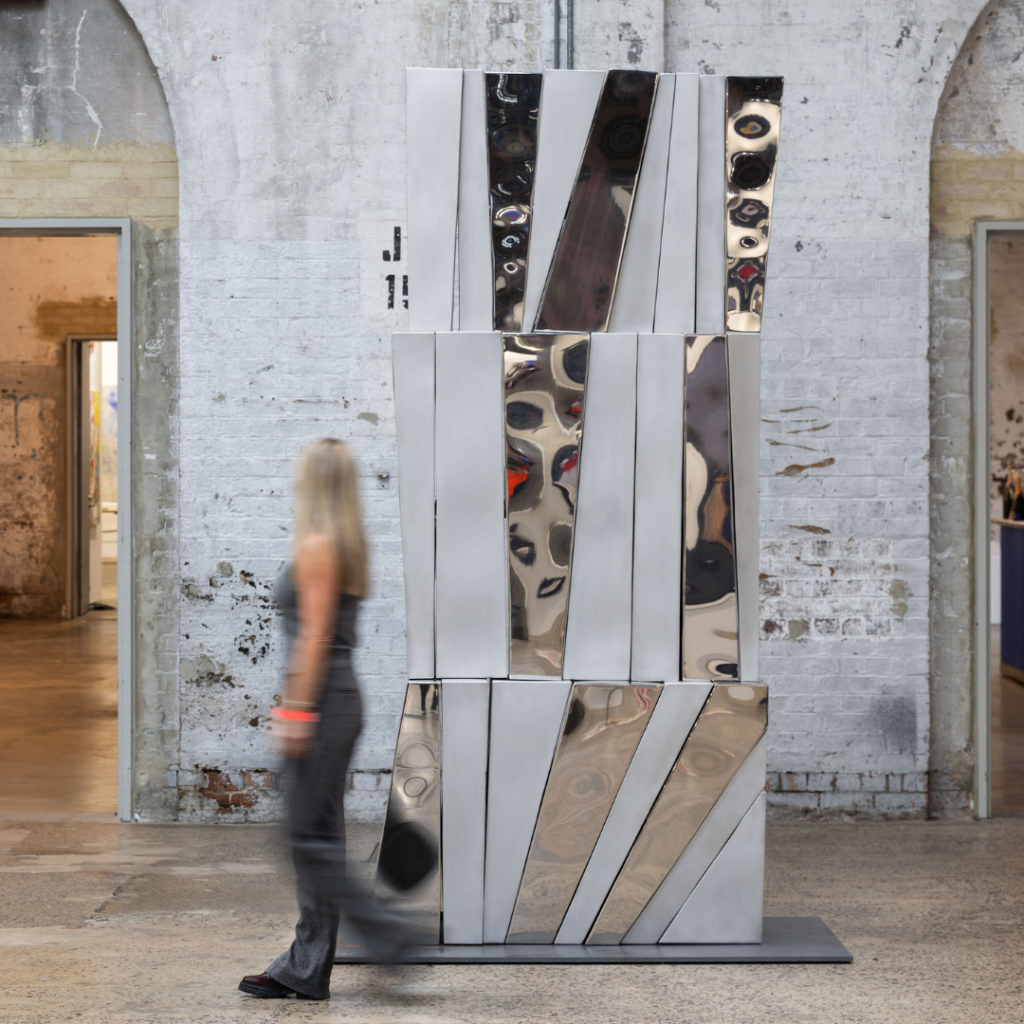
Any Way, 2025
Presented by The Commercial
Augusta Vinall Richardson explores abstraction through a combination of industrial materials and hand-crafted detail, balancing structural clarity with an embrace of imperfection and idiosyncratic form. Her works often begin as drawings and maquettes made from recycled cardboard, paper, and tape, before evolving into modular assemblages fabricated from sheet and cast metals, bearing the traces of hand-formed edges and the softened seams.
Any Way 2025 is an ambitious new work for Installation Contemporary. Each modular element has its own distinctive form yet comes together—like pieces of a puzzle—into a larger, three-tiered composition. The stainless-steel surface is textured through a combination of modified industrial techniques and hand mark-making. The result is a dynamic structure that navigates repetition and variation, verticality, and unpredictability.
Gemma Smith
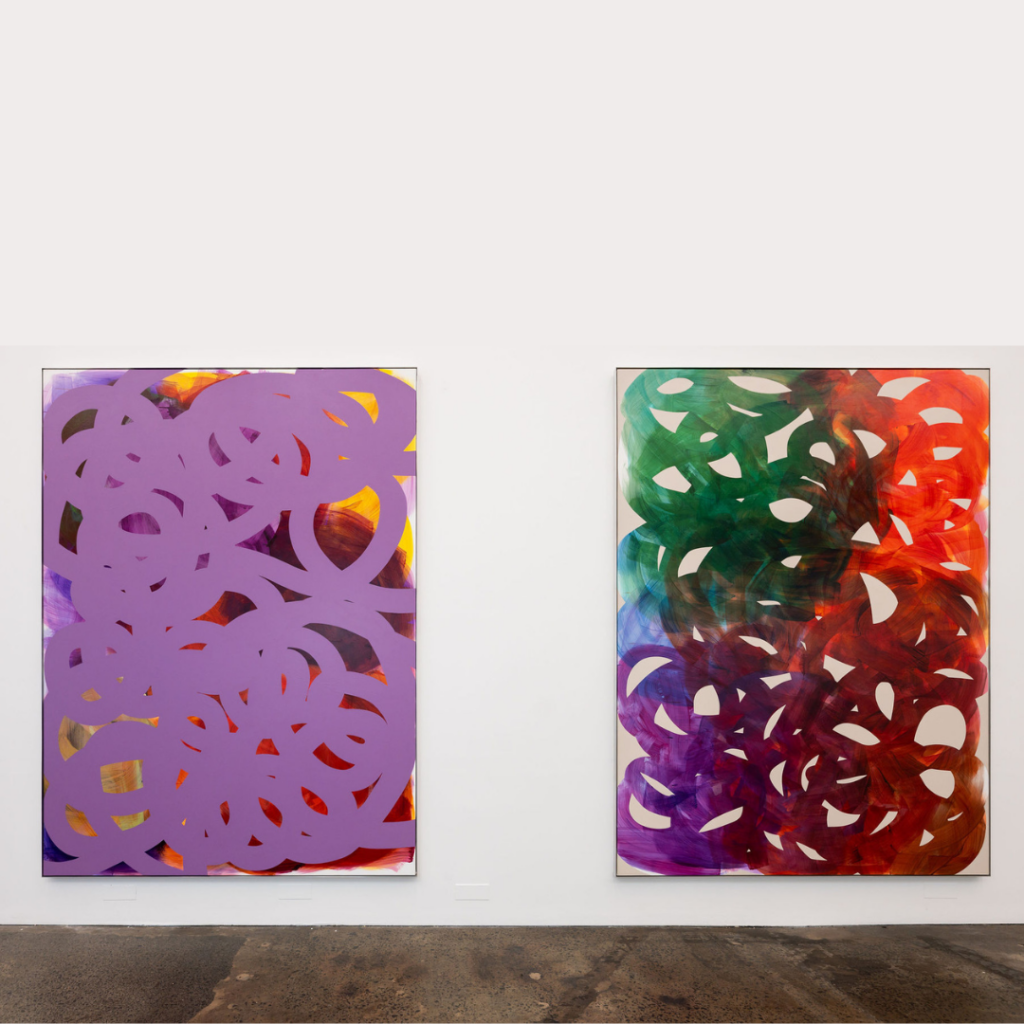
Shadow Paintings, 2025
Presented by Sullivan + Strumpf
Gemma Smith’s paintings emerge through an intuitive, process-led practice that embraces uncertainty, revision, and chance. Built over months, each painting results from layered gestures, erasures, and reversals—what Smith describes as a “soft battle” between openness and control. By modifying tools, altering scale, and deliberately disrupting familiar methods, she invites the unexpected to shape the work’s direction.
For Installations, Smith presents two works from her Shadow Paintings series. These immersive canvases employ translucent layers of matte and gloss acrylic, creating subtle topographies that allow new compositions to be discovered through shifts with light and movement. Responsive to context and scale, the works emphasise painting as both object and encounter—an ongoing negotiation of presence, process, and perception.
Offsite: Gerwyn Davies — Mirage
Ace Hotel Sydney in partnership with Sydney Contemporary
8 September – 2 November 2025
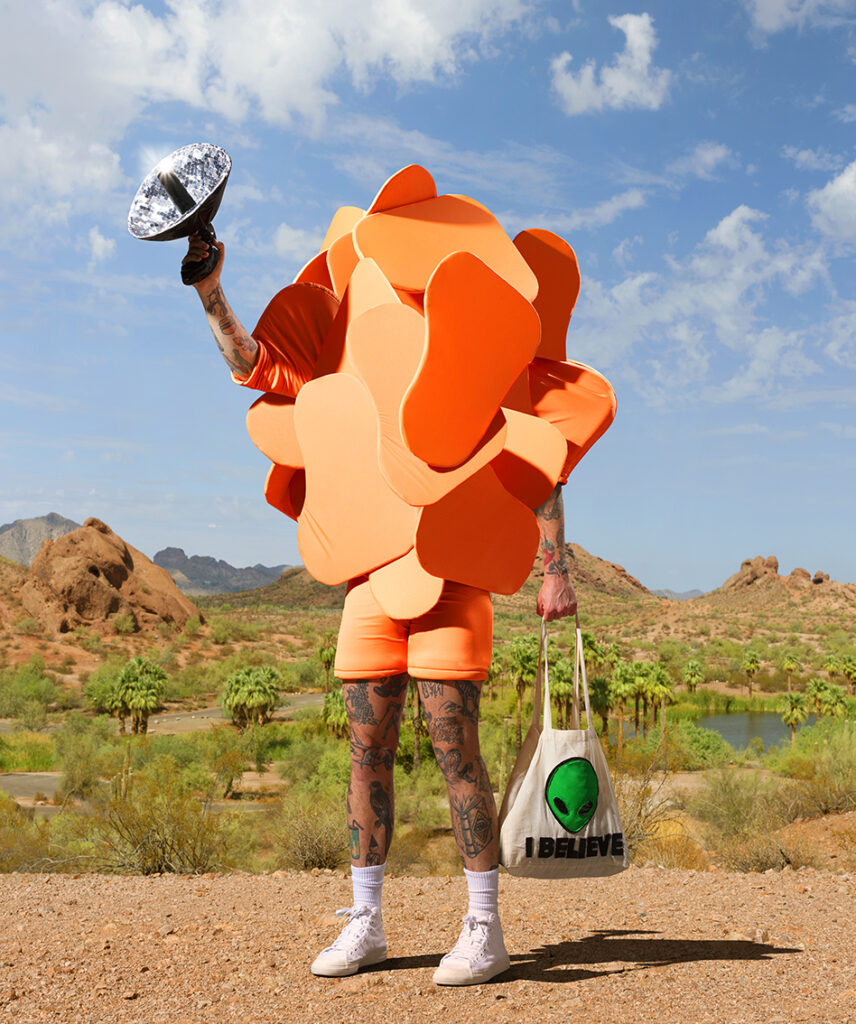
Gerwyn Davies creates photographic self-portraits in which costume, character and context collide. Using everyday materials and readymade props, he builds extravagant disguises that both conceal and transform his body. Playful and excessive, these images blur lines between authenticity and artifice, inviting us to reflect on the roles we perform and the stories we weave through dress and appearance.
These works are from a series, Mirage, conceived after time spent in Southern Arizona’s blistering desert landscape. Like the atmospheric illusion from which it takes its name, the series features shimmering visions that entice yet remain just out of reach. Costumes used in the making of the photographs have also been dismantled and reassembled into textile works that echo Arizona’s distinctive terrain and signage, reimagined through synthetic, excessive fabrics.
Together, these works conjure a world of stressed surfaces and unstable visions — dazzling spectacles that invite us closer while keeping their secrets intact.
Meet The Curator: José Da Silva
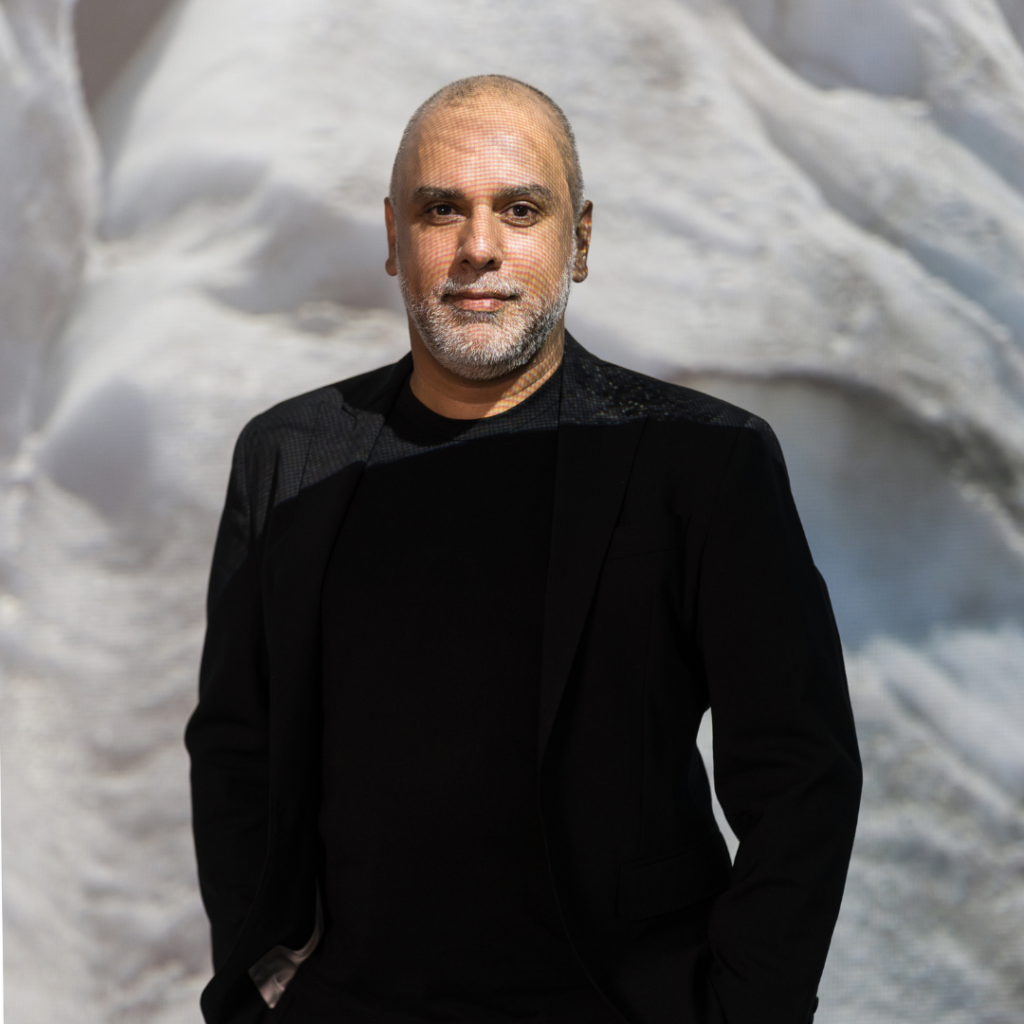
José Da Silva is an Australian curator and the Director of Sydney’s UNSW Galleries, where he has led a dynamic program of contemporary Australian art and design since 2018. In 2024, he curated the 18th Adelaide Biennial of Australian Art and became Chair of University Art Museums Australia.
