Working through layers, erasures, and instinctive gestures, Seraphine Pick builds paintings that pulse with ambiguity – works where identity, sensation, and materiality remain always in motion. We spoke to her about her current exhibition, Twenty 25 at STATION, reflecting on how she is pushing painting into new psychological and tactile territories.

Image: Glitch and Motherboard, 2025
What inspired you to pursue a career in art, and how has your journey as an artist evolved over the years?
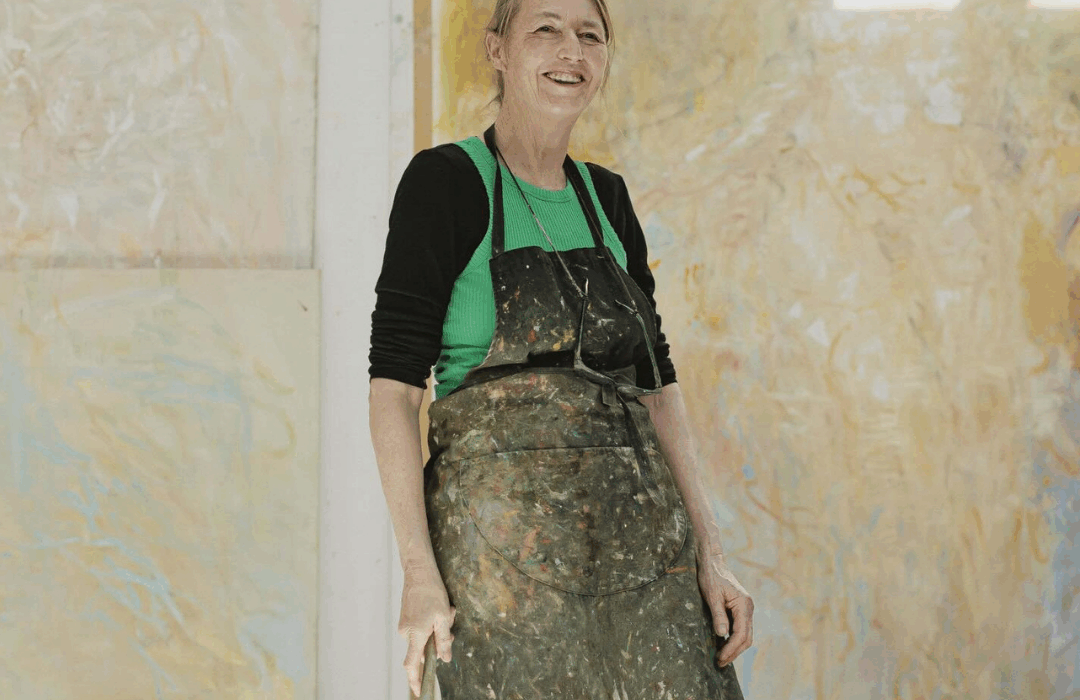
I grew up in the 70s in an art environment with young parents who had both been to Ilam Art school in Christchurch, New Zealand, in the late 50s and early 60s. I grew up in the Bay of Islands, and many young university graduates came up here looking for alternative ways of living back then. We lived the first four years on Moturua Island, where my parents were caretakers. When my brother was born, we moved to the mainland to Kororareka (Russell), also in the Bay of Islands.
My father taught art, art history and ceramics at Bay of Islands High School in Kawakawa. My mother painted and looked after us (and there were foster children over many years). They both worked on oyster farms and fishing boats. Many creative people visited over the years, so it was a normal everyday experience to be making or engaging in art. My father taught me to draw and look at his art history books, feeding my interest in art. I just drew all the time. I think because I am profoundly deaf and wasn’t able to participate in all the conversations, I just observed a lot.
I didn’t decide to pursue a career in art until I left school and moved out of home. I just thought I’d try it out as a full-time thing. I had resisted art, with both parents having gone to art school too, but I ended up at the same art school as them, with some of their tutors still there!
My journey as an artist has evolved in many directions, with changes often triggered by experiences along the way, such as places I’ve lived and people I’ve met. It is still evolving, and I hope always will, as I want to experience it in many ways and to keep learning new things within it and around it.

Image: Browser, 2025. Photo by Simon Strong.
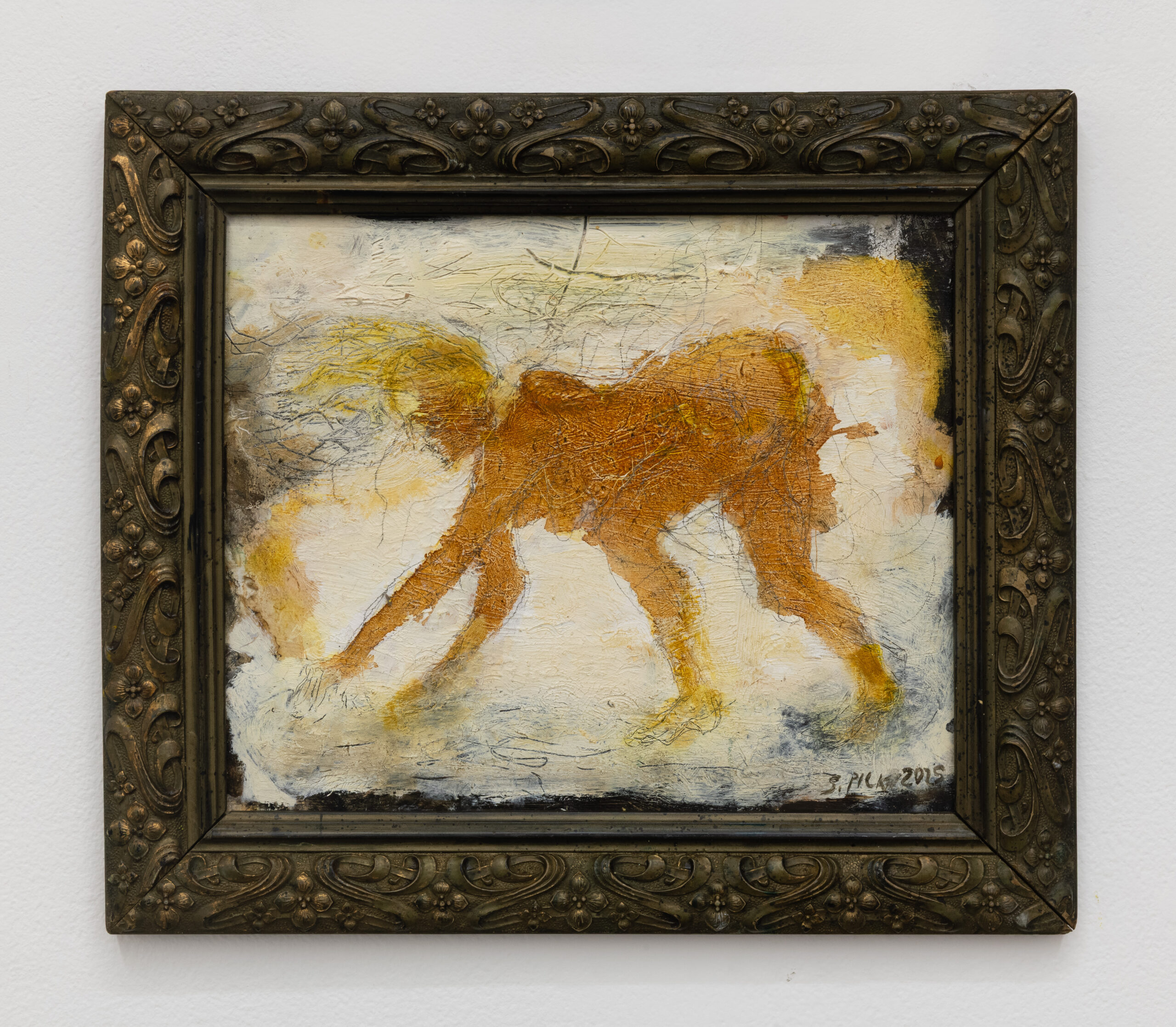
Your figures are often ambiguous and shifting. What draws you to this sense of fluid identity?
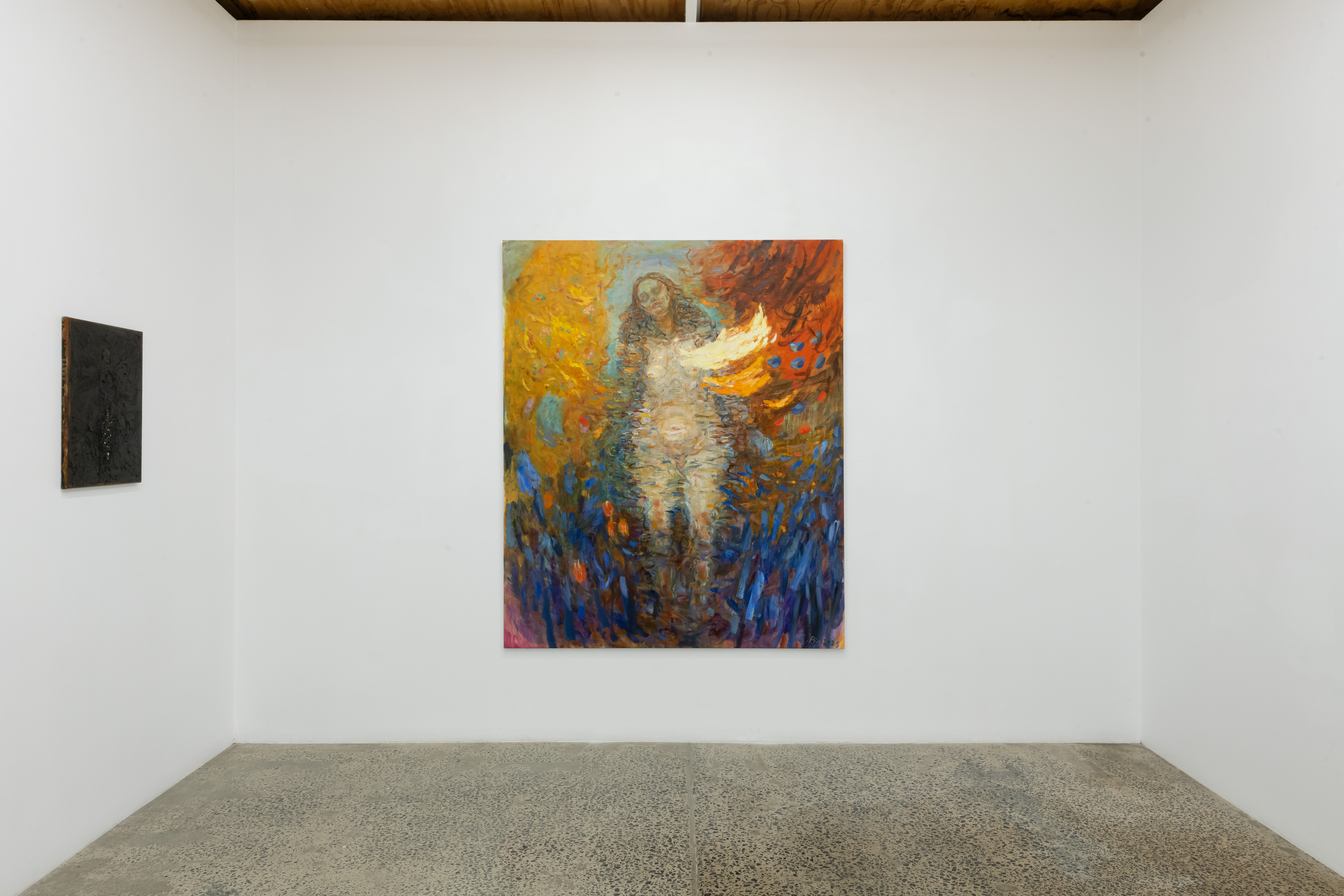
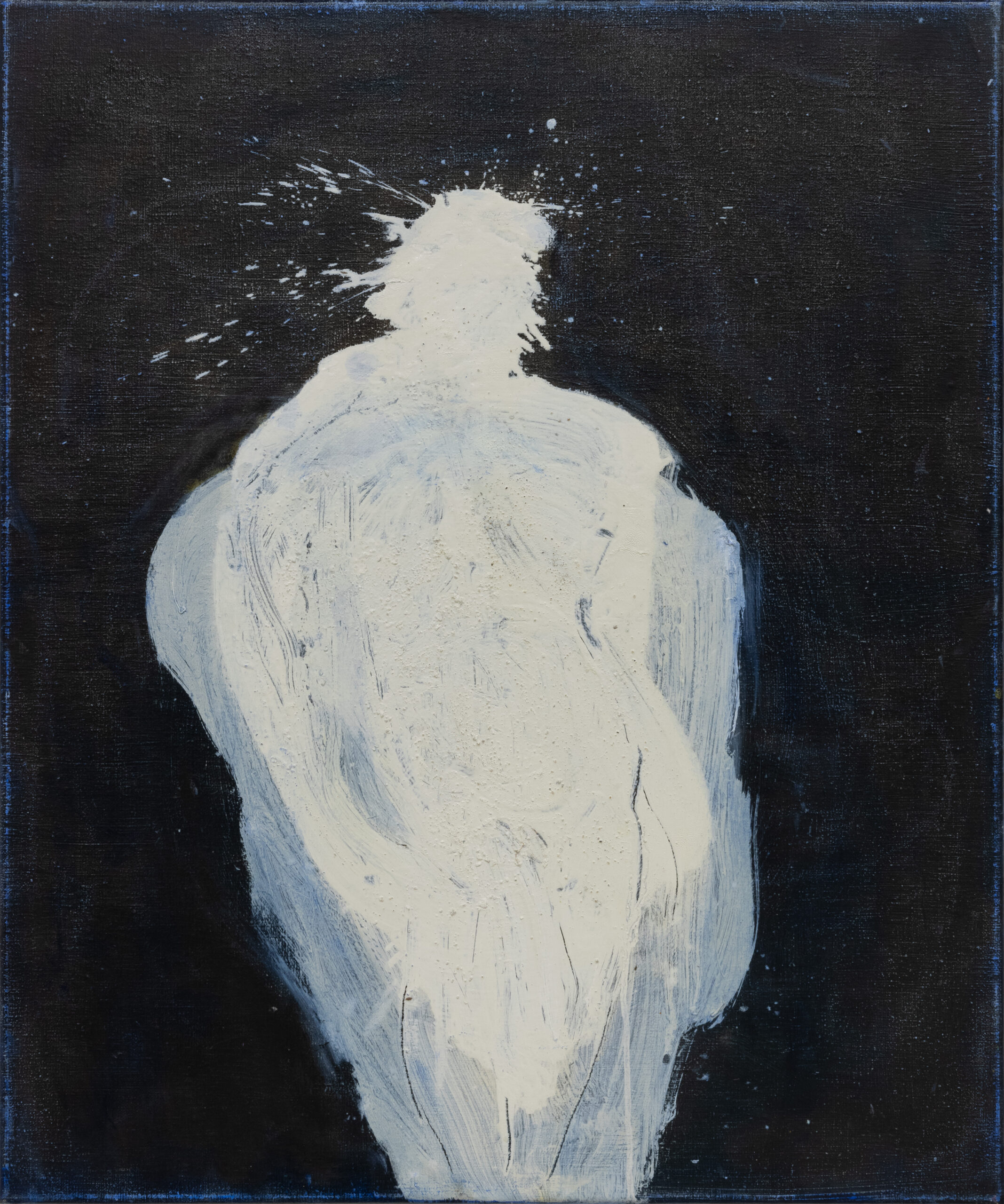
My approach to painting often begins in an intuitive way, where I just start, and the figures will sometimes emerge in the process of making over time. I do a lot of drawing along with the painting, too. My process is more representative of a bodily sensation than creating an image or figure. I feel that through making or destroying what’s there, I leave a visible history of the painting. All the flaws and accidents become part of the work, making the materiality of the work a sensation as well. I search for the energy of the unseen.
There is an ambiguity in the way figures are in space, as they emerge from the painted surface in an unsure, ghostly and anxious way whilst also embodying a sense of calm too. These works are forever moving and not fixed, becoming a reflection of the natural world that we are a part of, with the painting process directing what to do somewhat as well.

Image: Installation View, Twenty 25, Photo: Simon Strong
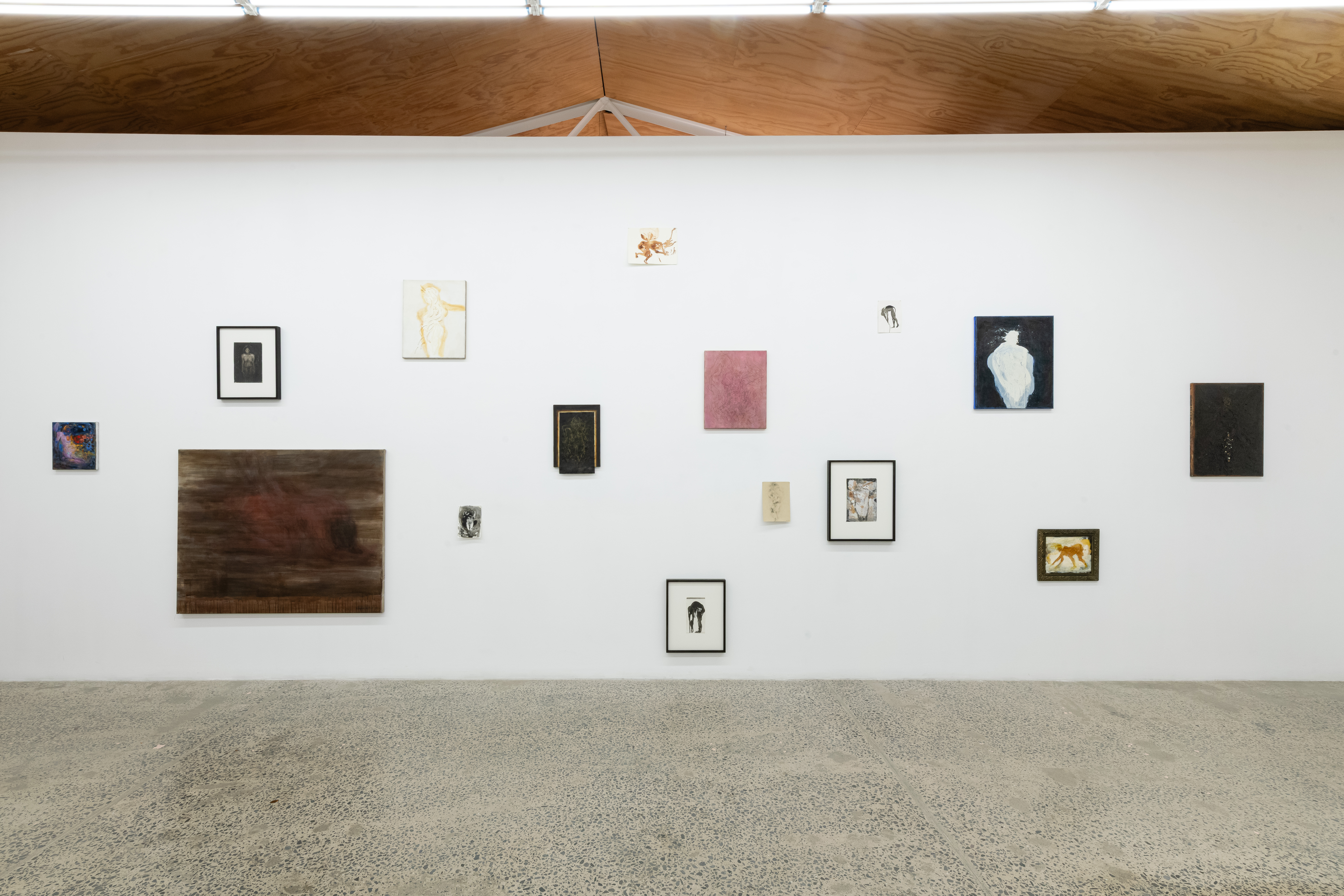
The internet and found imagery have played a key role in your work. How do you find the balance between appropriation of external imagery and the painting’s own autonomous language?
I am using found imagery from the internet less and less now. I used it more, along with printed media, as source material for images of unease. Transferring a photograph image to a painting seemed to create more unease, beauty and ambiguity.
I used it back in 2013 more when I made a series about the internet’s early use of social media in public humiliation of young humour with images of drunk people comatose. I liked the ambiguity of the images being peaceful and vulnerable, the space of unease it sat within and the changes of social behaviour evolving with human interaction with the internet. Now I think maybe we have reached a kind of over-saturation point, and I want to just make work where I’m just having a dialogue and responding to through the materiality of the paint or medium I’m using and react to with all the human senses. I’m finding it hard to just illustrate images in oil paint without embodying a sense of being present, too. I am now more interested in how we are in a crisis between our humanity and technology, rapidly changing our behaviour and the natural world we live in, with imagery reflecting it to us.
I want to bring body awareness back into the realm of looking at painting, with technology taking this away more and more from us. Looking at paintings for how it’s made and not just the image alone, something that goes deeper than being saturated in flicking through digital images that hold less information than a painting does. Where you see more, you move closer and scan your eyes over it forensically, and from a distance, you see something different, a change of perception, where you have to move your body into space, not just pinch your fingers out to get closer as we do on a screen.

Image: Sleep, 2025. Photo by Simon Strong.
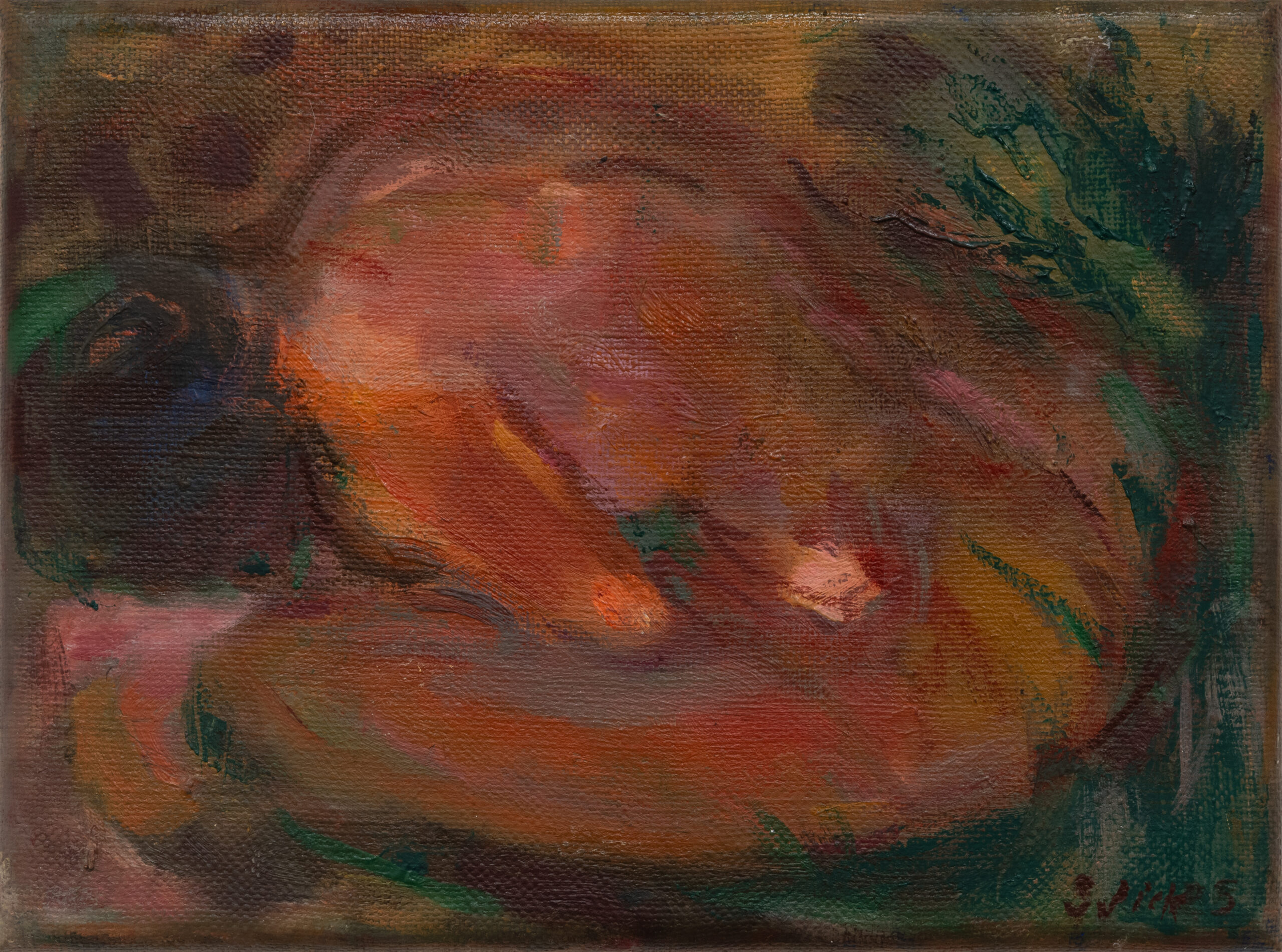
You often depict the body, or figures in ambiguous psychological spaces. What role does memory play in the construction of such spaces?
My early work was an attempt at visualising how memory and its sensations are forever being reconstructed and their influence on constructing our identity, and this fluidity over time. The methods I used with thick layered white paint, obscuring layers of drawings and scratching into the paint on canvas, I seem to be revisiting again 30 years later, as I’m becoming more interested in exploring texture, the tactile and layering and obscuring information in my work. It also happens to embody my own art past into my older self.

Image: Overflow II, 2025. Photo: Simon Strong.
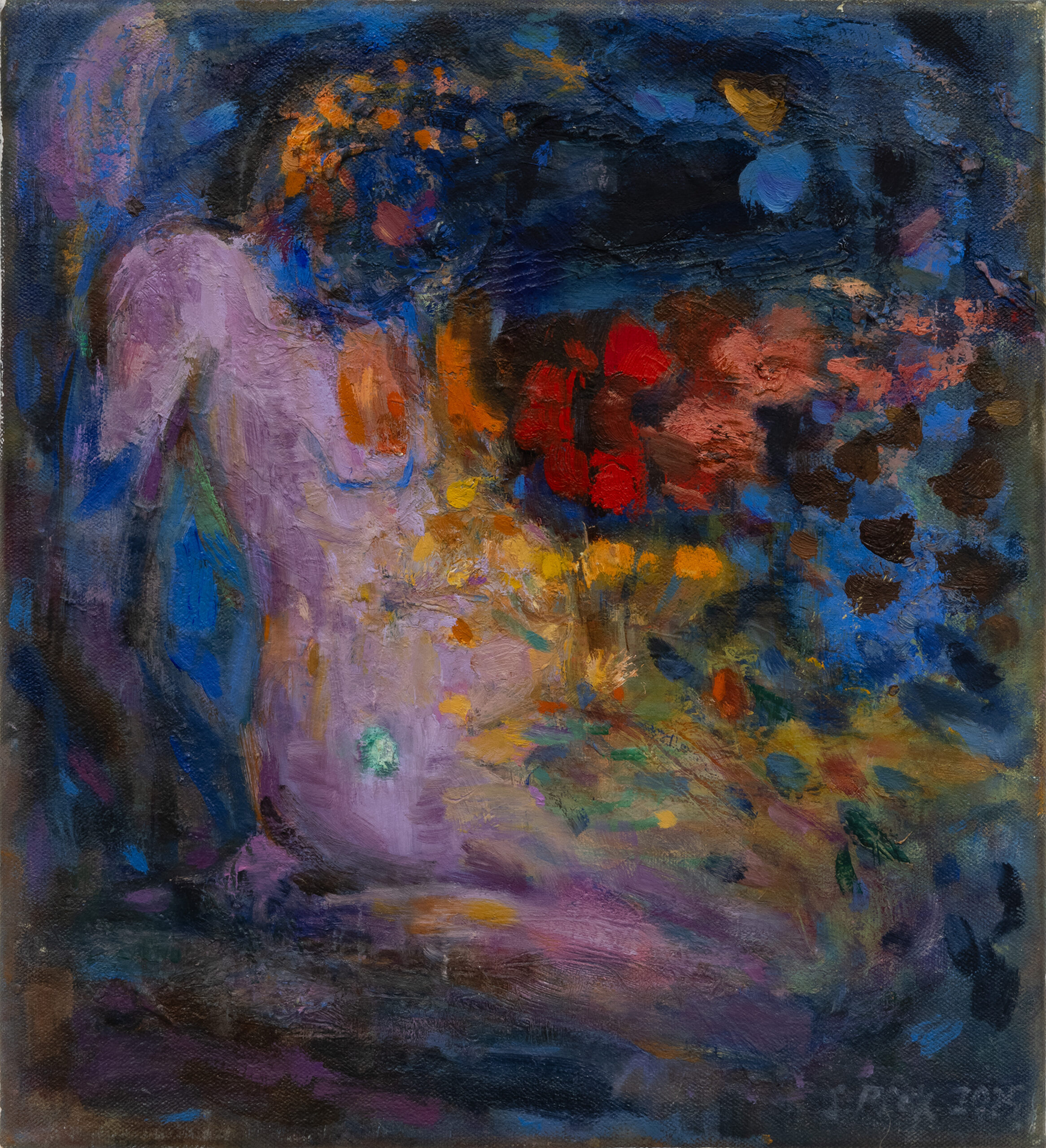
When people engage with the blurred boundaries and partial narratives in your paintings, what response are you hoping to draw out?
Art is experiential, with each person bringing their own experiences of the world and individual emotional responses to that. It’s this process that completes the work, and where I let it go. I don’t have any specific expectations for bringing out anything in people, but hope there is some level of engagement with their senses to the work; hearing something, remembering something, feeling something. It could also be just looking at the surface and noticing it as a tactile thing to explore, or thinking about something outside of the work in the world. Just a connection of being present, maybe, I like to leave the work open-ended in this way.

Image: E-Mystic I, 2025. Photo: Simon Strong.
As someone whose work spans over three decades, how has your understanding of “what painting is” shifted for you and how do you see your practice expanding on this moving forward?
Actually, it’s nearly four decades now! My first show was in 1989. I’ve explored a lot of threads of ways of painting over the years, for sure. My desire to keep learning, searching, and responding to the world and where I am as a person in it. It’s really a long journey in finding yourself in the end, and that confidence to be yourself in your work.
Painting itself has a primal familiarity for me, as the first thing you do as a child is use your senses to explore the world. Anything sticky or liquid, you use your hands and smear it on something, that’s painting, it’s an action first. You pick up a stick or use your fingers and draw in the sand. It’s an indelible mark; it’s the doing. I see my grandchild doing this now, and I want that sense of immediate connection back. Going forward, I’m trying to just draw it from my intuition in a more freeing way and want to go back to exploring materials more as a way of bringing the tactile back to the forefront. I like to explore and use my perception as an older woman through this process and see where it takes me.
I do like not knowing what I’ll be making ahead, though. It’s good to keep that mystery and exploration alive. My deafness, I realise now, is part of my identity in how I’ve navigated the world and how I create movement in my work like visual sound. I often experience paintings that way.
The last few years, I’ve collaborated with friends who are younger artists of different disciplines: Andrew Bec, a photographer; Jaime Jenkins, a ceramic sculptor; and I will be doing a project with a sculptor next year, Isabella Loudon. It’s an interesting process to collaborate and show work alongside another artist and cross disciplines, and generations. It’s very experimental and interesting, and as an experience, it’s the exchange that you’re left with, that memory of making that you learn so much about your own work as well. It’s also a great antidote to the long hours spent alone in your studio, too!
Painting is a vehicle to engage in the world or to just lose yourself in. It is the paintings’ immersive quality I love. At a certain stage of the process, you are in that calm, relaxing state, then the next thing you can be in a battle with it! It can take you on an emotive ride, and it requires risk-taking to go back to the calm.
Pick’s Exhibition continues at STATION, Melbourne until 24 January