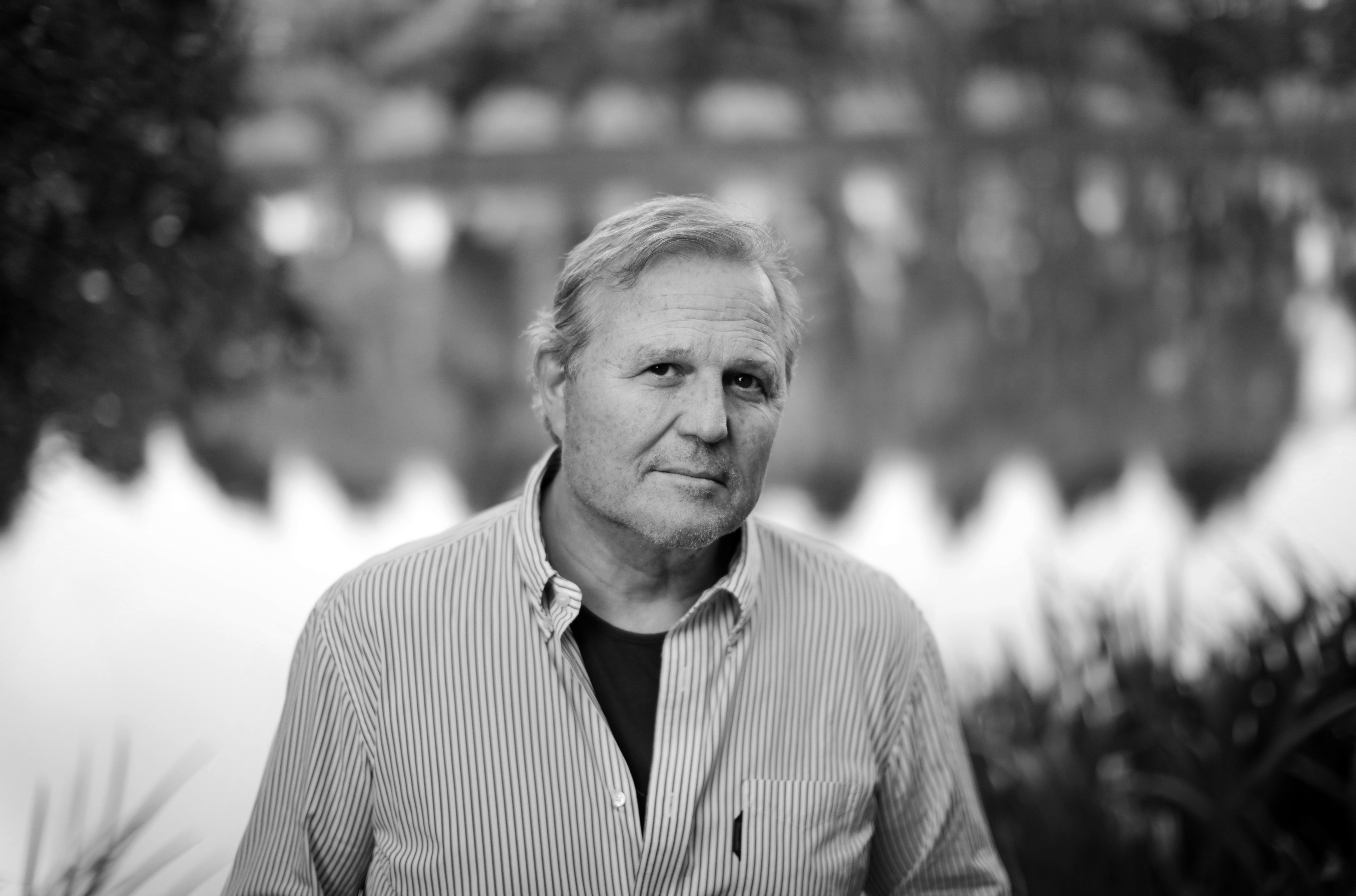
For Tim Olsen, Sydney Contemporary’s first edition is still vivid: a packed opening night, people squeezing through stands and a sense that something significant was happening in Sydney. As one of the galleries to have exhibited at every edition of the Fair, Olsen has watched it grow from an ambitious new event into a major meeting point for galleries, artists and collectors.
Tim Olsen has spent decades championing Australian artists across generations, from his father John Olsen and Fred Williams to a younger generation of contemporary voices. With a gallery grounded in a deep love of painting, drawing, sculpture and photography, Olsen has always believed in the conversation between artists and generations. Having exhibited at every edition of Sydney Contemporary, he has seen first-hand how the Fair has grown alongside the city’s art scene. We spoke to Tim about his memories of the Fair, the artists and collectors who have shaped his practice, and what he hopes for the next decade.
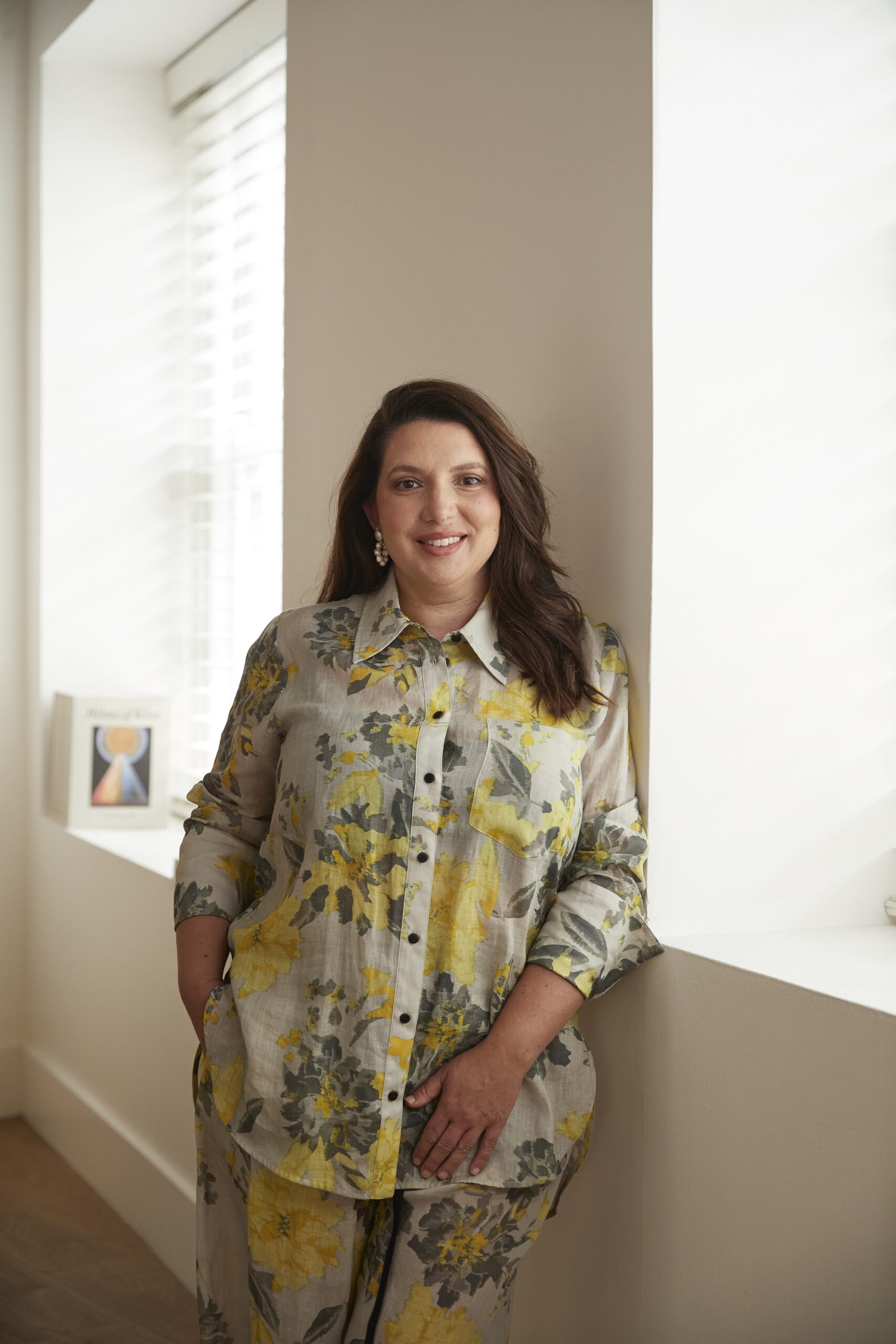
Photo: Tim Olsen, courtesy Olsen Gallery
____
Looking back at Sydney Contemporary, what do you remember about some of those earlier editions?
What I remember about those very early editions were that I was skeptical, having only ever been to the Melbourne Art Fair before. That was a very boisterous art fair. It was in the old exhibition centre and people flew from all around Australia. You know, Melbourne was always considered the capital of the Australian art scene. That’s why my family moved to Victoria when I was young because he wanted to be with Arthur Boyd and Fred Williams and what have you, so Melbourne collectors would take my father seriously. Now, when we came to Sydney and we had our first art fair here, it went off with a bang. I’ll never forget the opening night. It was total chaos because we all underestimated how successful this was going to be, and people squeezing through your stand. Everyone was in a great mood, even though it was hard to get a drink. Sydney is the new superstar of the Australian art scene, and the energy of the art fair then was so overwhelming, and it was so successful. It felt like Sydney was really ready for a large-scale art event of this kind.
 Sydney Contemporary, Carriageworks Sydney. 9/9/2022. Picture: James Horan.
 Sydney Contemporary, Carriageworks Sydney. 9/9/2022. Picture: James Horan.
How has the role of an art fair like Sydney Contemporary evolved over the past decade for galleries, artists, and collectors?
It’s evolved as a stomping ground for dealers to see what other dealers are doing. It’s a great place where collectors from other galleries come along and discover a gallery that was virtually around the corner for years that they never went into or was more than they thought. Many people who assumed that you only did this or that, particularly when being the son of John Olsen, they thought that I was just a John Olsen gallery. But when they saw the plethora of my artists and the fact that I have a philosophy about my love of painting and drawing that steeps itself into sculpture and photography, they we were far more interesting than they thought. They realized that that I had a good eye. That I run a very professional organization, and it’s the Art Fair that that provided that awareness.
 Sydney Contemporary, Carriageworks Sydney. 9/9/2022. Picture: James Horan.
 Sydney Contemporary, Carriageworks Sydney. 9/9/2022. Picture: James Horan.
What have you noticed about the audience that has that has come through the doors over the past decade?
Well, it’s amazing. I’m getting people who come to the Art Fair from interstate or overseas, and then the next day they visit the gallery in Paddington and procure works. So, the Art Fair is a great billboard to get people into your space.
Sydney Contemporary, Carriageworks Sydney. 9/9/2022. Picture: James Horan.
 Sydney Contemporary, Carriageworks Sydney. 9/9/2022. Picture: James Horan.
Over the past 10 years, what shifts have you noticed in the kinds of work collectors and audiences are responding to? What did you bring the very first year?
The first year of Sydney Contemporary I brought Fred Williams John Olds, mixed in with a few of my younger artists. I’m multi-generational in what I present, and what I do. I believe in the conversation. Having grown up in the post-war period, and seeing the bridge between modern to post-modern, my job has been to provide that conversation. It doesn’t have to be necessary derivative aspects to what you buy now in a young art, any young artist. You don’t have to sort of match your art collection to the sofa or match it to each to within itself. An Art Fair gives you a feel for eclecticism. An Art Fair gives you a feel that you can have whatever you want, and it doesn’t matter that it doesn’t have any relationship to what you already have. You can have fun, and there are no rules.
 Stephen Bird, Walking man with dog, 2025, Courtesy of the artist and OLSEN Gallery.
 Stephen Bird, Walking man with dog, 2025, Courtesy of the artist and OLSEN Gallery.
Olsen has represented many significant Australian artists across generations. How do you balance supporting established artists while also championing emerging voices?
A lot of my artists that have joined me over the years have said this: It’s all very well, I could part of a contemporary conceptual space, but I would be so honoured to be hung next to your father, or Fred Williams, or Ian Fairweather, because who else could? All this obsession with newness doesn’t have depth. If you’re able to profile an artist amongst a John Olsen or a Fred Williams or a Brett Whitely, you know, from my friendship with all those artists as a child, I have access. I’m a go-to when it comes to people reselling them outside of auction houses. There are artists who have been so honoured, and I tell you what, it takes a lot of bravery, and it’s a big call to be hung next to a 20th century master and not look like an amateur.
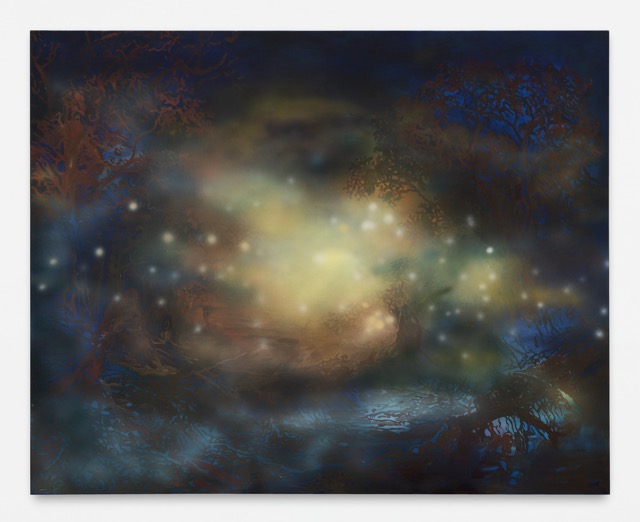
B Robertson, We are watching the trees in the old campsite at night, as if we are spectators of a film. Then someone pulls out a painting I did and asks what it is. It’s dark with super bright lights in the sky. Like the northern lights – but also artificial. There are some fields in the foreground of the painting but when we look at them they disappear and are replaced by the same eucalyptus trees we are looking at in the campsite. The painting is supposed to be a bushfire but no one believes me, 2026 Courtesy of the artist and OLSEN Gallery.
Thinking about the artists you’ve presented at Sydney Contemporary over the years, are there any standout moments, discoveries, or conversations that have stayed with you?
I think one of the things about being good at the Art Fair is to be very egalitarian. Talk to everybody. You don’t know who they know, or who they might be. There are dealers who only talk to someone if they thought they were a big collector, or they thought they were famous, or whatever. I’ve always said to my staff, always offer everyone a catalogue and try and engage. Never underestimate anyone, because humility is so important, and in a Philistine country like ours, we need to celebrate everybody that loves art, because they’re far and few between.
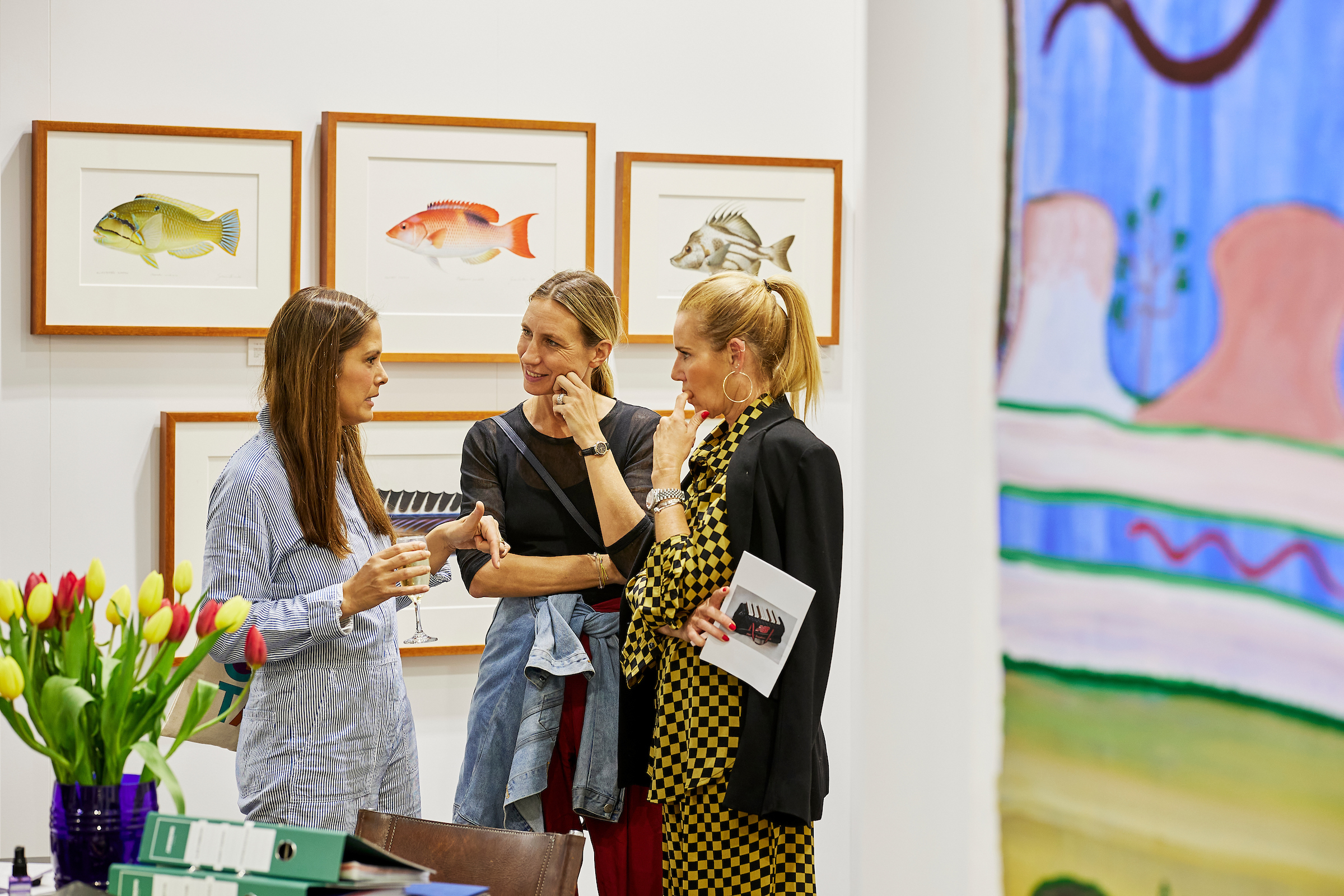
Sydney Contemporary, Carriageworks Sydney. 9/9/2022. Picture: James Horan.
Sydney contemporary marks its 10th edition, what do you hope the next decade of the Fair looks like for Australian contemporary art?
I would hope that more people are prepared to fly out from anywhere in the world to be here. Australia’s looking like a good place with the way the world is at the moment.
Sydney Contemporary returns to Carriageworks from 3 – 6 September. Tickets are on sale now.