André Hemer’s practice explores the tension between the physical and the virtual, bringing together painting, sculpture and digital image-making. Drawing on the shifting qualities of light, landscape and natural forms, he reimagines how we experience and make sense of the world around us.
We spoke with Hemer about the influence of Vienna, New York and Aotearoa on his work, the enduring possibilities of painting in a digital age, and the ideas behind his latest exhibition. To touch a cloud while standing on the ground.
Exhibition on until 24 December 2026
Gow Langsford
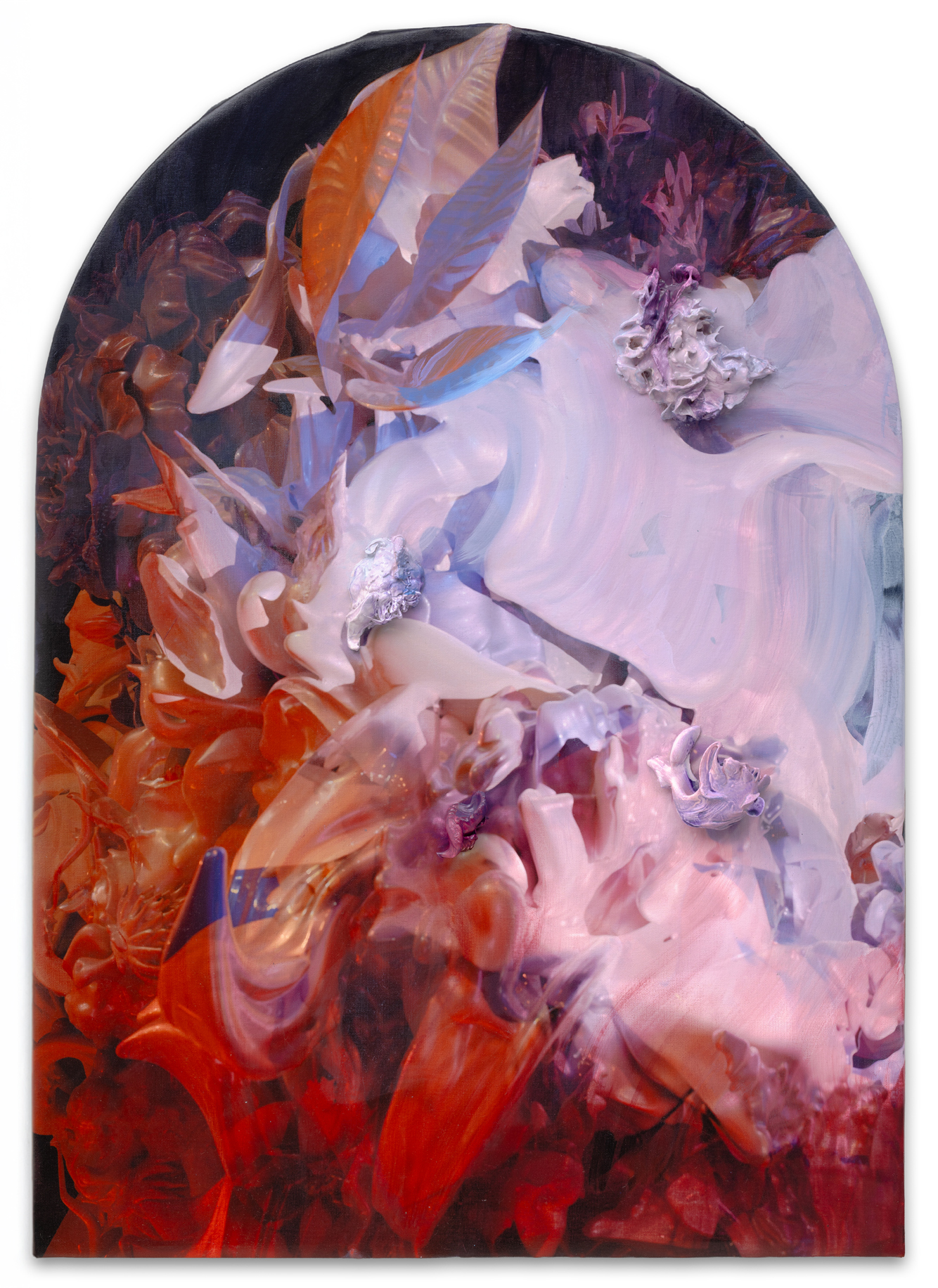
André Hemer, To touch a cloud while standing in a garden #6, 2026. Courtesy the artist and Gow Langsford.
Your practice moves between digital image-making, painting and sculpture. What continues to draw you to the space between these different ways of making?
I’ve always believed that the artist’s role is to respond to the time and place in which they’re living. And so for the best part of the last two decades the influence of how digital media has affected the way in which we see and create has been a really pertinent part of my practice. And although I engage heavily with digital processes and wish to represent them in some way, it’s not an attempt to speak to technology for it’s own sake—but rather to create a deeper understanding of how all these modes of making and seeing relate. I’m a big believer in the continuing relevance of the ’slowness’ of a physical object, and the way that paintings and sculptures can endure in the world. That’s why I intentionally move between different forms of media, be it painting, sculpture, or natively digital mediums.
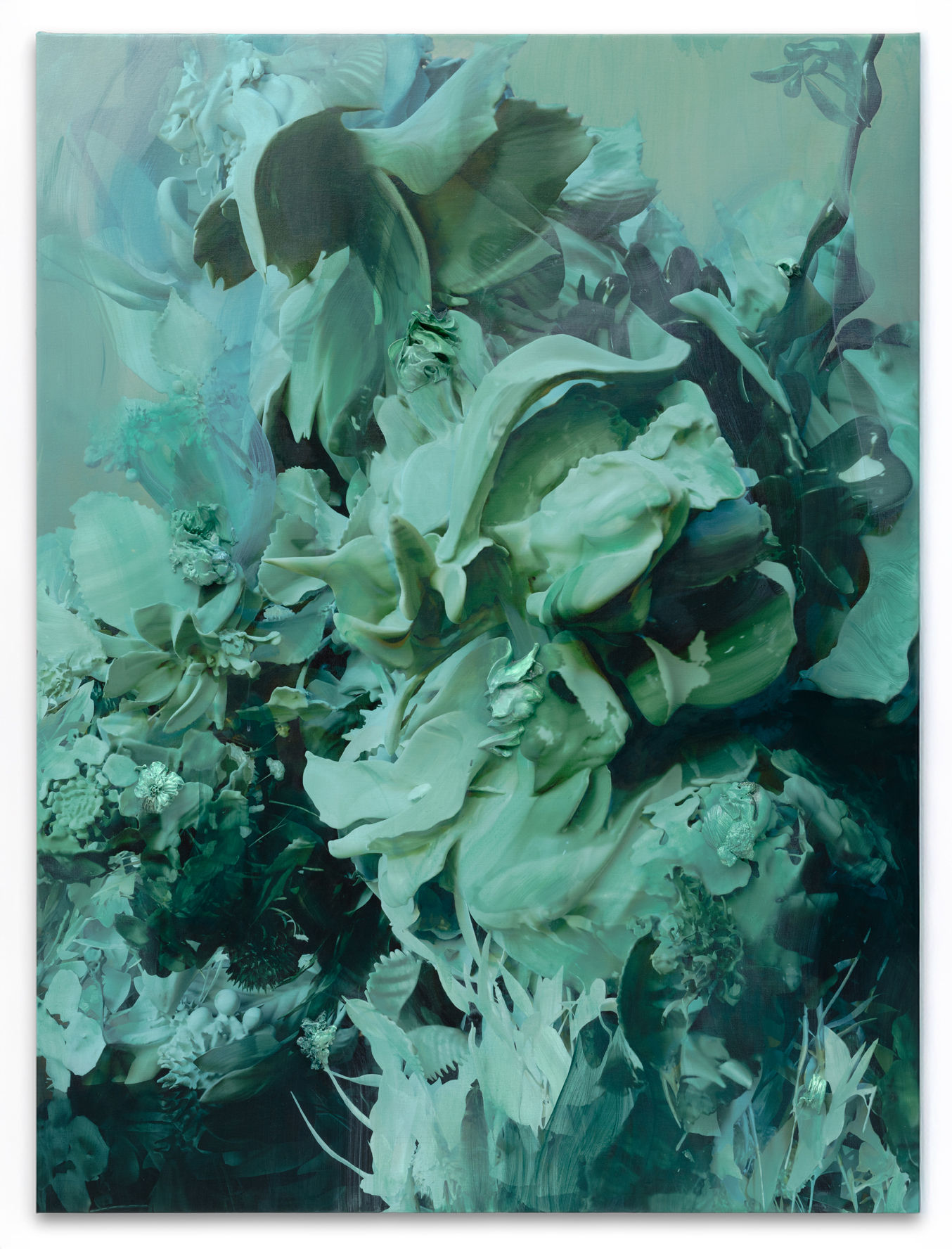
André Hemer, To touch a cloud while standing in a garden #4, 2026. Courtesy the artist and Gow Langsford.
You live and work in Vienna while maintaining a strong connection to Aotearoa. How do these different places and environments inform your practice?
Although I’m predominantly based in Vienna I also do studio periods in New York each year for a couple of months at a time, and I make sure that I come back to Aotearoa at least one month per year. These places inform my work in different ways but together create a really beautiful tapestry of experience. In Vienna, you have this very particular artistic history that is explicitly part of everyday life through the architecture and landscape of the city—and these really romantic aesthetic and material inspirations are often reflected strongly in my paintings. New York is a beast, it’s a chaotic city with every kind of cultural touchpoint. That creates a beautiful energy that is quite opposite to Vienna, and so those two places actually work really well in tandem.
Aotearoa is always the baseline touchstone for me in terms of how I think about the world. Being away from long periods you appreciate even more the unique singularity of its geography and landscape—and as someone who was born in Queenstown, I think that’s the most pertinent example of that. And there is also the connection to water and ocean, which has become really specific for me when living in a landlocked country like Austria for so long.
I think that there’s a beautiful relationship between where I live and where I work and my movements in the world, they’ve each very much part of my practice.
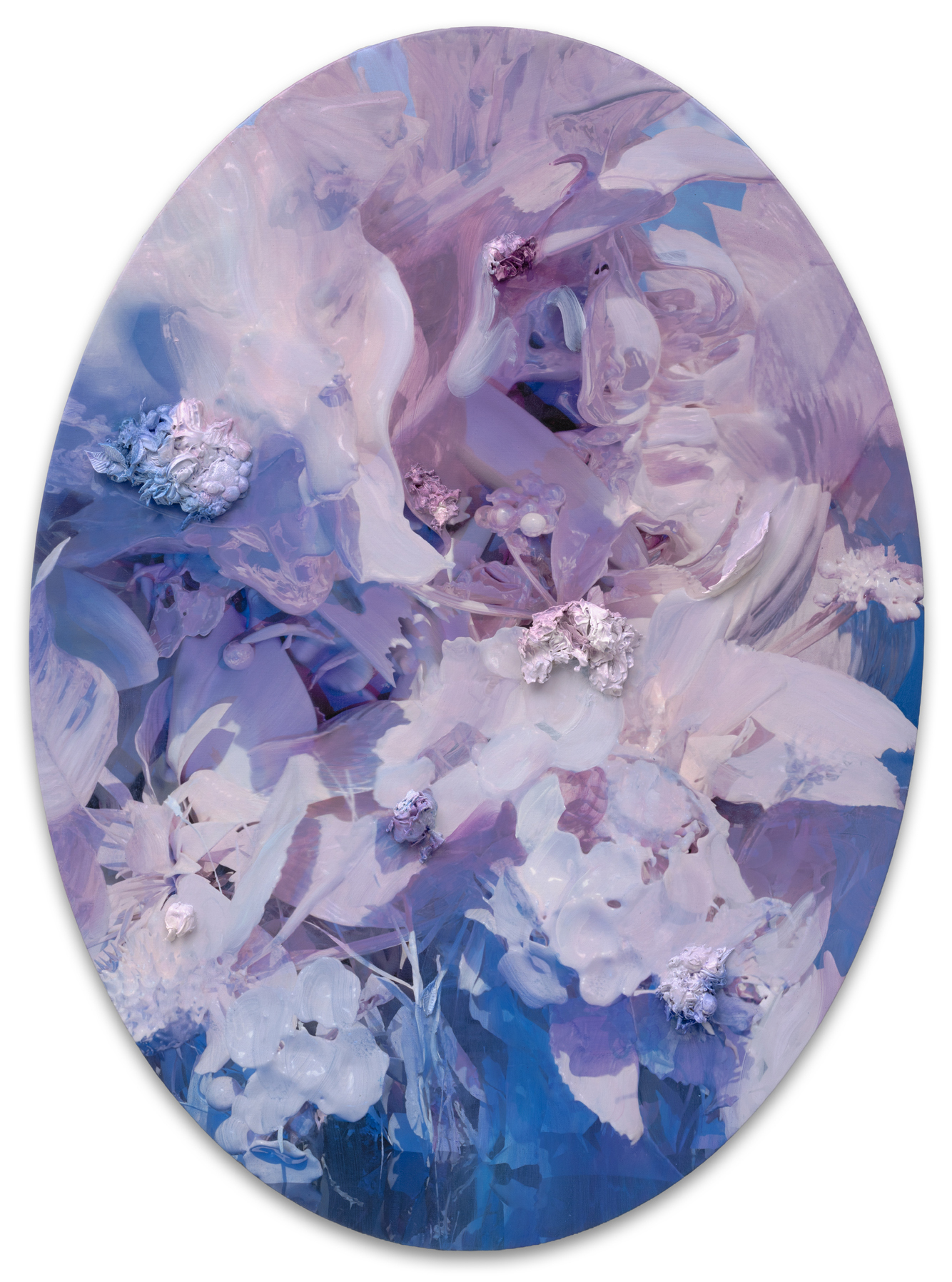
André Hemer, To touch a cloud while standing in a garden #4, 2026. Courtesy the artist and Gow Langsford.
Your exhibition, To touch a cloud while standing on the ground, explores the relationship between image and material, illusion and physical presence. Can you tell us about the ideas behind the exhibition?
Even though this exhibition explores similar ideas of place, time, and the environment as previous shows, this exhibition is a distinct departure in terms of how it’s come to be.
The approach for this show was to collect a large set of three-dimensional forms generated from imagery that I’ve gathered over the past eighteen months or so. It could be a flower, elements from a larger landscape view, clouds in a sky, sculpted forms from paint or pigments, or images painted as a quick studies in oil and watercolour. I’ve taken all these elements and combined them into a virtual 3D landscape, and in doing so I also stripped back all the texture and colour of these objects. I’ve then chosen particular viewpoints within that virtual space from which to base painting compositions, and then used the process of painting to ‘reimagine’ the skins and textures of these objects.
So there is a sort of juxtaposition between recognisable elements, like a landscape traversing from ground to sky. And at the same time, the visuality of them changes from painting to painting as I reapply and shift the imagery of these forms through painting. And there is also a sense of illusion that forms from the complex interplay between images and objects from many, many places, all at the same time. But in the context of paintings that could also appear to just be a simple landscape or a still life.
I’m also creating a virtual staging of light that is actually sourced first-hand from the particular environments that I’ve visited; whereby I’ve created a virtual light source in the form of an HDRI that replicates the light and sky in those places. The title, To touch a cloud where standing on the ground, refers to this idea of these connections between places, and the impossibility of what it means to touch something without a kind of fixed materiality or a dreamt reality.
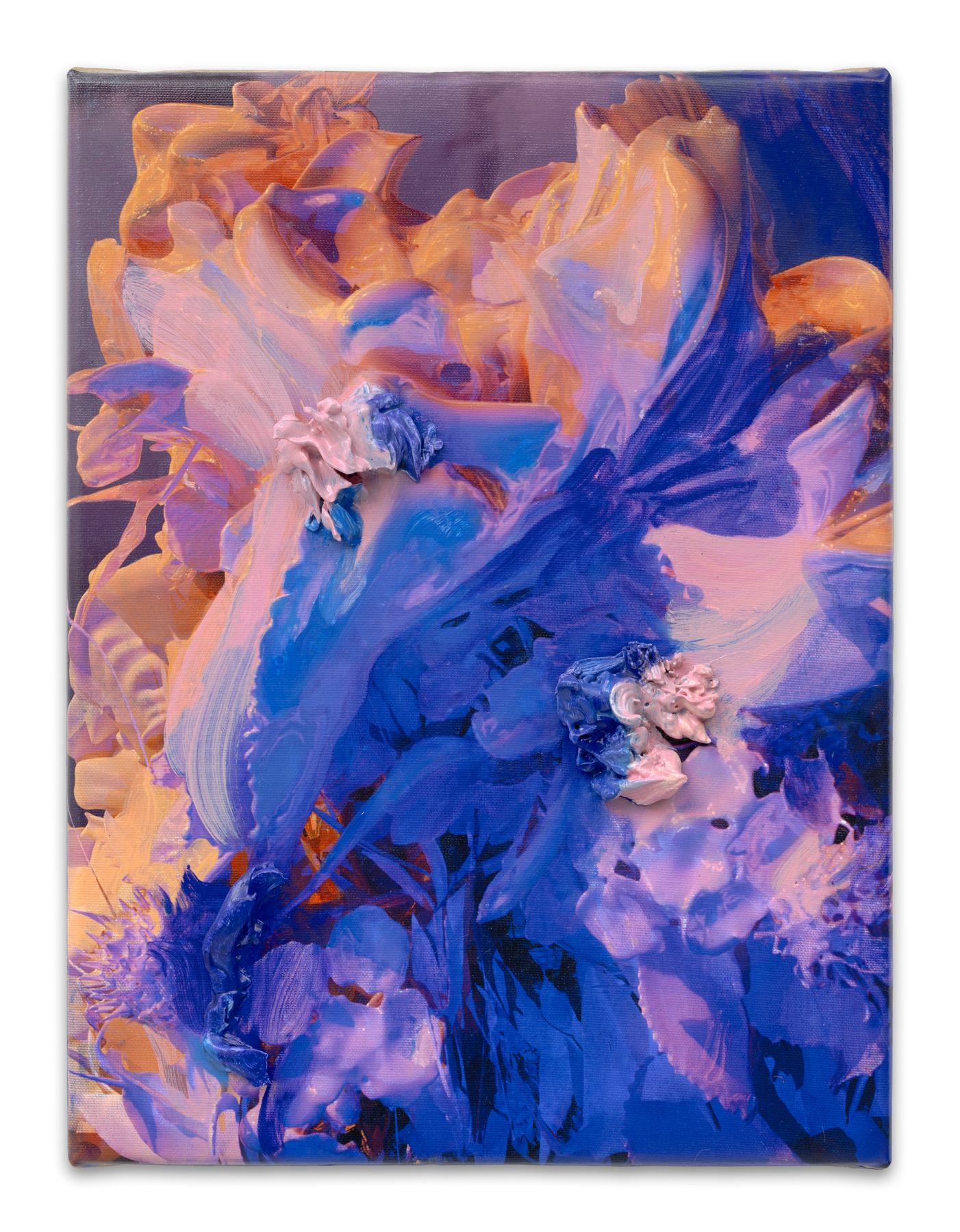
André Hemer, To touch a cloud while standing in a garden #5, 2026. Courtesy the artist and Gow Langsford.
You have increasingly incorporated three-dimensional digital environments into your process, using scanned and generated forms to develop new compositions. How has working within virtual space changed your relationship to painting?
So I guess this largely follows on from the previous answer. It’s been really interesting to use that virtual space specifically in terms of the light play in these works. Whereas I used to follow a sun across the sky in real time through a slow photographic capture, I can now do that as a kind of virtual timeline and move between daylight and evening while mixing elements of locations. And I can play with light sources in a way that feels quite historically linked in terms of painting history. I was thinking about how old masters made paintings, where the light source was often from a single candle-light and could be moved around to illuminate and reveal different parts of the composition. And in a way, that’s what I’m trying to do here too.
Some of the paintings are very vibrant and lit intensely from one direction, letting colours almost glow, and some are much more obscure and darker, where light is just sort of barely passing through the forms. I think that’s been a really beautiful exercise in reimagining a place through a virtual space, and also establishing a relationship to another kind of painting history.
Your work often draws on the natural world while engaging with contemporary digital technologies. How do observation and digital transformation work together in your practice?
For me, these are always inextricably linked. The basis for whatever I do has to start in the physical world and the natural environment, and that capturing of the natural world is therefore very important. I no longer begin work in the digital space—it has to come from firsthand captured imagery or 3D scans of physical objects.
The last few years I’ve really been trying to explore that phenomenological experience of how an environment changes—ie how light influences colour and hue, the humidity of a sky and how it alters the perception and depth of an image, and the dreamlike appearance and structure of clouds in different places. Wherever you are in the world, these things can appear so variable and changeable, and say so much about the place in which you live.
And I suppose that’s a way for me of humanising the digital world in which we’re inescapably surrounded by which has kind of formed it’s own kind of virtual environment around us—to a point where it often becomes a new baseline for experience (rather than the physical world). As an example, for many people in the world it might be more likely to experience a sunset through an Instagram post than through an actual day to day experience—which is kind of a crazy situation to be in.
I think my work is really trying to speak to both positions, to see them as interlinked, as well as something that can create a new conversation in terms of thinking back to the natural world and it’s importance. Painting is a vital medium for representation.
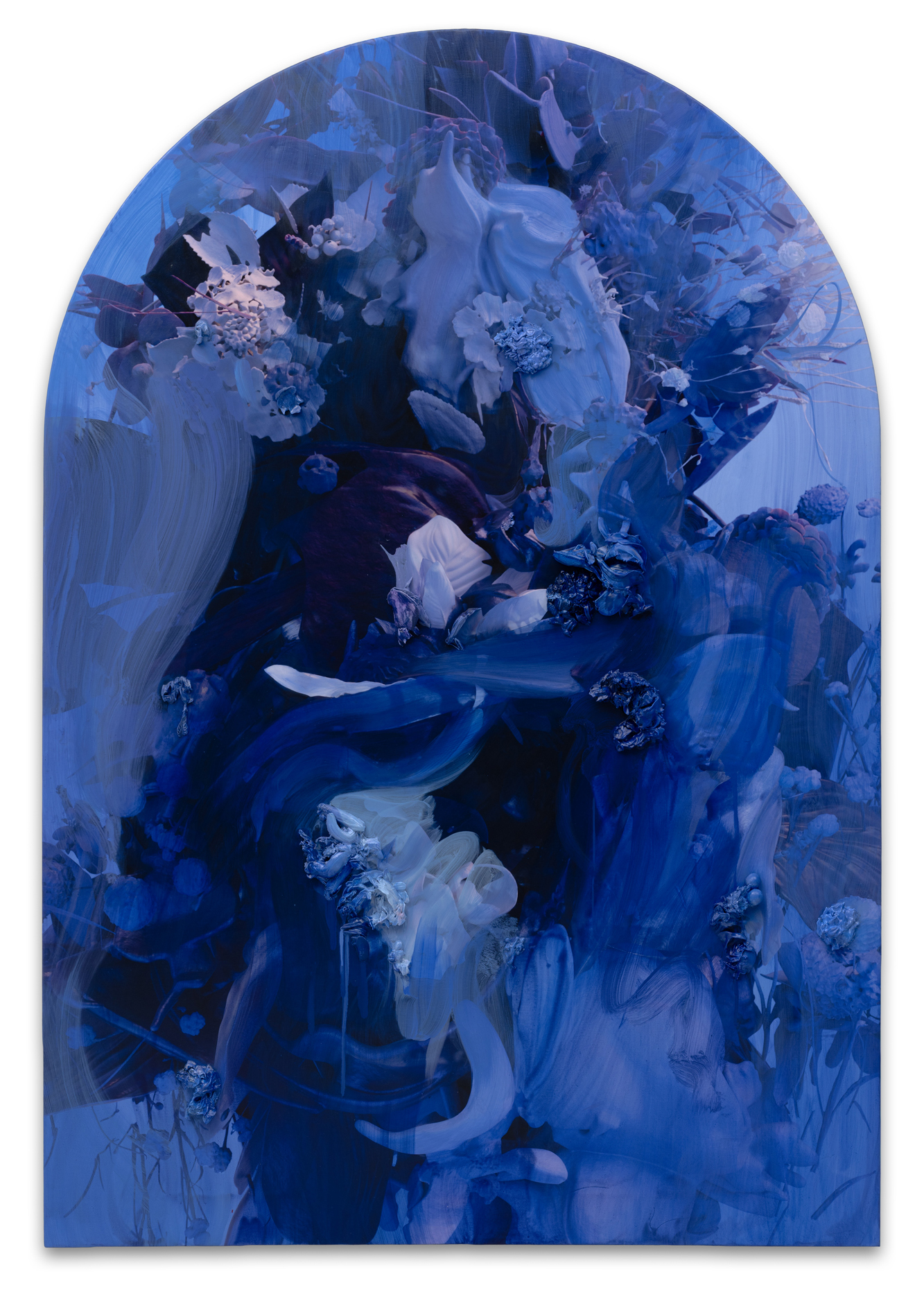
André Hemer, To touch a cloud while standing in a garden #1, 2026. Courtesy the artist and Gow Langsford.
When bringing a body of work together, how do you consider the relationships between individual paintings and sculptures?
What’s interesting about shows where I’ve used sculpture is that often the sculptural element is the part that actually manifests first—in this show the sculptures represent arrangements of objects that I have collected; it’s from these that I then base the paintings upon. You could say that they are a still life of those sculptures living in virtual spaces. But in a way I also see the sculpture as a form of painting, both literally in the sense that they are painted objects, but also in the sense of them being materialised versions of things within the paintings.
What do you hope viewers discover as they move between your works and encounter them from different perspectives?
I’ve always been really open to the viewer discovering works for themselves and not dictating what that might be. But obviously, to do that you also have to engage someone to really look at something, and hopefully move beyond any pretence that they might bring to a work. And that’s why I like to play with different kinds of surfaces and thicknesses and illusory space, because it necessitates the audience to really look and think about what it is that they’re seeing. I think one of the beautiful qualities of painting is the experience of alchemy when you encounter something that you find mysterious and you don’t quite understand how it came to be.
What questions continue to shape your practice, and what new directions are you interested in exploring?
For me it’s always important to explore new ways of making, and how different approaches can come together to create work that speaks to the complexities of our time.
The last couple of years I’ve been painting a lot more with oils and the surfaces of the paintings are changing. The act of painting is slower, and it’s been refreshing to work with a more traditional painting approach while integrating it with imagery created in those virtual spaces. And at the same time, the paintings are also getting thicker again because I’m integrating a lot of 3D printing processes that extrude the imagery out from the canvas.
So the direction that I’m taking now is really to explore how far the painting and the sculpture kind of cross over to become one mode of making. Extending from that, I’m interested in creating larger sculptural works that can speak to both the paintings and digital practice.
André Hemer’s exhibition To touch a cloud while standing on the ground on now until 24 December 2026 at Gow Langsford