
For Primavera 2026, curator Antares Wells brings together eight young Australian artists drawn to the traces the past leaves behind: in bodies, objects, landscapes, archives and memory. The exhibition moves between the intimate and the historical, the personal and the collective, asking what survives, what disappears, and who gets to decide what is remembered.
Across painting, film, photography, weaving and installation, these artists approach history from oblique and often unexpected angles. The result is an exhibition that feels at once deeply considered and gloriously unruly: a place where found objects, lost stories and fragments of memory collide, and where the past keeps pressing into the present.
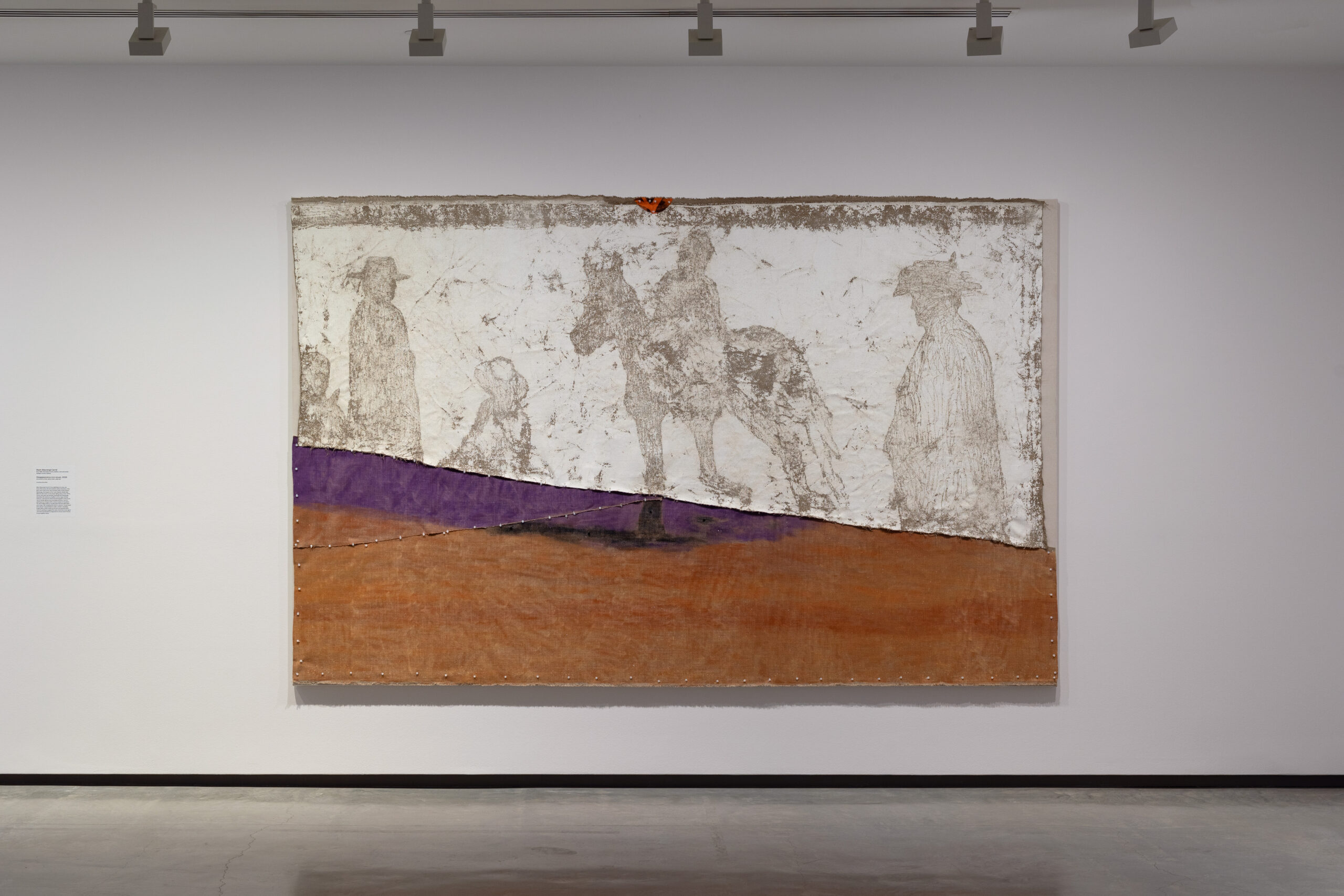
Mark Maurangi Carrol, Disappearance (oro enua), 2026, oil enamel on linen, pāreu cloth, cable ties, installation view, Primavera 2026: Young Australian Artists, Museum of Contemporary Art Australia, Sydney, photograph: Jessica Maurer
How would you best describe this year’s Primavera?
Primavera 2026: Young Australian Artists features the work of eight artists: Mark Maurangi Carrol, Stanton Cornish-Ward & Trent Crawford, Callum McGrath, Jahkarli Felicitas Romanis, Linda Sok, Jack Wansbrough and Rudi Williams. Their work is both emotional and analytical – it has a kind of felt precision. It’s shot through with intellect, but it’s not cold. The exhibition is idiosyncratic, at times eccentric and obsessive. There’s a preoccupation with material culture and the found object throughout the exhibition that gives it a certain unruliness, and it’s materially quite diverse. Someone at the opening described it as ‘unhinged’. I liked that.

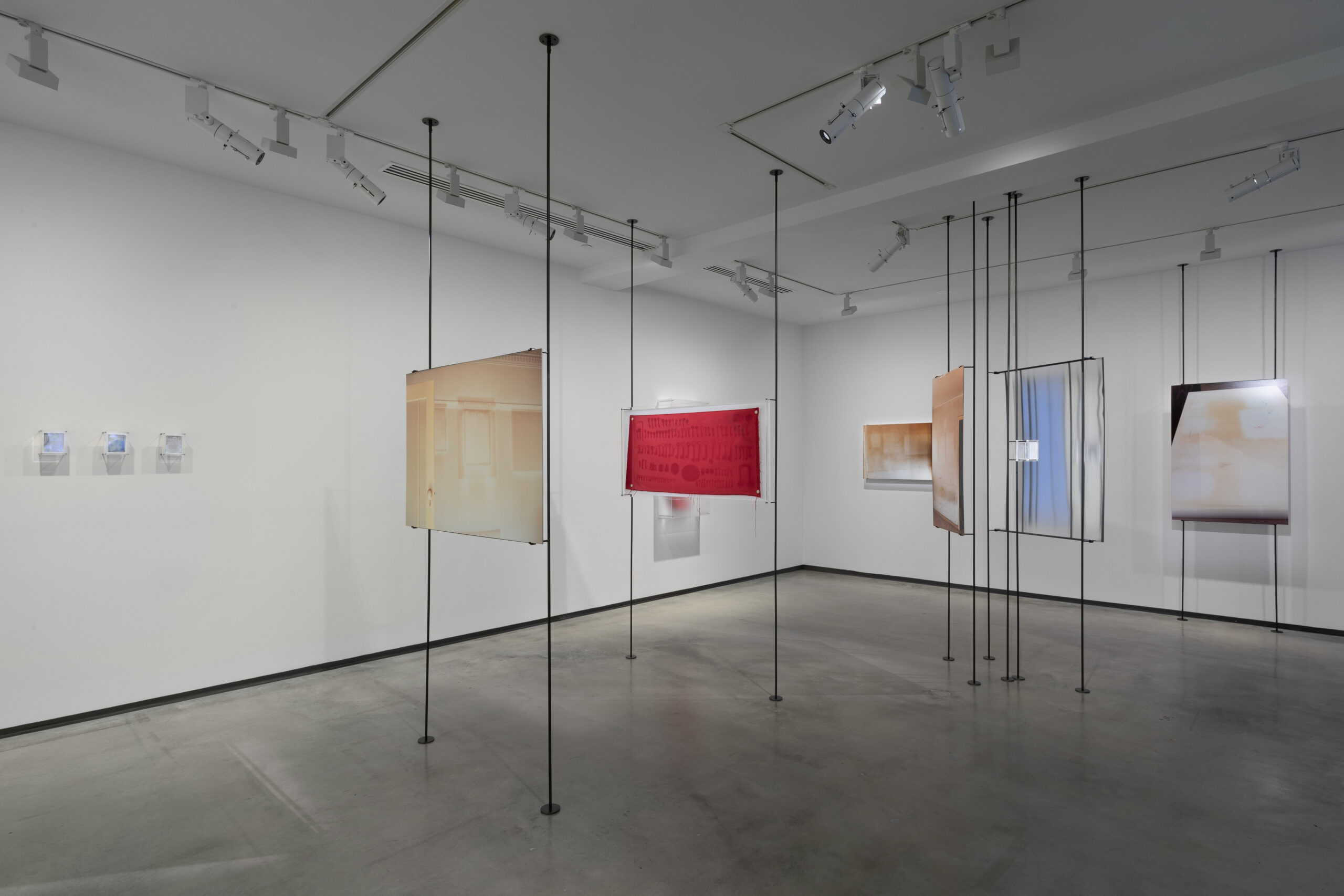
Rudi Williams, In the air we breathe, 2026, installation view, Primavera 2026: Young Australian Artists, Museum of Contemporary Art Australia, Sydney, photograph: Jessica Maurer
What was the initial instinct or suspicion that led you towards this group of artists?
These artists are preoccupied in different ways with what I’ve called ‘the material and psychic traces of the past’. They consider these traces on different timescales, from the geological to the span of a single human life. They are orbiting similar ideas but coming at them in different ways. There are points of convergence, but I don’t think the artists all agree with each other. If they did, that to me would be a far less interesting exhibition. I’m interested in how all these different approaches spin out from similar preoccupations.

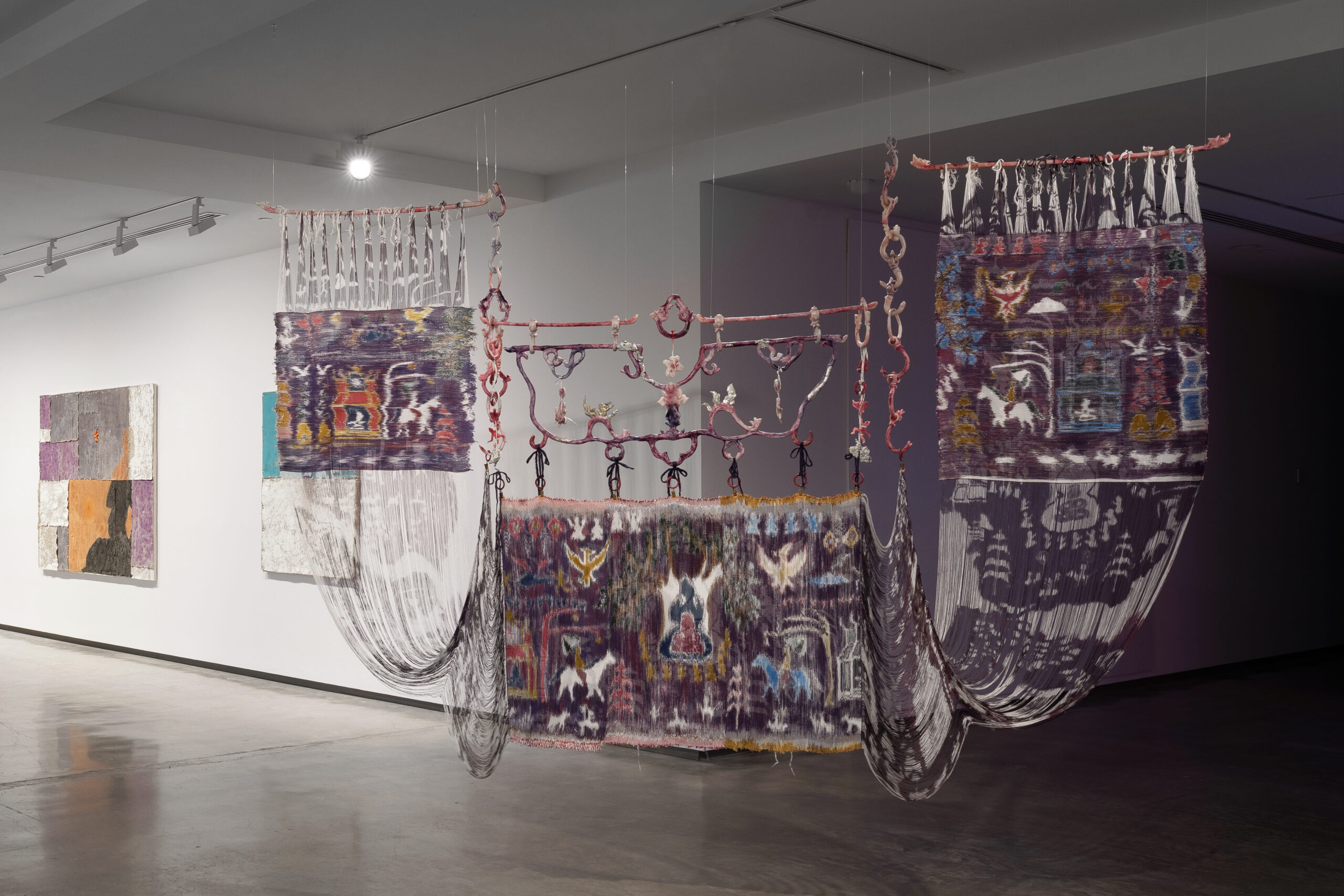
Linda Sok, Deities in Temples XXI, 2026, installation view, Primavera 2026: Young Australian Artists, Museum of Contemporary Art Australia, Sydney, photograph: Jessica Maurer
Primavera is interested in history, memory and the archive. Why do you think those ideas feel particularly present for young Australian artists right now?
Over the past few years, there has been an international resurgence of practices that grapple with history, memory and the archive. I think this is partly connected to the COVID-19 lockdowns, the way they forced us all inward – think of people going through their attics or garages, revisiting things they’d been meaning to organise or clear out for years. The pandemic also coincided with major social movements that put questions of representation and power at the top of the agenda, which naturally involve an historical perspective on the conditions of the present. I think the convergence of these forces has been felt locally in different ways and has intersected with existing preoccupations in contemporary Australian art. For several of the artists in Primavera 2026, I would also say that unprecedented levels of online access to historical material around the world, through large-scale digitisation programs, has influenced their work.
That said, I think these are eternal themes – artists have been grappling with the past, with memory, for thousands of years – and of course archive-based practices have a long history. I believe in the power of eternal themes. To some extent, I do feel there’s very little that’s truly new under the sun; we just come at enduring preoccupations differently from our vantage point in time. I would say that sensibility is shared by many of the artists.
You visited artists across the country while developing the exhibition. What were you looking for in those studio visits, and what did you find that you weren’t expecting?
I was looking for depth in an artist’s practice – not a single stand-out work, but a deep, considered practice that had evolved over many years. Many of the artists in this year’s Primavera are presenting new work in the context of a broader body of work they have developed over a longer period. Rudi Williams’ photographic installation In the air we breathe spans over a decade, from 2012–2026. Jahkarli Felicitas Romanis’ video work Skin to Skin is grounded in her project (Dis)connected to Country, which she began in 2019, while Linda Sok’s monumental silk weaving forms part of her series Deities in Temples (2023–ongoing).
My research trip to took me to cities and regional centres across the country. The art scene in Western Australia took me by surprise – it’s experimental, collaborative, alive with irreverent observation. As one artist told me, ‘There aren’t really many opportunities over here, so you just make what you want.’ A freewheeling and open sensibility thrives over there. I loved it.

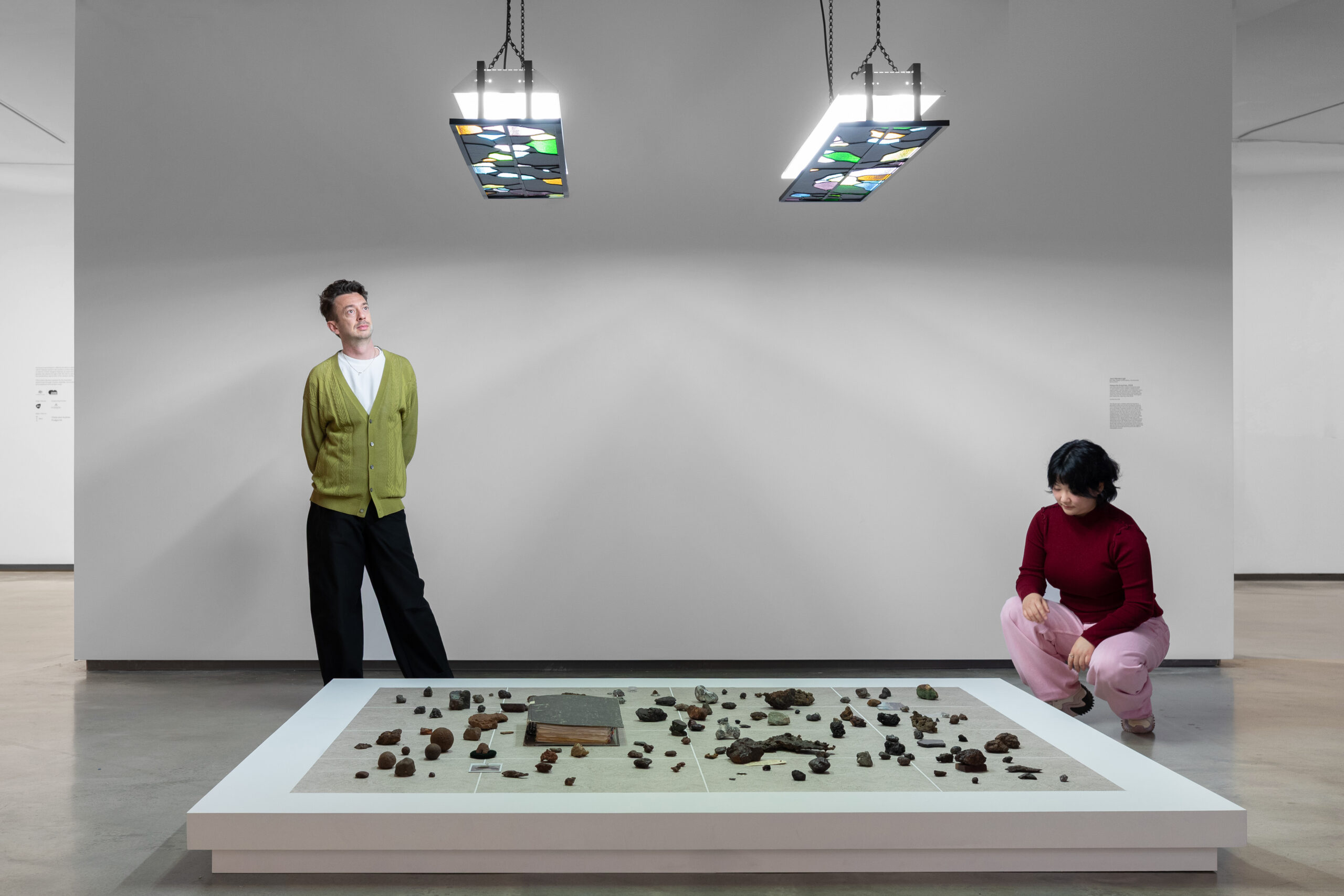
Jack Wansbrough, Meteorite Enquiries, 2026, installation view, Primavera 2026: Young Australian Artists, Museum of Contemporary Art Australia, Sydney, photograph: Jessica Maurer
There are very different ways of engaging with the past across the exhibition. Were there particular tensions or affinities between the artists that became apparent as the exhibition took shape?
Affinities and tensions between the artists ricochet across the gallery. Stanton Cornish-Ward and Trent Crawford’s film Synchresis is at one end of the gallery and Rudi Williams’ photographic installation In the air we breathe is at the other. They take very different approaches to the broader question of technological change – Rudi’s installation is resolutely material, while Stanton and Trent’s film includes neurologically-generated and deepfaked footage – but they orbit similar questions of memory, violence and grief.
Linda Sok’s weaving Deities in Temples XXI and Jack Wansbrough’s installation Meteorite Enquiries both approach the absent (lost, discarded, destroyed) object through sculpture, and their practices are social and collaborative – Linda invited her family to contribute drawings that reverberate across her weaving, while Jack met with geologists as he developed his work. Different kinds of knowledge, contributed by other people, has flowed into both of their works, but materially and aesthetically they couldn’t be more different.

Callum McGrath, History Piece (Flagship), 2026, installation view, Primavera 2026: Young Australian Artists, Museum of Contemporary Art Australia, Sydney, photograph: Jessica Maurer
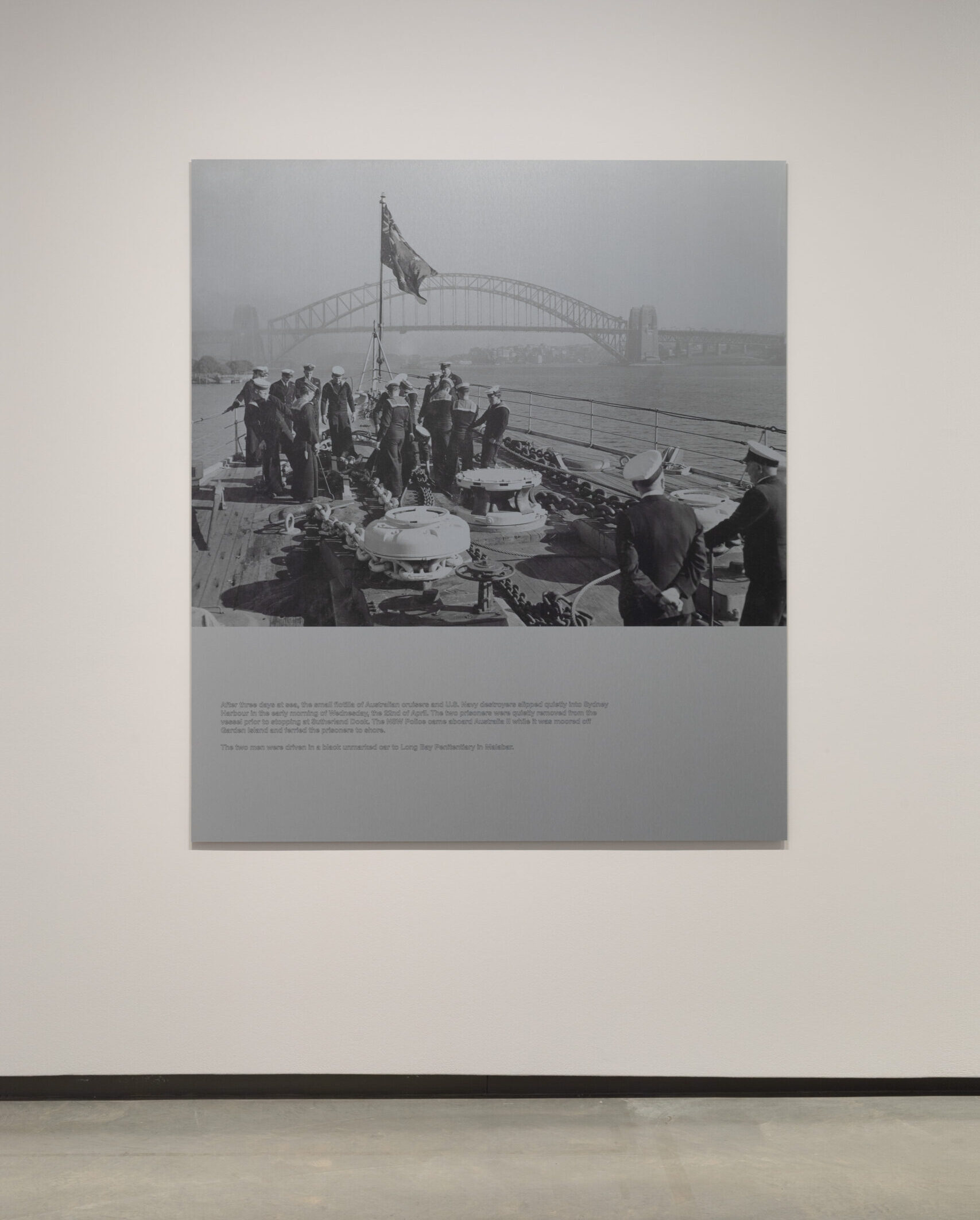
Several of the artists seem to be working with things that are intimate or deeply personal, while also opening onto much larger histories. What interests you about that movement between the personal and the collective?
I’m interested in how we are all implicated in something larger than ourselves – call it our cultural moment, the sweep of history, broader forces of social change. That movement between the personal and the collective speaks to me because I believe we are all connected, as clichéd as that sounds, and with that comes questions of ethics and responsibility. No one is an island, etc. Callum McGrath’s installation History Piece is a great example of this. The work is anchored in what Cal calls “a queer love triangle gone awry” – the murder of a young man, John ‘Jack’ Joseph Riley, aboard the HMAS Australia II in 1942 by his lovers, two fellow naval servicemen – and the far-reaching implications of John’s death. Cal finds form for those ripple effects in layers of etched glass and a two-way mirror facing onto Sydney Harbour, where the ship transported the perpetrators to Long Bay Gaol. Ultimately, his installation asks us to consider ethical questions. What does justice look like? Is it even possible? What do you think about the death penalty? What does it say about Australia in the 1940s that a man chose murder over being found out as gay, and how do we narrate these stories?
There’s a narrative drama in that movement between the personal and the collective that I’m intuitively drawn to, a sense of storytelling. Mark Maurangi Carrol’s paintings oro enua, atu enua (the horse, the lord of land) do this beautifully – he takes a cultural tradition, a horse race on a beach, and paints its passage from living memory into history, the end of an era on Avaiki Nui (the Cook Islands).
 Stanton Cornish-Ward and Trent Crawford, Calibration Sequence: Apple, 2026 and Synchresis (Part I), 2026, installation view, Primavera 2026: Young Australian Artists, Museum of Contemporary Art Australia, Sydney, photograph: Jessica Maurer
 Stanton Cornish-Ward and Trent Crawford, Calibration Sequence: Apple, 2026 and Synchresis (Part I), 2026, installation view, Primavera 2026: Young Australian Artists, Museum of Contemporary Art Australia, Sydney, photograph: Jessica Maurer
How much do the materials themselves shape the way these artists think about memory and history?
Materials have influenced the artists in different ways. Mark Maurangi Carrol’s training in traditional Cook Islander printmaking and textile practices, such as pāreu staining, has shaped his distinctive approach to painting – he pushes many layers of oil enamel into the reverse of the linen, and only part of it comes through to the front. That process, which is stubbornly material-driven, has influenced how he approaches the past. He describes it as an analogue for the loss of memory over time. But equally important in this exhibition are the archival ‘sparks’ that have informed the artists’ works, which are presented on the exhibition entrance wall. In her video Skin to Skin, Jahkarli Felicitas Romanis performs spoken word yarning to camera. She adopts the frontal and profile poses of ‘mission mugshots’ made of her great-grandmother Dolly in 1938, after she was forcibly removed from Pitta Pitta Country. Jahkarli’s installation, which features these original portraits infused with her own photographs of Pitta Pitta Country, is a tender and powerful conversation across time and place.
 Jahkarli Felicitas Romanis, Dolly, 2021, and Dolly, 2024, installation view, Primavera 2026: Young Australian Artists, Museum of Contemporary Art Australia, Sydney, photograph: Jessica Maurer
 Jahkarli Felicitas Romanis, Dolly, 2021, and Dolly, 2024, installation view, Primavera 2026: Young Australian Artists, Museum of Contemporary Art Australia, Sydney, photograph: Jessica Maurer
For visitors walking through the galleries, what is the key takeaway or shift in perspective you hope they leave with regarding how we carry history into the future?
That we are surrounded by incredibly rich stories, and that those we think we know are complex. That questions of narration, and notions of value – whether, and how, something is recorded, collected, discarded, destroyed – shape what we think we know about the past. That this partial knowledge shapes our connected human present. And that the work of artists is so generative in inviting us to reconsider our own perspectives, and inherently important. Jack Wansbrough told me that one of the fundamental instincts for his work in Primavera 2026 was a sense that “The things I can learn are worth knowing.” I like to think that animates the entire exhibition, and I hope visitors leave with that sense too.
Primavera 2026: Young Australian Artists continues at the Museum of Contemporary Art Australia, Sydney until 28 September
For Tim Olsen, Sydney Contemporary’s first edition is still vivid: a packed opening night, people squeezing through stands and a sense that something significant was happening in Sydney. As one of the galleries to have exhibited at every edition of the Fair, Olsen has watched it grow from an ambitious new event into a major meeting point for galleries, artists and collectors.
With a gallery grounded in a deep love of painting, drawing, sculpture and photography, Tim has always believed in the conversation between artists and generations. We spoke to Tim about his memories of the Fair, the evolution of his gallery, and what he hopes for the next decade.
Photo: Tim Olsen, courtesy OLSEN Gallery
____
Looking back at Sydney Contemporary, what do you remember about some of those earlier editions?
What I remember about those very early editions were that I was skeptical, having only ever been to the Melbourne Art Fair before. That was a very boisterous art fair. It was in the old exhibition centre and people flew from all around Australia. You know, Melbourne was always considered the capital of the Australian art scene. That’s why my family moved to Victoria when I was young because he wanted to be with Arthur Boyd and Fred Williams and what have you, so Melbourne collectors would take my father seriously. Now, when we came to Sydney and we had our first art fair here, it went off with a bang. I’ll never forget the opening night. It was total chaos because we all underestimated how successful this was going to be, and people squeezing through your stand. Everyone was in a great mood, even though it was hard to get a drink. Sydney is the new superstar of the Australian art scene, and the energy of the art fair then was so overwhelming, and it was so successful. It felt like Sydney was really ready for a large-scale art event of this kind.
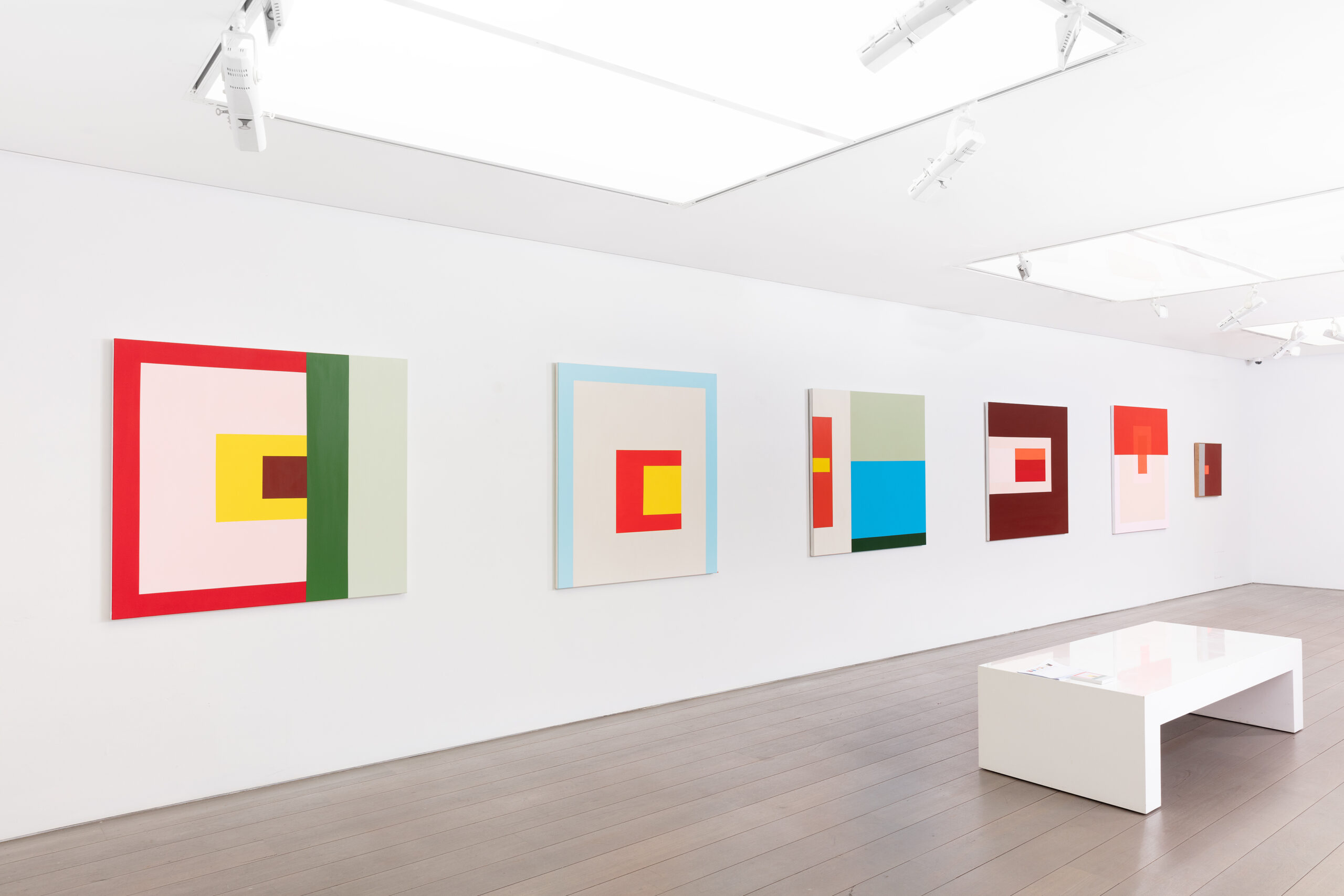
How has the role of an art fair like Sydney Contemporary evolved over the past decade for galleries, artists, and collectors?
It’s evolved as a stomping ground for dealers to see what other dealers are doing. It’s a great place where collectors from other galleries come along and discover a gallery that was virtually around the corner for years that they never went into or was more than they thought. Many people who assumed that you only did this or that, particularly when being the son of John Olsen, they thought that I was just a John Olsen gallery. But when they saw the plethora of my artists and the fact that I have a philosophy about my love of painting and drawing that steeps itself into sculpture and photography, they we were far more interesting than they thought. They realized that that I had a good eye. That I run a very professional organization, and it’s the Art Fair that that provided that awareness.
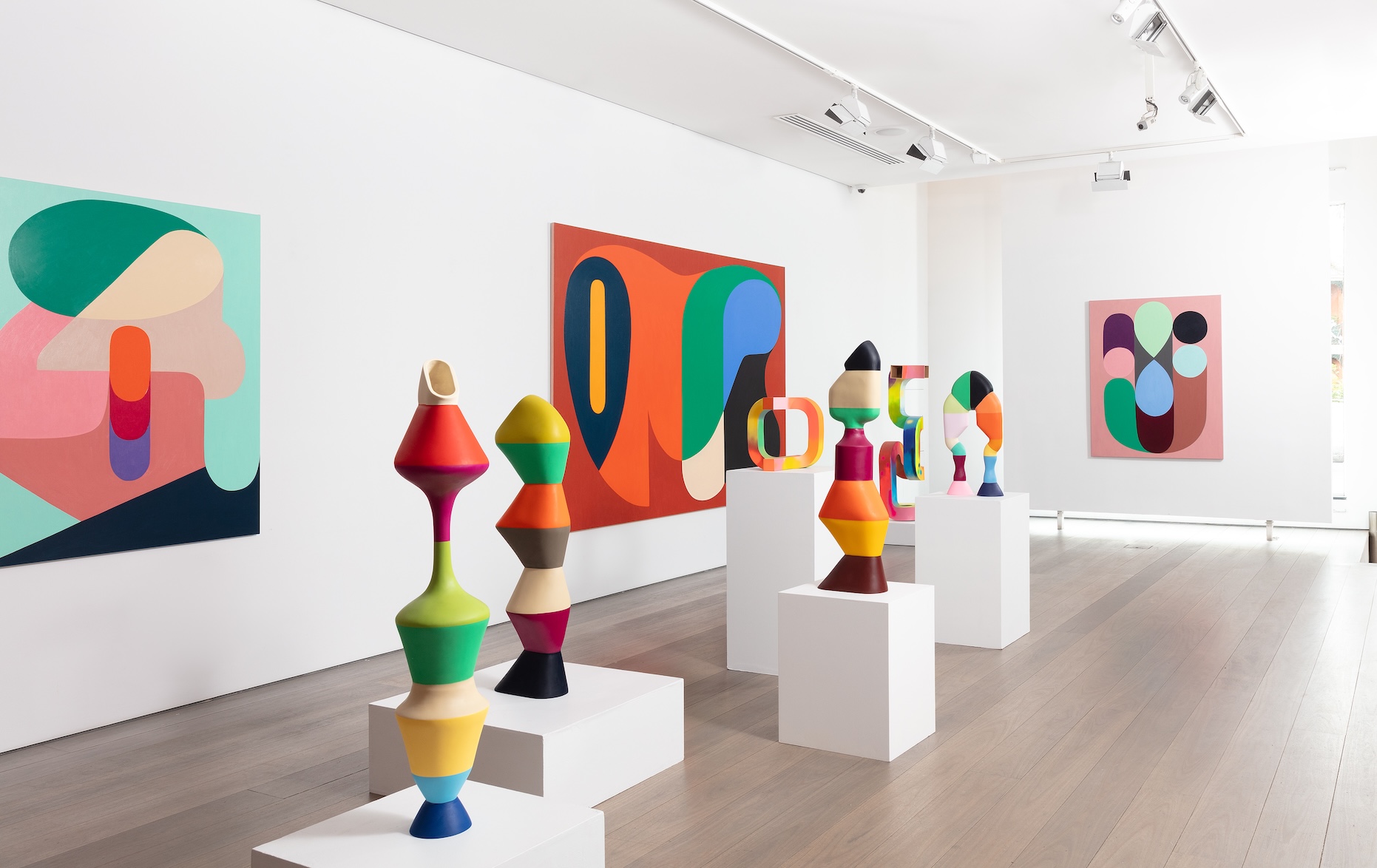
What have you noticed about the audience that has that has come through the doors over the past decade?
Well, it’s amazing. I’m getting people who come to the Art Fair from interstate or overseas, and then the next day they visit the gallery in Paddington and procure works. So, the Art Fair is a great billboard to get people into your space.
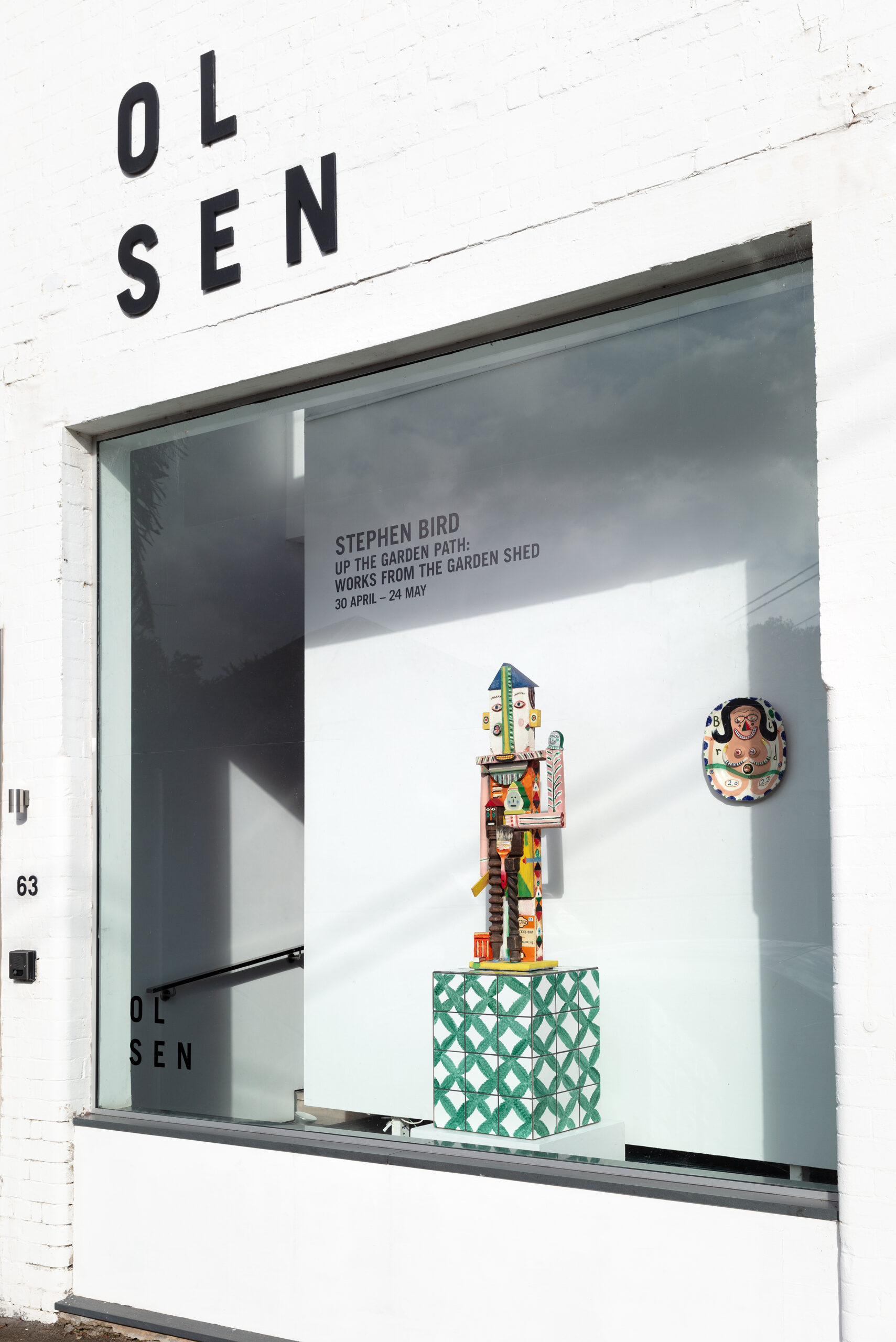
Over the past 10 years, what shifts have you noticed in the kinds of work collectors and audiences are responding to? What did you bring the very first year?
The first year of Sydney Contemporary I brought Fred Williams John Olds, mixed in with a few of my younger artists. I’m multi-generational in what I present, and what I do. I believe in the conversation. Having grown up in the post-war period, and seeing the bridge between modern to post-modern, my job has been to provide that conversation. It doesn’t have to be necessary derivative aspects to what you buy now in a young art, any young artist. You don’t have to sort of match your art collection to the sofa or match it to each to within itself. An Art Fair gives you a feel for eclecticism. An Art Fair gives you a feel that you can have whatever you want, and it doesn’t matter that it doesn’t have any relationship to what you already have. You can have fun, and there are no rules.
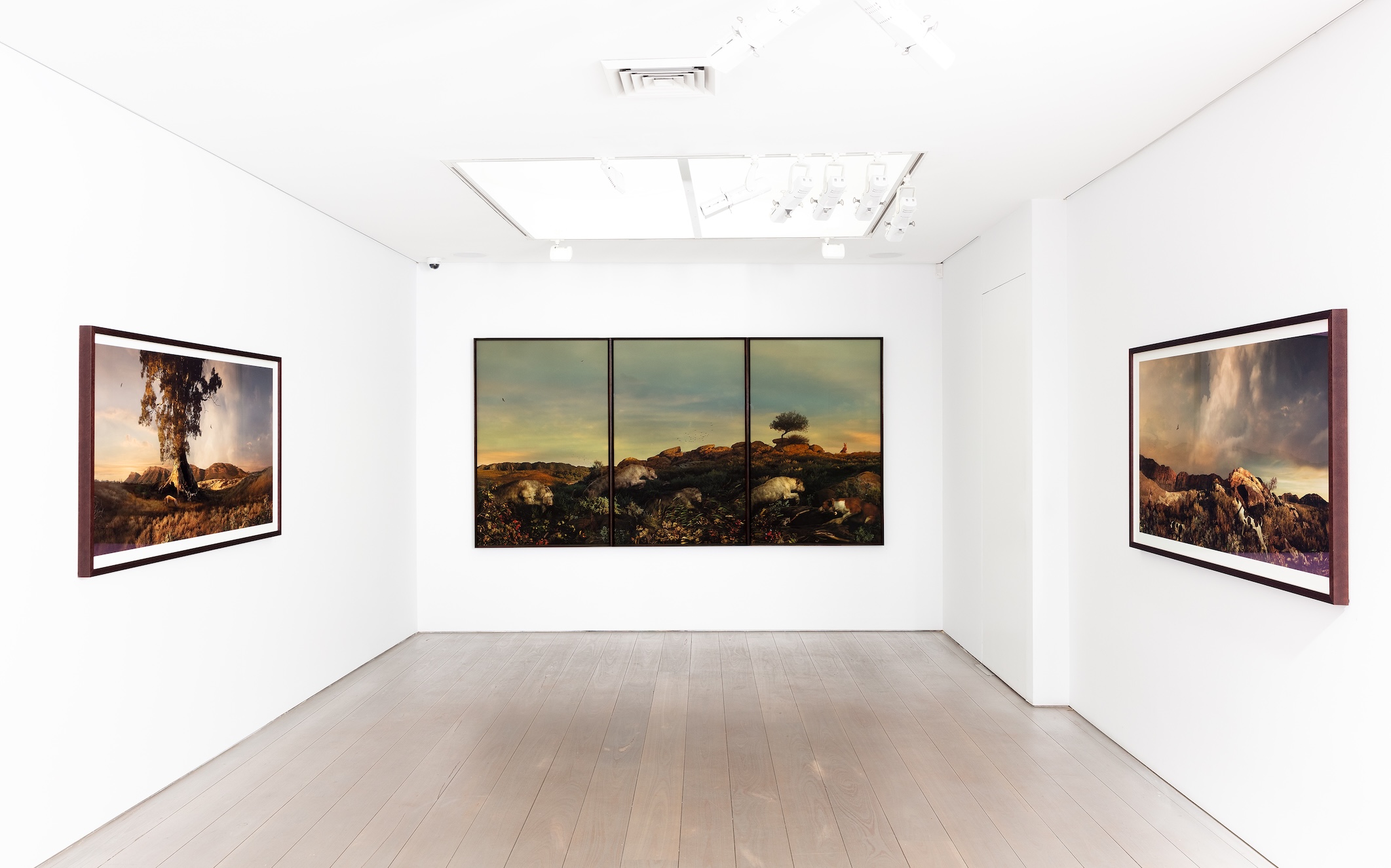
Joseph McGlennon, The Hunt, Olsen Gallery 2025 Image: Simon Hewson (@fatografi_insta)
Olsen has represented many significant Australian artists across generations. How do you balance supporting established artists while also championing emerging voices?
A lot of my artists that have joined me over the years have said this: It’s all very well, I could part of a contemporary conceptual space, but I would be so honoured to be hung next to your father, or Fred Williams, or Ian Fairweather, because who else could? All this obsession with newness doesn’t have depth. If you’re able to profile an artist amongst a John Olsen or a Fred Williams or a Brett Whitely, you know, from my friendship with all those artists as a child, I have access. I’m a go-to when it comes to people reselling them outside of auction houses. There are artists who have been so honoured, and I tell you what, it takes a lot of bravery, and it’s a big call to be hung next to a 20th century master and not look like an amateur.
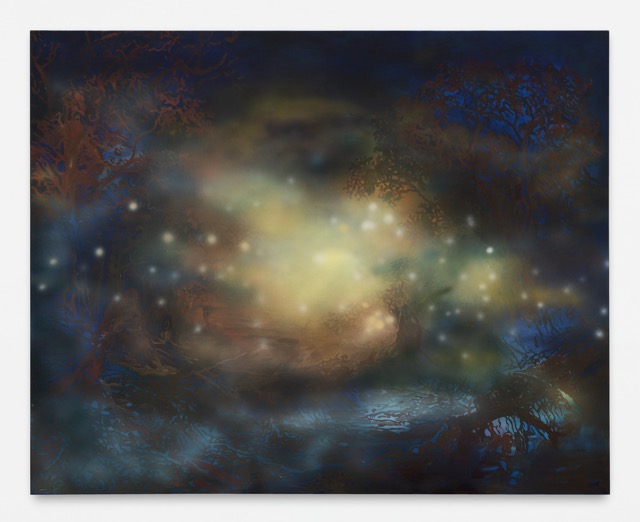
B Robertson, We are watching the trees in the old campsite at night, as if we are spectators of a film. Then someone pulls out a painting I did and asks what it is. It’s dark with super bright lights in the sky. Like the northern lights – but also artificial. There are some fields in the foreground of the painting but when we look at them they disappear and are replaced by the same eucalyptus trees we are looking at in the campsite. The painting is supposed to be a bushfire but no one believes me, 2026 Courtesy of the artist and OLSEN Gallery.
Thinking about the artists you’ve presented at Sydney Contemporary over the years, are there any standout moments, discoveries, or conversations that have stayed with you?
I think one of the things about being good at the Art Fair is to be very egalitarian. Talk to everybody. You don’t know who they know, or who they might be. There are dealers who only talk to someone if they thought they were a big collector, or they thought they were famous, or whatever. I’ve always said to my staff, always offer everyone a catalogue and try and engage. Never underestimate anyone, because humility is so important, and in a Philistine country like ours, we need to celebrate everybody that loves art, because they’re far and few between.
Sydney contemporary marks its 10th edition, what do you hope the next decade of the Fair looks like for Australian contemporary art?
I would hope that more people are prepared to fly out from anywhere in the world to be here. Australia’s looking like a good place with the way the world is at the moment.
Sydney Contemporary returns to Carriageworks from 3 – 6 September.
With an instinct for unexpected pairings and a deep appreciation for art, objects and craftsmanship, Sarah-Jane Pyke brings a designer’s eye to Sydney Contemporary. As Co-Founder and Creative Director of Arent&Pyke, she has spent almost two decades curating interiors where art and design are in constant conversation. Here, she shares the works and artists she’ll be seeking out at the Fair’s 10th edition.
____
 Harriet Goodall
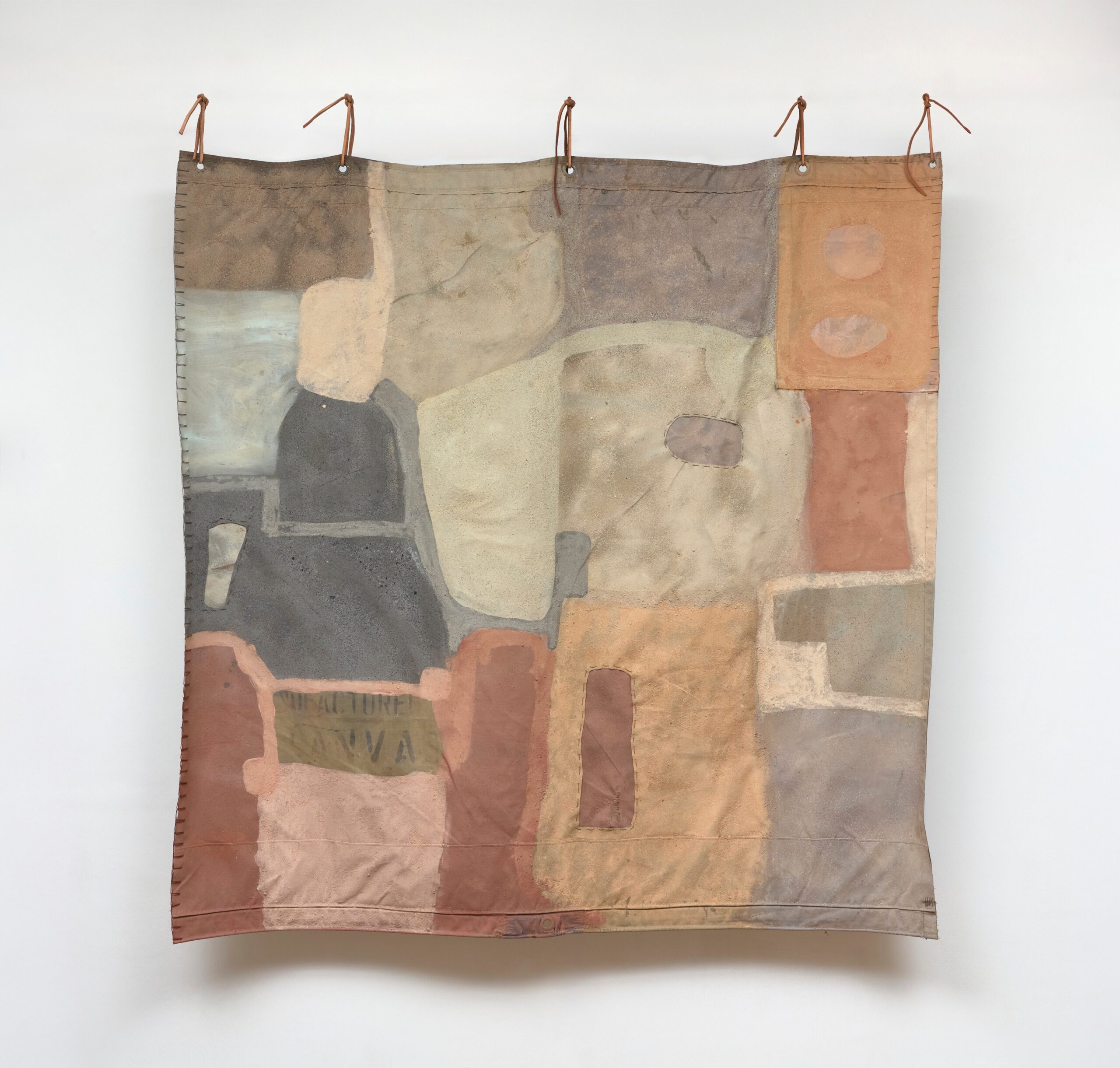
Textiles in all their forms have always fascinated me, and the fluidity of this work immediately caught my attention. There’s something really compelling about the way the material seems to move and take on a life of its own. I love seeing familiar materials pushed into unexpected territory.
Learn more about this conversation here.
 Harriet Goodall, Prime Mover, 2025, Courtesy of the artist and Jennings Kerr.
Talk: The Material Turn
The way artists experiment with materials and explore new possibilities beyond their traditional use is always exciting. There’s so much interesting work happening at the intersection of art, craft and sculpture, and I’m looking forward to hearing more about the thinking and experimentation behind it. It should be a really engaging conversation.
Saturday, September 5 2026
12:00PM – 1:00PM
Learn more about this conversation here.
Artist Talk: Fowlers Gap Artist residency
Any opportunity to hear directly from artists about their practice is always a highlight, and I’ll be trying to catch as many of these conversations as I can throughout the fair. The Fowlers Gap Artist Residency has produced some incredible work over the years, and it’s fascinating to see how the landscape and experience of being there filters into each artist’s practice. This is one I’m particularly looking forward to.
Learn more about this conversation here.
 Nicole Kelly, Fowlers Gap, Photo Will Mansfield, Courtesy of Arthouse Gallery.
 Nicole Kelly, Fowlers Gap, Photo Will Mansfield, Courtesy of Arthouse Gallery.
Abdul Abdullah
Having first discovered Abdul Abdullah’s work at the fair many years ago, it has been wonderful to follow the evolution of his practice ever since. Collecting one of his works myself two years ago made that connection even more personal, so I’m particularly excited to see this newest incarnation of his work. His ability to continually evolve while retaining such a distinctive visual voice is something I’ve always found compelling.
Learn more about the gallery here.
 Abdul Abdulla, virgin and child, 2026, Courtesy of Ames Yavuz.
 Abdul Abdulla, virgin and child, 2026, Courtesy of Ames Yavuz.
R-McBurnie
The Works on Paper section is one I never miss — it’s often where I discover some real gems. The variety of scale and approach is always exciting, and there’s often a more intimate quality to these works that encourages you to slow down and spend a little more time with them. It’s consistently one of my favourite sections to explore.
Learn more about the gallery here.
 R-McBurnie, First light, 2026, Courtesy of Umbrella Studio.
 R-McBurnie, First light, 2026, Courtesy of Umbrella Studio.
Sydney Contemporary returns to Carriageworks from 3 – 6 September.
Andrew Martin has built a collection shaped by instinct, curiosity and a growing appreciation for abstraction. From living with art in his Harry Seidler-designed Southern Highlands home to discovering artists through galleries and major institutions around the world, Andrew shares how his approach to collecting has evolved, what continues to challenge him and why supporting the arts matters to him. Andrew is Head of Asset Management at MA Financial Group, Principal Partner of Sydney Contemporary.
__
Your Southern Highlands home, designed by Harry Seidler, is an extraordinary setting for art. How has living in such a significant piece of architecture influenced the way you think about collecting?
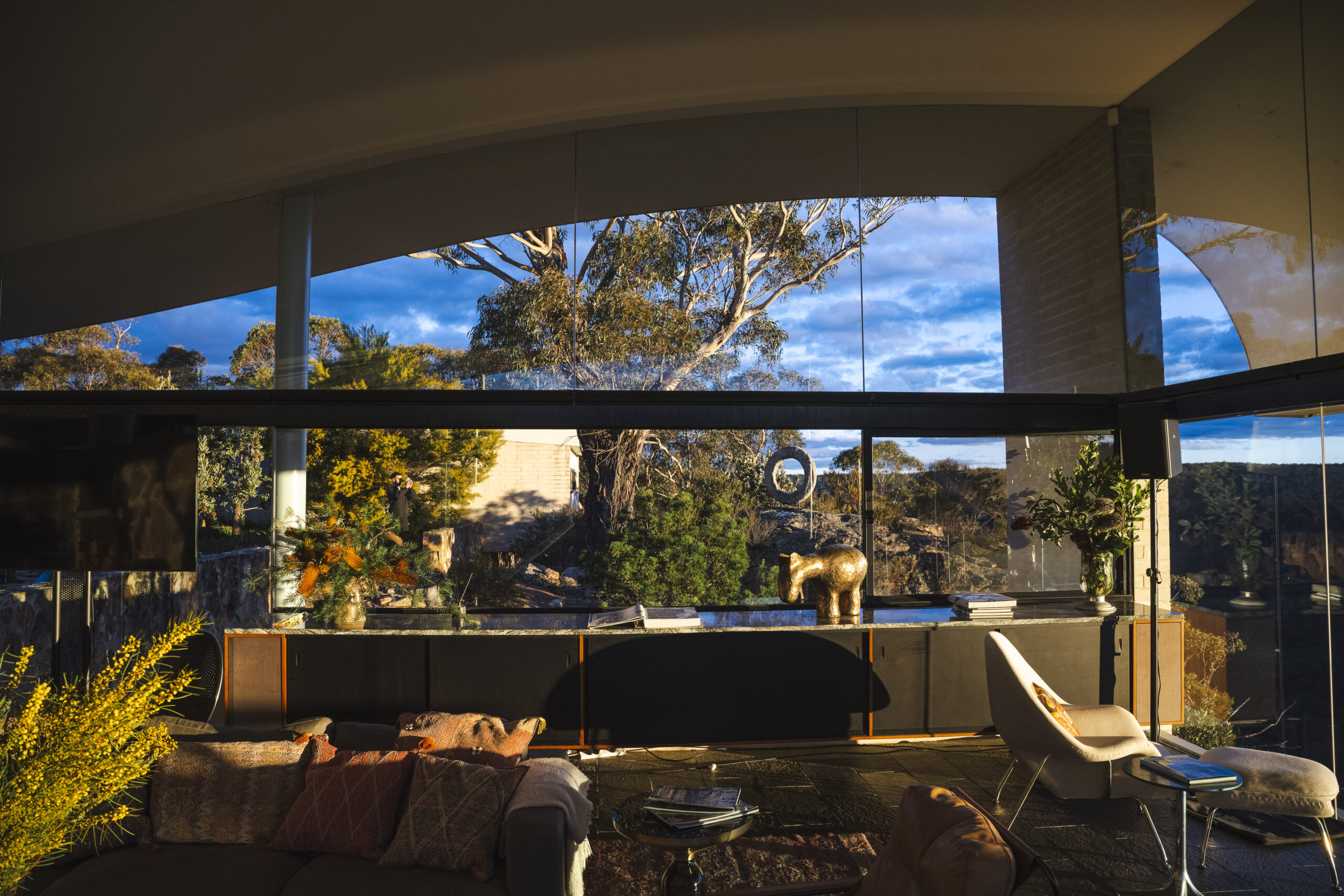
The house is a significant artwork in its own right – an artwork you can live in. Seidler designed it primarily of glass, so there is actually very little wall space for art. This has reinforced to me that less can be more, and that the art you collect and live with shouldn’t compete with the architecture or its setting. The relationship between the work, the space and the setting or landscape is just as important as the work itself.
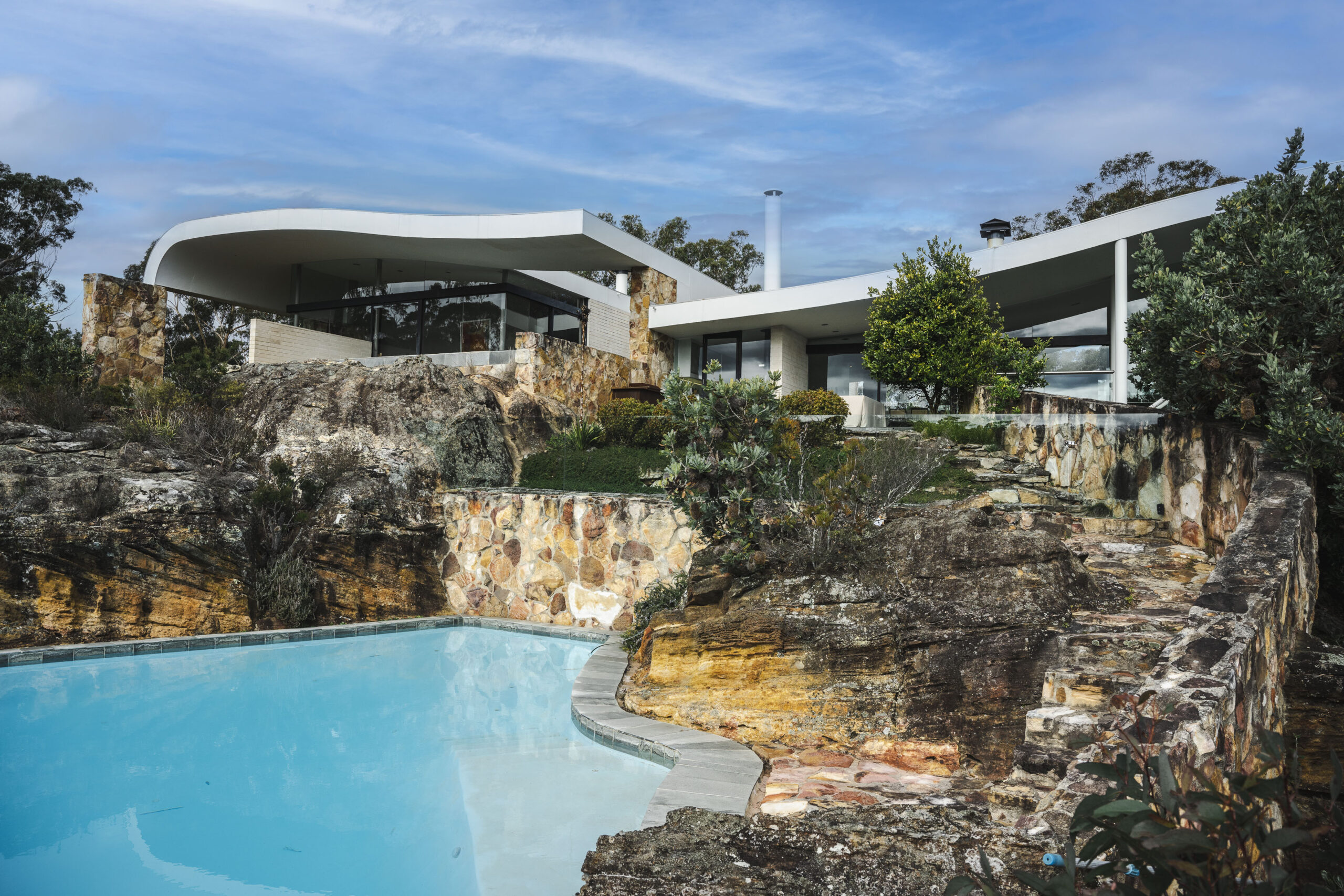
How has your collection evolved over the years?
My collection in Sydney has become more adventuress and bold over time. In the beginning it was more conservative in my choices, whereas today I’m increasingly drawn towards strong abstraction. As I have spent more time looking at art, I’ve become more willing to be challenged by what I collect.
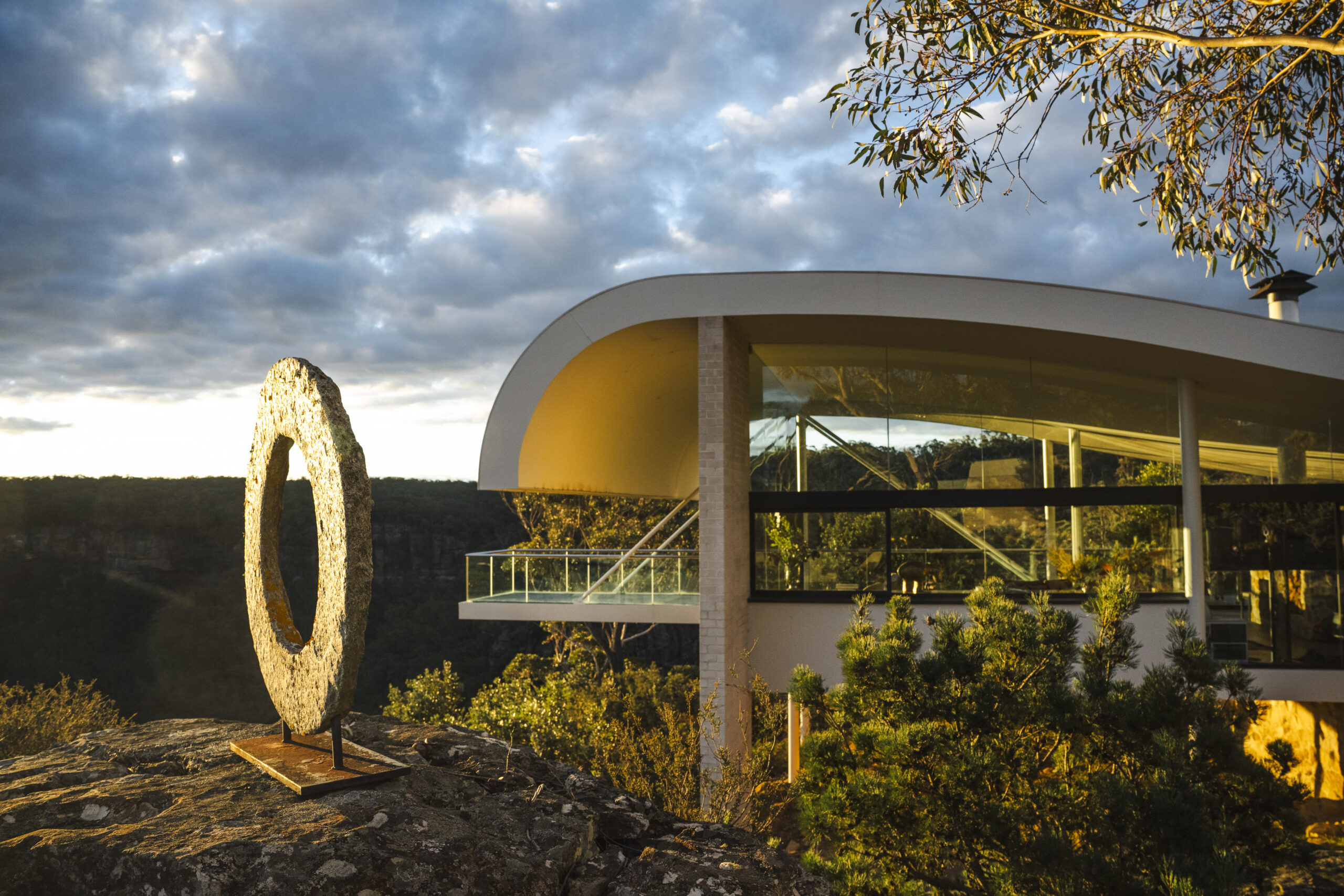
Are there particular moments, artists or discoveries that shifted your perspective as a collector?
Locally a growing appreciation of, and collection of, significant Australian artists such as Brett Whitely and John Olsen has heavily influenced my collection. Visits to major public galleries in global cities like New York, Paris and Madrid have also been influential by exposing me to different artists, works and styles.
On a more personal level I have three adult children who are all artists. Watching their personal creative journeys has given me a much deeper appreciation for the thought, effort and challenges involved in producing art. It has made me appreciate not only the finished work, but also the process behind it.
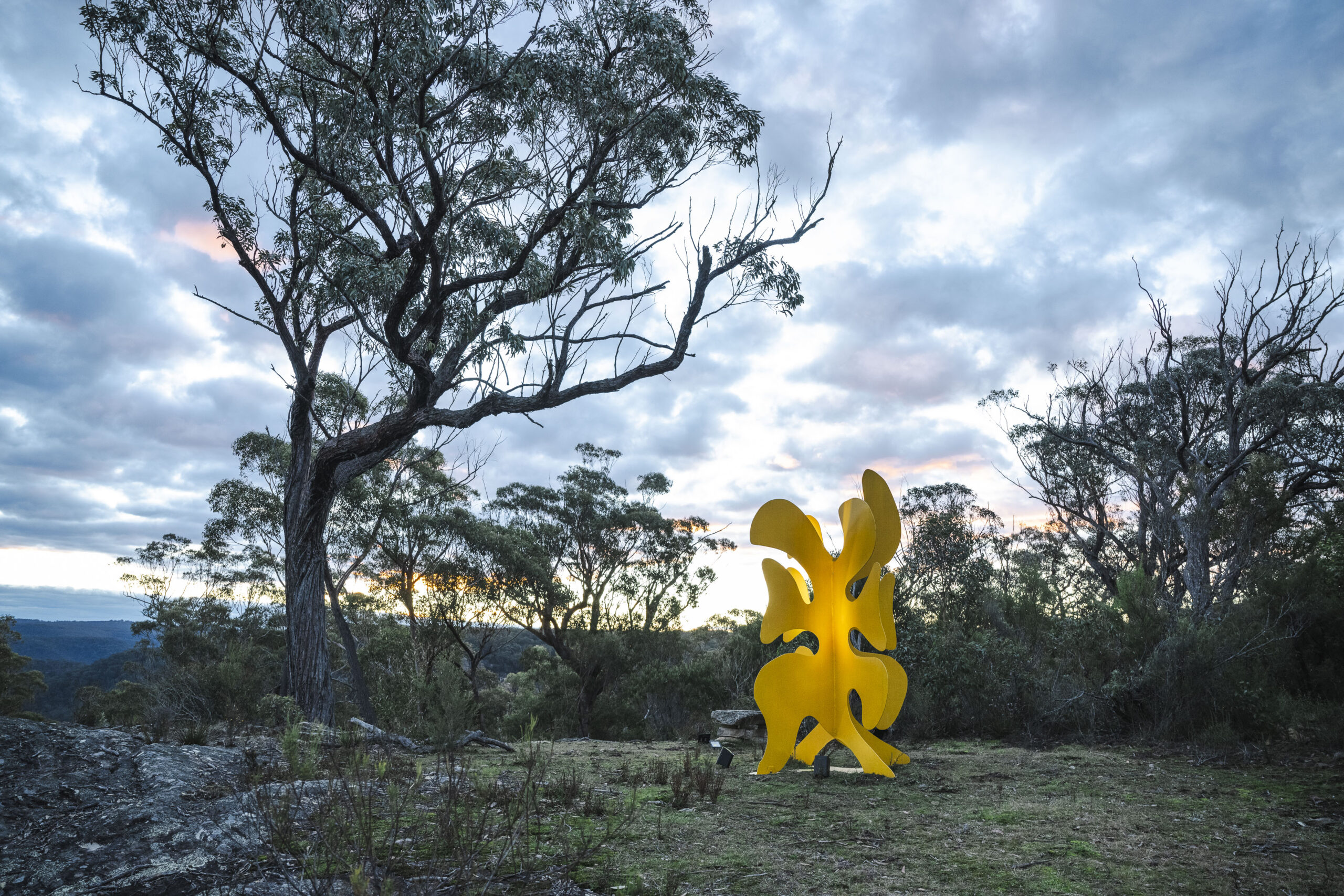
Do you collect with a particular philosophy in mind, or do you still rely on instinct when you encounter a work that resonates?
For me, it is largely about instinct. I’m increasingly passionate about abstract art because I find it constantly challenges me – there isn’t necessarily a single interpretation or an immediate answer. Ultimately, I think you have to respond to a work personally and trust that instinct.
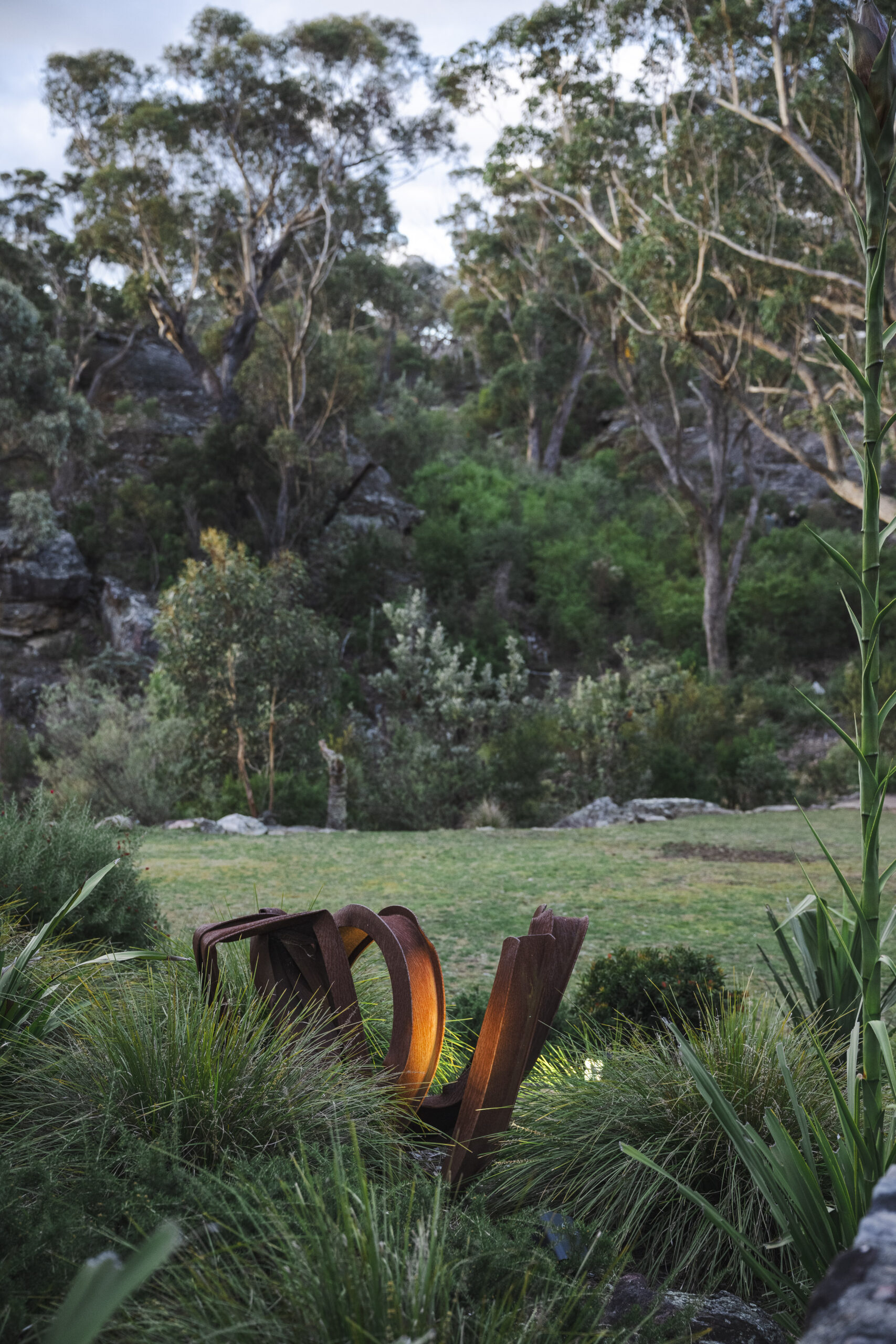
Living with art is very different from seeing it in a gallery or museum. How do the works in your home continue to surprise or challenge you over time?
That is one of the great things about living with art. Unlike seeing something briefly in a gallery, at home you have an ongoing relationship with a work. I find the pieces I live with continue to reveal themselves over time – I notice different details, interpret them differently depending on the day, and sometimes see something entirely new in a work I’ve looked at hundreds of times. That ability to keep surprising you is part of what makes a great work so rewarding to live with.
Sydney Contemporary brings together established collectors and people buying their very first artwork. What advice would you give to someone just beginning their collecting journey?
My simple advice is to just get lost at the vast Carriageworks space. Wear good shoes, get your steps and do many laps of the space. The sheer number of galleries, artists and works gives anyone starting out a strong survey of contemporary art in its many forms.
Don’t feel you need to know everything or even anything – look widely, ask questions and pay attention to what you keep coming back to. Ultimately, as I said earlier, trust your instincts because collecting should start with finding something that genuinely resonates with you.
As MA Financial Group is the Principal Partner of Sydney Contemporary, what excites you most about supporting the Fair, and why do you think events like this matter for Australia’s cultural landscape?
The arts sector deserves strong corporate support, and historically I don’t think there has been enough of it in Australia. At MA Financial, we believe businesses have a role to play in contributing to the communities in which they operate, and supporting arts and culture is an important part of that.
Sydney Contemporary brings artists, galleries, collectors and the broader public together in a way that makes contemporary art accessible and exciting. As Australasia’s premier art fair, it provides an important platform for both established and emerging artists and galleries. We’re proud to support an event that contributes so much to Australia’s cultural landscape and encourages more people to engage with, appreciate and collect art.
Sydney Contemporary returns to Carriageworks from 3 – 6 September.
As Fair Director of Aotearoa Art Fair and a collector herself, Sue Waymouth knows what catches her eye. From artists she has followed for years to new discoveries and works that bring back a personal memory, these are the pieces Sue will be making a beeline for at Sydney Contemporary.
____
Artists To See
Lee Bae
Top of my list is a sculpture by South Korean artist Lee Bae, showing with Gow Langsford. He has exhibited at Rockefeller Center and the Venice Biennale, and I would love to add such an internationally renowned artist to my collection. Bae is known primarily for his black works, often using charcoal, but it is his bronze sculptures I love the most.
Learn more about this artist.
 Photo: Lee Bae, Brushstroke S1, 2025, Courtesy of Gow Langsford Gallery.
 Photo: Lee Bae, Brushstroke S1, 2025, Courtesy of Gow Langsford Gallery.
Yuki Kihara
Also on my list, showing with Gow Langsford, is Yuki Kihara (Japan, Sāmoa), who represented New Zealand at the Venice Biennale in 2022. I saw her work, which featured embroideries on pandanus mats, in the group exhibition In That Stone, In That Cyclone, In That Leaf at Gow Langsford last year, based around weather stories. Several institutions purchased these large-scale works, and I was pleased to see there are some smaller-scale works in a similar style at Sydney Contemporary.
Learn more about this artist.
 Photo: Yuki Kihara, Woven Memories: Harold – Vanuata, 2026, Courtesy of Gow Langsford Gallery.
 Photo: Yuki Kihara, Woven Memories: Harold – Vanuata, 2026, Courtesy of Gow Langsford Gallery.
Donna Marcus
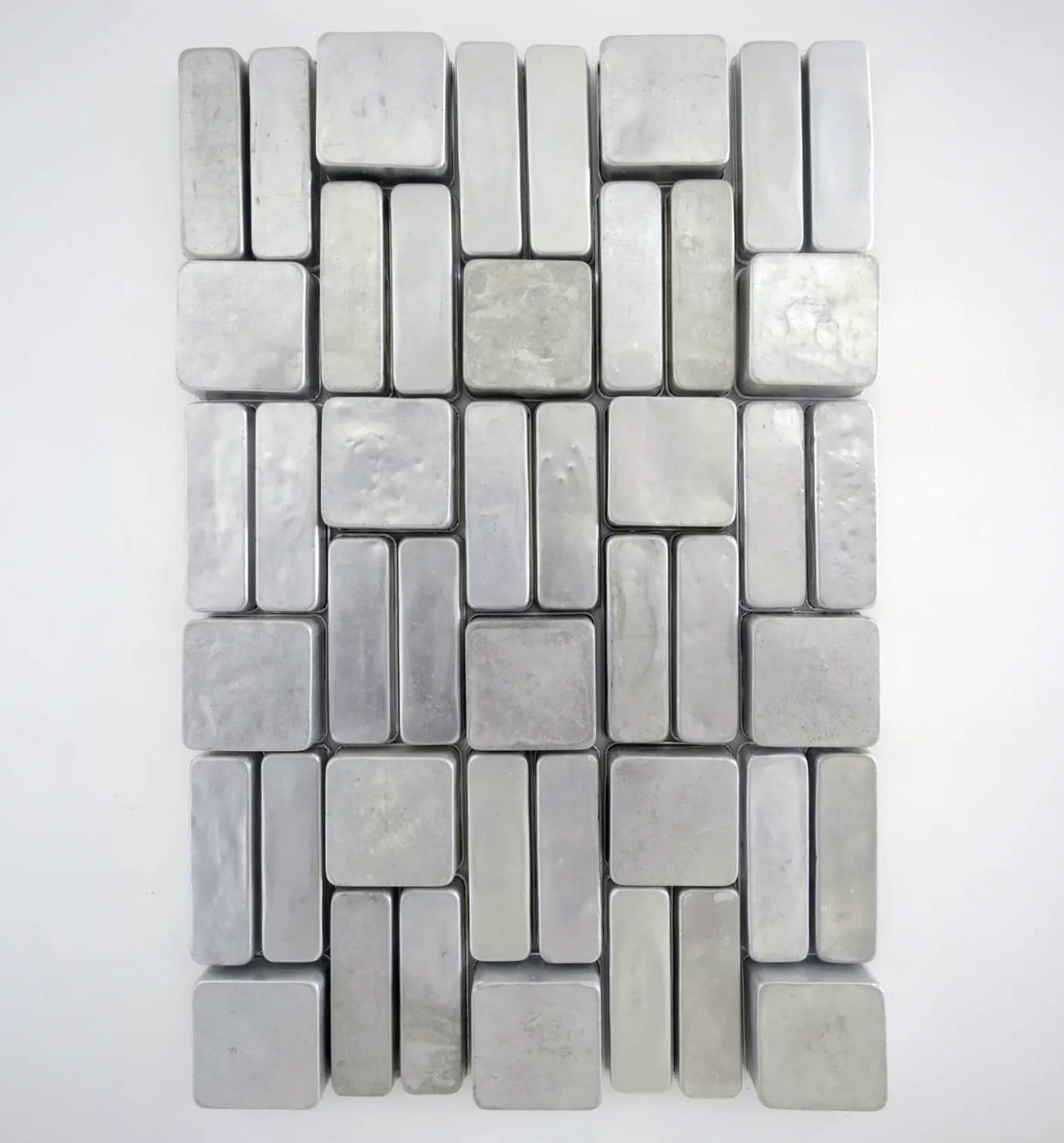
I recently discovered the Australian artist Donna Marcus through Gallery Sally Dan-Cuthbert. I spotted a work of Marcus’s in Sally’s home and admired it. The grid patterns reminded me of Agnes Martin, but I was surprised when I looked closely to find it was made out of discarded aluminium cake tins. Marcus’s work, made with familiar objects, evokes stories — this one reminded me of hours sitting in my grandmother’s kitchen watching her fill the cake tins!
Learn more about this artist.

Photo: Donna Marcus, Prairie, 2026, Courtesy of Gallery Sally Dan-Cuthbert.
Cindy Leong
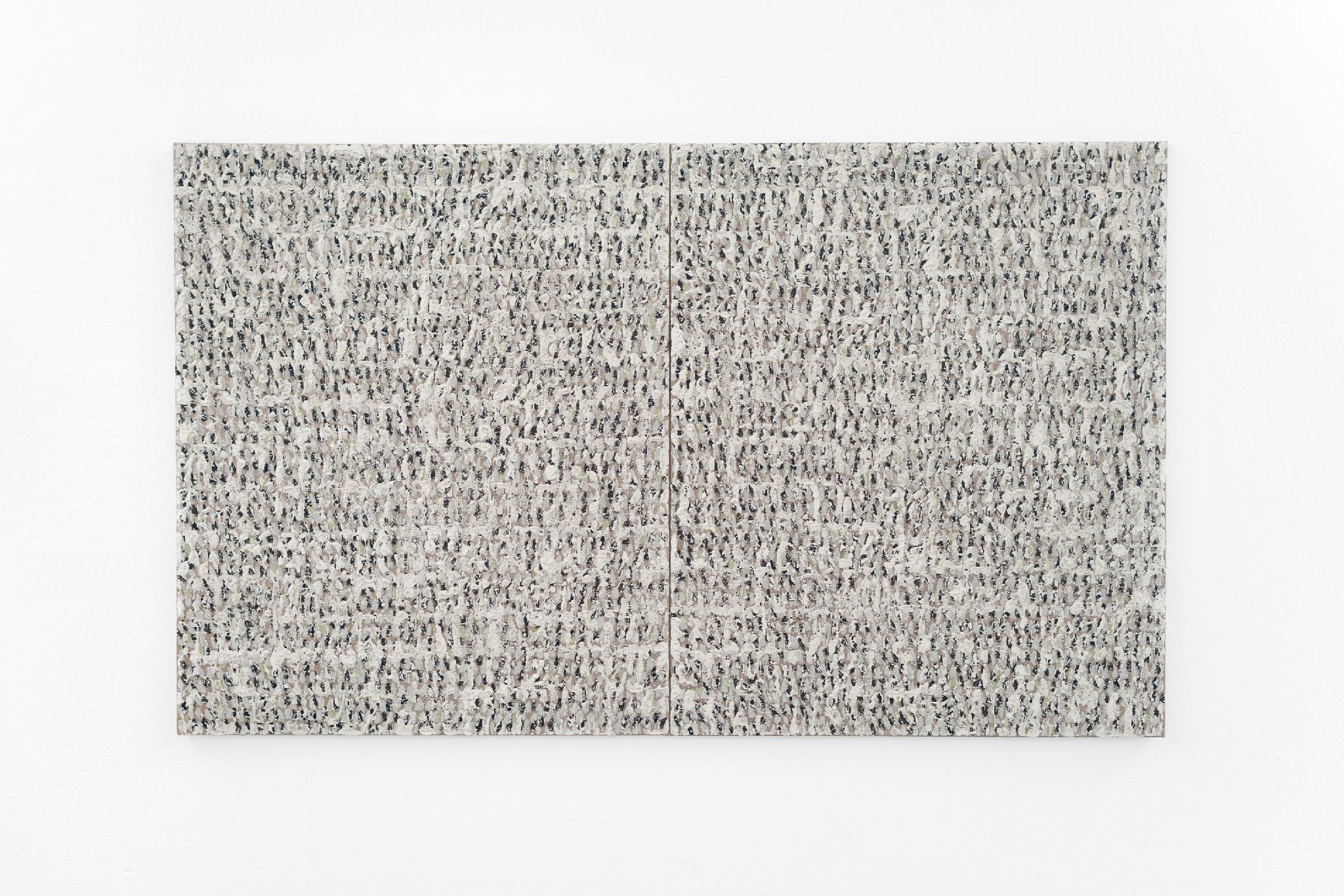
I have been keeping an eye on New Zealand-based artist Cindy Leong since she was at Elam art school. I was delighted to see that such a young artist is now represented by Fox Jensen McCrory Gallery. Her work references her Malaysian-Chinese heritage and sits at the intersection of abstract painting and Eastern philosophical thought. It is the texture of her paintings that resonates with me — with the repetition of the brushstrokes, they have a calming and meditative effect when you view them. She is definitely one to watch!
Learn more about this artist.

Photo: Cindy Leong, Everything and Nothing 2511, 2025, Courtesy of Fox Jensen McCrory Gallery.
Vita Cochran
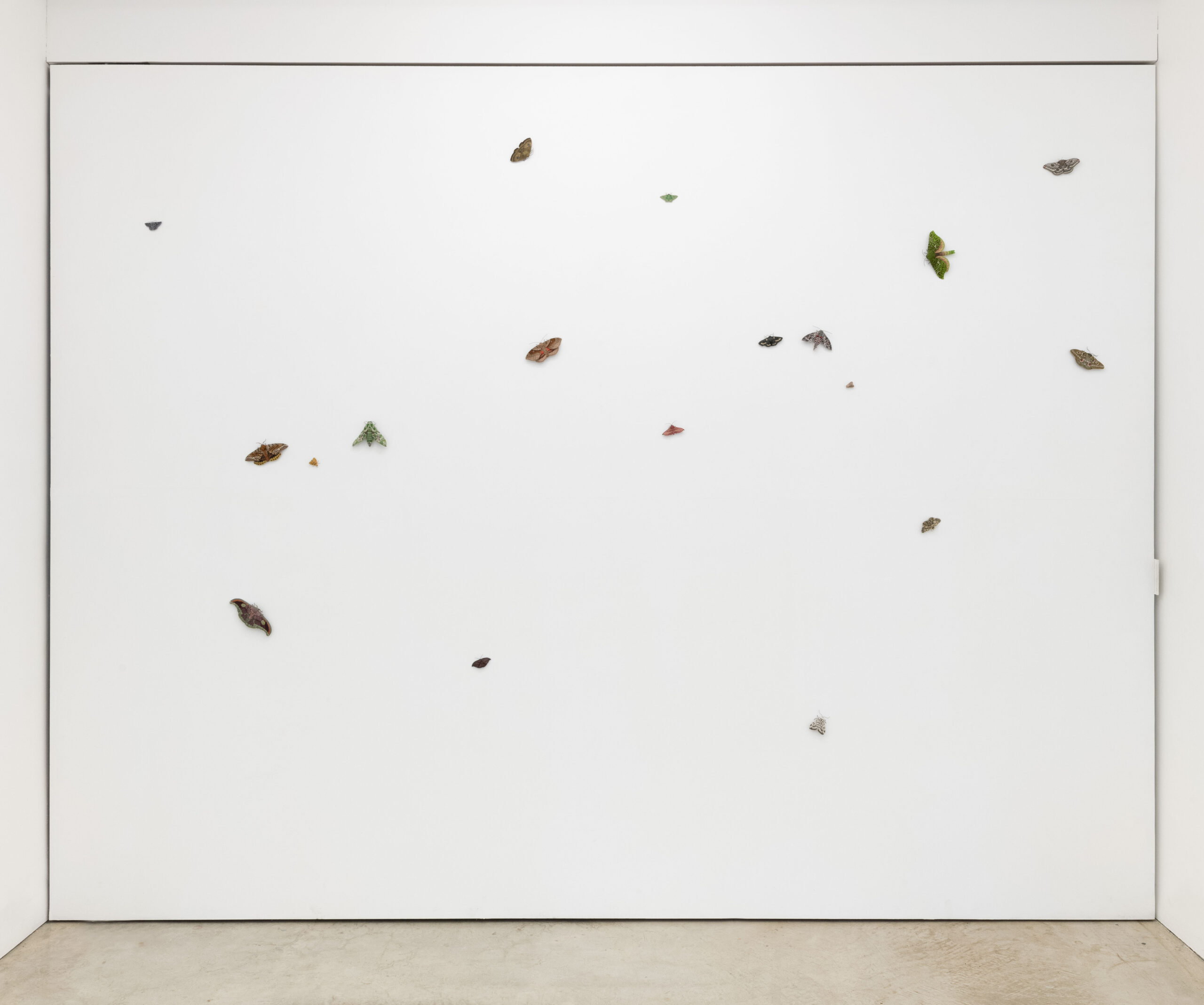
Day01.Gallery is showing Vita Cochran’s exquisite hand-embroidered moth sculptures. Each one is incredibly intricate and fragile, made with layers of astonishing colours. As a group they would look amazing, but I would settle for just one of these beautiful pieces.
Learn more about this artist.

Photo: Vita Cochran, Courtesy of Day.01 Gallery.
Mia Boe
I have regretted not purchasing one of Mia Boe’s paintings at her early exhibition with Roslyn Oxley9, and I have been looking out for one ever since. I find her paintings intriguing, with their strikingly unique long-limbed figures surrounded by richly coloured landscapes. I loved her painting Drifting Cloud — her Archibald Prize portrait of musician Baker Boy — and for a young artist she is gaining a lot of recognition.
Learn more about this artist.
 Photo: Mia Boe, School Night, 2026, Courtesy of Roslyn Oxley9.
 Photo: Mia Boe, School Night, 2026, Courtesy of Roslyn Oxley9.
Peter Robinson
Sutton Gallery is showing one of my favourite artists, Peter Robinson (Ngāi Tahu/Pākehā). Robinson is widely recognised as one of Aotearoa New Zealand’s leading contemporary artists, having exhibited extensively throughout New Zealand and internationally, including at the 49th Venice Biennale. Drawing has always been a key part of his practice, and I like his charcoal drawing Ki Roto Ki Wā, 2025, as it shows the physical process of his drawing, the play between order and disorder, as well as referencing his Māori ancestry with tiki-like forms.
Learn more about this artist.
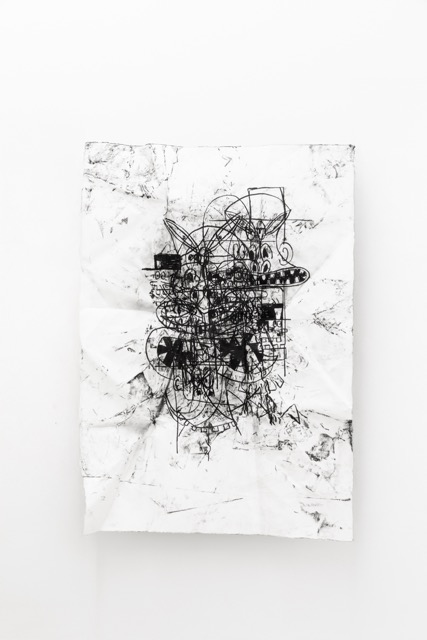
Photo: Peter Robinson, Ki Roto Ki Waho, 2025, Courtesy of Sutton Gallery.
Bridget Stehli
The Nasha boys have a knack for spotting young emerging artists. They are showing the Australian painter Bridget Stehli. Her work can be challenging, as she borrows from B movies and pornography and satirises the dominant heterosexual gaze. I find them really amusing, and I have my eye on The Hold Out, which is painted incredibly well.
Learn more about this artist.
 Photo: Bridget Stehl, The Holdout, 2025, Courtesy of Nasha Gallery.
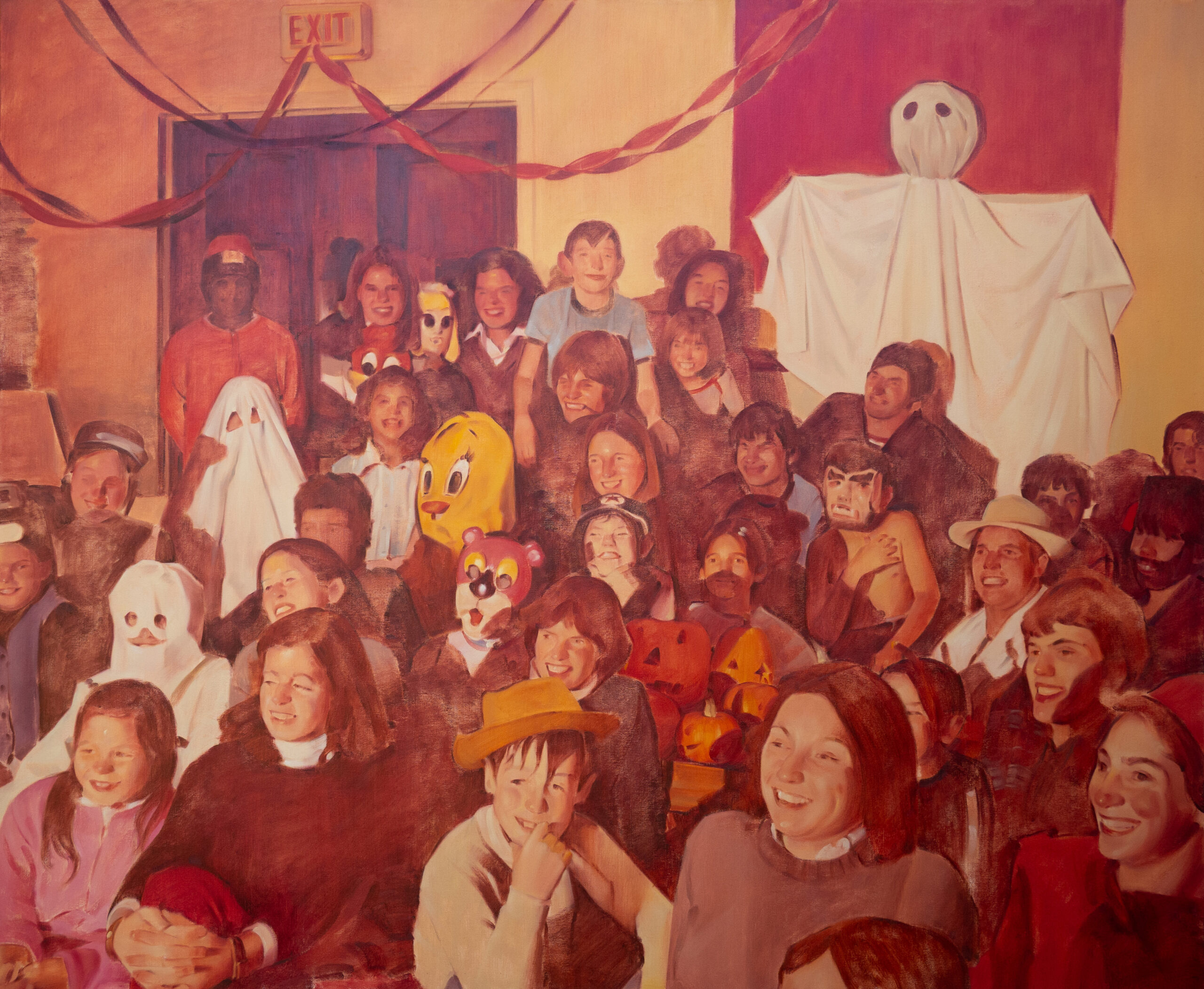 Photo: Bridget Stehl, The Holdout, 2025, Courtesy of Nasha Gallery.
Murray Fredericks
I couldn’t pick my top picks without including some photography, which forms the base of my art collection. I am interested in the incredible landscape images of Murray Fredericks who is showing with Michael Reid. They are taken in remote landscapes, and I like the way he changes our perception and reorganises this ephemeral landscape with the blazing fire.
Learn more about this artist.
 Photo: Murray Fredericks, Blaze #22, Kangaroo Lake, Great Darling Anabranch, 2023, Courtesy of Michael Reid.
 Photo: Murray Fredericks, Blaze #22, Kangaroo Lake, Great Darling Anabranch, 2023, Courtesy of Michael Reid.
Installations
Billy Apple
I am looking forward to seeing one of New Zealand’s internationally acclaimed pop and conceptual artists, Billy Apple (1301SW | STARKWHITE), take over the front of Carriageworks. The work draws its title from Billy Apple®: The Artist Has to Live Like Everybody Else, his landmark 2015 survey exhibition at Auckland Art Gallery Toi o Tāmaki. I will also be lining up for one of the Billy Apple posters, and for the talk by Mary Apple and curator José da Silva.
Alex Seton
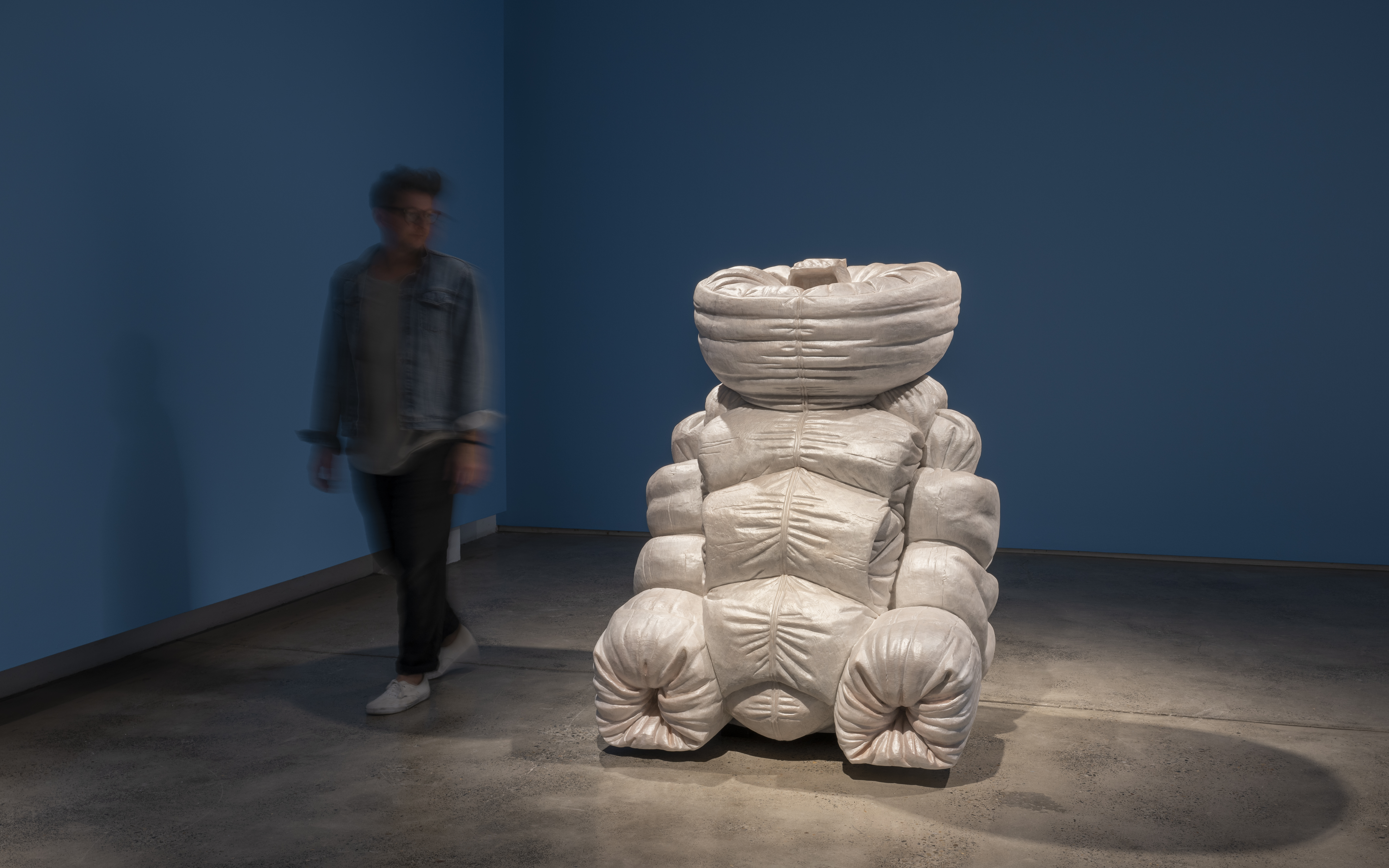
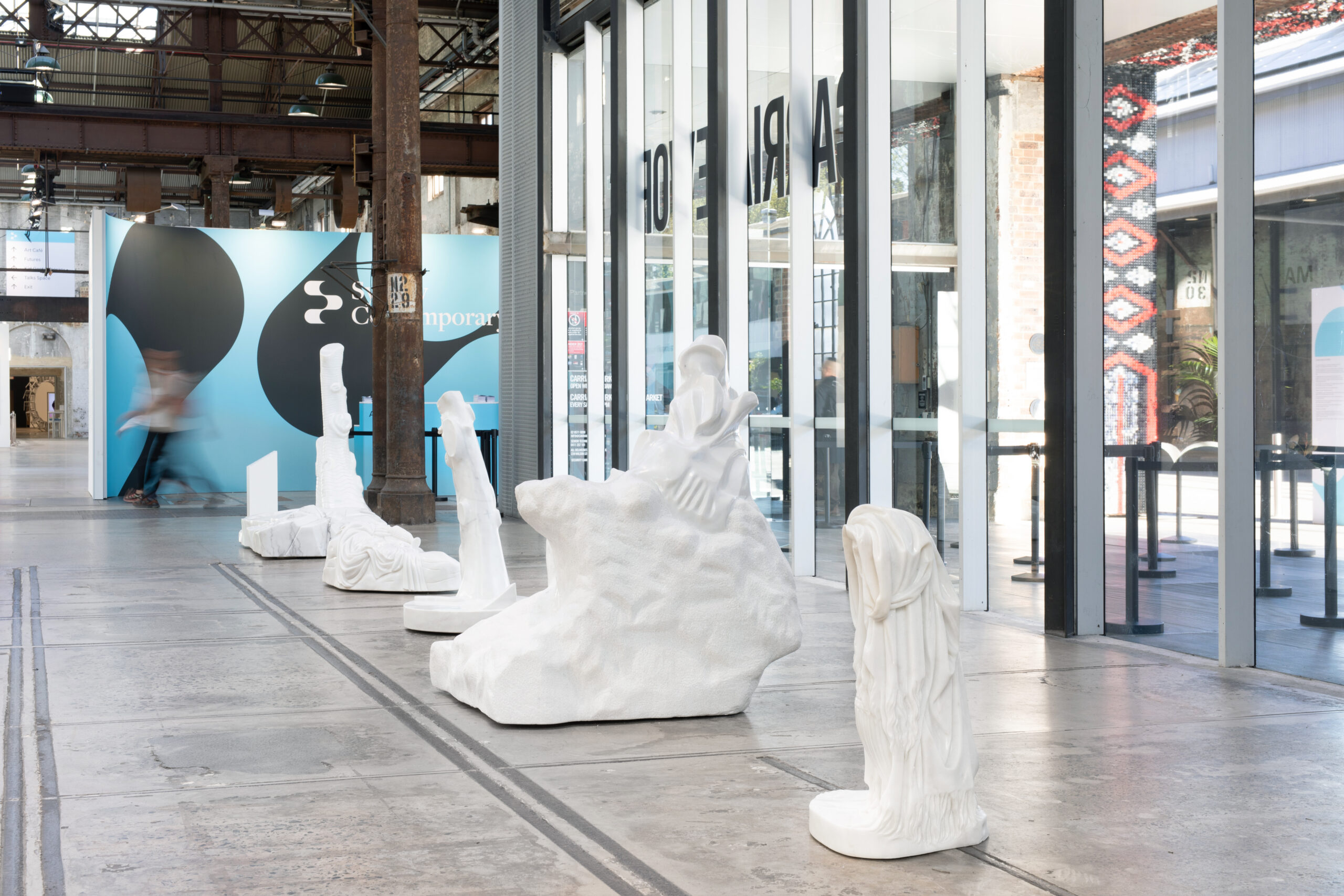
I am also looking forward to seeing Alex Seton’s giant carved marble puffer jacket, A Person of Substance (Life Size), 2025, who shows with Sullivan and Strumpf. I saw this work in the making at his studio last year, and I couldn’t get over both the size of it and the incredible detail of the empty jacket.
Pommery Bar
And of course, I am looking forward to a glass of Pommery Champagne at the Pommery bar!
Sydney Contemporary returns to Carriageworks from 3 – 6 September.
@suewaymouth.art
artfair.co.nz
Justin Art House Museum (JAHM) is an initiative of contemporary art collectors Charles and Leah Justin. Based in Melbourne, their house museum shares their collection and their passion for art, architecture and design with the public. The Justins have collected for over 40 years, with their collection now comprising more than 300 works spanning painting, sculpture, works on and from paper, photography, digital and video art. Ahead of Sydney Contemporary, Charles and Leah share the artists and works that have caught their attention.
Artwork Not To Miss

Max Lawrence White, 211, 84, 203, 103, 138, 187, 117, 2024. Courtesy of the artist and Five Walls Gallery.
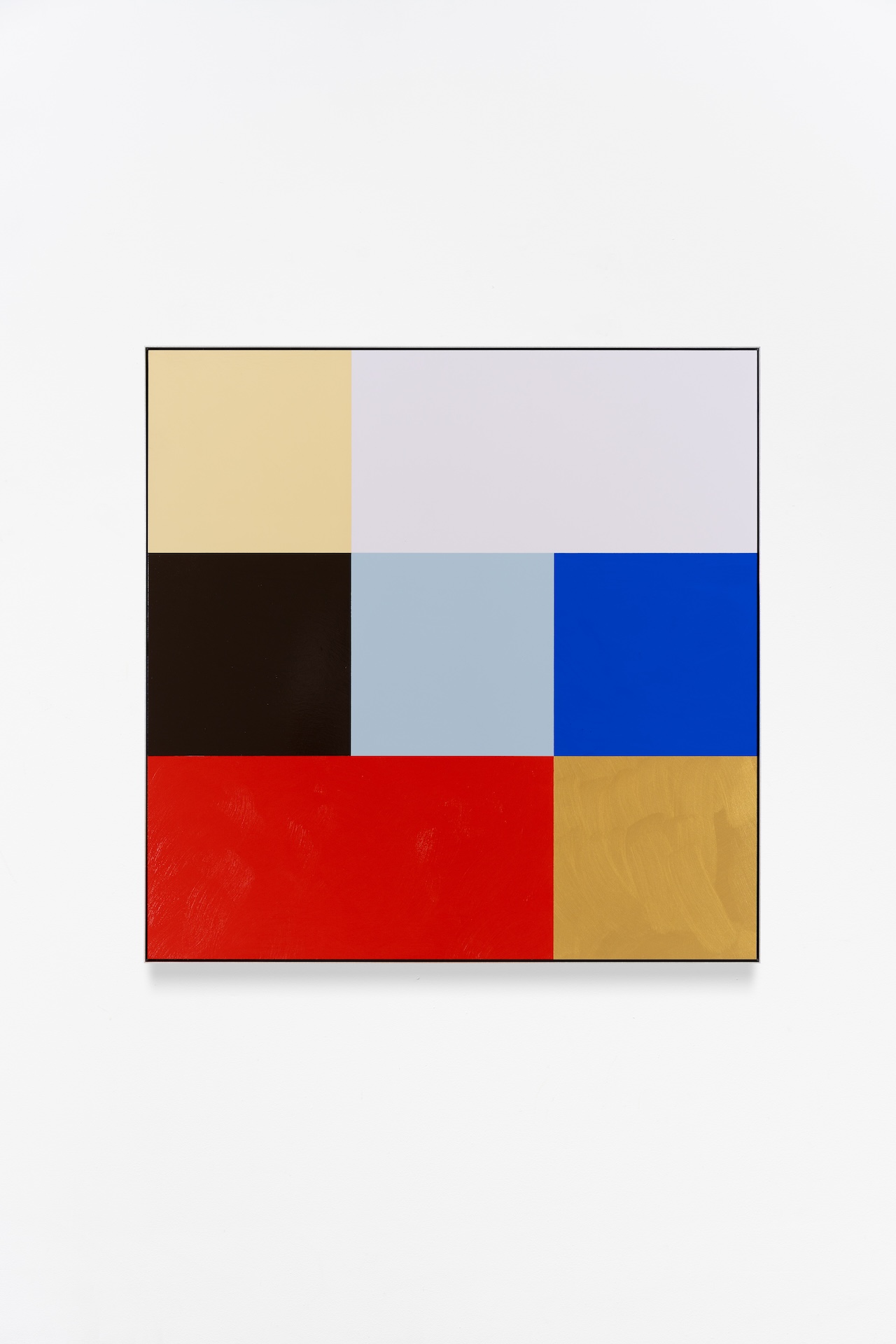
Max Lawrence White’s colourful geometric grids at Five Walls are impactful.

Lee Bae, Issu du feu 9sp, 2003. Courtesy of the artist and Gow Langsford.
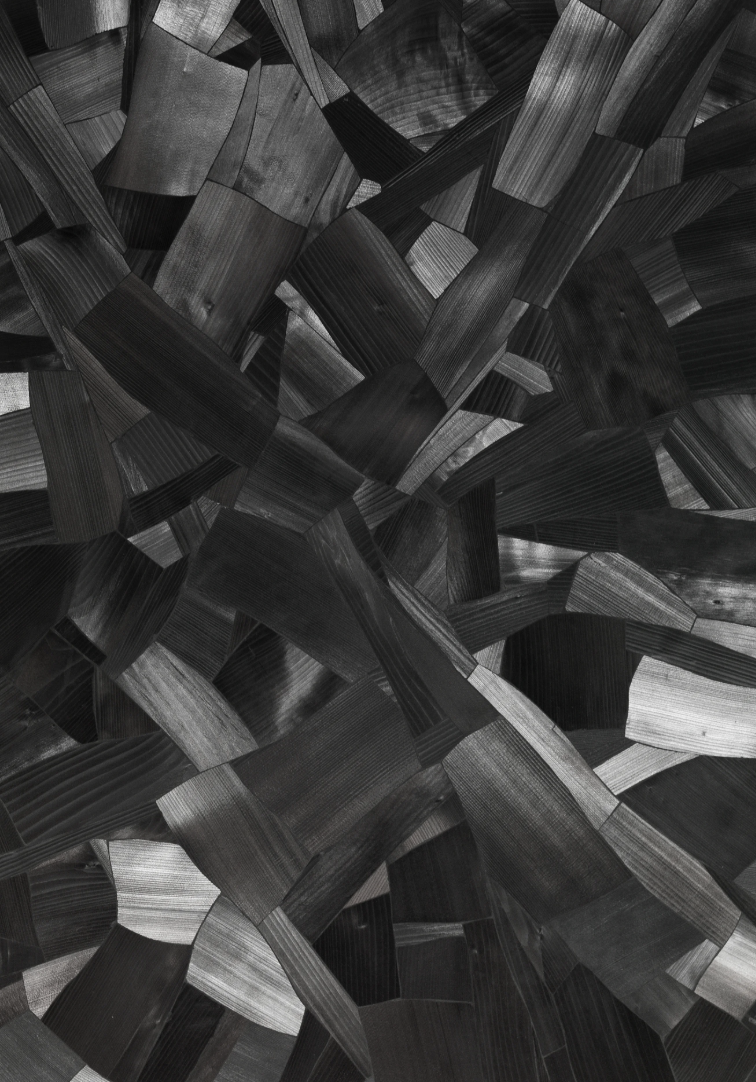
In contrast to Lawrence White is Lee Bae’s black and white dynamic geometries at Gow Langford.

Brett Weir, Untitled, 2026. Courtesy of the artist and Jacob Hoerner Galleries.
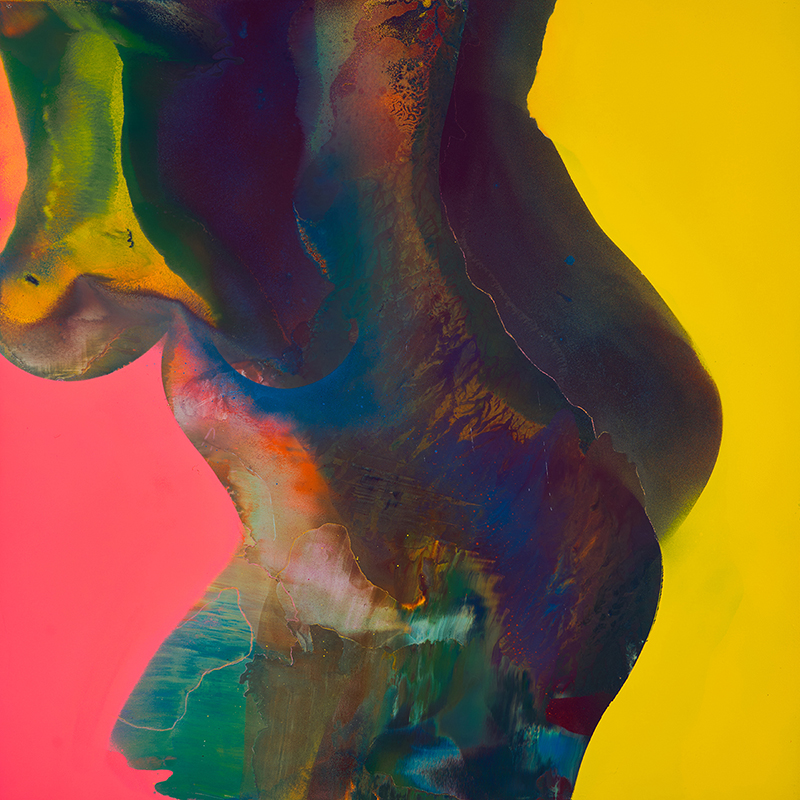
When it comes to the expressionist side of abstraction Brett Weir’s riotous coloured fluidity at Jacob Hoerner, hits you between the eyes.

Nick Devlin, Neige, 2025. Courtesy of the artist and Void_Melbourne.
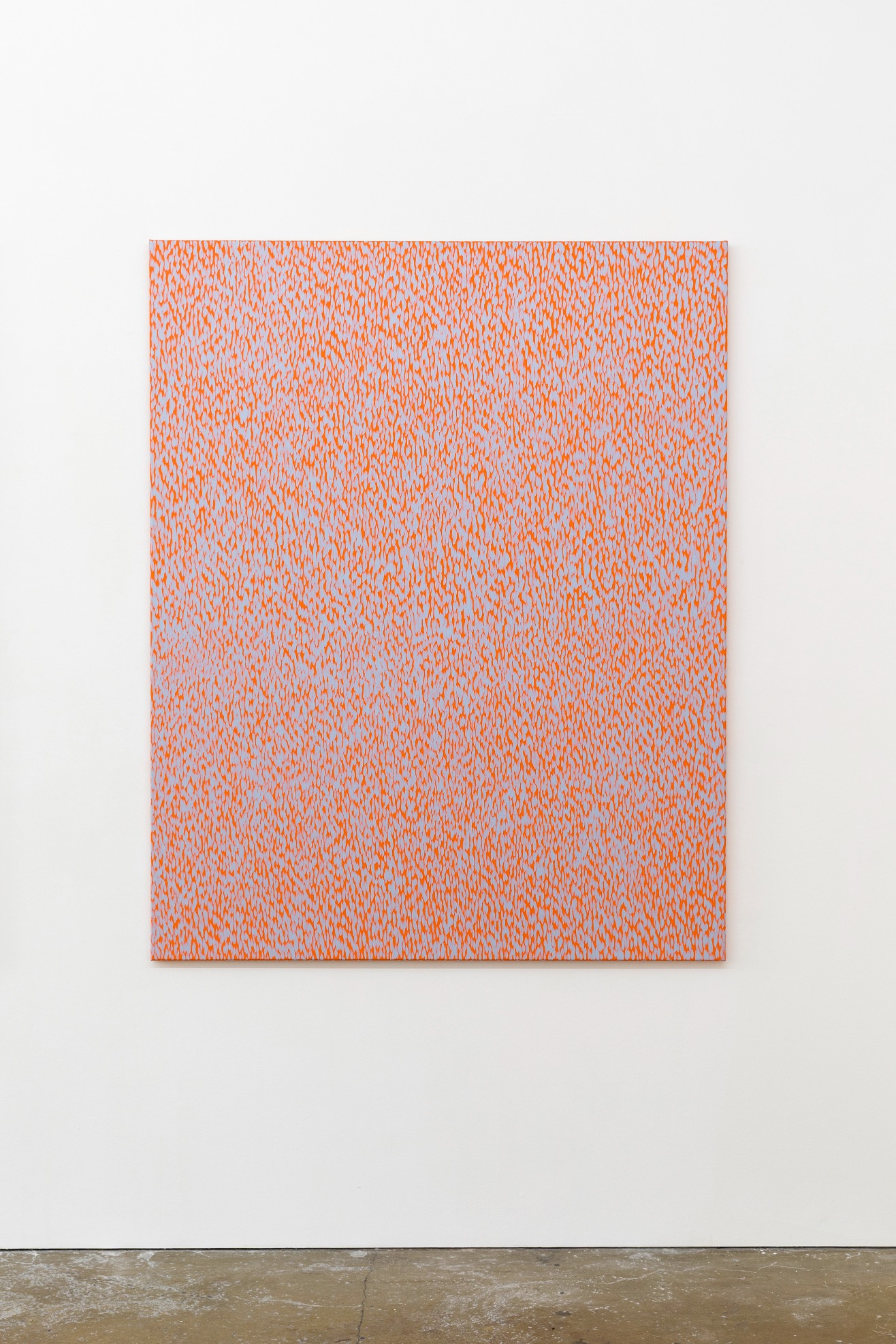
To calm you down, Nick Devlin’s 2 colour minimalism at Void_Melbourne should do the trick.

Cobi Cockburn, Primary Lines 13, 2026. Courtesy of the artist and Dominik Mersch.
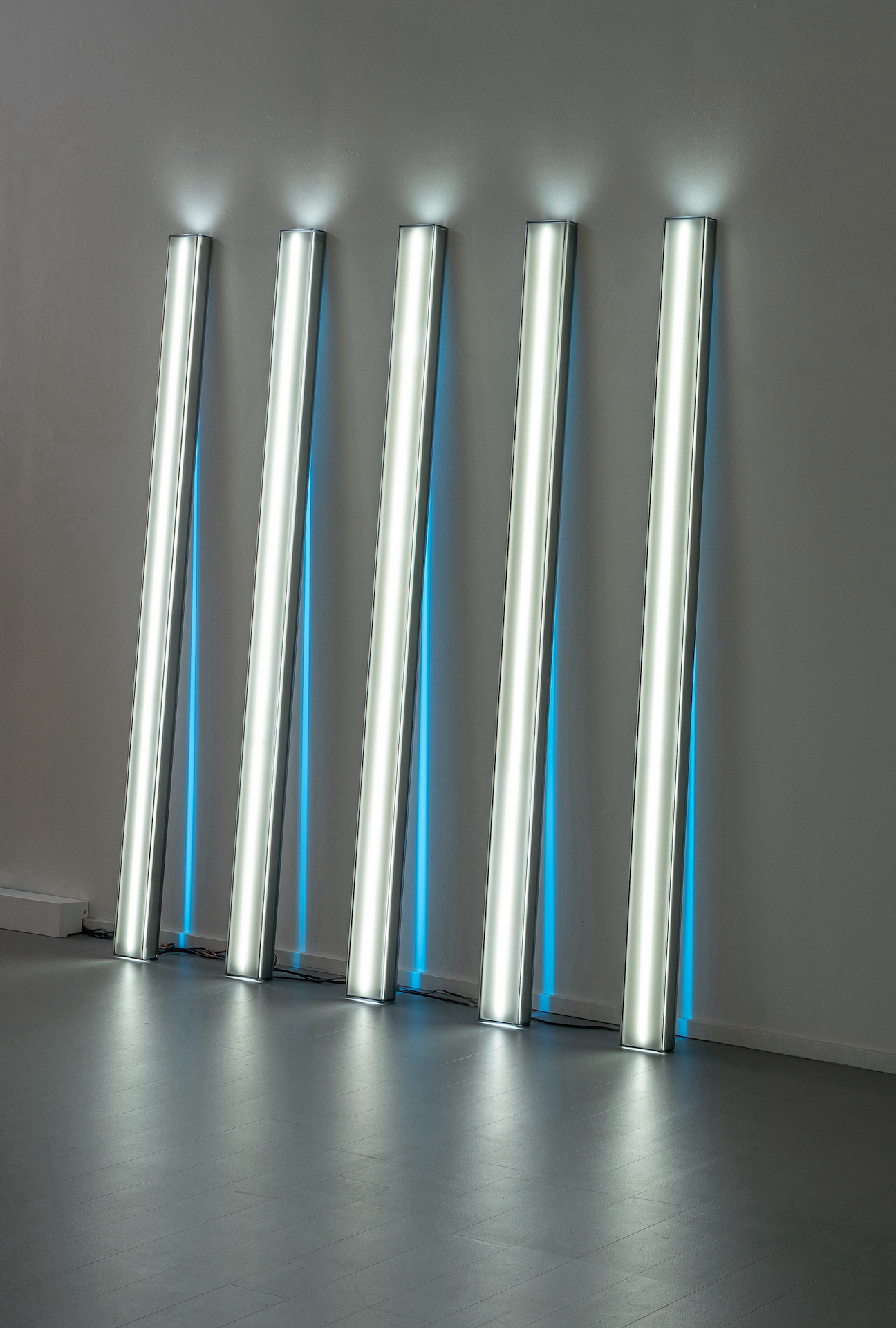
To take you into a state of meditation, suspend yourself in Cobi Cockburn’s minimalist light works at Dominik Mersch.
Talks To Hear
New Platforms, New Possibilities: Art in the Digital Age should give us compelling insights on the new frontiers in art.
New Platforms, New Possibilities: Art in the Digital Age
Noelle Faulkner | Host
Nikita Le Messurier | Speaker
Claire Evans | Speaker
Tom Sanders | Speaker
Sam Leach | Speaker
Also grab the rare opportunity to hear from art collectors direct at Why We Collect: Collectors in Conversation. Moderated by Kym Elphinstone, editor of her recent book on Collecting: Living With Art, who knows her stuff.
Why We Collect: Collectors In Conversation
Kym Elphinstone | Host
Max Germanos| Speaker
Gaibrielle Germanos | Speaker
Sebastian Goldspink | Speaker
Installation To See

Jemima Wyman, Haze 18, 2025. Courtesy of the artist and Sullivan+Strumpf.
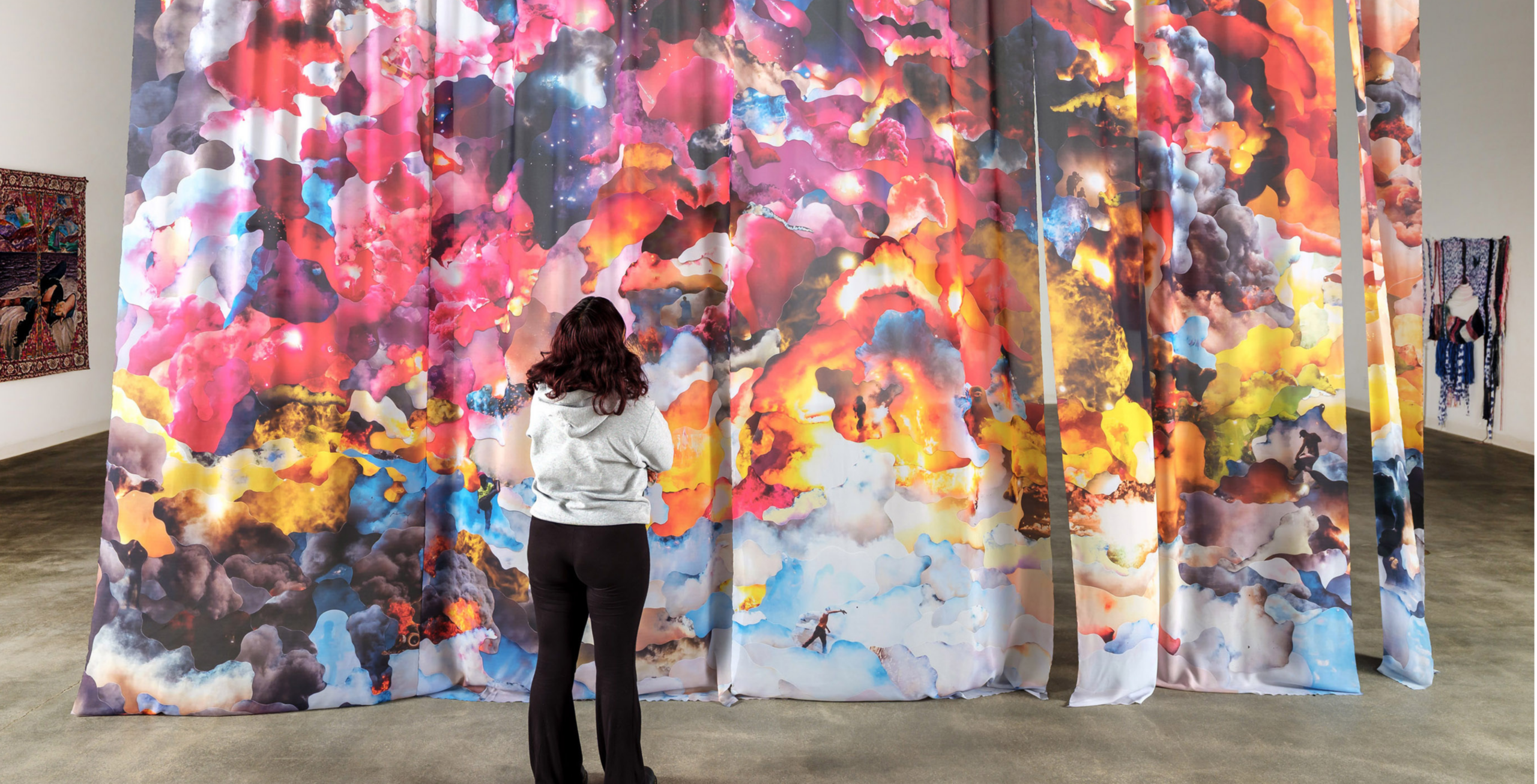
As we are also into Conceptual Art, Jemima Wyman’s Haze 18 installation, presented by Sullivan + Strumpf is intriguing. She has transposed cut out photographs of coloured smoke from protests around the world to create this immersive curtain, transforming the ephemeral into the concrete.
This is a taste of what’s on offer. We are looking forward to the feast.
Cover image: Courtesy of Broadsheet.
With spaces in both Melbourne and Sydney, STATION brings a distinctly artist-led approach to their program, responding to the practices, ideas and conversations shaping its artists at any given moment. As Sydney Contemporary celebrates its 10th edition, we speak with gallery Director Jane Hayman about the gallery’s enduring relationship with the fair, the evolving Australian art landscape, and more.
STATION operates across both Melbourne and Sydney, with spaces in South Yarra and Surry Hills. How does that dual-city presence shape the way you build your presentation for Sydney Contemporary?
Melbourne and Sydney have their own rhythm, their own communities, and conversations that shape them, and we are grateful to be able to draw on both. But our presentation for the fair is driven by the artists and what’s happening in their studios that year, rather than geography. We have also never shown the same artist twice at Sydney Contemporary – we see each edition as a chance to introduce something that the audience hasn’t seen from us before, keeping the presentation feeling fresh each year.
 Laith McGregor, In The Studio, 2026. Courtesy of the artist and STATION.
 Laith McGregor, In The Studio, 2026. Courtesy of the artist and STATION.
You’ve exhibited at every edition of the fair since 2013. What has sustained that consistent relationship with the Fair over more than a decade?
We’ve been returning each year since 2013 because Sydney Contemporary has always been about championing artists and their practices, and this strongly aligns with how we run our gallery. When we were solely based in Melbourne, we appreciated the opportunity the fair gave us to embed ourselves within the Sydney arts community. Now we are based in both cities, we appreciate Sydney Contemporary’s wider reach, attracting audiences from other states across Australia, and increasingly from New Zealand and the broader Asia-Pacific region.
Looking back across your participation, are there particular presentations or artist moments at Sydney Contemporary that stand out as especially defining for the gallery?
We tend to curate and present the work of just two or three artists at Sydney Contemporary, rather than expansive group exhibitions. It allows us to build a narrative, a thread between practices, and a dialogue that’s easier for collectors to follow amid the noise of a fair. Our aim is to give people a reason to slow down, engage more deeply with a body of work, ask us questions, and look like they would in one of our galleries.
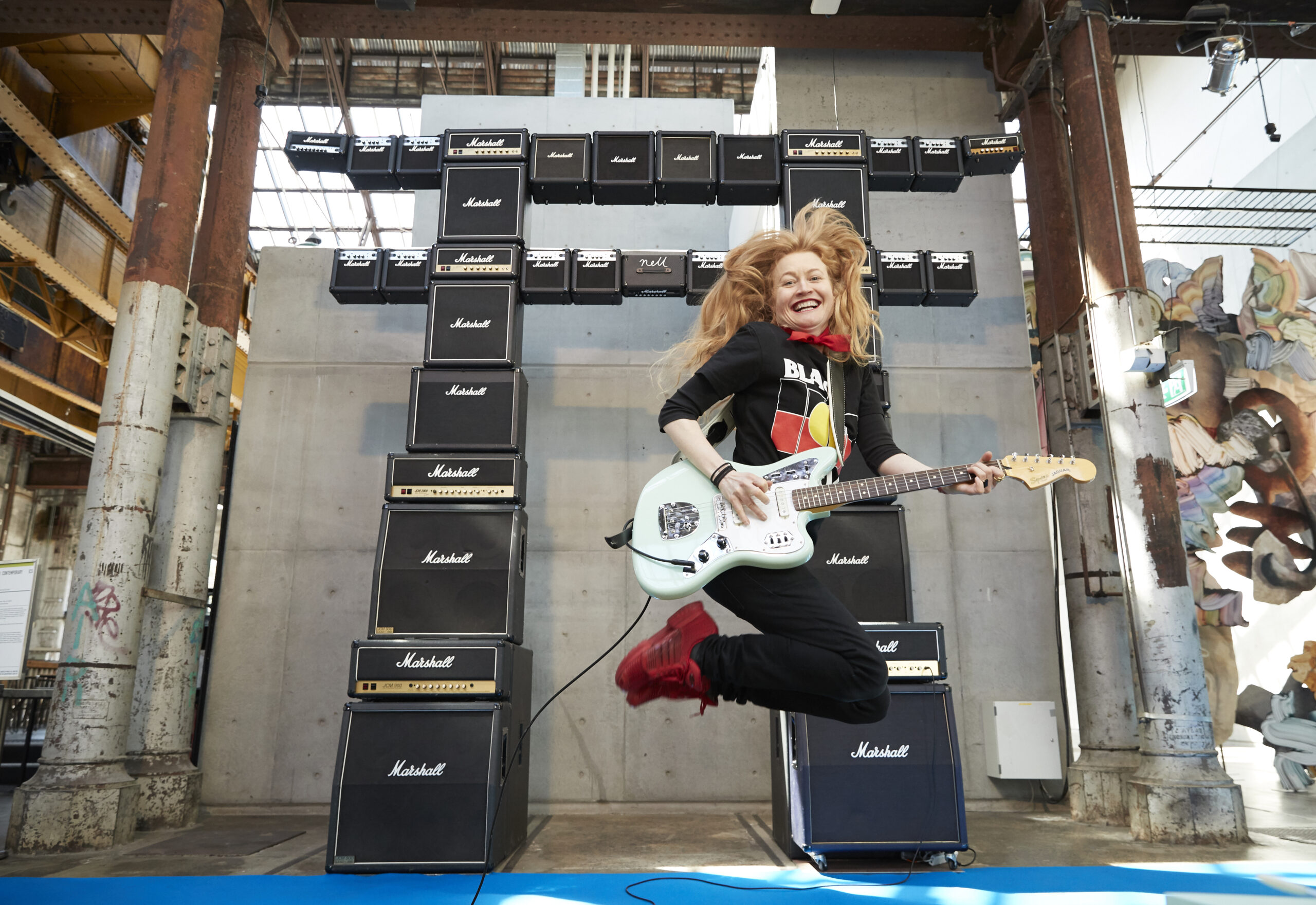
Our presentation with Nell in 2019 stands out as a great example of this. We showed an in-depth exploration of her practice across painting, sculpture and her ambitious architectural and sonic work, ROCK GATE, in Installation Contemporary. Watching audiences respond to that installation and our booth was a genuine highlight, and the kind of moment a fair makes possible.

Pictured: Nell, ROCK GATE, Installation View at Sydney Contemporary 2019. Courtesy of the artist and STATION Gallery. Image by Zan Wimberley.
How has the Australian contemporary art landscape shifted over the past decade from your perspective?
Locally, we are genuinely excited by the growth of regional and council galleries across the country. Places such as Ngununggula, Bundanon, Newcastle, Rockhampton, and HOTA are all creating real opportunities for both exhibitions and acquisitions, which is incredibly important in supporting the practices of our artists and putting their work in front of audiences well beyond the capitals.
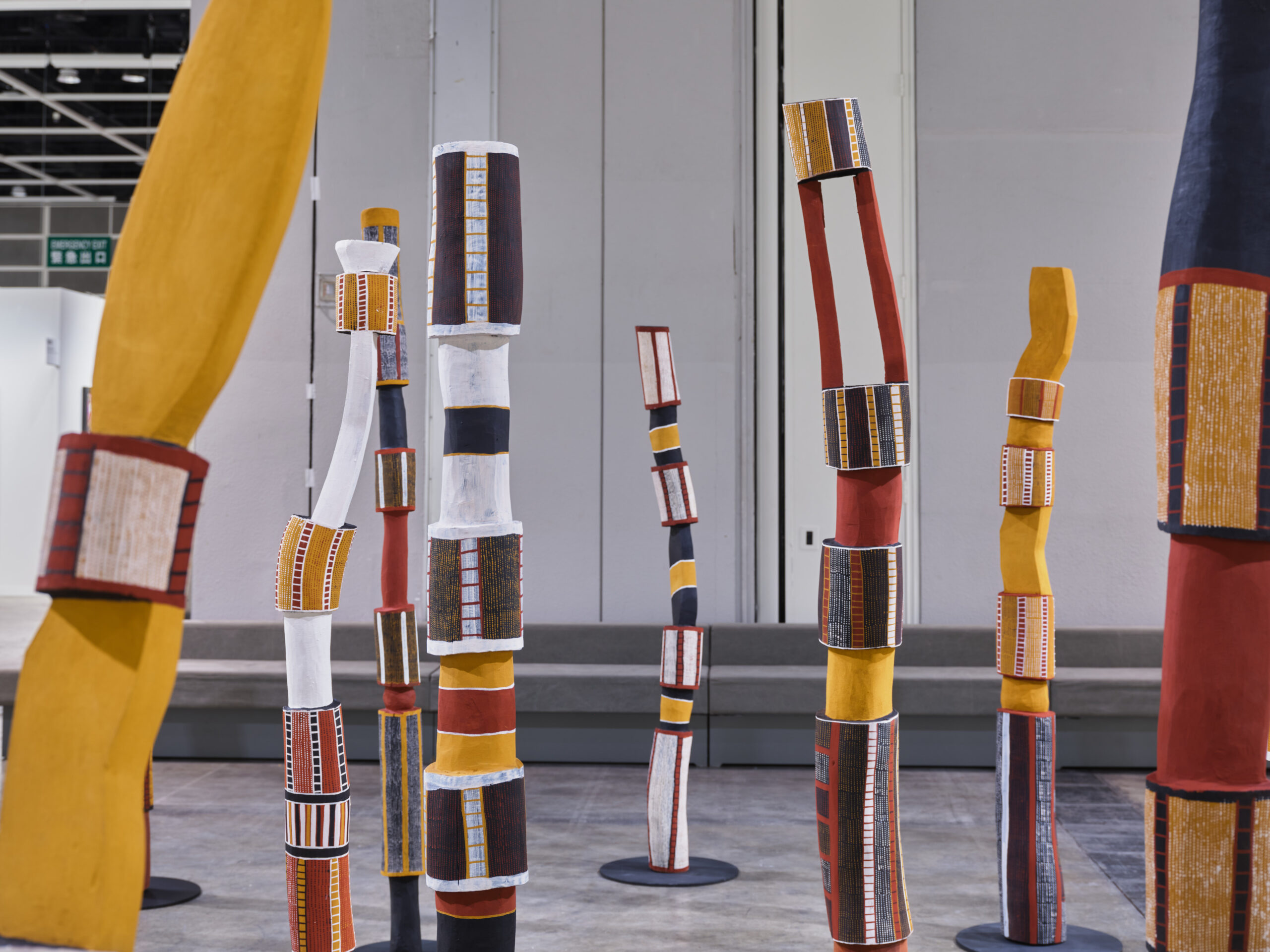
But the bigger shift for us is the growing international visibility of Australian contemporary art. We are committed to supporting that momentum, positioning artists like Daniel Boyd, Zac Langdon-Pole, Nadia Hernández, Shireen Taweel and Pedro Wonaeamirri in front of international curators and collectors through participation in major international art fairs, biennales and collaborative projects. It is important that Australian artists are seen in both commercial and critical contexts, so they can flourish alongside their international peers.

Pictured: Pedro Wonaeamirri. Courtesy of the artist and STATION. Image by Kitmin Lee Photography.
As Sydney Contemporary marks its 10th edition, what does this milestone represent for STATION as a gallery working between two cities, and how do you see your role within that wider ecosystem?
Looking back at the past ten editions of Sydney Contemporary, we feel lucky that STATION has been a part of that and has grown alongside the fair. We’ve watched the team expand and diversify the audience, push the fair into new directions, develop collectors from their first purchase to becoming long-standing clients of ours, and situate Sydney in September as the place to be.
We have never solely prioritised the commercial outcome of the fair. Instead, we’ve sought to help people engage with our artists and the ideas behind their practice, and Sydney Contemporary has been an exemplary partner in that aim.

Pictured: Zac Langdon-Pole, Marble Sculptures, Installation View at Sydney Contemporary 2025. Courtesy of the artist and STATION Gallery.
stationgallery.com
@stationgalleryaustralia
Learn more about what STATION is showing at Sydney Contemporary here.
With an instinct for the unexpected and a lifelong connection to art, fashion and design, Eva Galambos brings a distinctive eye to this year’s Sydney Contemporary. Founder and Director of Parlour X and a Sydney Contemporary Ambassador, Eva has selected the works, artists and conversations that have caught her attention. Here, she shares what she’s most excited to see at the Fair.
Photo: Eva sits in her Ball Chair by Finnish designer Eero Aarnio, Eva Galambos, in front of Adam Cullen’s, Untitled (Ned Kelly), 2007. Picture: Michael Comninus. Photo originally publish on The Australian.
Artists Not To Miss

Brett Weir, Untitled, 2025. Courtesy of the artist and Jacob Hoerner Galleries.
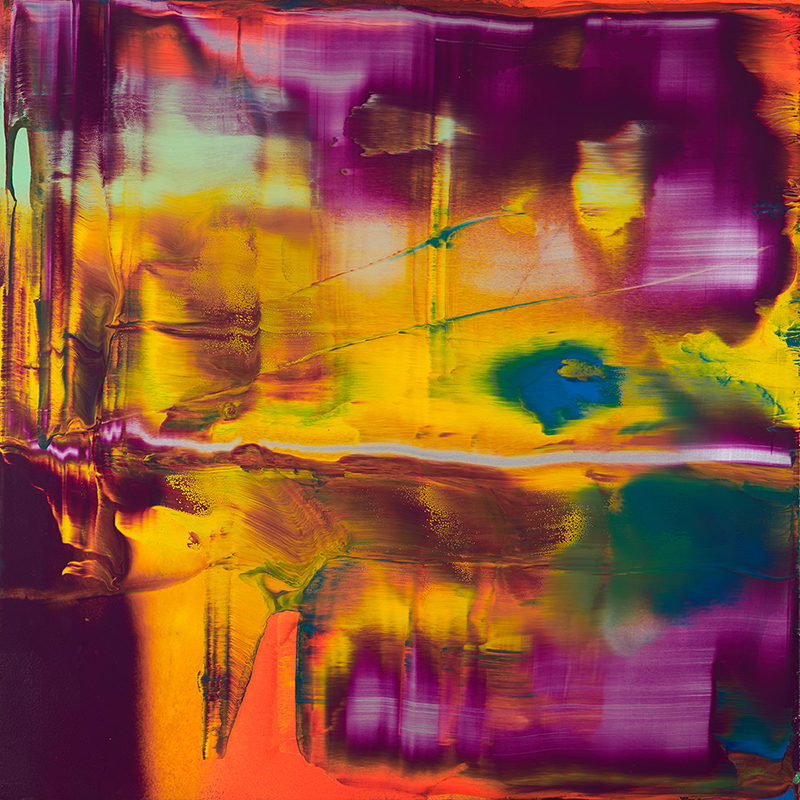
Brett Weir presented by Jacob Hoerner Galleries: The vibrant colours, composition and scale of this work really speak to me. I can easily visualise this in my home.

Murray Fredericks, BLAZE #22 Kangaroo Lake, Great Darling Anabranch, 2023. Courtesy of the artist and Michael Reid.
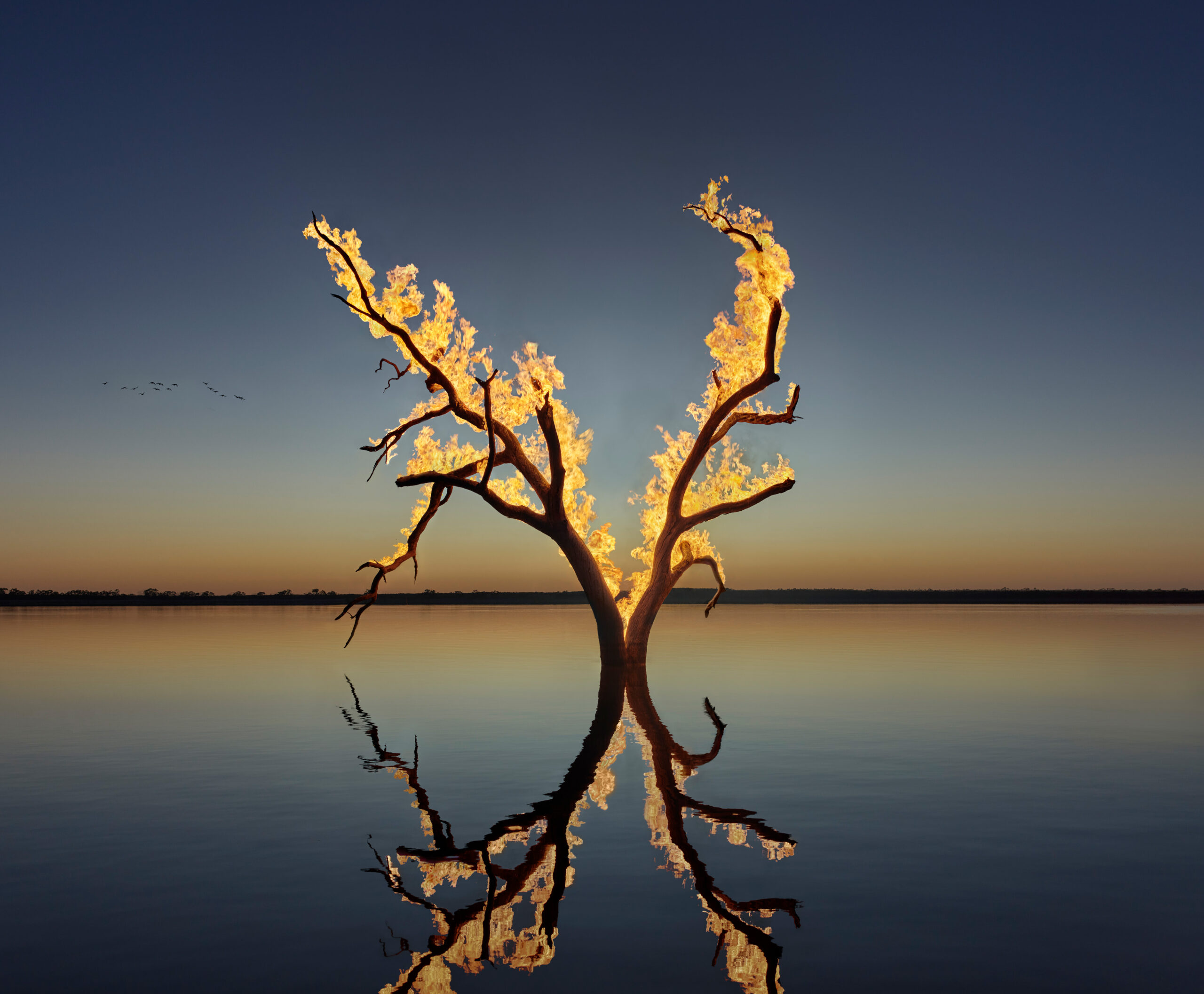
Murray Fredericks presented by Michael Reid: I love everything about this work and could literally spend an hour explaining all the reasons why. From the fire to the horizon line, to the specific colours and blend of gradient, to the reflection. I adore this.

Ben Mazey, Midas Platinum Sliced Ball Totem, 2026. Courtesy of the artist and C. Gallery.
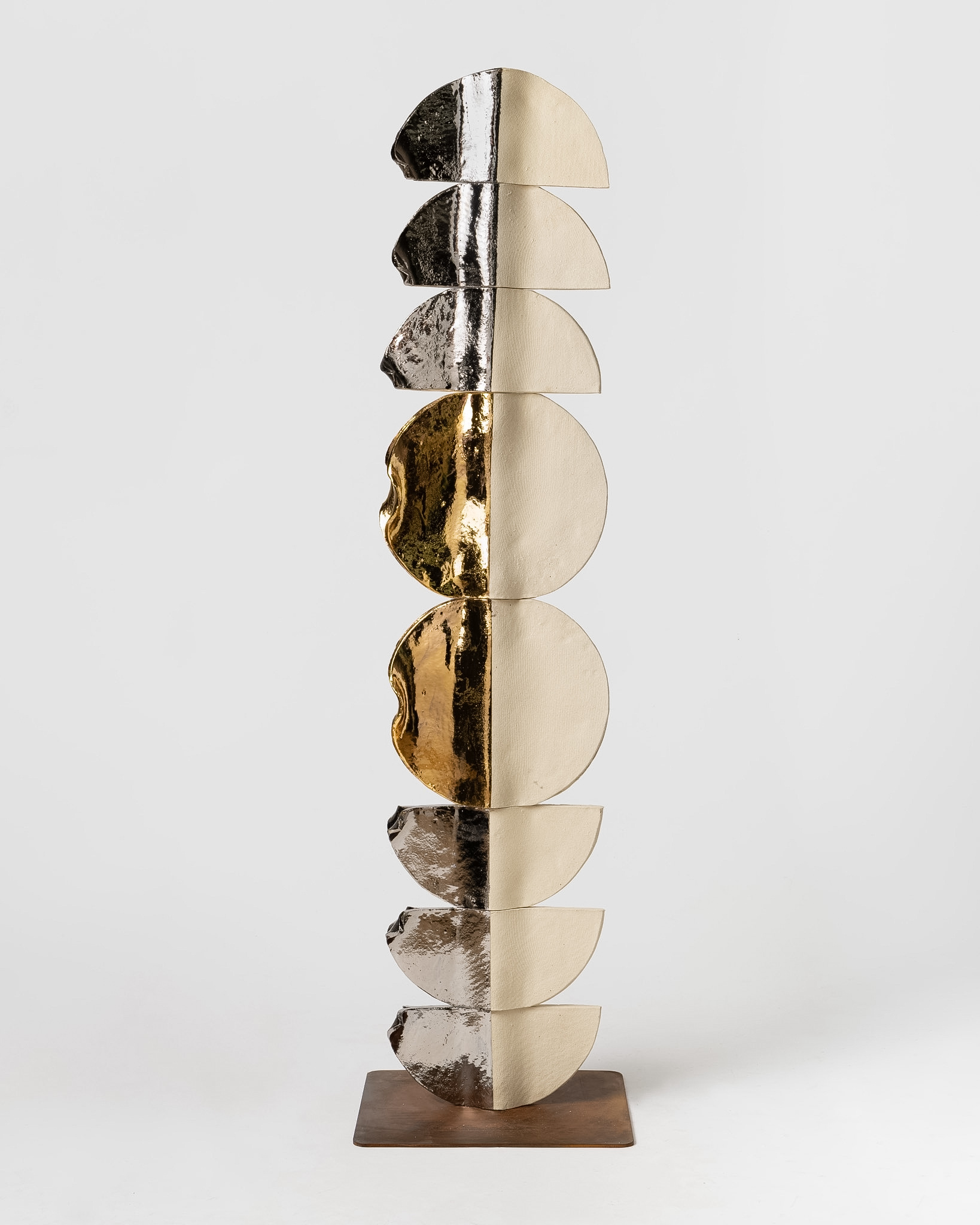
Ben Mazey presented by C. Gallery: I love the concept and meaning of a totem. And the material and shapes appeal to all my senses. I also love vertical shapes because they speak to my love of symmetry.

Cybele Malinowski, DEEP FAKE: Run Elvis Run, Las Vegas, 2024. Courtesy of the artist.
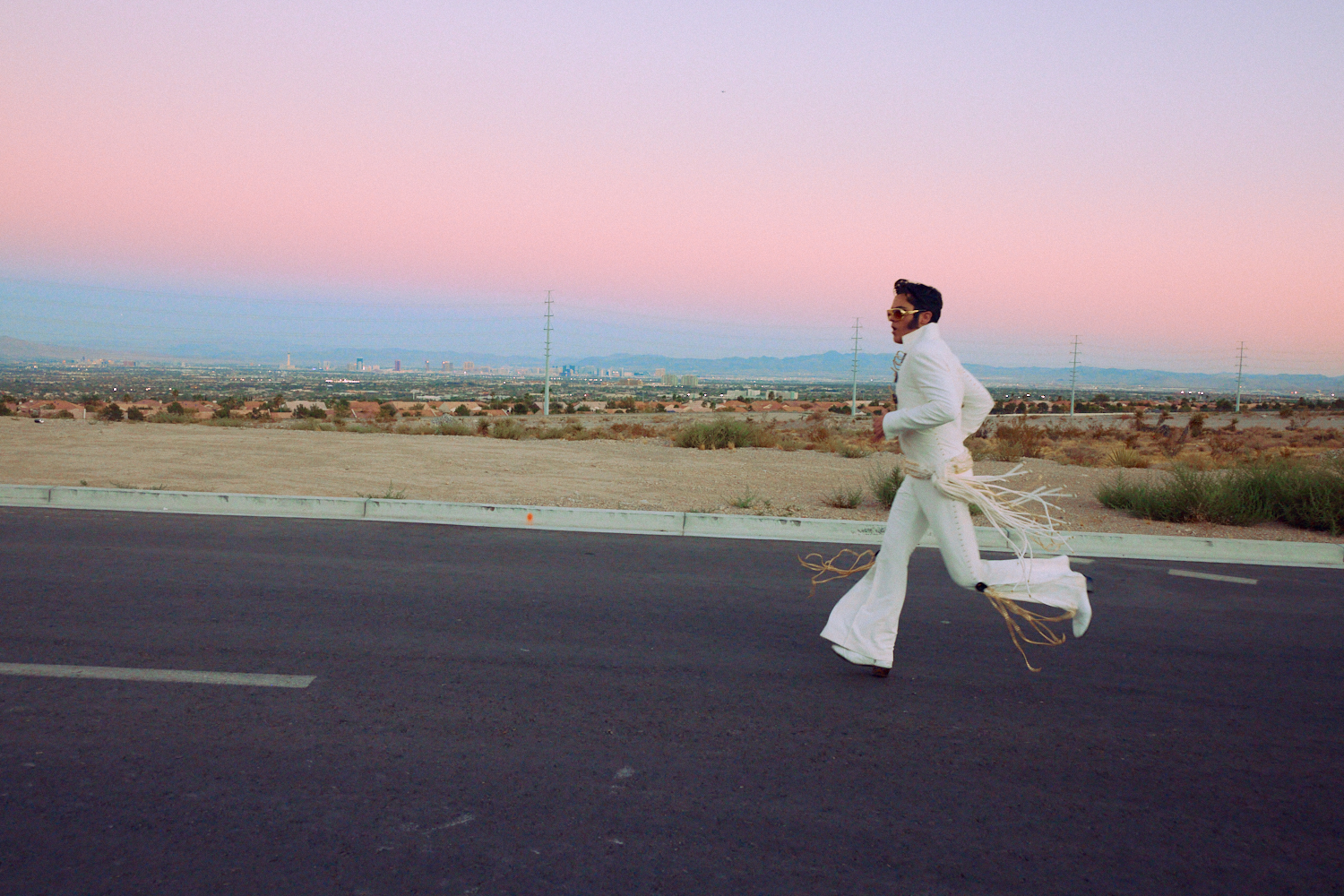
Cybele Malinowski (Photo Sydney): I adore this work. I love its emotion, references, the horizon line, colours and sense of pace/urgency.
Installations to Seek Out

Dr Ken Thaiday Snr, Dr Grace Lillian Lee and Allan George Lee, Suggoo Pennise. Courtesy of the artists and CASSANDRA BIRD.
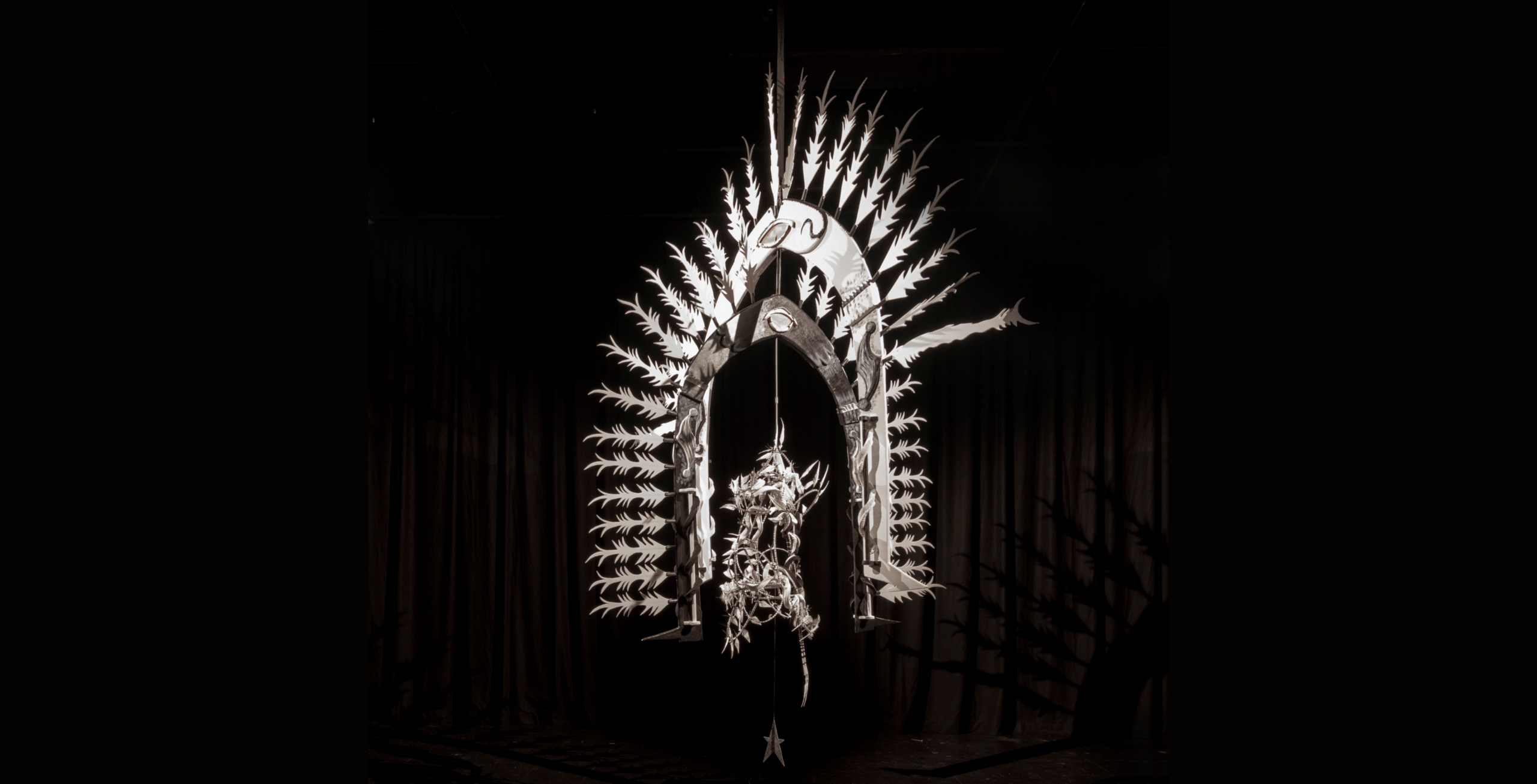
Dr Grace Lillian Lee, Dr Ken Thaiday Snr & Allan George Lee presented by CASSANDRA BIRD: Grace Lillian Lee is fashion meets art. She is an incredibly talented Australian ambassador. I have been supporting and following her career since the start.
Learn more about this installation here.
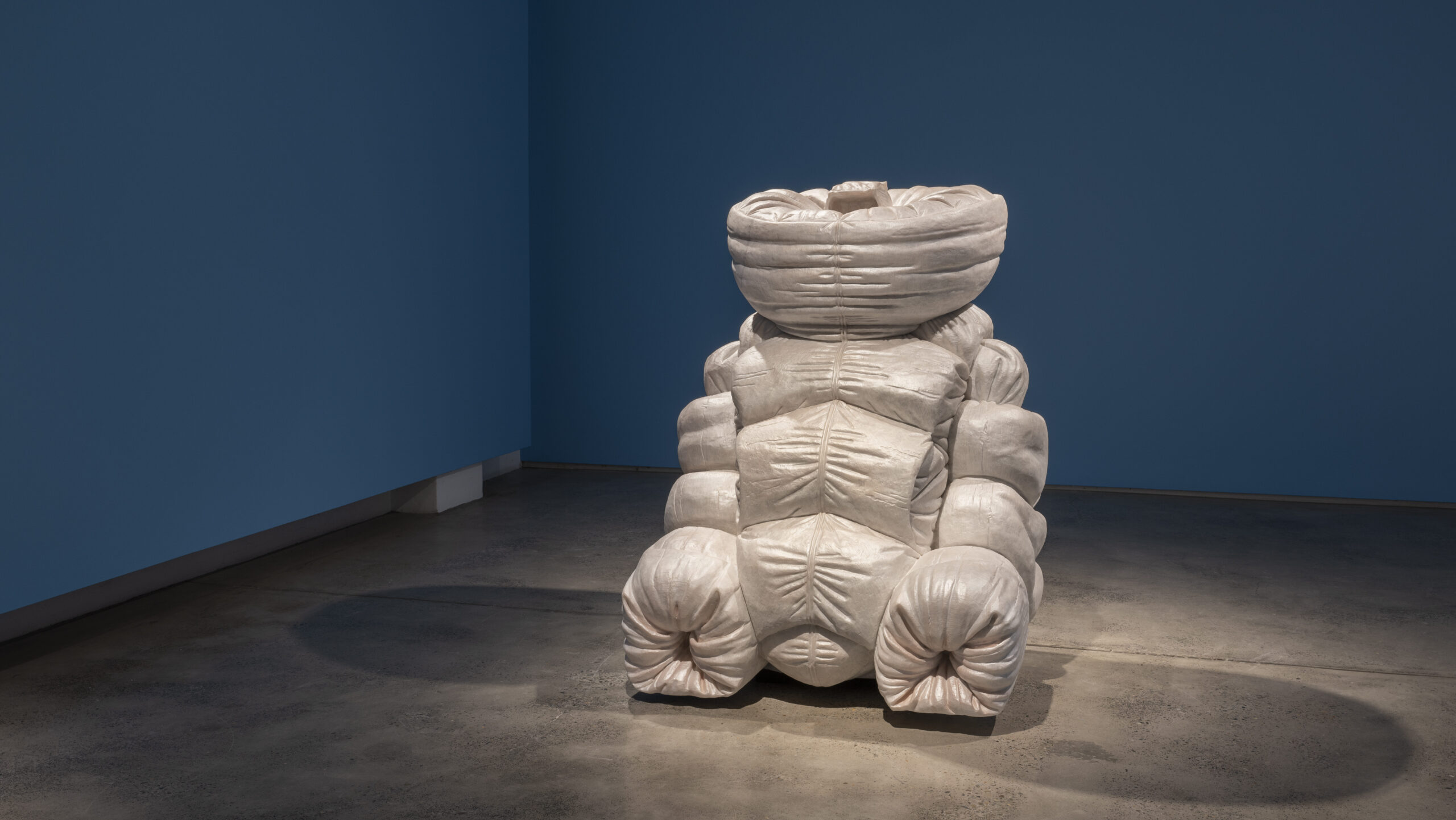
Alex Seton, A Person of Substance (Life Size), 2025. Courtesy of the artist and Sullivan+Strumpf.
Alex Seton presented by Sullivan+Strumpf: The whimsical Alex Seton makes me feel ironically so light, so I love the visual juxtaposition. Also, I admire galleries Sullivan & Strumpf so much, and revere everything they do! If their name is attached, I always want more information.
Learn more about this installation here.
Talks To Hear
New Platforms, New Possibilities: Art in the Digital Age
Noelle Faulkner | Host
Nikita Le Messurier | Speaker
Claire Evans | Speaker
Tom Sanders | Speaker
Sam Leach | Speaker
Then, Now, Next: 10 Years of Sydney Contemporary
Kym Elphinstone | Host
Dominic Feuchs | Speaker
Ramesh Mario Nithiyendran | Speaker
Suzanne Cotter | Speaker
Tim Etchells| Speaker
Both themes fascinate me and I want to hear more. With everything moving in multiple directions at once, I would like to hear from key leaders about their thoughts and feelings about the here and now, and the future.
Performance to Seek Out
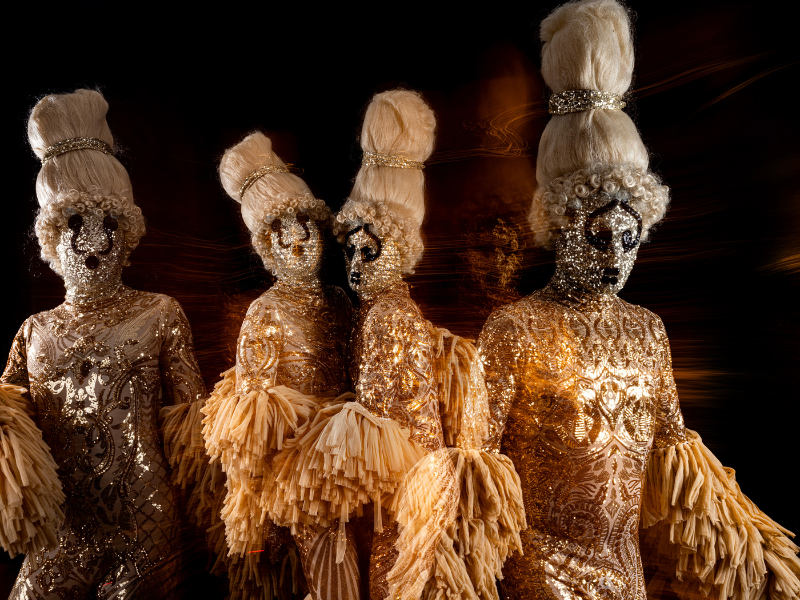
Super excited by performance art and their costumes. This will be an entire sensory experience and I can’t wait.
Don’t Miss Artist Booth Talks
And I always want to hear from artists and discover their inspirations. To me, this is the most fascinating storytelling and anecdotes that leave me feeling inspired and asking questions. I love thought-provoking discussions that leave me craving more. I love being transported into their personal space and then keeping an eye on their evolution, and feeling like I have a personal understanding and insight. This is the type of creative connectivity I thrive from.
Learn more about Artist Booth Talks here.
Sydney Contemporary returns to Carriageworks from 3 – 6 September.
As Sydney Contemporary returns to Carriageworks this September, we’re looking beyond the Fair and into the city itself. We asked Venue Owner and Operator of The Vanguard, Beau Neilson, to share her guide to Sydney, from the galleries and exhibitions she loves to the restaurants, live music venues and lesser-known spots that continue to inspire her.
What makes Sydney stand out as a cultural destination?
We are fortunate to have a beautiful harbour, great weather and the perfect setup to enjoy incredible art, music and performance both indoors and out.
If you have friends visiting from out of town, what are you adding to their itinerary?
There are a few must-sees for everyone who visits me. We’d start with a walk around the harbour and the Royal Botanic Garden, then head to the Art Gallery of NSW to see the latest show. Following that, we would go to Chinatown for steaming hot dumplings and jasmine tea at yum cha at The Eight. After filling our greedy bellies we would walk over to Chippendale to see a wild Chinese contemporary art exhibition at White Rabbit Gallery. Then we’d finish the evening with dinner at Cafe Paci in Newtown and a gig at The Vanguard.
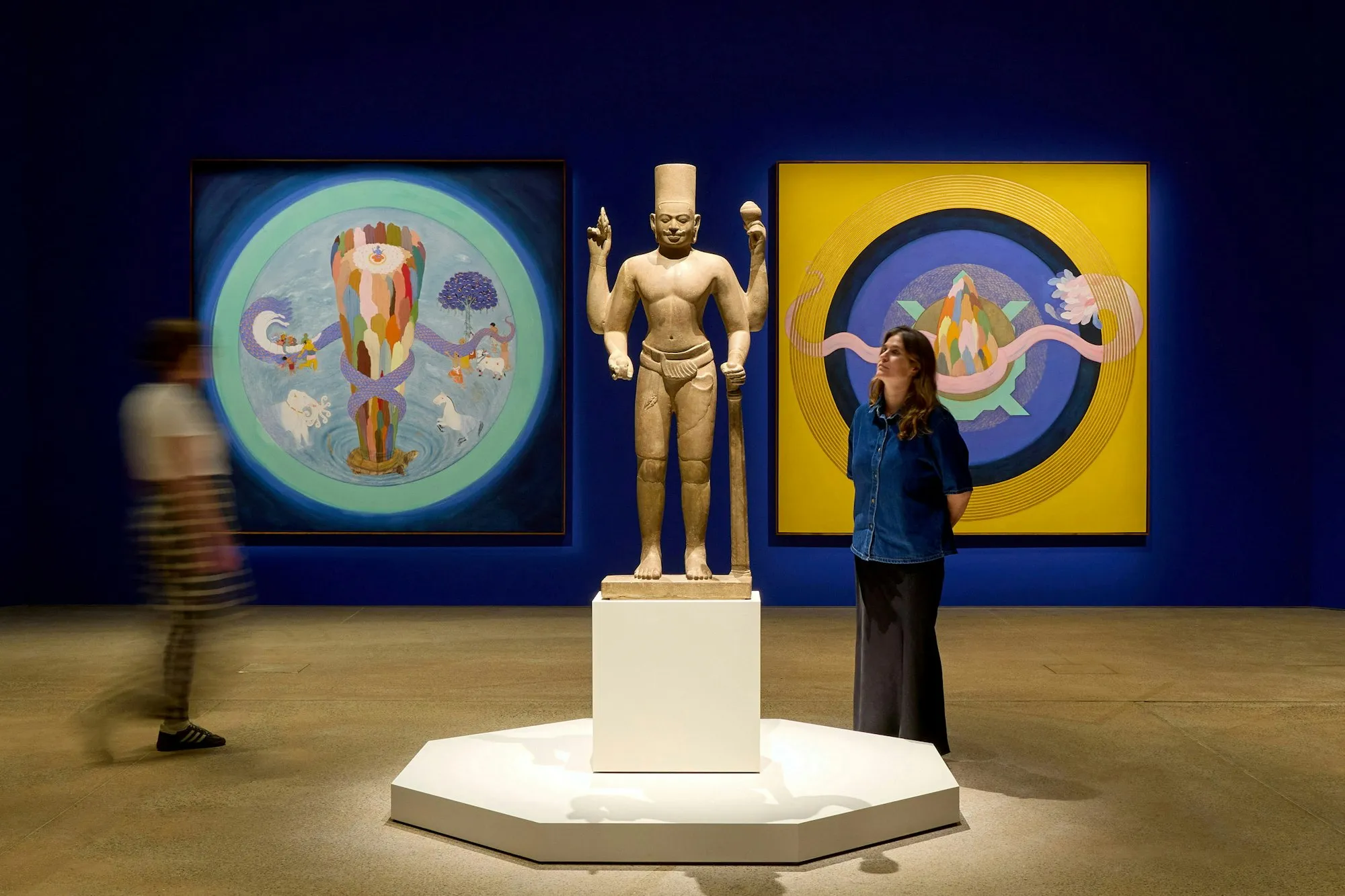
Pictured: Avatar: Forms of Vishnu, Installation at Art Gallery of NSW.
What cultural events or exhibitions coincide with Sydney Contemporary that you recommend?
Sydney Dance Company has its latest show, “Current”, at the intimate studio in Walsh Bay. Night owls can enjoy “Gut Health: After Dark” at The Vanguard. It’s a band, not a health treatment, and the vibe will be genre-warping and a whole lot of fun.
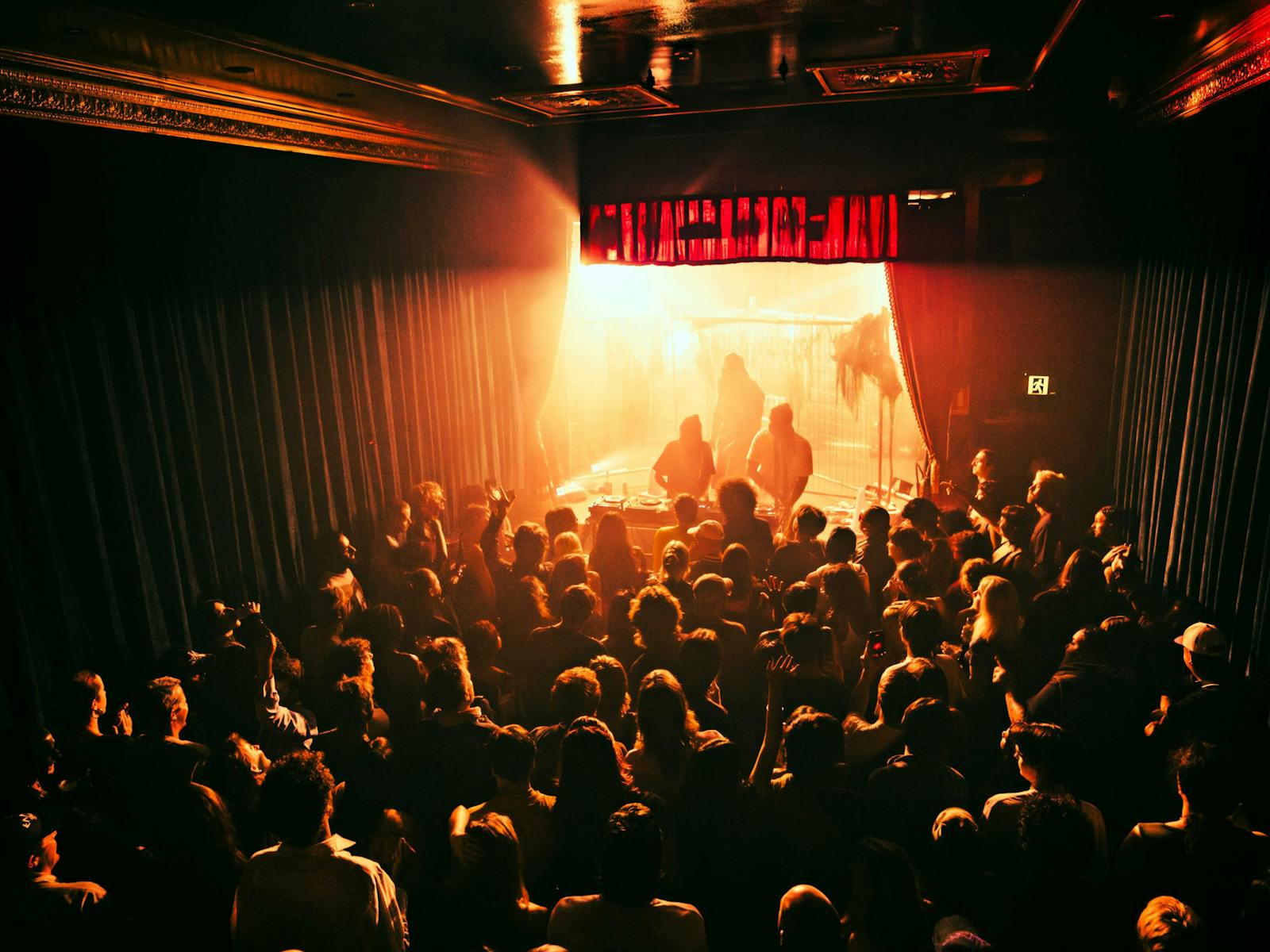
Pictured: The Vanguard
What are some places, people or experiences in Sydney currently inspiring you?
The beauty of Murray Rose Pool in Double Bay is always calming and inspiring to me. It’s surrounded by serene gardens that feel like they’re from another time, and the charming Woollahra Gallery at Redleaf sits right there too.
Do you have a favourite public art installation or mural in the city? What makes it special?
Agatha Gothe-Snape’s work on Bathurst Street (Represented by The Commercial). It’s a subtle mosaic in the east laneway at 115 Bathurst Street, Sydney, and the warped, marbled aesthetic captures the elusive nature of water.
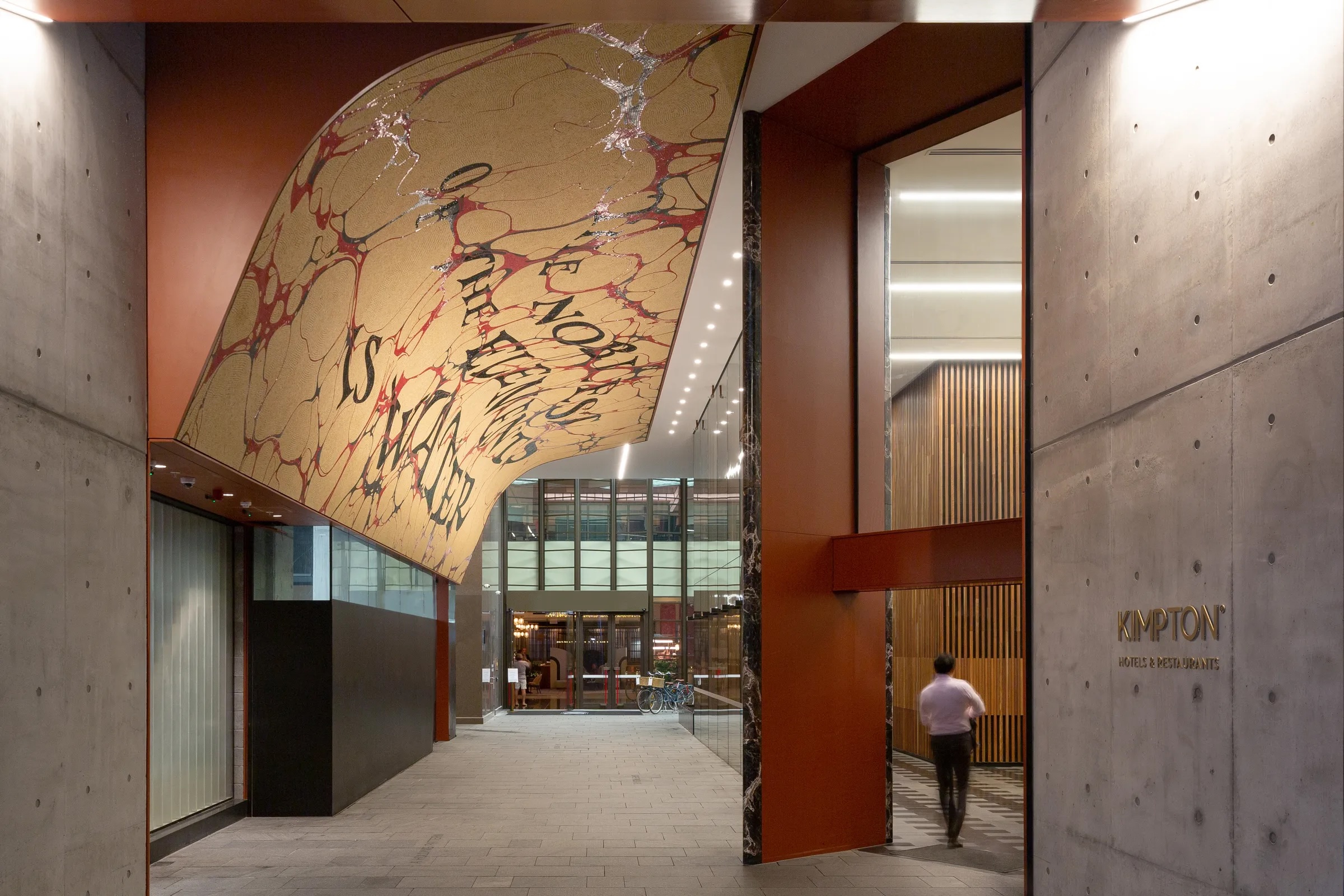
Pictured: Agatha Gothe-Snape’s work on Bathurst Street (Represented by The Commercial).
After a day of exploring Sydney Contemporary, where would you go for dinner and drinks to continue the evening?
The Eveleigh for a drink, a meal and some fabulous live music. It gets very busy, so if you’re with a group, book your table in advance.
A hidden gem?
Primary in Potts Point is a real institution for anyone who enjoys coffee. Creatives, art lovers and makers gather there in droves.
For more than a decade, Gow Langsford has been a familiar presence at Sydney Contemporary, bringing the depth and diversity of Aotearoa’s contemporary art scene to audiences across the Tasman. From its long-standing Auckland CBD gallery to its purpose-built flagship in Onehunga, the gallery’s approach is grounded in a strong and evolving roster of artists, and a belief in presenting their work in ways that surprise, engage and invite conversation. As Sydney Contemporary marks its 10th edition, Director Anna Jackson reflects on the gallery’s enduring relationship with the Fair, the changing art landscape across Australasia, and the artists and presentations that have shaped its journey
With your main gallery in the heart of Auckland, opposite the Auckland Art Gallery, Gow Langsford is deeply embedded in Tāmaki Makaurau’s cultural life. How does that position at home shape the way you present the gallery internationally at Sydney Contemporary?
We’ve had a presence in Auckland’s CBD since the early 1990s, but anyone who knows the city knows its cultural life extends well beyond the centre. In 2024 we opened our purpose-built flagship gallery in Onehunga – a suburb better known for industry, trades and local businesses than galleries. It’s been exciting to become part of that community and to see the enthusiasm and support the new space has generated.
While our home base is an important part of who we are, it doesn’t necessarily dictate how we present internationally. What defines Gow Langsford is the strength and diversity of the artists we represent. One of the great strengths of Aotearoa’s art scene is the richness of its perspectives and cultures, and that’s what we aim to bring to Sydney Contemporary each year.
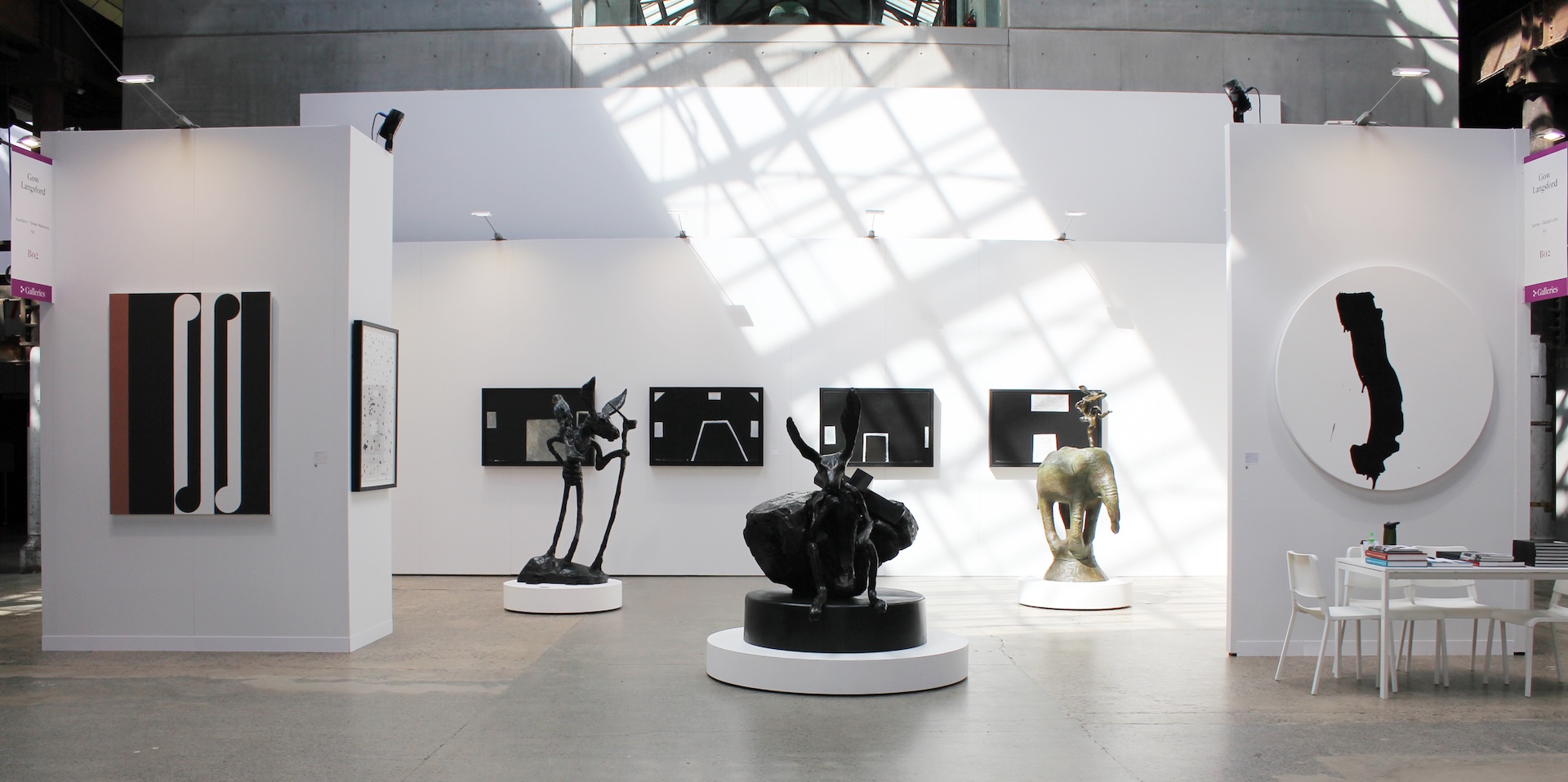
Pictured: Gow Langsford Booth at Sydney Contemporary 2022
You’ve been a consistent presence at Sydney Contemporary across its history. How has your approach to the Fair evolved as both the gallery and the Australasian art market have changed?
We’ve always tried to approach each edition as an opportunity to do something different while remaining recognisably Gow Langsford.
As the fair has grown, it’s naturally developed a stronger Australian focus, which has made our perspective as a New Zealand gallery even more distinctive. Over the past thirteen years we’ve welcomed many new artists into the programme, and the fair has also become an important platform for presenting internationally significant artists alongside our New Zealand roster.
One thing that hasn’t changed is that Sydney is wonderfully unpredictable. While our presentations are always carefully considered, we still joke that after more than a decade we’ve never managed to accurately predict how any particular fair will unfold.
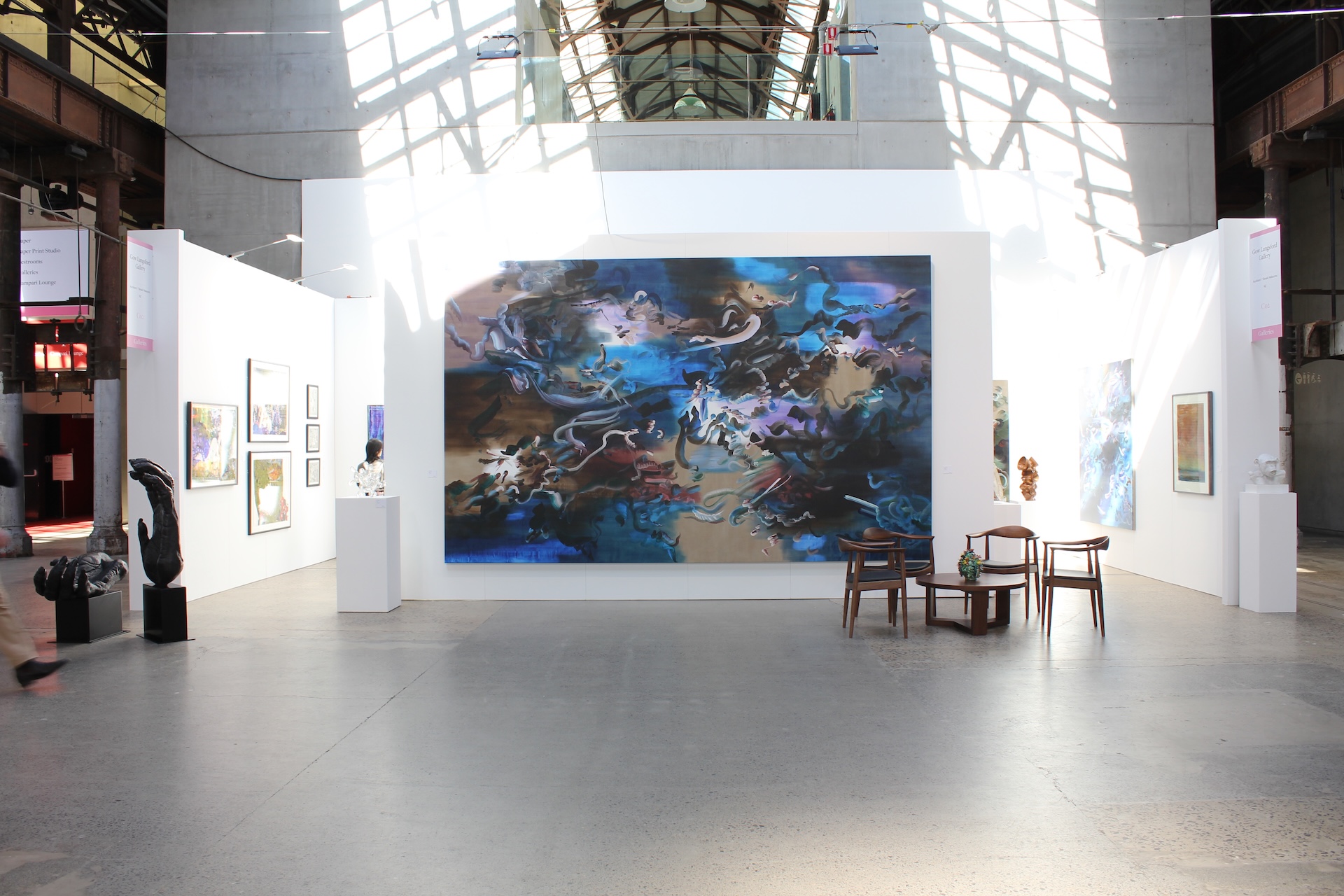
Pictured: Gow Langsford Booth at Sydney Contemporary 2023
Looking back across your participation, are there particular booths or artist moments at Sydney Contemporary that felt like turning points for the gallery?
I’m not sure I’d describe them as turning points, but there have certainly been many personal highlights over the years. Showing Damien Hirst at the inaugural fair in 2013 was certainly one. Some of my favourites include our presentation of Lee Ufan in 2017, Aiko Robinson in 2023, and Dale Frank’s monumental Buffalo last year. Sculpture Contemporary has also consistently been a highlight, with memorable works by Gregor Kregar and Simon Ingram, as well as Lisa Roet’s giant primate in 2024.
Collectively, these moments reflect what we value most about participating in art fairs: the opportunity to create thoughtful presentations that surprise audiences, spark conversation, and showcase artists in fresh and unexpected ways.
Auckland’s art scene has grown and shifted significantly over the past decade. What changes have you felt most directly in terms of collectors, audiences, or visibility for artists?
The art world is always evolving, and after nearly 4 decades the gallery has learned to adapt with it. The pandemic years brought unexpected momentum to the New Zealand market, and that confidence ultimately enabled us to invest in our new purpose-built gallery in Onehunga. We see that investment as a long-term commitment to the vitality of the arts in Aotearoa.
The response has exceeded our expectations. We’ve welcomed new audiences alongside long-standing collectors, and it’s been encouraging to see that community continue to grow. While it’s never an easy environment for artists, we’re optimistic. Aotearoa has an extraordinarily strong creative culture, and we believe there will always be an audience for ambitious, thoughtful contemporary art.
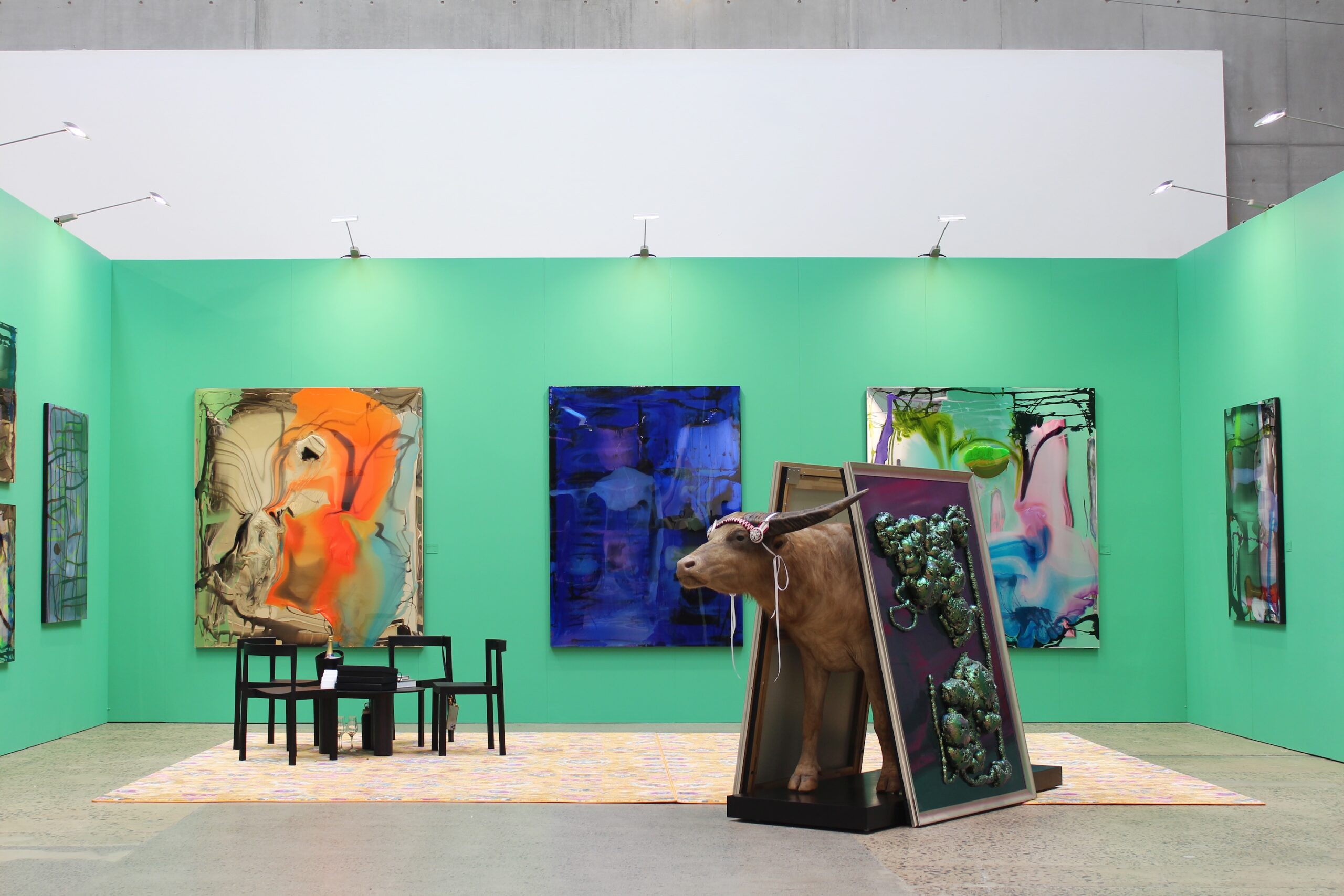
Pictured: Gow Langsford Booth at Sydney Contemporary 2025
As Sydney Contemporary marks its 10th edition, what does this milestone represent from your perspective, both as a long-standing exhibitor and as a gallery operating between Aotearoa and the wider region?
Sydney Contemporary has become an important part of our annual calendar. It gives us the opportunity to maintain meaningful relationships with Australian collectors and institutions without needing a permanent presence there.
Those relationships have been built gradually over more than a decade of exhibiting at the fair. Today, one of the most rewarding aspects is reconnecting with collectors who return each year, while introducing new audiences to the artists we represent. Reaching the tenth edition feels like a celebration not only of the fair itself, but of the long-term relationships and trust that have developed around it.
gowlangsfordgallery.co.nz
@gowlangsford
Learn more about what Gow Langsford is showing at Sydney Contemporary here.
