
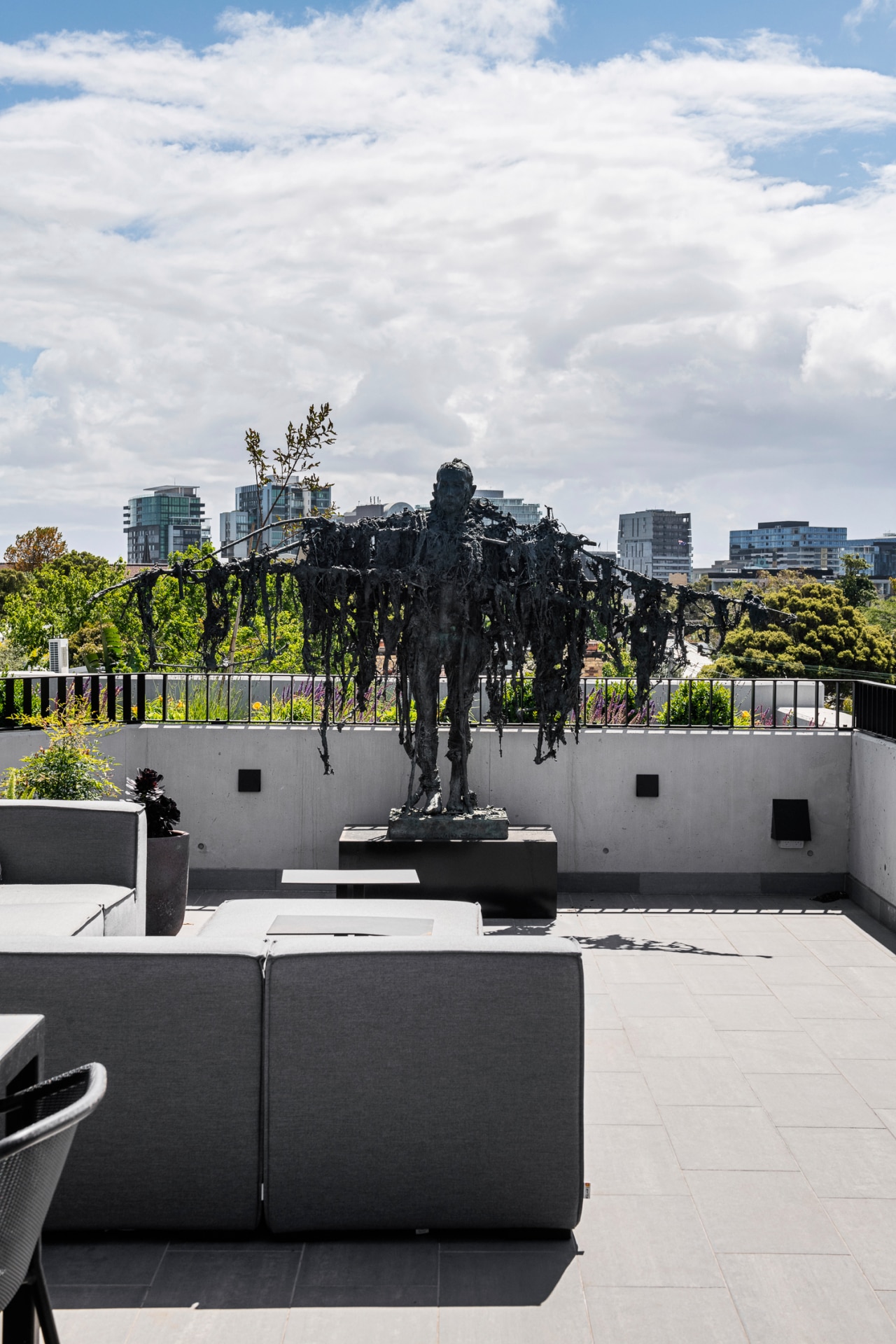
Sydney Contemporary returns to the Carriageworks from 3 – 6 September.
Driven by distinct yet complementary instincts–Andy’s analytical eye as an artist and Kallie’s lifelong passion for curation—this collecting duo approaches contemporary art with a shared focus on storytelling and deep, enduring connections. For them, art is never an afterthought or mere decoration; it is the vital center around which their entire daily life revolves.
Ahead of Sydney Contemporary, we spoke with Kallie and Andy about the evolution of their collection, the deliberate choice to design their homes around the art they love, and how the Fair continues to surprise and clarify their creative vision.
___

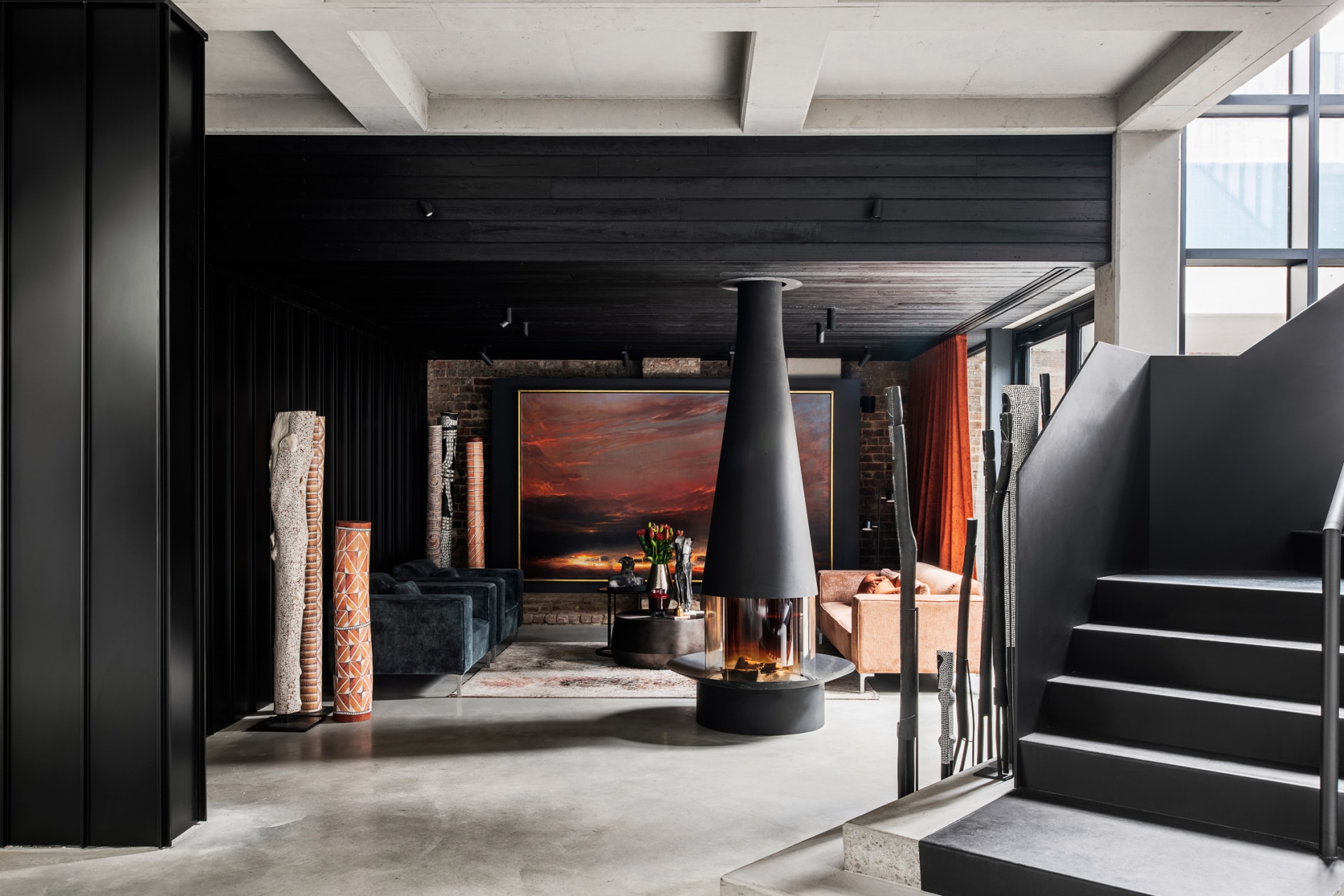
Yimula Mununggurr, Djapu, 2019, Paul Wutjinama Maymuru, Wayawu, 2019, Tim Storrier, Evening Embers, 1995Photo: Tom Blanchford
What first sparked your interest in collecting contemporary art?
Our paths to collecting were different but ultimately led us to the same place. Kallie’s passion for art started with her love of curation; when she was little, she would collect and curate items ranging from buttons to leaves to coins and then share them with others. From this and when she moved to Australia, she began collecting contemporary art and curating our own collection. Andy’s spark came from being tasked with selling off a former corporate art collection. This, in turn, led to his first personal acquisition, a work by Tim Storrier – an artist we still admire and collect.

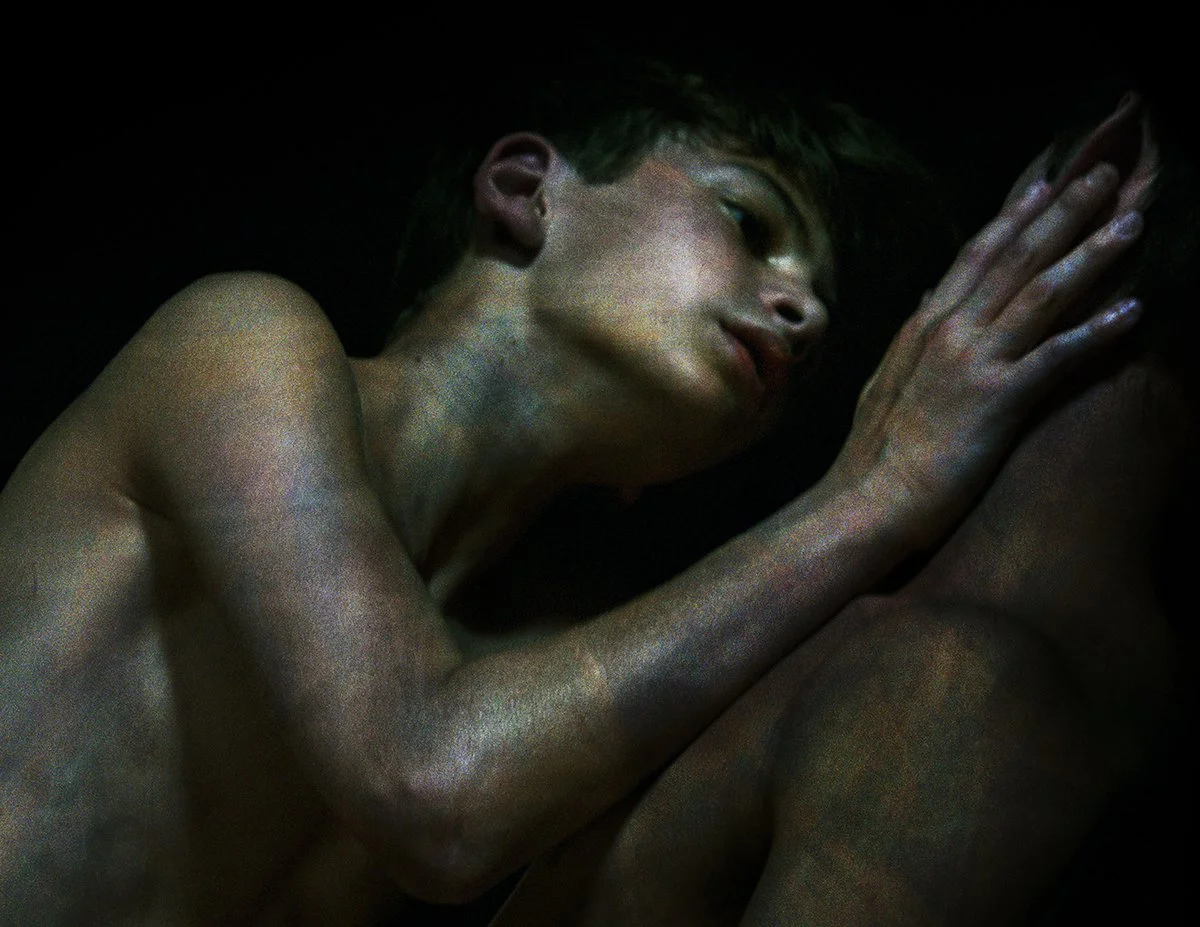
Bill Henson, Untitled, 2021
When encountering a new work, what qualities or ideas tend to draw you in?
We are drawn to works that tell us a story and sustain connection over time. Whether it is the stillness of a Bill Henson photograph or the meditative quality of a teamLab digital work, we look for something we can live with comfortably (and sometimes intentionally uncomfortably!) and that continues to reveal itself over time. Artworks do not need to fit a particular genre; they need to resonate both in the moment we encounter it and over the coming weeks, months and years that we have it hung in our home.

Photo: Tom Blanchford
Has your approach to collecting evolved over time? If so, how?
Andy is very analytically driven – he loves to understand the process of developing an artwork being an artist himself, while Kallie has always been driven by the joy of the hunt — and over time those instincts have converged into something complementary. Kallie’s involvement with the Museum of Australian Photography (MAPh) has drawn the collection increasingly towards photography. We have also become far more open to digital art, which was not part of our early thinking but now has a significant presence in our home.
What role does living with artworks play in your everyday life?
When we built our city home years ago, we worked with an architect who understood what we meant when we said that “art needs to come first, and living second.” To this end, art is the most prominent part of our interior life; it is not decorative so much as central to how we experience our home. We place artworks within rooms rather than as an afterthought, which means every space is in constant dialogue with the works that inhabit it.

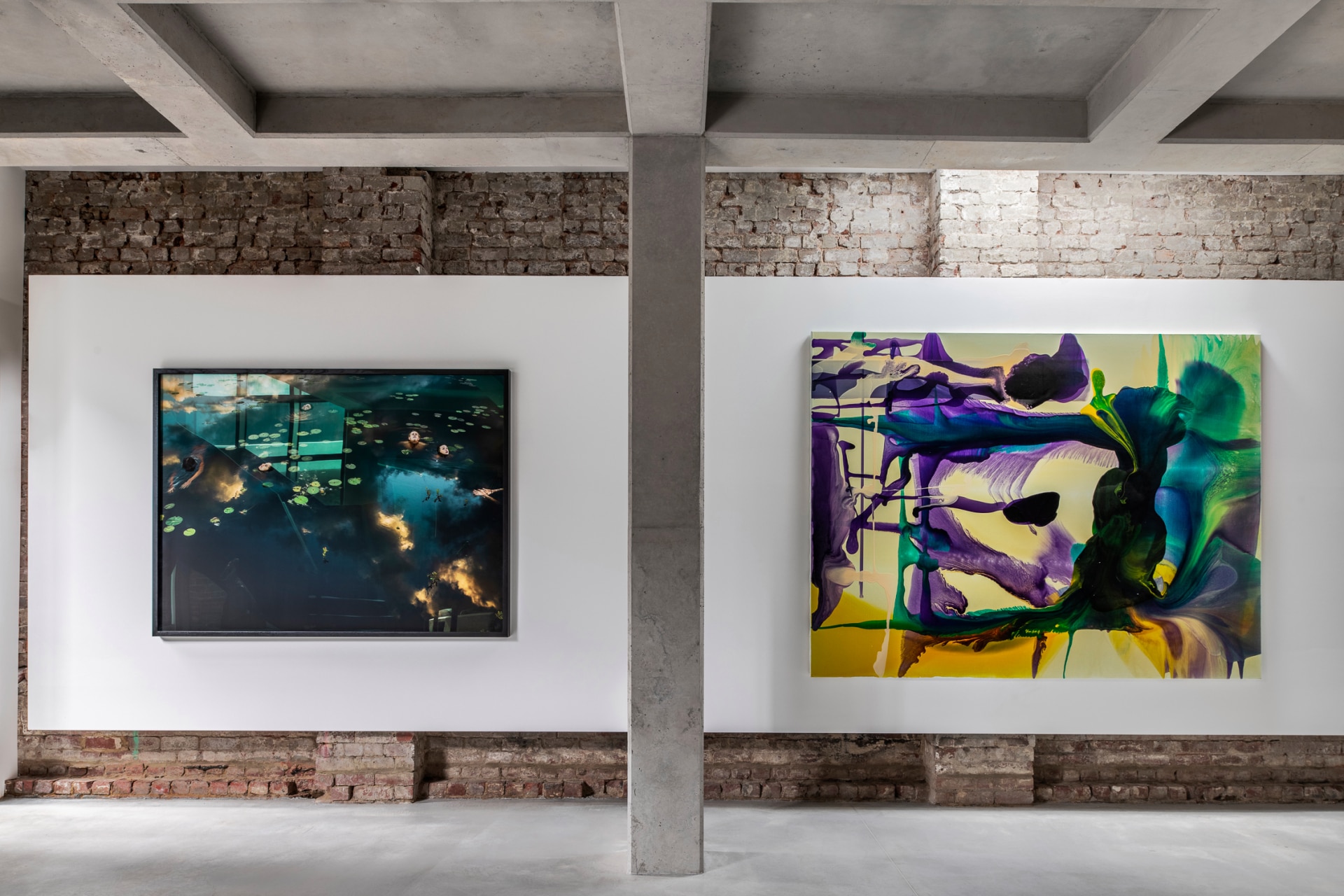
Tamara Dean, Cosmos, 2015 (left), Dale Frank, Black Soil Warrego Highway (Esk Turnoff) West Morton Anglican Boys College, 2003 (right). Photo: Tom Blanchford
Your collection has been described as reflecting a personal journey rather than a fixed collecting strategy, and even your home was designed around the artworks themselves. How has living so closely with the collection shaped the way you acquire and connect with new works?
When we converted our city home from a warehouse to a place to live, we made sure that art was the hero throughout all the spaces. This commitment has made us more attuned to how an artwork will feel to live with day-to-day — not just how it looks in a gallery. We have recently been repeating that process at our home in Mexico which has enabled us to embark on a new journey of discovery with Latin American art.

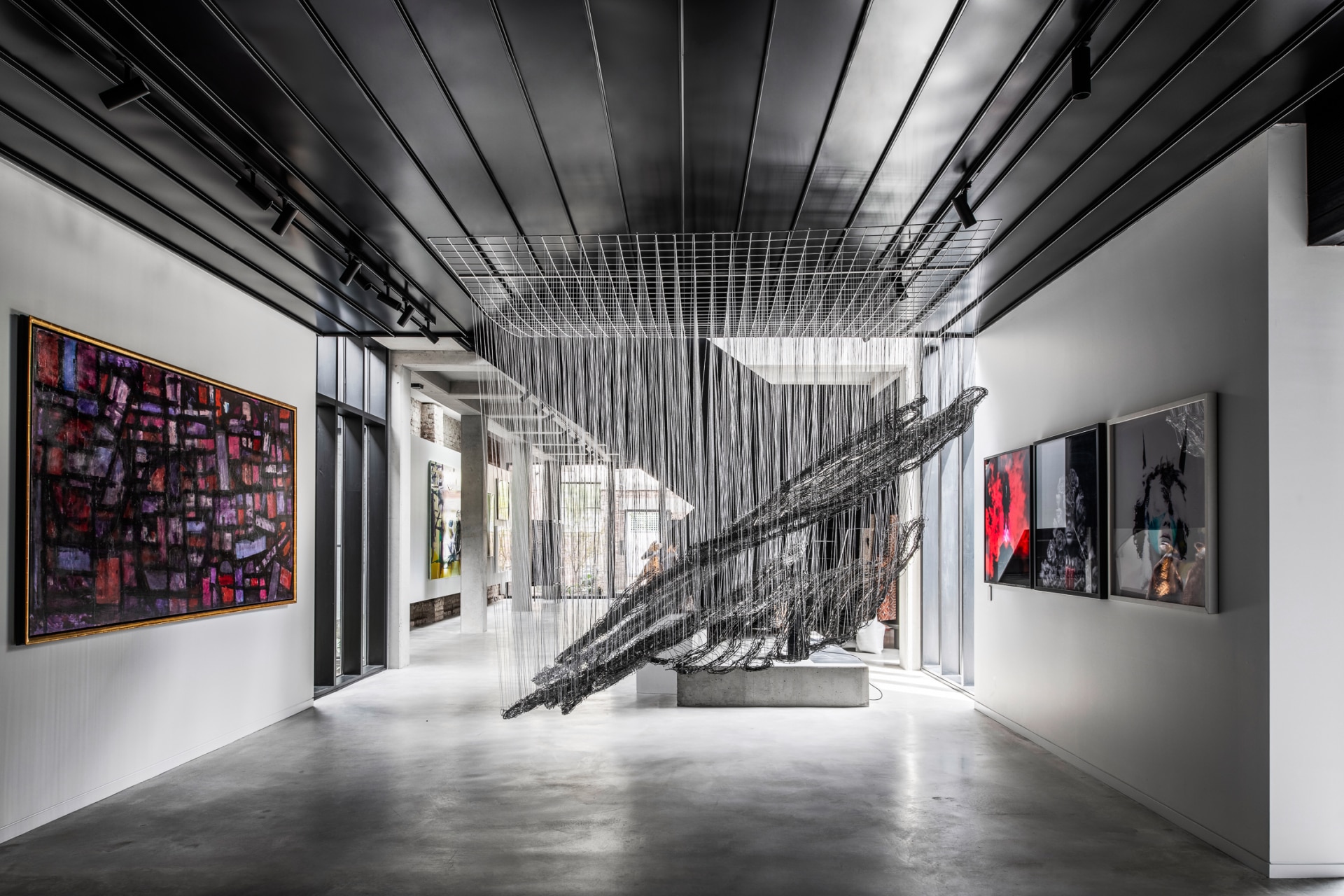
Laurence Edwards, The Catcher. Photo: Tom Blanchford
Sydney Contemporary brings together a wide range of artists and galleries each year. What do you most look forward to discovering at the Fair?
Sydney Contemporary has always been where we encounter work that surprises us — artists and practices we would not have found through our usual gallery relationships. We particularly look forward to discovering emerging Australian voices in photography and new media, where our collection has grown most strongly. The Fair also brings together galleries whose programs we follow closely, and the energy of seeing so much work in one place has a way of clarifying what genuinely moves us. And we love catching up with friends at Sydney Contemporary too!
What advice would you give to someone beginning their journey as a collector?
Our advice to anyone wanting to start buying art and/or building a collection is to invest in what genuinely moves you. Engage with institutions, attend openings, and build relationships with artists and gallerists, because the community and the conversations that stem from it are as enriching as the acquisitions. Above all, collect and curate artworks that you want to live with now and into the future.
Since the inaugural edition of Sydney Contemporary in 2013, Alcaston Gallery has been a constant presence, championing some of Australia’s most significant Aboriginal and Torres Strait Islander artists while helping to shape conversations around contemporary art collecting. Over the past decade, the gallery has witnessed profound shifts in the recognition and reception of First Nations art, both within the Fair and across the global art market. As Sydney Contemporary celebrates its 10th edition, Alcaston Gallery director Beverly Knight reflects on the power of in-person connection, the evolution of its presentations, and the moments that have defined its journey through a decade of the fair.
_______
Alcaston Gallery has been at every edition since 2013 – what keeps pulling you back each year?
We consider Sydney Contemporary to be a world class art fair; in a world now dominated by the ‘virtual’, personal, real-life contact, interaction and engagement is everything, so the four art fair days in Sydney has become among the most important in the year for our artists!
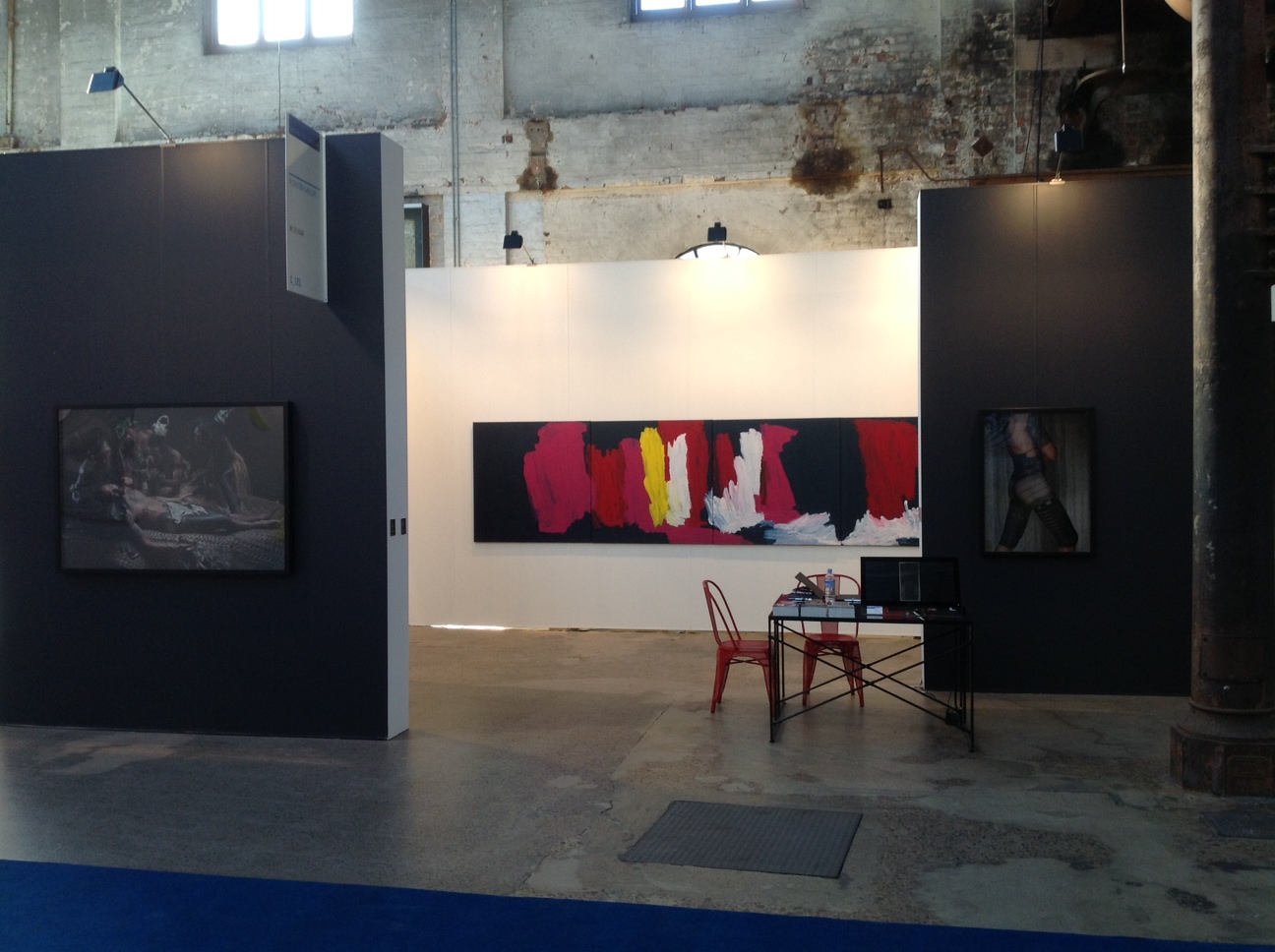
Alcaston Gallery, Sydney Contemporary 2013, Carriageworks
Looking back across all ten editions, how has your presentation evolved, in terms of artists, scale, or curatorial focus, while staying true to the gallery’s mission?
Initially having the same stand location each year really assisted us to look to artists and plan our stand design to achieve the strongest presentation. Changes made by Sydney Contemporary to our much-loved stand position, due to covid restrictions and now again in 2026, we have had to continually reinvent our stand designs for our artists to ensure that we present their work in the best possible way.
Since 2013, how have you seen the visibility and reception of Aboriginal and Torres Strait Islander art shift within the art fair context?
At first, it was a huge challenge being the only commercial gallery exhibiting First Nations Australian artists, as well as Pacific artists including Dean Smith, Greg Semu and Angela Tiatia. We looked to the marketing aspect for the artists to huge numbers of visitors especially institutional and savvy collectors particularly those interested in a wider view of great art. The enduring art of Sally Gabori has been exhibited at every fair, and now with a worldwide dedicated clientele, collectors who fly in from across the globe to see us and the major works by Sally Gabori reserved for Sydney Contemporary!
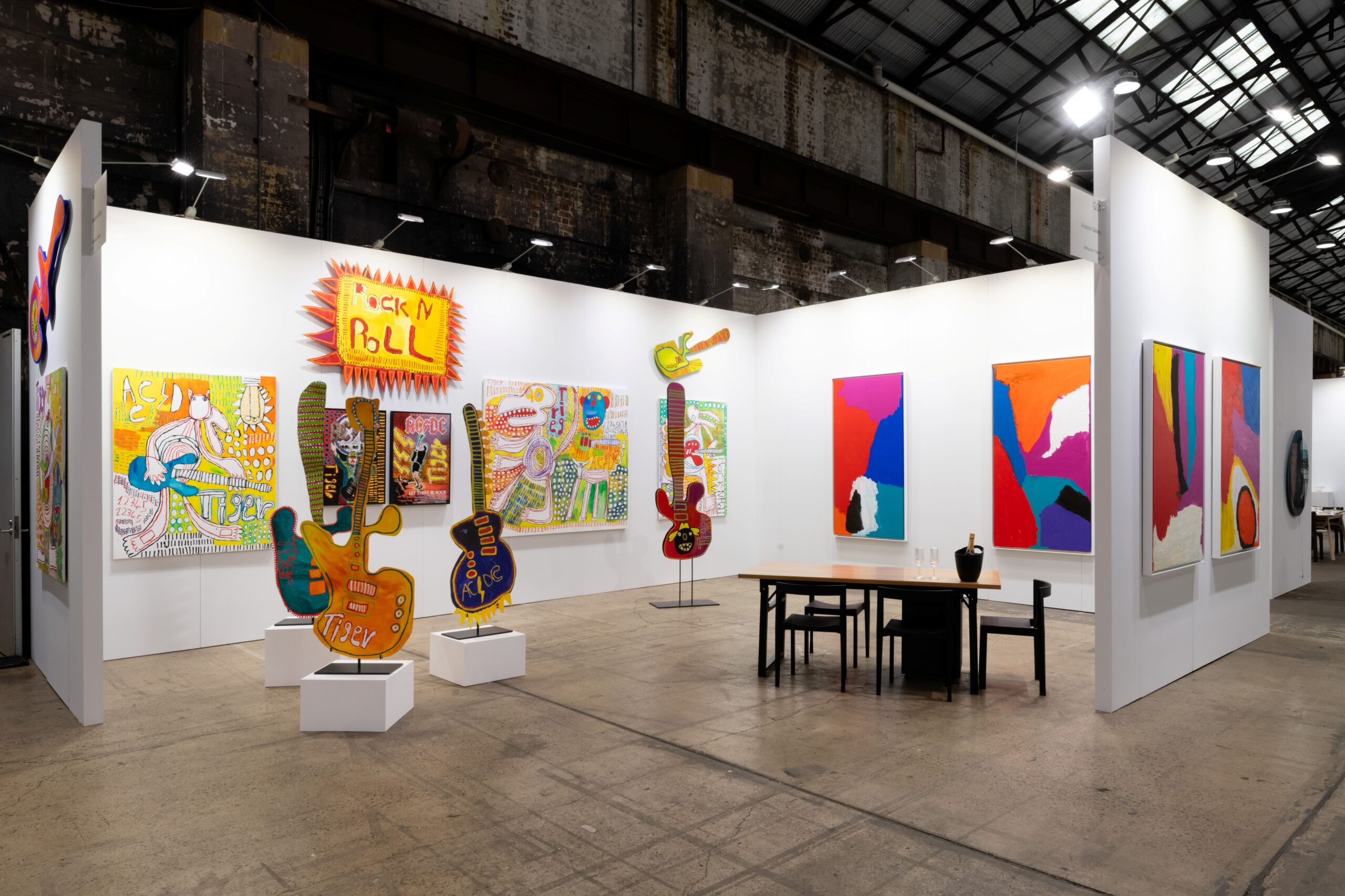
Alcaston Gallery, Sydney Contemporary 2025, Carriageworks.
Are there particular moments across the Fair’s history – a booth presentation, an artist breakthrough, or a collector interaction – that stand out as milestones for Alcaston Gallery?
In 2015, we received a call on VIP day from an unknown art lover from the United Arab Emirates about the major 4.5m Sally Gabori painting presented on our stand, requesting if we could hold it until they catch a flight to view the work at Sydney Contemporary first thing on Saturday morning. We obliged, and the client loved it – and a record price was achieved for the artist.
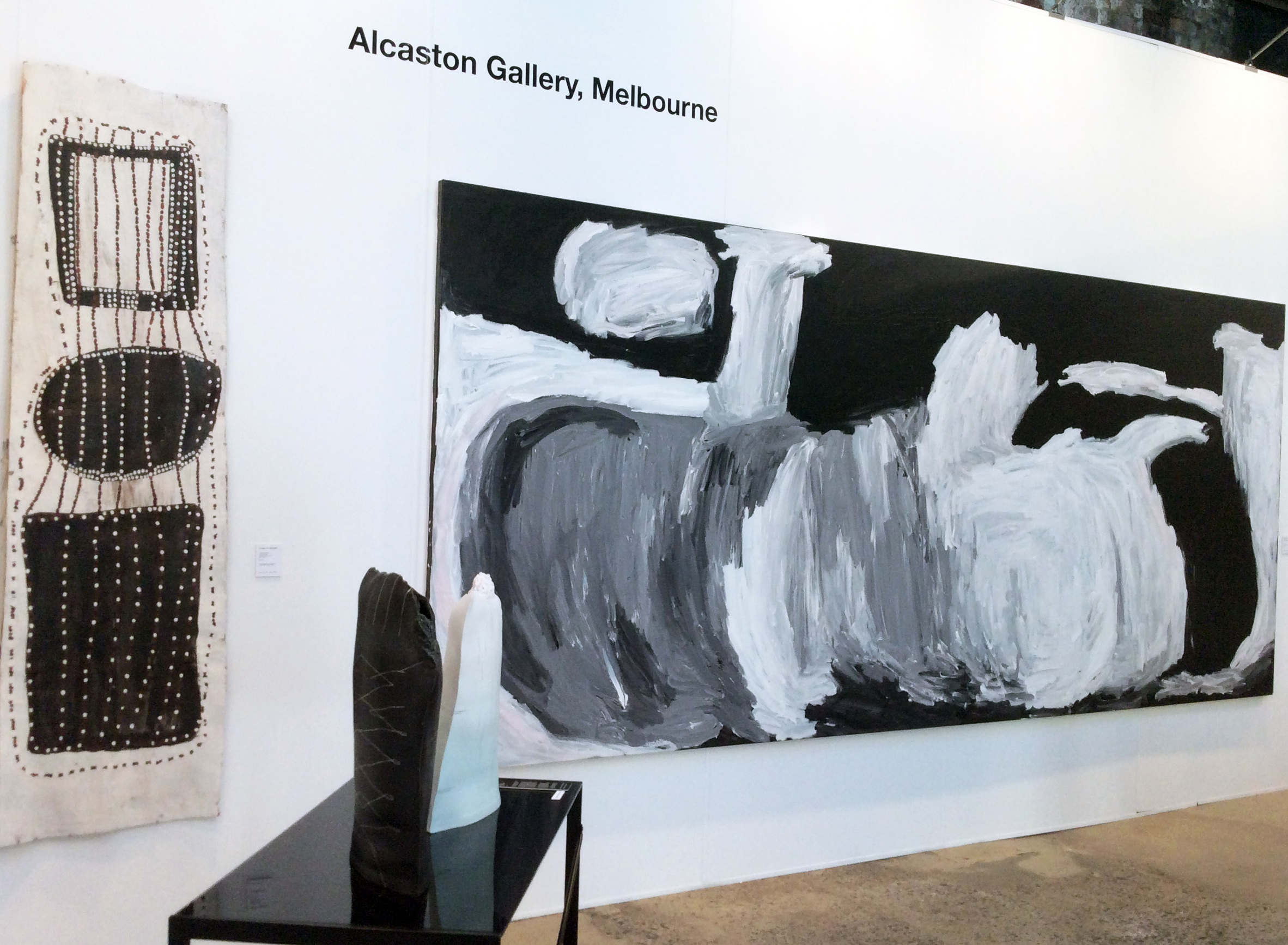
Major work by Sally Gabori at Alcaston Gallery’s booth at Sydney Contemporary 2015.
As Sydney Contemporary marks its 10th edition, what feels most significant to you about being part of its entire journey so far?
The enthusiasm shown by Alcaston Gallery staff and artists, combined with the highly anticipated annual catch-ups with Sydney clients and art lovers, has always been a recipe for success. Like New York art collectors, Sydney-siders love a party; but they know what they like and make decisions on the spot, pay and we deliver.
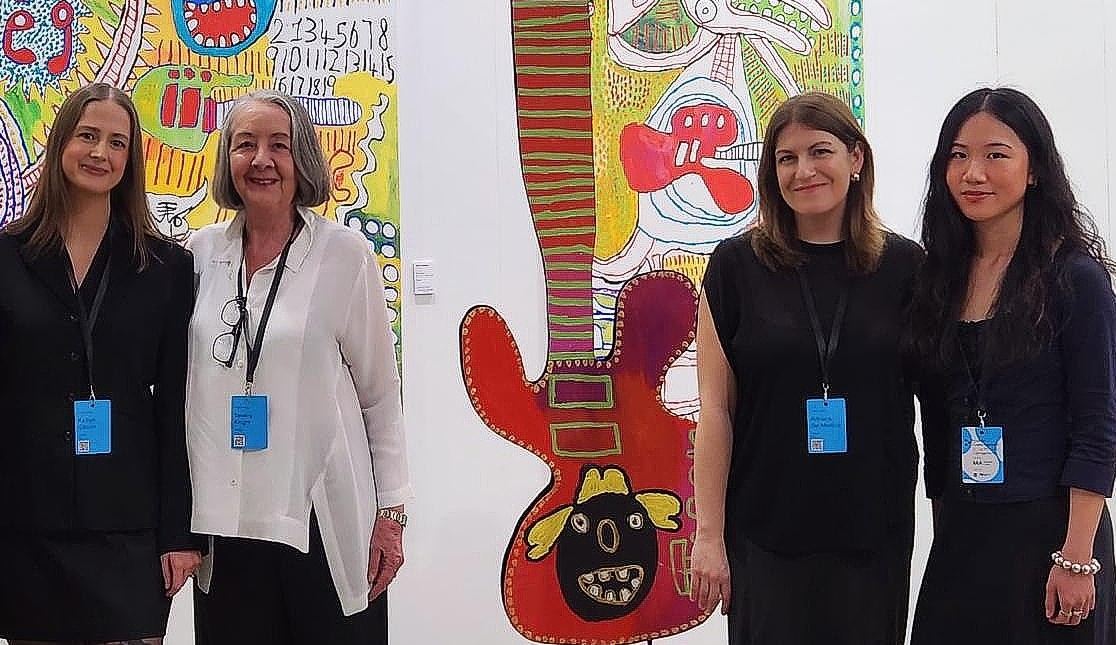
Alcaston Galley staff at Sydney Contemporary 2025
We caught up with artist Marina Rolfe ahead of her exhibition solo exhibition The edge of holding at ARC ONE Gallery opening on April 15th. Marina reflects on the slow attentiveness behind what often appears intuitive, the delicate tension between orientation and ambiguity, and the ways her paintings negotiate the surface – building, erasing, and reforming – to remain open, atmospheric, and endlessly unfolding for the viewer.

Marina Rolfe, Turning, with every tide, 2026, oil on linen, 122 x 152.5 cm. Courtesy of the artist and ARC ONE Gallery
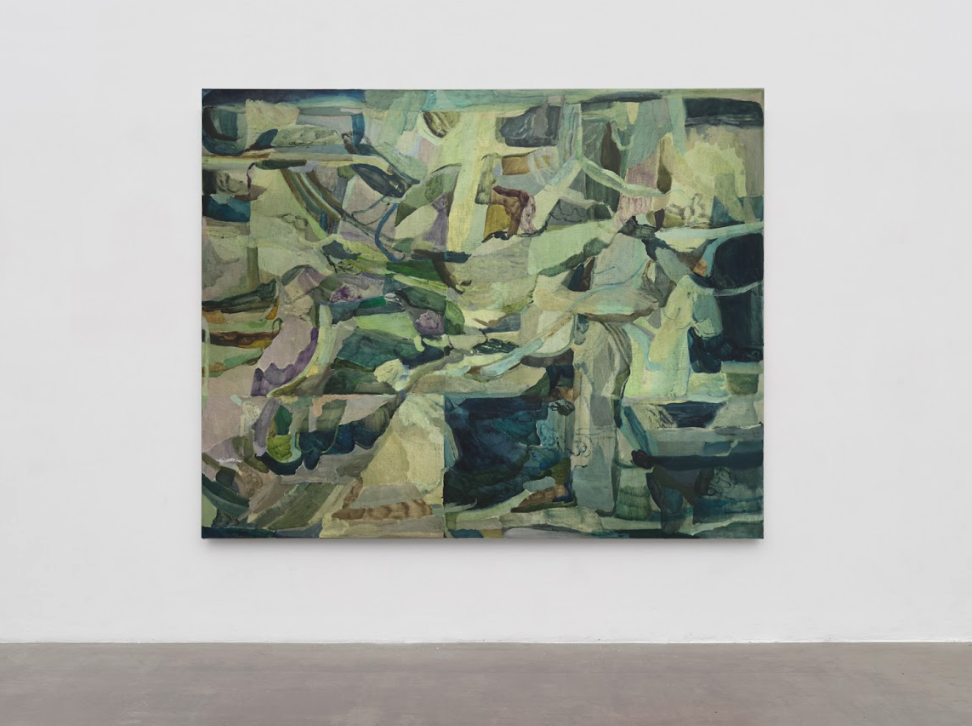
Your early training was in classical painting in Moscow. How does that foundation continue to shape the way you approach abstraction today?
My early training in classical painting definitely still sits somewhere in the background of what I do. It gave me a strong technical knowledge and sensitivity to structure; things like composition, spatial relationships, and how an image holds together. Even though my work is now abstract, that awareness is still there.
I think it shows as something underlying the painting. It allows me to push the work quite far into abstraction without it completely losing a sense of orientation. At the same time, my current practice is almost working against that training. Instead of constructing an image in a controlled way, I’m more interested in allowing the painting to develop through process, through layering and responding to what’s happening on the surface. So there’s a kind of tension between that training and the way I work now.

Installation view of Looking back to see if they still look back at me, 2024, Marina Rolfe, ARC ONE Gallery
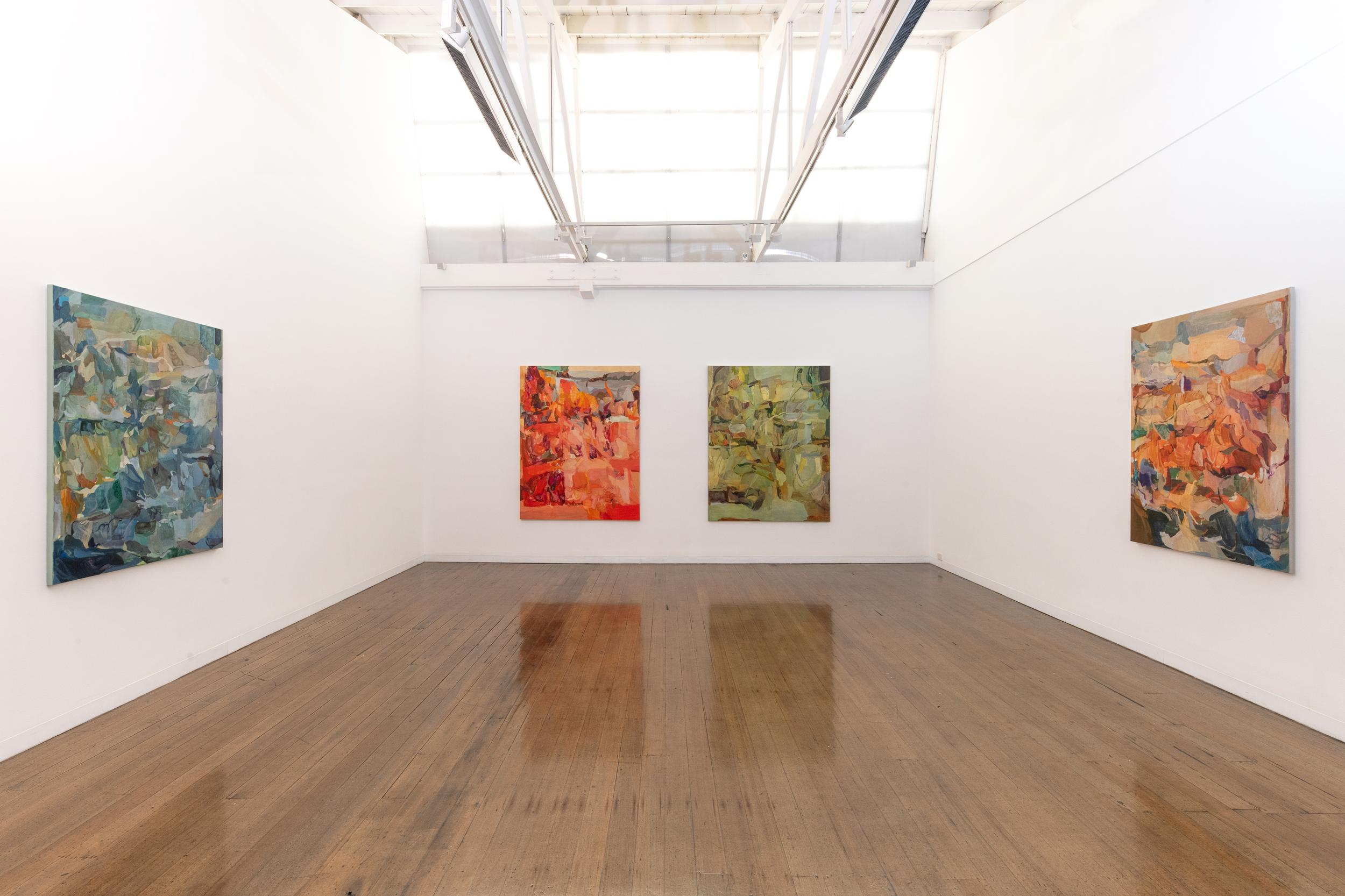
Your work often feels intuitive and emotionally driven. Can you talk about how intuition guides your process, and where conscious decision-making comes in?
I think what gets described as intuition in my work is actually quite slow and attentive. It’s not really about making quick or impulsive decisions; it is more about responding to what the painting is doing.
I start the work without knowing what it will look like when it’s finished. As the painting develops, I’m constantly adjusting things: colour, form, density; so there’s actually a lot of decision-making happening. But those decisions come from being with the painting and responding to it. There are also moments where I deliberately pause or hold back. That’s quite important, because it stops me from resolving the work too quickly and gives space for something else to come through

Marina Rolfe, Of the hour’s secrets, 2025, oil on linen, 198cm x 152.5cm. Courtesy of the artist and ARC ONE Gallery
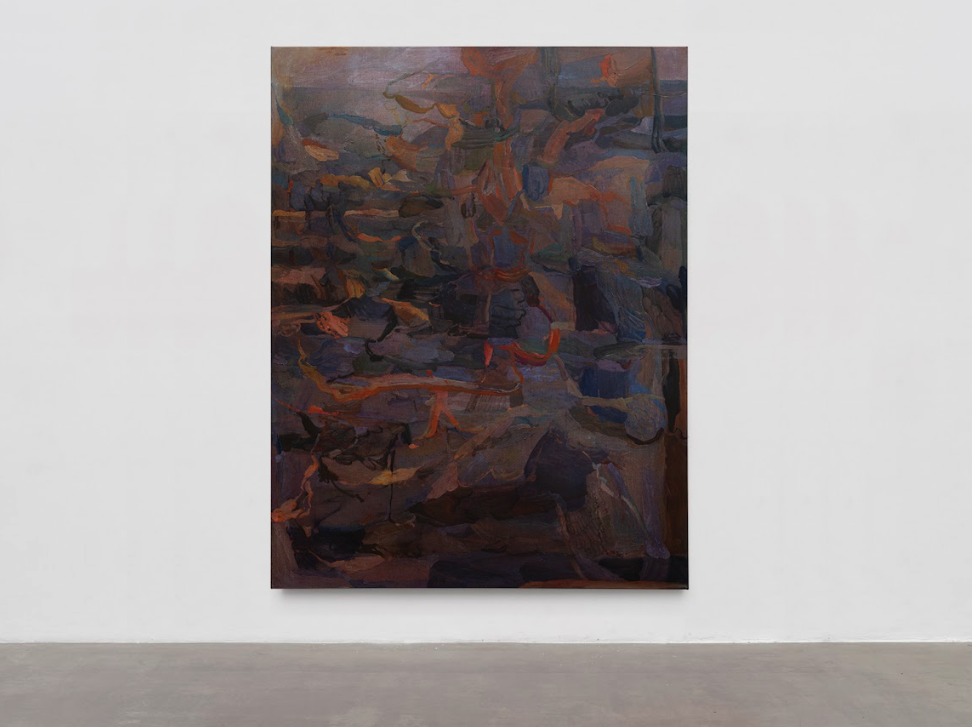
Your practice sits within landscape abstraction, but resists fixed place or narrative. What draws you to this space between recognition and ambiguity?
I’m interested in that space because it allows the painting to remain open. If the image becomes too defined, it can feel closed. But if it goes too far into abstraction, I lose my connection to it. So I work somewhere in between, where there are traces of landscape or space. Things can shift, dissolve, and sometimes reappear. I think that space also invites the viewer to spend time with the work, to orient themselves and then re-orient again. It becomes about experiencing how the painting unfolds.

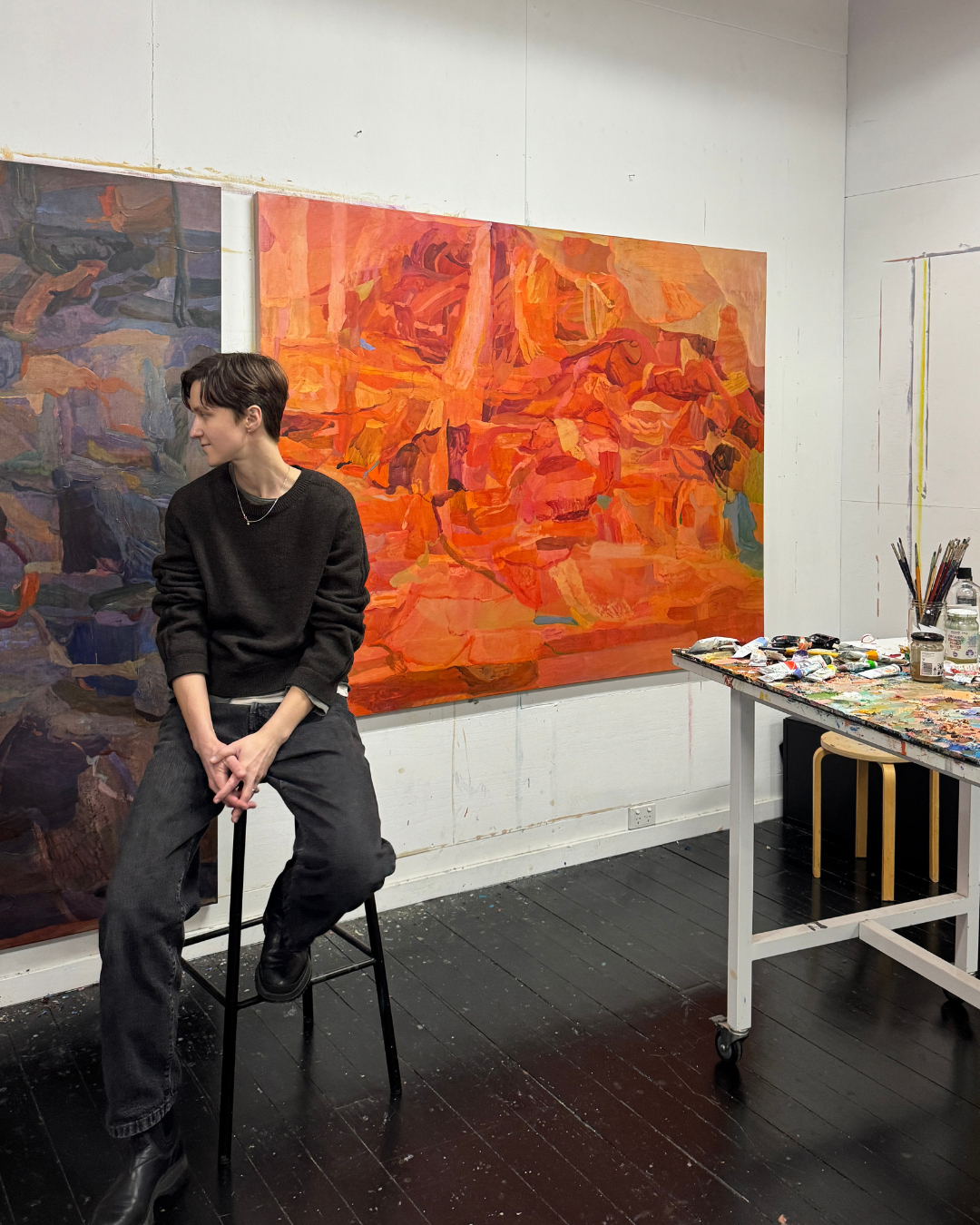
Marina Rolfe, Artist in studio, 2025. Courtesy of the artist and ARC ONE Gallery
Looking ahead to your upcoming exhibition at ARC ONE Gallery, are there new ideas, materials or directions you’re excited to explore?
In the upcoming exhibition, I’m continuing to develop this idea of painting as a kind of negotiation with the surface.
One thing that’s become more important in the work is this process of almost undoing the painting — pushing it to a point where it feels like it might fall apart or disappear, and then working back into it again. I often find that something new only begins to appear after that point, once the original image has been disrupted. So the paintings move through these stages of building, then being pushed towards a point of collapse, and then slowly re-forming into something else. That’s where the sense of negotiation really sits for me.
I’ve also been thinking more about how to sustain that threshold, where the painting stays open, but something can still begin to appear. The works are becoming more focused on atmosphere, and on how forms gather gradually through layering, erasure, and reworking.

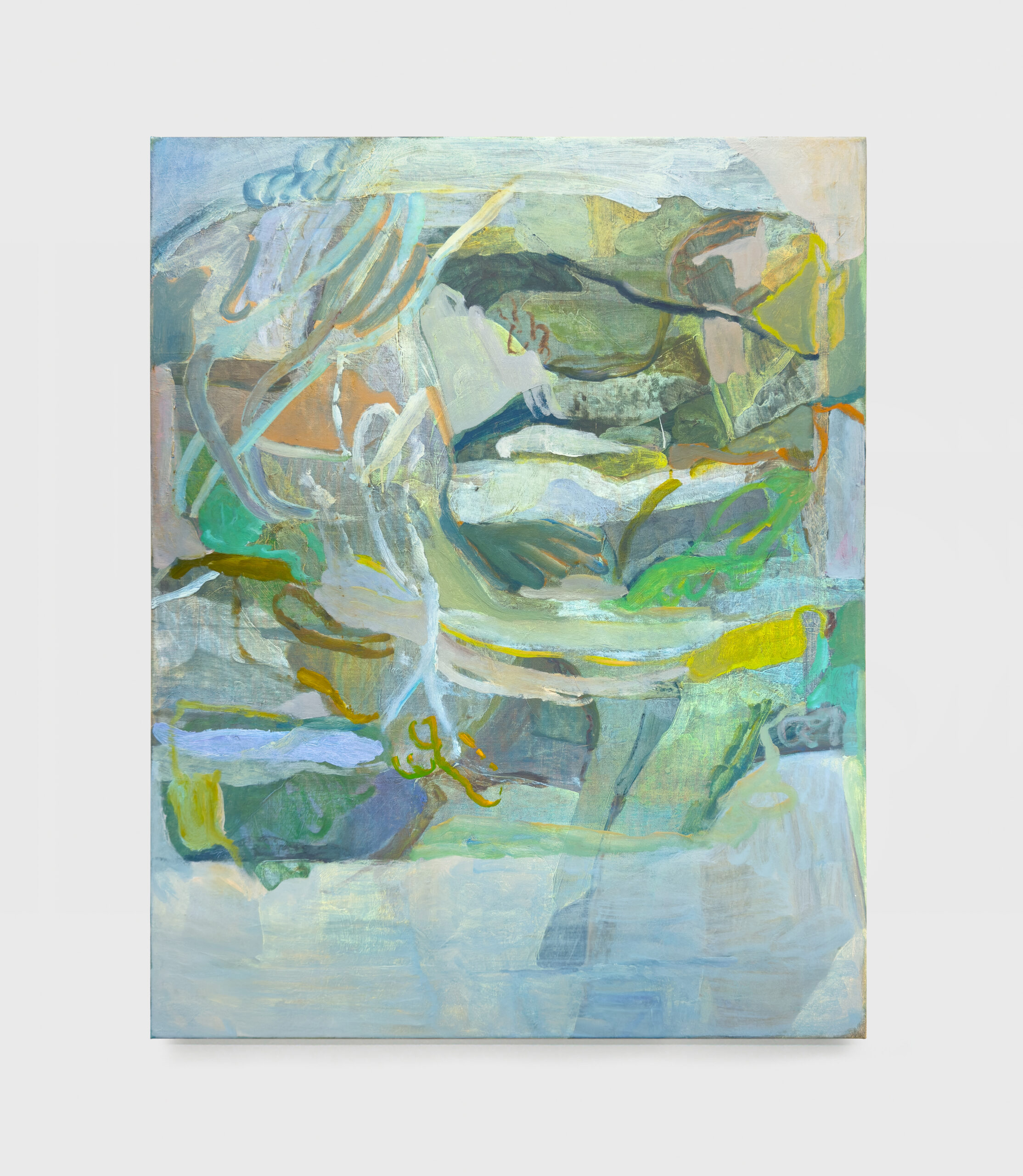
Marina Rolfe, From afar, 2026, oil on linen, 81 x 120 cm. Courtesy of the artist and ARC ONE Gallery
When someone chooses to live with one of your paintings, what do you hope the work continues to offer them over time?
I hope the work continues to unfold over time. I don’t see my paintings as being immediately legible; they can be experienced differently depending on how long you spend with them. Forms might appear and disappear, or certain areas might come forward at different moments. So I hope the work creates a space for ongoing looking, something that remains open and continues to shift over time.
Rolfe’s exhibition The edge of holding at ARC ONE Gallery runs from 15 April until 23 May, with the opening reception taking place on Saturday 18 April 2-4pm.
@marinarolfe
@arconegallery
arcone.com.au
Monica Rani Rudhar transforms jewellery and heirlooms into vessels of memory, tracing the intimate threads between migration, identity and belonging. Ahead of her inclusion in The Biennale of Sydney, we spoke with Monica on weaving family mythology with colonial critique, inviting audiences into tender conversations about inheritance and home, and what she’s looking forward to exploring in 2026.

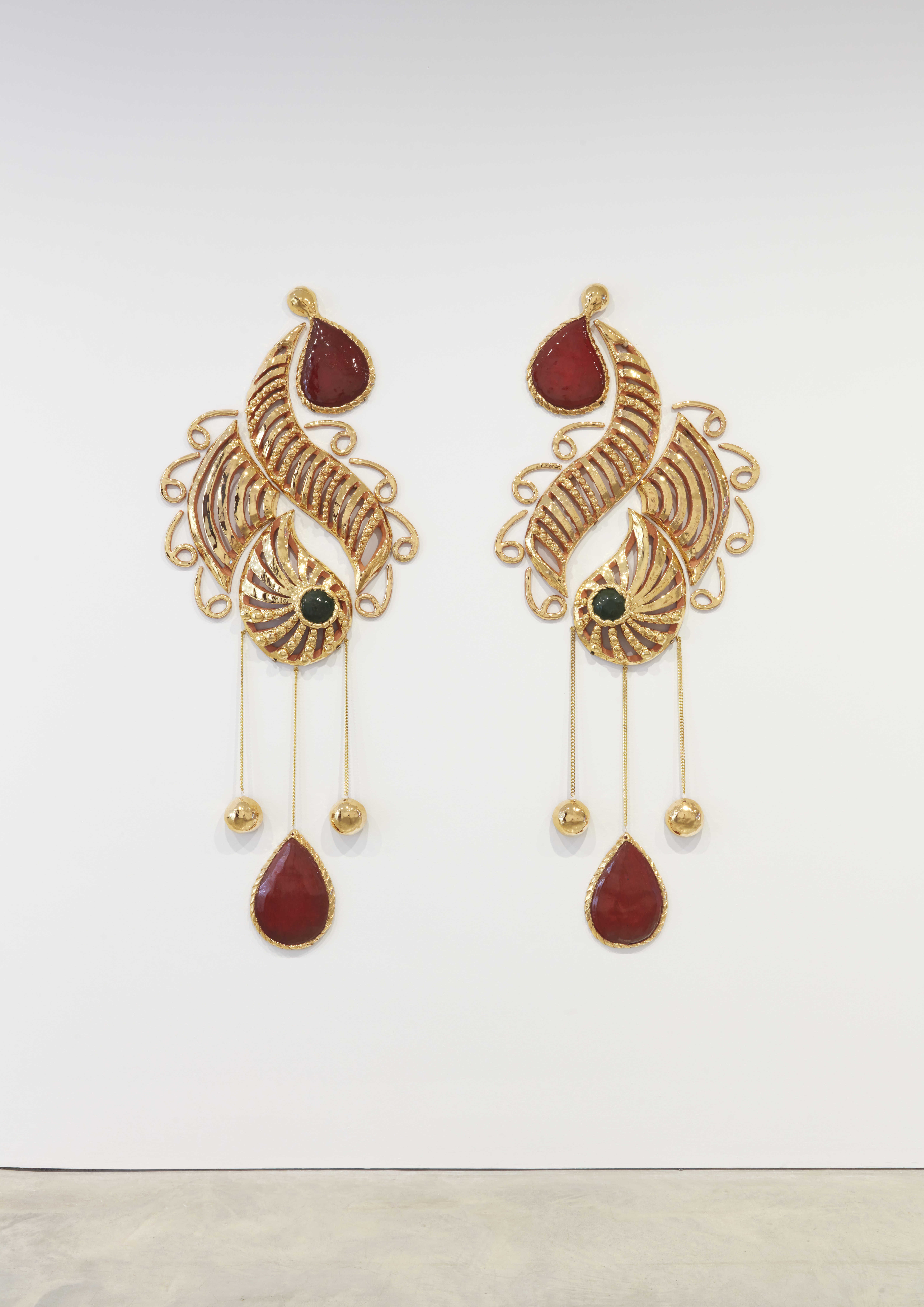
Monica Rani Rudhar, Daughter Of The Same House, 2021, Terracotta, glaze, lustre, dimensions variable. Photo: Docqment.
Objects such as jewellery and heirlooms recur throughout your practice. Can you speak about their significance and the role they play in your work?
I am very interested in the ways jewellery and heirlooms store inherited memory, acting as tangible links to my cultural homelands and family members who have passed. Using them in my work as relics that preserve personal histories creates an entry point into exploring my own personal family histories. For me, objects and heirlooms have played an important role in shaping my identity as an Indian Romanian Australian. As worn on the body, they have helped me in my journey in owning who I am, and being proud of my rich heritage, whilst being brought up in a space where I didn’t feel like I belonged.

Monica Rani Rudhar, Earrings That My Mother Kept For Me, MCA Primavera Installation View, 2024. Photo: Zan Wimberley.
Your practice often engages with cultural identity and family history. How has growing up between Indian and Romanian heritage shaped the themes and questions you explore in your art?
It’s really defined who I am as a person. I think having a multi-racial upbringing is super special, but I definitely think there is more to negotiate in order to belong. Sometimes I feel like I belong to neither side, and instead exist in what many people call this third space. It’s so much more common now, as a lot of children of migrants in my generation are grappling with similar feelings, where you feel like a bit of an imposter because you can’t speak the language of your ancestors. I explore ideas around cultural commodification, racial inequality, authenticity, migration and memory, so really a lot of my work is about belonging and what it means to belong in the context of Australia.

Monica Rani Rudhar, Performance View, Mother Of Millions On Whitford Road, Live dreams Distance, Carriageworks, 2022. Photo: Alex Davies
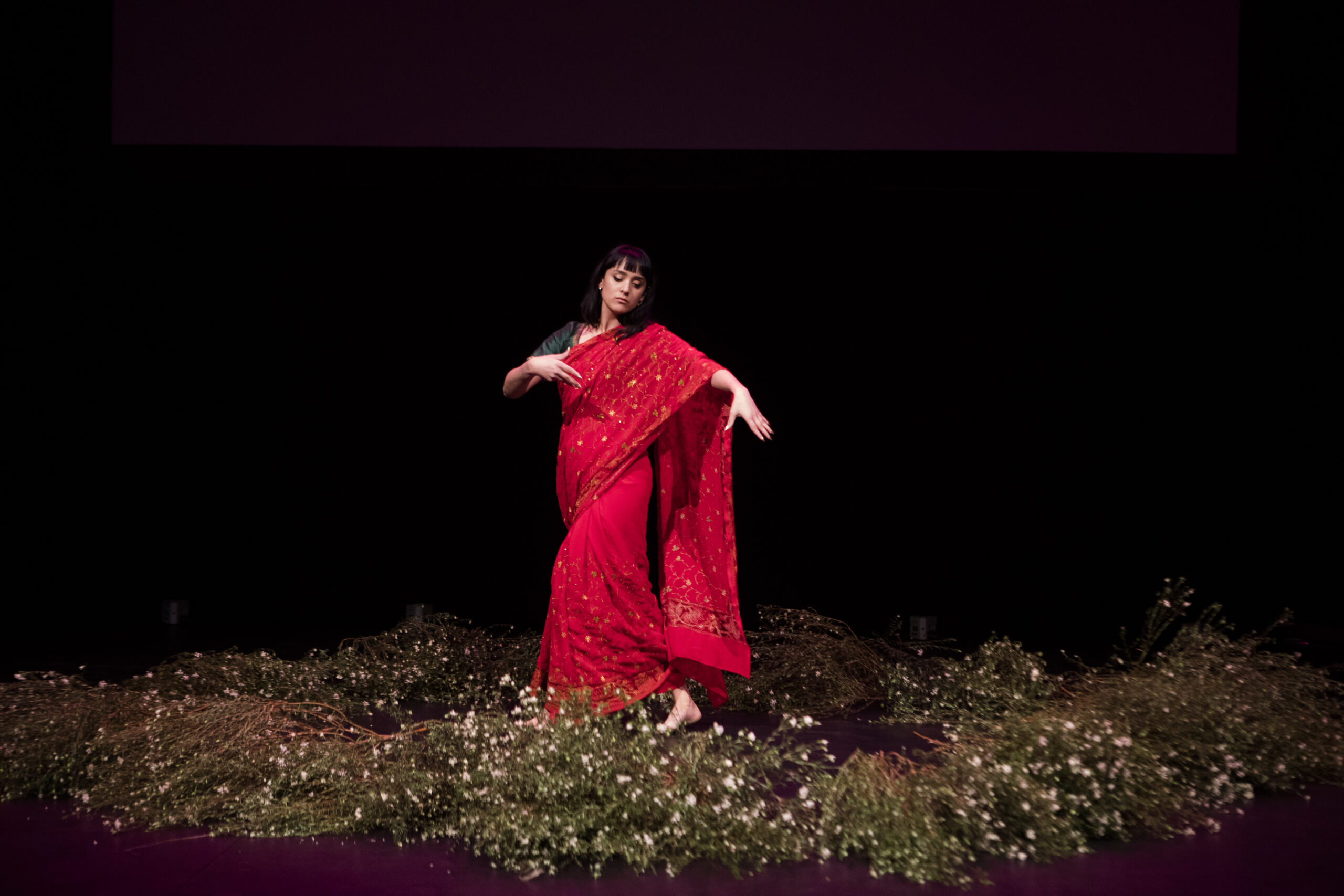
Much of your work draws on personal and familial narratives. What is your process for translating these stories into visual and sculptural forms?
I feel like most of the research I do for the making of my work comes from talking to my parents. For me, my parents feel like a connecting bridge to this imagined idea of a place that I’ve created in my head. Perhaps it’s a little more romanticised, like all good family stories are, and I really do feel like they sometimes function as a type of family mythology. Often, I’ll be calling up my mum or dad to get more details and a better context for certain stories. In my video works, I create nostalgic, non-linear storylines that resemble the way histories are told and stored. I often sketch scenes in pencil or create mood boards to translate what is inside my head. Often these scenes are close-up depictions or re-enactments that have been stitched together, accompanied by a narration or just a musical score. In my sculptures, often the stories are a little more embedded and less obvious, but often start out with many sketches and little studies. If I am working on family heirlooms, I like to work off a photo that my parents have sent to me on my phone, which may seem a little bit odd, but I like that there is a bit of a barrier or a degree of separation from the object. It leaves me the opportunity to interpret the object in my own way, kind of emulating the way we receive stories, how maybe there are parts that we need to fill in ourselves because we don’t have the full picture.

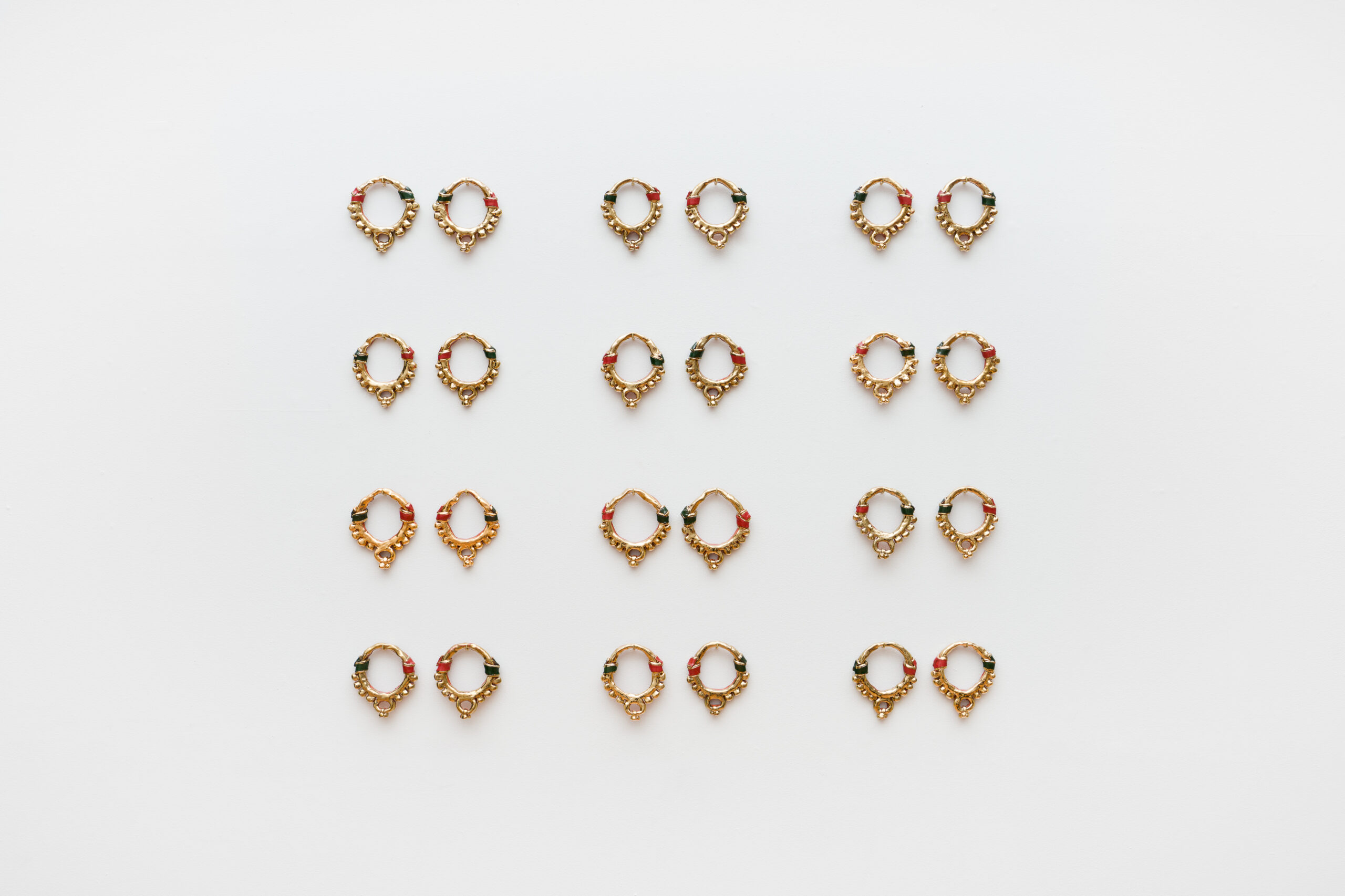
Monica Rani Rudhar, Hoops That My Once Belonged To My Mother, 2022. Photo: Docqment
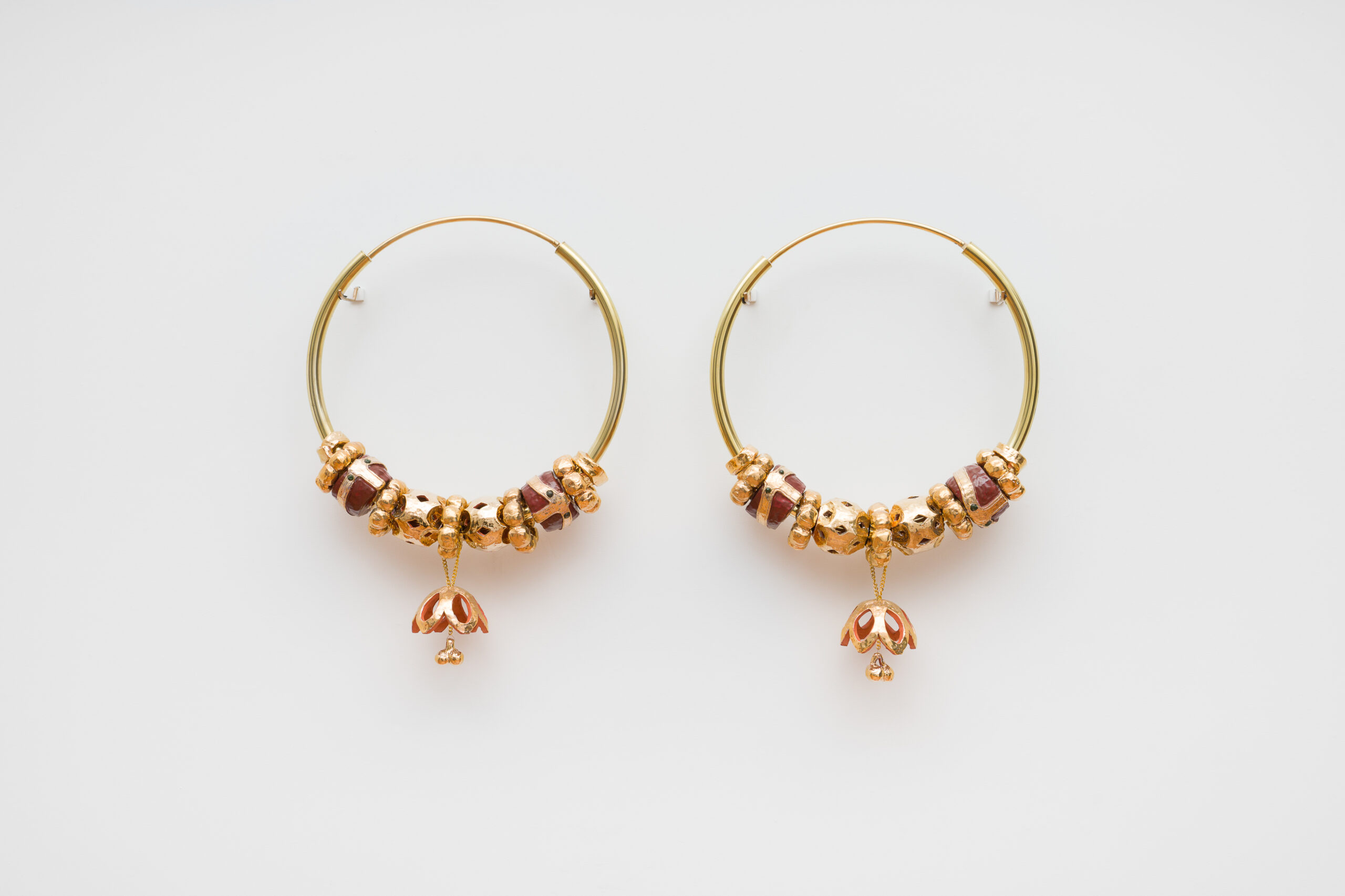
For the Biennale of Sydney, your new work engages with colonial legacies, trauma, and resistance. What conversations or reflections do you hope this project invites from audiences?
I hope my work invites audiences to reflect on the complex legacies of colonialism and how they continue to shape personal and collective identities. I want the work to encourage conversations about inherited legacies and how strength and knowledge are carried across generations. I want people to reflect on our collective responsibility in the face of racial injustice and colonial violence in our present day.

Installation View. Image courtesy Monica Rani Rudhar.
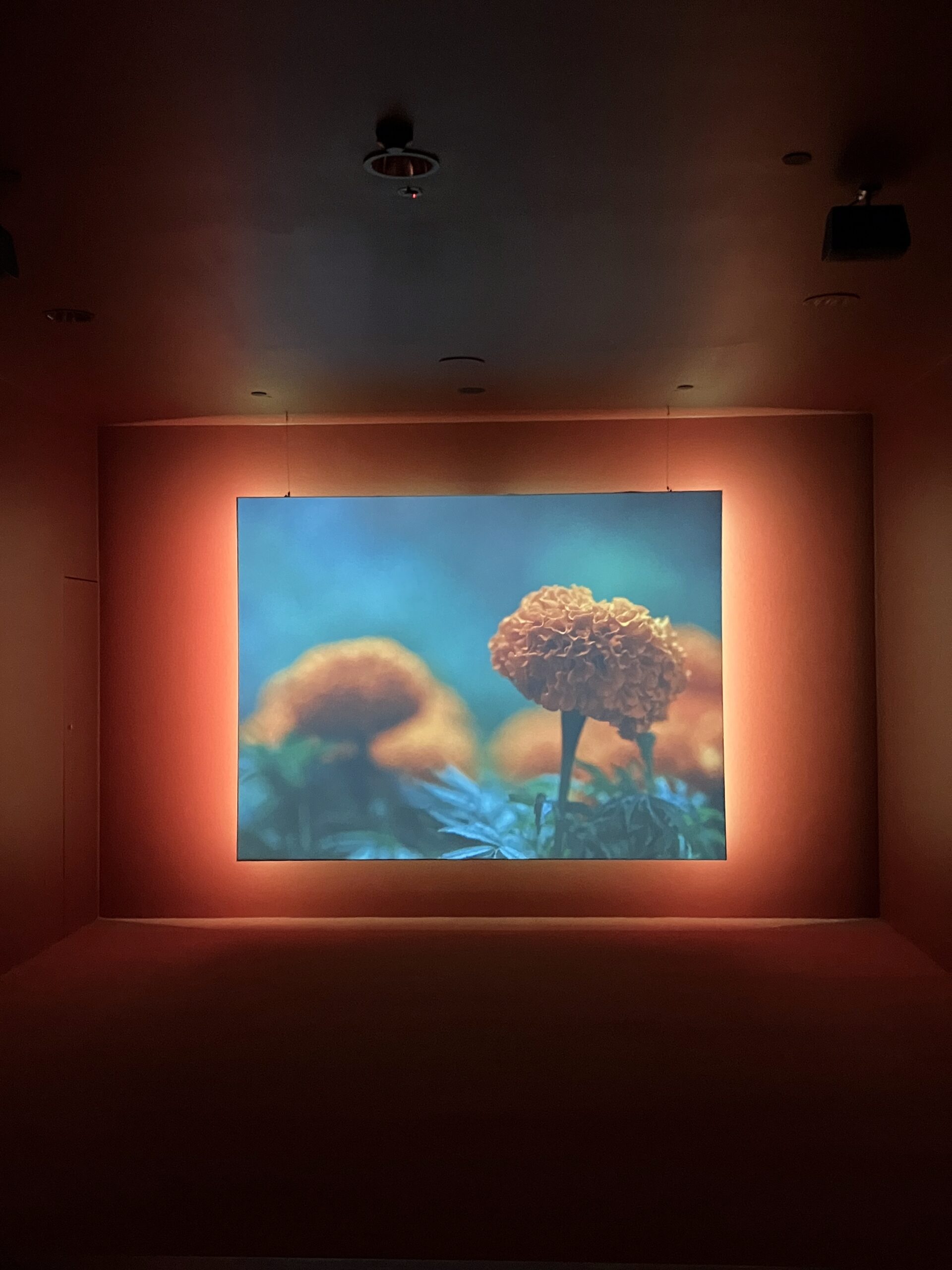
Looking ahead, are there particular projects, collaborations, or mediums you’re excited to explore in 2026?
Yes, absolutely, I’ve been wanting to explore sculpture a little more closely. I’ve got some ideas of artworks that I’ve sketched in my diary from last year that I’ve been itching to make! I’m eager to take a moment away from ceramics and explore new materials. I’m just waiting for a bit of a breather to play and experiment! I’ve got some public artworks that will be unveiled quite soon, both in ceramic and bronze, but I’m hoping it’s not the end and that these projects will propel me forward in being able to create larger and more ambitious works.
The Biennale of Sydney is on from 14 March to 14 June
biennaleofsydney.art
monicaranirudhar.com
Since its founding, Gallery Sally Dan-Cuthbert has championed work at the intersection of art, design, and craft.
We spoke with Director Sally Dan-Cuthbert about the gallery’s philosophy and the ideas behind the current exhibition, ‘Fine Design and Objets d’Art’. The exhibition brings together artists and designers working across function, form and fine art, and considers how collecting becomes an expansive, cross-disciplinary practice.

Installation Image, Fine Design and Object d’Art, Pictured: TibetSydney, Rhoda Ting & Mikkel Bojesen, Sabine Marcelis, Damien Wright, Gallery Sally Dan-Cuthbert, Photography Simon Hewson
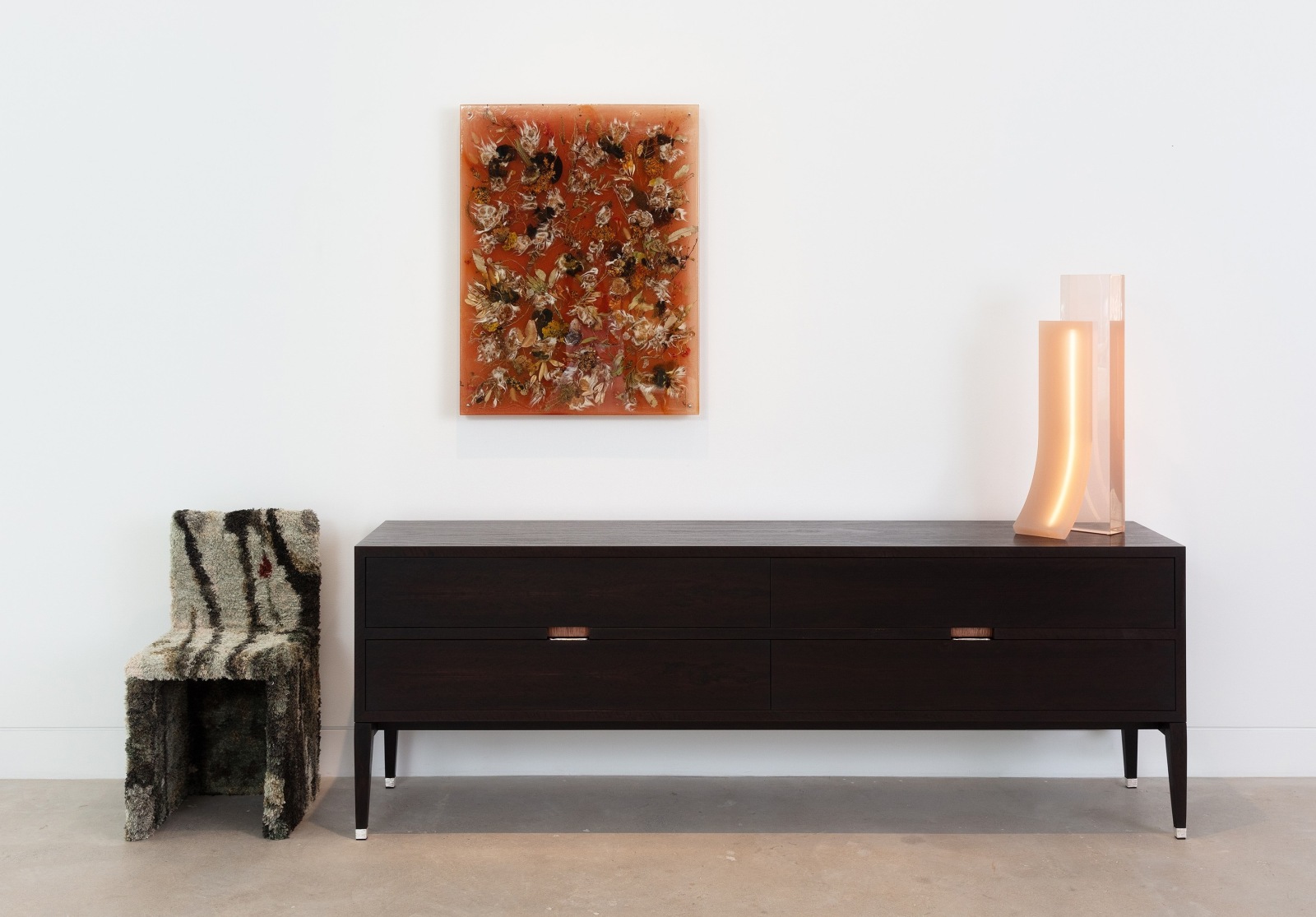
Can you tell us about the founding of Gallery Sally Dan-Cuthbert, what motivated you to establish the gallery?
Gallery Sally Dan-Cuthbert was established in 2019, the first of its kind in Australia to deliver an intergenerational programme of rigorous contemporary art, objets d’art and collectible design by local and international artists and designers.
Our motivation was to deliver a programme that celebrates diverse approaches to media across art and design, with carefully orchestrated intersections of these parallel disciplines. The gallery presents solo exhibitions, alongside curated group exhibitions, and participates in prestigious fairs and festivals internationally.
Importantly, represented artists and designers regularly exhibit in surveys, biennales, and significant thematic exhibitions in notable institutions globally. Their work is collected into important public and private collections around the world.

Prue Venables, Deep blue cadence, 2025, thrown Jingdezhen porcelain, thrown and altered Limoges porcelain, 16 x 28 x 28 cm, 28 x 10 x 8 cm
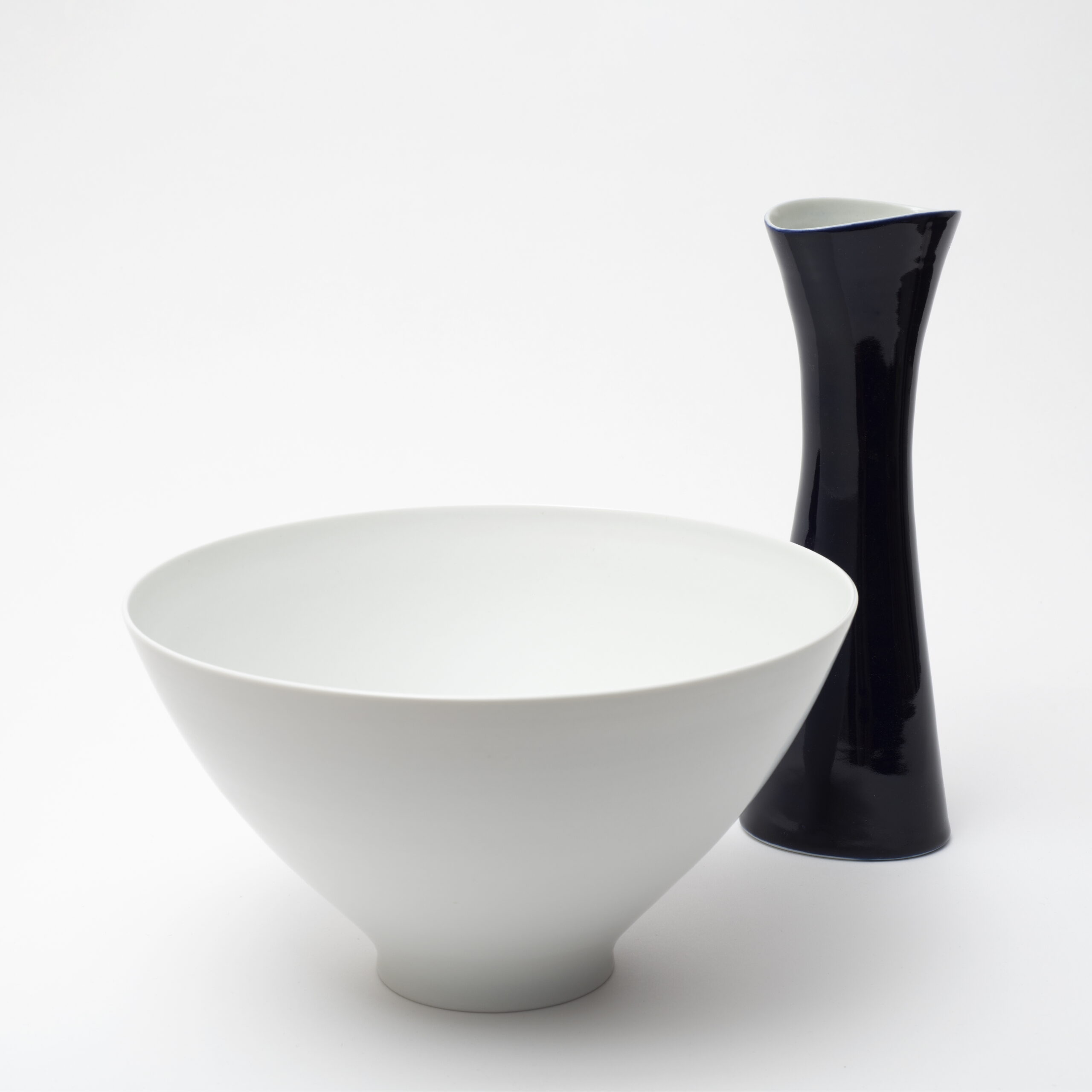
How would you describe the gallery’s philosophy, and how has it evolved since its opening in 2019?
The gallery’s philosophy is to offer collectors and enthusiasts alike an opportunity to engage with contemporary work that honours both innovation and timeless quality. Incorporating all the visual arts: painting, photography, film, textiles, ceramics and sculpture together with refined functional pieces. We present work that blurs the traditional boundaries between disciplines.
The philosophy remains the same just the roster of represented artist and opportunities has grown significantly.
 Sabine Marcelis, Slide Light, Toffee, 2023-ongoing, cast resin, LED, 70 x 20 x 26 cm, Edition of 8 plus 2 AP
 Sabine Marcelis, Slide Light, Toffee, 2023-ongoing, cast resin, LED, 70 x 20 x 26 cm, Edition of 8 plus 2 AP
Your upcoming exhibition brings together design and objects. How does ‘Fine Design and Objets d’art’ reflect the gallery’s mission to bridge contemporary art and collectible design?
Fine Design and Objets d’Art is a carefully curated exhibition celebrating the intersection of artistic excellence and functional beauty. Bringing together gallery artists from around the world, this exhibition showcases practitioners working at the pinnacle of their respective fields, each pushing the boundaries of art, objects, and design with distinctive vision and mastery.

Installation Image, Fine Design and Object d’Art, Pictured: Izabela Pluta, Prue Venables, Edward Waring, Tibet Sydney, Gallery Sally Dan-Cuthbert, Photography Simon Hewson.
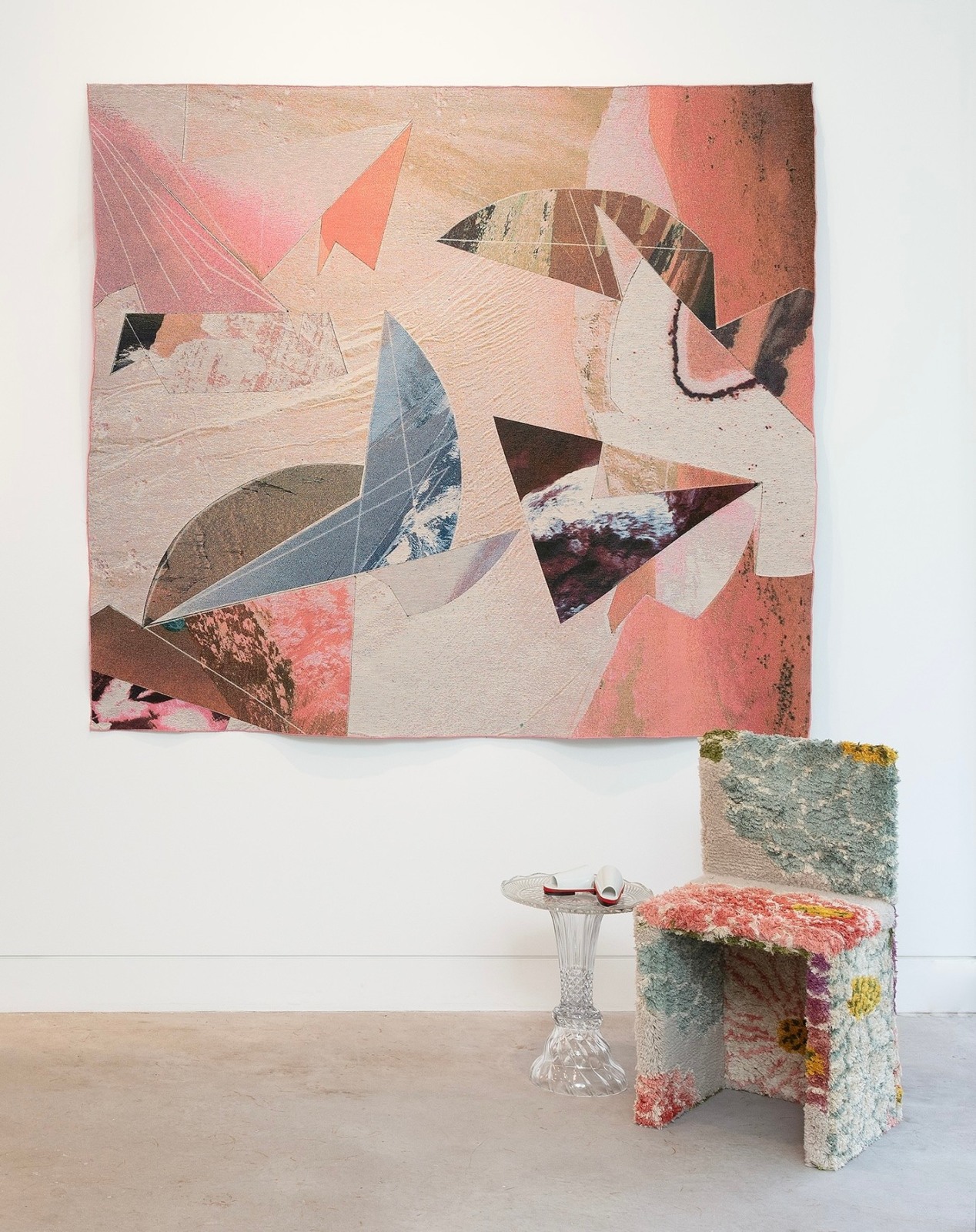
What conversations or reflections do you hope people take from ‘Fine Design and Object d’art’?
The exhibition invites a return to the thoughtful, holistic approach to living with art, the ethos of the gallery. It revives the spirit of a golden age when artists of all disciplines coalesced, and homes were layered with carefully chosen pieces, where collections reflected the full spectrum of creative expression beyond paintings alone. These artists share a commitment to exceptional craft and conceptual rigour, creating pieces that are as contemplative as they are exquisitely made.
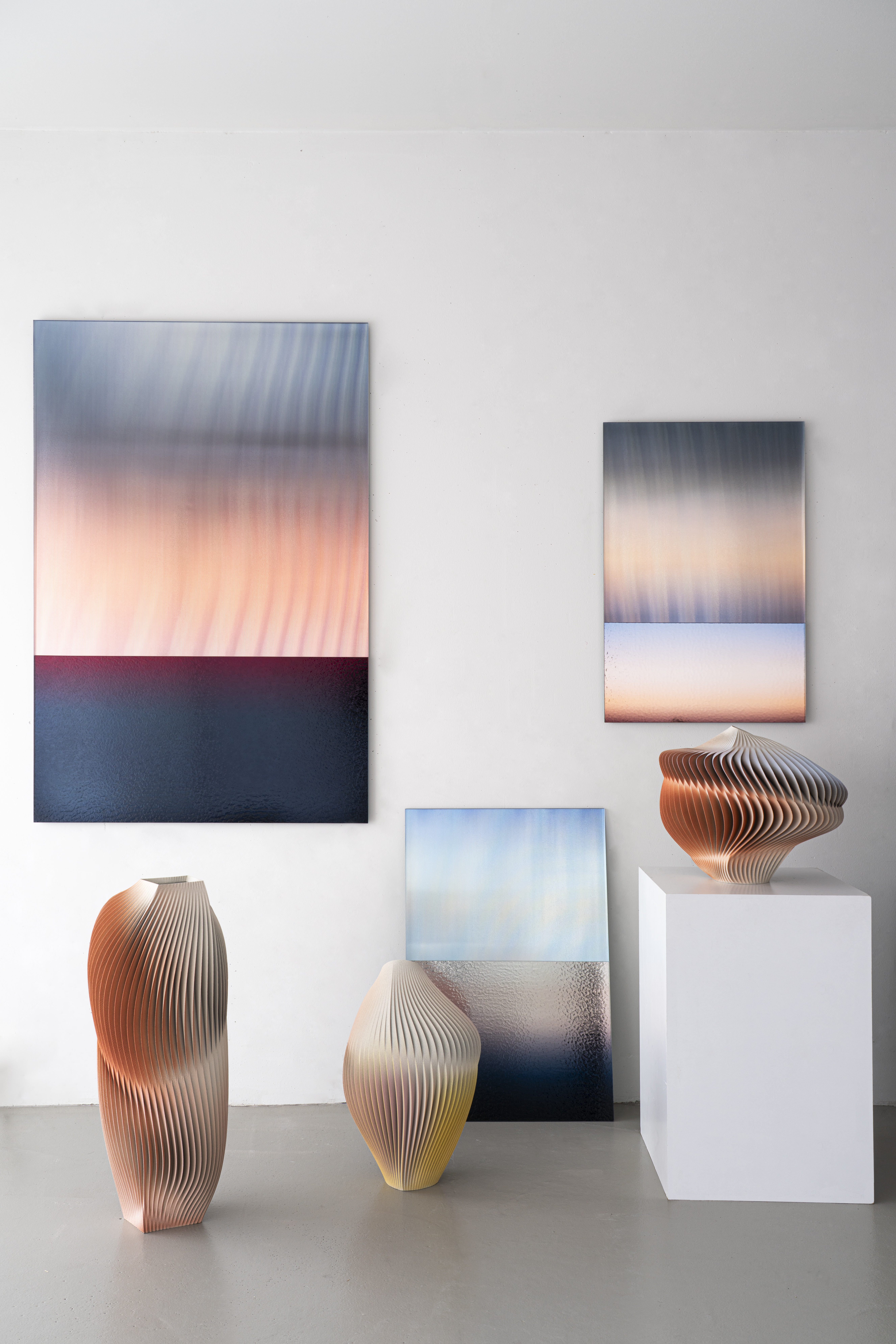
Looking ahead, what exhibitions, collaborations, or projects are you most excited about, and what can audiences look forward to from the gallery in the coming year?
Fine Design and Objets d’Art sets an inspiring tone for the gallery’s year ahead. In March, we present Tammy Kanat’s debut, solo exhibition, followed by rising star, Olive Gill-Hille’s third solo exhibition. Straight after her opening at the NGV with Cartier, Sabine Marcelis presents exquisite new art and design pieces in the gallery in June. In the second half of the year, we present female doyens of Australian art – new paintings by Sally Smart, then Gabo: light works by Donna Marcus, and the gallery’s much anticipated, first solo exhibition by Loewe Foundation Craft Prize finalist, Prue Venables.
The gallery will also participate in major fairs, including Sydney Contemporary and Aotearoa Art Fair. We have artists participating in important local and international museum exhibitions and biennales. We are excited that a number of major public works and private commissions will also come to fruition.
Critically, we look forward to continuing our engagement in and out of the gallery in deep and meaningful ways with our artists, curators, writers and collectors to support the broader arts community.
Fine Design and Objets d’Art continues until 8 March
@gallerysallydancuthbert
sallydancuthbert.com
Curator Tim Riley Walsh unpacks Primavera 2025 as a charged snapshot of the present. Blending research and curiosity, we discuss an exhibition shaped by material intensity and the strange distances of life in a digital, post-industrial world.
Featuring five emerging artists from across Australia, Primavera becomes a site of friction and feeling, where sculpture, ambivalence, and making take centre stage.
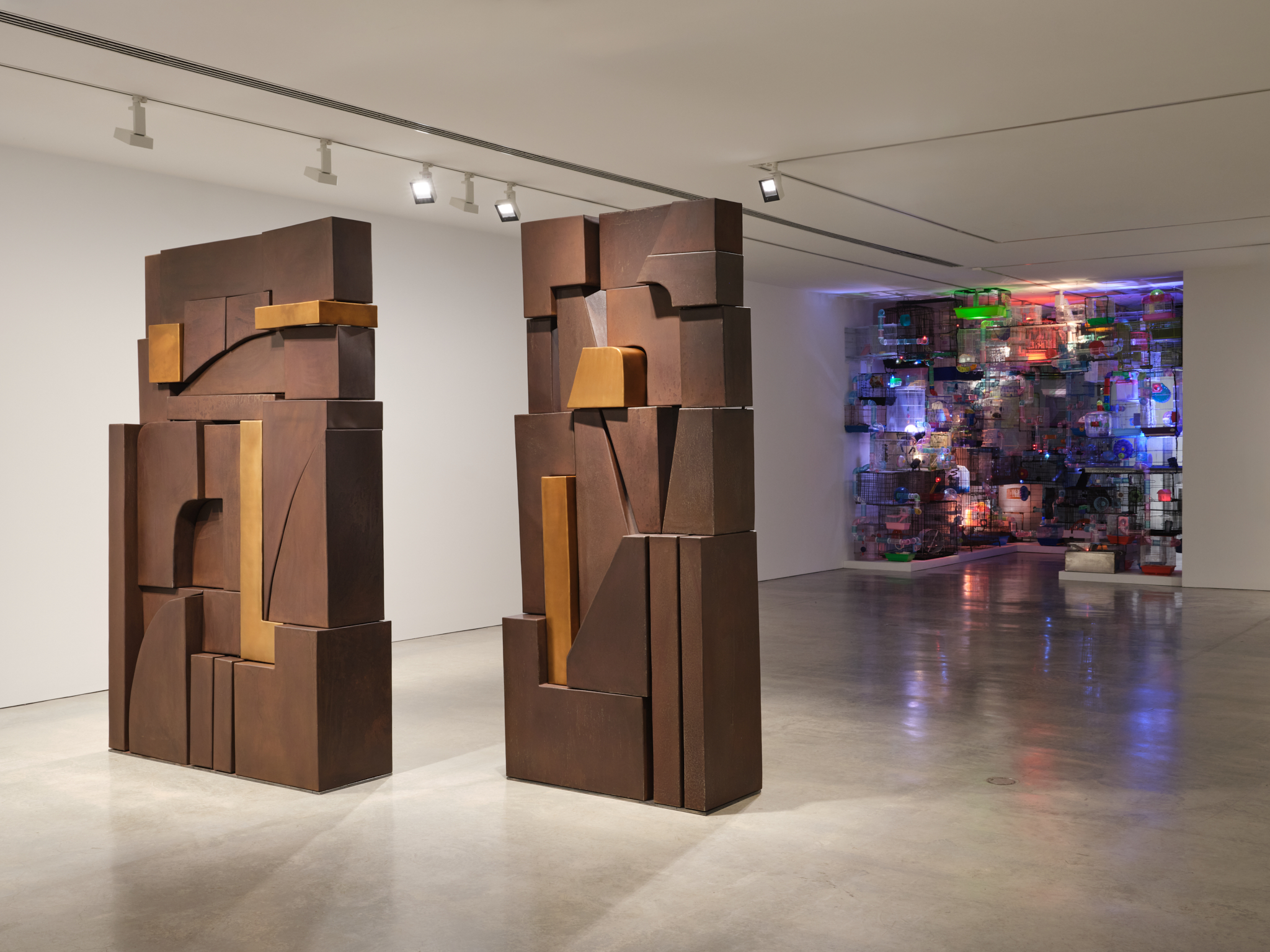
Installation View, Primavera 2025: Augusta Vinall Richardson (front), Emmaline Zanelli (rear). Image: Hamish McIntosh.
How would you best describe this year’s Primavera?
Primavera is an exhibition series that began at the MCA Australia in 1992 – it has an incredible legacy. Over 250 artists have exhibited. 30 curators have participated. The series has an engrained rhythm and remit: annually celebrating young Australian artists 35 years or under.
This year’s Primavera features five artists: Francis Carmody (NSW/VIC), Alexandra Peters (VIC), Augusta Vinall Richardson (VIC), Keemon Williams (QLD), and Emmaline Zanelli (SA). The exhibition reflects what young artists are concerned with right now: labour, extraction, technology, the digital and production. But this exhibition is also strongly materially-focused, even fixated. There is an industrial quality to many of the works, it is a very physical exhibition. It is overtly a celebration of what I see as a renewed interest in sculpture and installation.
Mood is something I increasingly want to express in the exhibitions I curate. I’ll defer to some of the descriptions of this exhibition shared with me by others: brutalist, ominous, and muscular. A colleague summarised the overriding sensation as being ruled by distance and removal – which sits in contradiction with these artworks’ physical immediacy. Ambivalence interests me greatly as a person. I think that is where a lot of magic is found.
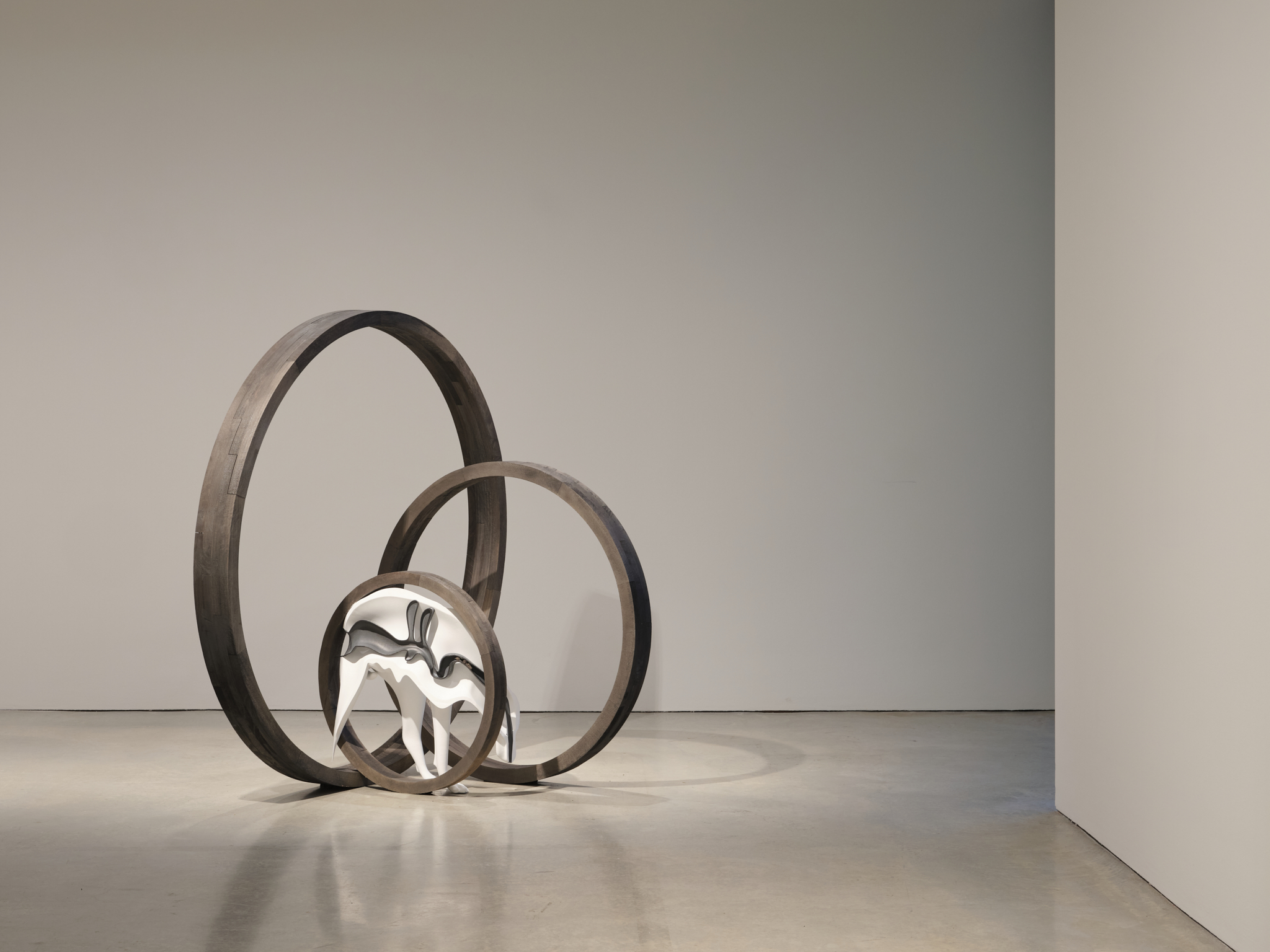
Francis Carmody, Canine Trap (I), 2025. Image: Hamish McIntosh
How did you approach the exhibition development?
I come from an academic background, trained in art history, but grew up in an artistic household. I’d like to think I blend the qualities of both in my curatorial approach.
My process is initially largely instinctive. It is focused on the contemporary. The impetus for my projects emerges from everyday life – the news, literature, popular culture, and of course, art. They begin with what I’d call suspicions. Often about how human behaviour and the world might be changing. I then go out and test this instinct. I observe how current events and actions might confirm or challenge it. From there, I do deeper research into its genealogy to understand where it grew from.
The art might key into the outcomes of my suspicion closely, or it might disagree with it entirely. The exhibition bottles all of that friction and presents it.
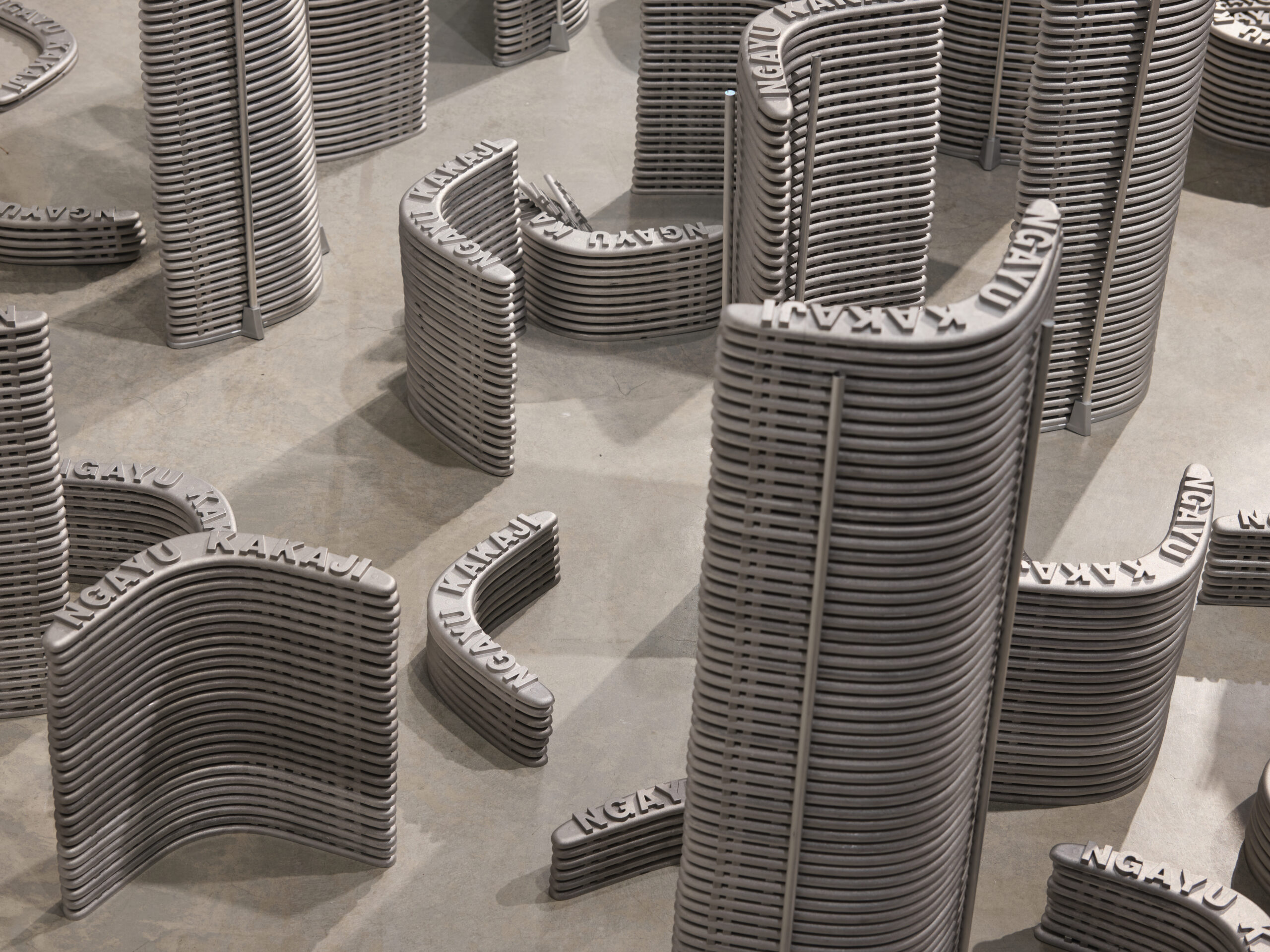
Keemon Williams, Business is Booming (detail), 2025, installation view. Image: Hamish McIntosh
This year’s Primavera focuses on making in a “digital and post-industrial era.” What drew you to this theme, and why do you feel it speaks strongly to the experience of young Australian artists today?
I think what sets apart a single exhibition in a long-running exhibition series like this is its point of view, a sense of cut-through. My leading suspicion in Primavera was what I was calling ‘industrial abstraction’. That the objects that structure our lives today are becoming more mysterious to us, how they are made and function – think of the iPhone for example – and that this state of distance is, in multiple senses, manufactured.
The post-industrial era isn’t new – some might even feel it’s a little outdated. I’m curious how its conditions have changed and its level of visibility. It is not unusual to go through a day now and not make anything new in physical space. If we do produce something ‘new’, it is more often immaterial. A playlist. A carousel of images. A vibe.
I was drawn to the idea of industry because it has strong connections to themes in art history. The factory and production, their ties to pop art and constructivism. Thus, the exhibition features a lot of seriality, for obvious reasons. But I was also drawn to the idea because I feel the distance from making myself. I hope the feeling is relatable too.
Artists are especially sensitive towards the world. As a species, humans understand through knowing a thing’s components or ingredients. Artists make every day – and so I turn to them and their art for guidance through the present.
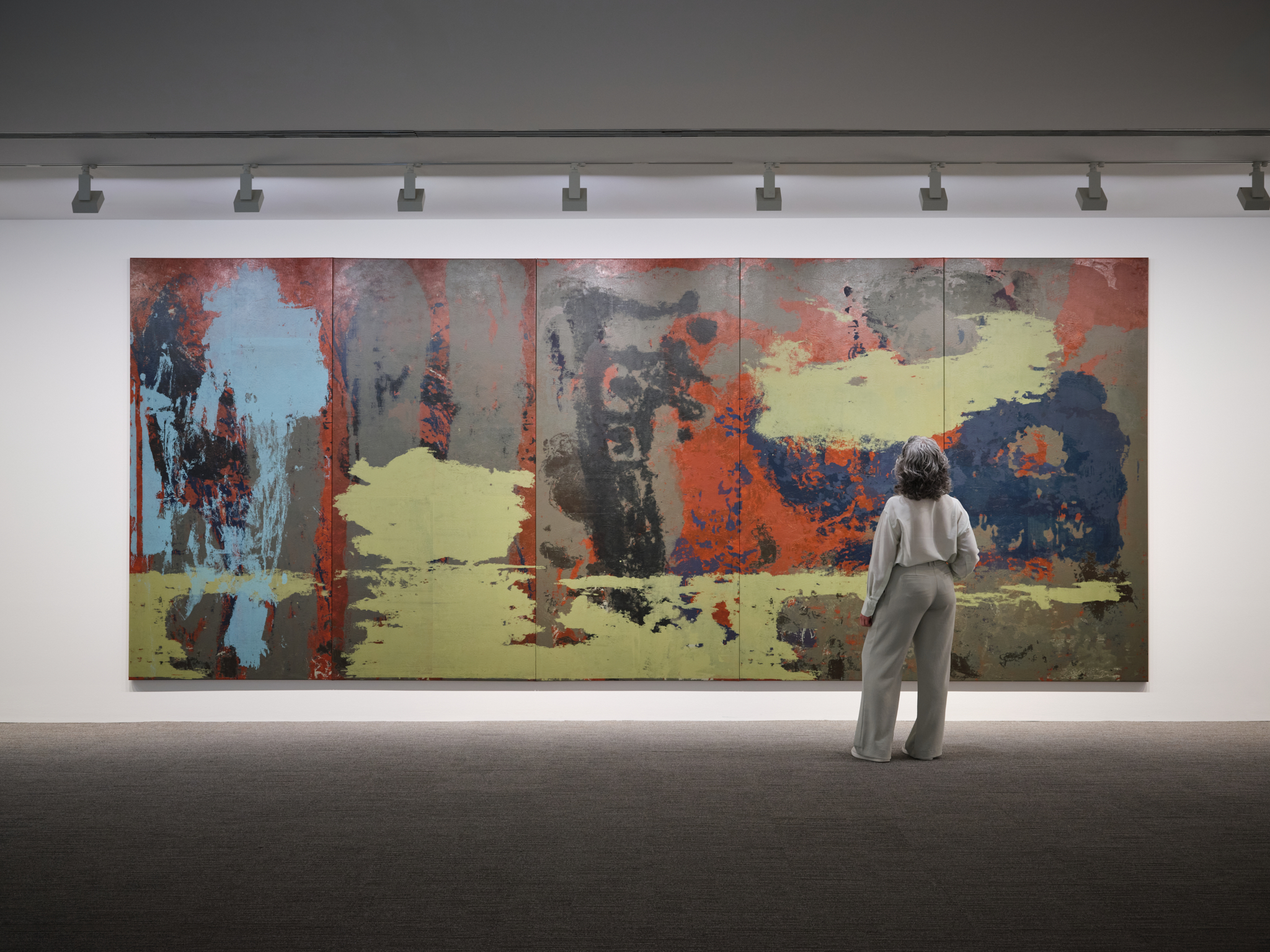
Alexandra Peters, Defenestration (Autoantibodies) as part of The Infinite Image, 2025, installation view. Image: Hamish McIntosh
The show includes artists from several states and very different cultural contexts. What tensions or surprising connections emerged as you researched and met with artists across the country?
On a practical level, Primavera is grounded in a concentrated period of research travel around the country. I met with over 50 artists across seven states.
A studio visit can be an amazing thing. Artists are so open. A lot developed through these encounters and my preconceptions being overturned or troubled. An artist list for the exhibition then starts to emerge from there: which artists might work well in dialogue, but also as counterpoints or even in friction. The promise of what an artist might make or where their energy is currently directed excites me.
Mustering all of those forces and then directing them towards their realisation on opening day is a wild, joyous ride.
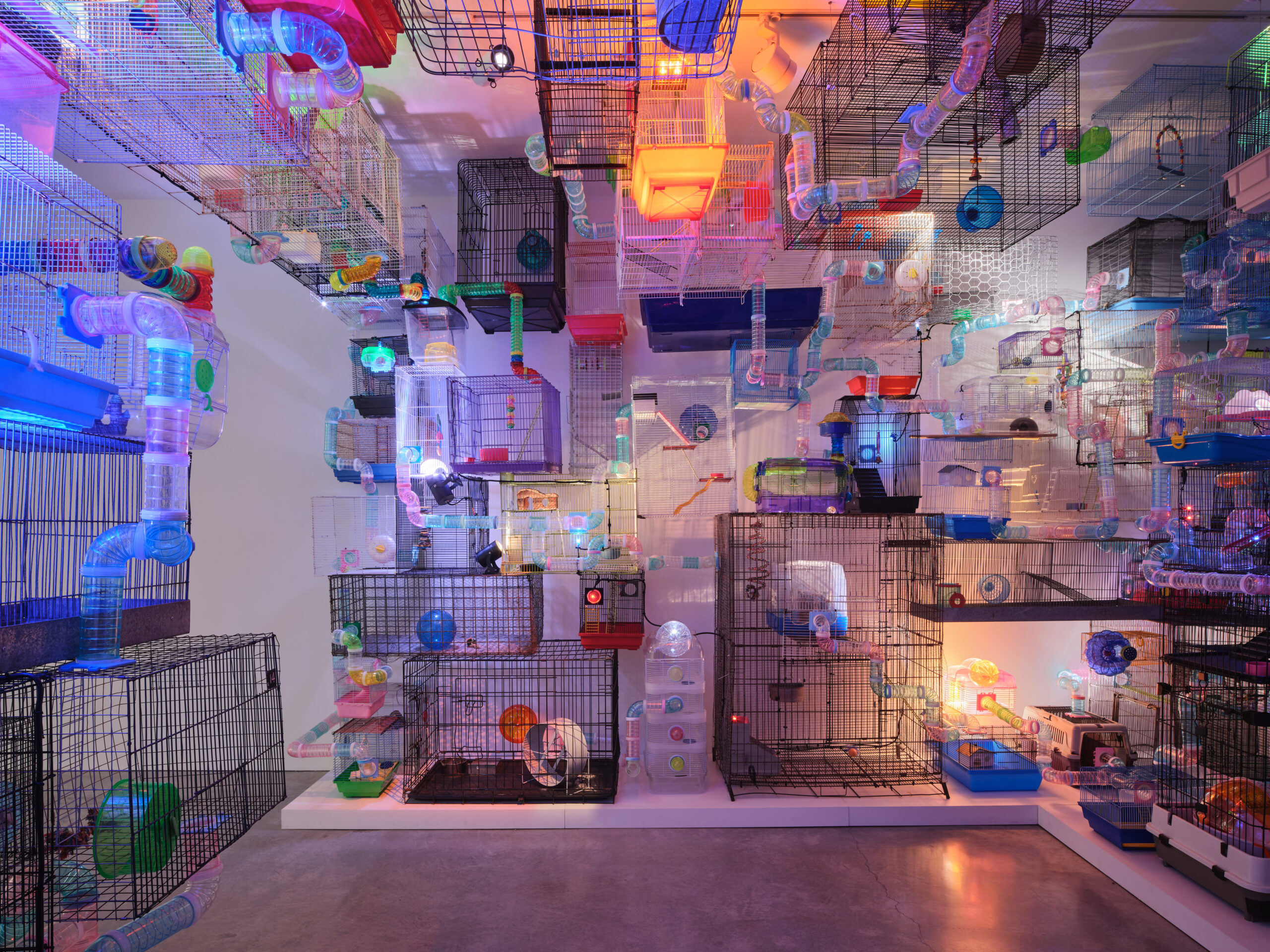
Emmaline Zanelli, Magic Cave, 2024/2025, installation view. Image: Hamish McIntosh
What do you hope audiences will take away from Primavera 2025?
The vitality of contemporary Australian art and the innovation of the young artists in this place. Hopefully a sense of confidence in the ongoing relevance of art to reflect the present. That it makes visible something which has been clouded. That it resonates with a feeling they might have about their own worldview right now.
Primavera 2025: Young Australian Artists continues Museum of Contemporary Art Australia, Sydney until 9 March
@mca_australia
@tim.riley.walsh
José is a curator and Director of UNSW Galleries, Sydney. He spends most days looking at art and thinking about exhibition-making.
See José’s selection of must-see museum exhibitions for this summer.
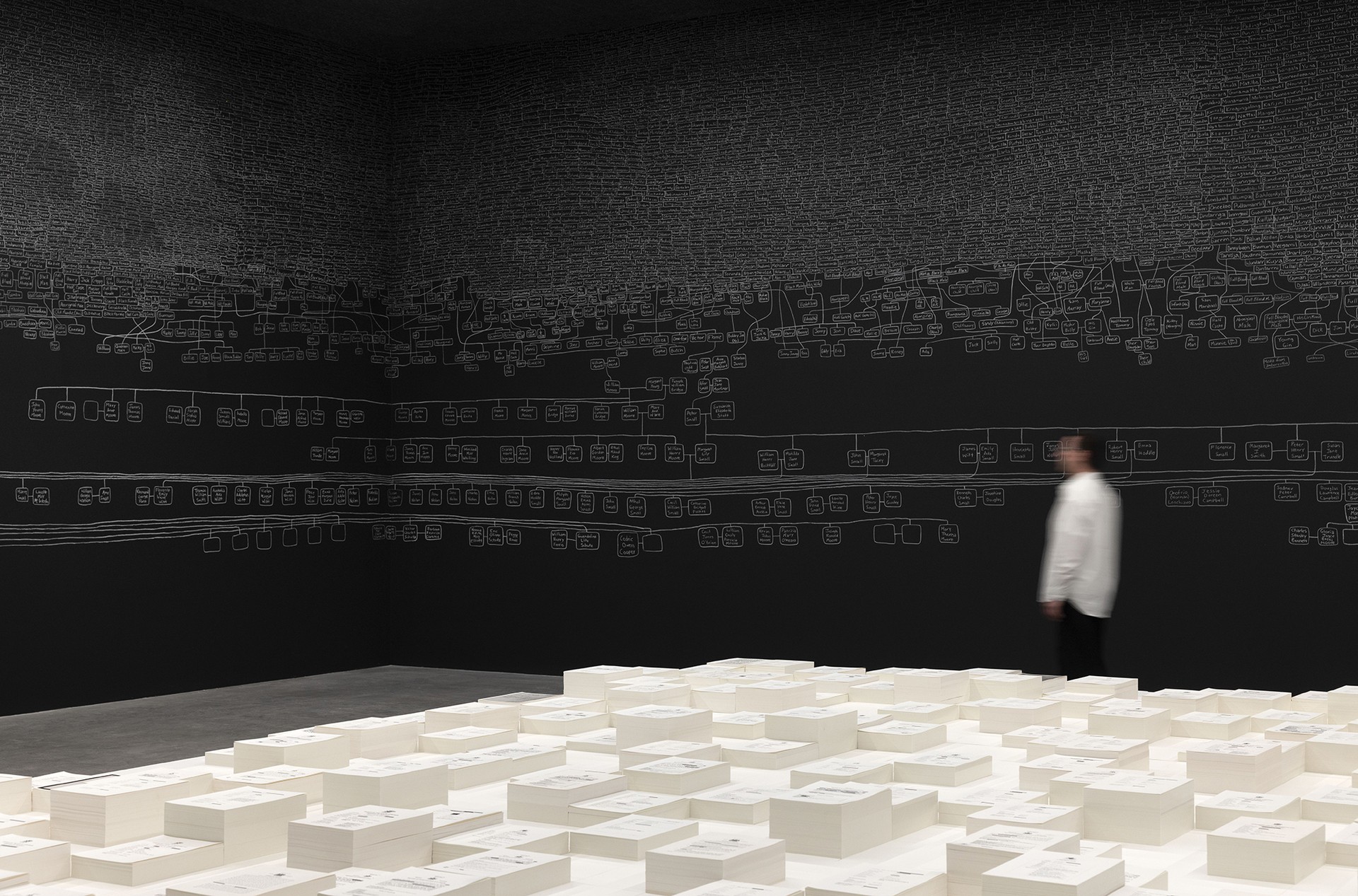
Archie Moore: kith and kin at the Queensland Art Gallery / Gallery of Modern Art, Brisbane
Australia’s Golden Lion-winning pavilion from the 2024 Venice Biennale, curated by Ellie Buttrose, has its triumphant homecoming. A work of immense scope in its mapping of human relations and responsibilities, it is, without question, one of the most defining works of contemporary Australian art. Complementing the exhibition is a terrific display from the QAGOMA Collection that focuses on the artistic gesture of mark-making in recording and sharing expressions of life.
Exhibition runs until 18 October
Meanjin | Brisbane
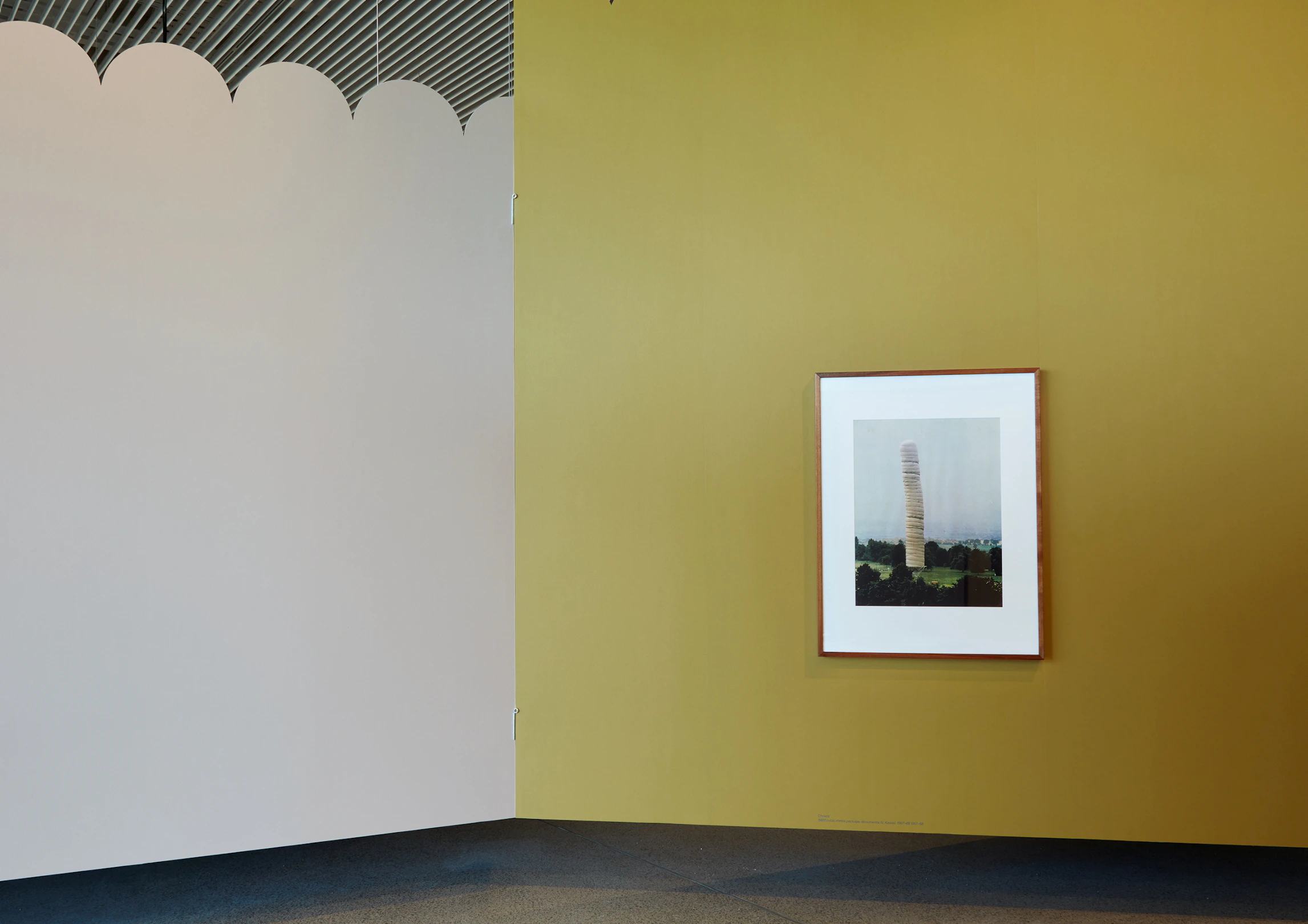
Thomas Demand: The Object Lesson at Art Gallery of New South Wales, Sydney
Don’t miss this exhibition, a masterclass in design and curatorial excellence, which runs until January 11, 2026. It features key international works from the Kaldor Collection, displayed in a specially created space by German artist Thomas Demand. The final week also features performances of musician and composer Jules Reidy’s work ‘Only Above’, made in response to the exhibition.
Exhibition runs until 11 January
Gadgial Land | Sydney
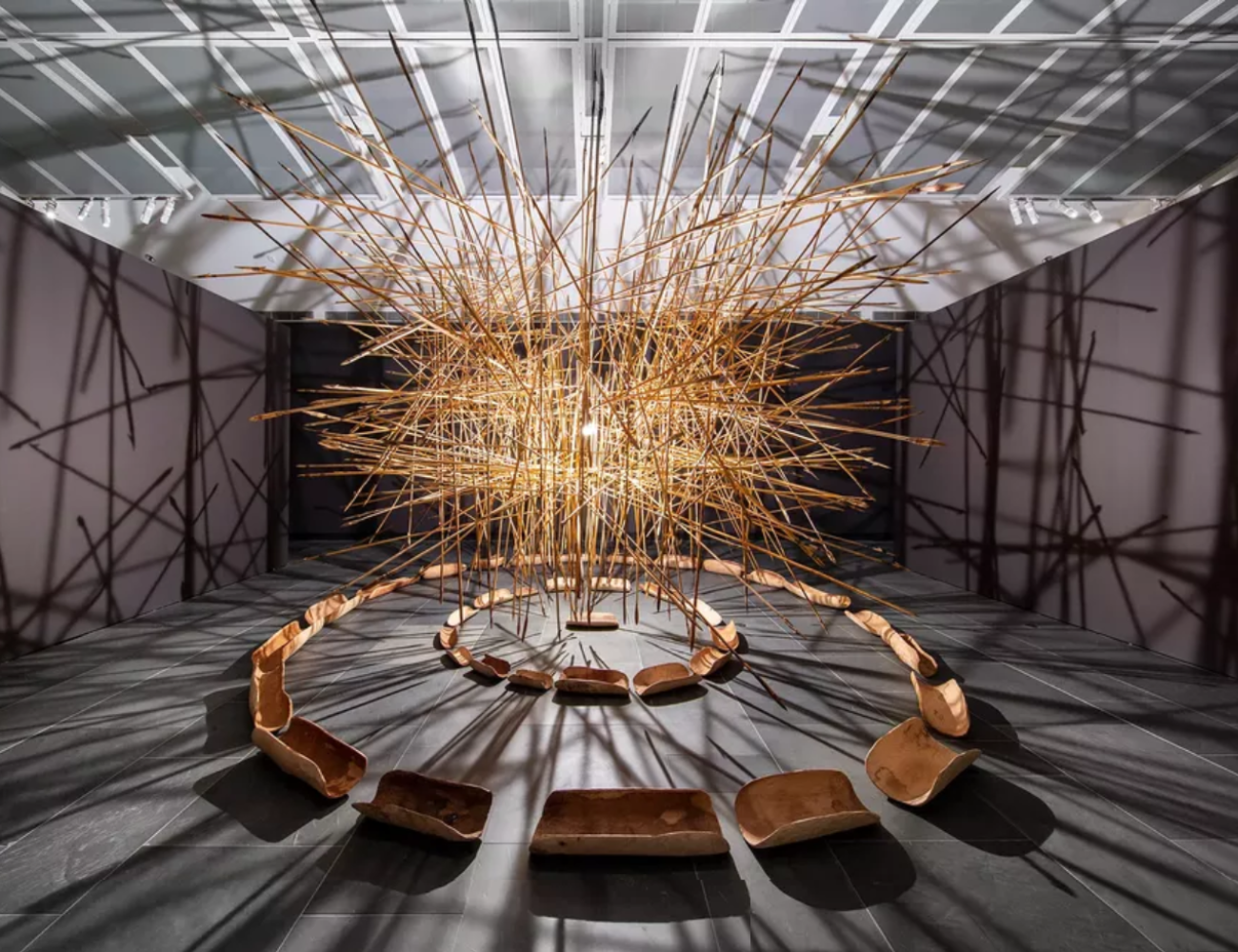
Too Deadly: Ten Years of Tarnanthi at Art Gallery of South Australia, Adelaide
This expansive exhibition recounts a decade of commissioning and acquiring significant works of contemporary Aboriginal and Torres Strait Islander art, and an absolute joy as an exhibition experience. Highlights include the extraordinary paintings of Nyaparu (William) Gardiner and Motorbike Paddy Ngal, alongside the unforgettable installation Kuḻaṯa Tjuṯa featuring 550 spears by artists from the APY Lands in the form of a nuclear explosion.
Exhibition runs until 18 January
Kaurna | Adelaide
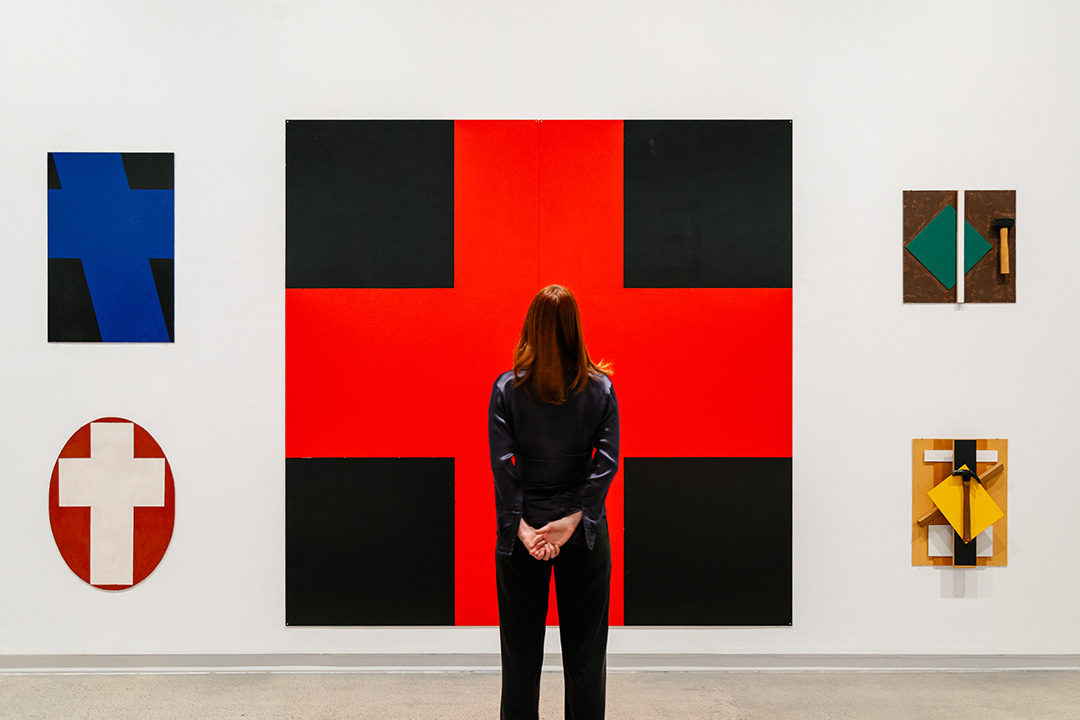
John Nixon: Song of the Earth 1968–2020 at Heide Museum of Modern Art, Melbourne
A remarkable survey of the late Australian artist that celebrates his unwavering commitment to experimentation and engagement with abstraction and radical modernism. Curated with care by the artist’s partner, Sue Cramer, this is a wonderfully spirited exhibition and a reminder of how fantastic it is to see an artist’s practice across time.
Exhibition runs until 9 March
Naarm | Melbourne
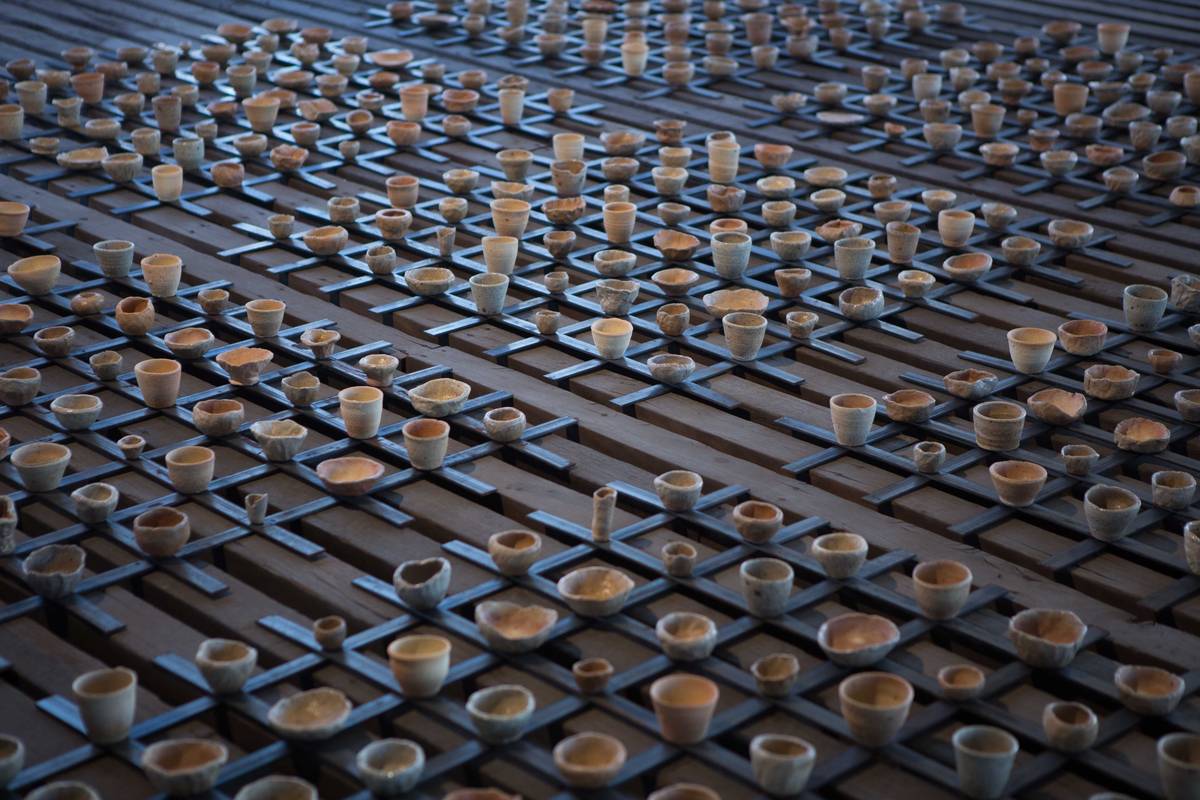
Yasmin Smith – Elemental Life at the Museum of Contemporary Art, Sydney
Curator Jane Devery continues to provide Sydney audiences with beautifully conceived and poetic exhibitions. This survey of Yasmin Smith is another one, celebrating the artist’s fascinating exploration of history, ecology and geology through ceramics, glazes and form.
Exhibition runs until 8 June
Gadigal Land | Sydney
Guided by instinct and a sensitivity to the emotional weight of everyday spaces, Laura Jones’ practice moves between still life, interior, and memory. We spoke to the artist about her current exhibition, Rooms, at CHALK HORSE. In this conversation, she reflects on the slow pull toward a life in art, the ways intuition shapes her painting process, and how Rooms emerged from a period of personal return and recalibration.

Image: Front Window, 2025
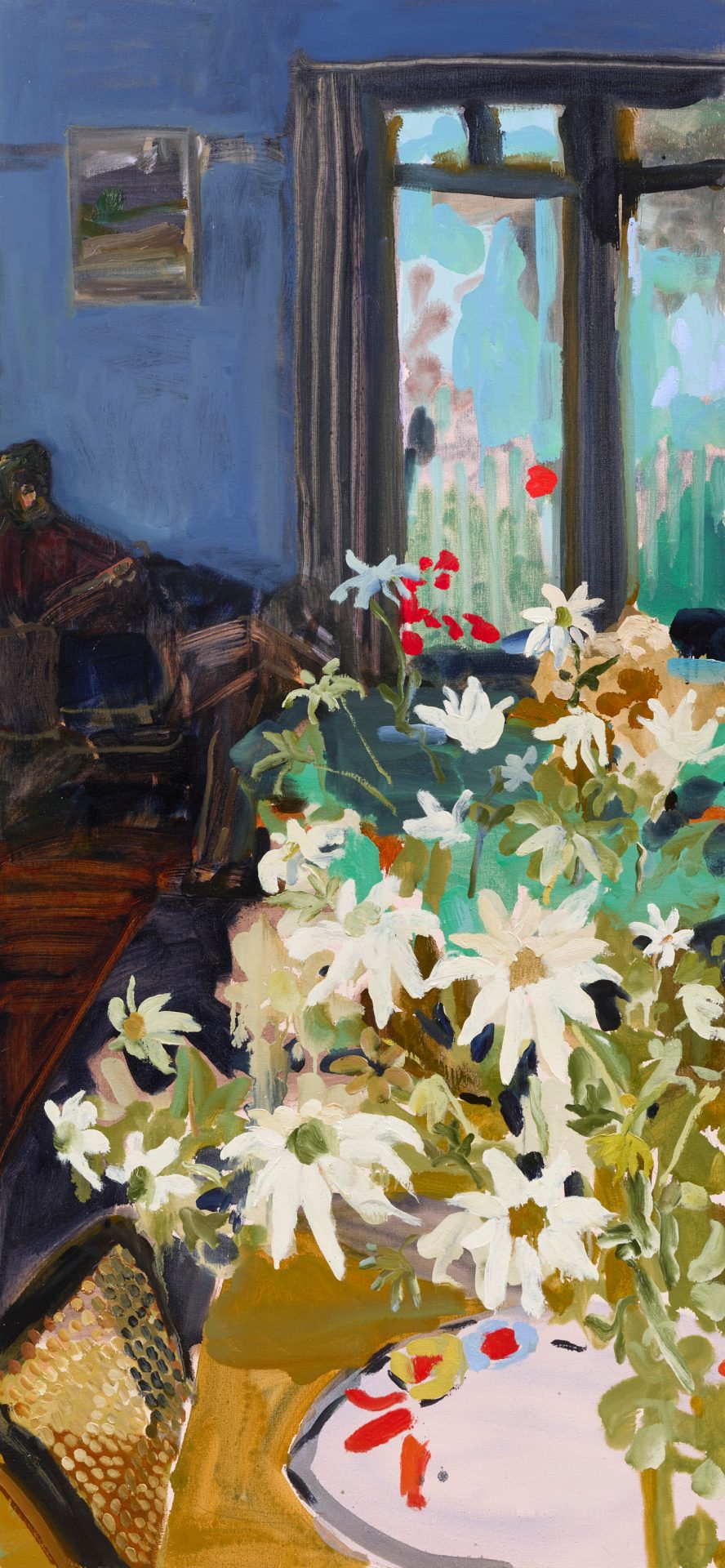
What inspired you to pursue a career in art, and how has your journey as an artist evolved over the years?
It wasn’t an overnight decision to pursue art, but when I was a teenager and young adult figuring out what I wanted to do with my life, I felt a constant and gradual pull towards art. I made decisions that I thought were sensible for my future, but then I couldn’t ignore that I really just needed to try and find a way to make art the centre of my purpose. I finished an arts degree and then decided to enrol in a printmaking masters at UNSW. Funnily enough I met lots of painters in the printmaking department. Seeing how they had studios and lived their lives inspired me to get a studio of my own. Then, I just kept following my gut. I had lots of different part-time jobs, and there were many years where I did a bit of everything, but art became my main purpose and I was determined to pursue it full-time.

Image: Mirror View, 2025
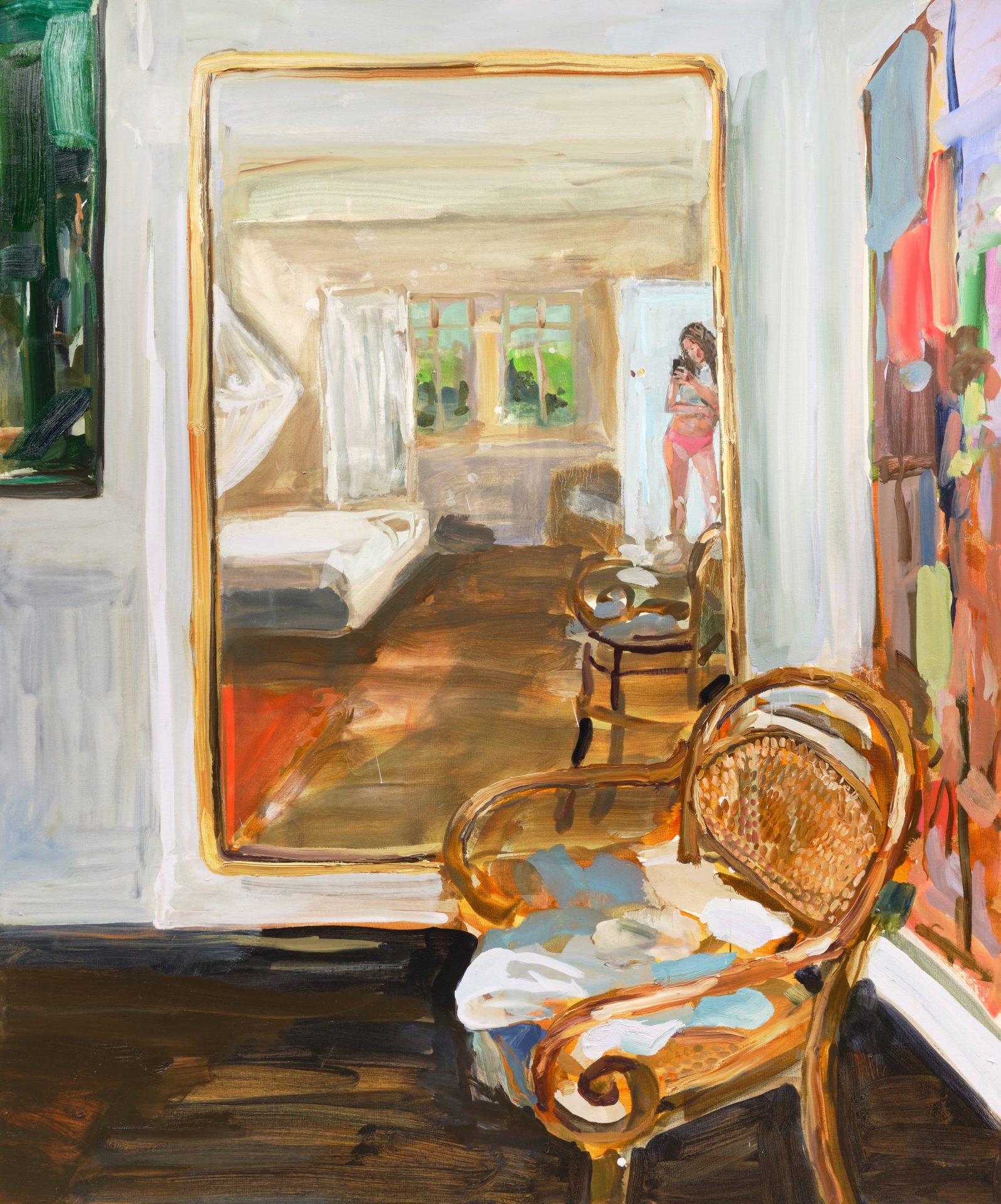
How do you approach the creative process when starting a new painting? Do you have any specific rituals or techniques?
I’m always trying to keep it interesting for myself and expand the framework of how I start a painting series. I tend to think about making a body of work and narrow down my interests at the time. It might be that I’m experimenting with a particular colour or surface and theme, but I try to identify the thread of it early on. And then there will be a painting that I think encapsulates that idea and it becomes the painting I compare every consecutive painting to. I’m always thinking about how to capture emotion and time passing. Still life is very effective for me, but I also try to include some autobiographical elements. I want to document a sense of what the here and now is like, so that when I look back my work has elements of the feeling of a certain time.

Image: Hydrangeas, 2025
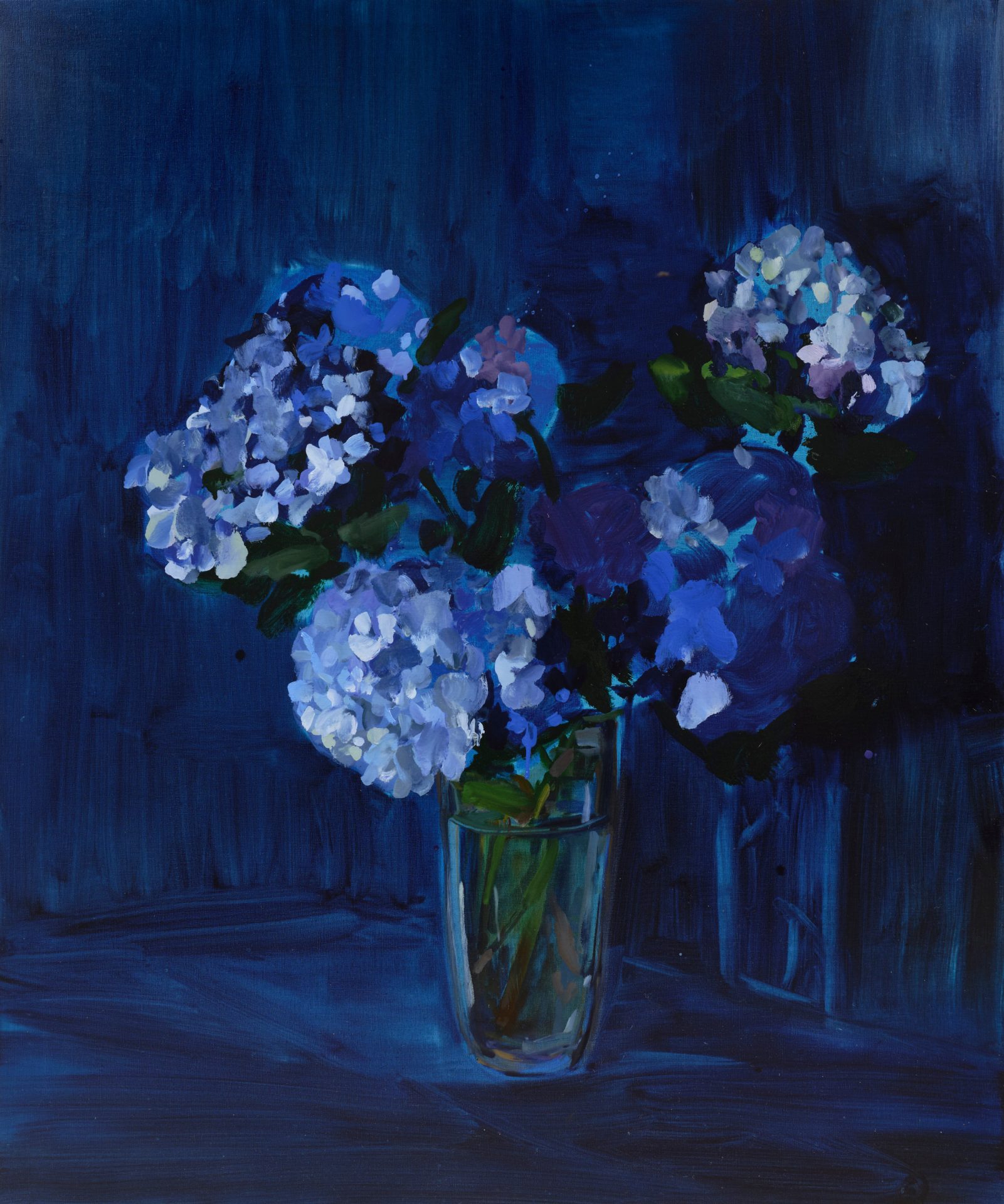
Your work often places domestic interior elements alongside evocative natural forms, how is that interplay showing up in the new works at CHALK HORSE?
For Rooms at CHALK HORSE, I was painting vignettes from home. I was trying to make sense of moving home to the town I grew up in after living in S ydney for 20 years. You would think I’d start with landscapes being in the Blue Mountains, but I was somehow drawn to narrowing my perspective to walls and doorways and intimate scenes as a way to settle into the sense of the domestic space as a place to begin opening up. The world has become so overwhelming, and I am very concerned about the future of the planet, our wild places, and the climate. But the way we live is so important to think about. Our indoor life is not at all disconnected from our outdoor one. As I get older, I become more and more sensitive to that. I think back to my grandmother being so waste-conscious. She would use shower caps on bowls instead of Glad Wrap. My Mum repairs everything that breaks and never buys anything on a whim. She thinks about how long it will last and how much she really needs it. Somehow within just a few generations it has become too easy to consume so much, and our waste has exploded, letting our indoor lives become so disconnected from our resources. Anyway, I wanted to make a show that really engaged with the domestic and the handmade. I’ve always been a fan of bringing nature indoors and embracing those elements that make a home feel like home.

Image: Pink Flannel Flower, 2025
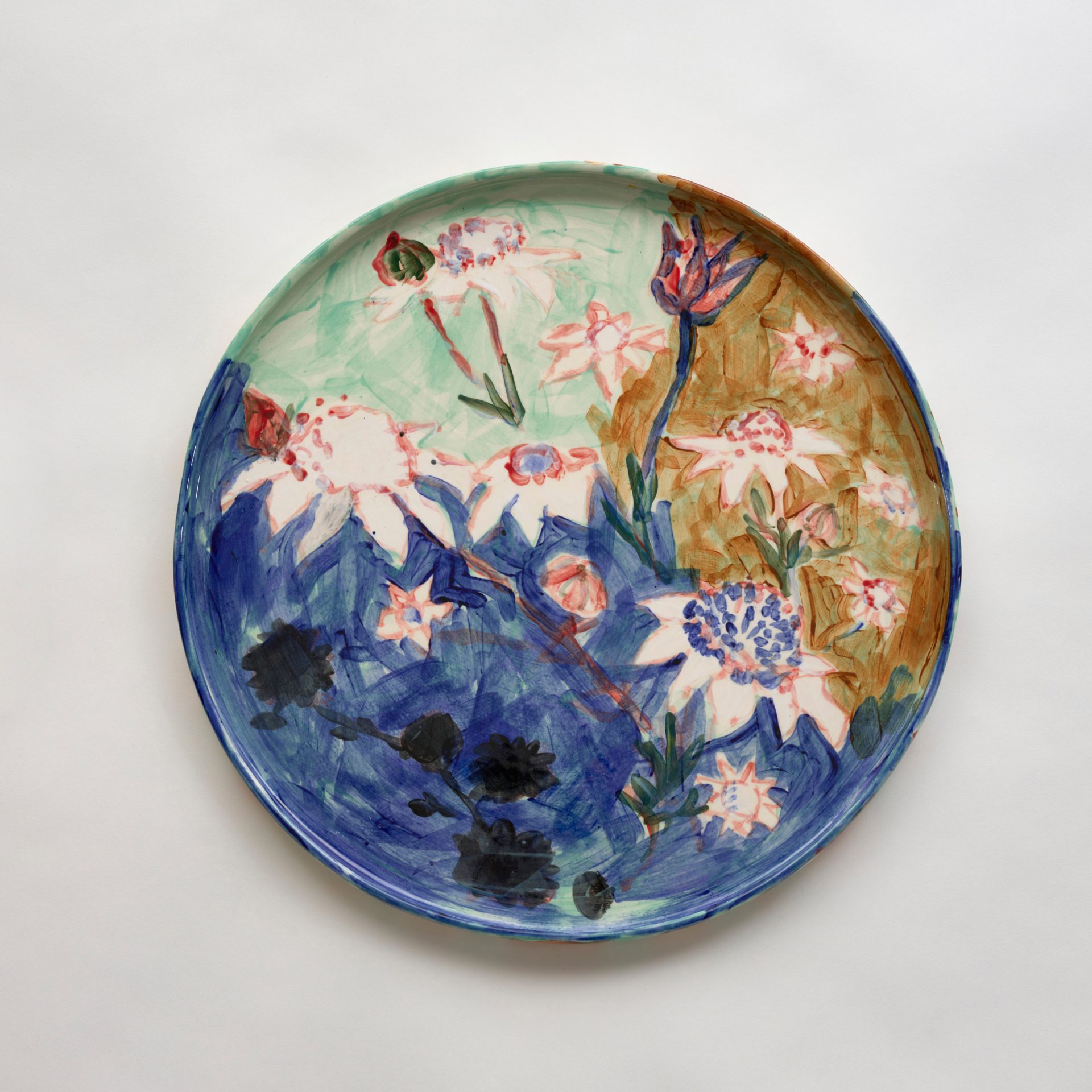
Your exhibition at CHALK HORSE Rooms draws on what has been described as a melting pot of memories, premonitions and beauty. How do you navigate this while constructing a single interior or landscape?
I try to keep it simple. It’s important to remember that there’s a language in the way that paint is used. Painting is my outlet, and each painting reflects a small moment of a life that navigates so much emotional terrain. I think you could try and document every tiny emotion and become overwhelmed with trying to squeeze in too much information. Sometimes it’s about what you leave out, when you stop, and how much to leave unanswered for the viewer.

Image: Self Portrait, Kurrajong, 2025
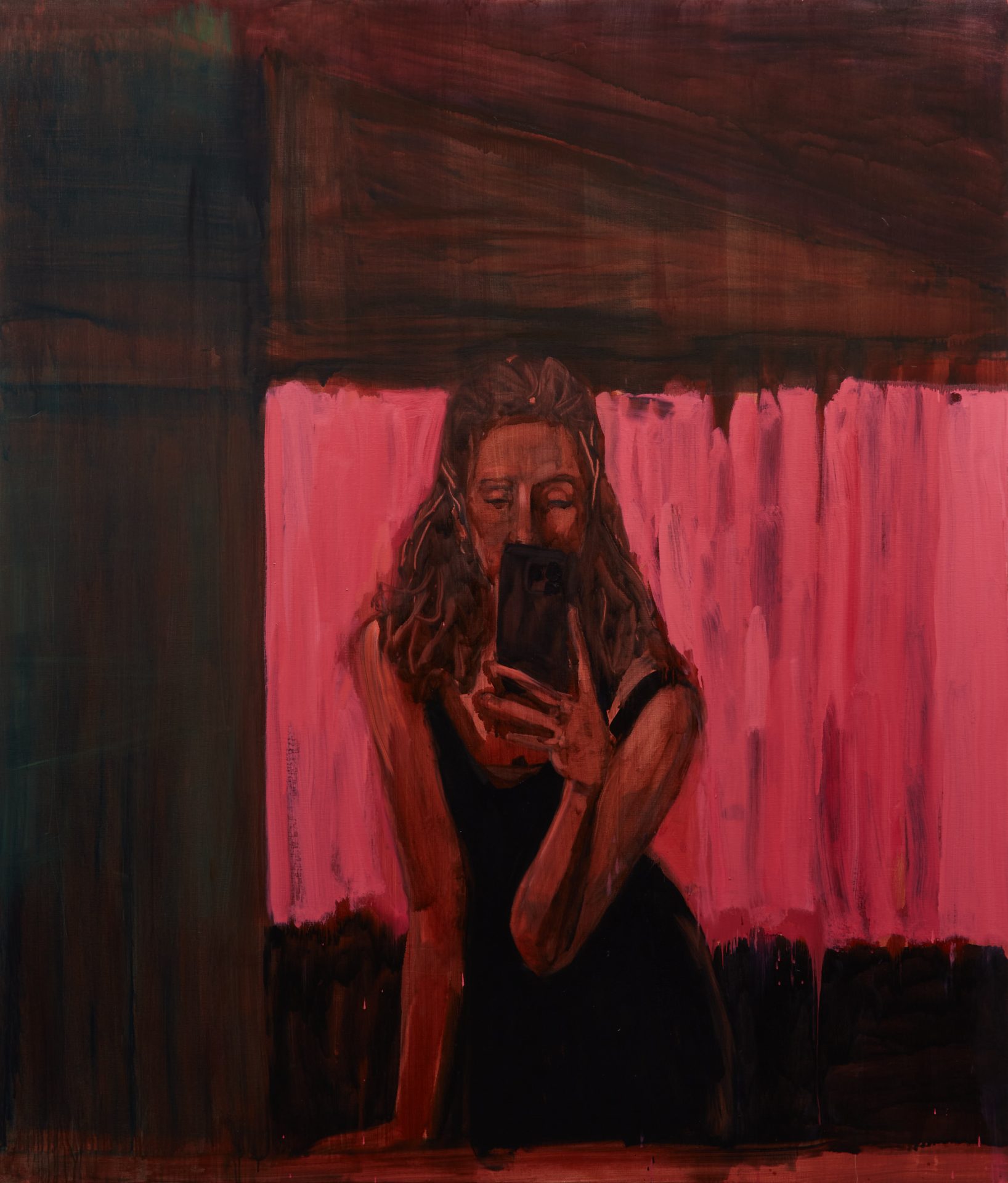
Where do you hope to see your practice in 10 years?
I hope I’m just making better and better paintings for the rest of my life.
___
Jones’ exhibition continues at CHALK HORSE until 20 December
@_laura_jones
@chalkhorsegallery
Working through layers, erasures, and instinctive gestures, Seraphine Pick builds paintings that pulse with ambiguity – works where identity, sensation, and materiality remain always in motion. We spoke to her about her current exhibition, Twenty 25 at STATION, reflecting on how she is pushing painting into new psychological and tactile territories.

Image: Glitch and Motherboard, 2025
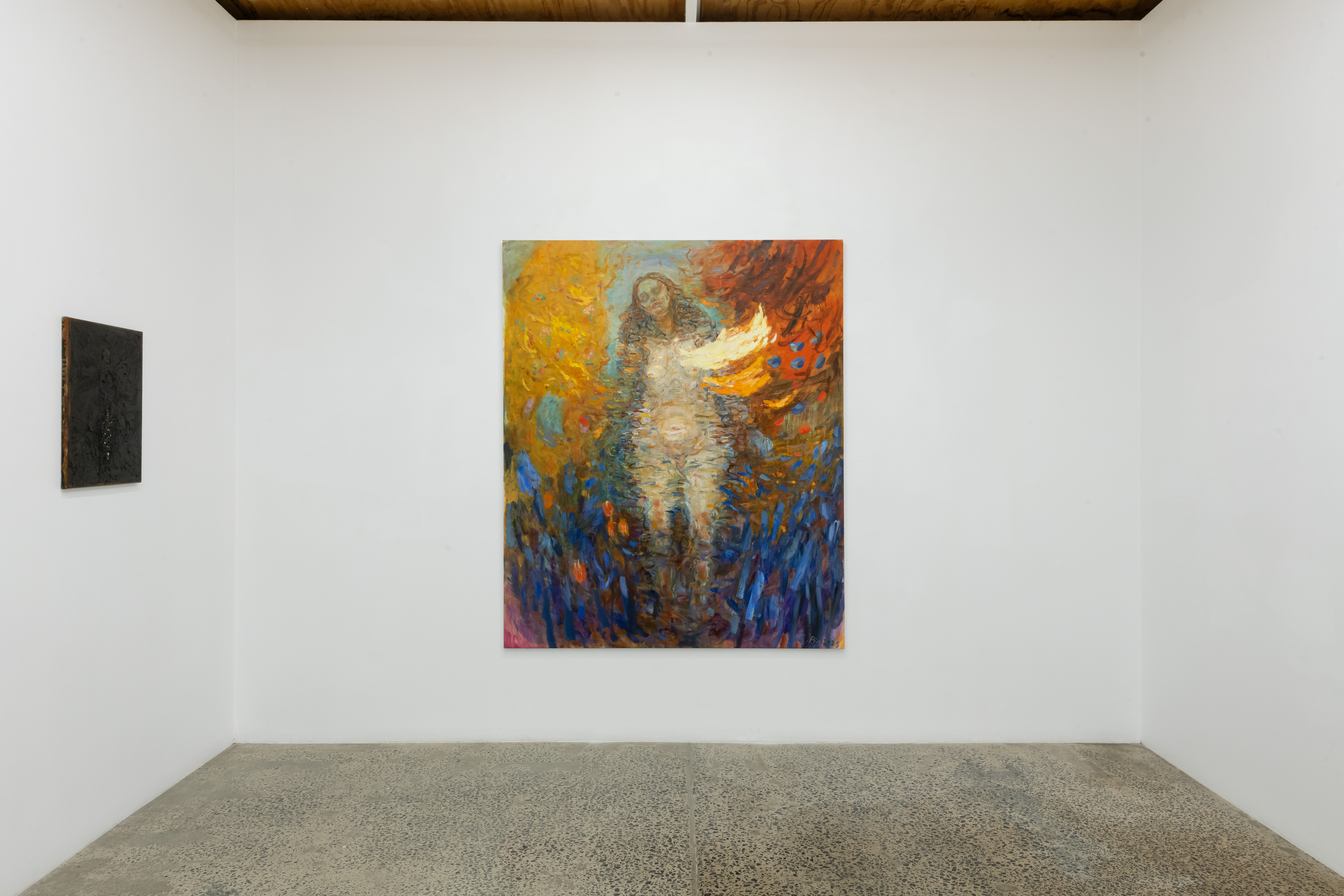
What inspired you to pursue a career in art, and how has your journey as an artist evolved over the years?
I grew up in the 70s in an art environment with young parents who had both been to Ilam Art school in Christchurch, New Zealand, in the late 50s and early 60s. I grew up in the Bay of Islands, and many young university graduates came up here looking for alternative ways of living back then. We lived the first four years on Moturua Island, where my parents were caretakers. When my brother was born, we moved to the mainland to Kororareka (Russell), also in the Bay of Islands.
My father taught art, art history and ceramics at Bay of Islands High School in Kawakawa. My mother painted and looked after us (and there were foster children over many years). They both worked on oyster farms and fishing boats. Many creative people visited over the years, so it was a normal everyday experience to be making or engaging in art. My father taught me to draw and look at his art history books, feeding my interest in art. I just drew all the time. I think because I am profoundly deaf and wasn’t able to participate in all the conversations, I just observed a lot.
I didn’t decide to pursue a career in art until I left school and moved out of home. I just thought I’d try it out as a full-time thing. I had resisted art, with both parents having gone to art school too, but I ended up at the same art school as them, with some of their tutors still there!
My journey as an artist has evolved in many directions, with changes often triggered by experiences along the way, such as places I’ve lived and people I’ve met. It is still evolving, and I hope always will, as I want to experience it in many ways and to keep learning new things within it and around it.

Image: Browser, 2025. Photo by Simon Strong.
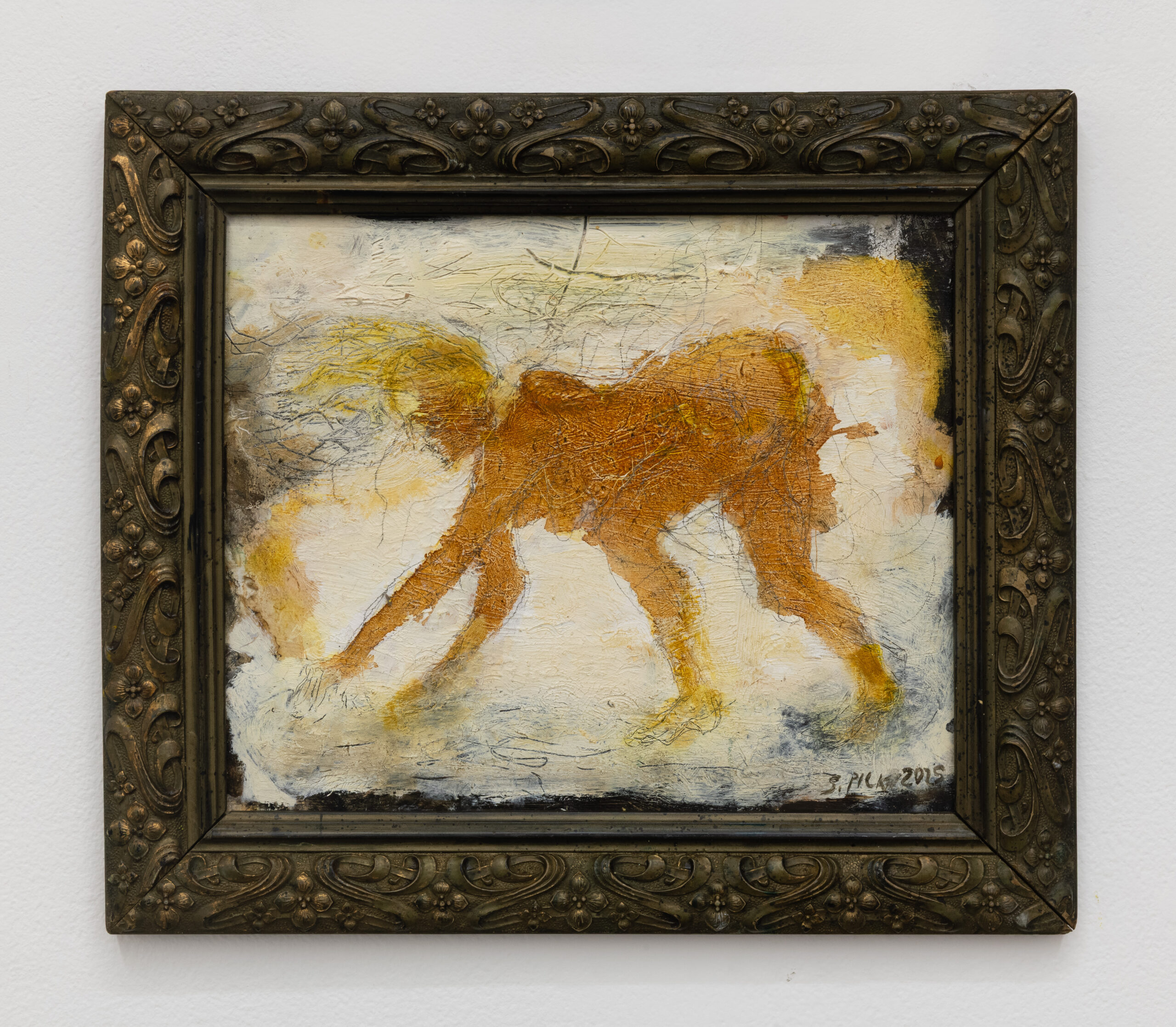
Your figures are often ambiguous and shifting. What draws you to this sense of fluid identity?
My approach to painting often begins in an intuitive way, where I just start, and the figures will sometimes emerge in the process of making over time. I do a lot of drawing along with the painting, too. My process is more representative of a bodily sensation than creating an image or figure. I feel that through making or destroying what’s there, I leave a visible history of the painting. All the flaws and accidents become part of the work, making the materiality of the work a sensation as well. I search for the energy of the unseen.
There is an ambiguity in the way figures are in space, as they emerge from the painted surface in an unsure, ghostly and anxious way whilst also embodying a sense of calm too. These works are forever moving and not fixed, becoming a reflection of the natural world that we are a part of, with the painting process directing what to do somewhat as well.

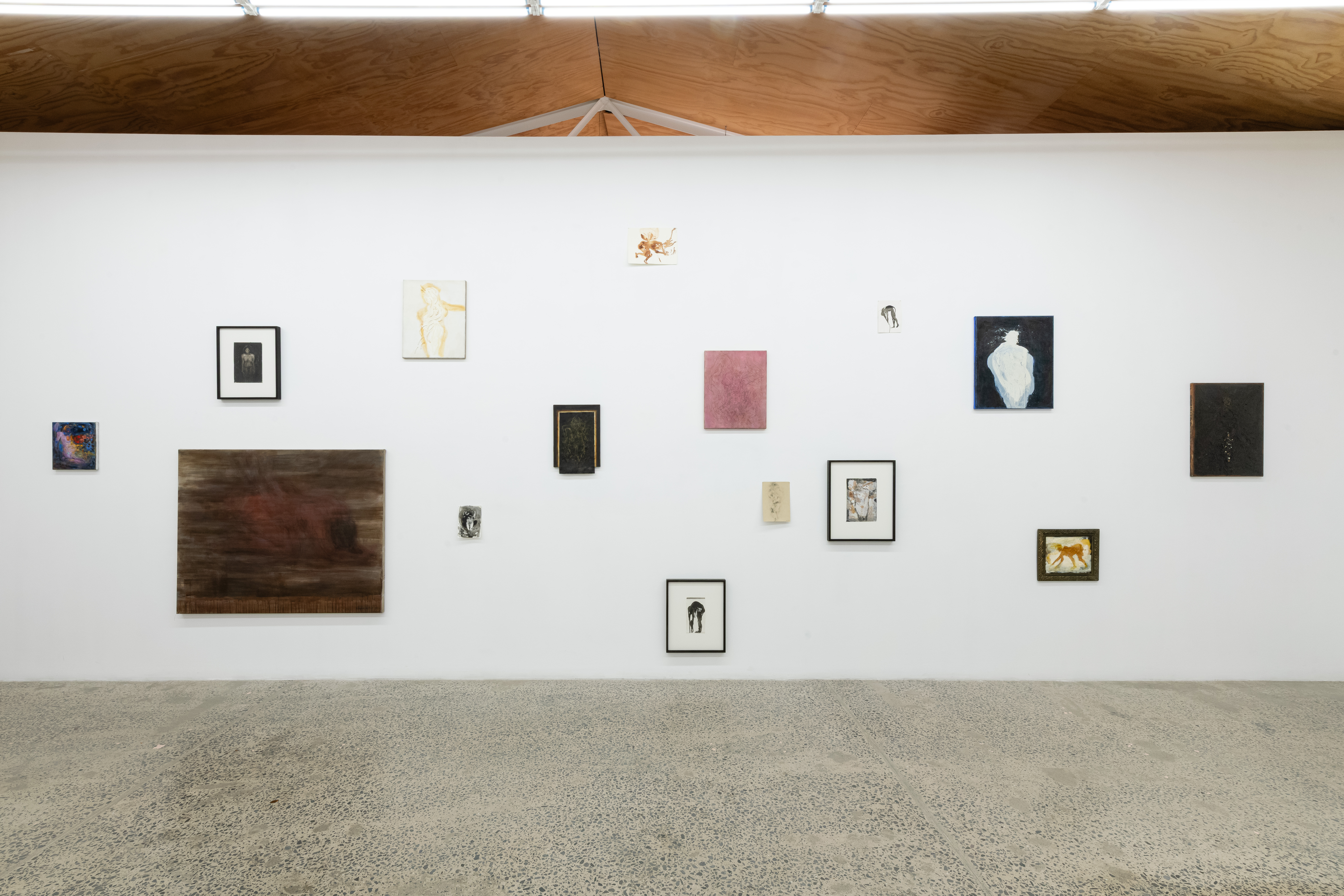
Image: Installation View, Twenty 25, Photo: Simon Strong
The internet and found imagery have played a key role in your work. How do you find the balance between appropriation of external imagery and the painting’s own autonomous language?
I am using found imagery from the internet less and less now. I used it more, along with printed media, as source material for images of unease. Transferring a photograph image to a painting seemed to create more unease, beauty and ambiguity.
I used it back in 2013 more when I made a series about the internet’s early use of social media in public humiliation of young humour with images of drunk people comatose. I liked the ambiguity of the images being peaceful and vulnerable, the space of unease it sat within and the changes of social behaviour evolving with human interaction with the internet. Now I think maybe we have reached a kind of over-saturation point, and I want to just make work where I’m just having a dialogue and responding to through the materiality of the paint or medium I’m using and react to with all the human senses. I’m finding it hard to just illustrate images in oil paint without embodying a sense of being present, too. I am now more interested in how we are in a crisis between our humanity and technology, rapidly changing our behaviour and the natural world we live in, with imagery reflecting it to us.
I want to bring body awareness back into the realm of looking at painting, with technology taking this away more and more from us. Looking at paintings for how it’s made and not just the image alone, something that goes deeper than being saturated in flicking through digital images that hold less information than a painting does. Where you see more, you move closer and scan your eyes over it forensically, and from a distance, you see something different, a change of perception, where you have to move your body into space, not just pinch your fingers out to get closer as we do on a screen.

Image: Sleep, 2025. Photo by Simon Strong.
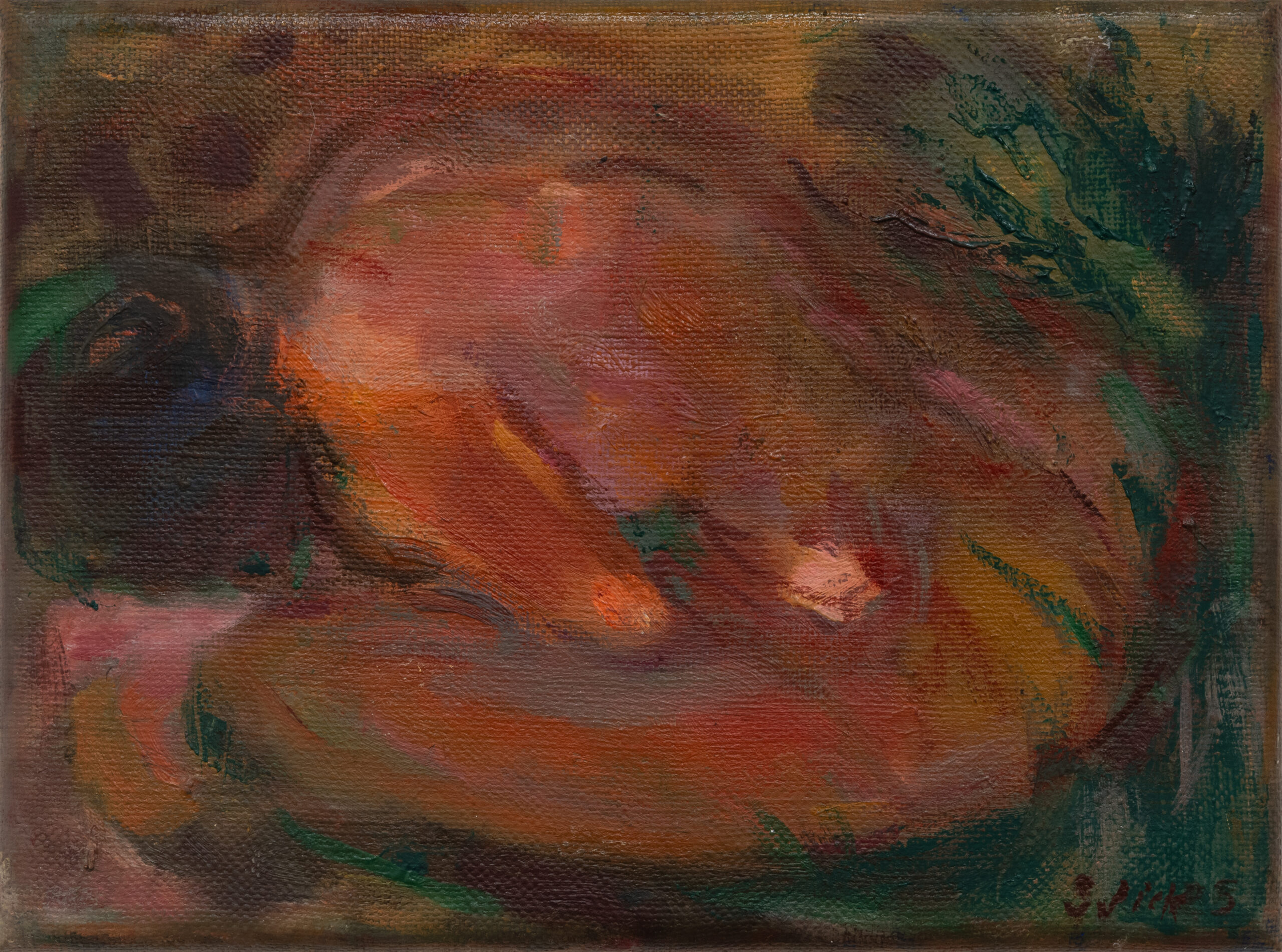
You often depict the body, or figures in ambiguous psychological spaces. What role does memory play in the construction of such spaces?
My early work was an attempt at visualising how memory and its sensations are forever being reconstructed and their influence on constructing our identity, and this fluidity over time. The methods I used with thick layered white paint, obscuring layers of drawings and scratching into the paint on canvas, I seem to be revisiting again 30 years later, as I’m becoming more interested in exploring texture, the tactile and layering and obscuring information in my work. It also happens to embody my own art past into my older self.

Image: Overflow II, 2025. Photo: Simon Strong.
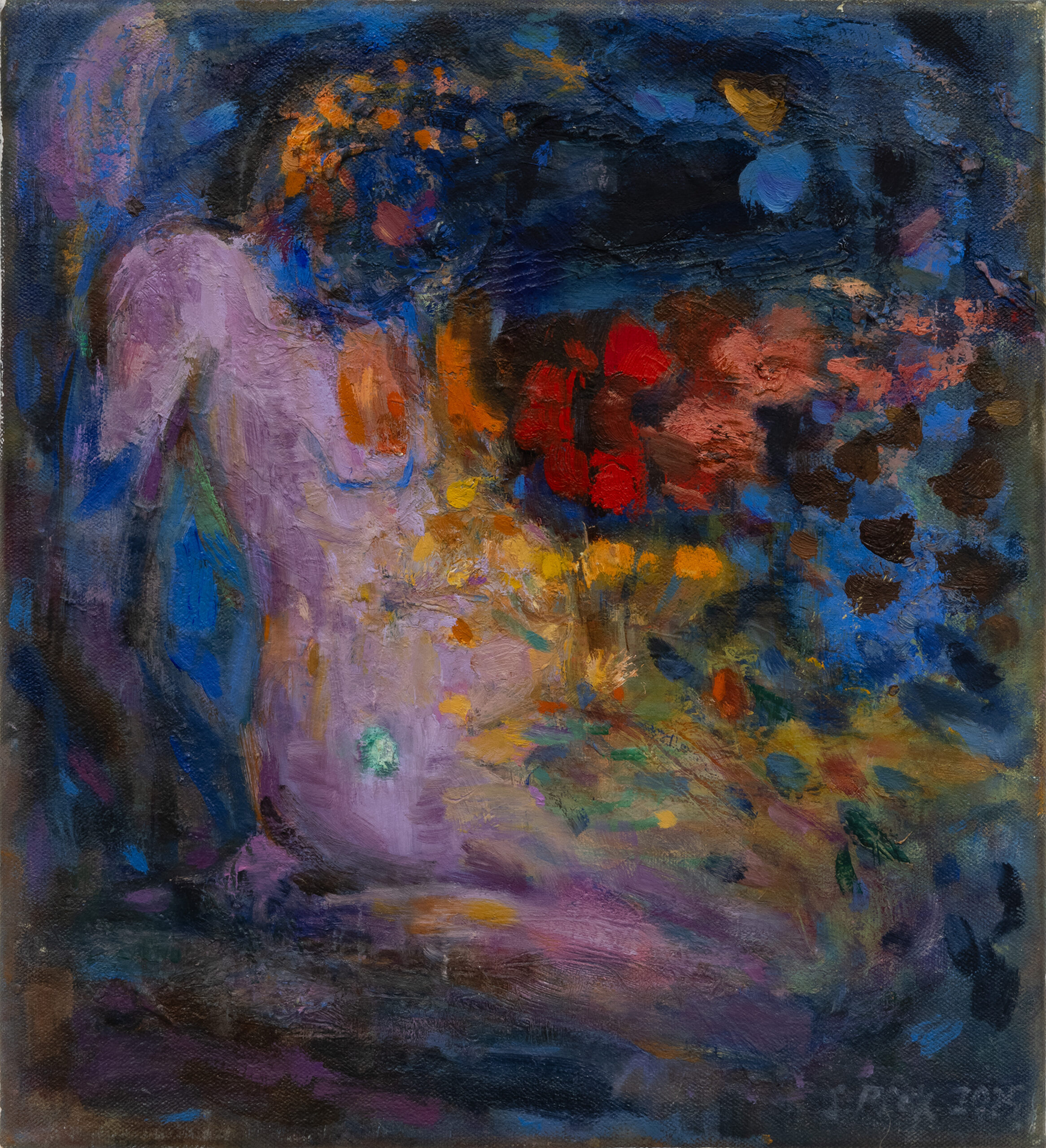
When people engage with the blurred boundaries and partial narratives in your paintings, what response are you hoping to draw out?
Art is experiential, with each person bringing their own experiences of the world and individual emotional responses to that. It’s this process that completes the work, and where I let it go. I don’t have any specific expectations for bringing out anything in people, but hope there is some level of engagement with their senses to the work; hearing something, remembering something, feeling something. It could also be just looking at the surface and noticing it as a tactile thing to explore, or thinking about something outside of the work in the world. Just a connection of being present, maybe, I like to leave the work open-ended in this way.

Image: E-Mystic I, 2025. Photo: Simon Strong.
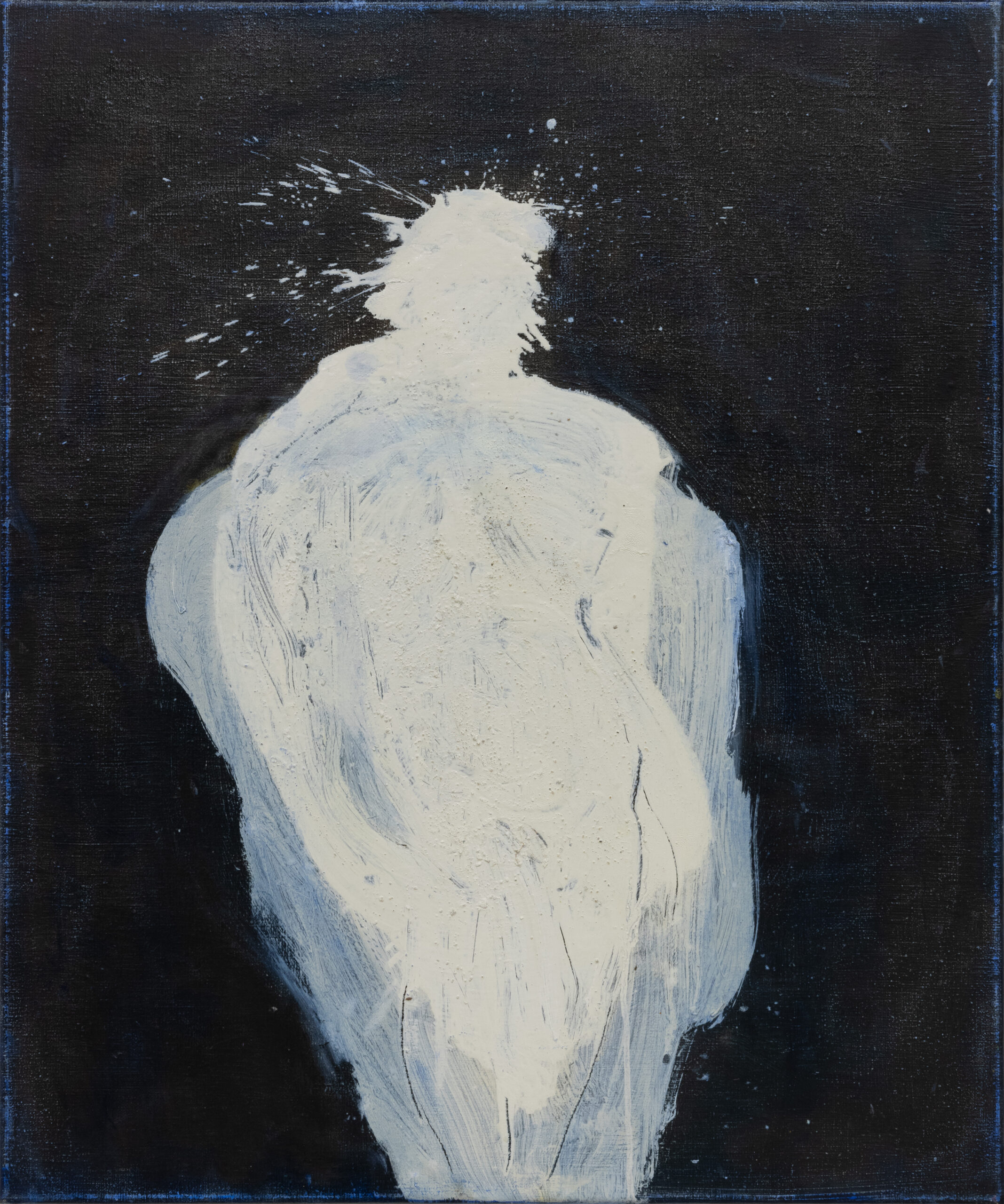
As someone whose work spans over three decades, how has your understanding of “what painting is” shifted for you and how do you see your practice expanding on this moving forward?
Actually, it’s nearly four decades now! My first show was in 1989. I’ve explored a lot of threads of ways of painting over the years, for sure. My desire to keep learning, searching, and responding to the world and where I am as a person in it. It’s really a long journey in finding yourself in the end, and that confidence to be yourself in your work.
Painting itself has a primal familiarity for me, as the first thing you do as a child is use your senses to explore the world. Anything sticky or liquid, you use your hands and smear it on something, that’s painting, it’s an action first. You pick up a stick or use your fingers and draw in the sand. It’s an indelible mark; it’s the doing. I see my grandchild doing this now, and I want that sense of immediate connection back. Going forward, I’m trying to just draw it from my intuition in a more freeing way and want to go back to exploring materials more as a way of bringing the tactile back to the forefront. I like to explore and use my perception as an older woman through this process and see where it takes me.
I do like not knowing what I’ll be making ahead, though. It’s good to keep that mystery and exploration alive. My deafness, I realise now, is part of my identity in how I’ve navigated the world and how I create movement in my work like visual sound. I often experience paintings that way.
The last few years, I’ve collaborated with friends who are younger artists of different disciplines: Andrew Bec, a photographer; Jaime Jenkins, a ceramic sculptor; and I will be doing a project with a sculptor next year, Isabella Loudon. It’s an interesting process to collaborate and show work alongside another artist and cross disciplines, and generations. It’s very experimental and interesting, and as an experience, it’s the exchange that you’re left with, that memory of making that you learn so much about your own work as well. It’s also a great antidote to the long hours spent alone in your studio, too!
Painting is a vehicle to engage in the world or to just lose yourself in. It is the paintings’ immersive quality I love. At a certain stage of the process, you are in that calm, relaxing state, then the next thing you can be in a battle with it! It can take you on an emotive ride, and it requires risk-taking to go back to the calm.
Pick’s Exhibition continues at STATION, Melbourne until 24 January
@seraphinepick
@stationgalleryaustralia
We caught up with artist Kyra Henley ahead of her exhibition ‘Lost’ at Nasha Gallery. Henley’s painting practice is guided by instinct, visual memory, and a deep curiosity for the discarded and overlooked. In our conversation, she reflects on letting imagery speak for itself, the quiet power of imperfection, and why—after decades of painting—she feels like she’s only just begun.
Cover Image: Party Salads, 2025
__
What inspired you to pursue a career in art, and how has your journey as an artist evolved over the years?
I don’t think I have pursued a career exactly. I went to art school straight after high school, 17 and desperate to leave the small town I grew up in. I’ve continued painting since the degree (supporting myself with stupid money paying jobs) and now it’s almost 25 years later and my painting has evolved into what I feel like is my real starting point to the actual work that I will make.

Image: Swimmers, 2024
Your paintings mix personal memories with pop culture —how do you balance what’s personal with the bigger social commentary in your work?
It’s probably impossible for anyone to make anything without a personal layer to it! But it’s not intentional of me, I make images precisely because of my poor ability to express ideas in any coherent verbal or literary way. There may be some link in my brain missing and painting is my way of trying to understand the world and my thoughts on things. It’s very difficult for me to explain using words. Or is it something I do to distract myself from all of that? I don’t know. Probably both.
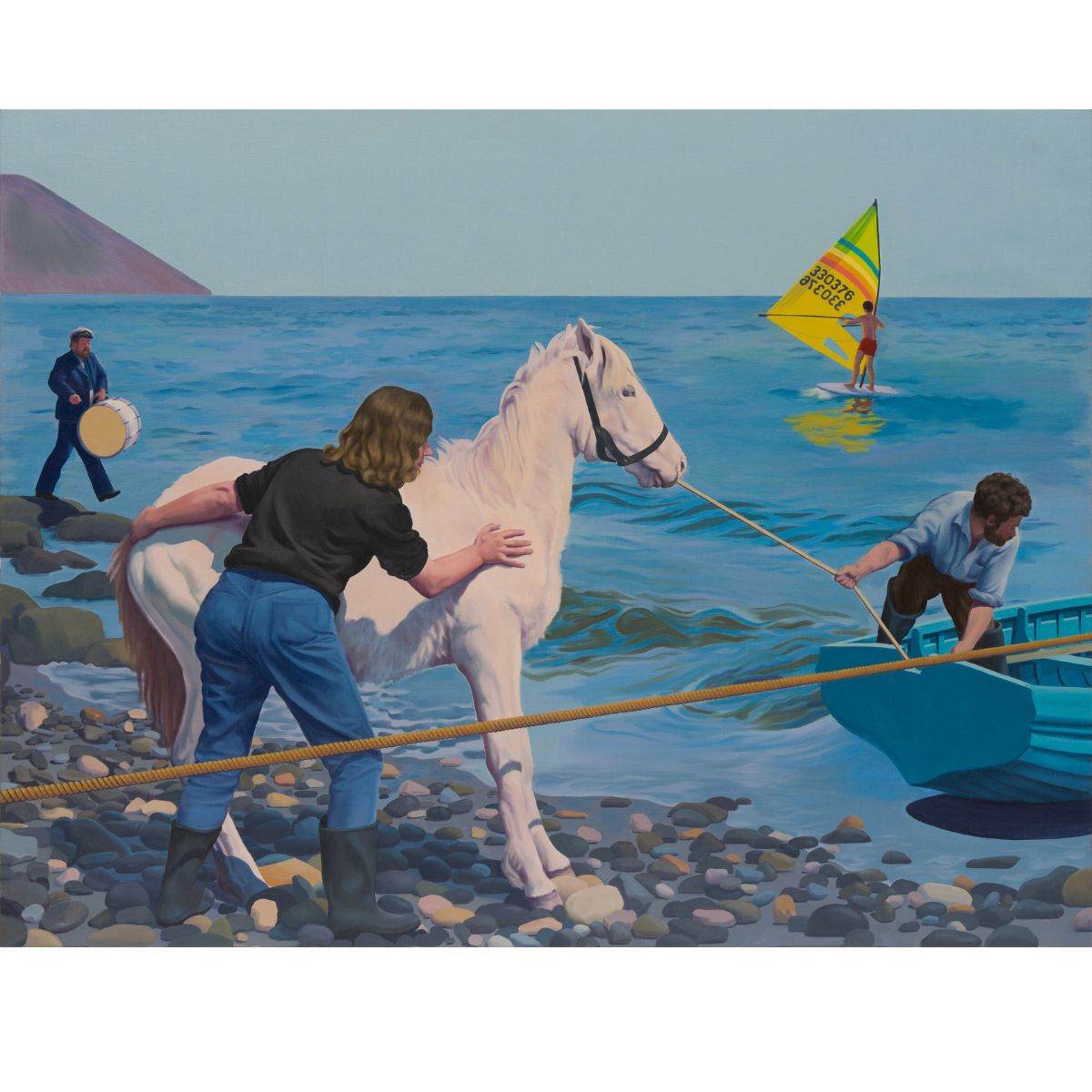
Image: Horse, 2025
How and where do you start your process of sourcing and reworking found imagery?
I start with secondhand books, usually from op shops or discarded on the street. I mostly avoid the internet but sometimes I want a particular thing to add to a painting and will go there. The colour of the printing inspires me, bright but yellowed with age, you get interesting effects from the limitations of the printing processes of the time.
A lot of ‘bad’ photos make it in because this is all before you could take a million photos for free and clean them up with a few clicks – I’m drawn to them because they haven’t been rendered all slick & uniform & bland.
These books are from a time in the recent past when everyone bought books of photographs of people and landscapes and gave them to each other with inscriptions scrawled in them like “ Dear Julie, Merry Christmas from mummy & daddy, 1978″. I have a large collection of these unwanted smelly books and I like spending time with them. I regularly go through tearing out things that catch my eye. When starting a painting I collage the images together with scissors and glue arranging ouija board style until I have something I want to scale up onto a canvas. It’s all pretty intuitive, and I will make formal decisions later on during the painting to block things out or move them or add something.

Image: The Devils Marbles, 2025
You’ve described your works as something for people to “ingest” — what do you hope people feel or think when they spend time with your images?
I try to make the paintings beautifully painted, to be enjoyed simply for their aesthetic qualities, but there’s more there if you have the time and inclination to sit with them. I love some of the narratives people have come up with for the paintings in this current show at Nasha; some things align with thoughts I’d had but often it’s something I hadn’t thought of at all and it makes complete sense in the picture and seems obvious and like that’s what I had intended all along.
Take the text by Steven Latimer we’ve used for the exhibition – It’s an extreme take on the paintings but it makes sense to me, it’s Steve’s take on it. I love it. The way people have engaged with the work keeps me excited to do more and helps me process what the hell I’m doing.

Image: Hotel, 2025
Where do you hope to see yourself, your practice, in 10 years?
Painting is one of the few occupations that gets better with age, perhaps because you lose some self-consciousness.
I’ve spent a couple decades refining some basic skills and now I can use those tools to invest time in looking and thinking about what I’m trying to do, or what the work is showing me. I’m not sure where I’m going, I feel like I’ve just begun.
Henley’s exhibition continues at Nasha Gallery until 26 October.
