
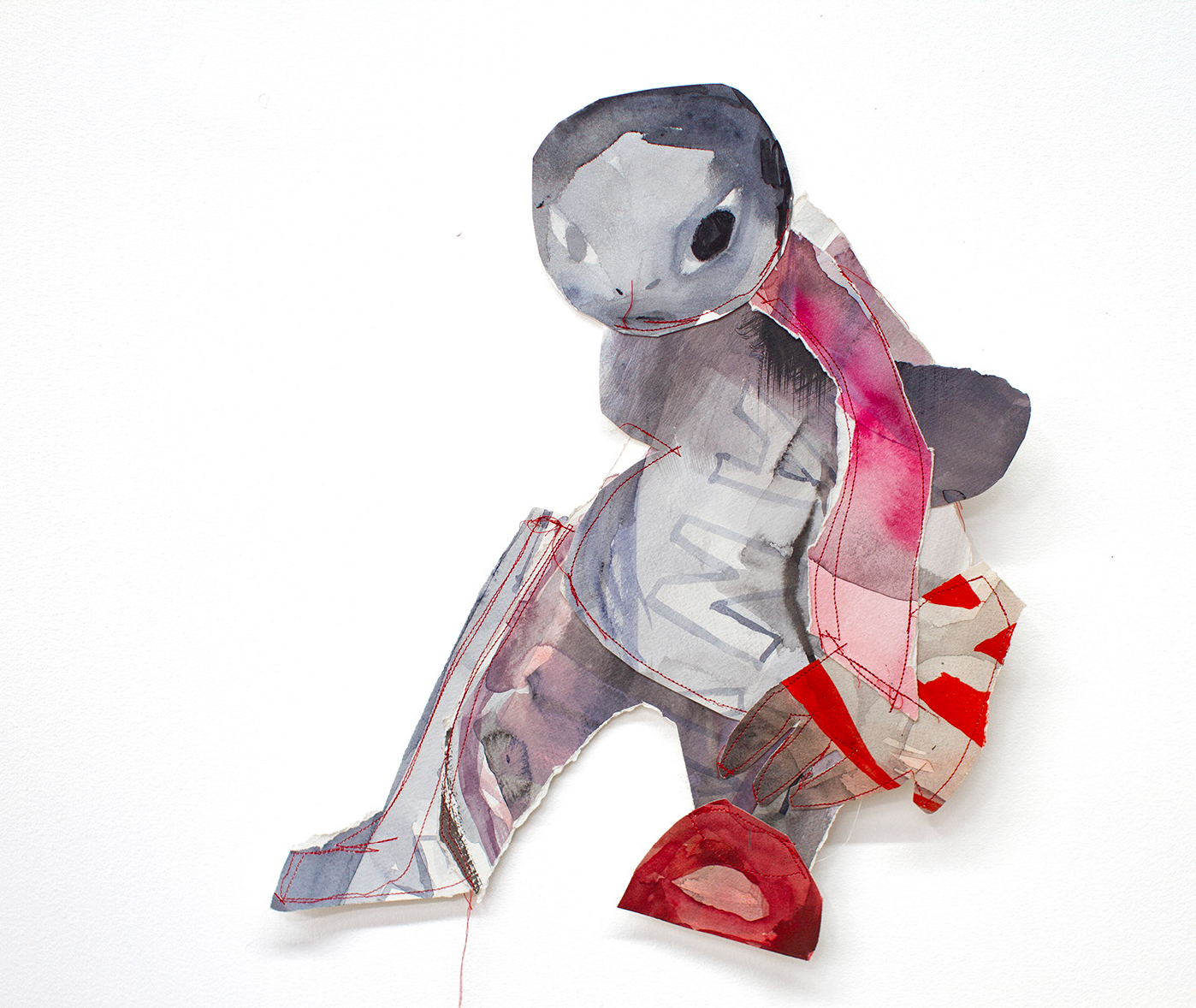
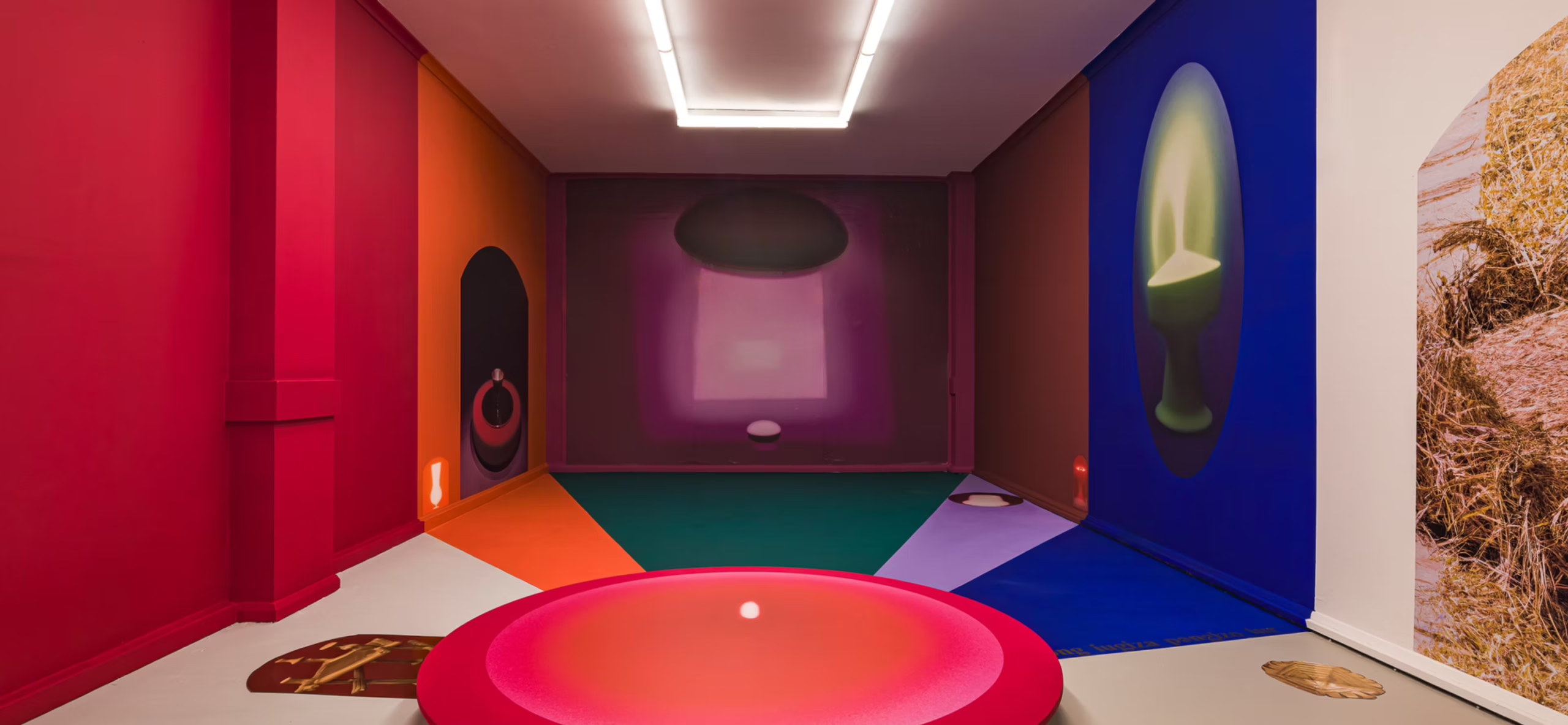
 Installation View, EO Gill, Sendiment, 2026. Photo: Zan Wimberley
 Photo: Artist Ben Mazey & Home Studio, Courtesy of Adrian Mesko.
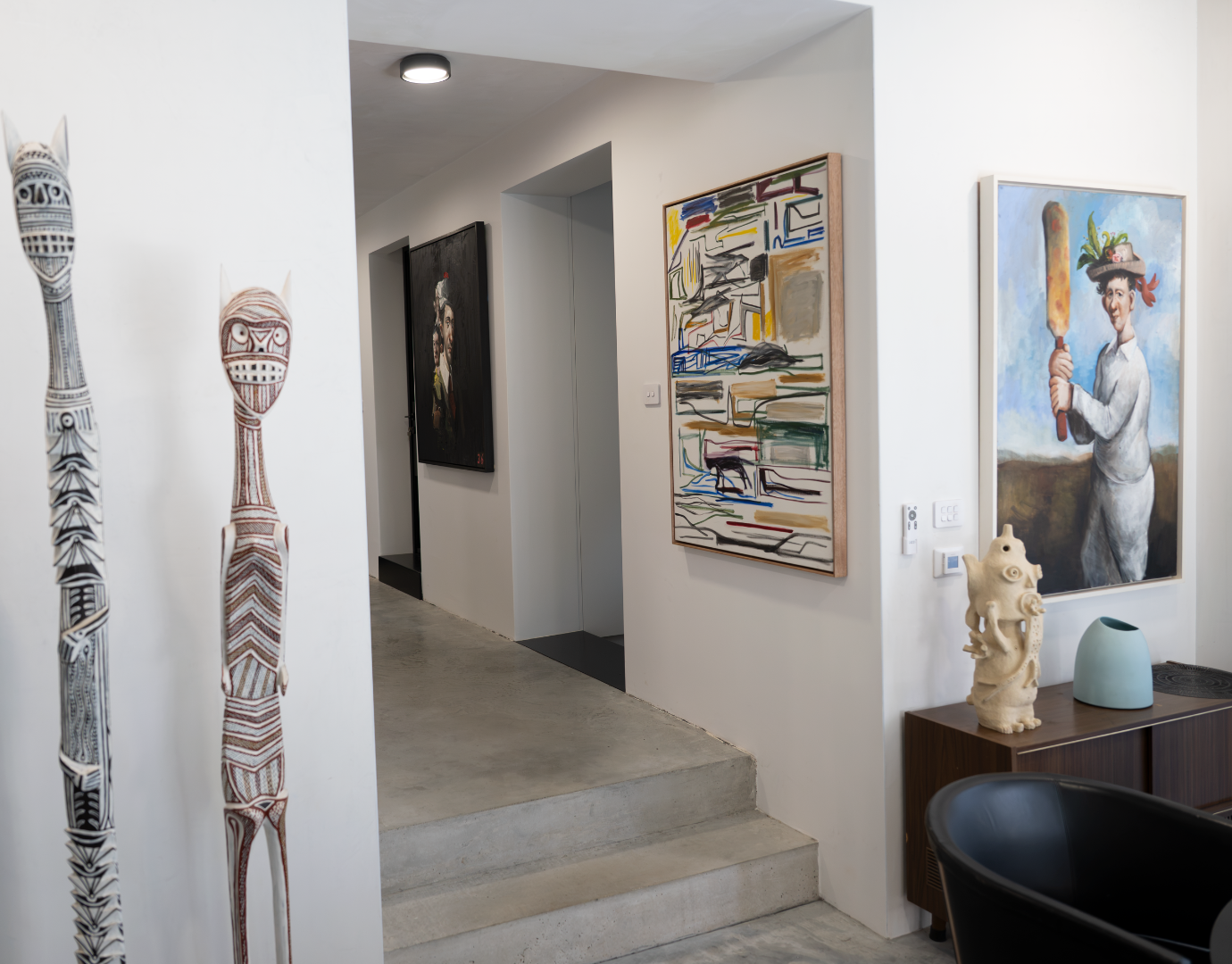 Left to Right – Nawurapu Wununmurra, McLean Edwards, Ken Whisson, Mai Nguyen-Long and McLean Edwards, Photo: Riste Andrievski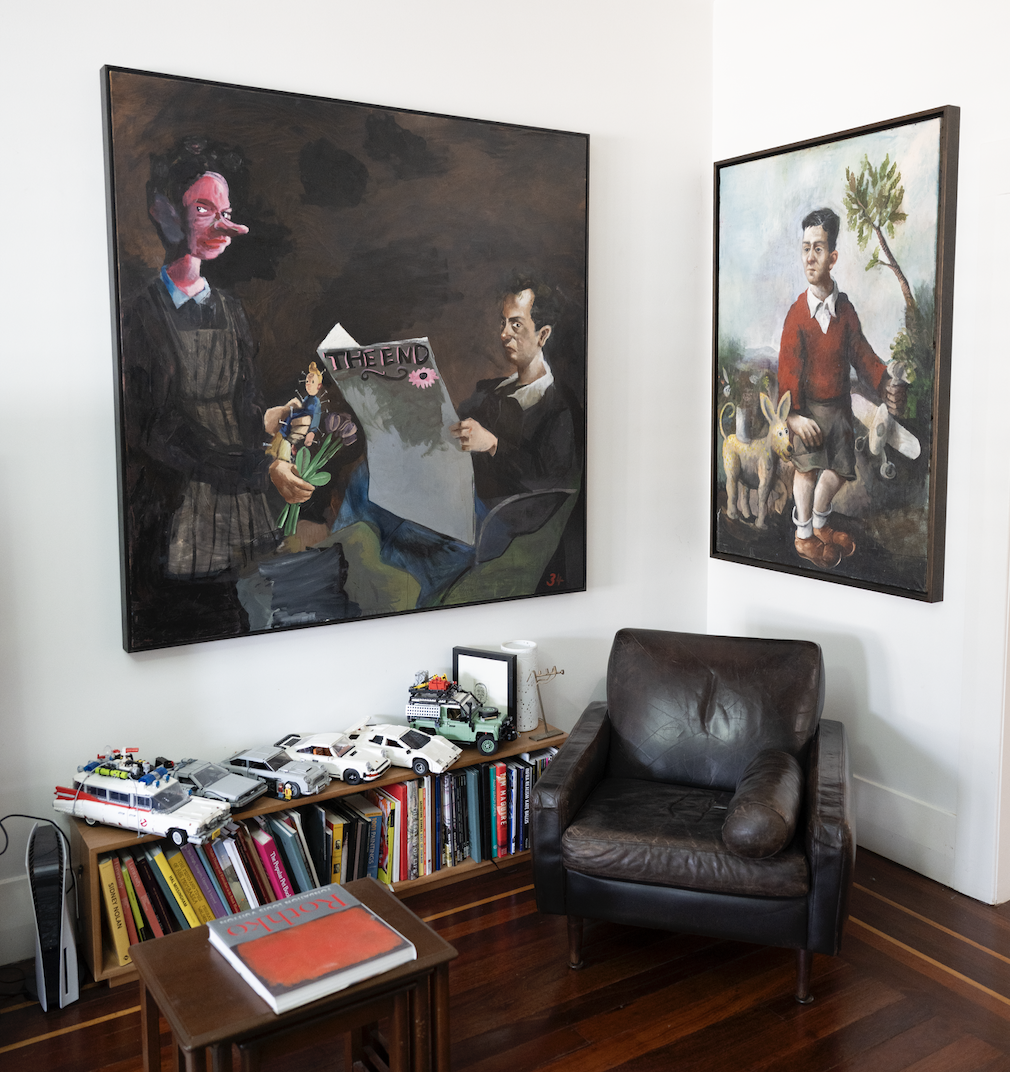
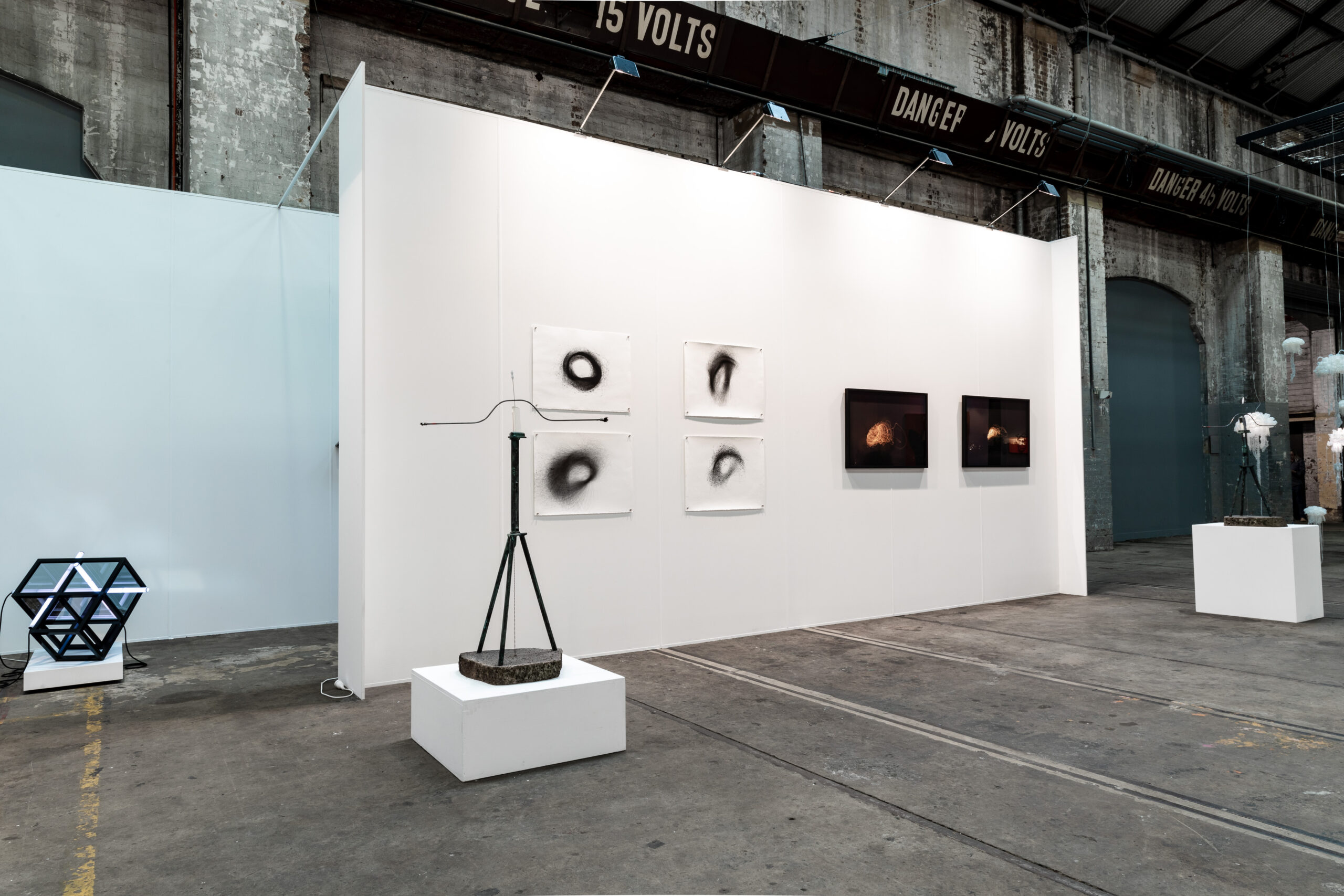
 Gregory Hodge, Suspension Painting, 2019. Installation view, Installation Contemporary at Sydney Contemporary 2019. Photography by Mark Pokorny.
 Alex Seton, Winners Are Grinners (Yet Another Dictator), 2017-2019. Installation view, Installation Contemporary at Sydney Contemporary 2019. Photography by Mark Pokorny.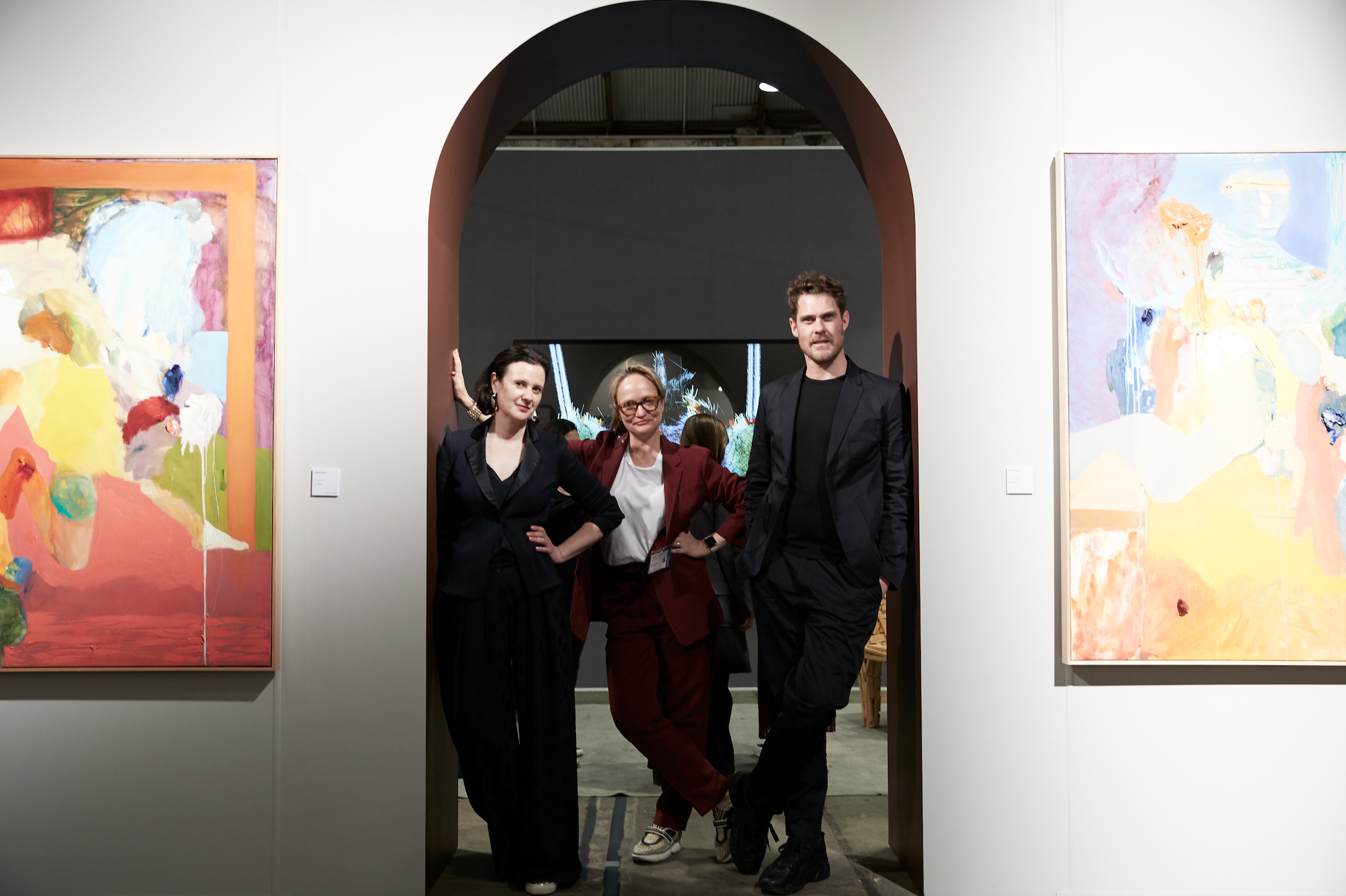
Sydney Contemporary returns to Carriageworks from 3 – 6 September.
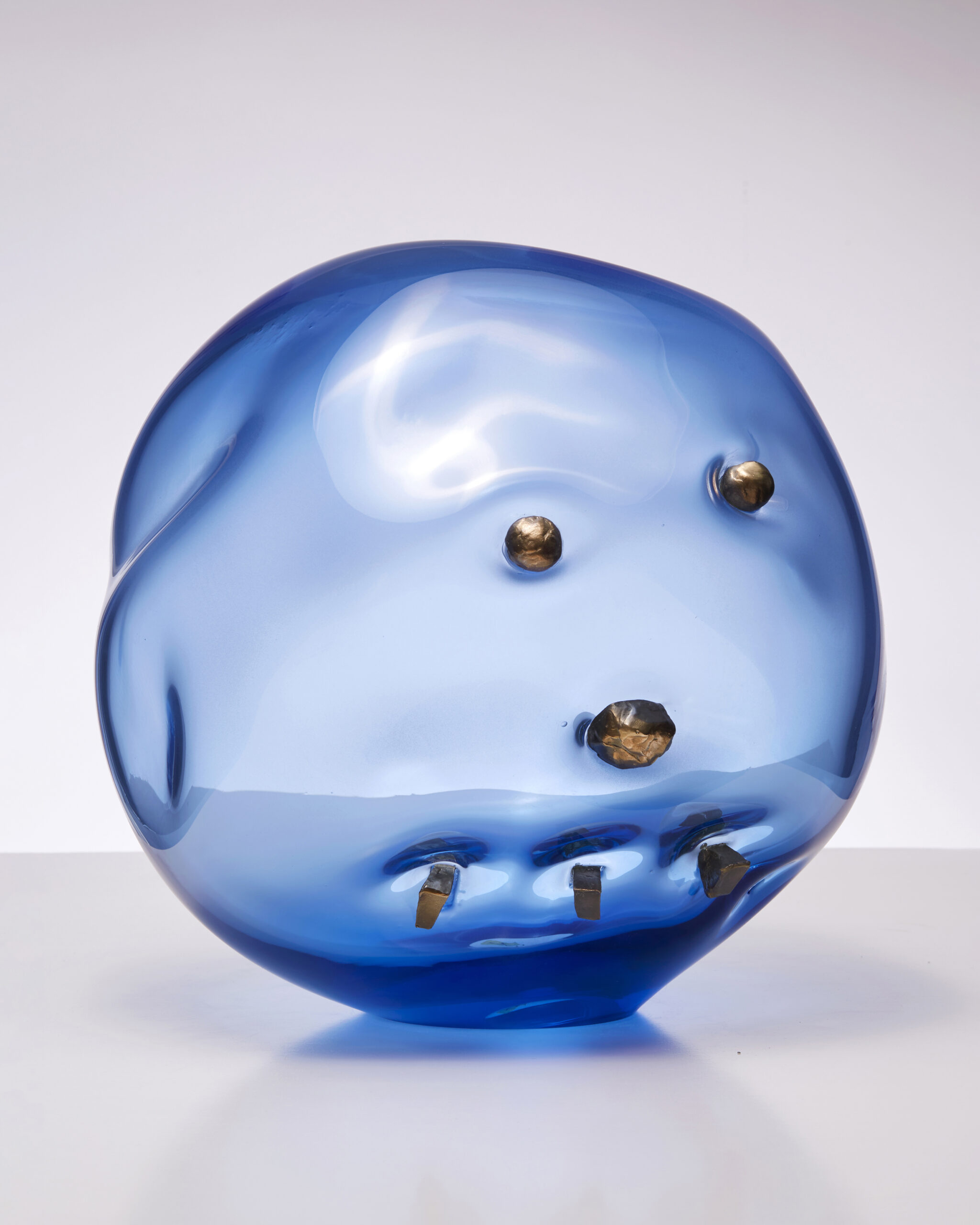
Equal parts high-gloss fantasy and dark mortality, Darren Sylvester’s multi-medium practice turns consumer aesthetics inside out. Ahead of Sydney Contemporary 2026, he discusses his upcoming solo exhibition with Neon Parc – a tone poem of identical-yet-wildly-different photographs hot off the grill—and why earnestness takes a backseat to iconic, emotion-spilling imagery.
What first drew you to making art, and how has your practice shifted over the years?
I won a colouring competition at five and been going ever since. Only now it’s getting closer to what I want. It’s only beginning.

Darren Sylvester, Keef, 2024. Courtesy Neon Parc, Melbourne
You jump between staged photography, sculpture, glasswork, and even pop music. How do these different mediums talk to each other?
They build history. Every work is the result of one before it so the practice grows and changes in look, feel and medium. Works talk to previous, offering differing ideas, opposite views. They create a never-ending jigsaw. I do whatever the idea needs to be. I don’t moralise; I present.

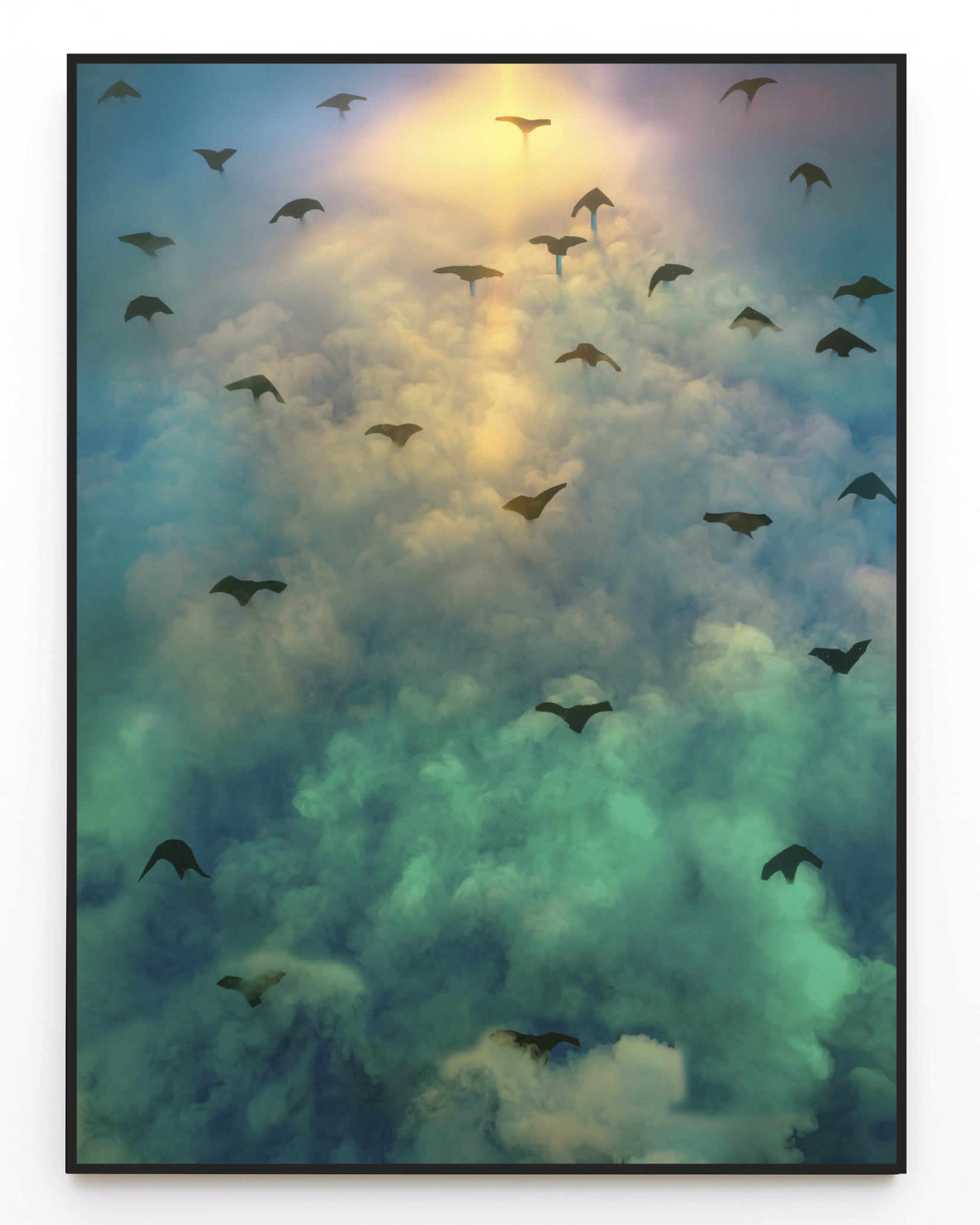
Darren Sylvester, Black Birds, 2026. Courtesy Neon Parc, Melbourne
Your work uses the glossy language of consumer culture. How do you map those raw human emotions onto commercial aesthetics?
Commercial aesthetics are full of human emotions. Being earnest isn’t necessarily interesting, and I don’t think ideas of raw human emotion need an image of raw human emotion.

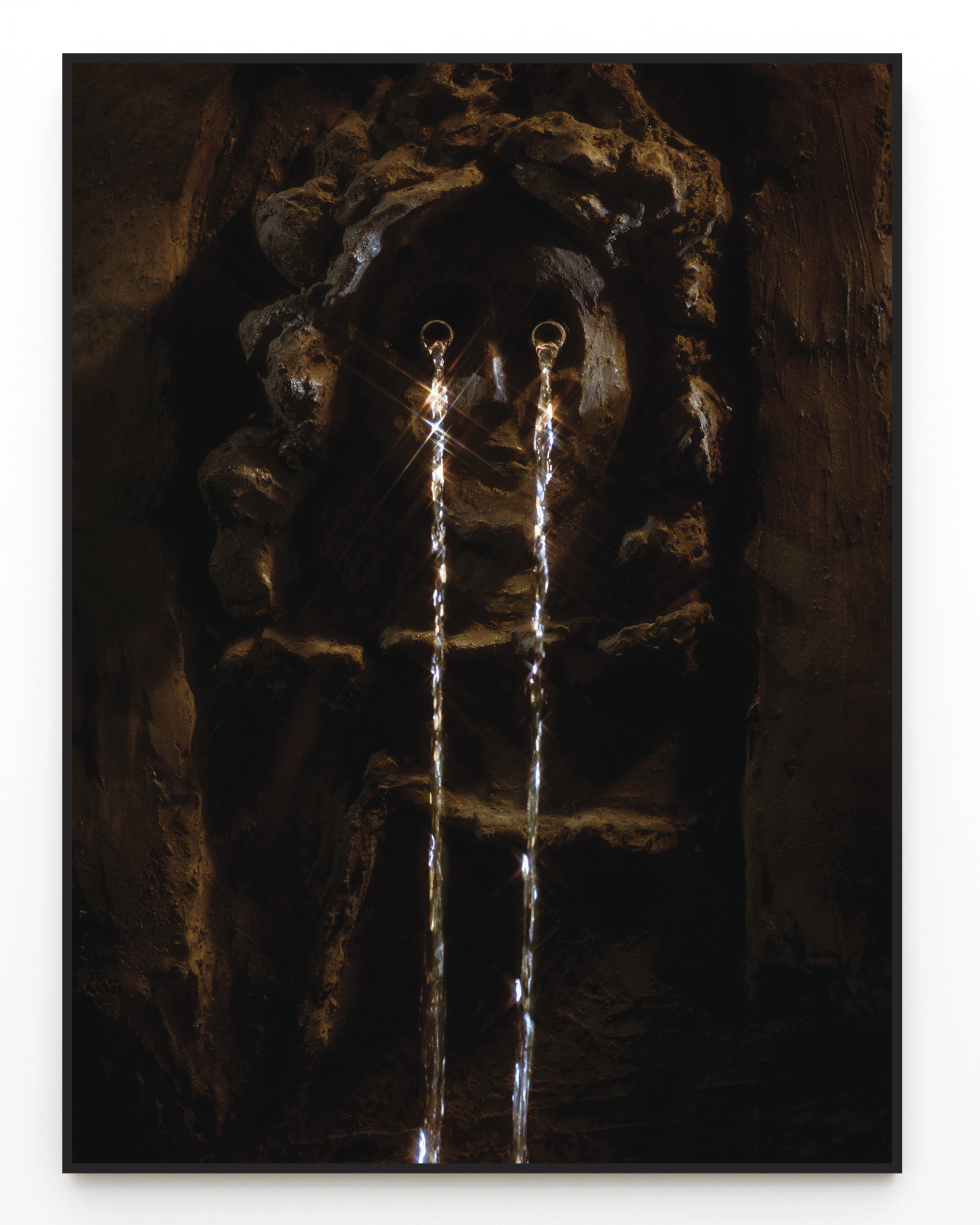
Darren Sylvester, Bright Eyes, 2026. Courtesy Neon Parc, Melbourne
When people stand in front of your hyper-polished, cinematic scenes, what kind of feeling or realisation are you hoping to spark?
To create unique, iconic images that don’t really function as a traditional photograph of trying to capture a moment, they’re more like a sign, or a tarot. They can be filled with a sense of sincerity, fantasy, tragedy and dark mortality. Up close there’s easter eggs in construction, faults that shine, it’s a hi-end feel to lo-fi construction.

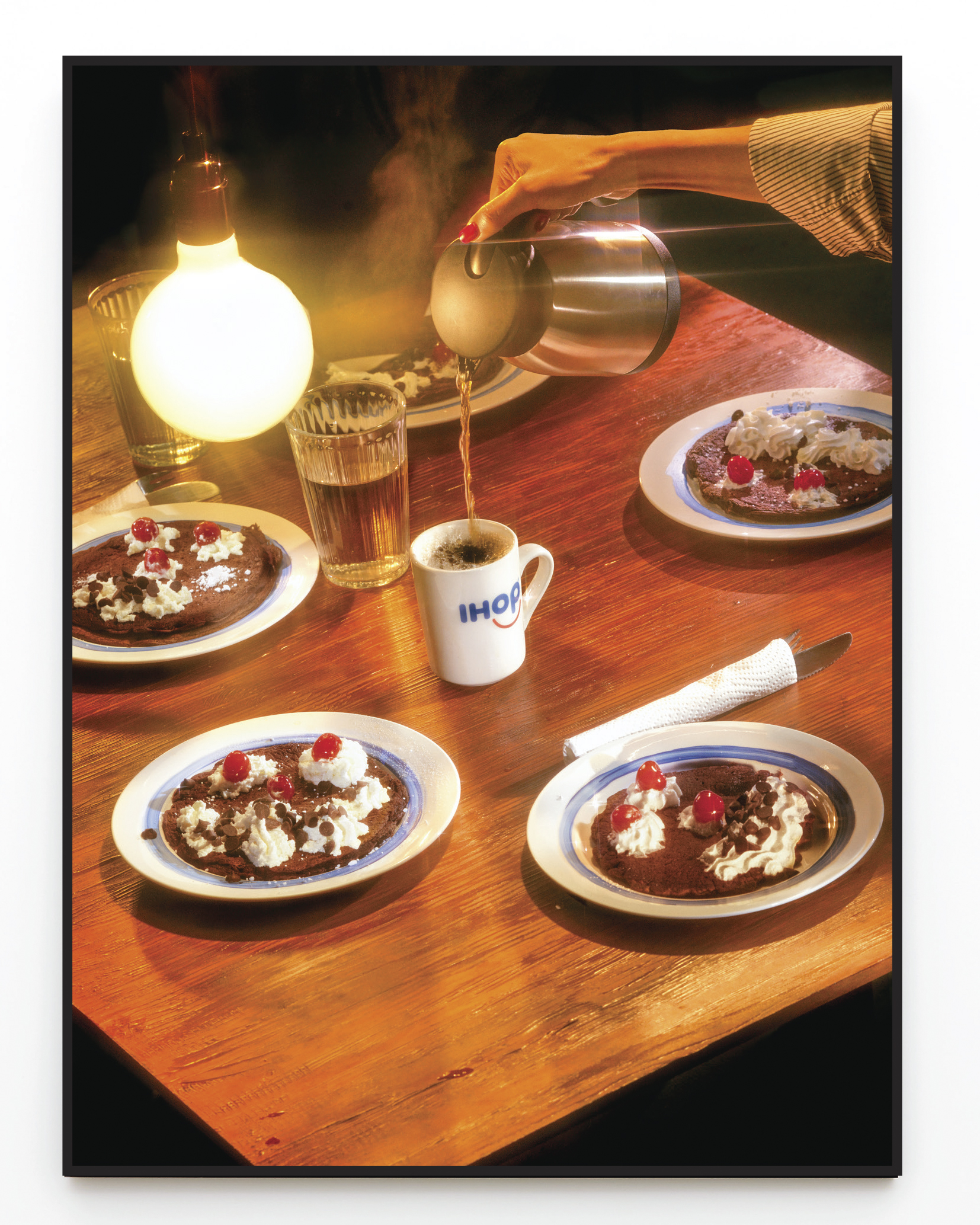
Darren Sylvester, Funny Faces, 2026. Courtesy Neon Parc, Melbourne
What can we look forward to in your presentation with Neon Parc at Sydney Contemporary 2026?
An exhibition of new photographs called Hot Cakes. Like off a grill, they’ll be the same size, pushed in a row, one after another, yet also wildly, completely different to create a tone poem that speaks to aspects of contemporary life.

Darren Sylvester, Turbo Maxx, 2025
Looking ahead, are there particular projects, collaborations, or mediums you’re excited to explore in 2026?
Hell no. This took all year. This is the year.
Sydney Contemporary returns to Carriageworks from 3 – 6 September.
darrensylvester.com
Instagram
Neon Parc
Instagram
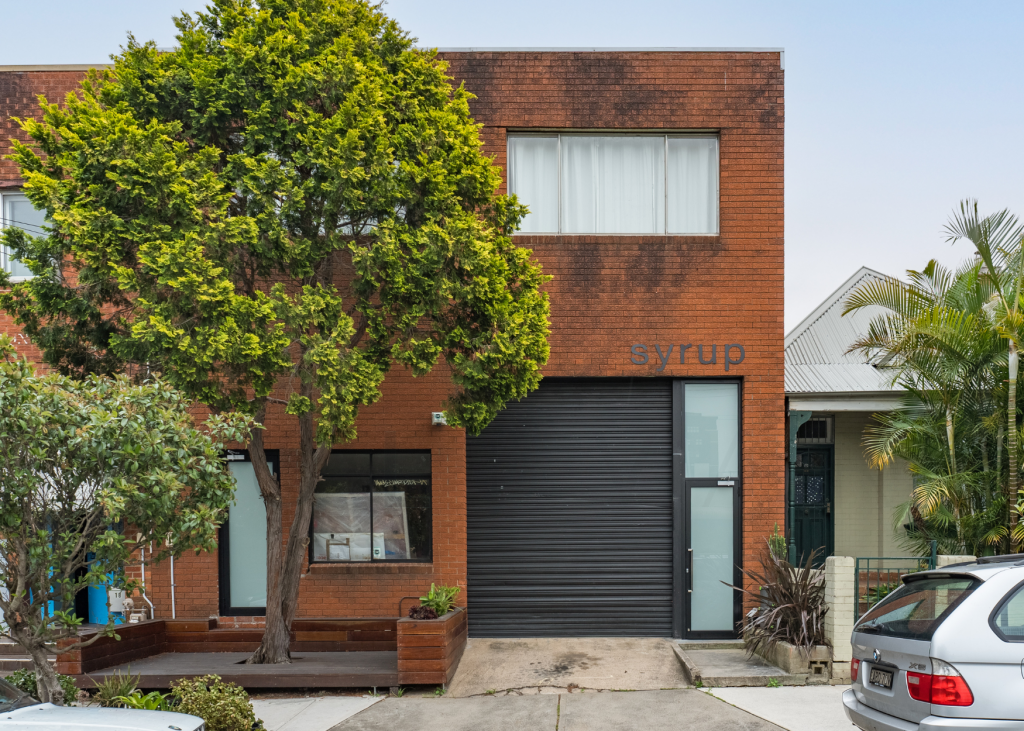
Emerging from an artist-run ethos, co-directors Carolyn Craig and Damien Dillon run SYRUP Contemporary as a hybrid gallery bridging independent project spaces and commercial platforms, with a focus on forward-thinking, regionally connected artists across the Asia-Pacific. As the gallery prepares to make its Sydney Contemporary debut across the Futures and Paper sectors, we spoke about scaling up ambitious practices, cultivating international conversations and what to expect from their upcoming fair presentations and expansion plans.
You initially expanded from a studio-sized room in Chinatown into your current warehouse in Marrickville. How has this dramatic shift in scale and location altered your curatorial vision and the types of ambitious work you are able to platform?
Our wonderful tiny Chinatown space established a strong curatorial vision which has become more ambitious and focused in the new space. Each of our artists share this vision to create internationally facing exhibitions at the forefront of our region. While the ambition has grown, our commitment remains the same—to present contemporary practices that are at the forefront of artistic discourse within our region while connecting them to broader international conversations.
SYRUP operates on a hybrid model, bridging the gap between an independent project space and a commercial gallery. Coming from an artist-run ethos, how does this inform the gallery program?
We are committed to championing work that is forward-thinking, distinctive and responsive to the cultural moment. This often means supporting projects that might traditionally be associated with institutional contexts, whether through large-scale exhibitions, collaborations with guest curators, or ambitious new commissions.
We see these projects as an investment in our artists’ long-term development. They create opportunities for experimentation, expand audiences and position artists for future institutional and international engagement. At the same time, we believe collectors are increasingly looking for works that challenge conventions and contribute to broader cultural conversations. Our goal is to build a sustainable model that enables artists to make ambitious work while connecting them to growing markets across the Asia-Pacific region and beyond.

Ruth Marbun, Trajektori 17, 2023
How would you define the core of SYRUP’s identity, and why is a regional connection so vital to what you do?
I think our name speaks to some of our identity – we are fluid and interesting and maybe a tiny bit sticky and delicious. At our core, we are interested in artists whose practices reflect contemporary conditions and who engage with the unique cultural dynamics of our region.
The Asia-Pacific is becoming an increasingly important centre for contemporary art, and we see tremendous potential in fostering stronger connections within these networks. For us, regional engagement is not simply a market strategy; it’s about recognising the cultural specificity, histories and perspectives that shape the work of our artists. We are interested in contributing to a more regionally connected and globally relevant conversation that moves beyond traditional Eurocentric frameworks.
Making your first appearance here, what do you hope fairgoers take away from their encounter with SYRUP?
I hope Fairgoers encounter something exciting from the SYRUP booths. We want the SYRUP presentations to feel fresh, ambitious and reflective of the extraordinary calibre of artists we represent. More than anything, we hope people engage deeply with the work, connect with the artists’ ideas and come away with a sense that these are practices contributing meaningfully to contemporary culture on an international stage.

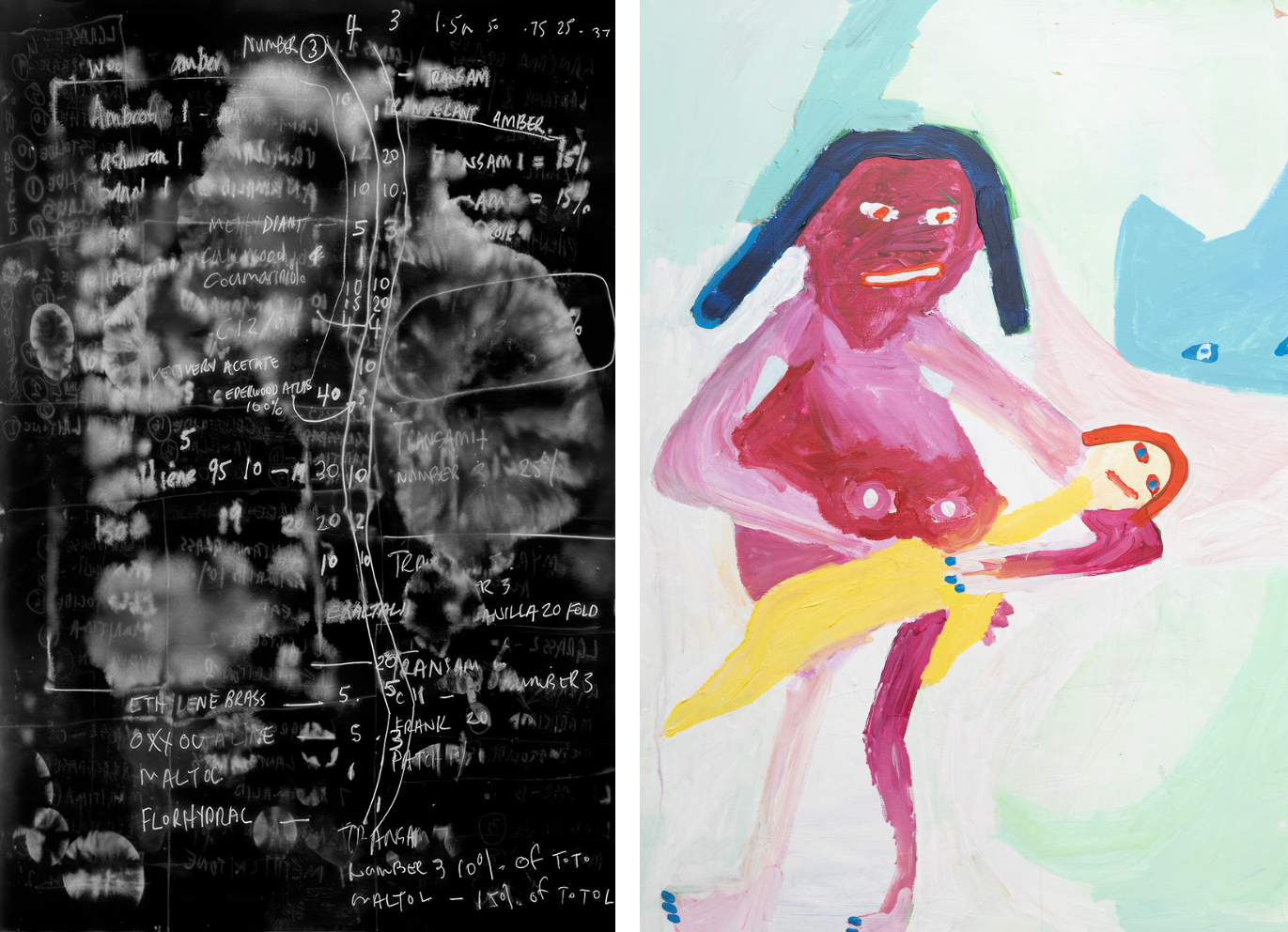
Left: David Haines, perfume sketchbook 4. Right: Eleni Ioakimidis, Untitled, 2026
Participating across both the Futures and Paper sectors, what can we look forward to at this year’s presentation and how did you curate these two distinct presentations?
This year’s presentation reflects the breadth of our program while highlighting artists working across diverse contemporary media. We will be launching a new perfume work by artist duo Haines & Hinterding during the VIP Preview. Developed from a sonic note, the work distils the conceptual sophistication of their practice into a sensory experience and offers collectors an accessible entry point into their broader oeuvre.
We are also delighted to introduce the remarkable painter Eleni Ioakimidis and to release a limited-edition vinyl work by Nova Milne.
Our Paper presentation brings together three artists with established international profiles, each exploring the body and its relationship to contemporary culture in distinct ways. The presentation includes works by Mike Parr, created in collaboration with gallery director Carolyn Craig, alongside mixed-media works by Jakarta artist Ruth Marbun and a new suite of drawings by Heath Franco. Together, the booth explores embodiment, identity and contemporary experience through the lens of works on paper.
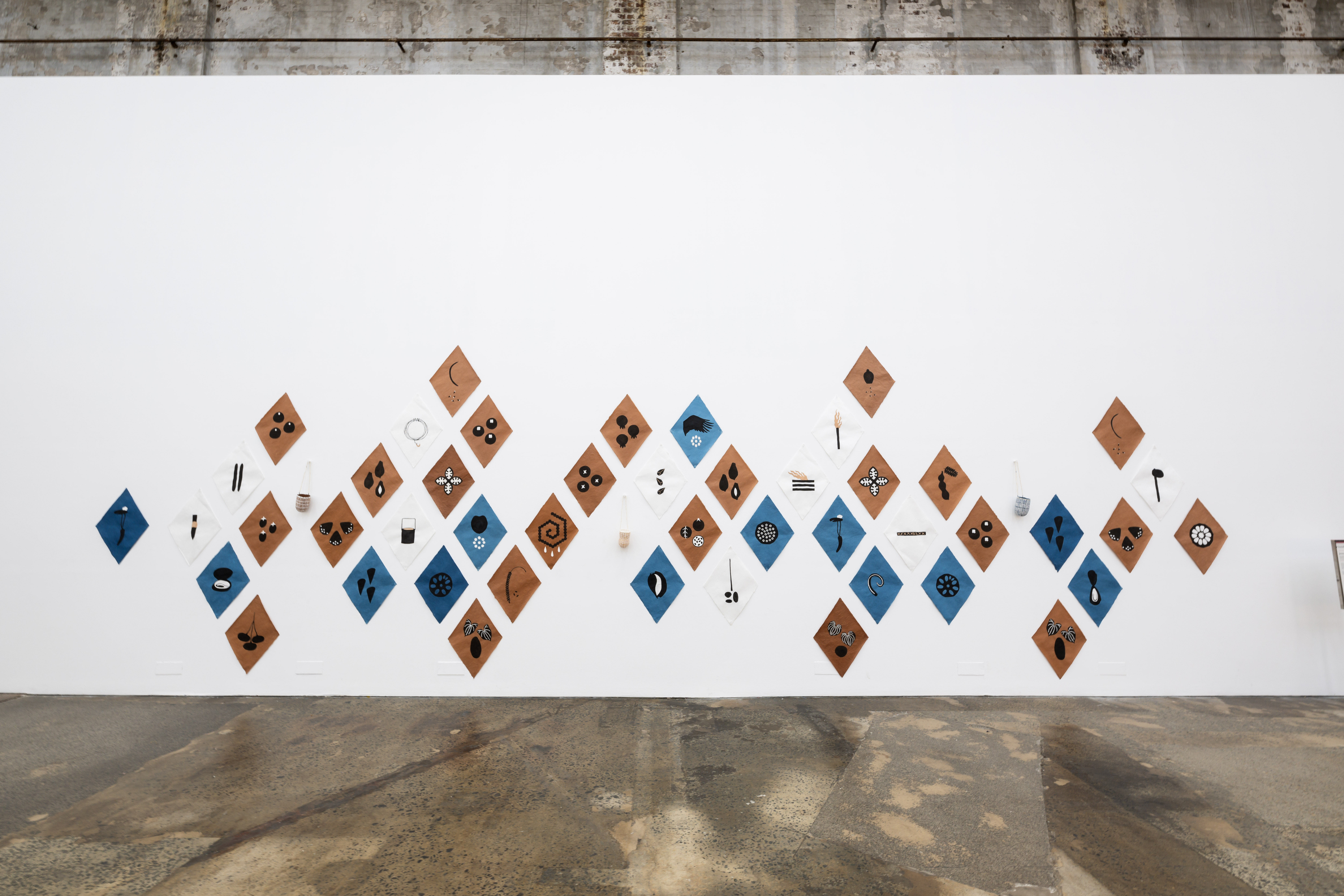
 Installation View, EO Gill, Sendiment, 2026. Photo: Zan Wimberley
What’s next for SYRUP Contemporary?
Following Sydney Contemporary, we are excited to present solo exhibitions by Luke Parker and Ben Reid, followed by a major exhibition by Haines & Hinterding, and subsequent presentations by Szymon Dorabialski and Nicholas Currie.
Alongside these exhibitions, we will be undertaking a significant renovation of the gallery to create a purpose-built stockroom and dedicated viewing space. We are also exploring opportunities to participate in our first international art fair. These developments reflect our continued investment in our artists, our collectors and the long-term growth of the gallery as a platform for ambitious contemporary practice.
Sydney Contemporary returns to Carriageworks from 3 – 6 September.
syrupcontemporary.com
Instagram
Artist Ben Mazey has lived with art across continents, from rural New Zealand to Paris, Shanghai and Sydney. Ahead of Sydney Contemporary 2026, where he exhibits with C. Gallery and joins the Talks program, he reflects on collecting instinctively, creating homes with personality, and the artworks that become lifelong companions.
Your home and studio are almost inseparable. How has living surrounded by your own work, and the work of others, shaped the way you think about what belongs in a home?
It’s been liberating to be honest. And I think really reinforced my belief that if you emotionally respond to it any work belongs in your home.
 Photo: Artist Ben Mazey & Home Studio, Courtesy of Adrian Mesko.
You’ve lived everywhere from rural New Zealand to Paris, Shanghai and now Sydney. Are there artworks or objects that have travelled with you, and why have those particular pieces stayed with you?
Absolutely – I am a firm believer in artwork and objects that we acquire kind of turning a home into an interactive charm bracelet. I have things (shout out a snoopy money box from my first boyfriend and giant concrete ear) that have been with me in every space I’ve lived in for my entire adult life.
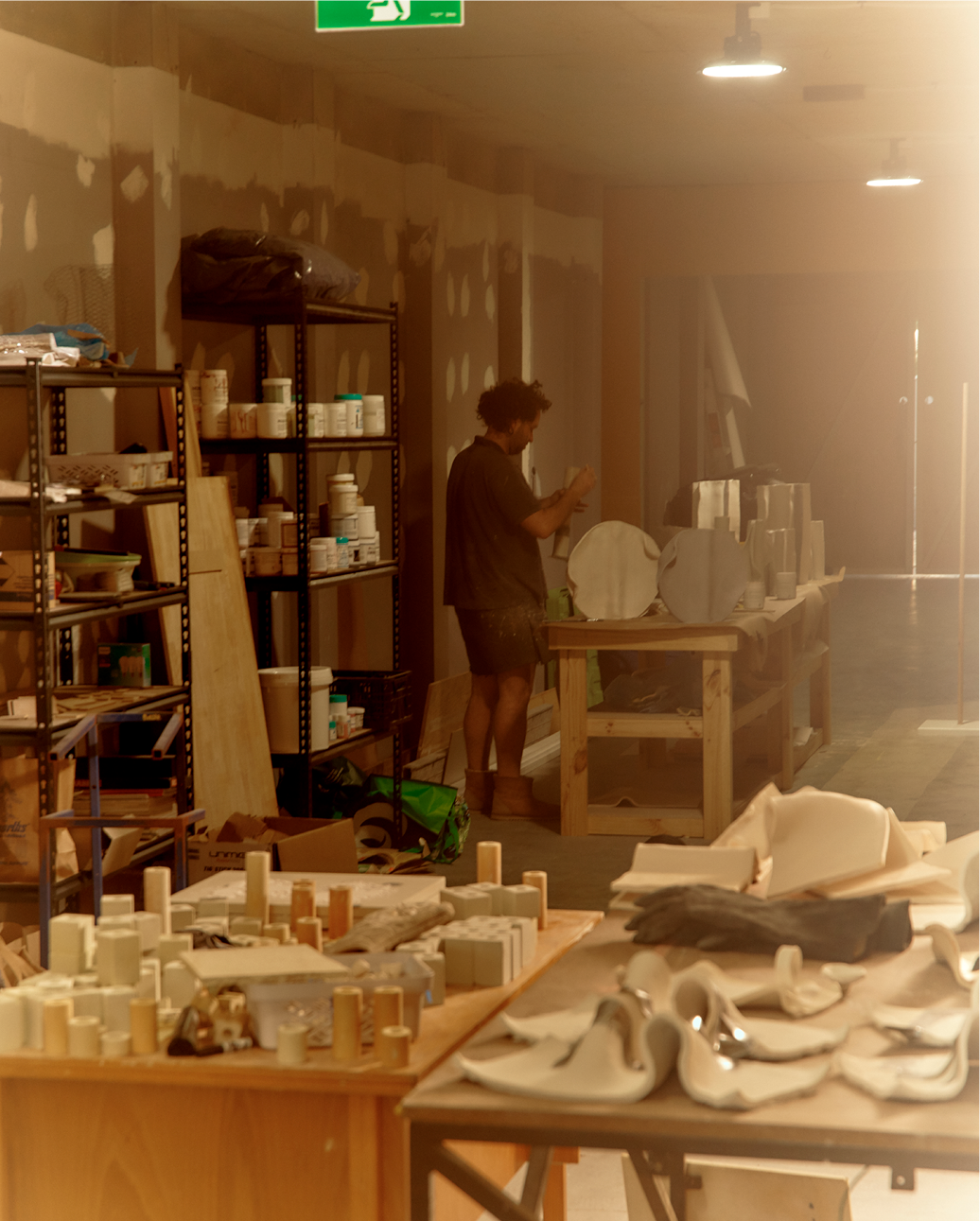
Photo: Artist Ben Mazey, Courtesy of Adrian Mesko.
As an artist, do you experience other people’s art differently once it’s in your home? Does living with an artwork reveal things you wouldn’t notice in a gallery?
I think energetically (I am prepared to have people roll their eyes at that word – I would) work definitely behaves differently in a home. I am constantly moving work around and in particular I think it’s less about the interior space, and more related to the proximity to other work, that makes me experience it differently.
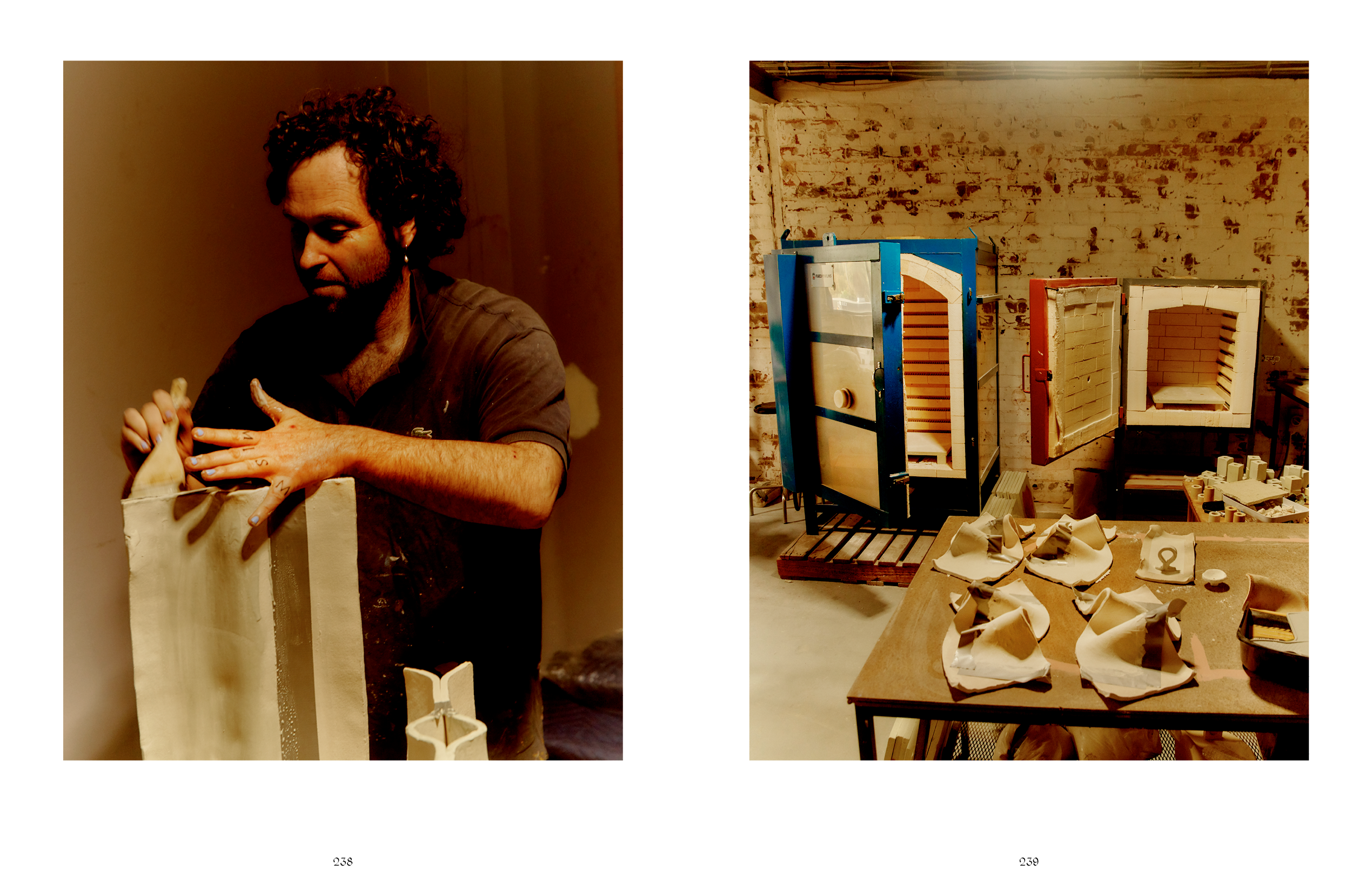
Photo: Artist Ben Mazey Home Studio, Courtesy of Adrian Mesko.
You often talk about your practice feeling instinctive rather than overly planned. Do you take the same approach when choosing the objects, furniture and artworks you live with, or are you surprisingly considered?
I have been labouring over a sofa purchase for about 6 years so that could be called considered. But I am 1000% instinctive generally.
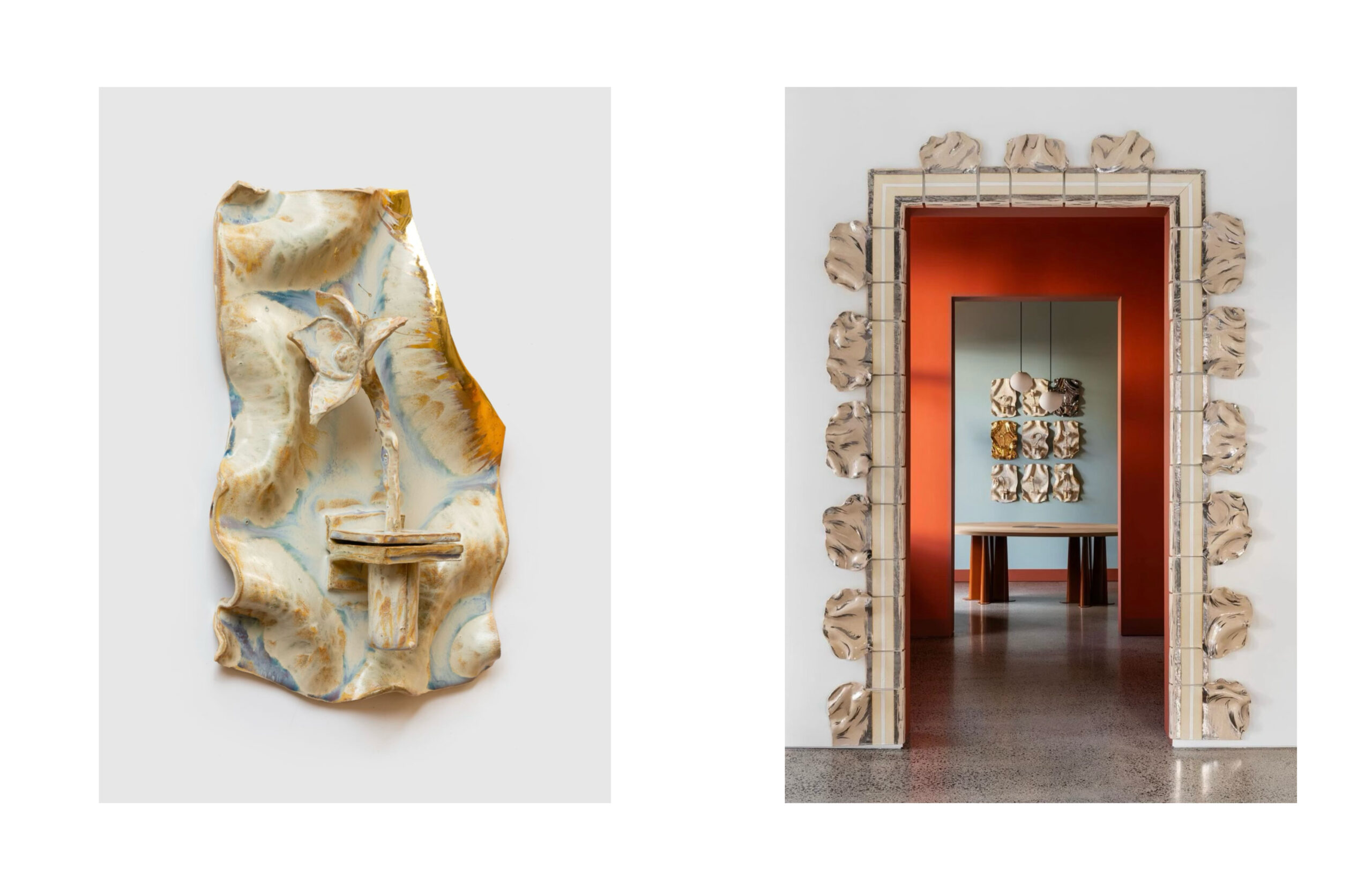
Photo: Ben Mazey, Midas Bite Petrified Floral, 2024, Petrified Florals Series, Ceramic, 44 x 30 x 12cm, Ben Mazey Home Studio, Courtesy of Adrian Mesko.
Your interiors feel highly personal but never overly polished. What do you think makes a home feel creative rather than simply well designed?
A sense of the person that lives there, not just a bunch of stuff with a certain taste level.
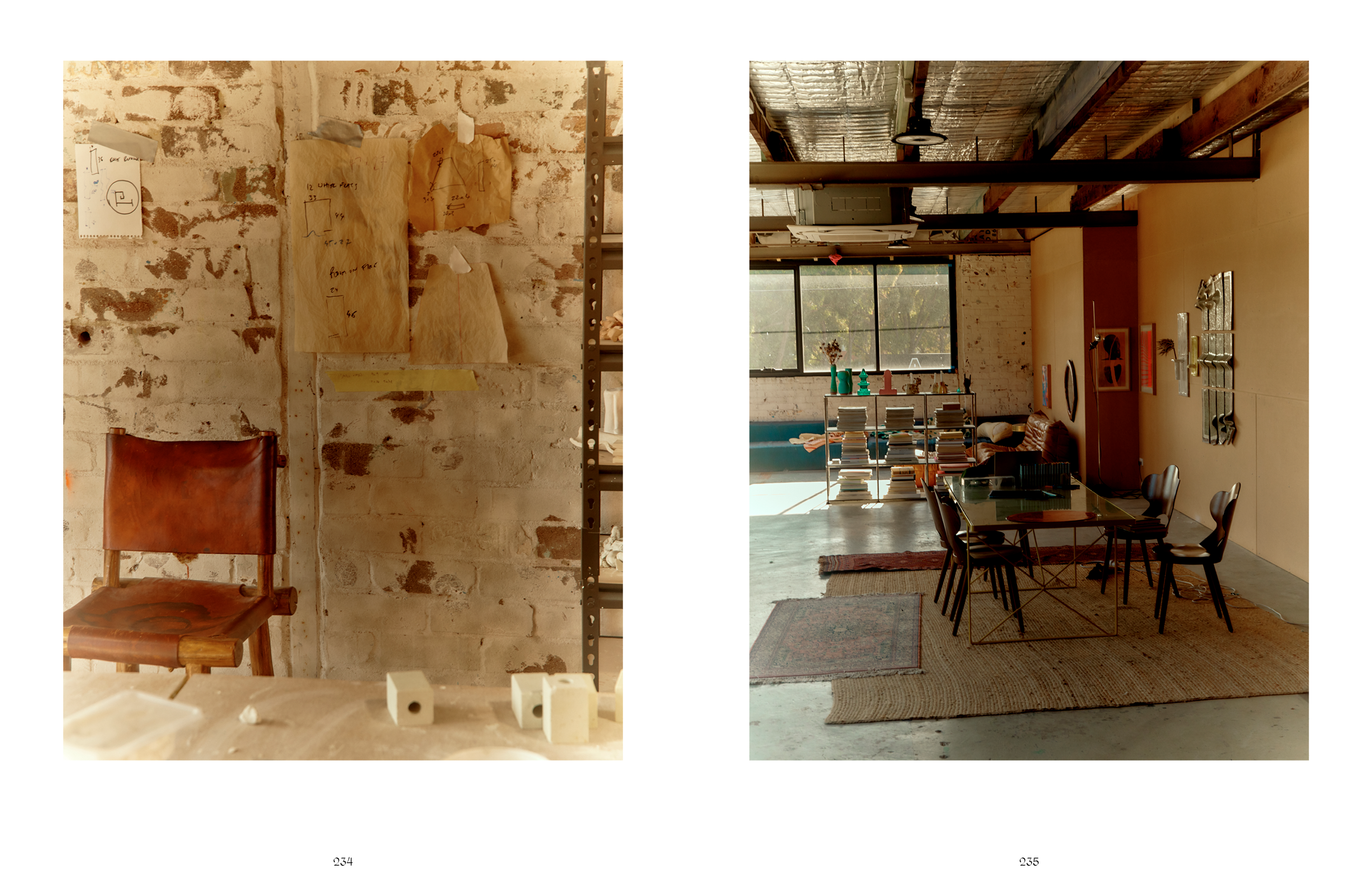
Photo: Artist Ben Mazey Home Studio, Courtesy of Adrian Mesko.
If someone was buying their first artwork for their home at Sydney Contemporary, do you have any words of wisdom for them?
I have never ever had a shopping hangover from money spent on art.
Sydney Contemporary returns to Carriageworks from 3 – 6 September.
What began as an independent space up a Windsor one-way street has grown into one of Melbourne’s most fearless hubs for contemporary and experimental art. Founded by Andy Dinan, MARS Gallery has spent over two decades operating on a simple but unwavering philosophy: trust the artists completely and never let the market dictate the vision. Having exhibited at Sydney Contemporary since its inaugural edition in 2013, the gallery has evolved alongside the Fair while remaining fiercely independent. We spoke with Andy about embracing the unexpected, bringing a timely message of “Radical Joy” to the 2026 Fair, and the gallery’s exciting new international expansion into North America.
Based in Windsor in Melbourne, MARS Gallery sits in a very specific pocket of the city’s cultural life. How does that Melbourne context shape what you choose to bring to Sydney Contemporary each year?
I never think of MARS being in Melbourne. I like to think we could have landed anywhere in the world, we just happen to be up a one-way street up the emerging end of Windsor. Being based in Melbourne has no input on what I bring to a fair. Instead, for context and curatorial themes of my shows, I look to the big issues of the world that my artists care about, or I left the content of my artists dictate the format of the shows we present.
Our stand at Sydney Contemporary is my way to send a curated art message out to the world – what I believe in, what I am seeing in the studios of my artists, who I believe need to be seen and collected NOW. This year I am bringing a show, Radical Joy. It’s a group show about how the world is in crisis and needs the radical act of joy NOW more than ever and I see artists telling their important stories with humour. Make no mistake, making genuine joy and laughter is a very considered and hard process by these artists. Nothing is left to chance in the works we will show at Sydney, they all lift you to another place through joy, beauty or laughter.

The Huxleys, Another Green World, 2026. Courtesy of the artists and MARS Gallery
MARS has been part of Sydney Contemporary since its very first edition. Looking across that decade, how has your approach to the Fair evolved as both the gallery and the broader Australian art scene have changed?
I think 10 years of showing at Sydney Contemporary has shown me that good collectors and curators are always looking, and good artists are always making, and the two over time will always find each other. MARS keeps turning and changing colour just like the planet! I think in the art world and the business world you need to keep moving. The minute you think you have the answers, the bucks or the strategy, the universe will stuff you up, so I like to think we keep evolving as our artists’ needs and wants do. I don’t worry too much about the larger art scene these days; we take MARS where we feel it should go. There are so many layers to the art world. I care passionately about artists and their work and it is the work I always come back to, no matter what.

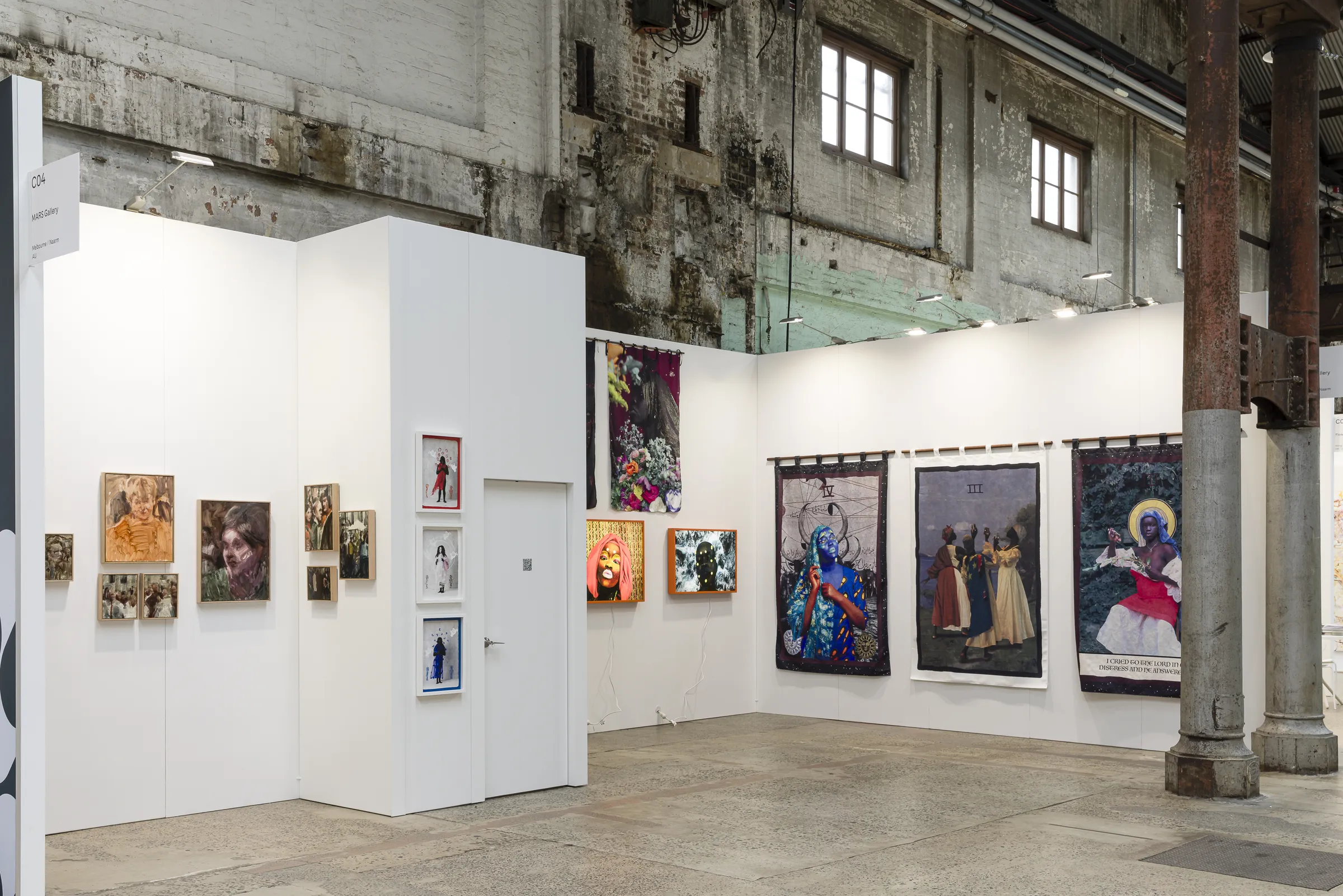
MARS Gallery, Sydney Contemporary 2013. Photo: Jacquie Manning
Across the years at Sydney Contemporary, has there been a particular artist presentation or risk you took that felt like it really paid off, or changed how you think about fairs?
Over 24 years, MARS has now staged at over 29 local Australian fairs and 13 international fairs from Aotearoa to Photo London to Photo Paris to KIAF. For a decade, Sydney Contemporary has been an annual highlight. We are a small, tight, hardworking, earnest gallery showing emerging to mid-career artists and our approach is always the same—take risks and believe in our artists and their work. Collectors and institutions have always responded to that. I no longer see art fairs as an option in our exhibition calendar; they are an important essential of our year.
MARS has long supported experimental and new media practices. How has audience appetite for those kinds of works shifted in the fair environment since 2013?
I do believe fair attendees love seeing varied mediums and being challenged. I am lucky that most MARS artists work across many mediums and so I have a great selection of mediums to choose from. I never worry what the market or audience wants. I tried that and it didn’t make me happy, and MARS is not a shop. I simply show whatever the artist needs to show in whatever medium the artist works in. Real artists are going to make art with their unique voice, with whatever medium they want, and they must have the choice always to create what they want. I must show only what I believe in, it’s pretty simple.

MARS Gallery at Sydney Contemporary 2025.
As Sydney Contemporary marks its 10th edition, what feels most significant to you about having been part of its evolution from the early years through to now?
I have loved showing at Sydney Contemporary for the last ten years. There have been spills (who can forget when Daniel Agdag’s glass sculpture was knocked from a plinth by a backpack) to sell-outs to no sales. I have loved them all, been sick, been exhausted, and talked until I had no voice left. I would not have it any other way and am sure this fair will delight in 2026 yet again.
From the early years, Sydney Contemporary has been a fair that listened to what galleries wanted – where they wanted their stand, what they were promoting and why. It is two-way communication and that is so important to me in building my gallery.

Jenna Mae Lee, to gather to nourish to sustain, 2022-23, included in Sydney Contemporary Installation 2023
Looking ahead, what exhibitions, collaborations, or projects are you most excited about and what can audiences look forward to from the gallery in the coming year?
I have just signed an agreement for MARS Miami, which is truly exciting for me and the next international chapter of MARS. I have stayed close friends with many of our ex-staff and interns and Wided Khadraoui was an outstanding young gallerist who went on to work around the world and settled in Miami. It was a natural step then to offer Wided the opportunity to take MARS artists to the USA. I’ve always loved connecting people, ideas and places, and that’s really how Wided and I think about MARS Miami. For me, this is an opportunity to introduce Australian artists doing genuinely exciting, thoughtful, unexpected work and general cool shit to new audiences across North America. There is so much incredible practice happening in Australia that deserves to be part of a broader international conversation, and Wided will create those connections.
MARS is not simply a place that sells art. The MARS family see the gallery as a platform that creates opportunities for artists to meet collectors, curators, museums and collaborators, and for conversations to happen that might not otherwise have existed. Wided and I hope to build something collaborative and relationship-driven, creating long-term opportunities while sharing some of the most interesting voices coming out of Australia with audiences across North America. MARS Miami is a natural next stop for me.
Sydney Contemporary returns to Carriageworks from 3 – 6 September.
marsgallery.com
Instagram
Facebook
Cover Image: Featured artworks – Malaluba Gumana and Neil Frazer, Photo: Riste Andrievski
For Max and Gabby Germanos, collecting art is about connection rather than formula. Their collection focuses on figurative and portrait-based art that holds tension and emotional ambiguity – pieces that act as daily companions woven into family life rather than static objects. Through their curatorial platform, 3:33 Art Projects, they actively champion emerging and mid-career artists. Ahead of Sydney Contemporary, Max and Gabby share what they are looking forward to at the Fair, advising new collectors to trust their curiosity, build relationships, and only buy what they truly want to live with.
Photos: Riste Andrievski
What first sparked your interest in collecting contemporary art?
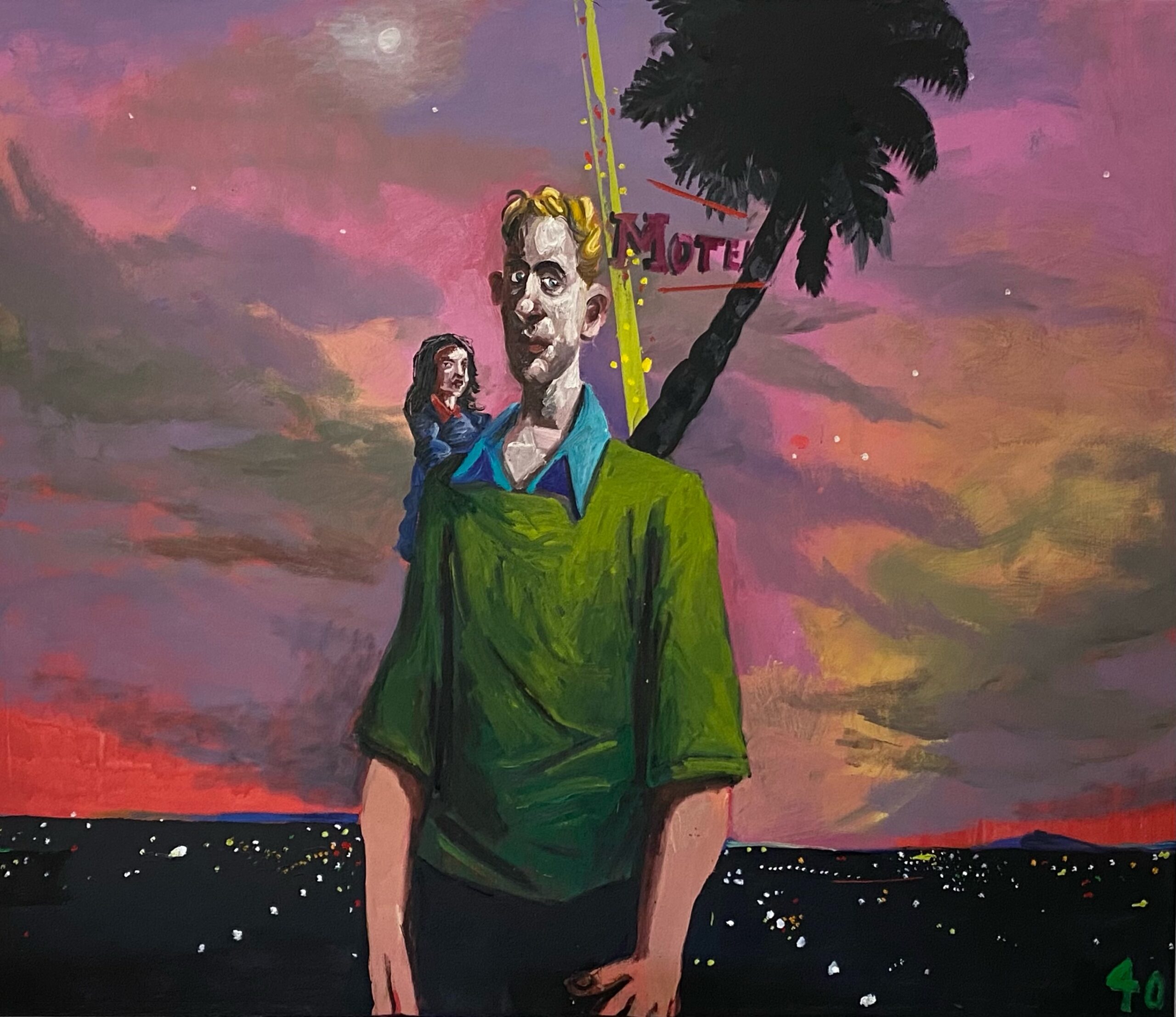
It began quite naturally: through looking, living with art, and being stopped in our tracks by certain works. In the late 1990s, while living in a terrace in Alexandria, we started buying contemporary Australian art, initially with an interest in abstraction and First Nations art. Then came what we now think of as our “McLean moment”: encountering McLean Edwards’ paintings opened up a different kind of emotional and psychological pull. The work was not simply beautiful; it was strange, charged and impossible to ignore. That sense of being consumed by a work, of needing to return to it again and again, was what truly sparked the collecting journey.
 Left to Right – Nawurapu Wununmurra, McLean Edwards, Ken Whisson, Mai Nguyen-Long and McLean Edwards, Photo: Riste Andrievski
When encountering a new work, what qualities or ideas tend to draw you in?
We are drawn to works that hold tension, ambiguity and emotion. We tend to shy away from the purely decorative; in fact, it is often the unresolved or slightly unsettling quality that keeps us looking. Figurative and portrait-based works have become especially important because they suggest stories without closing them down. We respond to art that creates room for conjecture, works that make you wonder who someone is, what has happened, or what might happen next.
Has your approach to collecting evolved over time? If so, how?
Yes, very much. At the beginning, the collection was more instinctive and exploratory. Over time, it has become deeper and more considered. We have found ourselves returning to particular artists and following their practices over many years, sometimes collecting in real depth. The collection now has a strong focus on Australian contemporary artists, particularly figurative and portrait-based work, and we have become increasingly interested in supporting mid-career artists, as well as creating opportunities for artists through our curatorial platform, 3:33 Art Projects.

Mclean Edwards. Photo: Riste Andrievski
What role does living with artworks play in your everyday life?
Living with art is central to the way we experience the collection. These works are not separate from family life; they are an integral part of the house, the conversations we have and the way we think. Some paintings offer energy, others invite contemplation, and some shift quietly depending on the day. For us, living with art means allowing works to keep revealing themselves over time. They become companions rather than objects.

McLean Edwards, LA Story 2, 2012, Photo: Riste Andrievski
Your collection feels deeply shaped by long-term relationships with artists and a genuine sense of connection rather than a fixed collecting formula. How have those personal relationships influenced the way the collection has evolved over time?
We value the deep friendships we have developed with many of the artists in our collection, and feel very privileged to have such remarkable people in our lives. Collecting is often spoken about in terms of acquisition, but for us it has been much more about connection with artists, ideas and the wider community around contemporary art. Getting to know artists and following the development of their work over time has made the collection more personal and more layered. It also means that works carry memories: of studio visits, dinners, conversations, exhibitions and moments of shared enthusiasm. Those relationships have shaped the collection in ways no fixed formula ever could.
Through 3:33 Art Projects, we have also had the privilege of working with some of Australia’s leading artists, as well as some of its most exciting emerging artists, across more than 70 solo exhibitions over the past 15 years.

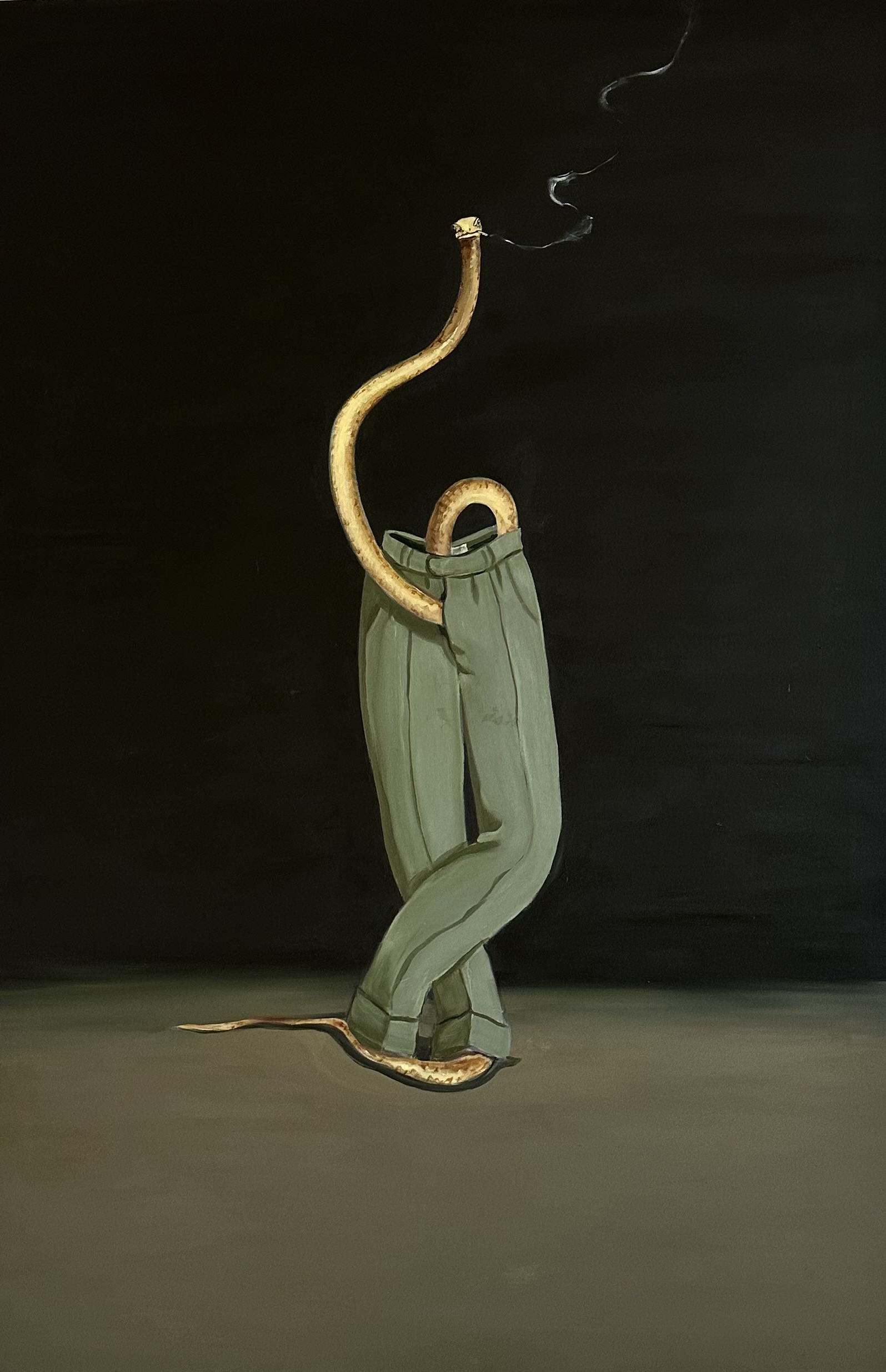
Joanna Braithwaite, Pant Man V, 2025, Photo: Riste Andrievski
Sydney Contemporary brings together a wide range of artists and galleries each year. What do you most look forward to discovering at the Fair?
What is exciting about Sydney Contemporary is its sense of concentration and possibility. You can see so much at once: established galleries, younger spaces, artists you have followed for years and artists you are encountering for the first time. We look forward to those unexpected moments of recognition: seeing a work that makes you stop, returning to a gallery stand for a second or third look, or beginning a conversation that may lead somewhere over time. The Fair is also a wonderful reminder that collecting is not solitary; it is part of a broader ecosystem of artists, galleries, curators and audiences.

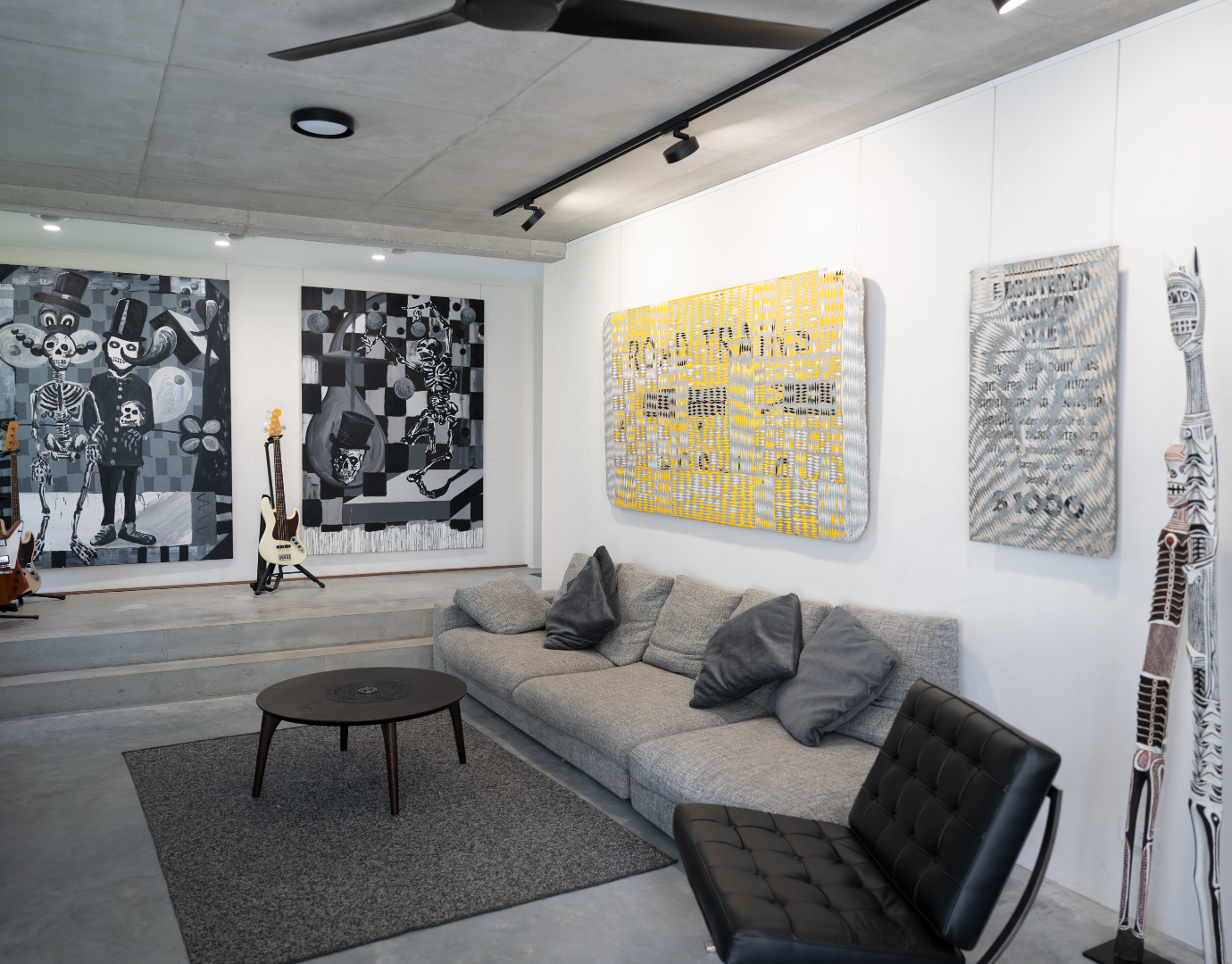
David Griggs (Right), Wanapati Yunupinu (Left), Nawurapu Wununmurra (Far Left). Photo: Riste Andrievski
What advice would you give to someone beginning their journey as a collector?
Start by looking as much as you can, and trust the works that stay with you. Visit galleries, fairs, artist-run spaces and exhibitions; ask questions; speak to artists and gallerists; and give yourself time to understand what genuinely moves you. It is easy to feel that you need a strategy from the beginning, but some of the most meaningful collections grow through curiosity, patience and relationships. Buy what you want to live with, not what you think you should buy. If a work keeps pulling you back, that is worth listening to.
Sydney Contemporary returns to Carriageworks from 3 – 6 September.
What began as a shared ambition between two friends has become one of Australia’s most influential contemporary galleries. Founded by Ursula Sullivan and Joanna Strumpf in 2005, Sullivan+Strumpf has spent the past two decades championing ambitious artists and building careers. Since Sydney Contemporary first opened its doors in 2013, the gallery has exhibited at every edition of the Fair, growing alongside it over more than a decade. We spoke with Ursula and Joanna about memorable moments, evolving alongside the Fair, and what keeps bringing them back.
Sullivan+Strumpf has exhibited at every edition of Sydney Contemporary since its launch in 2013. What has sustained that ongoing commitment to the Fair over more than a decade?
The audience is key to us, ever since the first edition. We find that it’s always the audiences who bring the energy and enthusiasm for contemporary art.
 Gregory Hodge, Suspension Painting, 2019. Installation view, Installation Contemporary at Sydney Contemporary 2019. Photography by Mark Pokorny.
As one of Australasia’s leading contemporary galleries, how has your approach to the Fair evolved as Sydney Contemporary itself has grown in scale, ambition, and international reach?
We give the fair a lot of thought, we want bring a unique viewpoint – something that hasn’t been seen before, works that are inspiring and interesting.
Alex Seton, Winners Are Grinners (Yet Another Dictator), 2017-2019. Installation view, Installation Contemporary at Sydney Contemporary 2019. Photography by Mark Pokorny.
Looking back to those early editions in 2013, how different did the energy of the Fair feel then compared to the environment you’re presenting in today?
The fair and its audience have grown together, maturing with experience and expanding in viewpoint. Our first booth for Sydney Contemporary was quite unusual for us, we installed one massive painting by Sydney Ball from the 1970s at the front, with a large stockroom behind it. Safe to say, it was our most minimal presentation ever. Now we see the fair as an opportunity to present works by a really wide range of our artists, a kind of extension of the gallery itself.

Ursula Sullivan and Joanna Strumpf at Sydney Contemporary, 2019
Your program spans major Australian contemporary artists across generations and mediums. How do you approach distilling such a broad and dynamic roster into a single booth presentation each year?
Of course, you can’t show everyone or do everything. For us, it’s about ensuring we’re presenting something fresh and unexpected, alongside local favourites.
Across more than ten years of participation, are there particular Sydney Contemporary presentations or artist moments that stand out as especially defining for the gallery?
While there are too many great moments to mention, one that stands out was the 2017 edition, when we presented a solo booth of works by Tony Albert. It remains one of the busiest fairs in our gallery’s history — the presentation sold out within a couple of hours of the vernissage, and we remember being pulled in opposite directions by usually very composed collectors! The same happened with Alex Seton’s presentation of his puffer jacket series in 2024.
We have had some impressive works in Installation Contemporary over the years, including Ramesh, Alex Seton, Lindy Lee, Michael Lindeman, Sanne Mestrom, Greg Hodge, just to name a few. Our collaboration with David Flack in 2019 was incredible, resulting in the best booth shots ever!

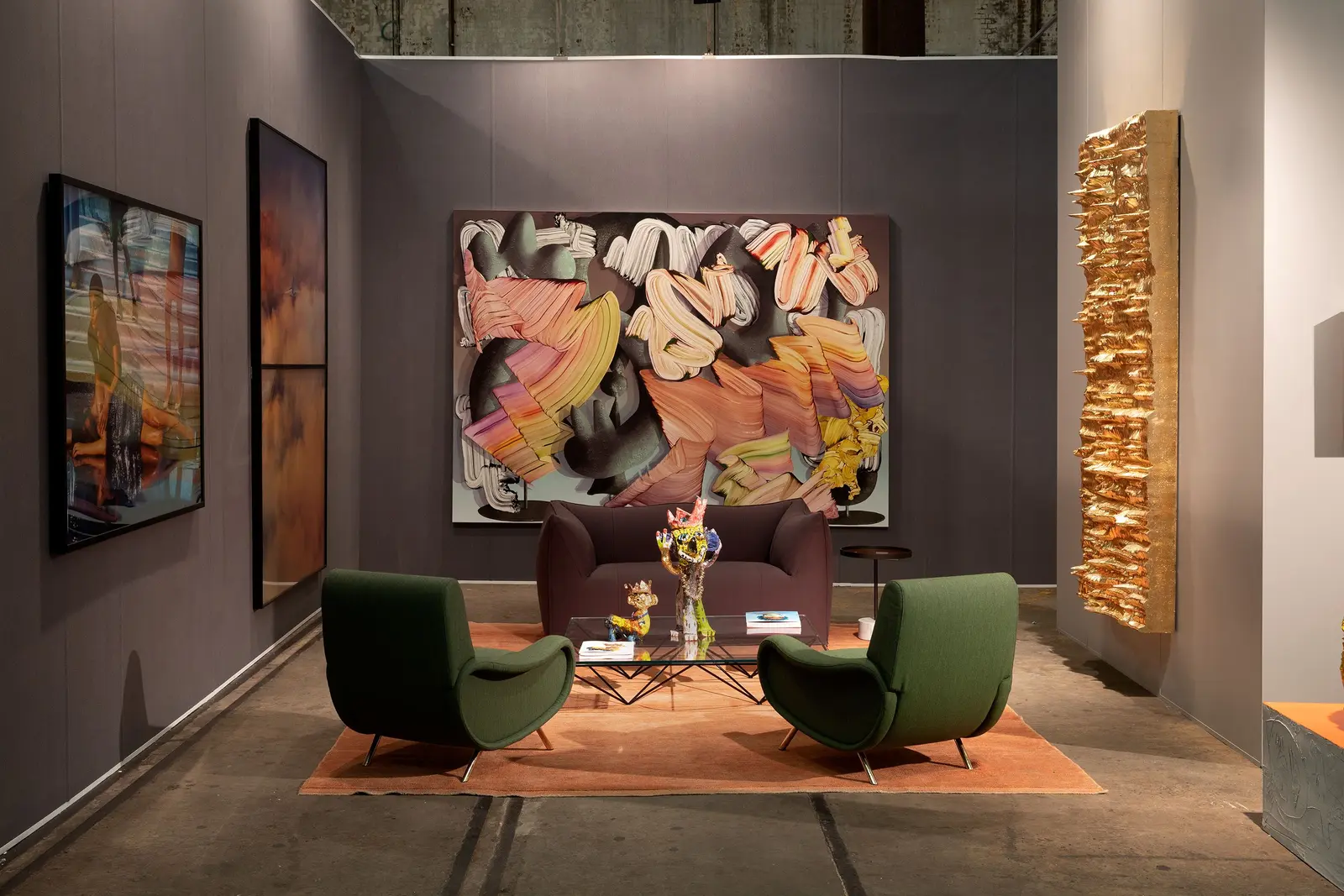
Sydney Contemporary, booth designed in collaboration with Flack Studio, 2019. Installation view, Carriageworks, Sydney Contemporary. Photography courtesy of Sydney Contemporary.
As Sydney Contemporary marks its 10th edition, how do you see its role in shaping the Australasian contemporary art landscape going forward?
The fair just keeps getting bigger and better – bring on the next 10 years!
___
Sydney Contemporary returns to Carriageworks from 3 – 6 September.
sullivanstrumpf.com
Facebook
Instagram
Photographer, artist, and editor Kitty Callaghan shares her top Sydney picks. From secret gardens and top swimming spots to must-see exhibitions, she has your guide to the city covered.
To Kitty, Sydney is a deeply nostalgic city steeped in history, defined just as much by its dramatic coastal inclines as the rich tapestry of cultures stretching west to the Blue Mountains. It’s a place where the past feels constantly present, making it a global bucket-list destination that is entirely worth the journey.
What makes Sydney stand out as a cultural destination?
Sydney feels nostalgic, in my opinion, both to those who have spent their lives here and those who visit. People have been living and working on this land for tens of thousands of years. There is a certain reminiscence here that feels apparent, particularly in summer – even if you are only just getting to know it. Something I love most about our city is its hills and inclines so close to the ocean. Along the coastline, there is so much to do and see all in a relatively small area, steeped in history. The city sprawls far west to the foothills of the Blue Mountains – there is such a rich tapestry of stories, cultures and communities within it that make ours a global pick on the bucket list. It is worth the journey.
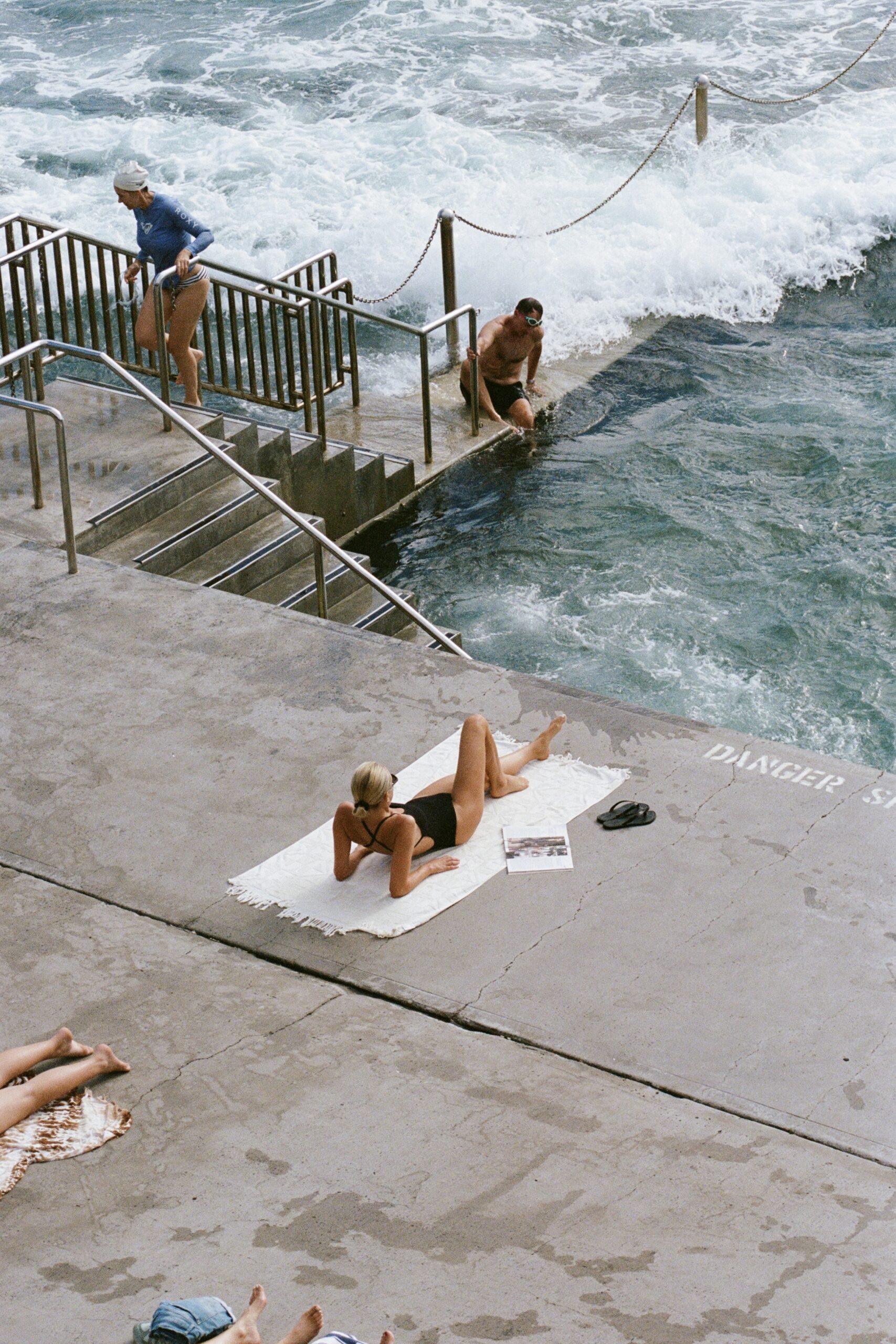
If you have friends visiting from outside of town, what are you adding to their itinerary?
If it’s during Autumn or the tail end of Winter, I would say getting on a ferry or even a whale watch boat – they come so close to our shores during migration season, and seeing the harbour and going through the heads gives the visual perspective you need. You’d have to have a swim at Wylies, year round that’s a must. If you want to do some shopping, stop by P Johnson Femme and Lucy Folk.

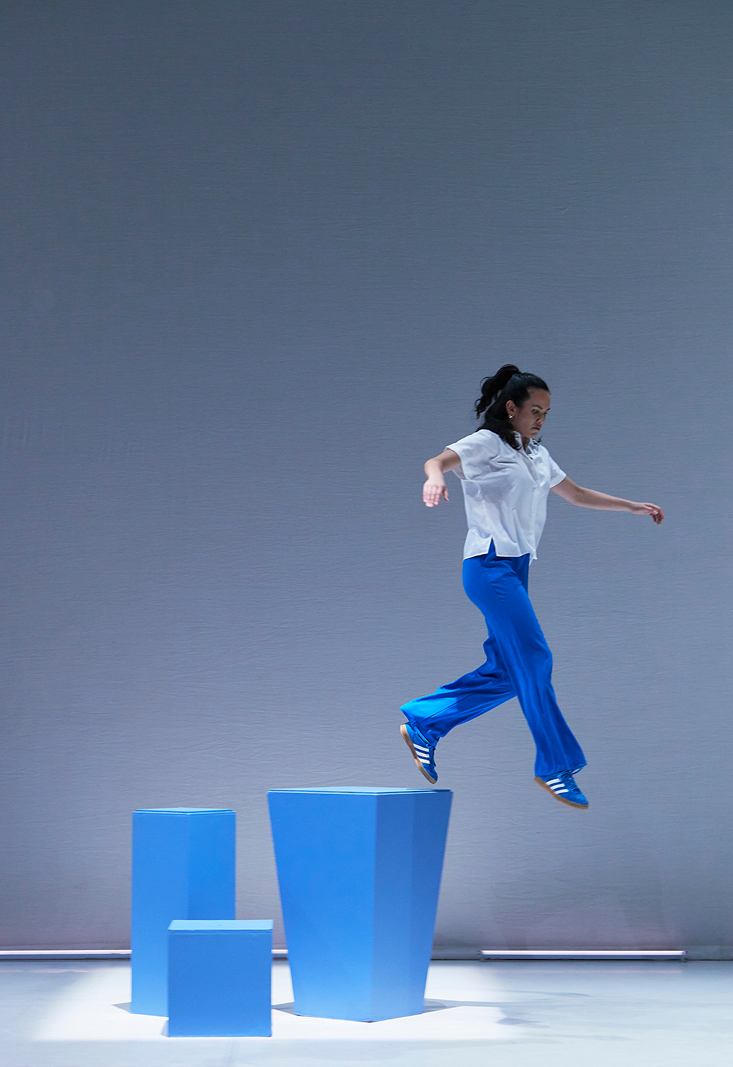
Amrita Hepi, Rinse
What cultural events or exhibitions coincide with Sydney Contemporary that you recommend?
Getting to the Art Gallery of NSW should be on your list – my pick in September would be the Billy Bain exhibition. Amrita Hepi will be performing Rinse at the Sydney Opera House on September 10 – 12. I was lucky enough to see this one woman show before she took it international. It weaves together autobiographical anecdotes on art, feminism and desire. There will be a group show of painting, textiles and sculpture opening at China Heights Gallery, featuring artists like Benedict Dos Remedios and Midori Goto. If you wanted to cap off your Sydney Contemporary week with music, Happy Mondays at The Enmore Theatre would be perfect on September 5.

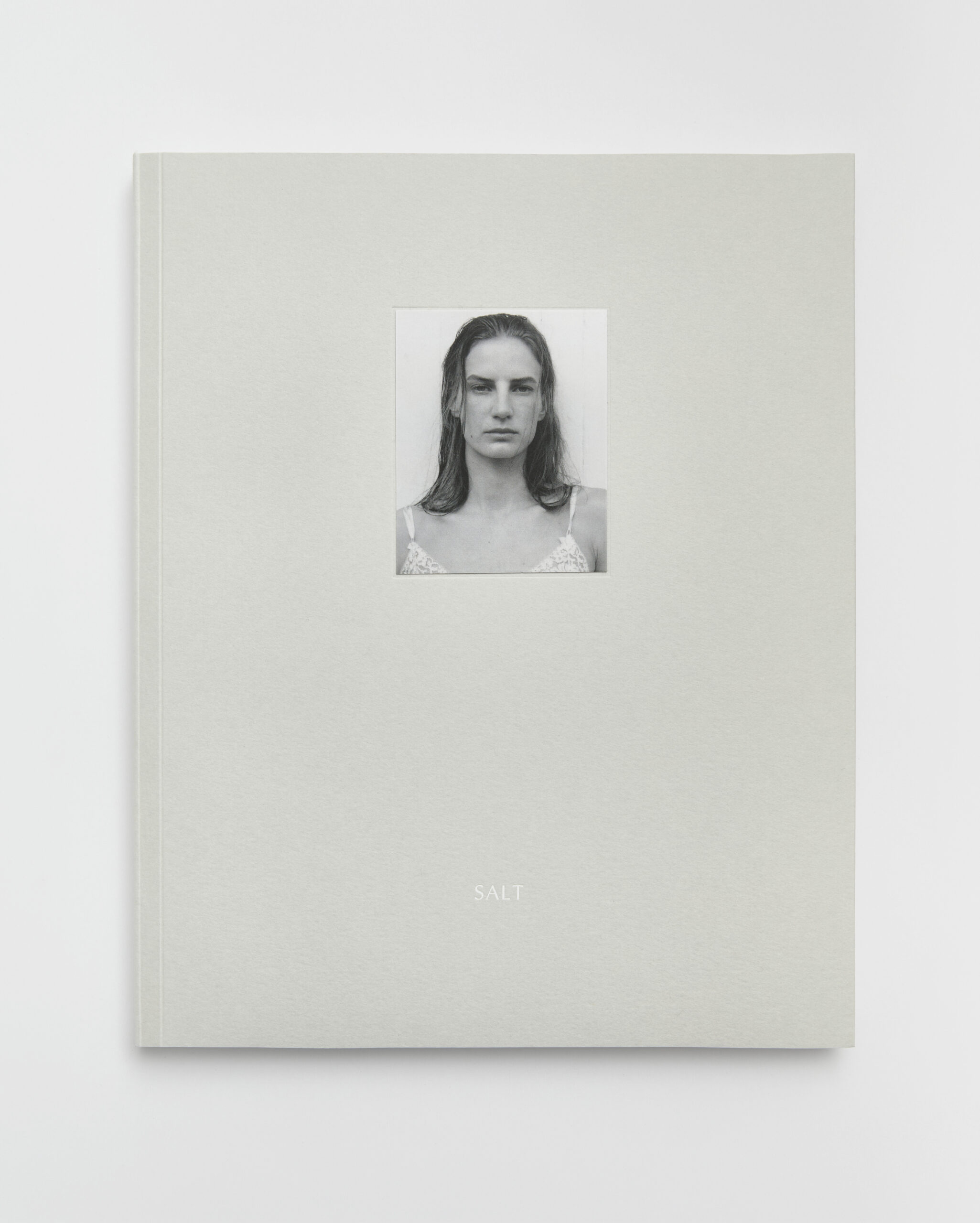
Salt, by Sophie Brockwell and Rosie Dalton
What are some places, people or experiences in Sydney currently inspiring you?
Although I am yet to spend some proper time there, I am always drawn to the ceramics coming out of Ryan Der’s Tamarama studio, from artists like himself and Ria Desiree. I love anything that Mass Practice work on, and recently went to the launch of Salt, a photographic book by Sophie Brockwell with poetry and prose by Rosie Dalton. And in terms of people, visiting Kien Situ’s studio before his residency recently concluded at Artspace Sydney had me feeling very inspired, both by his practice and him as a person.

Anna Pogossova, …the call from within things, Passage Gallery. Photo: Campbell Henderson, courtesy Passage Gallery
Do you have a favourite public art installation or mural in the city? What makes it special?
I’m not sure that it would be classified as a public art installation, but something I love about Passage Gallery in Chinatown, is that you can visit at any hour of the day and look. When I have worked late nights and wandered past, I love seeing the glow of the window from the street, I will usually make my way up the escalators. My favourite way to see a body of work is on my own when there is a quiet in the air. They have had amazing installations on show over the years – recently Anna Pogossova and Patricia Piccinini were favourites.

10 William Street
After a day of exploring Sydney Contemporary, where would you go for dinner and drinks to continue the evening?
If you want to be nourished both by food and energy, I would say go to 10 William Street for dinner.
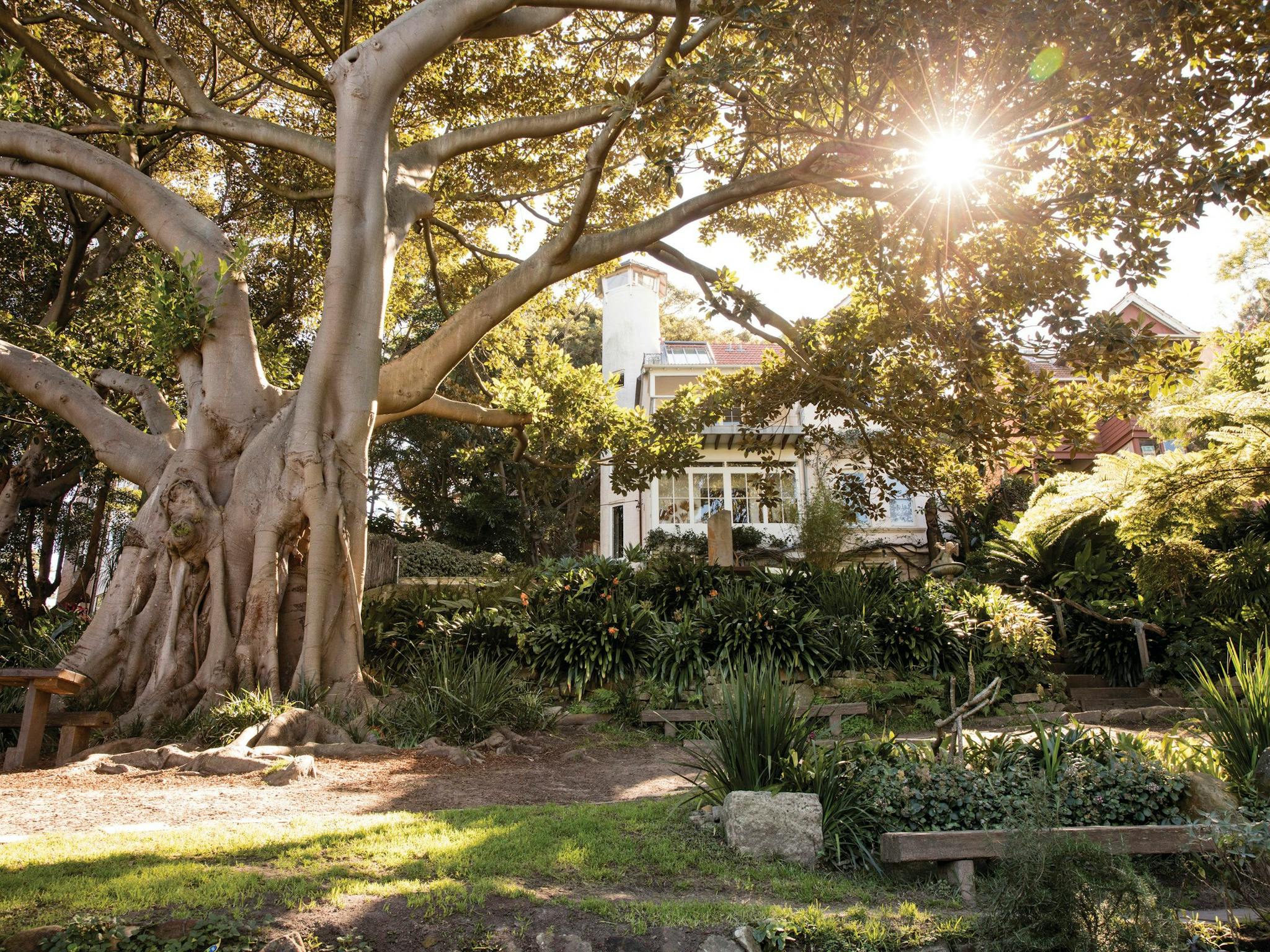
A hidden gem?
My mum always took me to Wendy Whitely’s Secret Garden in Lavender Bay growing up, and it holds a special place in my heart. You can sit and take in the best view of the city, all the while feeling a million miles away from it. The love and care that Wendy and her gardener Corrado have put into that space is special, we are so lucky to have it.
Driven by an evolving dialogue between design and science, architect Stephen Jolson and his wife Lisa approach contemporary art not as a pursuit of mere acquisition, but as a living record of their shared human experience. For them, a true collection is an authentic portrait of a life lived where art does not merely decorate architecture, but actively asserts its own presence to challenge, shift, and deepen the spaces it inhabits.
Ahead of Sydney Contemporary, we spoke with Stephen about the milestones that shaped his family’s collecting journey, how designing cultural landmarks like Point Leo Estate reframed his view of art as a legacy of stewardship, and why the Fair remains a vital annual nexus for creative connection and community.
Portrait: Stephen Jolson and Caleb Shea Sculpture

Ben Quilty, Rorshach After Johnstone, 2011. Purchased from Jan Murphy Gallery.
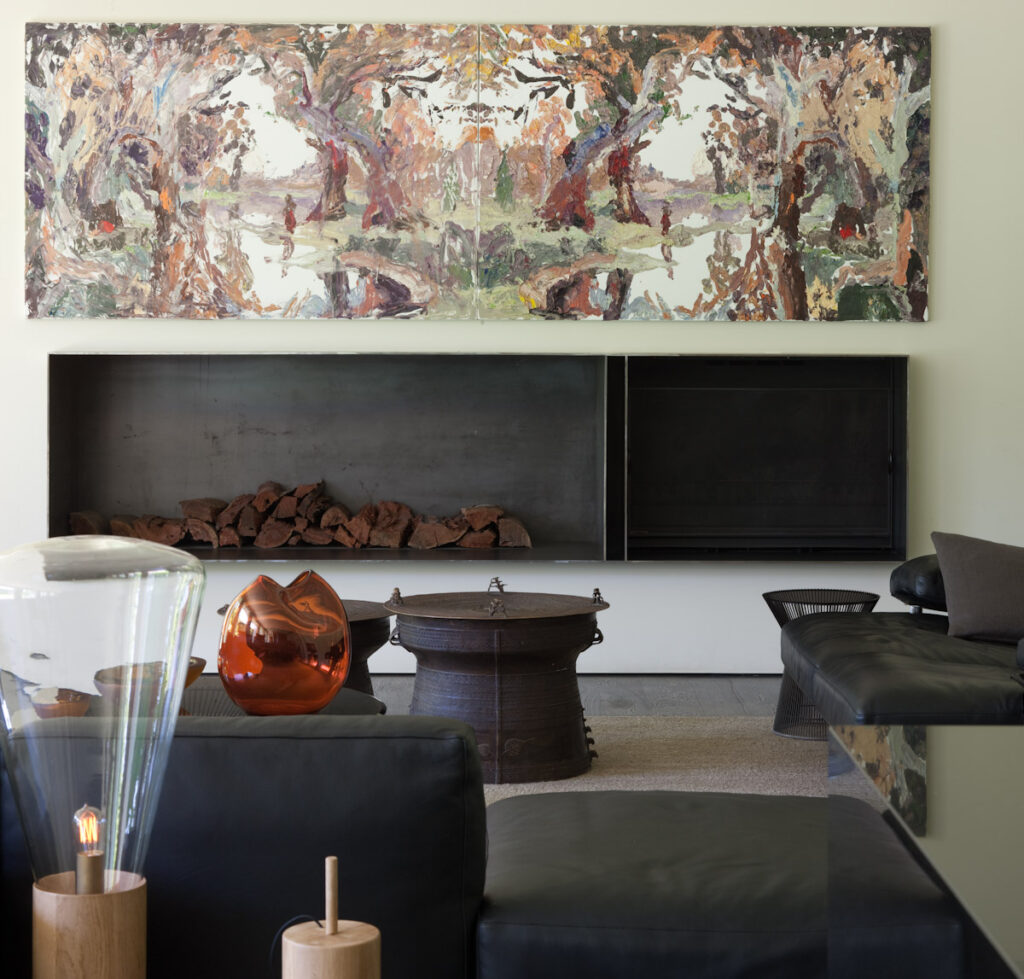
What first sparked your interest in collecting contemporary art?
Looking back, I don’t think my interest in collecting began with art itself. It began with curiosity. Lisa and I built our first home early in our relationship over 20 years ago. The walls were largely blank, not because we wanted them to be, but because we simply couldn’t afford the works we admired. Over time those walls slowly filled. Looking back now, I don’t really see a collection of artworks. I see a chronology of our lives. Every acquisition marks a friendship, a journey, a celebration, a loss or a conversation that moved us, challenged us or simply made us react.
Architecture naturally led me towards art. It taught me that before we can cast our eyes forward, we first need to look backwards. History, landscape, culture and the rituals of life all become part of the design process. Architecture is not an imposition upon place. At its best, it is an act of response. Art asks many of those same questions through a different medium.
Travel reinforced those lessons. Experiencing different cultures heightened my awareness of light, texture, materiality and the local vernacular. I came to appreciate that architecture, painting, music, landscape, food and the objects we live with are all different ways in which people interpret and respond to their surroundings. Together they deepen our understanding of the human experience.
Collecting has never really been about ownership. It has been about curiosity, engagement and learning to see.
When encountering a new work, what qualities or ideas tend to draw you in?
Like architecture, I am drawn to work that makes me stop and think.
The strongest works don’t always reveal themselves immediately. They ask something of you. They provoke a reaction, invite reflection or continue to unfold over time. I’m interested in artists who have developed an authentic language of their own, where process, material and idea become inseparable. You are not simply engaging with an object, but with years of thinking, questioning and making.
One of the most memorable experiences of my career began with an unexpected phone call from a tour guide with clients from Mumbai. He had taken them to visit Point Leo Estate, and upon arrival, they wanted to meet the architect. Within an hour they were in my office, and what began as a spontaneous conversation ultimately became an invitation to design a non-denominational temple within the UNESCO World Heritage landscape of Hampi in India.
What has stayed with me wasn’t simply the commission itself. It was the reminder that architecture and art share something fundamental. Both have the capacity to create an immediate emotional response before a single word is spoken. That instinctive human reaction is something I continue to look for whenever I encounter a work of art.
I’m not necessarily looking for beauty in the conventional sense. Beauty, for me, is something that invites deeper engagement. Some of the works I value most have challenged my assumptions, changed the way I think or simply stayed with me long after I first encountered them.

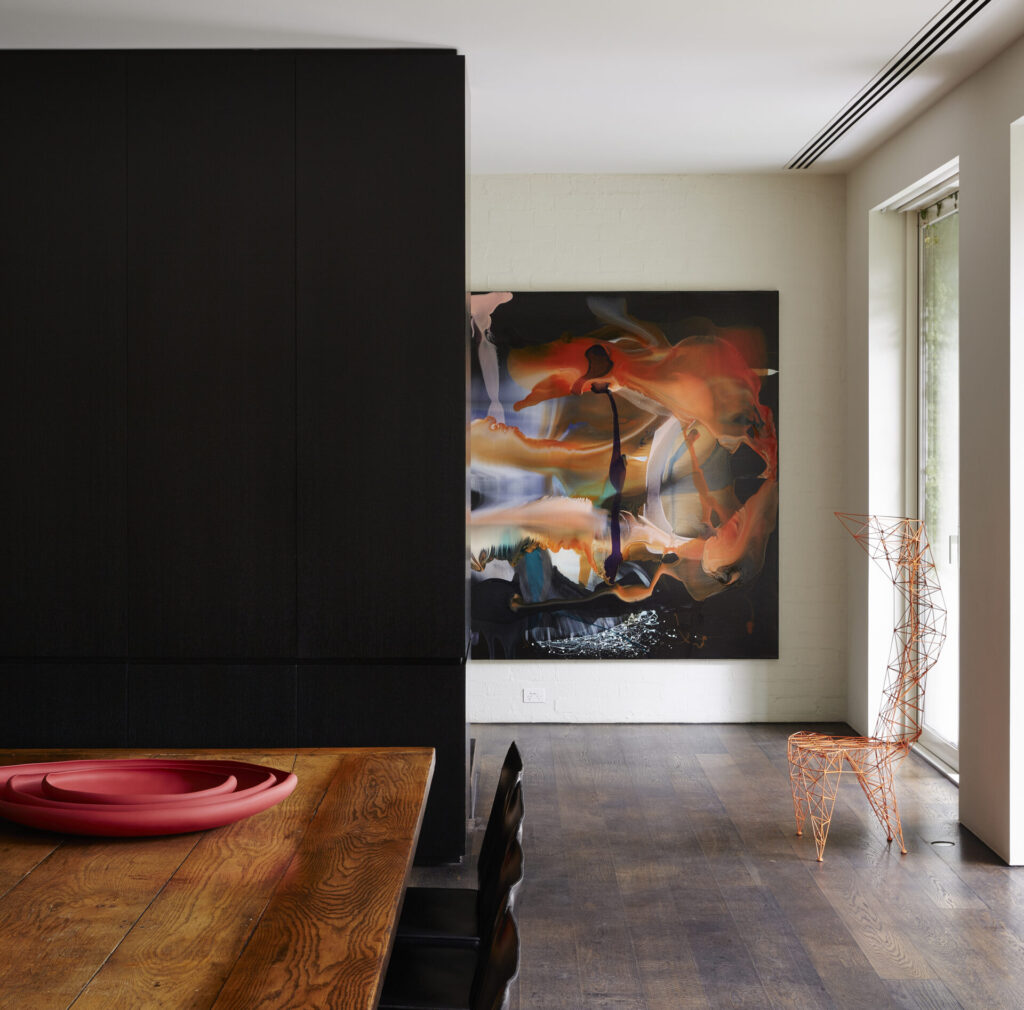
Dale Frank, Creative Guilt Beth Din and Flem Embroidered Words, 2008
Has your approach to collecting evolved over time? If so, how?
Completely.
When Lisa and I first began collecting, our decisions were largely instinctive. Over time they became conversations. Lisa approaches the world through science and medicine. I approach it through design and the built form. Those different ways of seeing have quietly shaped every acquisition and, in hindsight, made our collection stronger.
One of my favourite stories involves Robert Owen. I visited his studio and was immediately taken with Spectrum Shift 4. I bought it impulsively. The challenge was not simply how I was going to pay for the acquisition. It was finding the courage to tell Lisa that I had made the decision without her. From the beginning, collecting had always been something we shared. The gallery kindly agreed to store the work (or quietly hide it) while I paid it off. It remained there for almost ten years, not because Lisa objected to it, but because I never quite found the right moment to tell her. Today it hangs in our entrance hall and reminds me that the most enduring acquisitions are rarely those driven by impulse alone. Their meaning deepens through conversation, patience and ultimately a shared conviction.
Another defining moment came through Dale Frank. Anna Schwartz encouraged us to live with one of Dale’s extraordinary monochrome works. I loved its restraint and the way it echoed the simplicity of our interior. Lisa quietly observed that it felt too comfortable, that it was agreeing with the interior rather than creating its own space. Anna later introduced us to Creative Guilt Beth Din and Flem Embroidered Words, a work that was layered, complex and full of movement. Looking back, Lisa was absolutely right. That experience fundamentally changed the way I think about the relationship between art and architecture. Art has the power to assert its own presence within a space. It shouldn’t simply reinforce the architecture, otherwise it risks becoming decorative.
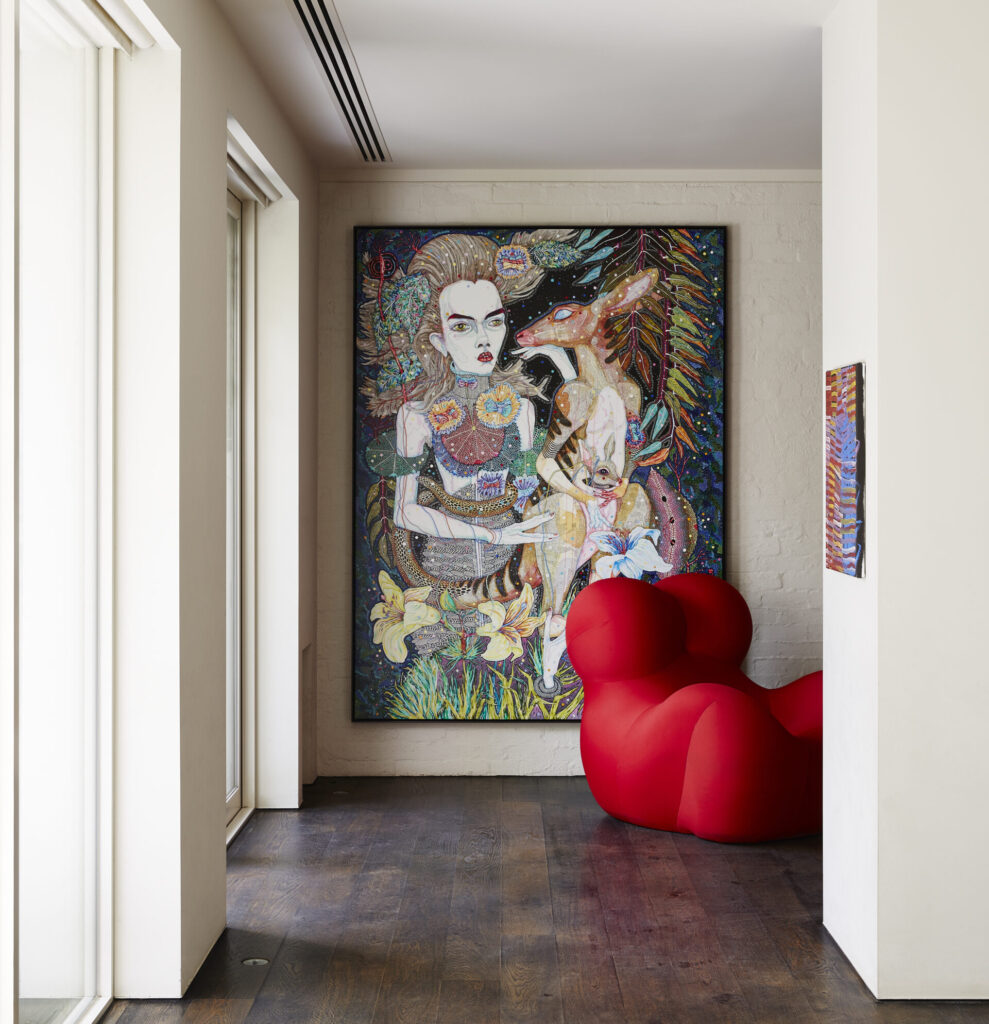
Del Kathryn Barton taught us another important lesson. When Roslyn Oxley first offered us one of Del’s works, my instinct was to say yes immediately. We had admired her practice for years and knew how fortunate we were simply to have been offered the opportunity. Lisa’s hesitation wasn’t about Del’s work, but about living every day with the confronting subject matter while our boys were still young. It changed the conversation completely. Rather than asking whether we should acquire an important work, we began asking whether it belonged in our lives. Roslyn generously introduced us to another work, What I Am Also, which we immediately connected with. It entered our collection during the week my father passed away and has become inseparable from that chapter of our family’s story.
Looking back now, I realise our collection is less about individual artworks than the life that surrounds them.

Del Kathryn Barton, What I Am Also, 2013
What role does living with artworks play in your everyday life?
Living with art has become a way of living with memory.
Every work in our home carries a story. Some remind us of travel, others celebrate the birth of our children, milestone birthdays or enduring friendships with artists and gallerists. Others hold much more personal memories, including periods of loss. The artwork itself never changes, but our relationship with it continues to evolve. Over time the collection has become a chronology of our lives. Looking around our home, I don’t simply see paintings and sculpture. I see twenty years of our lives reflected.
I’ve also become increasingly interested in living with the creative voices of our own generation. Contemporary art is, by its very nature, a commentary on the world in which it is made. It reflects the cultural, political and social questions of our time. Choosing to live with those works means engaging with those ideas every day. The same philosophy extends beyond art. Our home has gradually become a collection of contemporary architecture, furniture and lighting. Together they form a richer conversation about the time in which we live.
Spending meaningful time with artists has also made me a better architect. Visiting studios, understanding process and hearing artists speak about years of experimentation has reinforced the value of patience, restraint and trusting your own voice. Commissioning Lionel Bawden to create Wellsprings of the Spirit for my fortieth birthday remains one of the most meaningful experiences in our collection. Rather than responding to a decorative brief, Lionel responded to conversations about travel, aspiration and the human spirit. Watching an artist transform those ideas into something so deeply personal reinforced that the most meaningful commissions emerge through genuine dialogue.
Perhaps that is what I value most. A meaningful collection is not simply a reflection of personal taste. It becomes a record of a life lived. We are only custodians of these works for a period of time, yet while they are with us they become part of our own story, and perhaps part of the legacy we leave behind.
As architects living closely with art both personally and professionally, how does your approach to collecting differ from more traditional ideas of collecting, and what tends to draw you towards a work?
For me, collecting has never been about acquisition alone. It has always been about curation, relationships and creating a dialogue between art, architecture and the people who live with it. Working as an architect has only reinforced that belief.
Designing Point Leo Estate fundamentally changed my understanding of collecting. Working with John and Pauline Gandel, alongside artists and curators, I came to appreciate collecting as an act of stewardship rather than acquisition. Their vision wasn’t simply to build a remarkable collection, but to create a cultural legacy that could be shared generously with others. That philosophy shaped our architectural response. We conceived the building as a sculptural insertion within the landscape, embracing Inge King’s monumental work at its entrance. The simplicity and clarity of the architectural gesture created a framework through which art, landscape, food, wine and the experience of place could all be considered together as one. It reinforced something that has continued to shape my thinking: the most enduring collections create a legacy, enriching not only the lives of those who create them, but everyone who has the opportunity to engage with them.
That philosophy has continued to shape our residential work. During House of Light, the clients’ own journey into collecting unfolded alongside the architecture. Together we visited Sydney Contemporary, spent time in galleries and met artists including Sally Smart, Alex Seton and Marion Borgelt, and ultimately commissioned Tammy Kanat, who exhibited with Gallery Sally Dan-Cuthbert, to create a significant woven work specifically for the home. Those conversations became every bit as important as discussions about brick, stone or timber. Art was never considered an addition to the project. It became part of the home’s story from the very beginning.
What I have learnt is that designing for a client is very different from collecting for yourself. We can make introductions, ask questions, encourage curiosity and provide confidence, but taste is deeply personal, and art even more so. Every collection should become an authentic reflection of the people who live with it. Some of the greatest satisfaction I’ve experienced has come from watching clients discover an artist who genuinely speaks to them. That’s the moment the collection truly becomes their own.
I’ve never seen art as something separate from architecture. Contemporary artists, architects, furniture designers, lighting designers and landscape architects are all responding to the same moment in history through different mediums. Bringing those creative voices together thoughtfully creates homes that feel connected to their time, while remaining capable of enduring well beyond it.

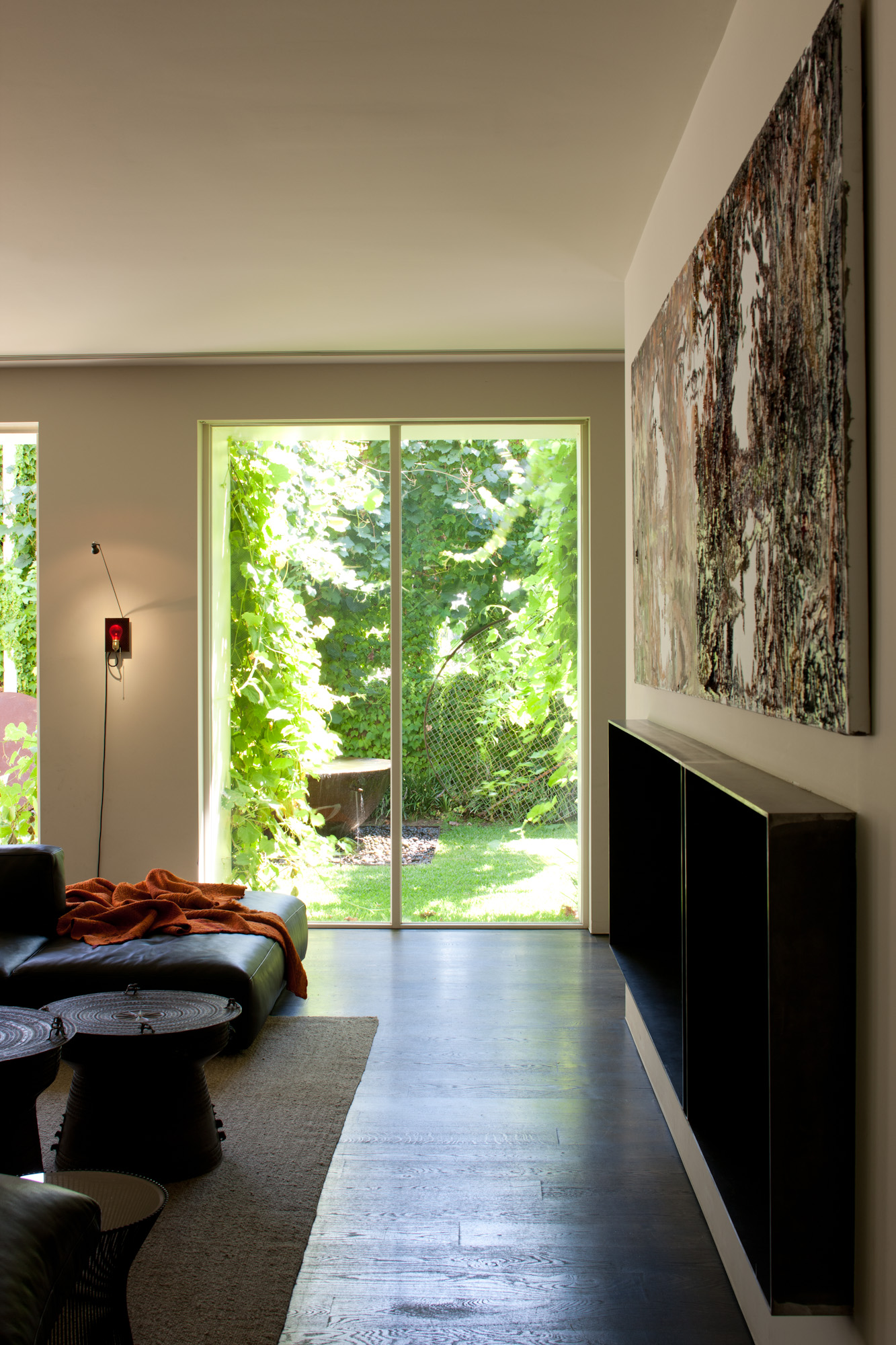
Ben Quilty, Rorshach After Johnstone, 2011. Purchased from Jan Murphy Gallery.
Sydney Contemporary brings together a wide range of artists and galleries each year. What do you most look forward to discovering at the Fair?
For me, Sydney Contemporary is much more than an art fair. It has become one of the few places where Australia’s creative community comes together. Artists, gallerists, curators, collectors, architects and designers all sharing ideas, conversations and a genuine curiosity about contemporary practice.
I enjoy seeing how artists’ practices evolve over time. There is something incredibly rewarding about watching an artist take a leap, challenge themselves or explore a completely new direction. Those moments often stay with me far longer than any individual acquisition. Equally important are the conversations. Some of the most meaningful relationships in our collection began not with a purchase, but with meeting an artist, visiting a studio or simply spending time talking with a gallerist. Sydney Contemporary creates those opportunities in a way that few other events can.
Carriageworks also plays an important role. It is an extraordinary setting for contemporary art. Its industrial character allows the work to breathe, creating an atmosphere that encourages exploration, discovery and genuine engagement. I always leave inspired, whether I acquire a work or not.
What advice would you give to someone beginning their journey as a collector?
Collect slowly.
Spend more time looking than buying. Visit galleries regularly. Meet artists. Listen to curators. If you’re fortunate enough to visit studios, do so. Travel widely. Immerse yourself in different cultures. Every experience develops your eye and deepens your understanding of the world around you.
Most importantly, trust your own response. Don’t collect because something is fashionable or because someone tells you it is important. Collect because it makes you stop. Because it moves you. Because it continues to occupy your thoughts long after you’ve left the gallery.
Over time you’ll realise that the artwork itself is only part of the story. The relationships you develop with artists and galleries, the places you’ve travelled, the conversations you’ve had and the moments in your own life that become attached to each work are what give a collection its real depth.
Looking back over more than twenty years, I don’t simply see a collection of artworks. I see a collection of friendships, journeys, ideas and experiences that have shaped who we are. A meaningful collection is not simply a reflection of personal taste. It is a portrait of a lifetime spent engaging with the cultural ideas of its time.
Perhaps that is what collecting ultimately becomes. Not an expression of ownership, but a legacy of curiosity, generosity and a life lived with culture at its core.
Sydney Contemporary returns to the Carriageworks from 3 – 6 September.
For more than 20 years, China Heights has shaped its own path within the Australian art landscape, championing artists whose practices move effortlessly between contemporary art, design and visual culture. As the gallery prepares to make its Sydney Contemporary debut, we spoke about trusting curatorial instinct, building lasting artist relationships, and why now felt like the right moment to join the Fair.
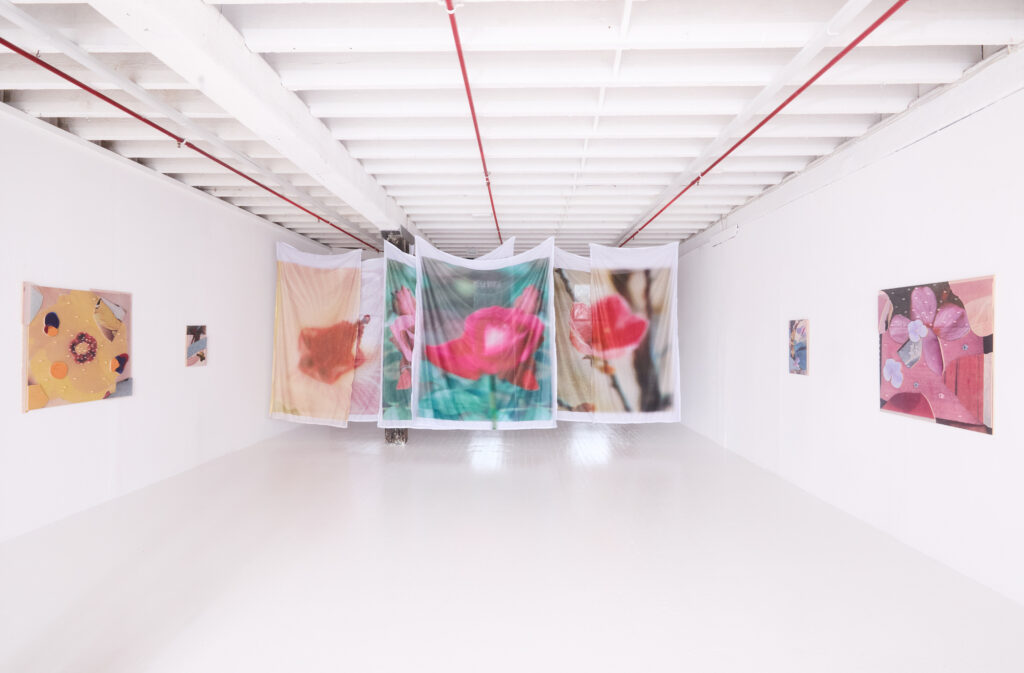
China Heights has built such a distinctive identity over the past two decades. What has remained constant in your vision since the gallery first opened?
Since our founding in 2004, our core aesthetic has remained consistent. While our artists and exhibitions have naturally evolved, our focus has always been on trusting our curatorial instinct and identifying distinctive, forward-thinking work, well ahead of the curve.
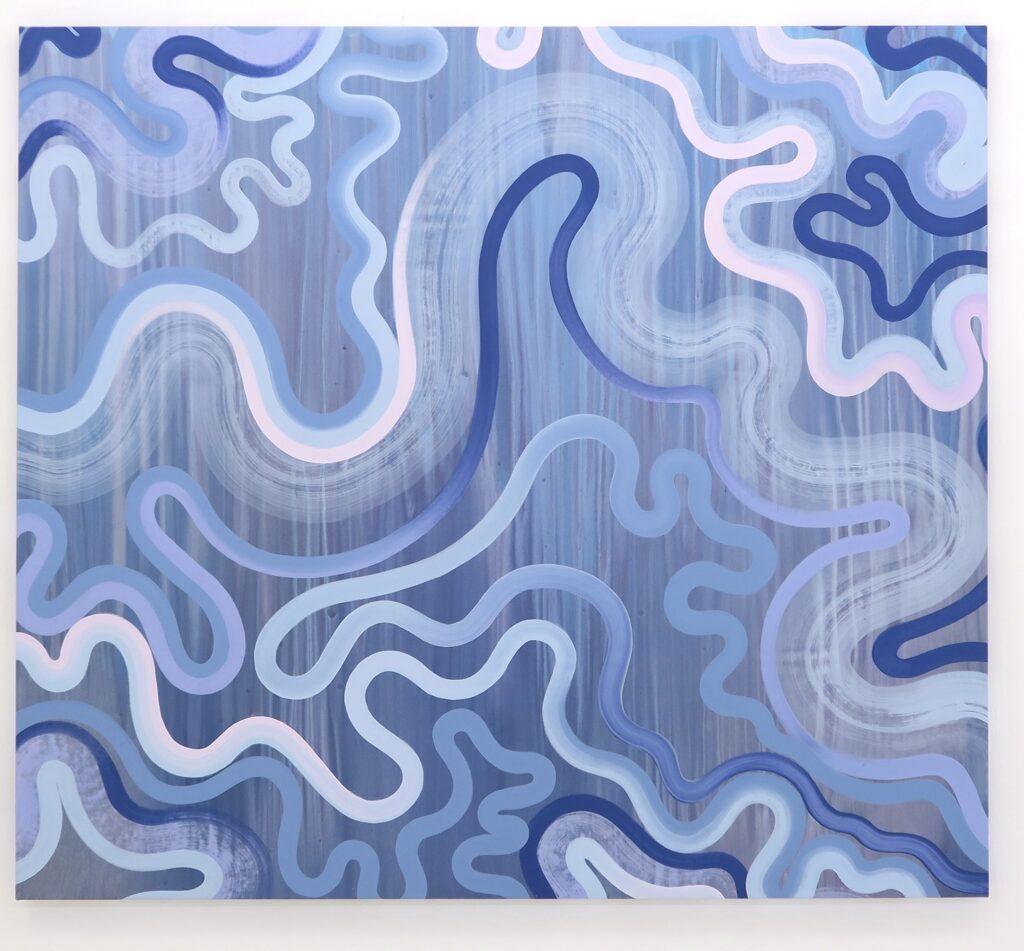
Your artists often sit at the intersection of art, design and visual culture. What draws you to practices that don’t fit neatly into one category?
We view all creative disciplines as interconnected forms of expression. It is important to us that we do not restrict an artist’s vision or confine their practice to a single, traditional category.
China Heights has worked with everyone from luxury brands to major museums and public institutions. Has collaborating across so many different contexts changed the way you think about exhibiting art?
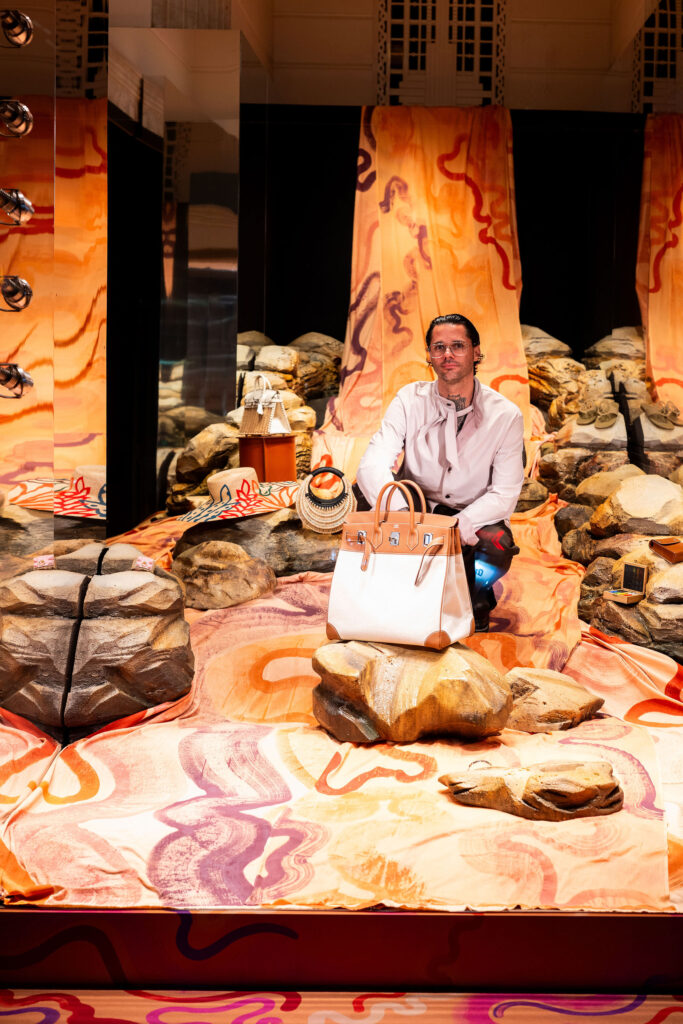
Our approach remains unchanged regardless of the environment. Whether we are working within our own gallery, partnering with a luxury brand, or collaborating with a museum, we apply the same curatorial rigour and commitment to high-level installation. The key realisation for us has been that our core standards and identity travel with us, independent of the context.
When you’re discovering or deciding to represent an artist, what makes you stop and think, “This is someone we need to work with”?
It begins with the initial impact of a truly distinct visual voice. However, formal representation is a long-term commitment built over time. We typically develop these relationships through a series of group exhibitions and collaborative projects, allowing us to cultivate a sustainable, mutual path of growth for both the artist and the gallery.
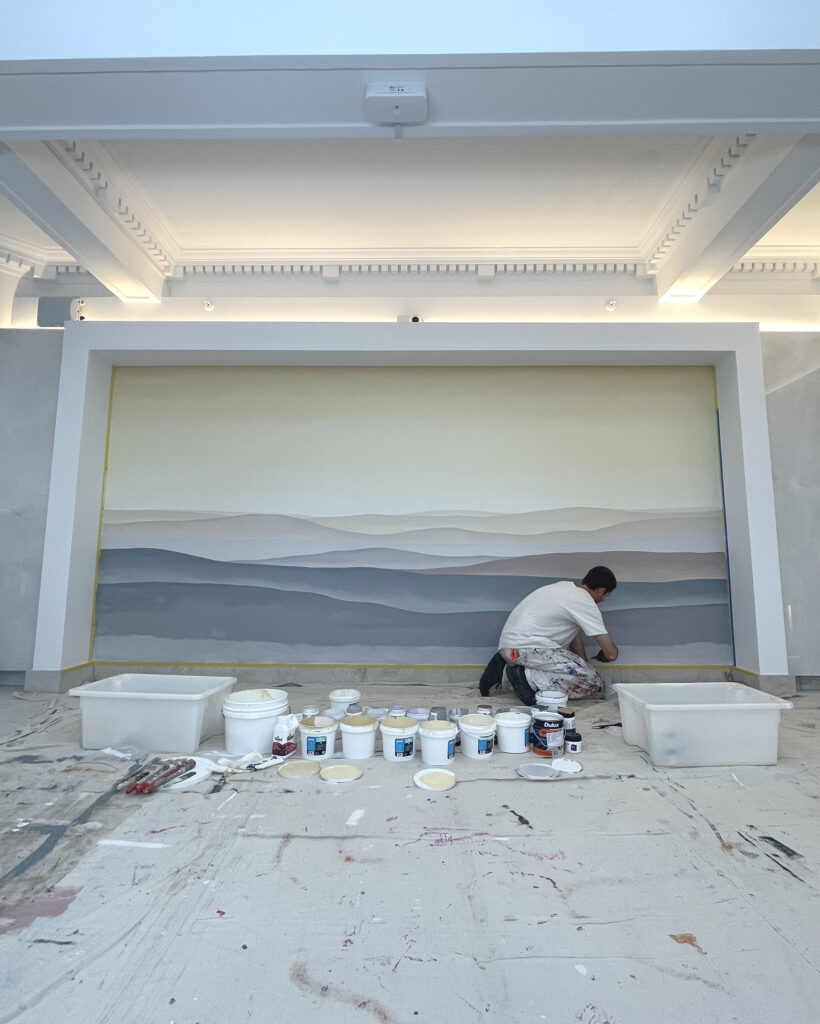
This is your first time participating in Sydney Contemporary, what led you to decide this was the right time for China Heights?
We have watched Sydney Contemporary develop into a premier fixture of the Australian art market. With our current programme and artists operating at a peak creative moment, the timing felt ideal. While we maintain a very deliberate strategy regarding our market presence, we felt this was the right opportunity to present our stable to a broader audience.
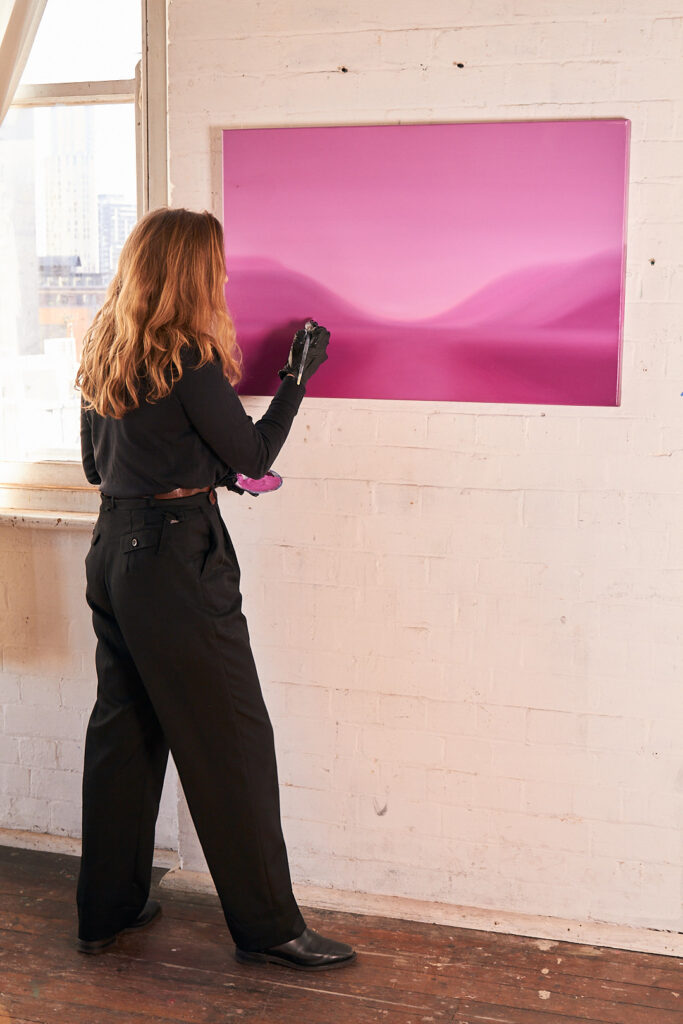
What excites you most about the contemporary Australian art scene right now, and where do you see it heading over the next few years?
The expanding engagement from a broader public is incredibly encouraging. We have always advocated for galleries to be accessible, welcoming spaces. Over the next few years, we anticipate this growing audience will deepen their relationship with the arts, looking beyond individual exhibitions to more meaningfully engage with an artist’s long-term practice.
Why do events like Sydney Contemporary matter to the city and to Australasia at large?
Sydney Contemporary serves as a vital focal point for the region. It creates a rare and important opportunity for galleries, artists, and collectors to connect, exchange ideas, and collectively drive the momentum of the contemporary art scene forward.
Sydney Contemporary returns to Carriageworks from 3 – 6 September.
chinaheights.com
@chinaheights
We caught up with designer Alix Higgins on his top picks of Sydney. Higgins’ practice is shaped by emotion, digital nostalgia, and a unique translation of poetry into wearable fabric armour.
In our conversation, he speaks about fashion as an intuitive form of storytelling, the constant tension between internet culture and physical wearability, and how he relies on his close-knit community of creative muses to keep his distinct, whimsical voice entirely untouched.
___
What makes Sydney stand out as a cultural destination?
Sydney is special because it’s so many different things. It’s glamour, nature, near and far. To my friends and I, it’s past its heyday but we live in hope and I suppose there is potential in that too.
If you have friends visiting from outside of town, what are you adding to their itinerary?
The south coast is really beautiful.

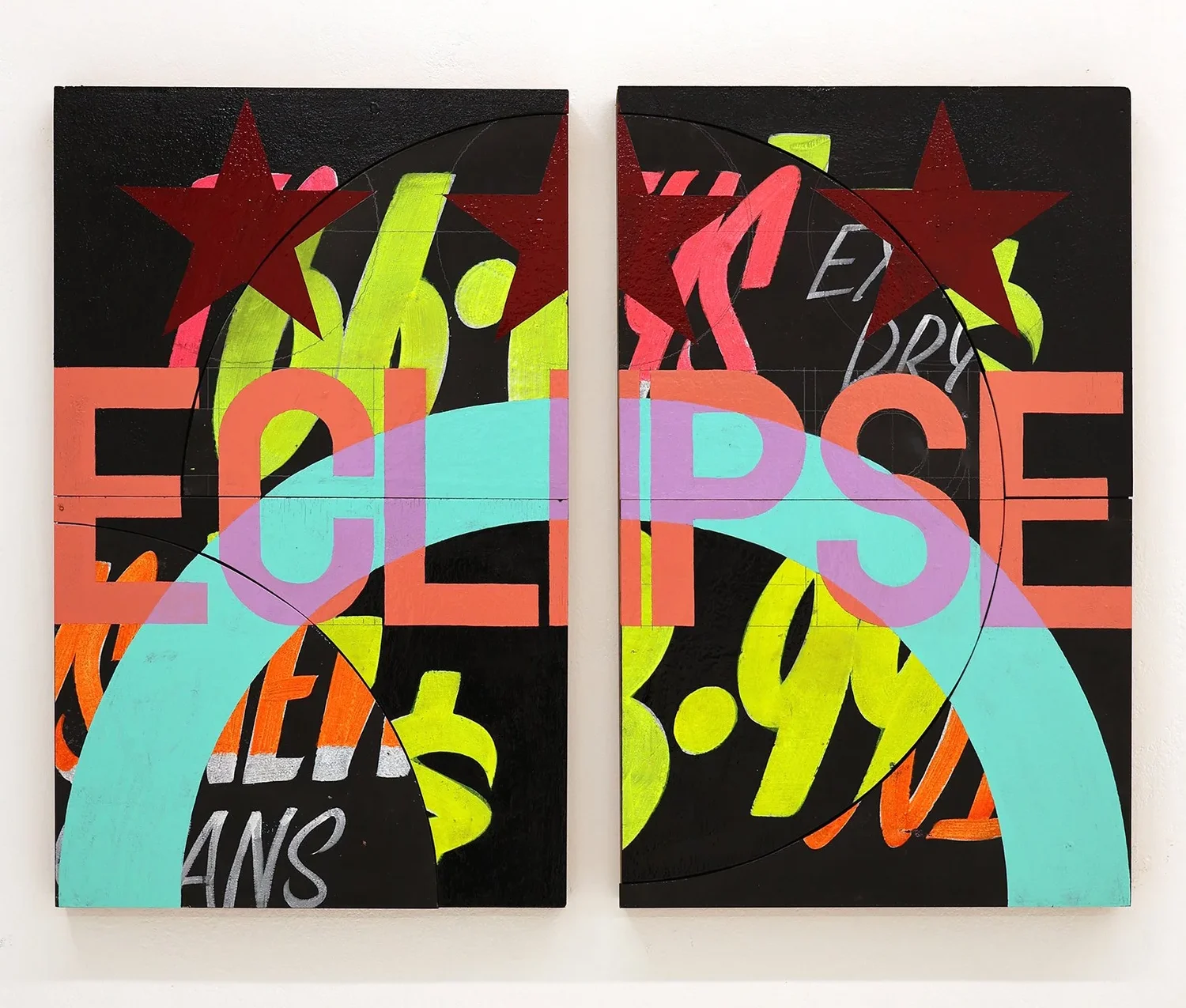
Edward Woodley, ECLIPSE, 2026. courtesy China Heights.
What cultural events or exhibitions coincide with Sydney Contemporary that you recommend?
China Heights always have something interesting showing. Right now Edward Woodley’s show ‘ONSITE’ is great. In September there’s a group show curated by Yang Zhi.

Laila, Marrickville
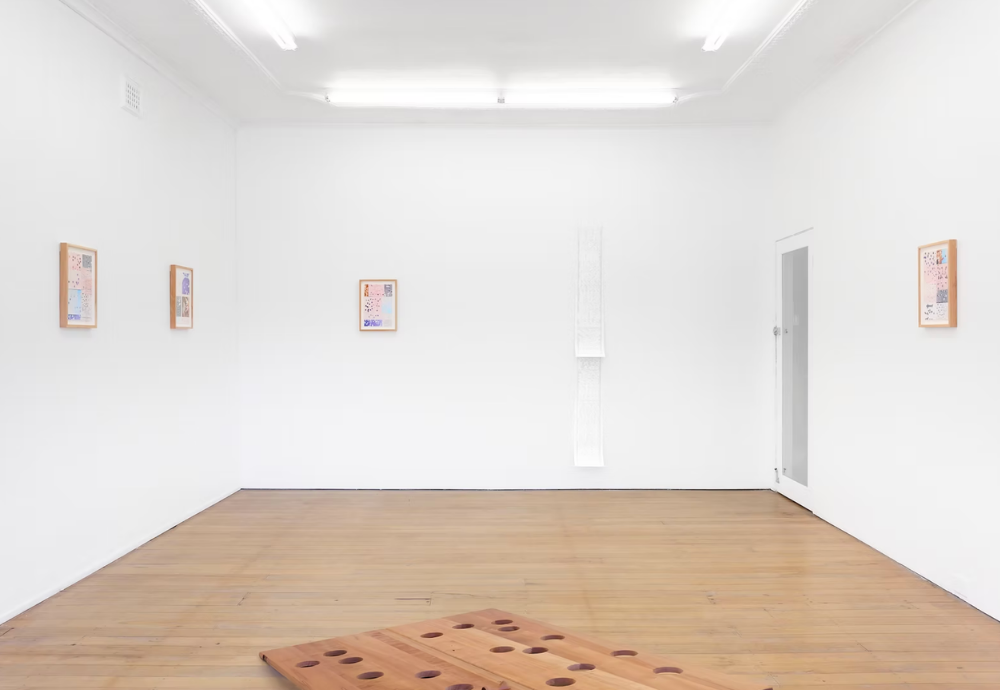
What are some places, people or experiences in Sydney currently inspiring you?
Neil Beedie has a beautiful show currently at Solvent. I also like NASHA, Laila, Numbers. Season has wonderful programming. I recently saw a talk ‘Young Almond’ by Lukas Kalos there that was inspired.

Jenny Holzer, I STAY (Ngaya ngalawa)
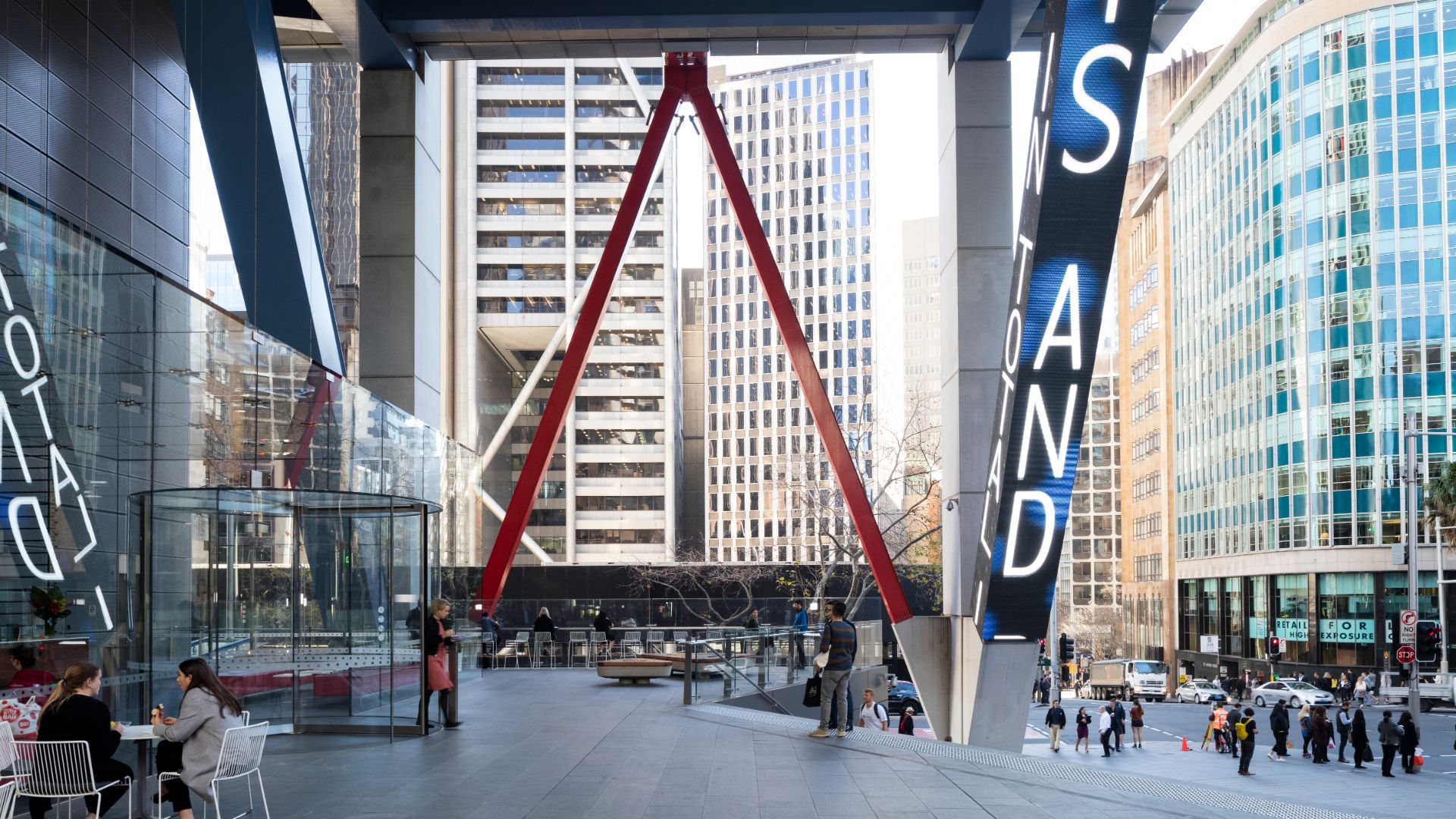
Do you have a favourite public art installation or mural in the city? What makes it special?
‘I STAY’ – the Jenny Holzer at Chifley Square. It looks like ticker tape and is in (essentially) our financial district so it’s easy to miss, despite being enormous. I walked past it a lot before noticing. It’s special because it’s surprising and poetic in the every day.

Porcine, Photo: Declan Blackall
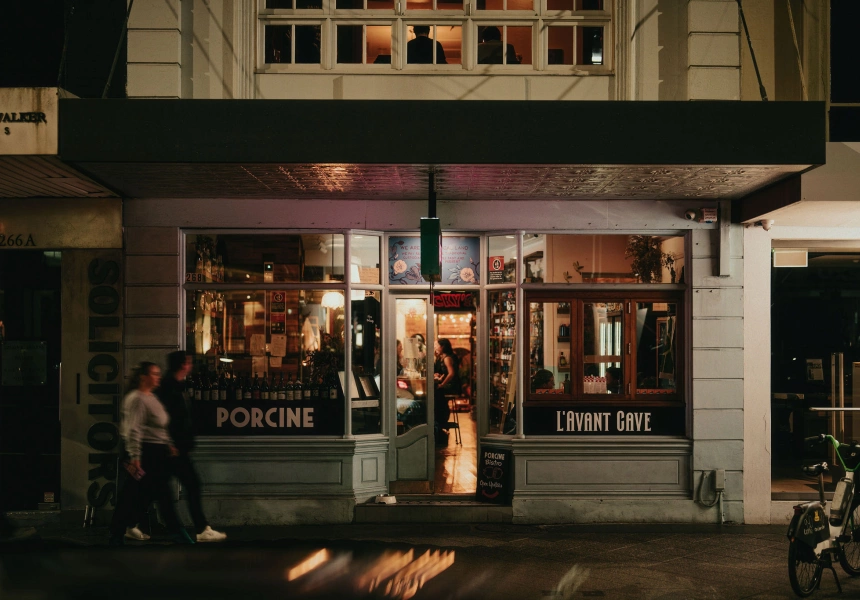
After a day of exploring Sydney Contemporary, where would you go for dinner and drinks to continue the evening?
I love dinner at Porcine – the menu is changing all the time but it’s always hardcore French. The Hollywood is my favourite pub in Sydney.
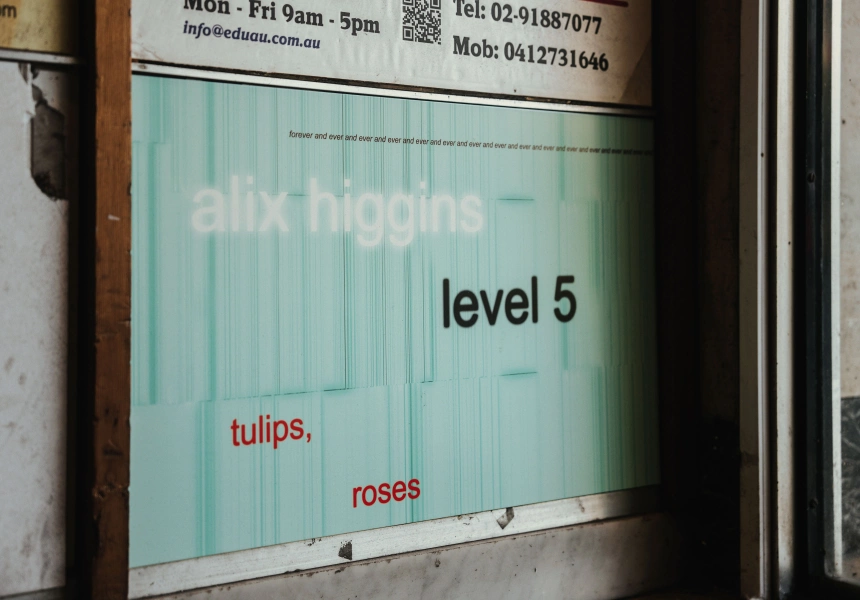
A hidden gem?
647-649 George street (my building of course!) is now home to many friends of mine – some other designers and some vintage as well. Love+Pop on level 2, Phoebe Cutler Jewellery and A Weekend With Denis on level 3 and then my store on level 5.
Sydney Contemporary returns to Carriageworks from 3 – 6 September. Tickets are on sale now.
