
Designer and Polestar Ambassador David Caon shares his guide to Sydney. From considered design destinations and architectural landmarks to creative neighbourhoods and local haunts, he offers his perspective on the city through a designer’s lens.
To David, Sydney is a city shaped by its natural landscape, distinctive architecture and diverse creative communities. From the harbour and its iconic buildings to the character and energy of its neighbourhoods, the city offers a constant source of inspiration. Hear from David on Saturday, 5 September, at 12pm for The Material Turn within the Sydney Contemporary Talks Program.
What makes Sydney stand out as a cultural destination?
Sydney has more depth than it’s given credit for. Yes, there’s the natural beauty of the harbour, beaches and the iconic landmarks. But there’s also a youthful energy in the outer parts of Sydney that inspires and feeds the art and design scene. This energy inevitably flows back into the more established parts of the city.
 Installation view of Billy Bain: By the River at the Art Gallery of New South Wales, featuring Mudjin (family) 2026, artworks © Billy Bain
 Installation view of Billy Bain: By the River at the Art Gallery of New South Wales, featuring Mudjin (family) 2026, artworks © Billy Bain
I always say the Art Gallery of NSW. Walk there from town if you can.
What cultural events or exhibitions coincide with Sydney Contemporary that you recommend?
Sally Dan-Cuthbert has Donna Marcus on until 12 September. White Rabbit in Chippendale is the other one, and it’s free and a short walk from Carriageworks.

Donna Marcus, GABO, Courtesy the artist and Gallery Sally Dan-Cuthbert. Photo: Simon Hewson
Do you have a favourite public art installation or mural in the city? What makes it special?
It’s not public art, but the Reader’s Digest Building in Surry Hills. John James built it in 1967 and it’s a fascinating, sculptural piece of architecture, now being carefully adapted by Design 5 and SJB so the intricate details survive.
 Fontana Redfern, courtesy Fontana. Photo: Nic Gossage and Charlotte Koch.
 Fontana Redfern, courtesy Fontana. Photo: Nic Gossage and Charlotte Koch.
After a day of exploring Sydney Contemporary, where would you go for dinner and drinks?
Dinner at Fontana in Redfern, then Piccolo Bar in Potts Point for a drink. Piccolo has been there forever.

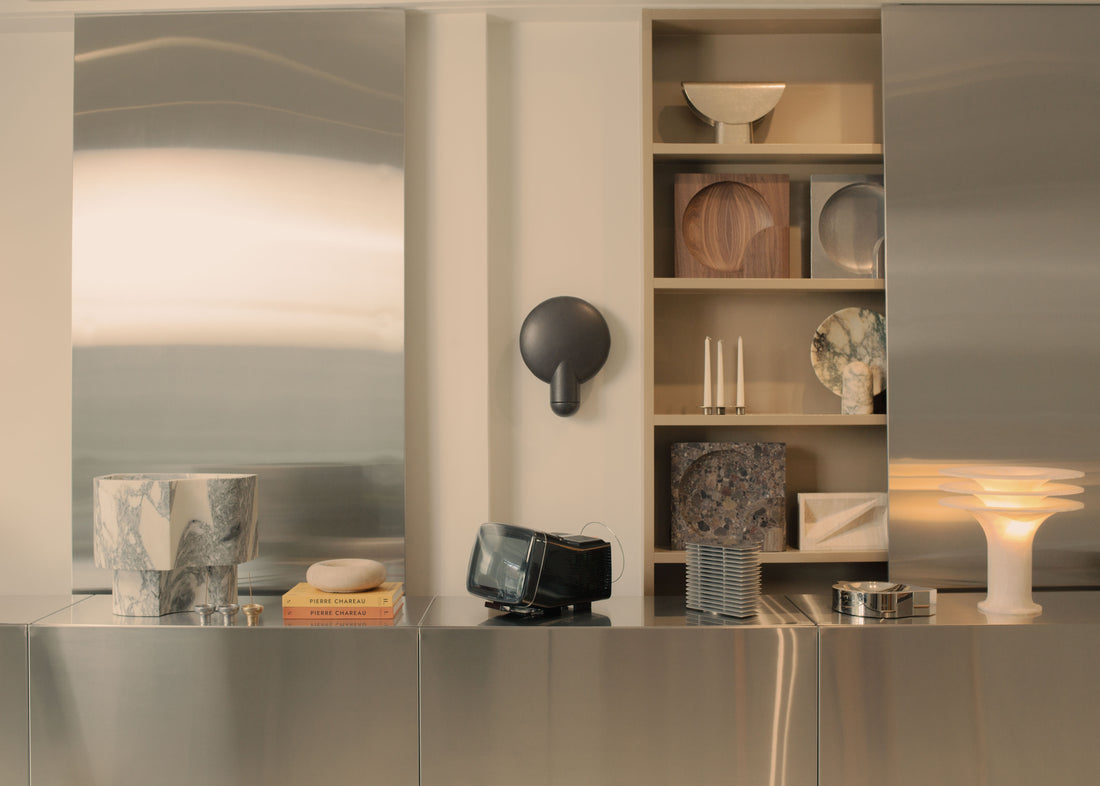
Courtesy Studio Henry Wilson
A hidden gem?
The Studio Henry Wilson store in Paddington. Henry has the most beautiful curation of products; you’ll be sure to take something home.
As a car enthusiast, what’s your favourite drive in Sydney?
The classic runs are up to Wisemans Ferry or down to Wattamolla Beach. I recently drove the Snowy Mountains Highway out of Cooma up through Tumut, which isn’t Sydney, but it was an amazing road with gorgeous views.
Sydney Contemporary returns to Carriageworks from 3 – 6 September.
@caondesignoffice
caondesignoffice.com
Equal parts raw intuition and tactile immersion, Eleanor Louise Butt’s painting practice transforms landscape, memory, and materiality into dynamic visual events. Ahead of Sydney Contemporary, she unpacks her presentation with COMA, and why literal representation takes a backseat to wordless, sensory-charged art-making.
Gesture, texture and movement play a strong role in your work. How do you know when a painting has reached resolution?
When I am painting, I am in a deeply intuitive space of action and reaction. Reaching the point of resolution usually takes me by surprise, when it happens and I experience a jolt of recognition and it is in this moment that the painting becomes a world in itself.
Colour feels central to the atmosphere of your paintings, particularly your use of warm yellows and earthy tones. How does colour shape the emotional register of a work?
I am sensitive to the way that colours make me feel awash with, for example, sensation or memory, and this leads many of my choices in the studio. It is hard to verbally describe the way these colours make me feel, because it is such a sensory experience. Colour can draw you into a painting, it can surround and embrace you, and in this moment of engagement, it is just you and the painting, existing in relation to each other.
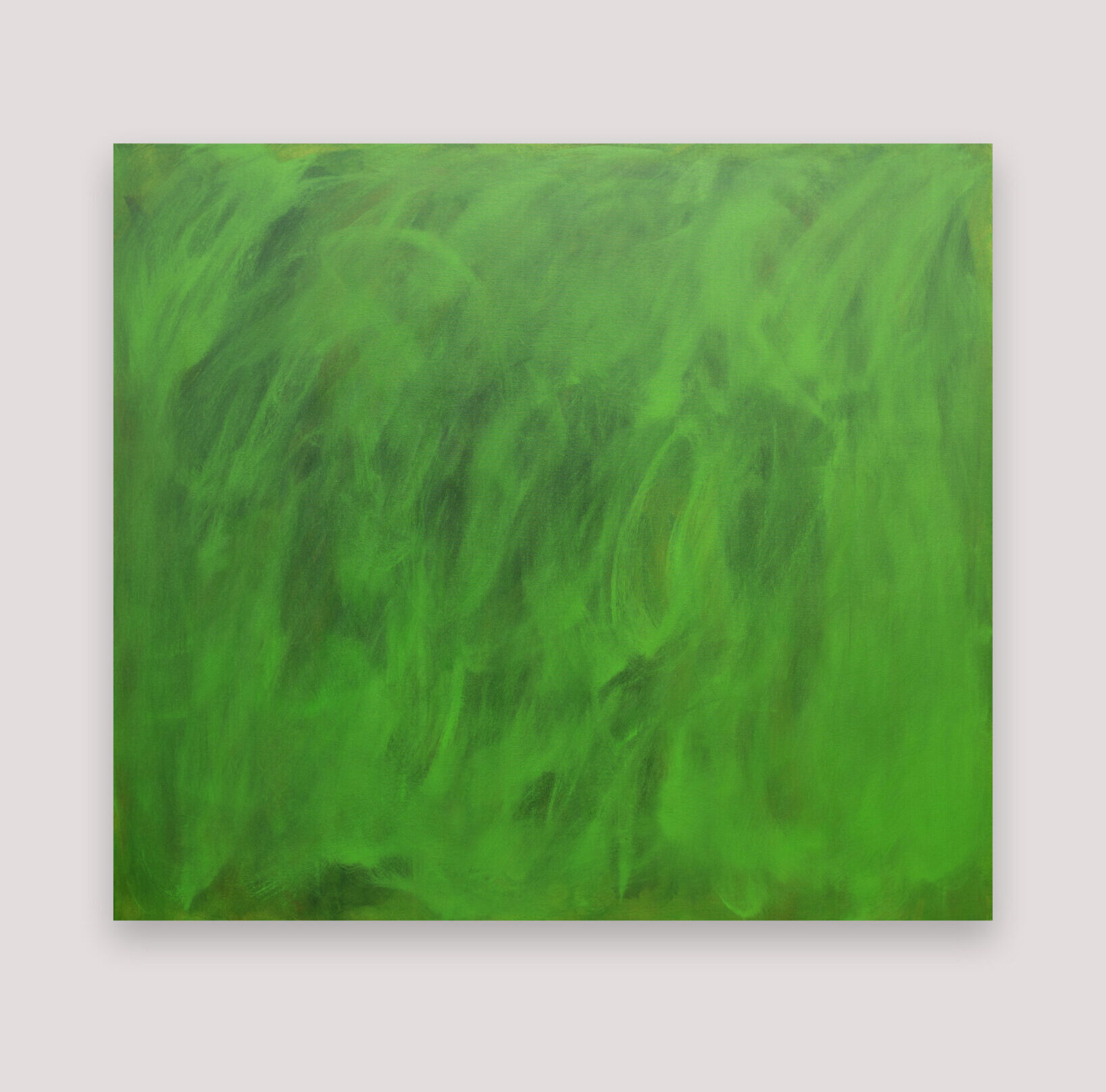
Photo: Eleanor Louise Butt, Untitled (green thicket), 122 x 137cm, oil on cotton, 2026. Courtesy the artist and COMA
You often work across multiple paintings at once. How do those works begin to “speak” to one another in the studio?
Oil painting is a slow process, whereby each layer needs time to dry before the next can be added, so I paint multiple works concurrently both out of necessity and because I work so energetically. Throughout this process, gestures and colours recur across the surfaces as, for example, where a series of marks in one painting informs the resolution of the next painting. Not only do forms, colours and marks oscillate across the paintings, but the works become an ongoing event in which no mark is final. Upon completion, a painting does not become an artefact of an event, but rather a charged space for the continuation of the event.
 Eleanor Louise Butt Studio, Courtesy the artist and COMA
 Eleanor Louise Butt Studio, Courtesy the artist and COMA
Materiality seems integral to your practice; from coarse linen and hessian to bronze and paper. What do different surfaces allow you to explore?
I am interested in having a direct and immediate experience with a painting, and my physical connection to materials when coaxing a work into existence is a vital part of this process. Different surfaces allow me to explore the interplay between paint and surface, and what these relationships can evoke. Primed cotton presents a smooth and slippery surface, leading to a painting that appears to be sliding around and barely fixed, whereas a coarse linen or hessian grips the paint in an entirely different way, allowing the painting to feel more like a cultural object.
Eleanor Louise Butt, Studio, Courtesy the artist and COMA
 Eleanor Louise Butt, Studio, Courtesy the artist and COMA
Landscape appears in your work less as direct representation and more as sensation or memory. How do place and environment influence your practice?
While undertaking the Porthmeor Studios artist residency in the UK, my experience of the extreme forces of nature there – the thrashing ocean swells colliding with granite cliffs below windswept bracken-covered moors – compelled me to make works that were ambitious and gestural in a way that resonated with my own embodied experience of that landscape, rather than depicting it. This continued when I came home to my studio in a forest on the outskirts of Melbourne/Naarm. My painting practice also carries undercurrents of the Edna Walling designed garden in which I lived during my childhood, a space I now consider as a ‘living painting’. This garden constantly revealed and concealed elements and details as I moved through it, and my experience of being physically immersed within this environment continues to contribute to the internal logic of my paintings as they unfold in the studio.
What can audiences look forward to encountering in your presentation with COMA this year, and how does it reflect where your practice is currently sitting?
I am presenting two new paintings with COMA this year. I have been thinking of these works as ‘thickets’. These paintings are spaces I have become entangled within and feel I can escape to. They are loose and immediate, filled with cascading forms and colours poised in a dynamic state of potentiality where no single work is neatly resolved. This fluidity reflects my own experience of the world, in which experience passes beyond the confines of language. The potential for wordless experience and mystery, both for myself and the viewer, continues to be a key theme of my studio practice.
 Eleanor Louise Butt, Courtesy the artist and COMA
 Eleanor Louise Butt, Courtesy the artist and COMA
Eleanor Louise Butt will be presenting with COMA at Sydney Contemporary.
Sydney Contemporary returns to Carriageworks from 3 – 6 September.
eleanorlouisebutt.com
Instagram
With so much happening across Sydney Contemporary, our Media Partner Art Guide has narrowed down a selection of the artists and works that have caught their attention ahead of this year’s Fair. These are some of the highlights they’re looking forward to seeing at Carriageworks this September.
Artist To See
Gunybi Ganambarr, D Lan Galleries: Gunybi Ganambarr is a Yolŋu artist whose work draws us in with its considered combination of deep cultural knowledge and experimental approach to found materials.
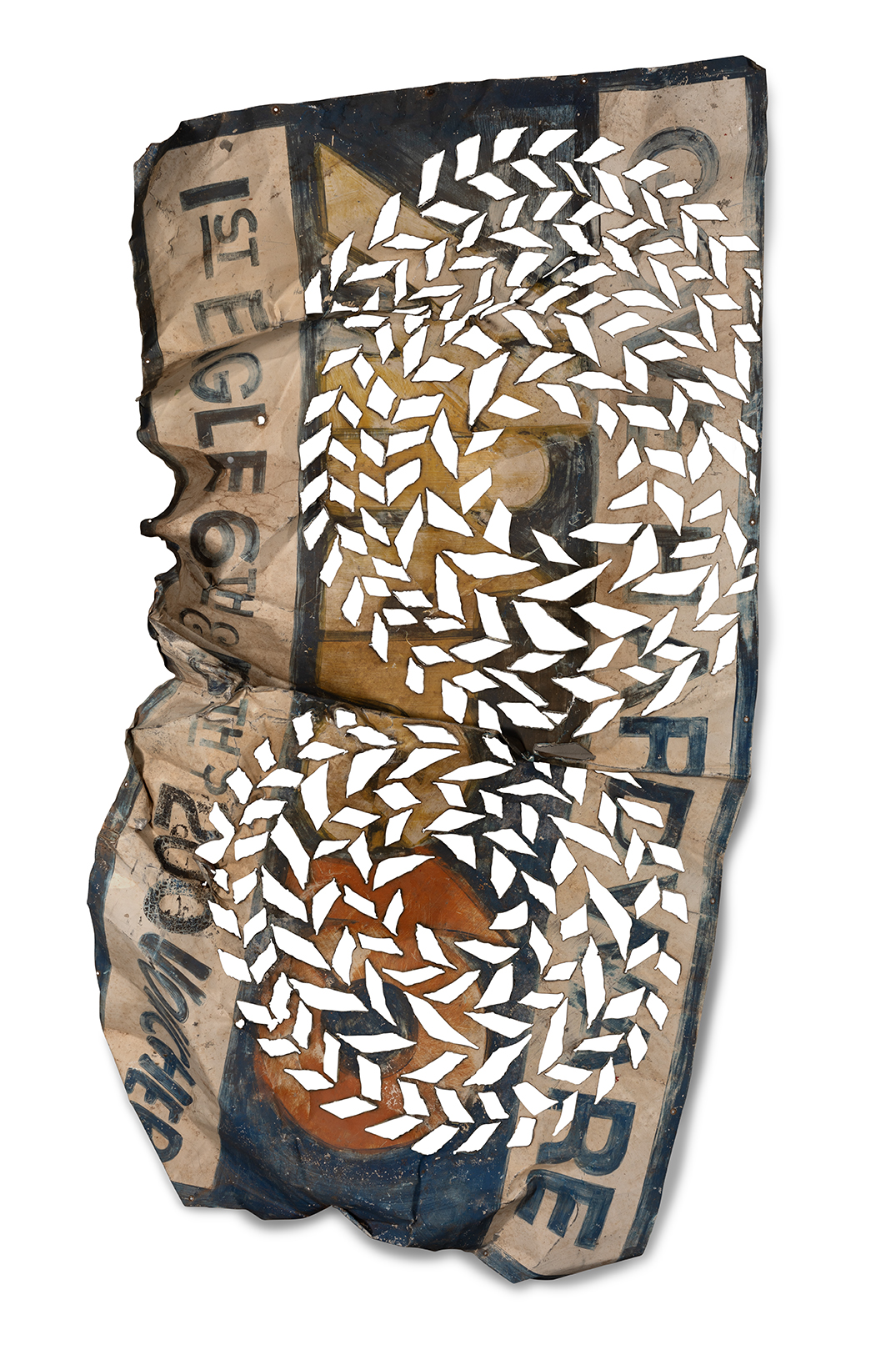
Photo: Gunybi Ganambarr, Spring-Water Running, 2024, Courtesy of DLAN GALLERIES
Artwork Not To Miss
Tammy Kanat, Gallery Sally Dan-Cuthbert: Here, Tammy Kanat, who featured in our January/February 2026 issue—turns to a singular colour palette, and we are intrigued to encounter this absorbing colour field.
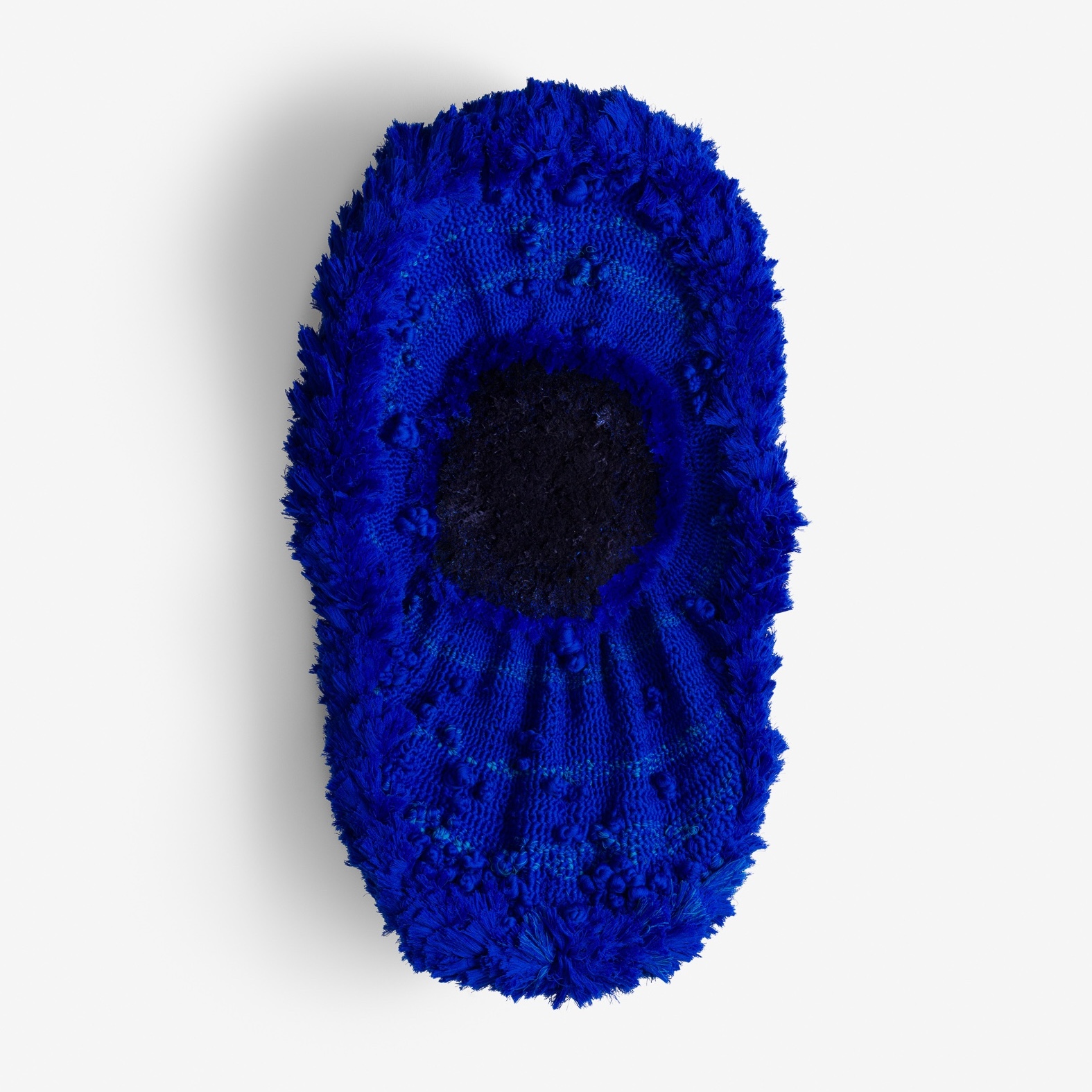
Photo: Tammy Kanat, Emergence II Blue, 2026, wool, copper, 160 x 100 x 42cm, Courtesy of Gallery Sally Dan-Cuthbert.
Photo Sydney Spotlight
Geoffrey Goddard, Head On Photo Festival: The familiar takes on a surreality through the lens of Geoffrey Goddard
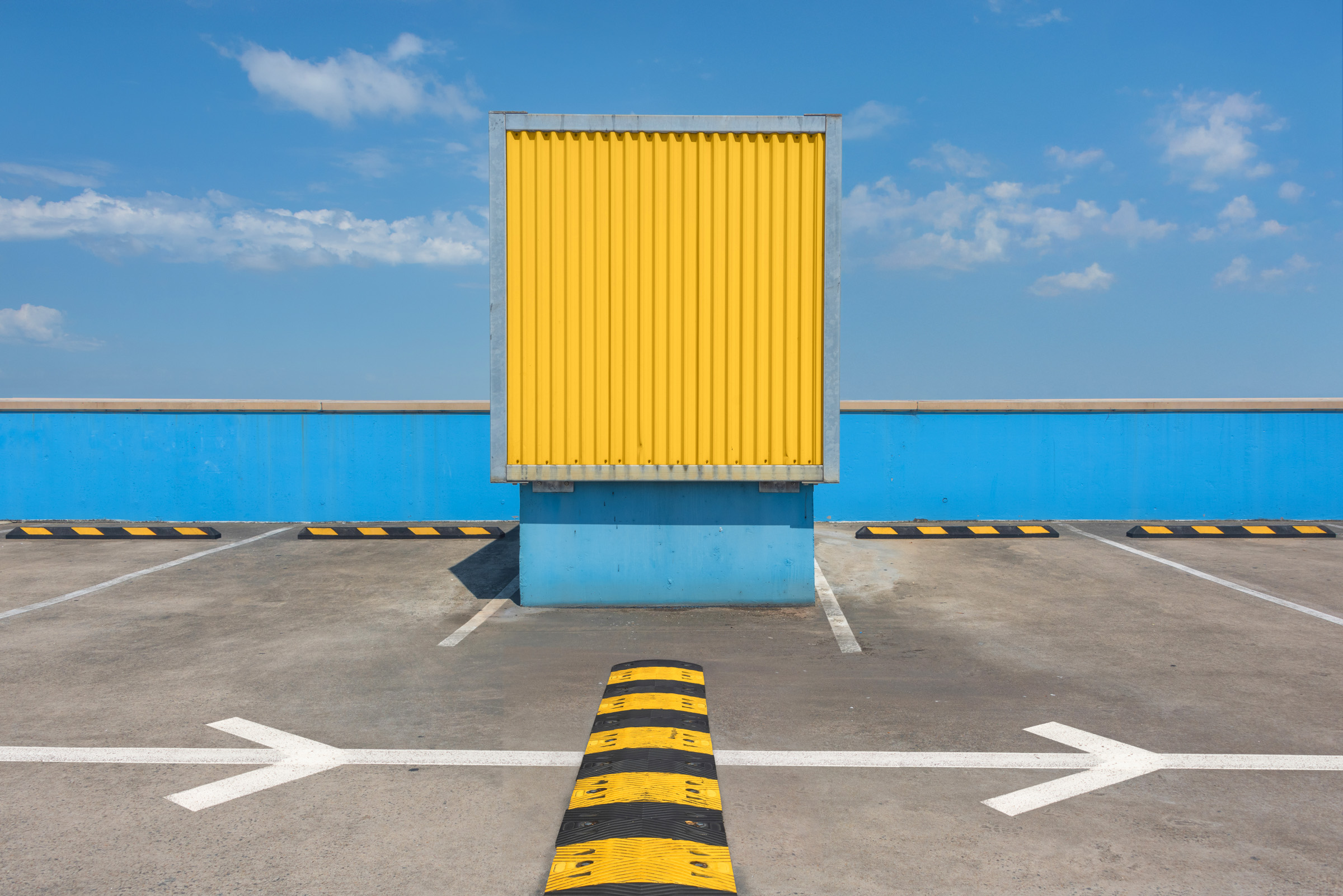
Photo: Geoffrey Goddard, Courtesy of Head On Photo Festival.
Artist On The Rise
Ochre Lawson, Jennings Kerr Gallery: This abstracted landscape by Ochre Lawson appeals to us with its harmony of fleshy and foliage tones.
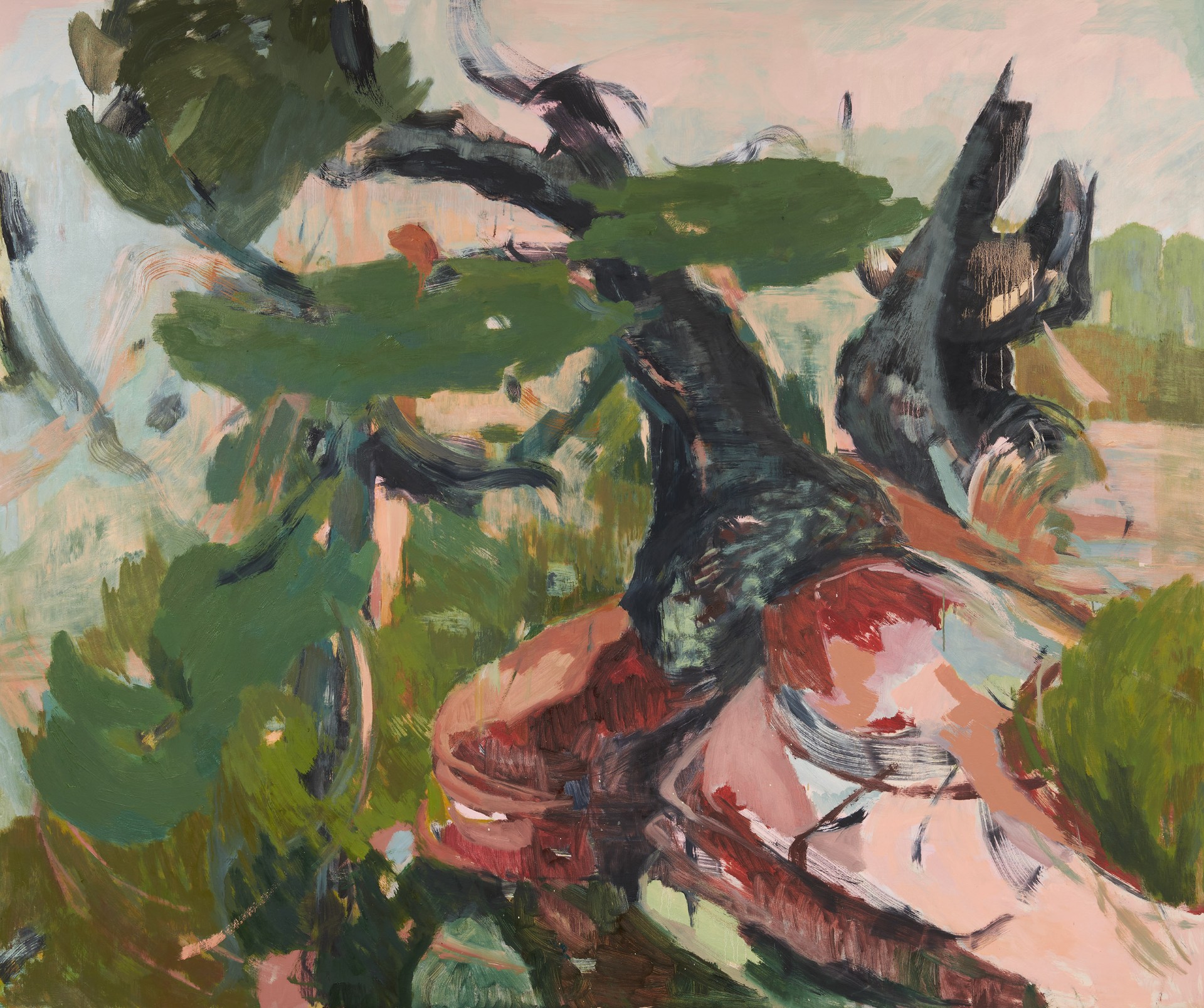
Photo: Ochre Lawson, Weeping-Banksias, 2026, oil on linen, 183 x 153cm, Courtesy of Jennings Kerr Gallery.
Works On Paper
Alison Alder, New Books/Old Hands: This opalescent work on paper by Athena Costopoulos showcases the power of print.
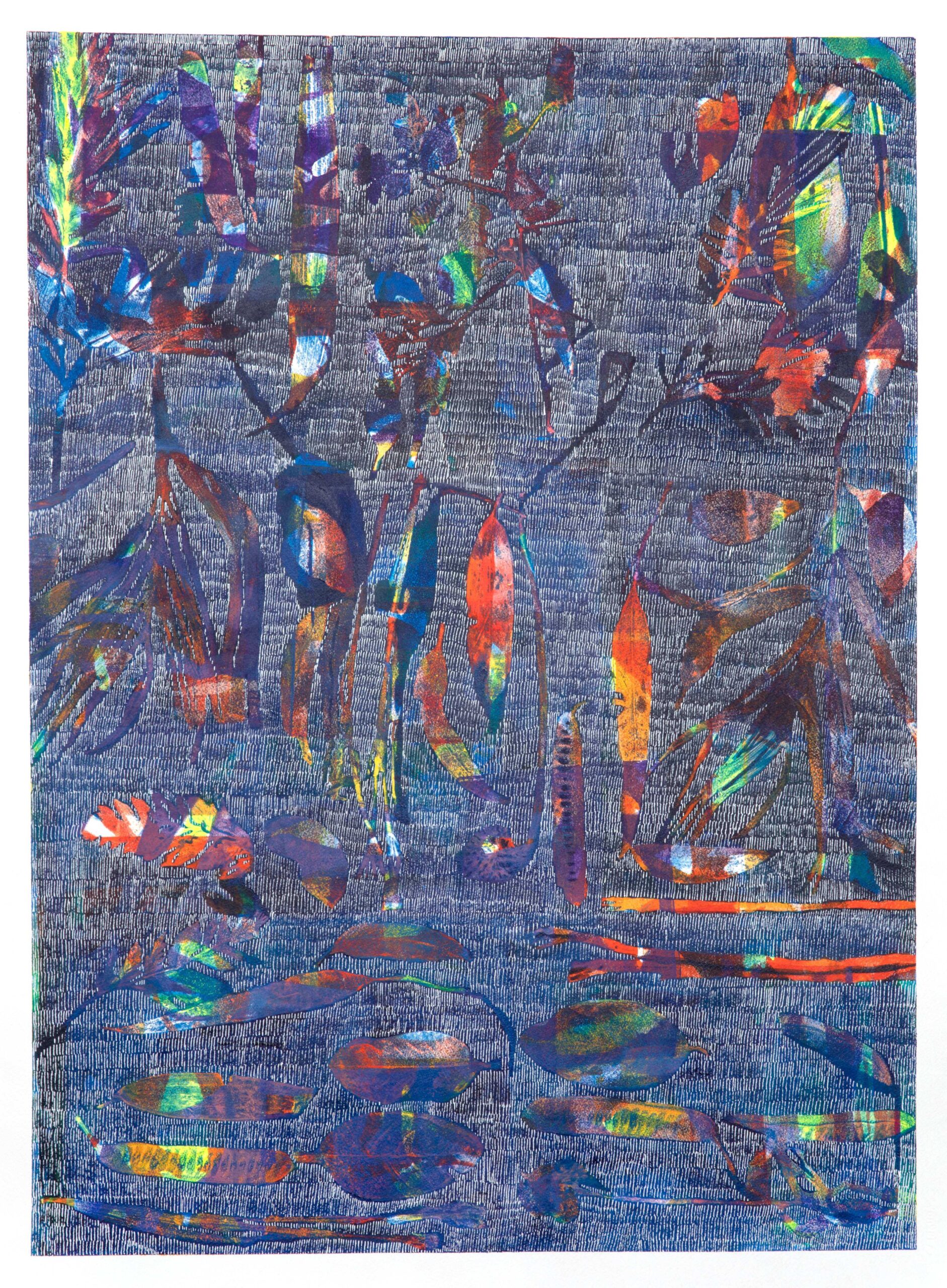
Photo: Athena Costopoulos, Monsoon Offerings, 2026, Courtesy of Umbrella Studio.
Installation To See
Dr Grace Lillian Lee, Dr Ken Thaiday Snr & Allan George Lee, CASSANDRA BIRD: We look forward to seeing this kinetic sculpture, the result of collaboration between Dr Ken Thaiday Snr, Dr Grace Lillian Lee and Allan George Lee, dance against the industrial backdrop of Carriageworks.
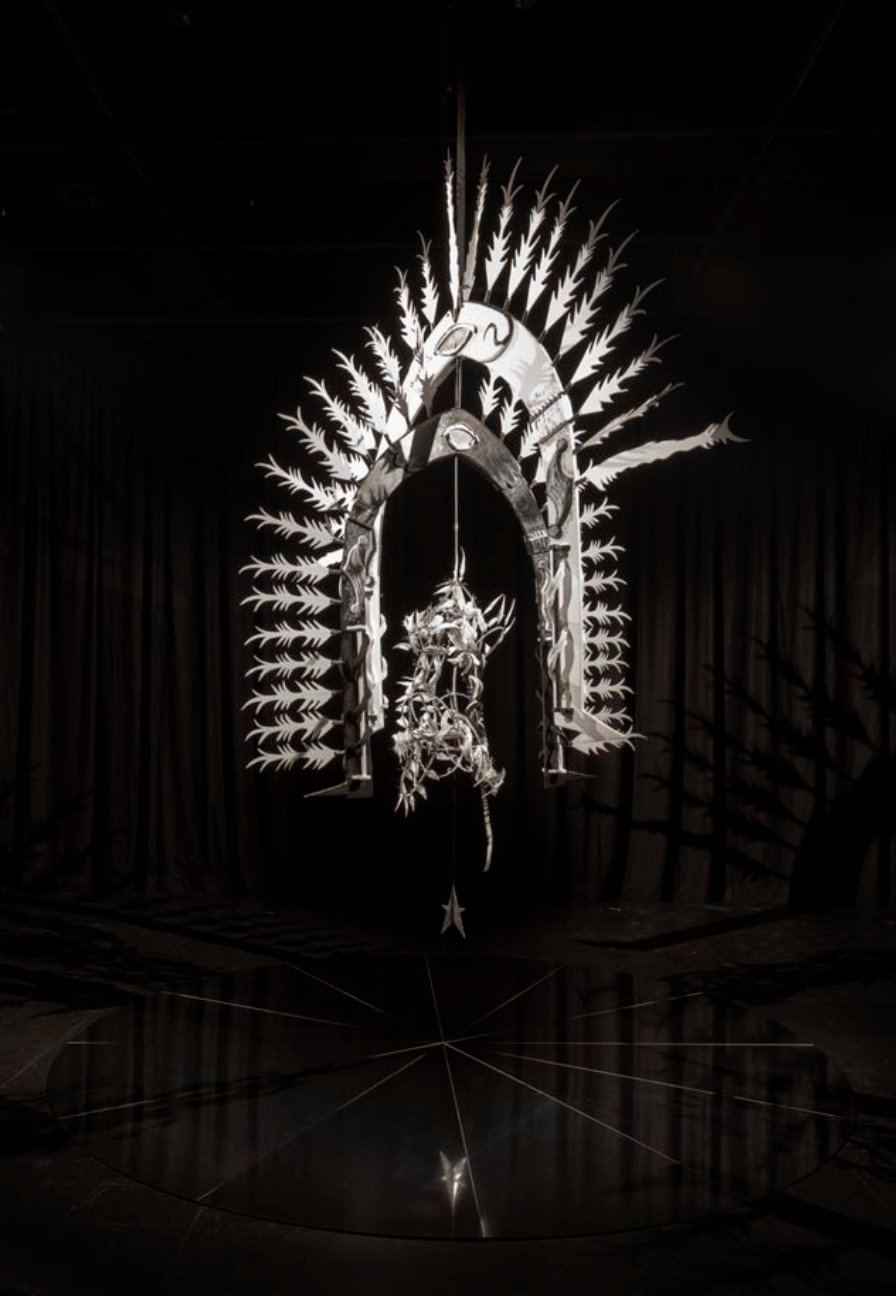
Photo: Grace Lillian Lee and Dr. Ken Thaiday Snr, ‘Suggoo Pennise’, 2021, hand-carved plywood, synthetic polymer paint, cane, feathers, cotton webbing, and mirrored glass, 350 x 300cm (approx.). Commissioned for the 10th Asia Pacific Triennial of Contemporary Art (APT10) by QAGOMA. Courtesy of the Artists.
Talk To Hear
Surface Tension: The New Age of Painting, Thursday 3 September, 12PM: We can’t wait to hear this thoughtful group of speakers muse on the ways artists are approaching the eternal, and eternally evolving, medium of painting.
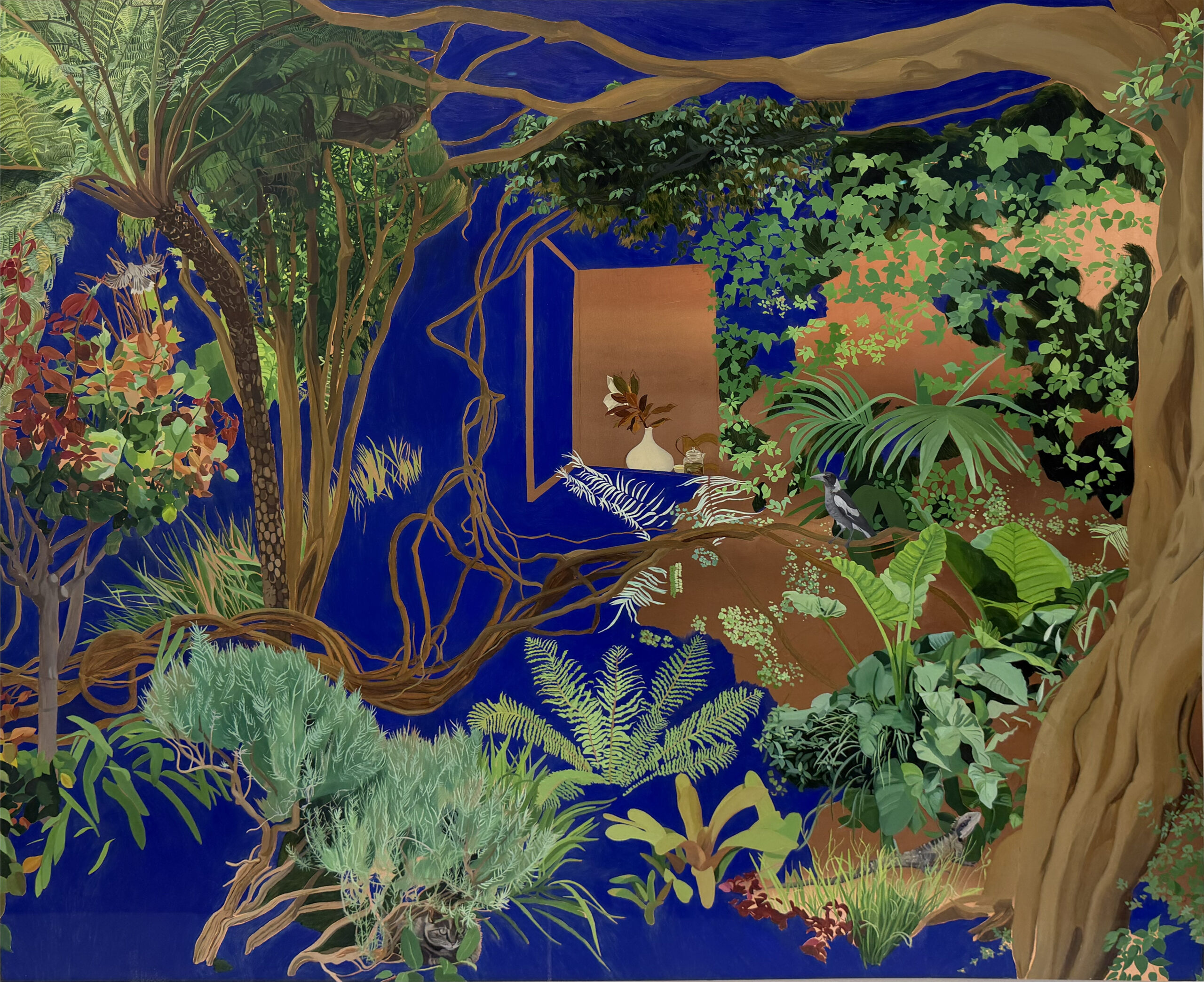
Photo: Natasha Walsh, Cornucopia, 2026, Courtesy of N.Smith Gallery.
Artists Rhoda Ting and Mikkel Bojesen work at the intersection of art and science, creating works shaped by living organisms, geological processes and emerging technologies. Presented at Sydney Contemporary by Gallery Sally Dan-Cuthbert at booth B06, the Copenhagen-based duo speak with us about collaborating with scientists, looking beyond the human perspective, and how fungi, microbes and deep time are helping them imagine more interconnected and affirmative futures.
Your practice combines artistic inquiry with scientific research, often working with living organisms. How has collaborating with scientists changed the way you think about making art?
For us, art and science begin in the same place: with curiosity, imagination, and a desire to relate to the world. The difference is that science often seeks knowledge and certainty, while art can stay with paradox, ask questions, and create emotional connections that help us imagine different kinds of futures.
Working closely with scientists has expanded how we make art. Rather than illustrating scientific discoveries, we use scientific research as metaphors and starting points for new ways of imagining the world. We remember an evolutionary biologist telling us that some fungi have more than 28,000 genders, and that this incredible diversity is part of what makes them so adaptable. Learning about the rhizomatic networks of fungi, and how they exist through relationships rather than individuality, made us ask a simple but transformative question: Can we be more like fungi?
Our collaborations have also introduced us to environmental DNA sampling and advances in genetics, which reveal that we are all hybrids. Genetically, we have far more in common than we have differences. In many ways, science is showing us that nature is stranger, more diverse and more fluid than the categories we’ve inherited; it is queer, non-binary, and constantly changing. That inspires us to create work exploring co-evolution, interdependence, and the entangled relationships that make up life on a continuously transforming planet.
 Photo: Rhoda Ting & Mikkel Bojesen, Landscape Portrait (Detail) Courtesy the artists and Gallery Sally Dan-Cuthbert, Sydney.
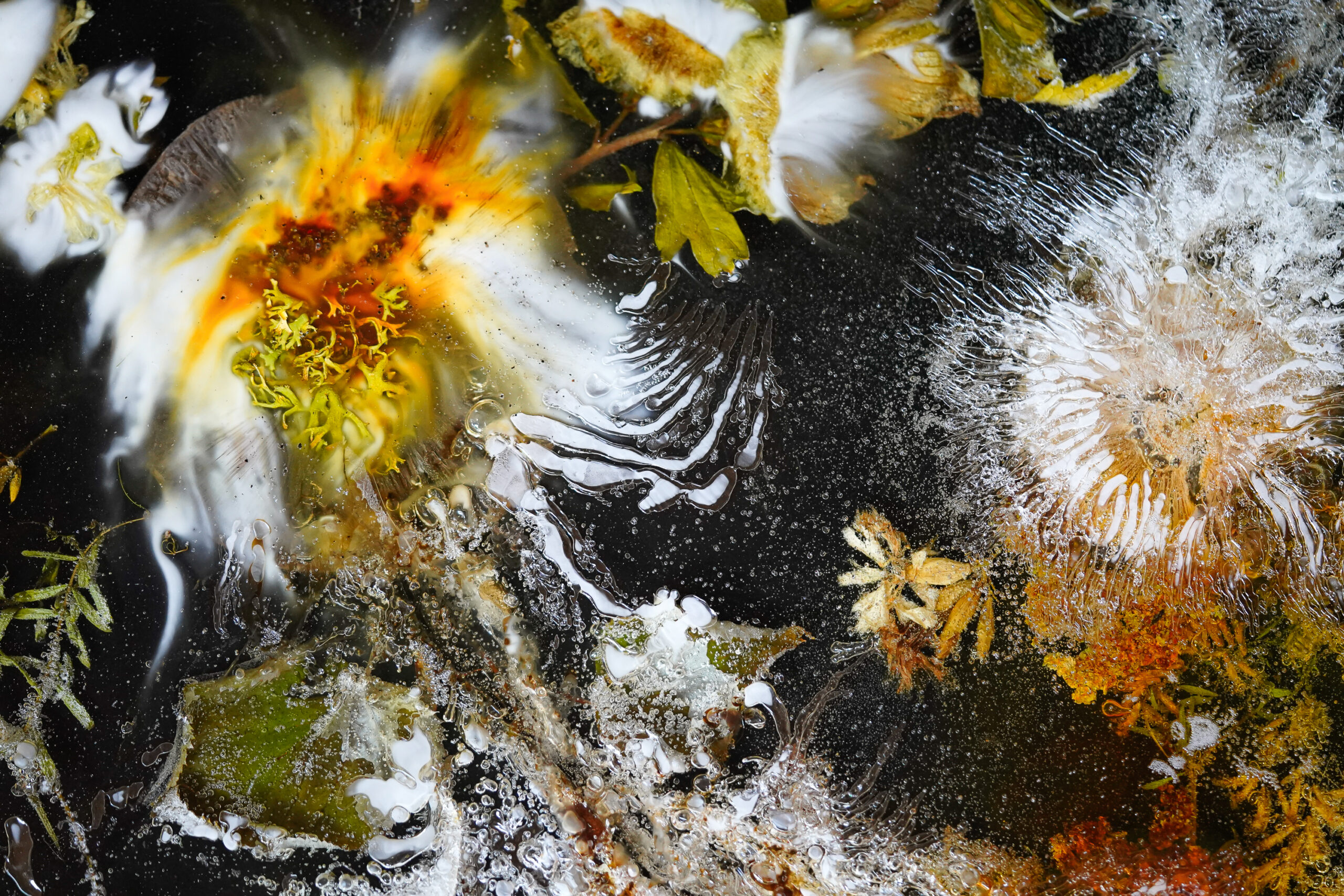 Photo: Rhoda Ting & Mikkel Bojesen, Landscape Portrait (Detail) Courtesy the artists and Gallery Sally Dan-Cuthbert, Sydney.
Many of your works invite us to think beyond a human perspective, whether through geological time, artificial intelligence or microbial life. Why is it important to challenge the idea that humans sit at the centre of the story?
It feels increasingly clear that the future many of us were promised, built around endless growth and human dominance, isn’t sustainable. When we first started working together, we realised something unsettling: we found it difficult to imagine a future beyond the end of the world, or even a world where humans weren’t at the centre of the story. That became one of the driving questions of our practice.
Mikkel’s background is in theology and art history, and from a European perspective there’s a long philosophical tradition, from Aristotle’s Scala Naturae through to humanism, that places humans at the top of a hierarchy. Discovering thinkers within queer ecology and posthumanism offered us a completely different way of seeing. Instead of placing humans above everything else, they invite us to see ourselves as one species among many, deeply entangled within a web of relationships. Yet what fascinates us is that, despite all the scientific evidence showing how interconnected life is, it remains incredibly difficult to truly decentre ourselves.
When we look at Earth’s history, we find a different perspective. Other species have survived five mass extinctions. Life has continually adapted, and complex biological life itself emerged from once toxic conditions. The planet has always been evolving through collaboration, mutation and transformation.
Our work tries to honour the intelligence and agency of other life forms, whether fungi, microbes, geological processes or even synthetic systems such as robotics and AI. By co-creating with these more-than-human collaborators, we’re constantly reminded that we are never fully in control and we are by no means the only intelligent species. That experience is deeply humbling.
Rather than imagining a return to a pure, untouched idea of nature, we’re interested in a future made up of many voices, many beginnings and many possible stories that includes synthetic life, industry and technology. A world experienced through relationships rather than hierarchies.
 Photo: Rhoda Ting & Mikkel Bojesen, Deep Time (Detail), glass, 12,000 year old ocean floor sediment from methane seepages in the Arctic Ocean, stainless steel, lights, Courtesy the artists and Gallery Sally Dan-Cuthbert, Sydney.
 Photo: Rhoda Ting & Mikkel Bojesen, Deep Time (Detail), glass, 12,000 year old ocean floor sediment from methane seepages in the Arctic Ocean, stainless steel, lights, Courtesy the artists and Gallery Sally Dan-Cuthbert, Sydney.
Works like the Interface Series are created over a period of time, while sculptures such as We Are All Hybrids imagine possible futures. How do you balance scientific reality with speculation and imagination in your practice?
By working with living systems, geological time and material processes, we stay grounded in scientific reality. But we also believe that imagination is essential. Scientific knowledge gives us a foundation, while speculation allows us to ask what kinds of futures might still be possible.
Our practice began with a desire to learn how to be in relationship with other species. Instead of simply representing nature, we wanted to create situations where nature could become an active collaborator and voice in the work.
In the Interface series, for example, we think of the repeated meetings between the ocean and industrial metal as the painter. The work develops through those encounters over time. In Deep Time, we worked with 12,000-year-old ocean-floor sediment collected from methane vents, folding it into molten glass so that ancient organic and mineral life could become visible again through the making process.
We’re particularly interested in what philosopher Rosi Braidotti calls affirmative futures. Rather than remaining in narratives of collapse, anxiety and dystopia, we want to create spaces where resilience, adaptation and co-evolution become visible. Nature continually shows us that worlds are still being built, and we hope our work offers a way of imagining ourselves as participants in those ongoing processes.
 Photo: Rhoda Ting & Mikkel Bojesen, We Are All Hybrids, Skagarrak 2, 2023 automotive paint, 3D-print, paster, resin, concrete, steel, 160 x 35 x 35 cm, Edition of 3, plus 2 AP, Courtesy the artists and Gallery Sally Dan-Cuthbert, Sydney.
 Photo: Rhoda Ting & Mikkel Bojesen, We Are All Hybrids, Skagarrak 2, 2023 automotive paint, 3D-print, paster, resin, concrete, steel, 160 x 35 x 35 cm, Edition of 3, plus 2 AP, Courtesy the artists and Gallery Sally Dan-Cuthbert, Sydney.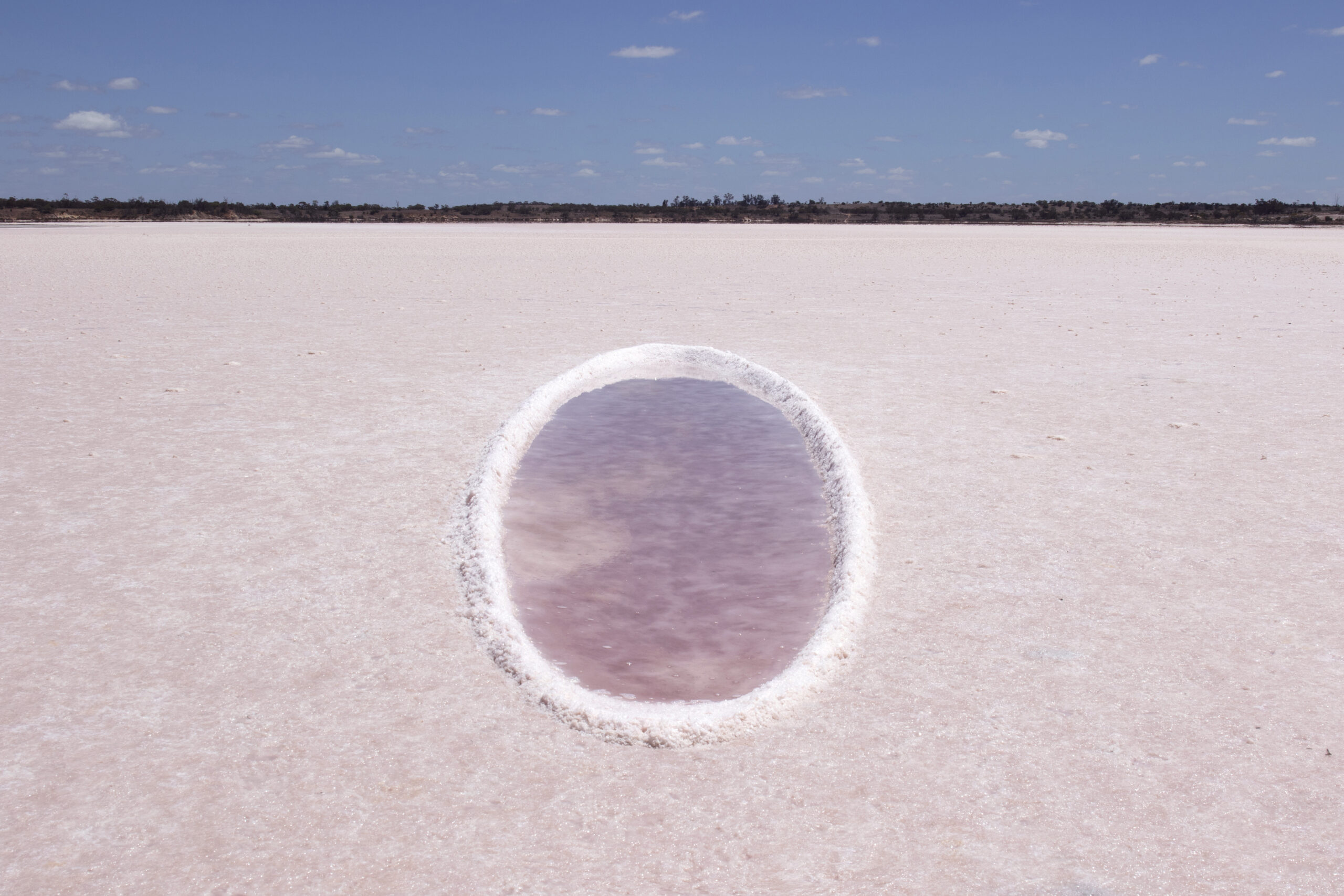
Photo: Rhoda Ting & Mikkel Bojesen, Quantum Field – Tunnelling, 2019, archival pigment print, oak frame, 100 × 150 x 5 cm, Edition of 3 plus 2 AP. Courtesy the artists and Gallery Sally Dan-Cuthbert, Sydney
For visitors discovering your work at Sydney Contemporary, what do you hope they leave thinking about, or perhaps seeing differently, after spending time with your installations and sculptures?
We hope people leave with a renewed sense that nature is resilient, wonderfully diverse and in constant evolution – and that we are not separate from it but deeply entangled within it. We hope visitors leave feeling a little more connected to the more-than-human world, and a little more curious about the intelligence and creativity that exists beyond ourselves.
We’re interested in the spaces where nature, industry, technology and humans meet, because that’s where new forms of life and new relationships are constantly emerging. Those intersections are often portrayed as sites of conflict, but we also see them as places of possibility.
Ultimately, we hope the work offers an affirmative perspective. Humans have undoubtedly contributed to many of today’s ecological crises, but we’re also part of the future. The question we’re always asking is: how can we learn to evolve together?
 Photo: Rhoda Ting & Mikkel Bojesen, Interface (Klintholm, winter, 7m/s, 18.12.2025), 2025, iron plate, oxidation, oak frame with museum glass, 130 x 90 x 6 cm (framed), Courtesy the artists and Gallery Sally Dan-Cuthbert, Sydney.
 Photo: Rhoda Ting & Mikkel Bojesen, Interface (Klintholm, winter, 7m/s, 18.12.2025), 2025, iron plate, oxidation, oak frame with museum glass, 130 x 90 x 6 cm (framed), Courtesy the artists and Gallery Sally Dan-Cuthbert, Sydney.
After Sydney Contemporary, what’s happening next in the world of Rhoda Ting and Mikkel Bojesen?
We’re excited about a busy year ahead. In early 2027, we’ll be part of the group exhibition (Un)Human Being at Kunsthalle Düsseldorf, opening in February. In March, we’ll open a solo exhibition at Ordrupgaard in Denmark, and we’re also installing a permanent rhizomatic wind sculpture at Aalborg University in Esbjerg, Denmark.
Alongside these projects, we’ll be working towards our first solo exhibition with Gallery Sally Dan-Cuthbert in early 2028. It’s an exciting moment for us, as all of these projects continue our ongoing conversations around co-evolution, hybridity and imagining more affirmative futures.
 Photo: Rhoda Ting & Mikkel Bojesen, Landscape Portrait #63, 2023, epoxy, pigment, flora and fungi (Sjælland, Denmark), Ø 110 x 3 cm, Courtesy the artists and Gallery Sally Dan-Cuthbert, Sydney.
 Photo: Rhoda Ting & Mikkel Bojesen, Landscape Portrait #63, 2023, epoxy, pigment, flora and fungi (Sjælland, Denmark), Ø 110 x 3 cm, Courtesy the artists and Gallery Sally Dan-Cuthbert, Sydney.
Where art meets the aperitivo hour, Saison is bringing a distinctly Australian approach to the bar at Sydney Contemporary.
Joining the Fair as a new partner for 2026, the Melbourne-based aperitif company is known for its seasonal, ingredient-led vermouths and amari, drawing on local produce and a culinary approach to flavour.
As part of Art + Dine, Sydney Contemporary’s new program bringing art, food and hospitality together across the city, Saison has collaborated with artists Reko Rennie, Ramesh Mario Nithiyendran, Michael Zavros and Joan Ross to create a series of limited-edition drinks inspired by their practices, palettes and personal tastes.
We spoke with Saison founder Dave Verheul about the craft behind the bottle, the natural crossover between art and hospitality, and what happens when an artist’s work becomes something you can taste.
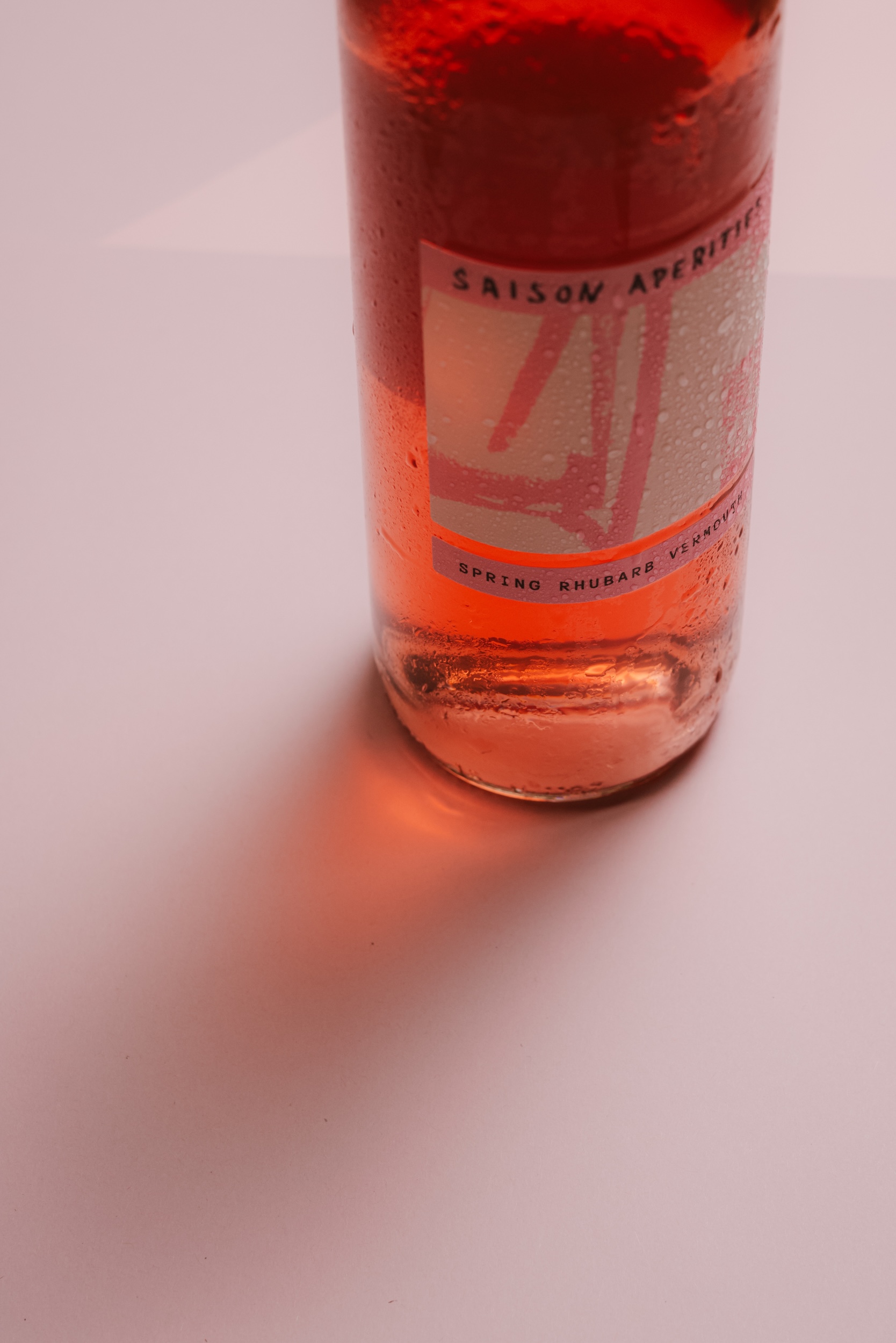
Saison Aperitifs joins Sydney Contemporary as a new partner this year. What drew you to the Fair and its audience?
We’ve always cared more about building genuine relationships with the right people than chasing quick wins and Sydney Contemporary felt right for many reasons. We’re a privately owned Australian aperitivo company and are humbled to now be poured at some of the best bars and restaurants around the world. That said, Australia is home, and always will be. So, activating our first major bar at a world-class art fair such as this at home is an amazing opportunity. Over the years, we’ve also noticed something about the people who found us early: they’re creative, they care about craft, and they love a sharp drink. This felt like a perfect reason to bring aperitivo and art together and to share Saison with a few new faces.
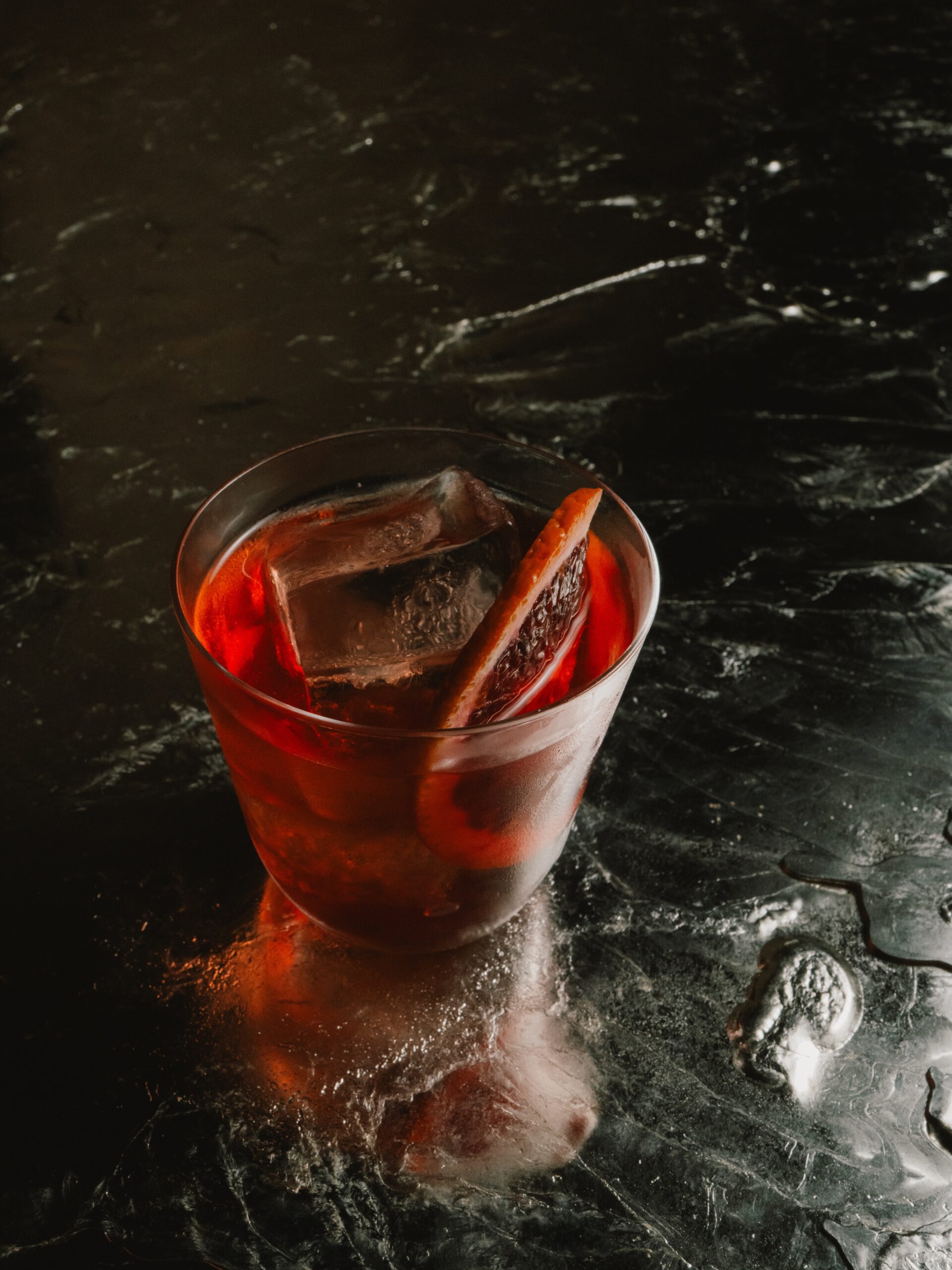
 Pictured: Quince Negroni inspired by Michael Zavros. Created by Saison Aperitifs for Sydney Contemporary Art + Dine.
How did Saison start, and how do you balance innovation with classic aperitif culture?
Saison started with a simple idea: vermouth and amaro didn’t need to be dark, heavy, or locked into old-world styles. They could be brighter, fresher, more singular in flavour, and enjoyed in a number of different ways. That’s really where the name comes from: Saison, because we capture our favourite seasonal moments and bottle them.
My background spans 25 years in professional kitchens, which translates straight through into our production, using refined technique and hands to extract flavour in its most expressive form, always from real, honest ingredients. My partner (and wife) Tash has over 20 years experience building and growing brands globally. Between us, it’s a pretty complementary team and the “old world vs. new world” aperitif question is one we actually talk about a lot.
Vermouth and amaro carry hundreds of years of European tradition, and we respect that completely, the botanicals and the patience. But a lot of that tradition was built around what was seasonally available in Piedmont or Turin, not Melbourne. We honour the past but we don’t treat it as a museum piece to replicate. We take that same discipline and process and apply it to what our local growers and foragers actually produce here, some that I believe are the best in the world: fruit, flowers and rare herbs, picked at their peak, the same way we do it in the restaurant. It’s less about reinventing the category and more about asking why the rules can’t flex to the season and the place we occupy in the new world.
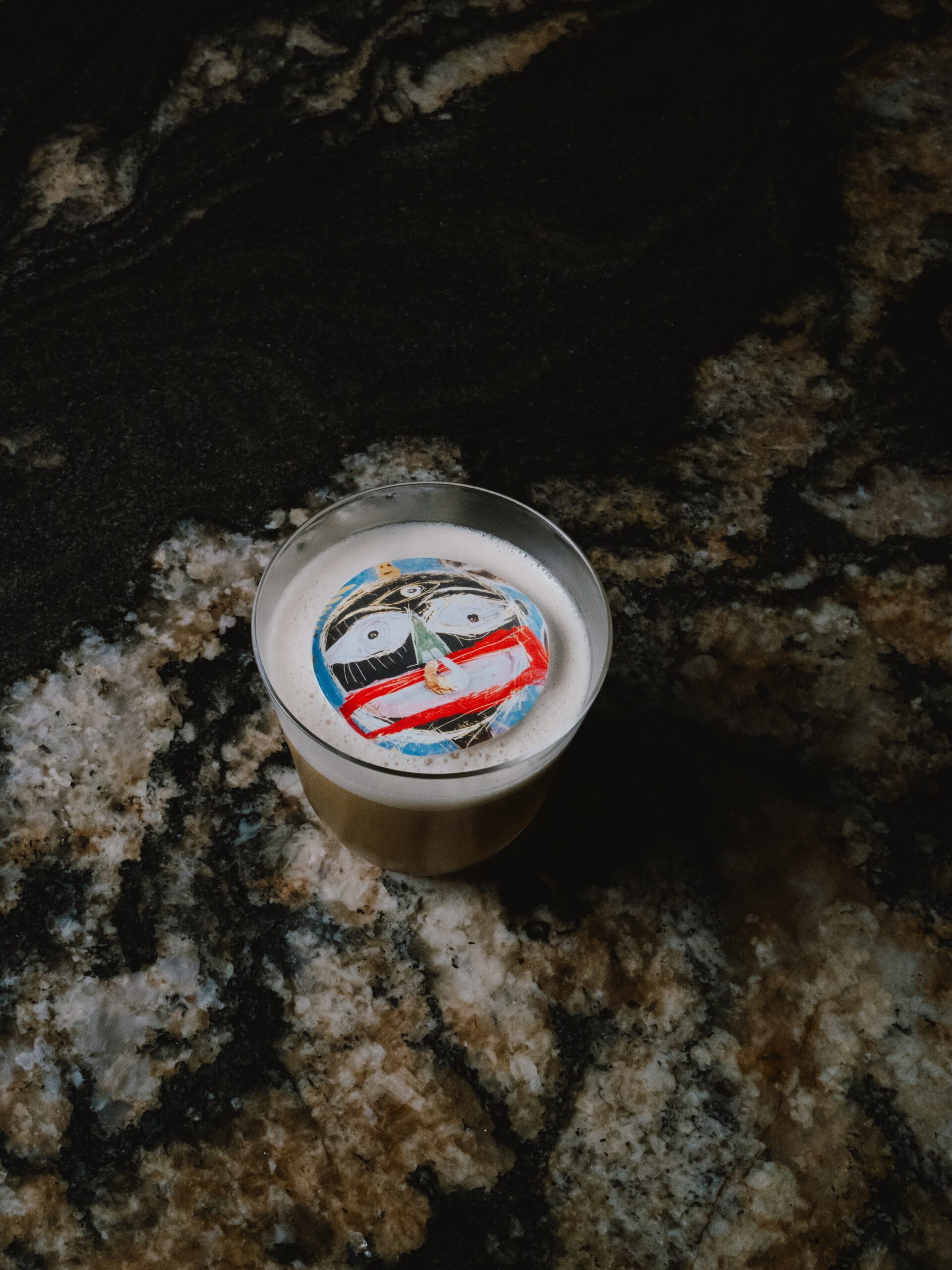
Image: Walnut Sour, Inspired by Ramesh Mario Nithiyendran. Created by Saison Aperitifs for Sydney Contemporary Art + Dine.
How do you see art and hospitality intersecting?
They’re both ultimately about creating a moment someone remembers. A great meal, a great drink, a photograph or a great artwork, they all do the same job: they slow you down and make you notice something. That’s part of why we put so much detail into how every bottle of Saison is made, there’s no shortcuts or artificial flavouring. It’s harder and labour-intensive, but I really feel that’s the difference between something that’s just consumed and something that stays with you. In hospitality we also talk a lot about atmosphere and energy; artists are doing something very similar with colour, scale and emotion. It’s a great thought, having those two worlds sit in the same room.
Why is Art + Dine a natural fit for Saison?
Because it’s built on exactly the same instinct Saison was: taking something real, capturing that moment and bottling it. We’ve always celebrated culture and creativity with people who share our ethos, and so we were genuinely pumped to collaborate with Reko, Ramesh, Michael and Joan. They are truly some of the best artists in Australia and for us, that meant really understanding more about each artist, before we could turn it into a drink. Tash and I met with each of them to learn their palate and flavour preferences: Ramesh’s pull toward intense, dry, rich pours; Joan’s super-taster precision and love of florals; Reko’s need for something spritzy but never too strong; Michael’s pull toward rich, resinous flavours that echo his Greek heritage. Each drink was built from there, in partnership with our good friend Sam Thornhill from (Melbourne bar) Byrdi.
What excites you most about the collaboration?
When we developed pairings with the artists, no two conversations were the same: one led with a specific ingredient and a memory, another led with colour, another with a very particular texture they wanted the drink to have. It keeps us honest about the fact that Saison isn’t a fixed formula, it’s a way of listening to a season, or in this case, to a person’s work, and translating it into something you can taste. That and the fact, it was pretty amazing to learn more about how some of these incredible artists think and how to then translate their practice into flavour.
What’s next for Saison?
Our instinct is the same as it’s always been: grow with integrity, without diluting the things that make it Saison: seasonal, ingredient-led, made without shortcuts. We love what we do, and we’re genuinely passionate about what we’re making. If we can keep sharing that with people around the world who genuinely appreciate quality and a good bitter drink, well, that’s our strategy right there.
Driven by a pursuit of awe, wonder, and authentic connection, artist Lottie Consalvo and her partner James Drinkwater, approach contemporary art not as an exercise in speculative acquisition but as a rich layer of everyday meaning and substance. For them, a collection is a living record of intuitive choices – where a chance encounter with a new work or a spontaneous exchange with a fellow maker carries as much weight as the art itself, serving to fill their lives with warmth, pleasure, and genuine intrigue.
Ahead of Sydney Contemporary, we spoke with Lottie and James about the humble, excuse-driven origins of their first art purchase, how trusting intuition over market value shapes their evolving collection, and why the Fair offers the perfect landscape for both seasoned and aspiring collectors to discover what truly speaks to them.
Nicholas John Wilkins
What first sparked your interest in collecting contemporary art?
It began at the exhibition Melbourne Now in 2013, an exhibition of Melbourne artists held by the NGV at the Ian Potter Centre. We saw paintings on paper by the artist Patrick Francis and were taken aback by them. We had not heard of the artist before and we went on to find out more. We were sent a catalogue of his work by Arts Projects Australia and they were $500 each. It was our son’s 2nd birthday coming up, we lived in a granny flat and had just started to feel like we were making a little bit of money from our art, so we decided as an excuse to buy one of Francis’ pieces, we would say it was for our son’s birthday. However, we couldn’t decide on one so we chose two. That was the beginning, we continued to make excuses to buy art from there on.

Photo: Nicholas John Wilkins
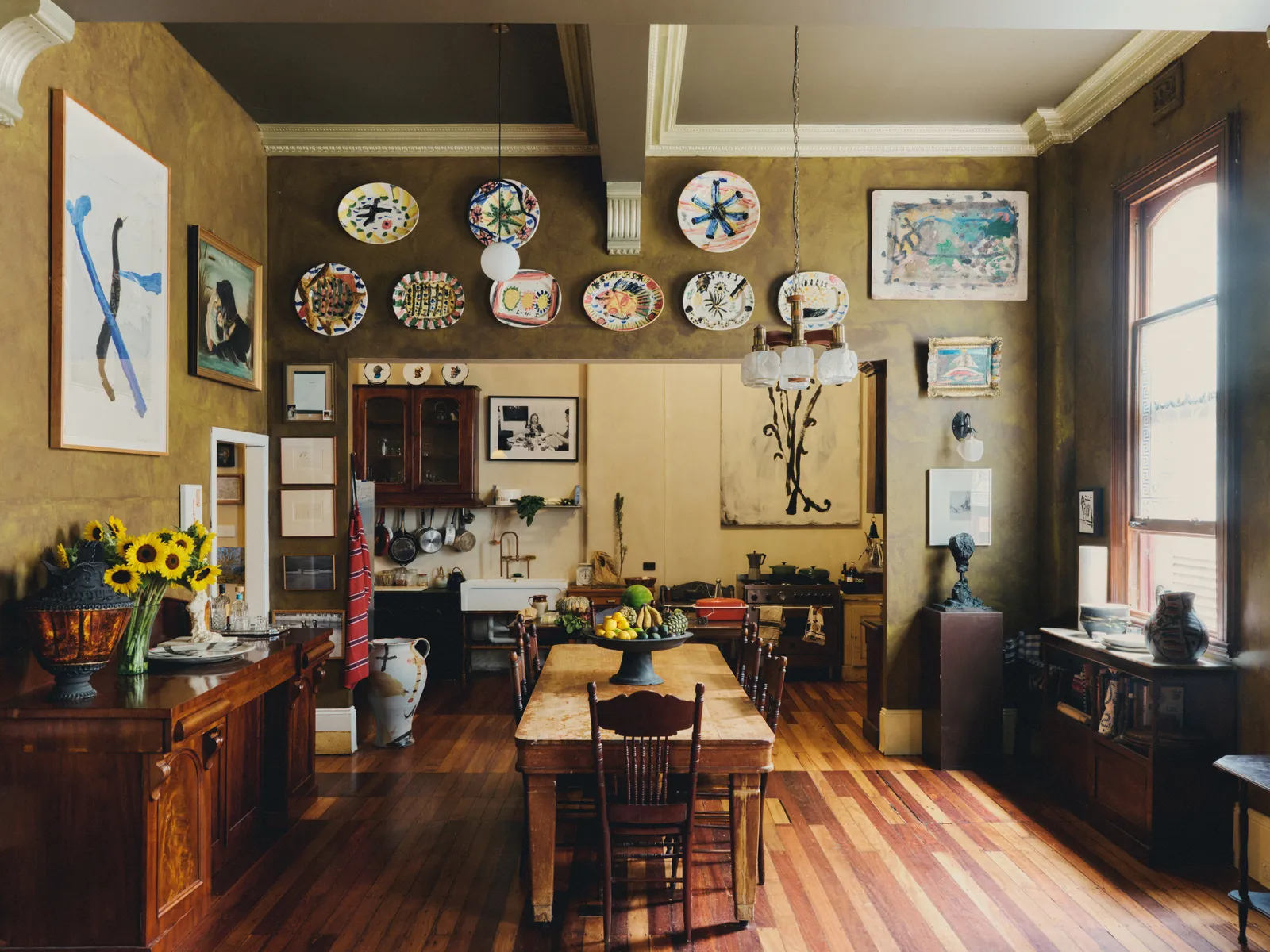
When encountering a new work, what qualities or ideas tend to draw you in?
We look for something we haven’t seen before, to encounter a newness steeped in the old.
Has your approach to collecting evolved over time? If so, how?
Not really, we don’t hunt things down or scroll through gallery catalogues to discover an artist. It just sort of happens. We often like to buy something after our own exhibitions. For instance, we were at a bar after James’ exhibition a couple of years back, and we were chatting with an artist Tara Macintosh who needed more money to get to Paris for a residency. She showed us her work on her phone and we genuinely loved it, so we bought one then and there. We seem to like a lot of the same things, but sometimes not. We do have a loose approach now where if one really wants it then the other trusts thier judgement. James has started enjoying photography so I think that will become more of a focus for us moving forward. We also finally just bought an Italian religious icon painting from the renaissance period which has been a dream of ours and I think it might be the beginning of something.

Photo: Nicholas John Wilkins
What role does living with artworks play in your everyday life?
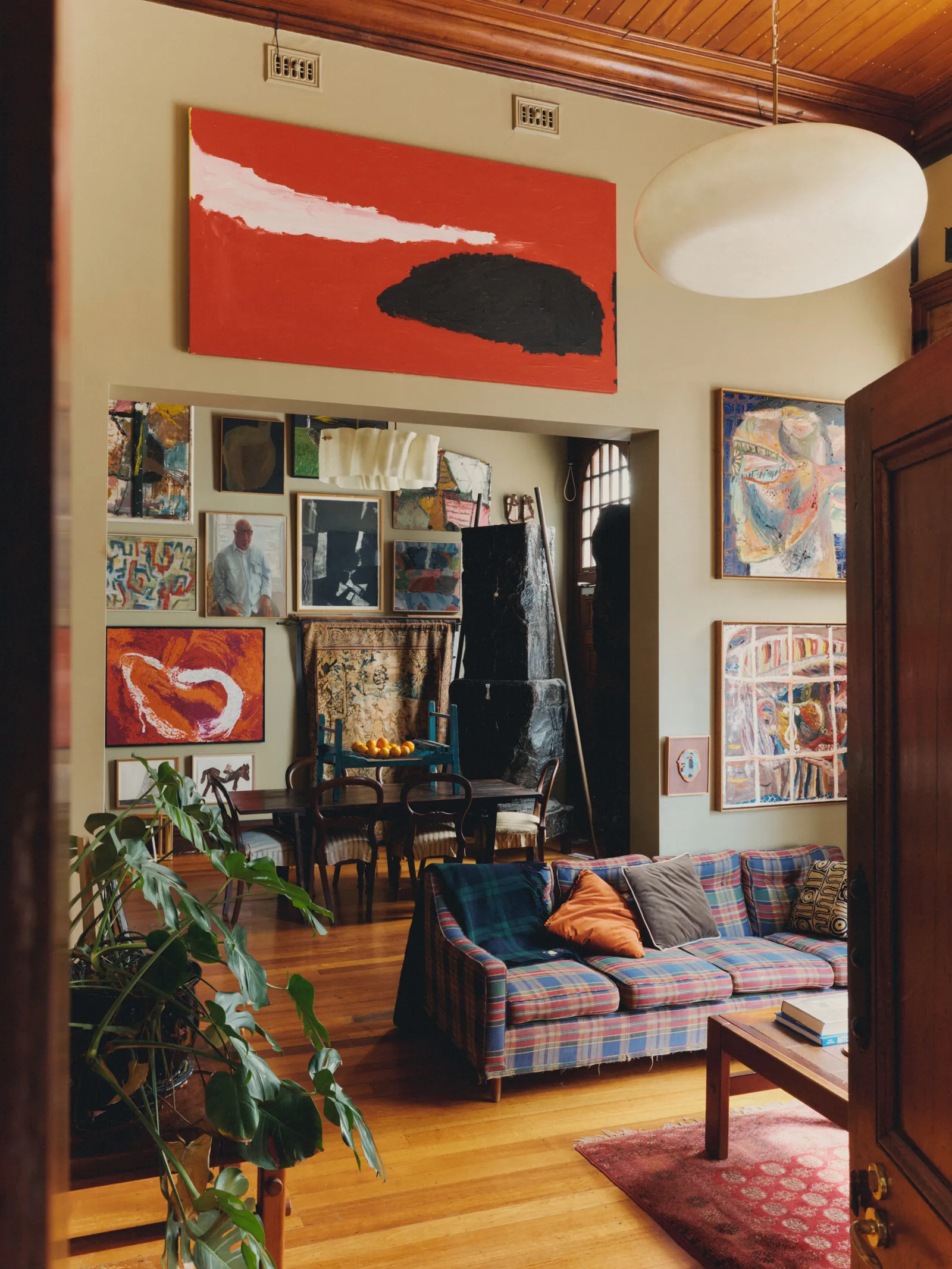
It wraps our lives in a layer of substance, meaning, warmth and pleasure. We have a space in the bush we are building where we feel art is not necessary because the natural world is all around us, and the landscape does for us what art does in a city. We feel art is somewhat of the same thing as nature. It comes from a place that intrigues us, fills us with awe and wonder in our everyday life and we are all about chasing those moments.

Photo: Nicholas John Wilkins
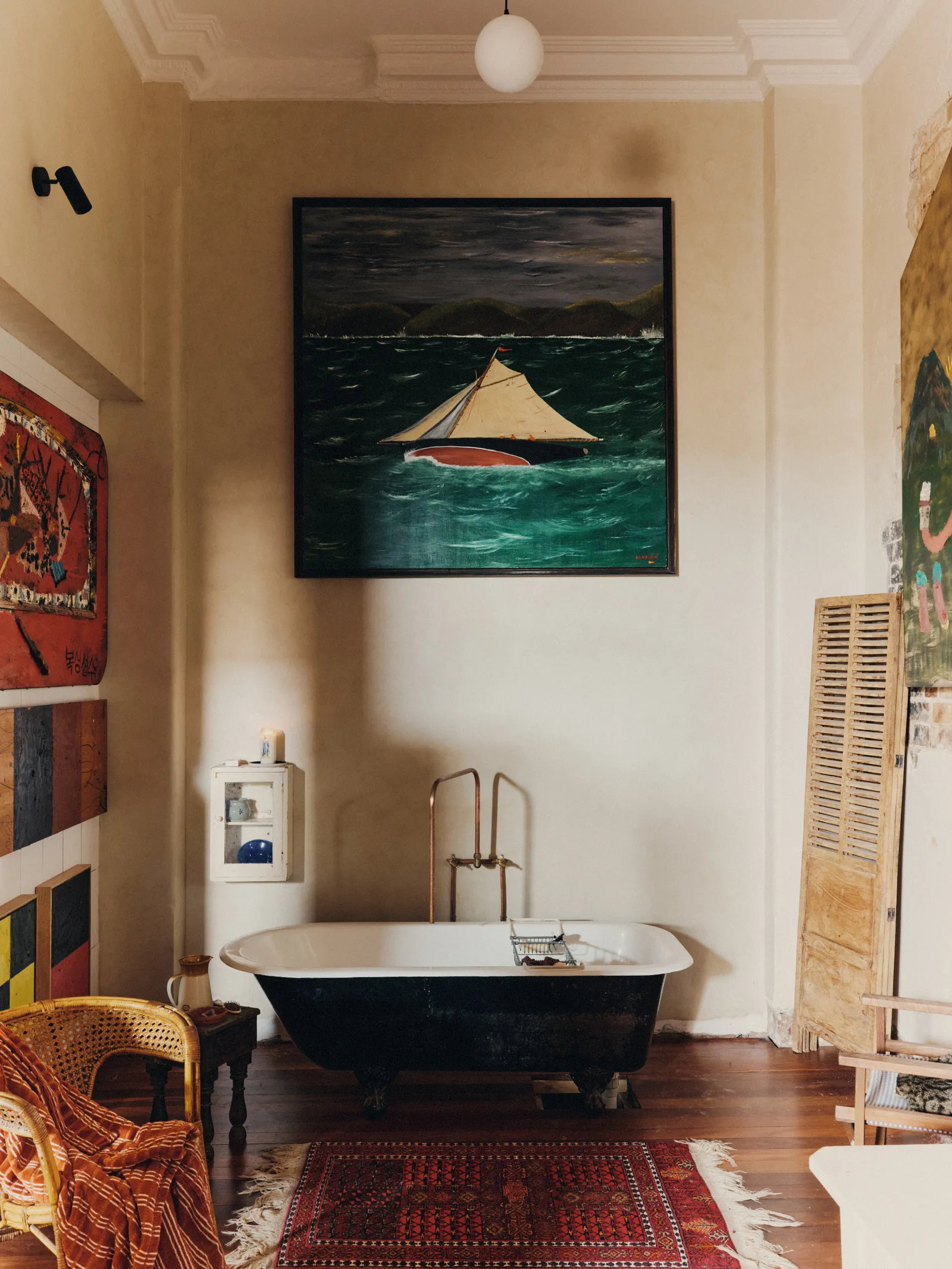
As artists living closely with art both personally and professionally, how does your approach to collecting differ from more traditional ideas of collecting, and what tends to draw you towards a work?
Some collectors think about what they ‘should’ be buying. What will grow in value, the longevity of the artist. We look for an artist who we feel is really committed to their practice, who is genuine and doing it for the right reasons, and who simply collect things we are drawn to. Even if we love everything about the artist we still need to love what they make to buy it. We also swap art with artists, so we end up with things we could never have imagined. Like we have these amazing flags hanging in the centre of our living room made by Lauren Brincat which we never would have imagined in my wildest dreams of having.

Photo: Nicholas John Wilkins
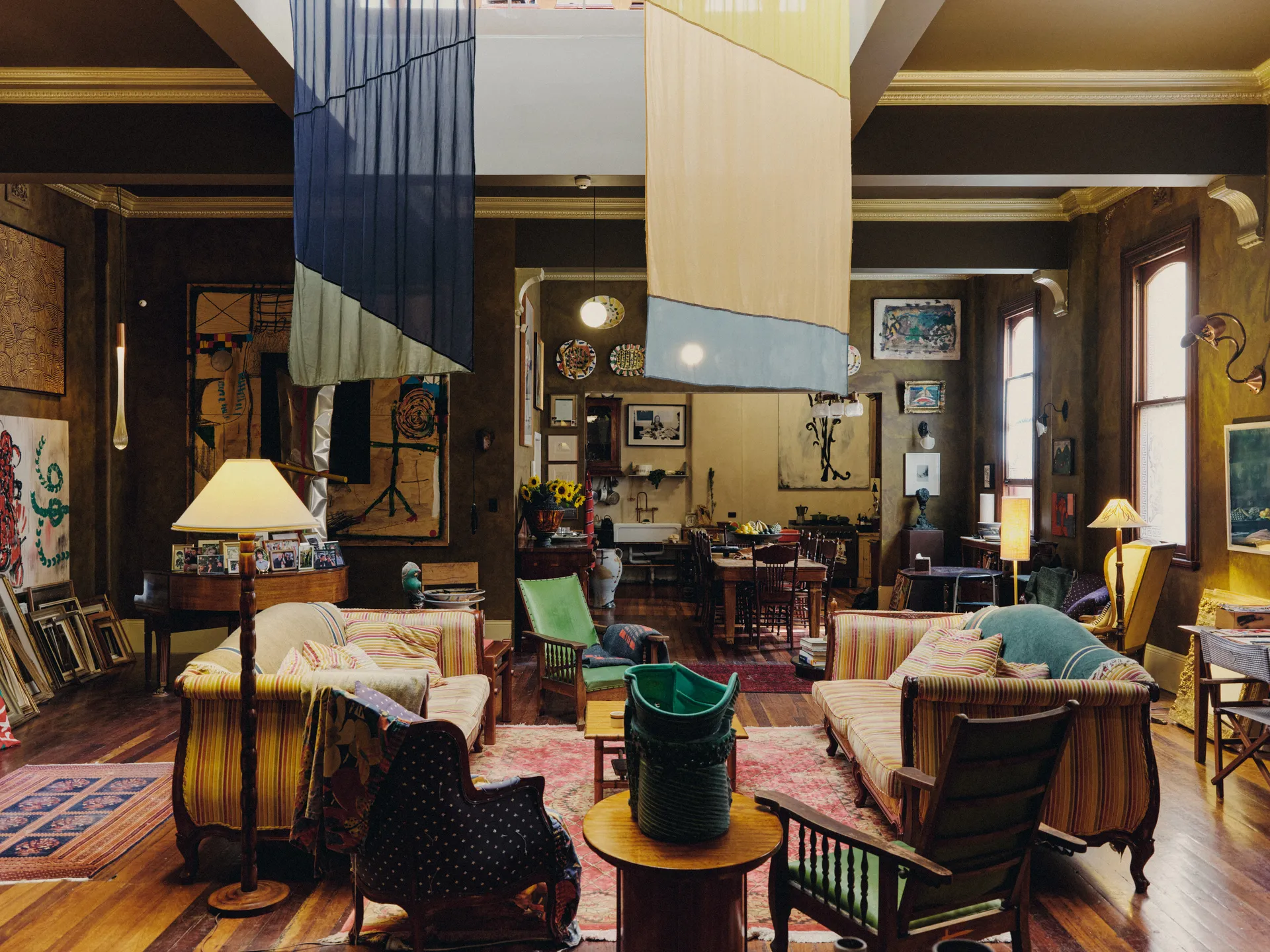
Sydney Contemporary brings together a wide range of artists and galleries each year. What do you most look forward to discovering at the Fair?
Discovering new artists or seeing what artists are making now, how a practice evolves, where they are pushing into.
What advice would you give to someone beginning their journey as a collector?
Ultimately, buy what you like and if you don’t know what you like yet then Sydney Contemporary is a great place to start. You can see so many different artists works and start to gauge what you like. Maybe you find that you are really drawn to ceramics or thick oil painting, abstraction or figuration. Taste in art is like anything else; it comes from a life of being us. It can shift over time, mature. Talk to the gallerists, talk to the artists, start to get a feel for it and buy your first piece and treasure it and then watch how it becomes a special part of your everyday. We all seek meaning in one way or another and art is a beautiful place to find it.
Nanda\Hobbs Gallery represents Lottie and James, Lottie will be exhibiting at this year’s edition of Sydney Contemporary.
Sydney Contemporary returns to Carriageworks from 3 – 6 September.
@drink_water_james
@lottieconsalvo
Website – Lottie
Website – James
Interior designer and Folk Studio co-founder Mariah Burton shares her top Sydney picks. From quiet coastal retreats and creative inner-west hubs to design-led local haunts, she has your guide to the city covered.
To Mariah, Sydney is a dynamic mosaic of distinct suburban personalities where you can shift seamlessly from the calm, golden shores of the Northern Beaches to the electric, creative energy of the Inner West. Defined by its human-centred warmth, vibrant independent spaces, and rich local artistry, it’s a city built on community and connection that makes every neighbourhood feel like a new discovery. Hear from Mariah on Friday, 4 September, 12pm for Small Space, Big Collection within the Sydney Contemporary Talks Program.
Photo: Jacqui Turk, courtesy Folk Studio
What makes Sydney stand out as a cultural destination?
I think Sydney’s suburbs are incredibly diverse in what they offer. Every neighbourhood has its own distinct character and atmosphere, often feeling completely different from the next, which is something I think makes Sydney really unique. You can move just a few suburbs over and experience a totally different pace, architecture, community and lifestyle, and I love that sense of variety within one city.
If you have friends visiting from outside of town, what are you adding to their itinerary?
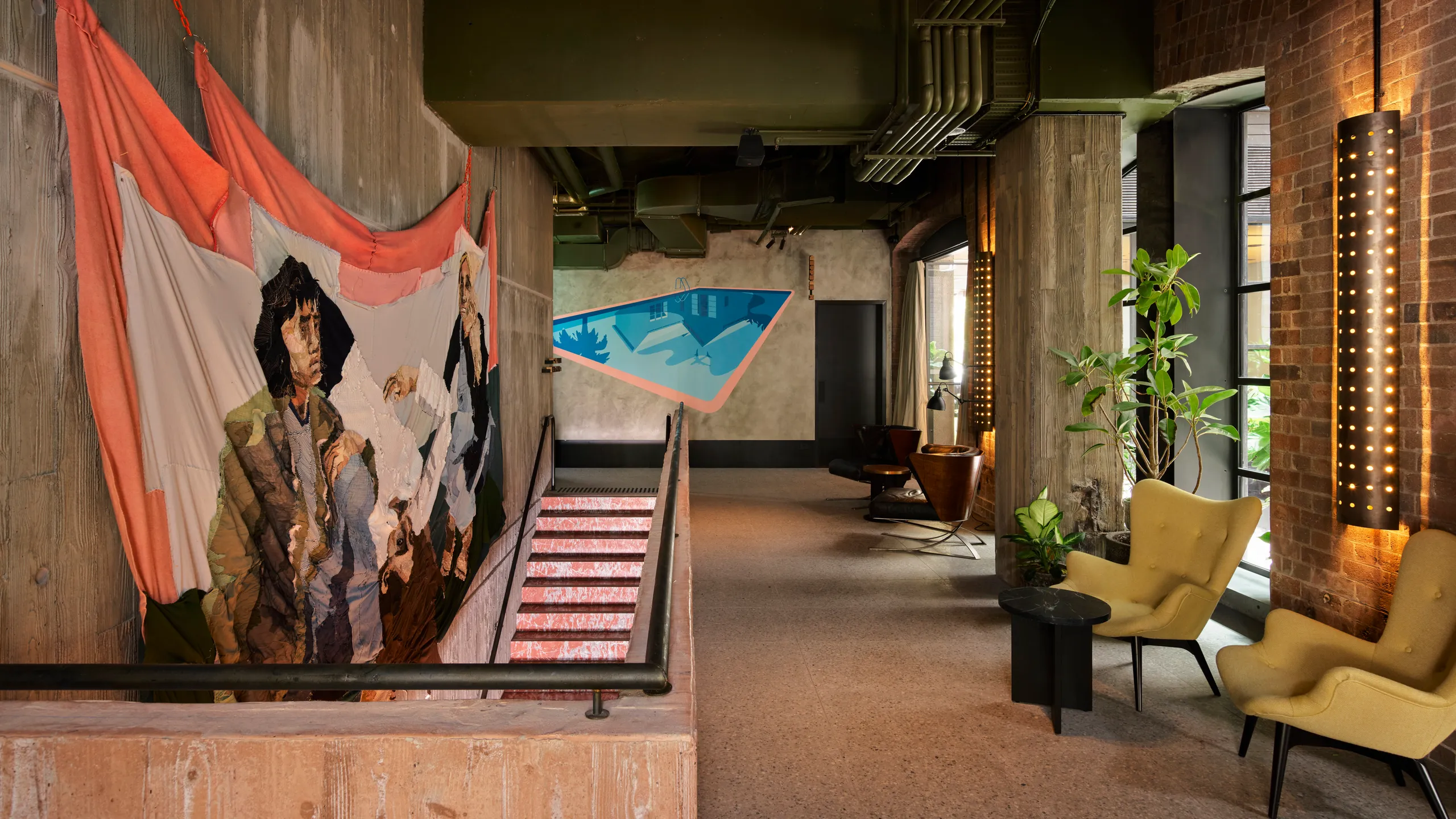
If you’re in Sydney during summer, I always recommend spending a day in Avalon, exploring some of the hidden beaches along the Northern Beaches before making your way down to Manly for dinner. Stay at the Ace Hotel while you’re here and spend a few days discovering Sydney’s incredible mix of hidden bars, neighbourhood restaurants and great cafés. It’s the best way to experience the city beyond the usual tourist spots.

Ace Hotel. Left: Julia Gutman, Once More with Feeling, 2021/2022. Back: Joanna Lamb, Pool, 2022. Photo: Anson Smart.
What cultural events or exhibitions coincide with Sydney Contemporary that you recommend?
A close friend of mine is curating a show at Hake Gallery in September with some amazing artists, which will be a worthwhile exhibition to visit.
What are some places, people or experiences in Sydney currently inspiring you?
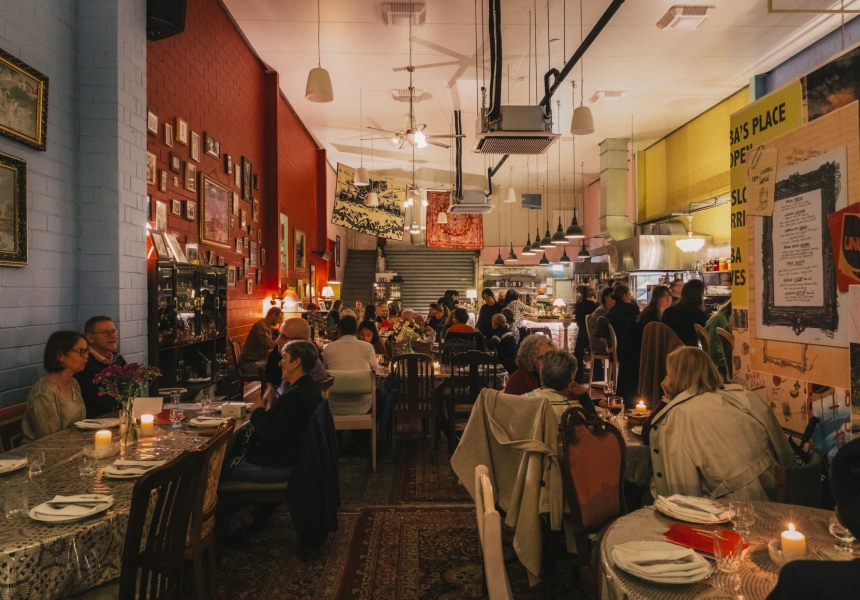
Our office is based in Marrickville, and I absolutely love the energy of the area. It has such a strong sense of community, with an incredible mix of creative people, independent businesses and great food. There’s always something worth checking out, whether it’s a meal at Baba’s Place, coffee at Two Chaps, or a visit to Superfreak. It’s one of those suburbs where you can spend an entire day wandering and constantly discover somewhere new.

Baba’s Place, Image: Chad Konik, courtesy Broadsheet.
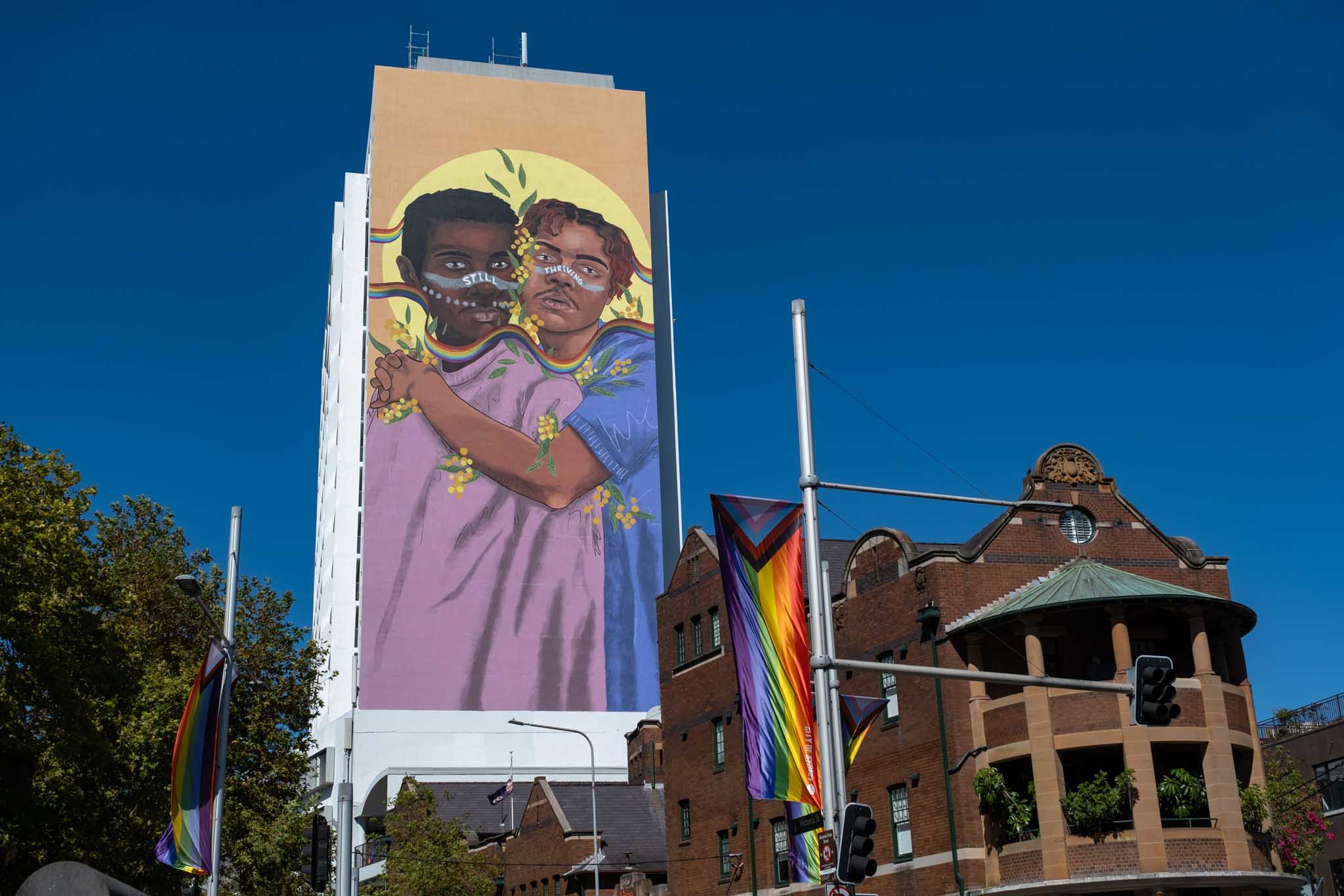
Do you have a favourite public art installation or mural in the city?
I love the First Nations mural in Redfern ‘Still Thriving’ by Dylan Mooney.
After a day of exploring Sydney Contemporary, where would you go for dinner and drinks to continue the evening?
Emma’s Snack Bar is always a great atmosphere and it feels like you’re having a big family dinner.

Image Courtesy Provider Store
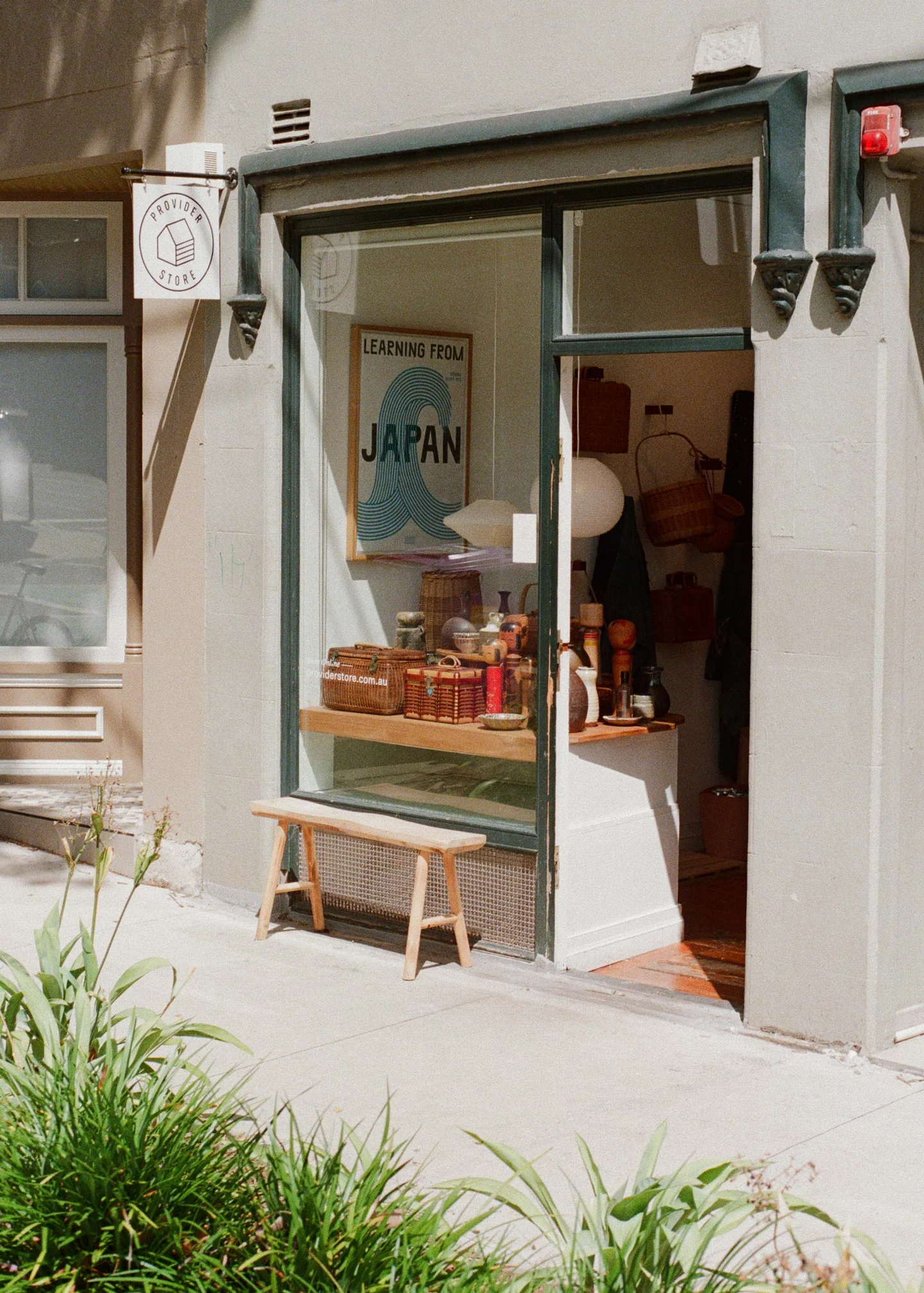
A hidden gem?
Paradise Beach in Avalon and Provider Store in Surry Hills.
Sydney Contemporary returns to Carriageworks from 3 – 6 September.
@mariah.burton_
folkstudiodesign.com
Design writer, editor and long-time observer of contemporary culture, Stephen Todd shares the artists, galleries and conversations he’ll be making a beeline for at Sydney Contemporary’s 10th edition. From must-see booths and ambitious installations to the talks not to miss, here’s what’s on his radar.
Booths
Fox Jensen is my go-to gallery for intellectually rigorous international artists filtered through the personable lens of gallerists Emma Fox and Andrew Jensen. Frankly, I covet one of German painter/sculptor Jan Albers’ chromatic wall-mounted ‘constructions’ which appear so dynamic as to make a room dance – as if absolutely everyone is watching.
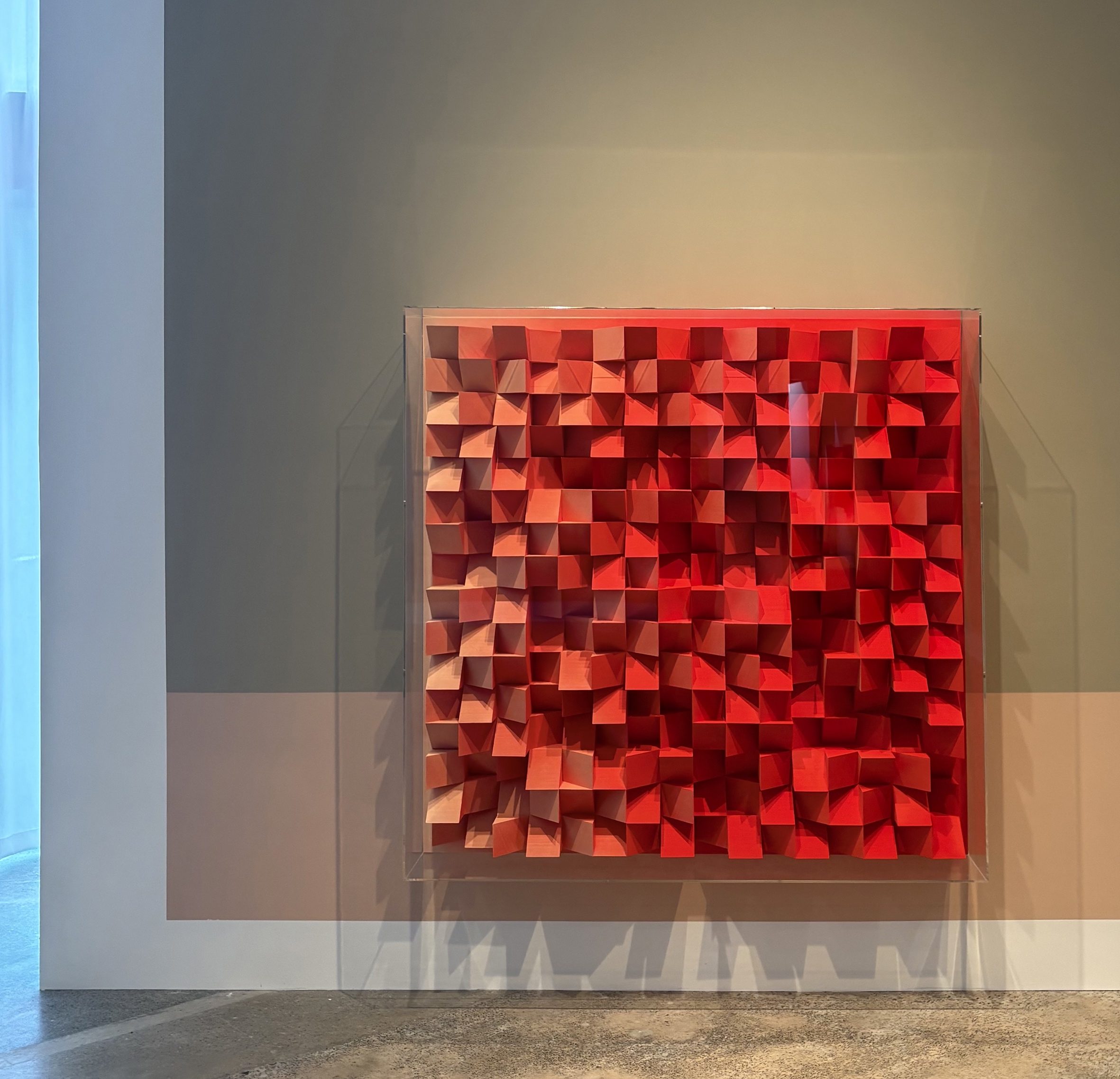
Pictured: Jan Albers, stRawbeRRyfields, 2024 Spray paint on polystyrene and wood, acrylic box, 171 x 171, 29cm
Sally Dan-Cuthbert is showing sensual hand-carved timber pieces by Perth artist Olive Gille-Hille and I am there for these stoic mini monoliths that act like evocative totems for the home.
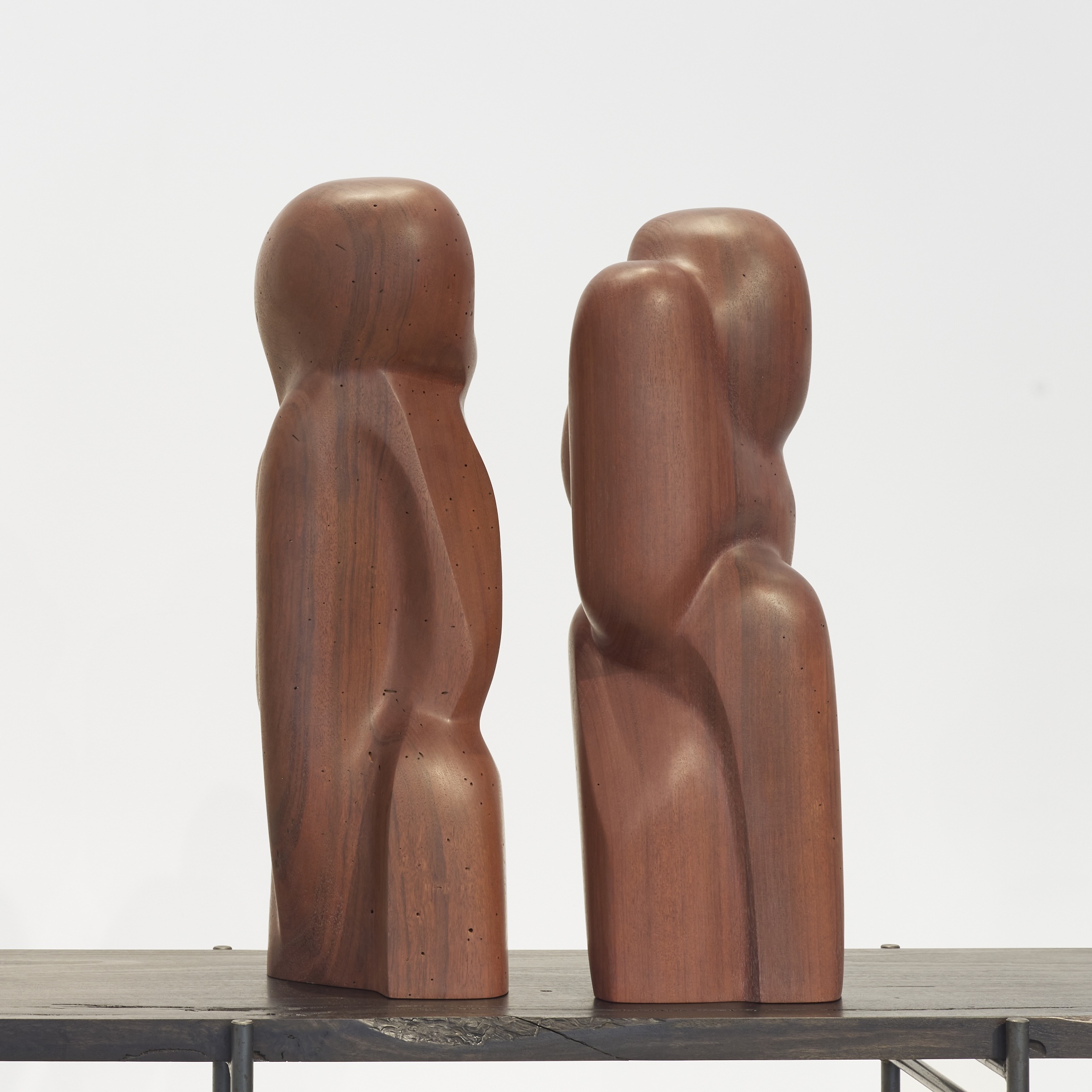
Pictured: Olive Gill-Hille, Figure IVV. Courtesy of the artist and Gallery Sally Dan-Cuthbert.
MARS Gallery, I’m looking forward to seeing The Huxleys because the world could do with more unadulterated campery right about now, and this Melbourne duo serves it up in bedazzled dollops.
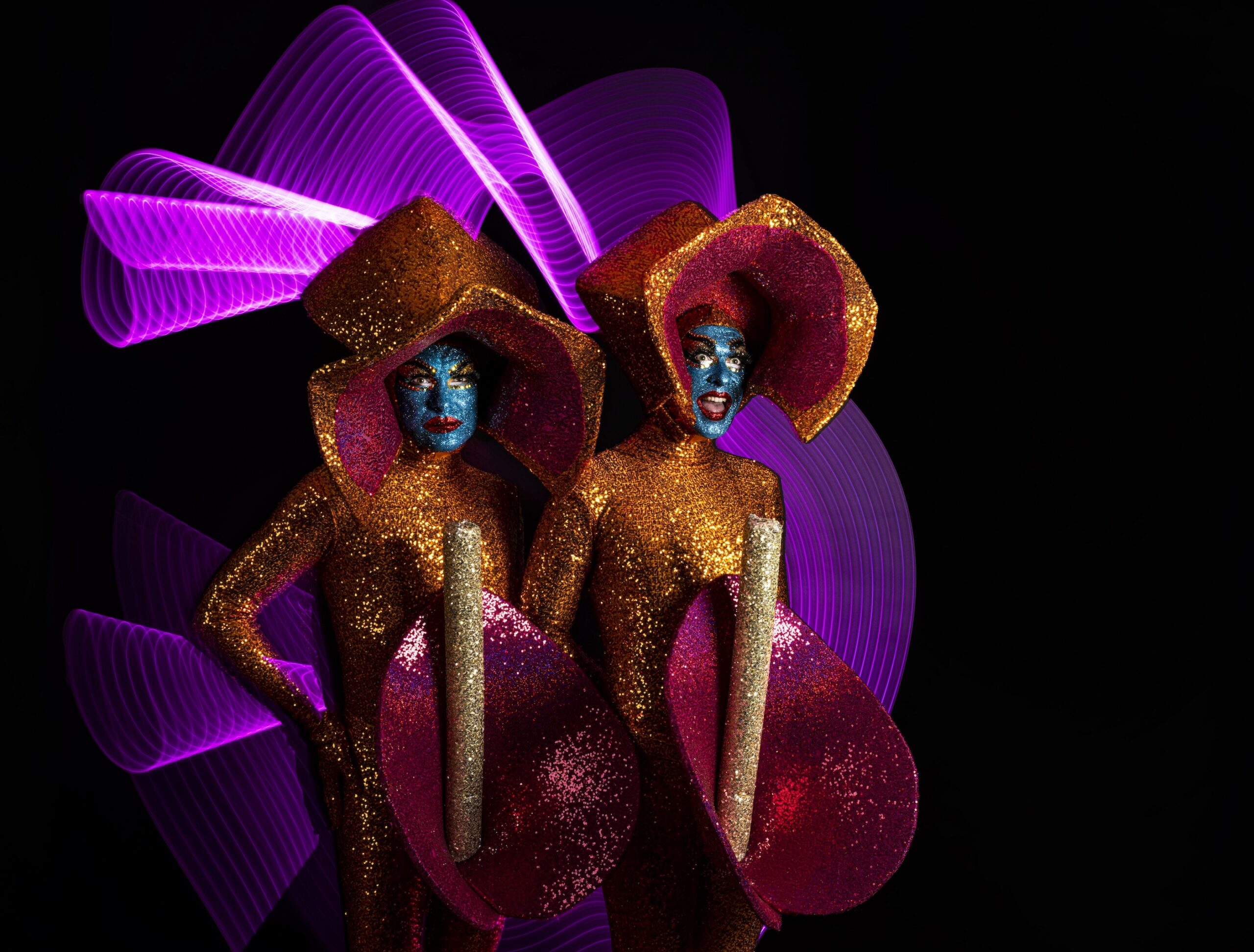
Pictured: The Huxleys, Nocturnal Bloom, 2026, from the series Radical Joy. Courtesy of the artists and MARS Gallery.
I love the way Cassandra Bird hangs work in ways that bring out aspects or attributes I had not suspected or expected. And I am excited to see pieces by three artists of Indigenous ancestry, Grace Lillian Lee, Danie Mellor and George Cooley, through a uniquely Bird’s eye view.
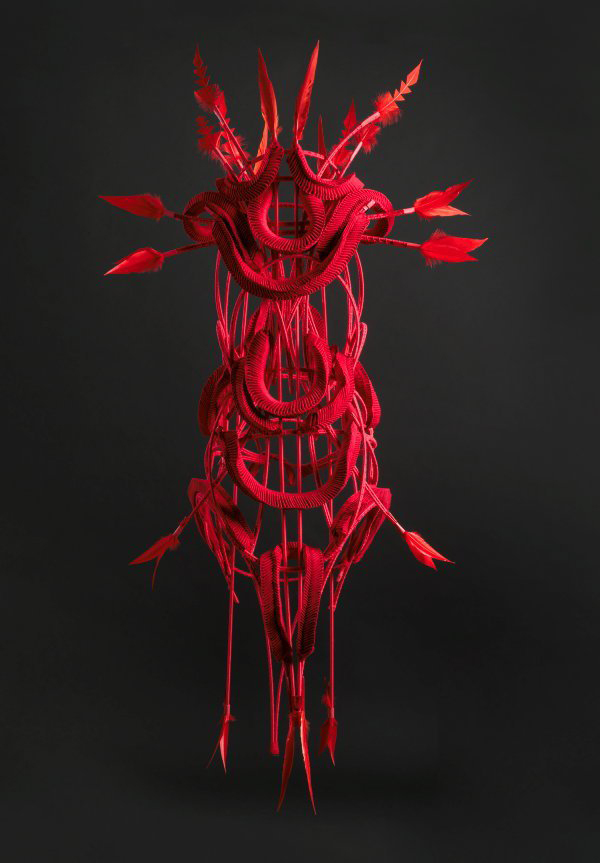
Pictured: Grace Lillian Lee, Belonging 3, 2022. Courtesy of the artist and Cassandra Bird.
It simply would not be Sydney Contemporary without Sullivan & Strumpf bringing the presence of iconoclastic ceramicist Ramesh Mario Nithiyendran. I missed out on one of his adorable gold-dipped clay statuettes last year and am hoping they might make a comeback for a victory lap right into my inevitable tote bag.
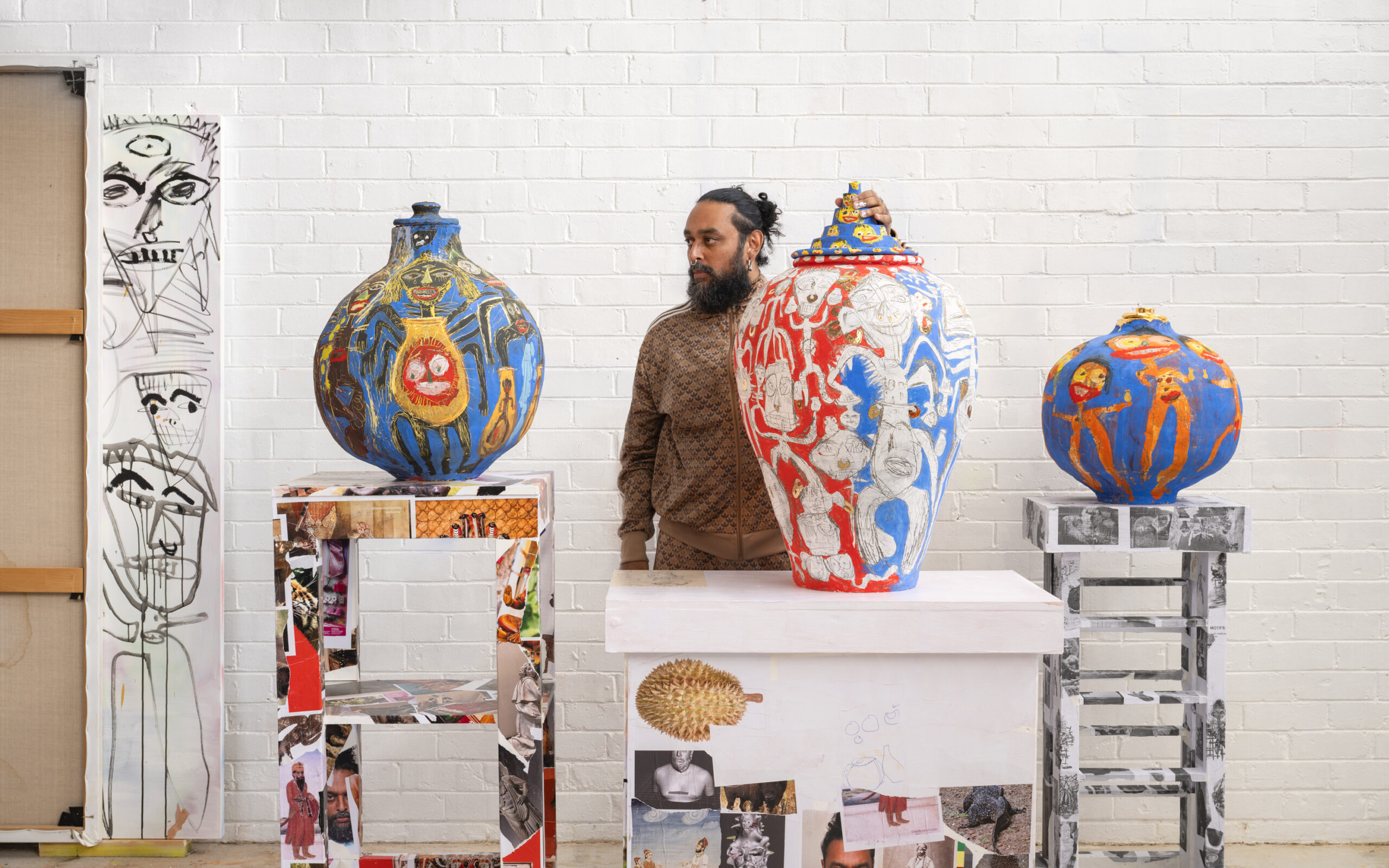
Pictured: Ramesh Mario Nithiyendran, Studio portait with Liquid Vessels 7, 11, 12, 2026. Photography by Mark Pokorny
Installations
The Reko Rennie installation at the new Sydney Fish Market is bound to be a retina-spinning experience, and will riff nicely on the permanently installed heavy-metal polychromatic ‘playground’ by sculptor Mike Hewson, who has also been invited to take over the Sydney Contemporary Café for the duration of the Fair.
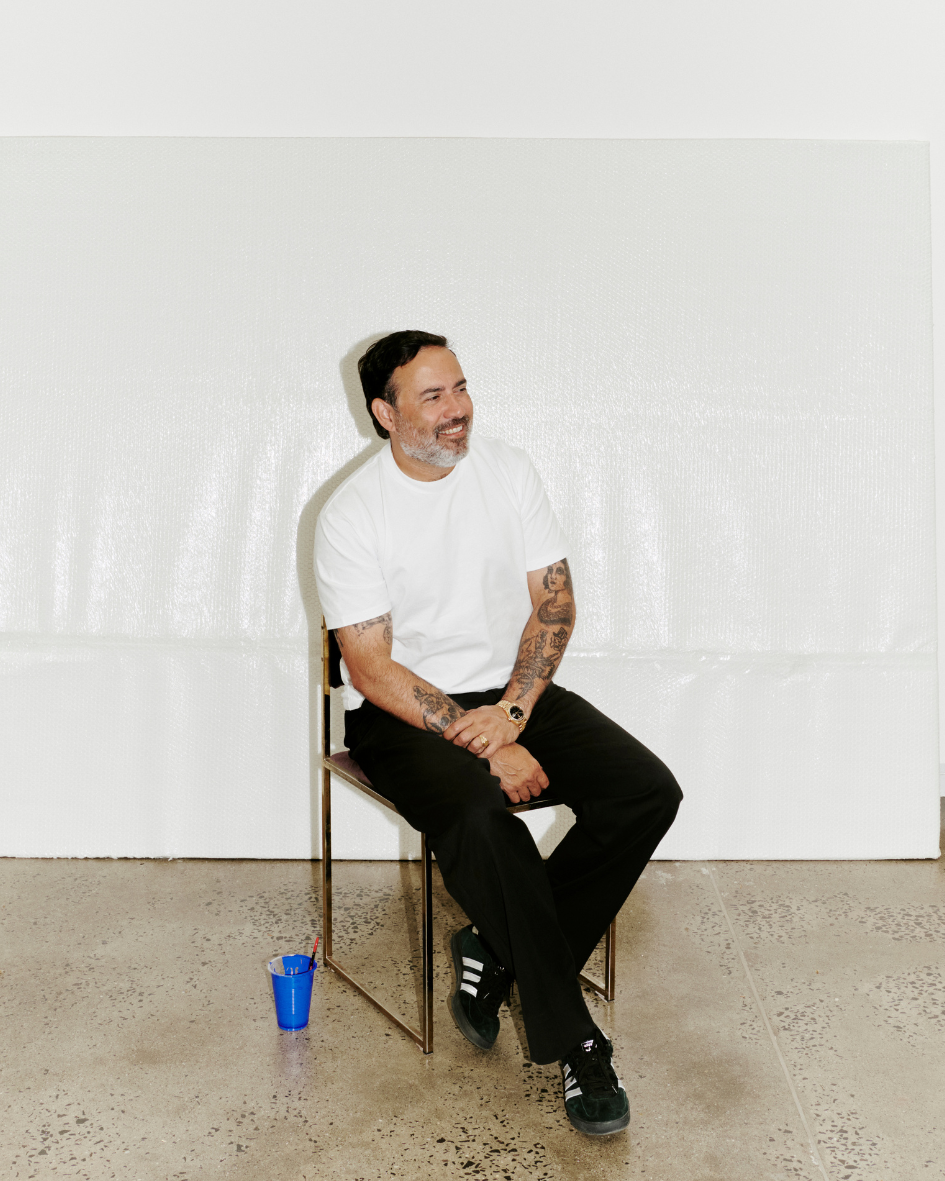
Pictured: Reko Rennie, supplied by Ames Yavuz.
Talks
Curated by Mitchell Oakley-Smith, you could drop me off at any one of the Sydney Contemporary Talks and you’d not hear a peep out of me for the duration. Of particular interest will be ‘Small Space, Big Collection’ since the first is my reality, the second my ambition.
About Stephen Todd
Design Editor, The Australian Financial Review.
Stephen Todd began his writing career in Paris in the early 90s where he was immersed in the worlds of fashion, art, architecture and design. He has contributed to papers such as The New York Times and The Guardian. Today he is the Design Editor of the Australian Financial Review and the Head of Publishing at Powerhouse Museum.
As the home of Sydney Contemporary, Carriageworks is much more than the venue for Australasia’s premier art fair. Housed within one of Sydney’s most distinctive heritage buildings, it has become a cultural destination in its own right, presenting a year-round program of exhibitions, performances, festivals and public events. We spoke with Andrew Demetriou, Director of Commercial and Venue Partnerships at Carriageworks, for his guide to experiencing Sydney’s creative side – from must-visit exhibitions and neighbourhoods to his favourite places to eat, drink and explore during Sydney Contemporary.
What makes Sydney stand out as a cultural destination?
Punching far above its size, Sydney is a melting pot of diversity and creativity. No other city has a comparable calendar of constant creative and cultural activation across the year – often free or affordable and always accessible, bringing people across the city and from afar together to celebrate.
What cultural events or exhibitions coinciding with Sydney Contemporary should visitors make time for?
No trip to Sydney is complete without a visit to the iconic Carriageworks Farmers Markets (every Saturday 8am – 1pm). Visitors should definitely spend a day in the CBD and Sydney Harbour with stops at the MCA to visit Tony Albert’s ‘Not A Souvenir’ and MCA X Tate; and the Art Gallery of NSW to see its vast collection, notably Yiribina Gallery’s First Nations collection within the spectacular new Naala Badu building.
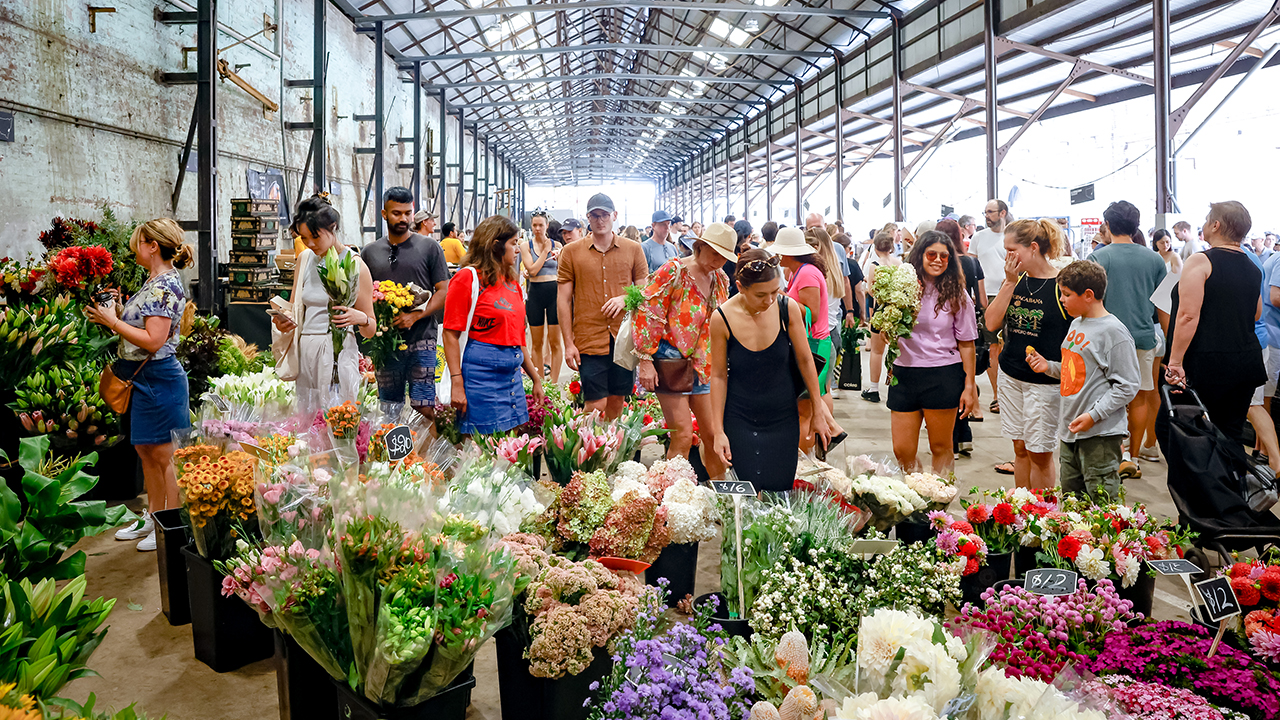
Photo: Carriageworks Farmers Market
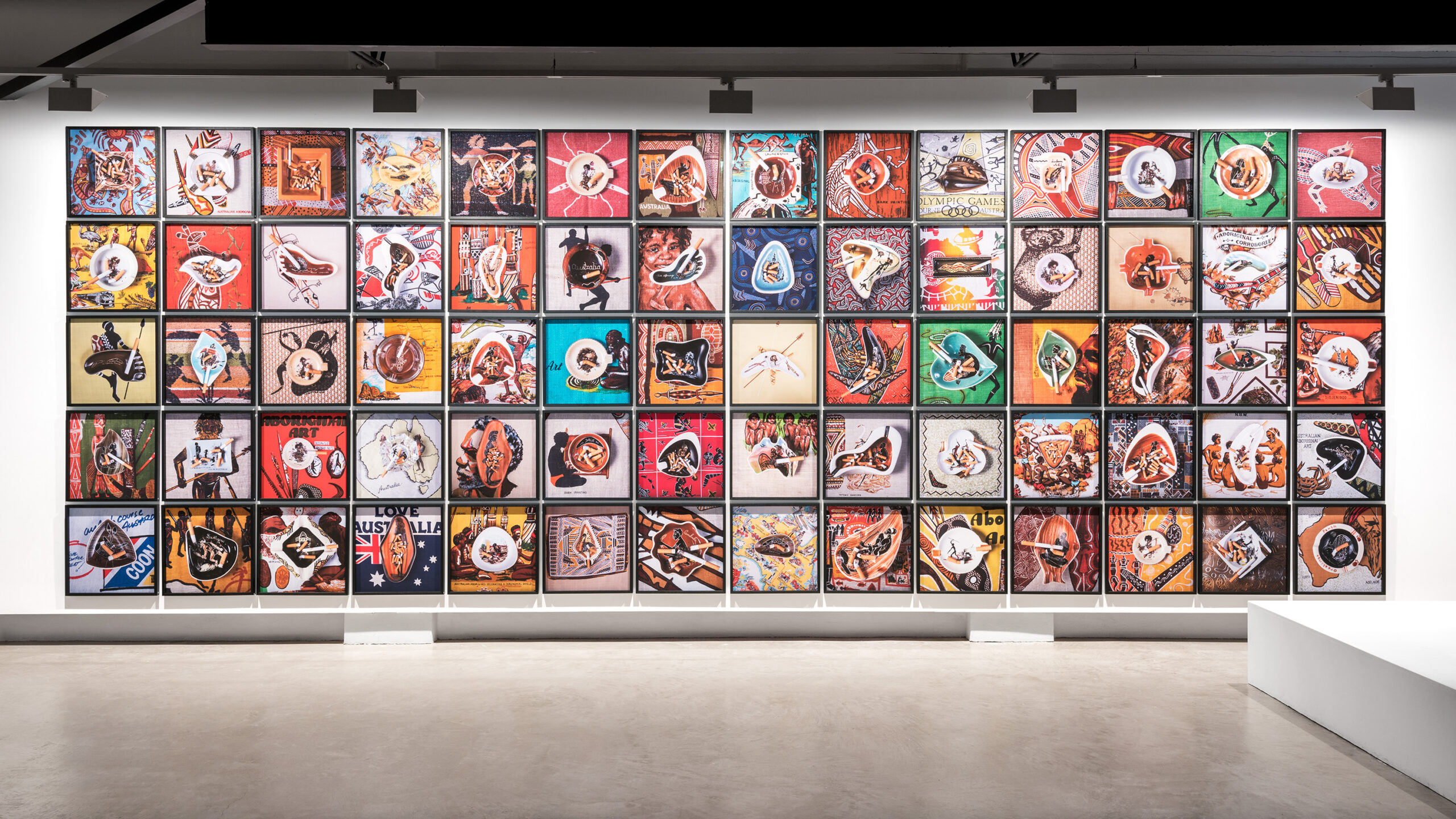
Photo: Tony Albert, Mid Century Modern, 2016, Collection, HOTA Gallery, gifted by the citizens of the Gold Coast to future generations, 2016, image courtesy of the artist and Sullivan+Strumpf, photograph: Mark Pokorny
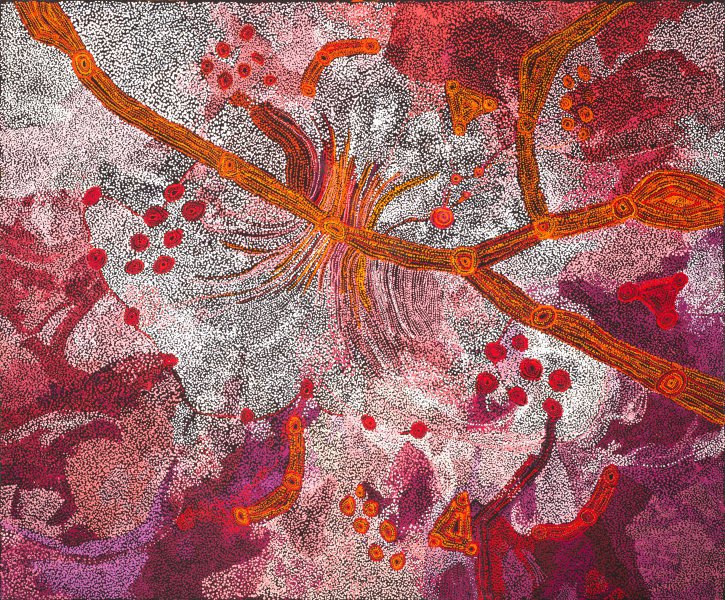
Photo: Yiribana at The Art Gallery of NSW: Sylvia Ken, Seven Sisters, 2019, synthetic polymer paint on linen, 200.0 x 240.0 cm.
In your opinion, what is it about Carriageworks that makes it such a special place to experience contemporary art?
Carriageworks is Sydney’s heart of creativity – we present a year-round program of major events and exhibitions, festivals and markets, concerts and performances. Supporting creatives and bringing together diverse communities within our distinctive industrial spaces, there’s no more fitting or spectacular backdrop for Sydney Contemporary as Australasia’s premier art fair.
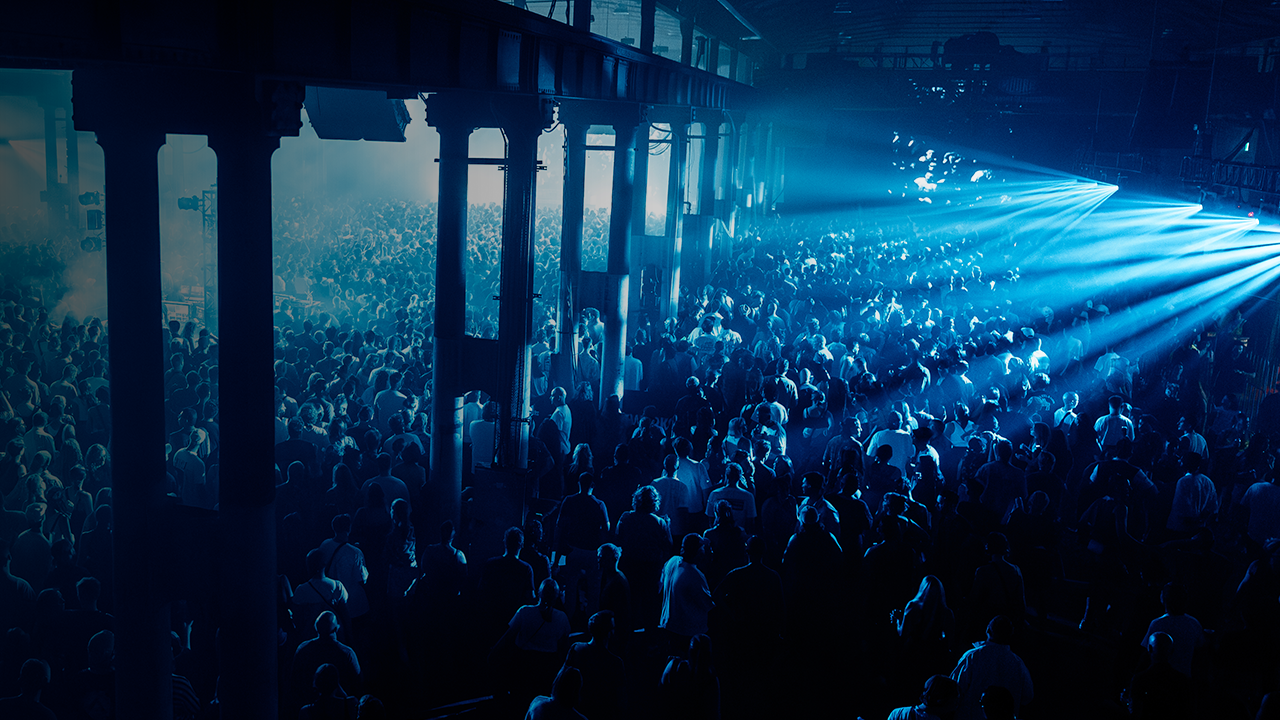
Photo: Carriageworks
After a day at the Fair, where are you heading to for dinner and drinks in the area?
The Inner West, Sydney’s night playground is walk away – no Fair experience is complete without dinner in Newtown (ANTE for amazing Japanese food and sake, Bella Bruta for Sydney’s best pizza, and cosy neighbourhood favourite bistro Café Paci). Followed by a night out in buzzing Enmore (Margaritas at new bar Super 44, Silvers for whisky and cocktails, Femelia for female-led curated wines and martini bar Bar Planet).
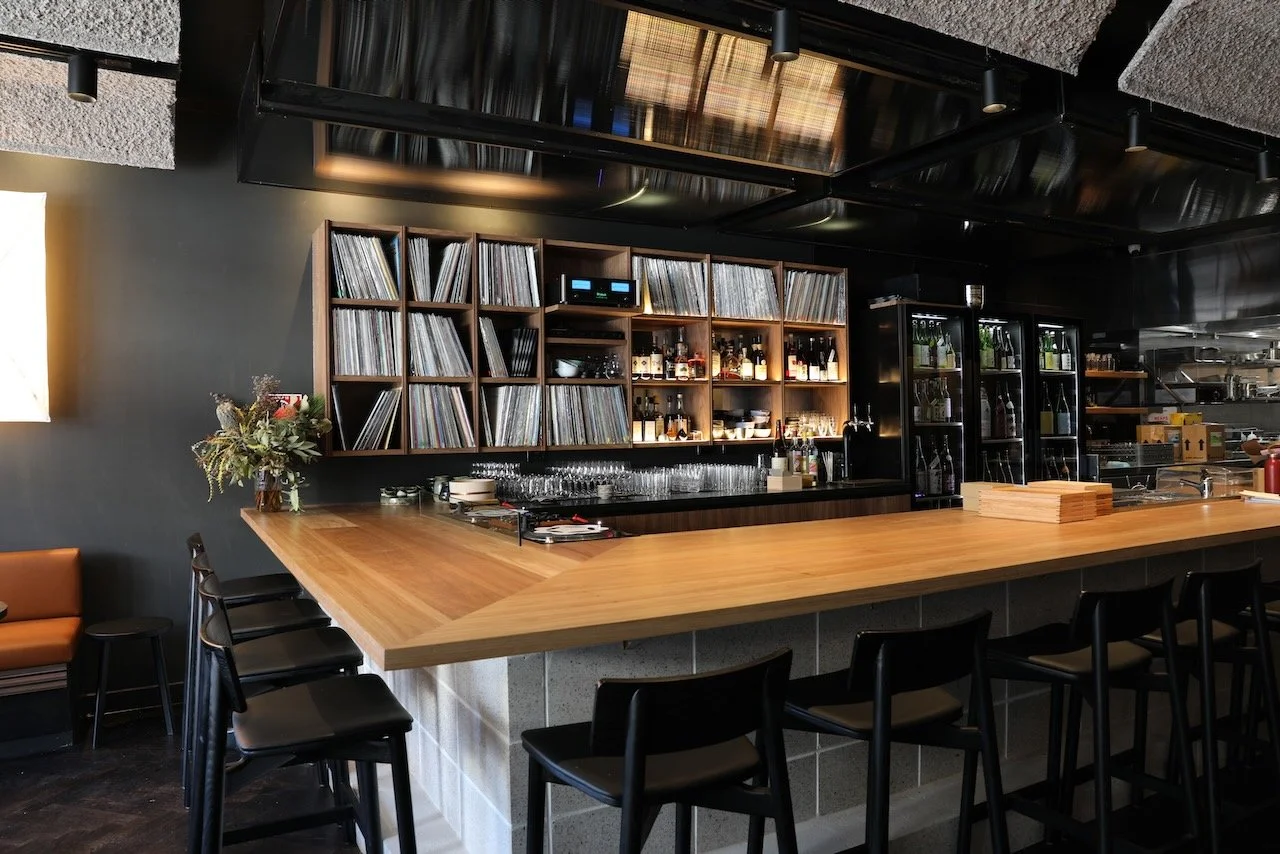
Photo: ANTE, Sourced ante.com.au
Which Sydney neighbourhood best captures the city’s creative spirit?
Sydney’s Inner East – Home of Sydney’s galleries, boutiques, best bars, restaurants and clubs intersecting Darlinghurst, Paddington, Potts Point and Surry Hills.
What’s one hidden gem in Sydney you think more people should know about?
Pleasure Club – Underground speakeasy in Newtown with live music and performance art with a killer cocktail list, open until 4am for a Sydney night of debauchery.
About Andrew Demetriou
Andrew is Director of Commercial and Venue Partnerships at Carriageworks, one of Australia’s most significant creative industry hubs, where he leads venues and commercial strategy, major events, venue partnerships and public event programming. He leads development of Carriageworks’ program calendar to expand its extensive creative program and international reputation as a leading cultural precinct, hosting major global large-scale events, festivals, exhibitions and film productions. Major partnerships managed include Sydney Contemporary, Vivid Sydney, Sydney Writers Festival, Australian Fashion Week, Festival of Dangerous Ideas and Sydney Gay and Lesbian Mardi Gras.
About Carriageworks
Carriageworks is one of Australia’s most significant creative industry hubs, renowned for its dynamic cultural events, performances, and exhibitions. Housed in a historic railway workshop in Sydney on Gadigal Country, Carriageworks offers a vibrant platform for theatre, music, dance, food events, kids programming and more, collaborating with leading local and international artists to foster innovation and creativity in its distinctive industrial setting.
@carraigeworks
carriageworks.com.au
With more than 100 galleries presenting work across painting, sculpture, photography, installations and more, Sydney Contemporary rewards curiosity. We asked the Editor of Art Collector to share a selection of the artists, booths and talks they’ll be making time for at this year’s Fair.
Image: Bridget Stehli, the innocent witch, 2025, 35.5 x 28 cm. Photo by Hamish Macintosh. Courtesy of the artist and Nasha Gallery.
Booths
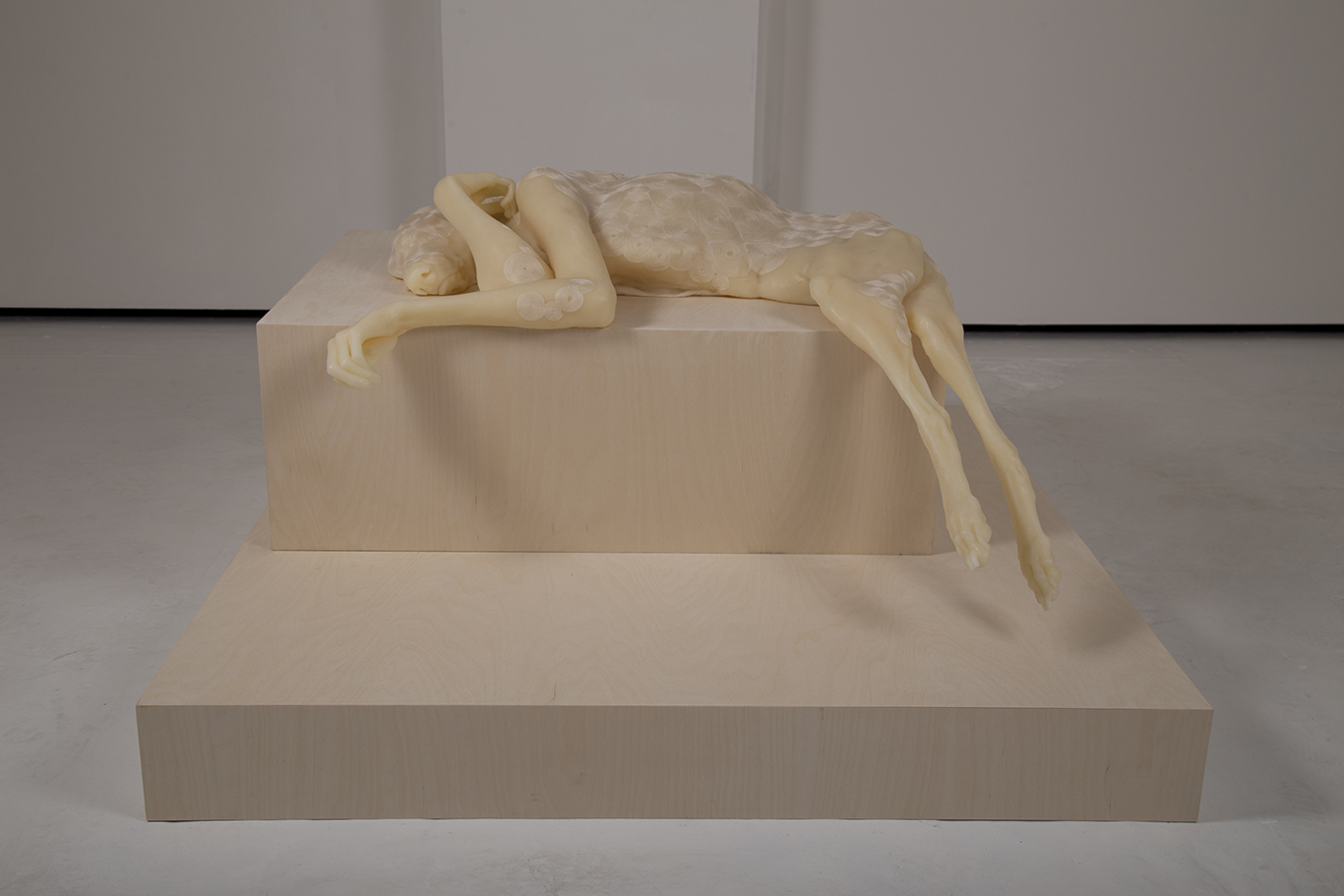
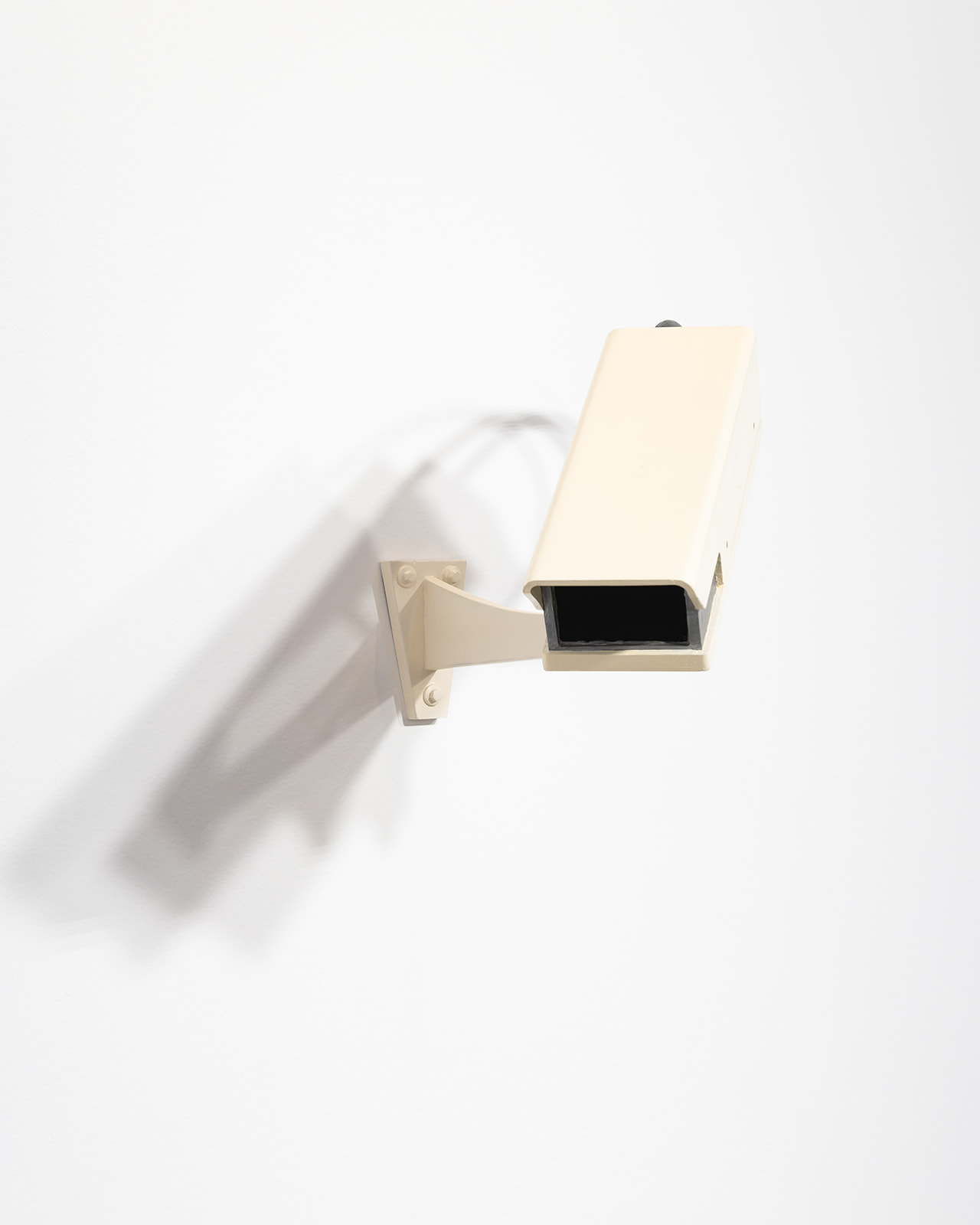
At Futures
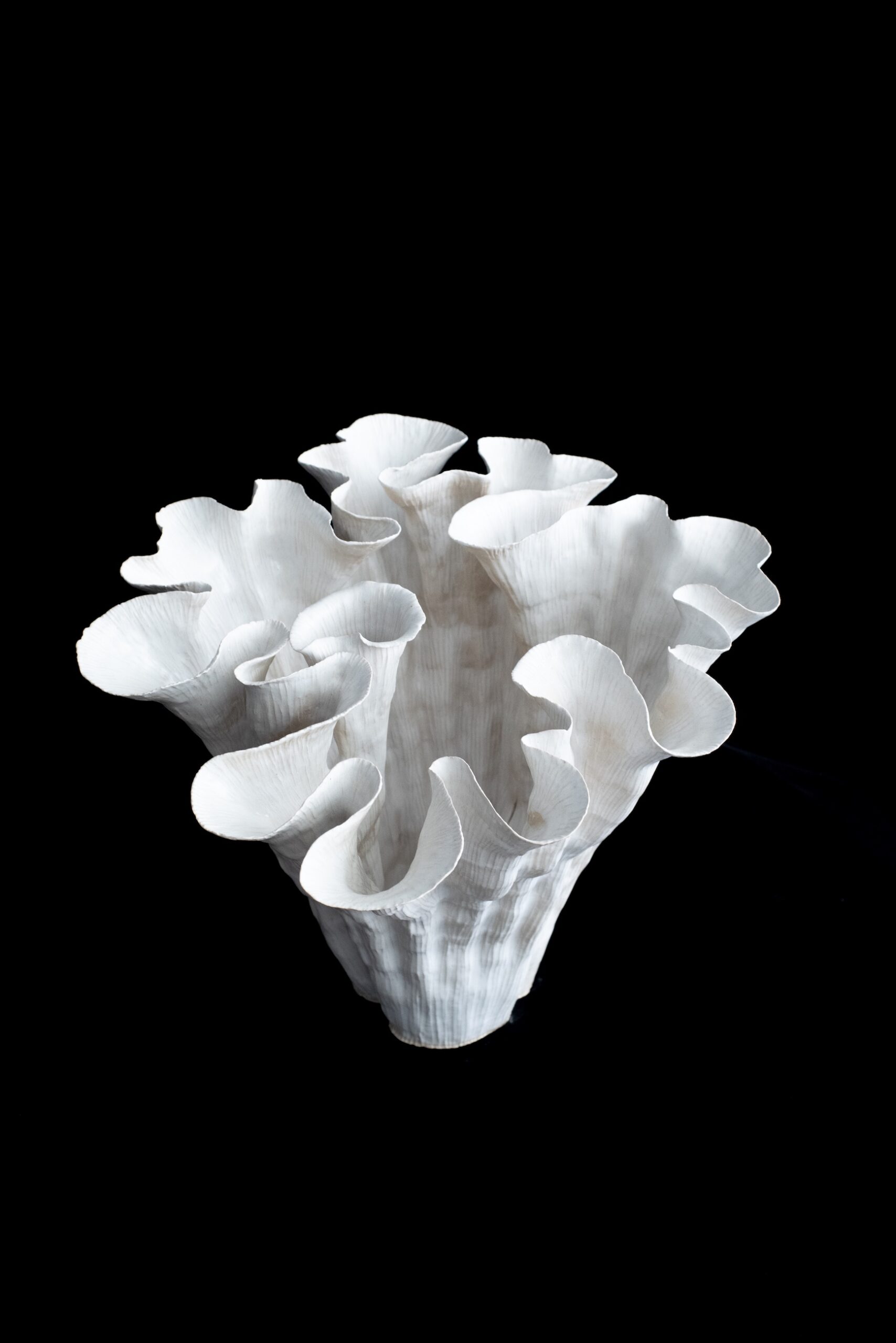
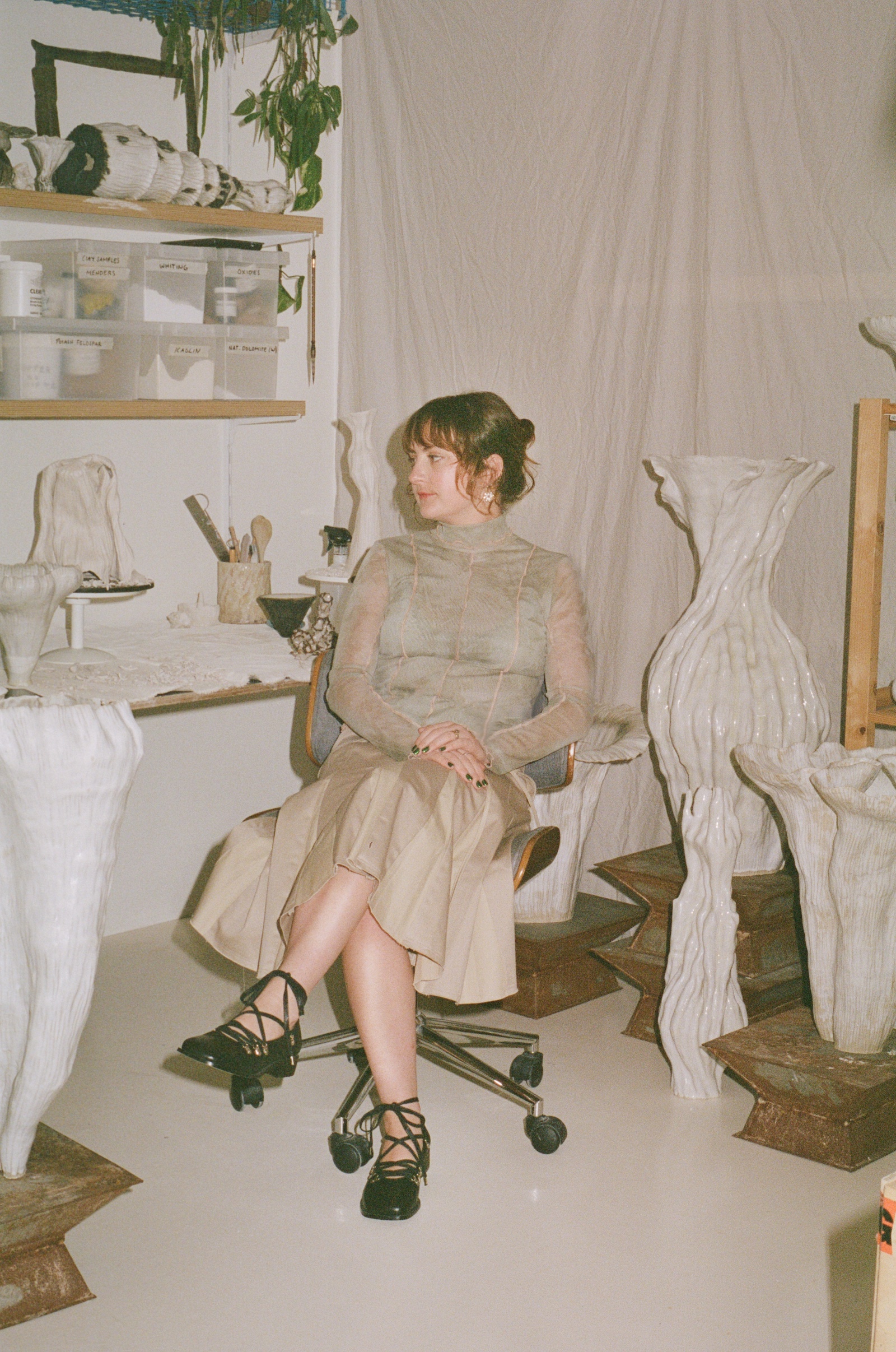
Bridget Stehli is a fresh voice that mines the kitsch of 1970s and ’80s pop culture producing work than more than earns its place in the Futures sector.
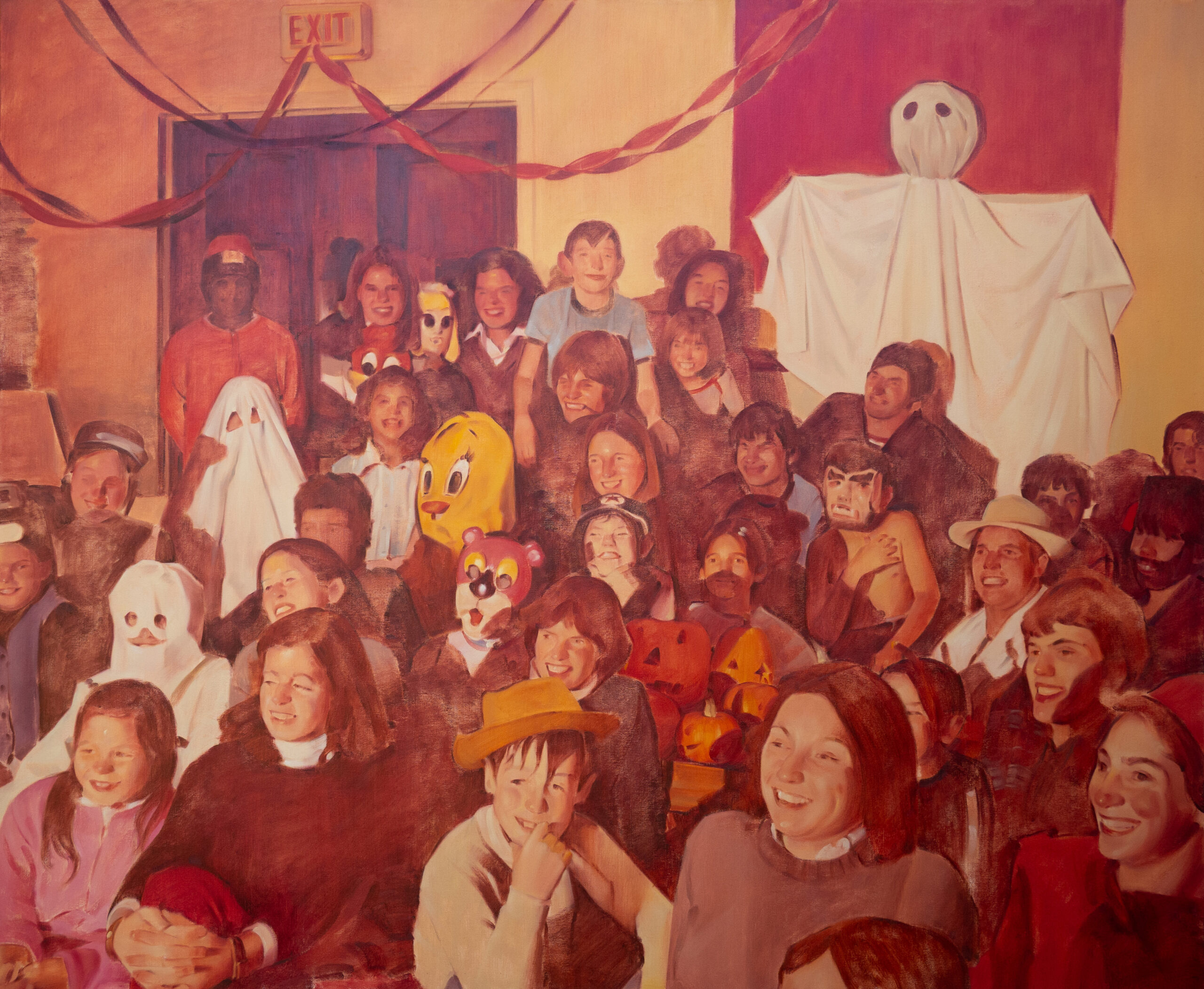 Photo: Bridget Stehli, The Holdout (detail), 2025, 140x170cm, Photo by Hamish Macintosh. Courtesy of Nasha Gallery.
At Photo Sydney
Rex Dupain – A Photo Sydney highlight — contemporary twist on the classic Sydney beach photograph that plays artifice against genuine light.
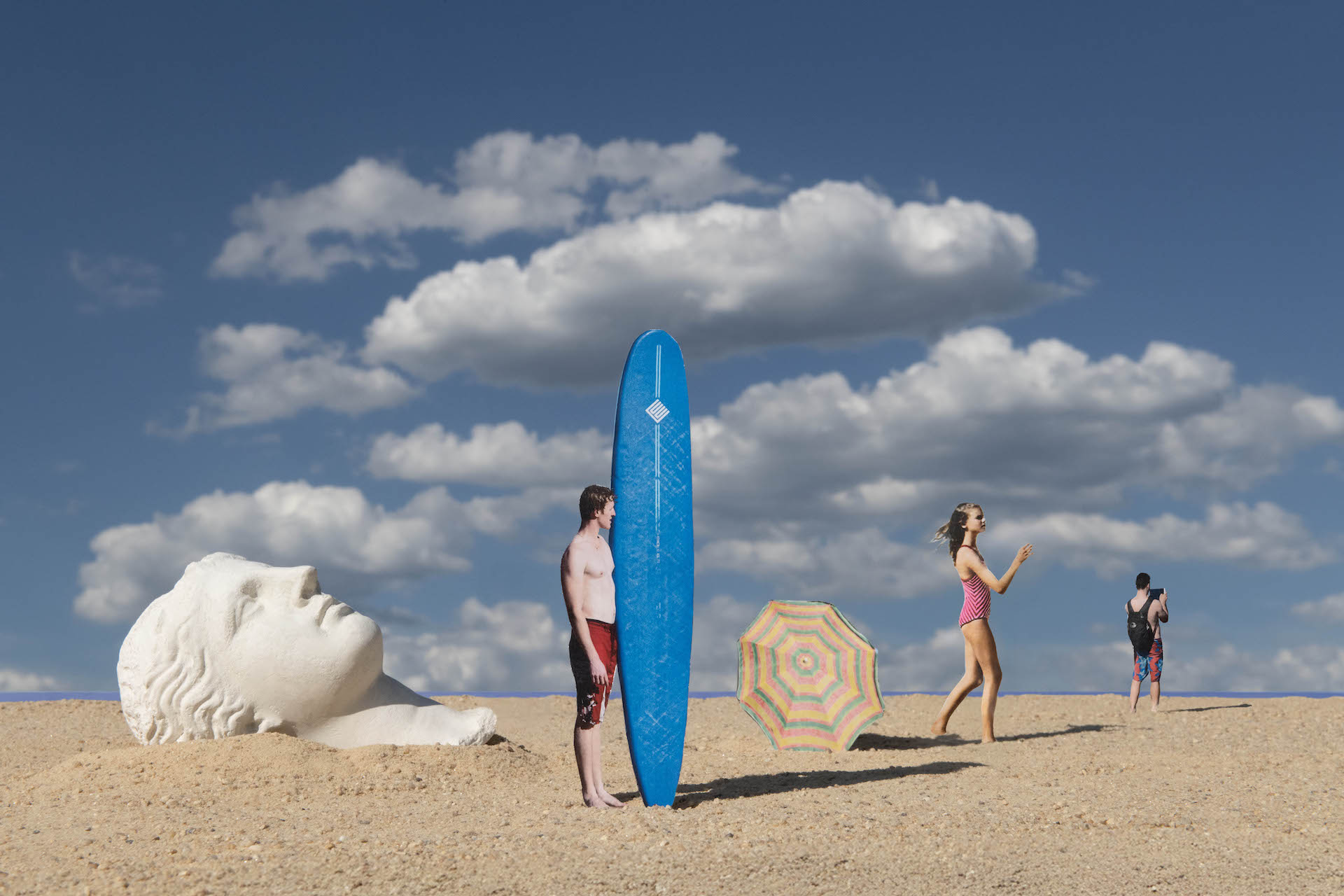
[Photo: Rex Dupain, In Time, 2026, Archival Pigment Print on Cotton Rag Paper, 80 x 120cm, Edition of 3 plus 2APS, 110 x 150cm Edition of 2 1APS
At Works on Paper
Matthew Hurdle – Hessian and ash worked into a fibrous, contemplative surface. The Brisbane artist’s meditative papermaking turns humble materials into a quiet meditation on labour, renewal and touch.
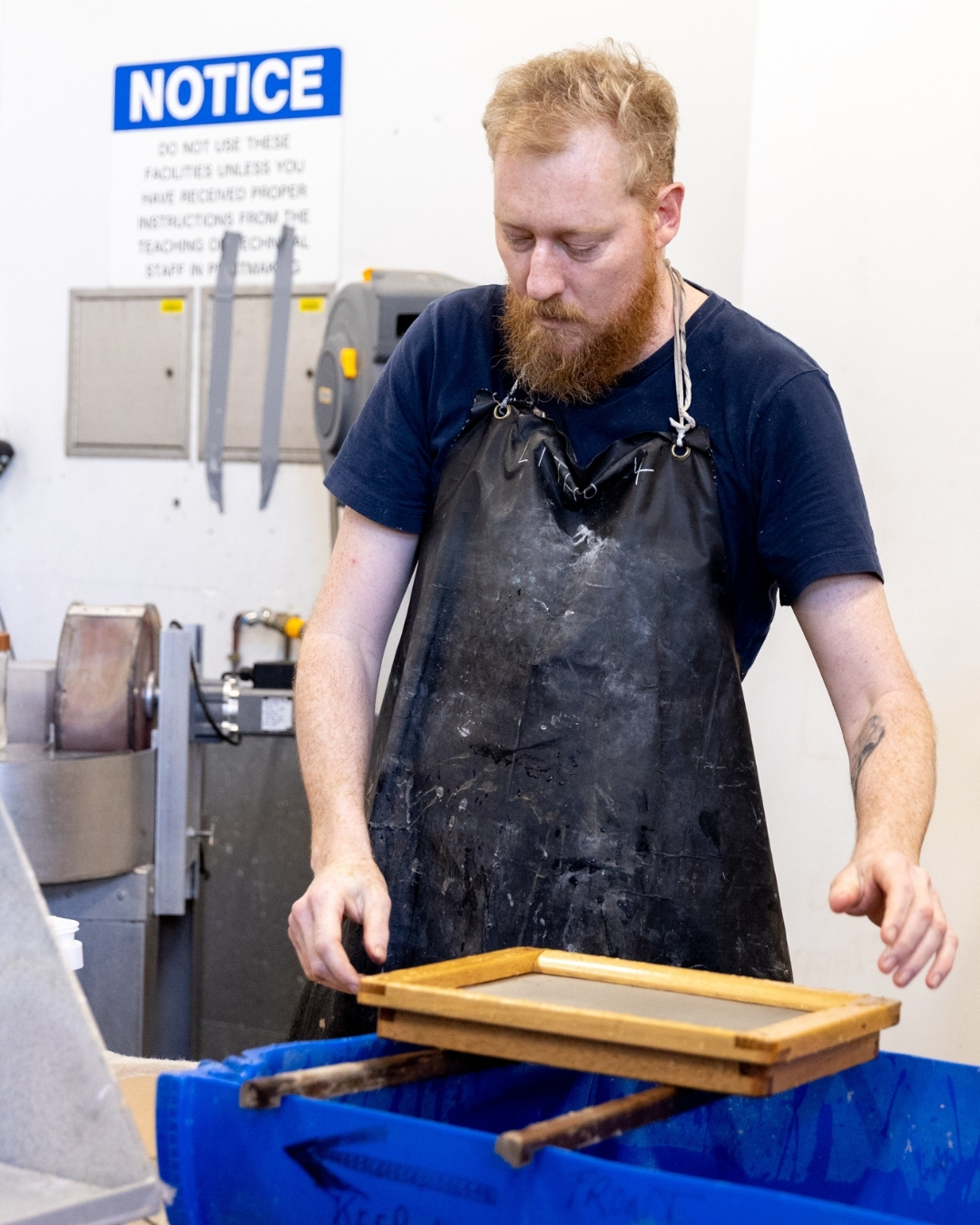
Photo: Matthew Hurdle Portrait. Courtesy of Parker Contemporary.
Talks
Platforms, New Possibilities: Art in the Digital Age tackles a timely question, as the art world braces for some of its biggest generational shifts in a decade. Essential listening for collectors thinking about where things are headed.
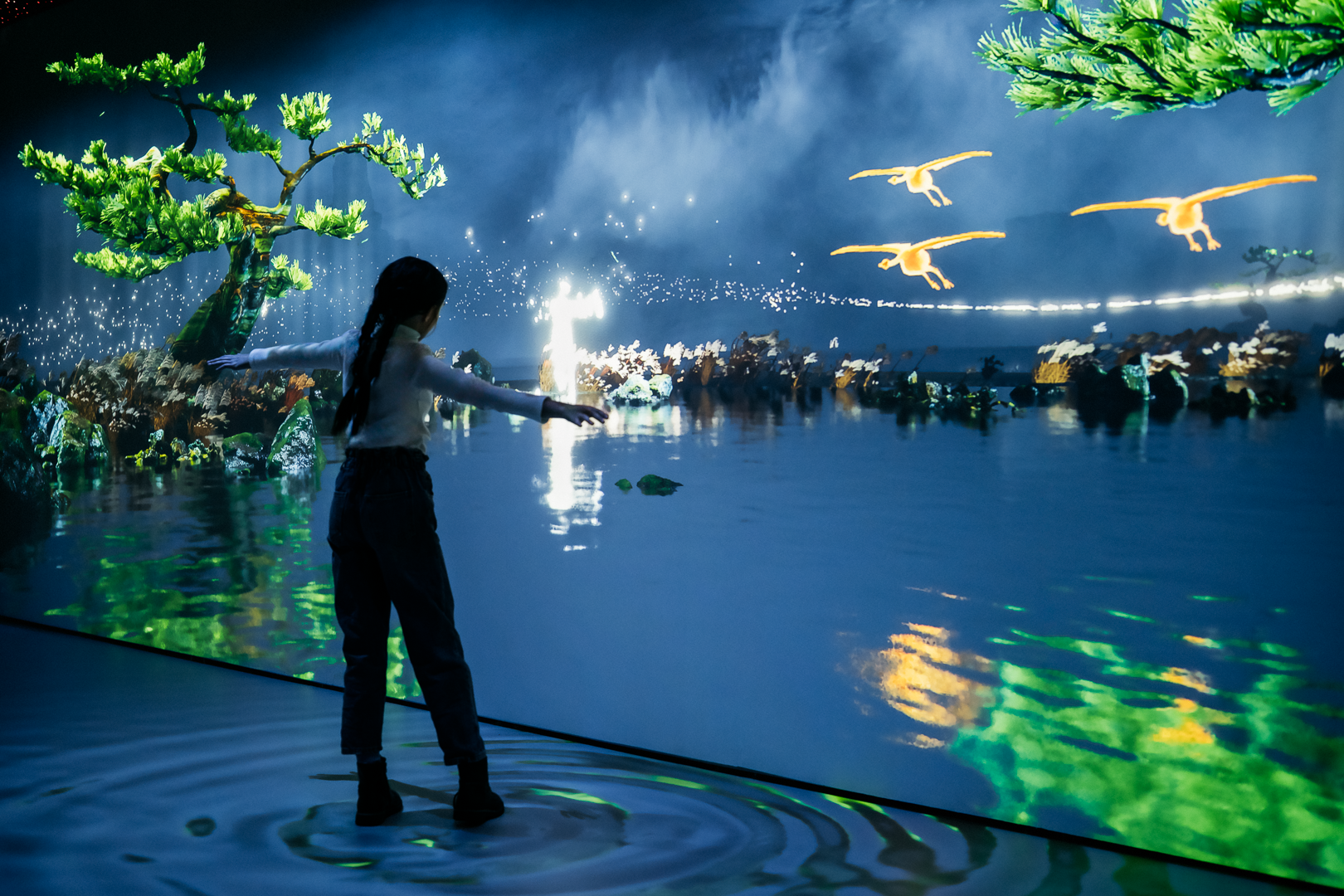
Talk: Platforms, New Possibilities: Art in the Digital Age
Installations
Mike Hewson – Impossible to walk past. Fresh from his acclaimed AGNSW Tank commission, Hewson’s work turns a fair into a genuine conversation about who shapes public space.
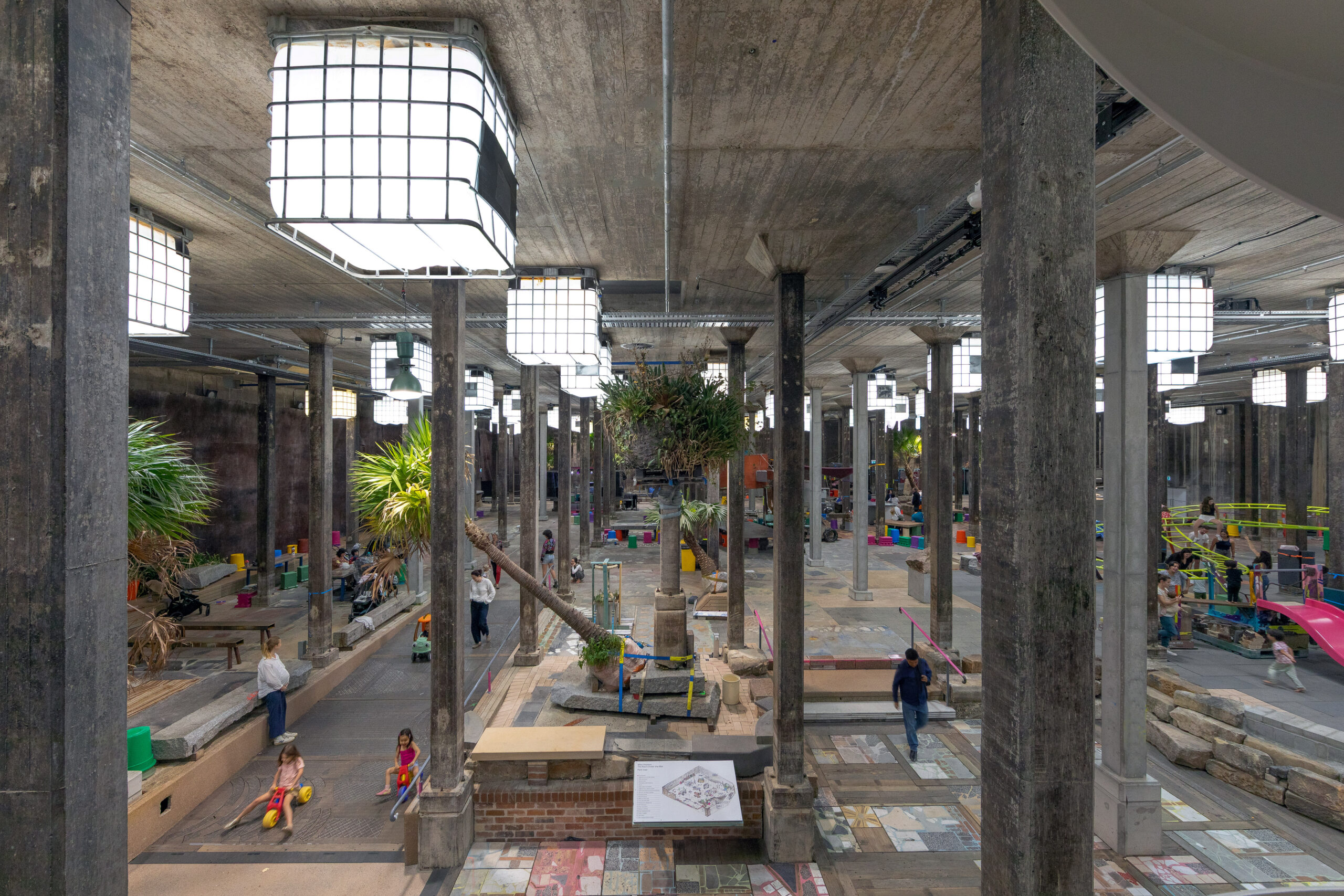 Photo: Mike Hewson, The Key’s Under the Mat, Art Gallery of New South Wales. Photo: Felicity Jenkins / Art Gallery of New South Wales.
Don’t Miss
And do come by our own talks — Art Collector’s Look Out For and Pull Focus sessions, led by our Sydney Editor Sebastian Goldspink. Expect sharp, generous conversation on the artists and ideas worth your attention at the fair.
About Art Collector
Every quarter, Art Collector magazine profiles the region’s leading artists, gallerists and collectors. You’ll also find art news, analysis of important issues affecting collectors and previews of forthcoming exhibitions across Australia and New Zealand. Subscribe to Art Collector and save up to 40% on newsagency prices. Plus, you’ll never miss an issue.
